Published: September 16, 2022
Last updated: August 14, 2026
Next review: August 2027, or sooner if major blood pressure guidance changes
Written by: Adel Galal, Founder and Lead Writer at NextFitLife
Review status: Updated using current American Heart Association, American College of Cardiology, NHLBI and cardiovascular guidance. This article has not been medically reviewed by a doctor.
Reading time: About 24 minutes
High blood pressure can be quiet.
You may feel fine.
You may have no headache.
You may have normal energy.
But the pressure inside your arteries can still be too high.
Over time, high blood pressure can strain the heart, brain, kidneys, eyes and blood vessels.
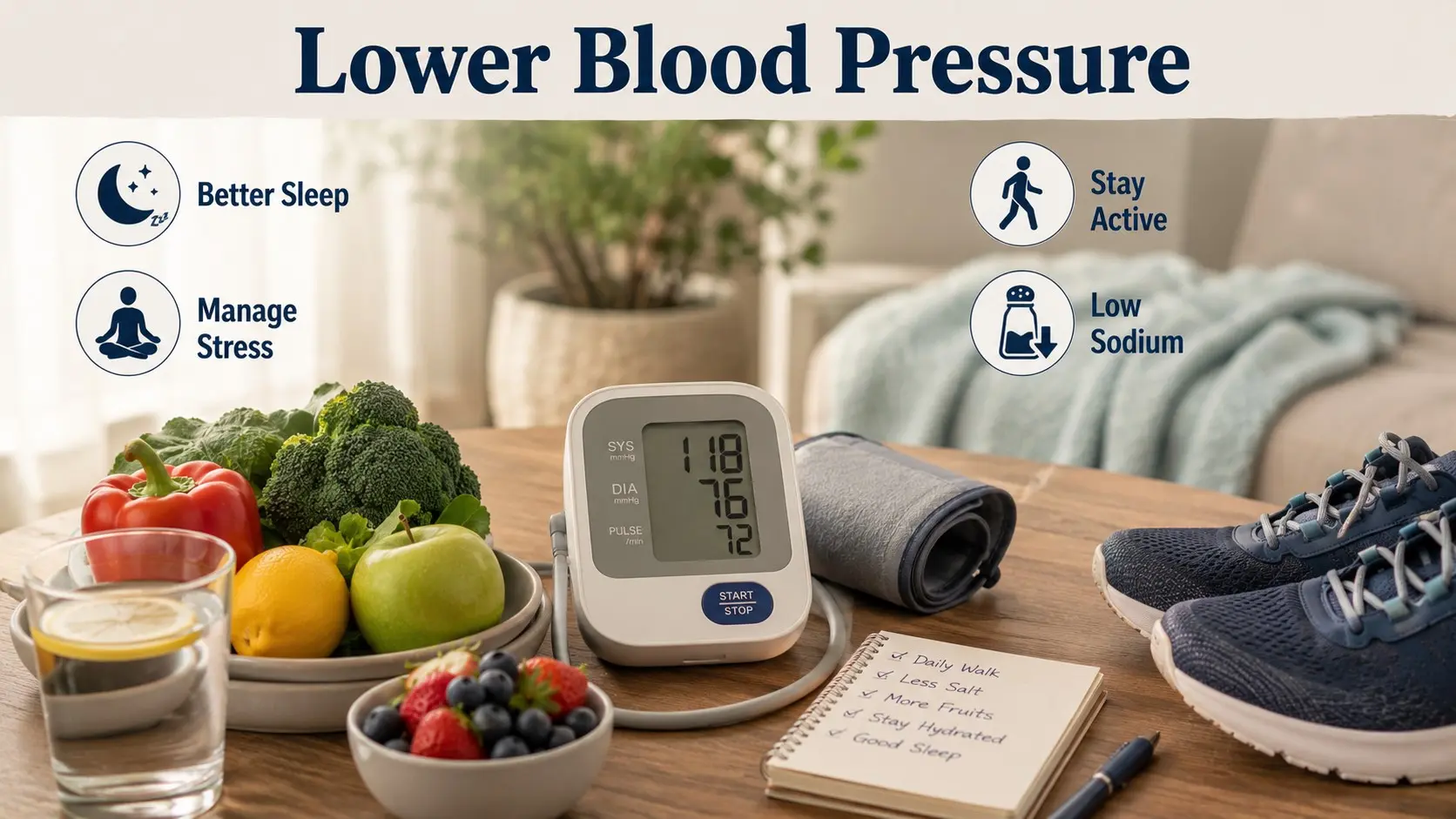
The good news is that there are proven ways to lower blood pressure.
The best results usually come from several simple habits working together.
Food matters.
Sodium matters.
Movement matters.
Sleep matters.
Alcohol matters.
Smoking matters.
Medicine can matter too.
The current blood pressure guideline also looks at your full cardiovascular risk, not only one reading.
The general treatment goal is below 130/80 mm Hg for most adults.
Some people need medicine early.
Others with lower risk Stage 1 hypertension may first use lifestyle changes for several months.
This guide explains how to lower blood pressure safely.
It also answers the questions people ask most.
What can lower a high reading quickly?
What should you drink?
What should you eat?
When is high blood pressure an emergency?
How should you check it at home?
When do you need medicine?
For more heart health guidance, visit the Heart and Cardiovascular Health Hub and the Heart Disease Guide.
Medical Notice
I am not a dermatologist or A doctor, and this content does not replace professional medical advice. What I share comes from real-life experience, extensive research, and consultation with healthcare providers. Always consult qualified medical professionals for diagnosis and treatment of any health condition.
Do not stop, double or change prescribed blood pressure medication because of one home reading.
Pregnancy, kidney disease, heart disease, diabetes, severe hypertension, fainting and very low blood pressure need personal medical advice.
Quick Answer: How Can You Lower Blood Pressure?
The best supported ways to lower blood pressure are:
- Measure it correctly
- Use a DASH diet or similar heart healthy eating pattern
- Reduce sodium
- Eat potassium-rich foods when they are safe for you
- Move regularly
- Add strength exercise
- Reach a healthier weight if needed
- Reduce or avoid alcohol
- Stop smoking
- Protect sleep
- Check for sleep apnea when symptoms suggest it
- Manage stress
- Take prescribed antihypertensive medicine correctly
- Track readings at home
- Review medicines and supplements that may raise blood pressure
No food, drink, supplement or breathing trick can safely treat a hypertensive emergency.
Blood Pressure Numbers at a Glance
| Category | Systolic | Diastolic |
|---|---|---|
| Normal | Less than 120 | Less than 80 |
| Elevated | 120 to 129 | Less than 80 |
| Stage 1 hypertension | 130 to 139 | 80 to 89 |
| Stage 2 hypertension | 140 or higher | 90 or higher |
| Severe hypertension | Higher than 180 | Higher than 120 |
If the two numbers fall into different groups, the higher group usually matters.
Only a qualified healthcare professional can confirm a diagnosis of hypertension.
What Is Blood Pressure?
Blood pressure is the force of blood pushing against your artery walls.
A reading has two numbers.
Systolic Blood Pressure
The top number is the systolic blood pressure.
It measures pressure when the heart contracts.
Diastolic Blood Pressure
The bottom number is the diastolic blood pressure.
It measures pressure when the heart relaxes between beats.
High blood pressure is also called hypertension.
One unusual reading does not always mean you have hypertension.
Doctors usually look at repeated readings, your history and sometimes home readings.
What Changed in Current Blood Pressure Guidance?
The current guideline was released in 2025.
It replaced the older 2017 guideline.
The Main Goal Is Below 130/80
The general treatment goal is below 130/80 mm Hg for most adults.
Some people need a different goal because of pregnancy, frailty, limited life expectancy or other medical issues.
PREVENT Risk Is Now Important
Doctors can use the PREVENT cardiovascular risk equations when deciding if some people with Stage 1 hypertension should start medicine.
A 10 year PREVENT cardiovascular risk of 7.5 percent or more is one reason medicine may be recommended at an average pressure of 130/80 mm Hg or higher.
Medicine Is Recommended at 140/90 or Higher
For adults with average blood pressure of 140/90 mm Hg or higher, medicine plus lifestyle changes is generally recommended.
Some People Need Medicine From 130/80
Medicine may also be recommended when average pressure is 130/80 mm Hg or higher and a person has:
- Known cardiovascular disease
- A previous stroke
- Diabetes
- Chronic kidney disease
- A PREVENT 10 year cardiovascular risk of 7.5 percent or higher
Lower Risk Stage 1 May Start With Lifestyle
Adults with Stage 1 hypertension and PREVENT risk below 7.5 percent may first use lifestyle changes.
If average blood pressure remains at or above 130/80 mm Hg after about 3 to 6 months, medicine may be recommended.
Stage 2 Often Starts With Two Medicines
Current guidance prefers two first line medicines for many adults with Stage 2 hypertension.
A single combination pill is preferred when appropriate.
This can make treatment easier to follow.
How to Lower Blood Pressure Fast Safely
Many people search for how to lower blood pressure fast.
The first step is not to force the number down.
The first step is to make sure the reading is correct and decide if it is dangerous.
If a Reading Is Unexpectedly High
- Sit in a quiet place.
- Support your back.
- Keep both feet flat on the floor.
- Keep your arm supported at heart level.
- Do not talk.
- Rest for at least five minutes.
- Measure again.
A reading can rise for many short term reasons.
These include:
- Stress
- Pain
- Recent exercise
- Caffeine
- Nicotine
- A full bladder
- Talking
- Wrong arm position
- A cuff that does not fit
A lower second reading does not mean hypertension has been cured.
It may mean the second measurement was more accurate.
Do Not Take Extra Medicine on Your Own
Do not take an extra dose because one reading is high.
Only do this if your healthcare professional has given you a specific plan for that situation.
Do not borrow another person's medicine.
Do not double a missed dose unless your prescriber tells you to.
When High Blood Pressure Is an Emergency
A reading higher than 180/120 mm Hg needs attention.
If you are not pregnant:
- Wait at least one minute.
- Measure again correctly.
If the second reading is still higher than 180/120 mm Hg, look for new symptoms.
Call Emergency Services for Symptoms Such As:
- Chest pain
- Shortness of breath
- Back pain
- Weakness
- Numbness
- Vision change
- Trouble speaking
This may be a hypertensive emergency.
Do not wait for water, tea, juice, food, vinegar, garlic or a breathing exercise to work.
Do not exercise to force the pressure down.
If There Are No Emergency Symptoms
A repeated reading above 180/120 mm Hg without signs of acute organ damage is still severe hypertension.
Contact your healthcare professional as soon as possible.
They may need to start, restart or adjust oral blood pressure medicine.
How to Measure Blood Pressure Correctly
A wrong technique can create a wrong number.
Thirty Minutes Before the Reading
- Do not smoke
- Do not use nicotine
- Do not drink caffeine
- Do not exercise
Empty your bladder before you sit down.
When You Measure
- Rest quietly for at least five minutes
- Keep your back supported
- Keep both feet flat on the floor
- Do not cross your legs
- Place the cuff on bare skin
- Support your arm
- Keep the middle of the cuff at heart level
- Do not talk
- Do not use your phone
Take More Than One Reading
Take two readings about one minute apart.
Write them down.
A pattern is more useful than one number.
Home Blood Pressure Monitoring
Home blood pressure monitoring can help show whether treatment is working.
It can also help confirm hypertension.
Use an automatic upper arm cuff monitor.
Choose a validated device.
Make sure the cuff fits your arm.
A cuff that is too small or too large can give a wrong reading.
Wrist and finger monitors are less reliable.
What About Smartwatches?
Cuffless devices are improving.
But current guidance says they should not yet be used to diagnose hypertension or guide treatment.
This includes many smartwatch, ring and phone based blood pressure tools.
Bring your home monitor to a medical visit.
Your healthcare professional can compare it with clinic equipment and check your technique.
Follow the DASH Eating Plan
DASH diet means Dietary Approaches to Stop Hypertension.
It is one of the best studied eating patterns for blood pressure.
You do not need special products.
DASH uses normal foods.
Eat more:
- Vegetables
- Fruit
- Whole grains
- Beans
- Lentils
- Nuts
- Seeds
- Fish
- Poultry
- Low-fat dairy
- Healthy plant oils
Eat less:
- Excess sodium
- Sugary drinks
- Sweets
- Fatty meats
- Processed meats
- Foods high in saturated fat
DASH can fit many cultures and budgets.
For more detail, read the Heart Healthy Diet Guide.
Reduce Sodium
Sodium reduction can help many people lower blood pressure.
A general upper target is 2,300 mg of sodium per day.
A target closer to 1,500 mg can lower blood pressure further for many adults with hypertension.
You do not have to change everything at once.
Common Sources of Sodium
- Restaurant meals
- Fast food
- Processed meat
- Pizza
- Canned soup
- Frozen meals
- Packaged sauces
- Salty snacks
- Seasoning mixes
- Some breads
Easy Sodium Changes
- Read food labels
- Compare similar brands
- Choose lower sodium versions
- Rinse canned beans
- Choose unsalted nuts
- Use garlic
- Use herbs
- Add lemon or lime
- Ask for sauces on the side
- Cook more meals at home
Eat Potassium Rich Foods When Safe
Potassium rich foods can support healthy blood pressure.
Potassium helps the body manage sodium.
Foods with potassium include:
- Beans
- Lentils
- Potatoes
- Sweet potatoes
- Tomatoes
- Spinach
- Bananas
- Oranges
- Avocado
- Plain yogurt
- Fish
More potassium is not safe for everyone.
Ask a healthcare professional before deliberately increasing potassium if you have:
- Chronic kidney disease
- Kidney failure
- High blood potassium
- Heart failure
- A fluid restriction
Some blood pressure medicines can also raise potassium.
Do not use potassium supplements or potassium based salt substitutes without checking first.
Move Your Body Regularly
Physical activity can help lower and control blood pressure.
Many adults can work toward about 150 minutes of moderate activity each week.
You can split it into smaller sessions.
Try:
- Walking
- Cycling
- Swimming
- Dancing
- Gardening
- Active housework
Ten minutes still counts.
Walking after meals can be an easy place to start.
If you have chest pain, fainting, severe shortness of breath or serious heart disease, ask a healthcare professional before hard exercise.
Add Strength Exercise
Strength exercise can support blood pressure, muscle health and blood sugar control.
Simple beginner options include:
- Chair squats
- Wall push ups
- Resistance band rows
- Light weights
- Step ups
- Glute bridges
Start light.
Breathe normally.
Do not hold your breath while lifting.
Reach a Healthier Weight if Needed
Weight is not the only cause of hypertension.
Thin people can have high blood pressure too.
But excess body fat can increase blood pressure in some people.
A modest weight reduction can help when excess weight is present.
Do not use extreme diets.
Focus on habits you can repeat.
- Eat more vegetables
- Include enough protein
- Eat more fibre
- Reduce sugary drinks
- Walk regularly
- Protect sleep
- Plan simple meals
Visit the Weight Management and Metabolism Hub.
Reduce or Avoid Alcohol
Alcohol can raise blood pressure.
It can also affect:
- Sleep
- Body weight
- Heart rhythm
- Medicine
If you do not drink alcohol, you do not need to start.
If you drink heavily every day, do not suddenly stop without medical advice.
Alcohol withdrawal can be dangerous.
Stop Smoking and Nicotine Use
Smoking damages blood vessels.
Nicotine can temporarily raise blood pressure and heart rate.
Stopping smoking lowers overall cardiovascular risk.
Ask about:
- Counseling
- A quit plan
- Nicotine replacement when appropriate
- Prescription medicine
- Support from family or friends
Sleep Enough and Check for Sleep Apnea
Sleep and blood pressure are connected.
Poor sleep can make blood pressure harder to control.
Sleep apnea is also linked with hypertension.
Possible sleep apnea signs include:
- Loud snoring
- Breathing pauses
- Gasping during sleep
- Morning headaches
- Daytime sleepiness
- Persistent tiredness
If you have these symptoms, ask about a sleep evaluation.
Manage Stress
Stress management does not cure hypertension.
Stress can raise blood pressure for a short time.
It can also affect:
- Sleep
- Food choices
- Alcohol use
- Smoking
- Exercise
- Medicine routines
Simple options include:
- Slow breathing
- Walking
- Prayer
- Meditation
- Stretching
- Quiet time
- Journaling
- Talking with someone you trust
Read Self Care Habits.
Take Blood Pressure Medicine Correctly
Many people need blood pressure medication.
This is common.
It does not mean you failed.
Medicine can protect the heart, brain, kidneys and blood vessels.
Common first line medicine groups include:
- ACE inhibitors
- Angiotensin receptor blockers
- Calcium channel blockers
- Thiazide type diuretics
The best treatment depends on your health.
Kidney function matters.
Pregnancy matters.
Other medicines matter.
Blood tests may matter.
Why Two Medicines May Be Used
Stage 2 hypertension often needs two first line medicines.
A single pill containing two medicines may make treatment easier to follow.
Do Not Stop Medicine When the Number Improves
A normal reading can mean the treatment is working.
Stopping medicine can make the pressure rise again.
Common Side Effects
Possible effects include:
- Dizziness
- Lightheadedness
- Frequent urination
- Dry cough with some medicines
- Ankle swelling with some medicines
- Changes in potassium
- Changes in kidney tests
- Tiredness
Tell your healthcare professional if a side effect bothers you.
Another dose or medicine may work better.
Medicines and Substances That May Raise Blood Pressure
Some products can raise blood pressure or make hypertension harder to control.
Examples include:
- Some decongestants
- NSAID pain medicines such as ibuprofen and naproxen
- Some stimulants
- Some corticosteroids
- Some antidepressants
- Some birth control pills
- Energy products
- Alcohol
- Natural licorice
- Some herbal supplements
- Some recreational drugs
Do not stop a prescription medicine on your own.
Show your doctor or pharmacist everything you take.
Caffeine and Blood Pressure
Caffeine can cause a temporary rise in blood pressure and heart rate.
The effect differs from person to person.
Current 2026 heart guidance also makes an important distinction between normal coffee intake and high dose caffeine products.
Evidence about coffee should not be applied to energy drinks.
Energy drinks can contain large amounts of caffeine and other stimulants.
They are a poor choice when you are trying to control blood pressure.
Avoid caffeine for at least 30 minutes before checking your blood pressure.
If coffee causes palpitations or a clear rise in your readings, discuss it with your healthcare professional.
What to Drink to Lower Blood Pressure Quickly
This is one of the most searched hypertension questions.
The safe answer is simple.
There is no emergency blood pressure drink.
No juice, tea, vinegar drink, supplement or large glass of water can safely treat a hypertensive emergency.
If your blood pressure is above 180/120 mm Hg and you have emergency symptoms, call emergency services.
Drinks That Can Fit a Daily Blood Pressure Plan
| Drink | How It Fits | Main Caution |
|---|---|---|
| Water | Supports normal hydration and can replace sugary drinks | People with fluid restrictions need personal advice |
| Low fat milk | Can fit DASH and provides protein and minerals | Kidney needs and lactose tolerance vary |
| Unsweetened soy drink | Can be a dairy alternative | Check sodium, sugar, potassium and protein |
| Low sodium vegetable juice | Can add vegetables and potassium | Regular versions may contain a lot of sodium |
| Beetroot juice | Dietary nitrate may have a modest effect in some people | Not emergency treatment |
| Unsweetened tea | Can replace sugary drinks | Caffeine and herbs affect people differently |
Water
Water is usually the simplest drink.
It is especially useful when it replaces soda, sweet tea or energy drinks.
Drinking a large amount quickly is not a treatment for hypertension.
Beetroot Juice
Beetroot juice contains nitrate.
Research suggests it may have a modest blood pressure effect in some people.
It does not replace medicine.
It does not treat an emergency.
Hibiscus Tea
Hibiscus tea has been studied for blood pressure.
It may have a small effect in some people.
It can also interact with medicines.
Ask a healthcare professional or pharmacist before using large amounts every day.
Pomegranate Juice
Pomegranate juice has also been studied.
Any effect is small compared with proven hypertension treatment.
Juice also contains natural sugar.
Whole fruit gives you more fiber.
Drinks to Limit
- Energy drinks
- Sugary soda
- Large sweet coffee drinks
- Sweet tea
- High sodium broth
- High sodium vegetable juice
- Large amounts of alcohol
- Licorice drinks
- Detox drinks
How to Lower Blood Pressure Naturally
When people say natural, they often mean lifestyle changes.
The best supported lifestyle methods are:
- DASH eating
- Sodium reduction
- Potassium rich foods when safe
- Regular physical activity
- Strength exercise
- Healthy weight management
- Less alcohol
- No smoking
- Good sleep
- Sleep apnea treatment when needed
- Stress management
- Home blood pressure monitoring
Some people can improve their blood pressure a lot with lifestyle changes.
Other people need medicine too.
Both can be true.
How to Improve Blood Pressure in 3 Months
Three months can be a useful period for building habits.
It is not a promise.
It also does not mean everyone should wait three months before starting medicine.
Month 1: Know Your Numbers
- Use a validated upper arm monitor
- Check your cuff size
- Learn correct measurement technique
- Take two readings
- Start a simple log
- Reduce major sodium sources
- Start walking
- Take medicine correctly
- Reduce alcohol
Month 2: Build a Routine
- Follow a DASH style plate
- Walk most days
- Add strength exercise
- Improve sleep
- Plan lower sodium meals
- Work on weight if needed
- Review caffeine
- Discuss medicine side effects
Month 3: Review the Pattern
- Look at your average blood pressure
- Check medicine adherence
- Review sodium intake
- Review activity
- Review sleep
- Ask if medicine needs adjustment
- Ask about sleep apnea if symptoms suggest it
Bring your blood pressure record to your healthcare professional.
A Simple 7 Day Blood Pressure Start
This is not a cure.
It is a simple way to begin.
Day 1
Take two correct readings.
Write them down.
Day 2
Replace one high sodium food.
Day 3
Walk for 10 to 30 minutes if it is safe for you.
Day 4
Add one potassium-rich food if potassium is safe for you.
Day 5
Protect your sleep tonight.
Day 6
Try slow breathing, prayer, walking or another stress tool.
Day 7
Review your readings.
Choose two habits to continue.
Simple Daily Eating Plan for Lower Blood Pressure
Breakfast
- Oats
- Fruit
- Plain low fat yogurt
- Unsalted nuts
- Water or unsweetened tea
Lunch
- Beans, lentils, fish or chicken
- Large serving of vegetables
- Whole grains
- Fruit
Snack
- Fruit
- Plain yogurt
- Unsalted nuts
- Vegetable sticks with hummus
Dinner
- Fish, beans, tofu or lean protein
- Vegetables
- Brown rice, barley or potatoes
- Olive oil
- Herbs
- Lemon
Simple meals are often easier to repeat.
What Are the Symptoms of High Blood Pressure?
Most hypertension causes no symptoms.
This is why it is sometimes called a silent condition.
You cannot reliably diagnose high blood pressure from:
- Headache
- Dizziness
- Facial flushing
- Tiredness
- Nosebleeds
You need a blood pressure measurement.
Very high blood pressure with serious symptoms is different.
Chest pain, breathing trouble, weakness, numbness, vision change or trouble speaking with blood pressure above 180/120 mm Hg needs emergency attention.
What Can Uncontrolled High Blood Pressure Damage?
Untreated hypertension can damage the body over time.
It can increase the risk of:
- Heart disease
- Heart attack
- Heart failure
- Stroke
- Atrial fibrillation
- Chronic kidney disease
- Vision problems
- Blood vessel disease
- Cognitive decline
This is why treatment matters even when you feel well.
Blood pressure and cholesterol often affect risk together.
High Blood Pressure During Pregnancy
Pregnancy has different blood pressure rules.
High blood pressure during pregnancy needs medical care.
Do not change medicine, supplements or herbs without speaking with your maternity team.
High blood pressure during pregnancy can be linked with preeclampsia.
Contact your maternity team urgently for severe readings or symptoms.
Urgent symptoms can include:
- Severe headache
- Vision change
- Upper abdominal pain
- Chest pain
- Shortness of breath
- Severe or sudden swelling
Blood pressure problems can also happen after delivery.
Kidney Disease and Blood Pressure
Kidney disease and hypertension are closely connected.
High blood pressure can damage the kidneys.
Kidney disease can also make blood pressure harder to control.
People with kidney disease may need special advice about:
- Blood pressure targets
- Medicine
- Potassium
- Sodium
- Fluid intake
Do not deliberately increase potassium if you have kidney disease unless your healthcare professional says it is safe.
Visit the Kidney Health and Disease Hub.
Diabetes and Blood Pressure
Blood pressure control is very important when you have diabetes.
Diabetes raises cardiovascular and kidney risk.
Good care may include:
- Blood sugar management
- Blood pressure treatment
- Cholesterol care
- Healthy eating
- Physical activity
- Medicine when needed
Visit the Diabetes and Blood Sugar Management Hub.
Blood Pressure in Older Adults
Older adults can benefit from good blood pressure control.
But treatment must consider the whole person.
Important issues include:
- Dizziness
- Falls
- Frailty
- Kidney function
- Other medicines
- Low pressure when standing
Do not chase a low number if treatment is causing fainting or falls.
Some people need an individual blood pressure goal.
What Is Resistant Hypertension?
Resistant hypertension means blood pressure stays above goal despite an appropriate treatment plan.
There can be many reasons.
Possible causes include:
- Wrong measurement technique
- A cuff that does not fit
- Missing medicine doses
- Medicine doses that need adjustment
- High sodium intake
- Heavy alcohol use
- Sleep apnea
- Kidney disease
- Hormone disorders
- Medicines that raise blood pressure
Do not keep adding supplements.
Ask for a proper medical review.
How to Track Blood Pressure at Home
Keep a simple log.
Write down:
- Date
- Time
- Systolic pressure
- Diastolic pressure
- Heart rate
- Medicine time
- Symptoms
- Caffeine intake
- Exercise
You can also note unusual stress or illness.
Bring the record to your healthcare professional.
A pattern is more useful than one good or bad reading.
Common Blood Pressure Myths
Myth: I Feel Fine, So My Blood Pressure Is Fine
False.
Hypertension often causes no symptoms.
Myth: A Headache Tells Me My Blood Pressure
False.
Headaches have many causes.
You need a reading to know your blood pressure.
Myth: Water Can Lower Dangerous Blood Pressure Fast
False.
Normal hydration is healthy.
Water does not treat a hypertensive emergency.
Myth: Beetroot Juice Can Replace Medicine
False.
Beetroot may have a modest effect in some people.
It does not replace prescribed treatment.
Myth: Garlic or Vinegar Can Cure Hypertension
False.
Do not use home remedies instead of proven care.
Myth: I Can Stop Medicine When My Reading Is Normal
False.
The reading may be normal because the medicine is working.
Myth: A Smartwatch Can Replace a Blood Pressure Cuff
Not yet.
A validated upper arm cuff remains the preferred tool for treatment decisions.
Myth: Salt Is the Only Cause of High Blood Pressure
False.
Sodium matters.
So do genes, age, kidney health, weight, alcohol, sleep apnea, diabetes, medicines and other factors.
Myth: Supplements Are Safer Than Medicine
False.
Supplements can cause side effects and medicine interactions.
Some can raise blood pressure.
What Not to Do
- Do not ignore repeated high readings because you feel normal
- Do not take extra medicine without instructions
- Do not double a missed dose unless your prescriber tells you to
- Do not use a drink to treat an emergency
- Do not drink extreme amounts of water
- Do not exercise hard during a severely high reading
- Do not use potassium salt substitutes without checking first
- Do not rely on detox drinks
- Do not rely only on supplements
- Do not stop medicine on your own
Questions to Ask Your Healthcare Professional
- What is my blood pressure goal?
- What is my PREVENT cardiovascular risk?
- Do I need medicine now?
- How often should I check at home?
- Is my monitor validated?
- Does my cuff fit correctly?
- How much sodium should I eat?
- Is more potassium safe for me?
- Could sleep apnea affect my blood pressure?
- Could one of my medicines raise my blood pressure?
- What side effects should I watch for?
- What should I do if my reading is above 180/120?
Conclusion
Learning how to lower blood pressure is not about finding one secret trick.
Start with the basics.
Measure correctly.
Reduce sodium.
Follow a DASH eating pattern.
Move regularly.
Protect sleep.
Reduce alcohol.
Stop smoking.
Take medicine correctly when it is prescribed.
And do not wait for symptoms.
High blood pressure is often silent.
Call to action: Start your how to lower blood pressure plan today. Take two correct readings, write them down and choose one habit from this guide that you can repeat this week.
High Authority References and Sources
American Heart Association: 2025 High Blood Pressure Guideline
American Heart Association: Home Blood Pressure Monitoring
American Heart Association: When to Call Emergency Services for High Blood Pressure
National Heart, Lung, and Blood Institute: DASH Eating Plan
American Heart Association: 2026 Caffeine and Cardiovascular Disease
Continue Reading on NextFitLife
Blood Pressure and Heart Health
- Heart and Cardiovascular Health Hub
- Complete Heart Health Guide
- Heart Disease Causes, Symptoms and Prevention
- Heart Healthy Diet Guide
- Signs of a Heart Attack
- High Cholesterol Symptoms, Causes and Treatment
Related Health Guides
- How to Check Heart Health at Home
- Snoring and Sleep Apnea Warning Signs
- Healthy Lifestyle Guide
- Self Care Habits
Related Health Hubs
Frequently Asked Questions About Lowering Blood Pressure
How can I lower blood pressure naturally?
Use a DASH eating pattern, reduce sodium, stay active, sleep well, manage weight if needed, reduce alcohol, stop smoking, manage stress and monitor your blood pressure correctly.
How can I lower blood pressure fast?
Sit quietly and repeat the reading with correct technique. Do not try to force the number down with extra medicine, exercise or a home remedy. Very high blood pressure with emergency symptoms needs urgent medical care.
What blood pressure is an emergency?
A reading above 180/120 mm Hg with chest pain, shortness of breath, back pain, weakness, numbness, vision change or trouble speaking is a medical emergency.
What should I drink to lower blood pressure quickly?
No drink safely treats a dangerous blood pressure reading. Water and other healthy drinks can fit a long term blood pressure plan but do not replace emergency care or prescribed treatment.
Can drinking water lower blood pressure?
Water supports normal hydration. Drinking extra water is not a treatment for hypertension or a hypertensive emergency.
Does beetroot juice lower blood pressure?
Beetroot contains dietary nitrate and may have a modest blood pressure effect in some people. It does not replace prescribed treatment.
Does hibiscus tea lower blood pressure?
Hibiscus has been studied and may have a small effect in some people. It does not replace standard treatment and may interact with medicine.
What foods help lower blood pressure?
DASH foods include vegetables, fruit, whole grains, beans, lentils, nuts, seeds, fish, poultry and low fat dairy.
How much sodium should I eat?
A common upper target is 2,300 mg of sodium per day. A lower intake around 1,500 mg can lower blood pressure further for many adults with hypertension.
Does potassium help blood pressure?
Potassium rich foods can support blood pressure control. Extra potassium can be dangerous for people with kidney disease or people taking certain medicines.
Is 130/80 high blood pressure?
Yes. A systolic pressure from 130 to 139 or a diastolic pressure from 80 to 89 is Stage 1 hypertension under current ACC and American Heart Association categories.
What blood pressure goal is commonly used?
The general treatment goal is below 130/80 mm Hg for most adults. Some people need an individual target.
What is PREVENT risk?
PREVENT is a cardiovascular risk tool. Current guidance uses it to help decide when some adults with Stage 1 hypertension should start medicine.
Can exercise lower blood pressure?
Yes. Regular physical activity can help lower and control blood pressure. Many adults can work toward about 150 minutes of moderate activity each week.
Does losing weight lower blood pressure?
Weight reduction can help when excess body fat is contributing to hypertension. Weight is only one part of blood pressure risk.
Can stress raise blood pressure?
Yes. Stress can raise blood pressure for a short time and can also affect sleep, eating, alcohol use, smoking and medicine routines.
Can caffeine raise blood pressure?
Yes. Caffeine can cause a temporary rise in blood pressure. The response varies from person to person.
Are energy drinks bad for high blood pressure?
Energy drinks can contain high doses of caffeine and other stimulants. They are a poor choice for people trying to control high blood pressure.
Can ibuprofen raise blood pressure?
NSAID pain medicines such as ibuprofen and naproxen can raise blood pressure in some people.
Can decongestants raise blood pressure?
Some decongestants can raise blood pressure. Ask a pharmacist or healthcare professional before using them if you have hypertension.
Can sleep apnea cause high blood pressure?
Sleep apnea is linked with hypertension and can be an important cause of blood pressure that is hard to control.
Can I stop blood pressure medicine when my reading becomes normal?
No. Normal readings may mean your treatment is working. Do not stop prescribed medicine without medical advice.
Can a smartwatch replace a blood pressure cuff?
Not yet for diagnosis or treatment decisions. Current guidance prefers a validated upper arm cuff monitor.
Can I improve blood pressure in 3 months?
Many people can improve their average blood pressure during three months of consistent lifestyle changes and proper treatment. Results differ between people.
When may blood pressure medicine be needed?
Medicine is generally recommended at an average pressure of 140/90 mm Hg or higher. It can also be needed from 130/80 when cardiovascular risk or certain medical conditions are present.
Why would I need two blood pressure medicines?
Stage 2 hypertension often needs two first line medicines. Current guidance prefers a single combination pill for many adults when appropriate.
What should I do if my blood pressure will not come down?
Ask for a medical review. Incorrect measurement, missed medicine, sodium, alcohol, sleep apnea, kidney disease, hormone problems and medicines that raise blood pressure can all contribute.

Health & wellness writer with 30+ years of experience in nutrition, fitness, and healthy aging. Founder of NextFitLife.com — evidence-based health guidance.