Published: Jul 12, 2022
Topic: Weight Loss Happy
Written and Source Checked by: Adel Galal, Founder and Lead Writer at NextFitLife
Medical Review Status: This article is educational and source-checked. It has not been independently reviewed by a licensed healthcare professional.
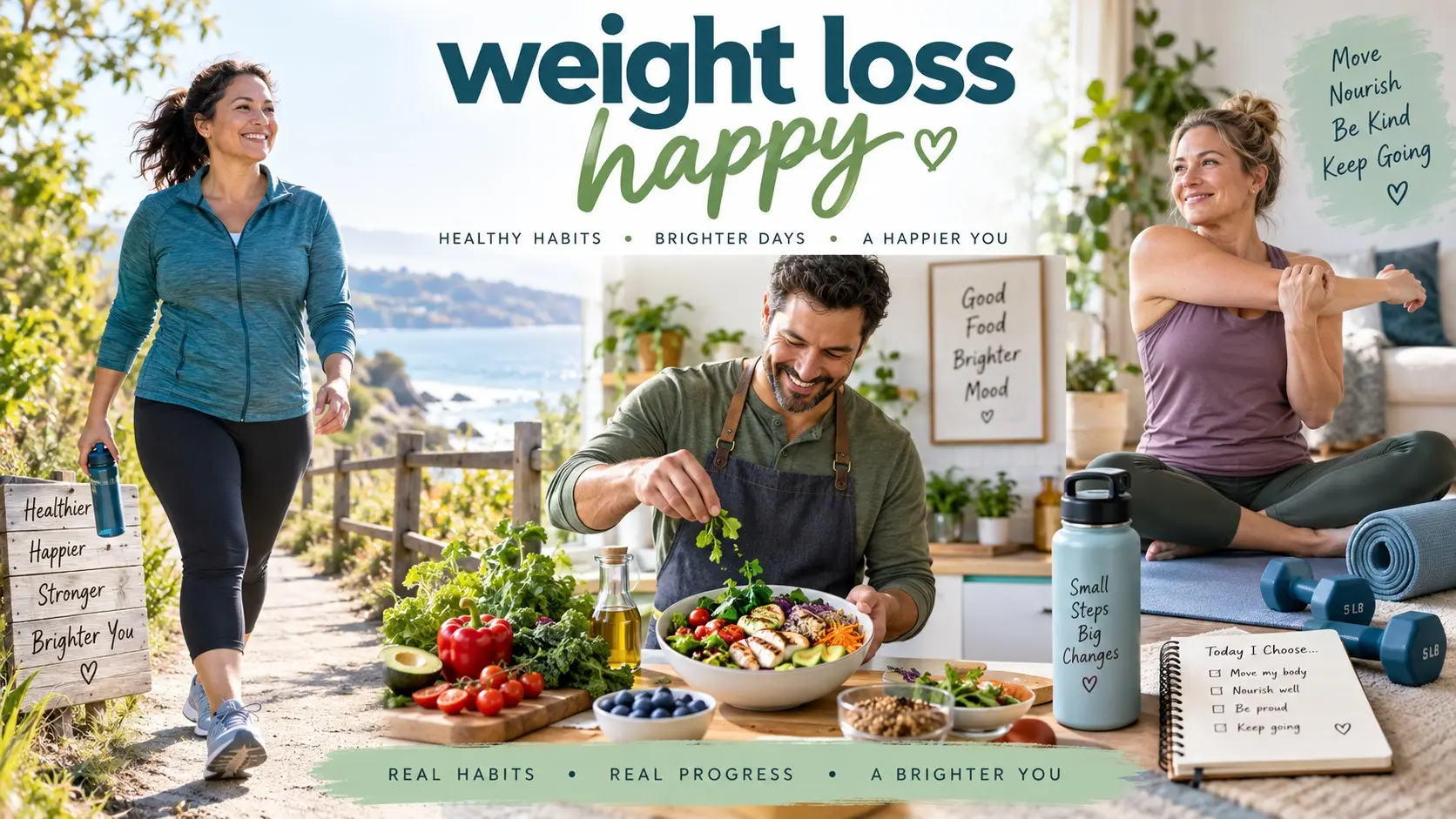
Reading Time: About 17 minutesWeight loss happy should not mean forcing yourself to become thinner so you can finally enjoy life.
Happiness is bigger than a number on a scale.
Your body weight does not measure your worth.
It does not measure your friendships.
It does not measure your character.
And it does not decide whether you deserve confidence or joy.
For some people, losing excess weight can improve health.
It may improve blood pressure.
It may improve blood sugar.
It may make movement easier.
It may improve some parts of quality of life.
But weight loss does not guarantee happiness.
A healthier approach is to build habits that support both your body and your mind.
Eat nourishing food.
Move in ways you enjoy.
Sleep.
Manage stress.
Ask for support.
Use realistic goals.
Then let weight change be one part of a bigger health plan.
I have maintained a personal interest in health, fitness, nutrition, weight management, sleep, wellness, and healthy aging for more than 30 years.
One lesson matters more than almost any diet rule.
If a plan makes everyday life miserable, it is very hard to keep.
This guide gives you nine practical ways to pursue healthy weight loss while protecting your wellbeing.
For a broader overview, visit the NextFitLife Weight Loss and Metabolism Hub.
Quick Answer: Can you lose weight and Still Enjoy Life?
Yes.
You do not need to hate your diet.
You do not need to exercise until you are exhausted.
You do not need to avoid every favourite food.
You do not need to feel guilty after one imperfect meal.
A healthier weight management plan can include:
- Realistic goals
- Nutritious food
- Favourite foods in reasonable amounts
- Regular movement
- Strength activity
- Enough sleep
- Stress care
- Support from other people
- A plan for setbacks
The aim is progress.
Not punishment.
What Does Weight Loss Happy Really Mean?
For this guide, weight loss happy means working toward better health without making your happiness depend on becoming a certain size.
It means caring about:
- Your health
- Your energy
- Your mobility
- Your strength
- Your sleep
- Your mood
- Your relationships
- Your daily habits
- Your ability to enjoy life
Weight can be one health measure.
It is not the only one.
9 Uplifting Habits for Healthier Weight Loss
1. Choose a health reason, not a shame reason
Start with your reason.
Why do you want to lose weight?
A helpful reason may be:
- I want to move more easily.
- I want to improve my blood pressure.
- I want more stamina.
- I want to reduce my risk of type 2 diabetes.
- I want to feel stronger.
- I want to stay active as I get older.
A shame-based reason sounds different.
It may sound like:
“I hate my body.”
“I cannot be happy until I am thin.”
“I failed because I gained weight.”
Those thoughts can make the process feel like punishment.
CDC guidance recommends understanding your personal “why” before starting.
A health based goal can give weight loss motivation a more useful direction.
2. Set Goals You Can Actually Reach
Extreme goals create pressure.
Realistic goals create direction.
The CDC recommends specific goals.
For example:
Instead of “I will exercise more,” say:
“I will walk for 15 minutes three times this week.”
NIDDK also recommends realistic weight goals.
Many structured programs begin with an initial target of about 5% to 10% of starting weight over about six months.
This is a general example.
Your personal goal can be different.
Good realistic weight loss goals may include:
- Walk three times this week
- Cook dinner at home four times
- Drink water instead of soda with lunch
- Do two strength sessions
- Go to bed at a regular time
These are actions you can control.
3. Eat Healthy Food You Actually Like
Healthy eating should not feel like a punishment menu.
You do not need to live on plain chicken and lettuce.
A balanced eating pattern can include:
- Vegetables
- Fruit
- Beans
- Lentils
- Whole grains
- Fish
- Eggs
- Poultry
- Plain yogurt
- Tofu
- Nuts
- Seeds
- Healthy plant oils
Use flavours you enjoy.
Add herbs.
Add spices.
Use different textures.
Cook foods from your culture.
A healthy diet does not need to look identical in every country or every home.
For practical ideas, read Nutrition Tips for Improving Your Health.
4. Stop Calling Foods Good or Bad
Food is food.
Some foods provide more nutrition.
Some foods contain more calories, added sugar, sodium, or saturated fat.
That does not make you a bad person for eating them.
One piece of cake does not destroy your health.
One salad does not create perfect health.
Your pattern matters more.
A flexible approach may make sustainable weight loss easier than a plan with endless forbidden foods.
You can enjoy:
- A birthday meal
- A restaurant dinner
- A dessert
- A holiday meal
- A favourite family recipe
Then return to your normal healthy pattern.
5. Choose Movement You Enjoy
Exercise should not be punishment for eating.
Physical activity supports health even when the scale changes slowly.
You might enjoy:
- Walking
- Cycling
- Swimming
- Dancing
- Strength training
- Yoga
- Hiking
- Gardening
- Sports
The CDC notes that activities you enjoy and can fit into your life are easier to continue.
That matters.
The most advanced workout is useless if you stop after one week.
Visit the NextFitLife Fitness Hub for more exercise ideas.
6. Protect Your Sleep
Sleep is part of health.
It is also part of self care.
NIH guidance says most adults need about 7 to 9 hours of sleep each night.
Try to:
- Use a regular bedtime
- Wake at a similar time
- Keep the bedroom dark
- Reduce bright light before bed
- Give yourself enough time to sleep
Poor sleep can make healthy routines harder.
You may feel too tired to cook.
You may move less.
You may find it harder to manage stress.
If you have long-lasting insomnia, severe daytime sleepiness, or loud snoring with gasping, talk with a healthcare professional.
7. Use Support Instead of Doing Everything Alone
Social support can make a health plan feel less lonely.
The CDC recommends finding family, friends, coworkers, or professionals who support your goals.
Support can look like:
- Walking with a friend
- Cooking with your partner
- Joining an exercise class
- Meeting with a registered dietitian
- Talking with your doctor
- Joining a structured weight management program
Good support should help.
It should not shame you.
Avoid people or programs that make you feel worthless because of your body size.
8. Track Progress Beyond the Scale
The scale can give useful information.
But it does not show everything.
Track other signs too.
You may notice:
- Walking feels easier
- Your strength improves
- Your blood pressure improves
- Your clothes fit differently
- You sleep better
- You cook more often
- You feel more confident exercising
- You keep your habits during busy weeks
This creates a broader positive mindset around progress.
If you use the scale, look at trends.
Daily weight can change because of water, salt, food, hormones, and bowel movements.
Read Weight Loss Tracking for a more complete approach.
9. Plan for Imperfect Days
Every healthy lifestyle has imperfect days.
You may miss a workout.
You may eat more than planned.
You may travel.
You may have a stressful week.
This is normal.
CDC guidance says setbacks are expected.
The goal is to return to your plan.
Do not wait for Monday.
Do not punish yourself.
Do not starve the next day.
Use the next normal meal.
Take the next walk.
Use the next bedtime.
This is how healthy habits become part of real life.
Weight Loss and Happiness: What Is the Real Connection?
Weight loss may improve some aspects of health and daily life for people who are overweight or obese.
But losing weight does not automatically create happiness.
Happiness is affected by many parts of life.
These can include:
- Relationships
- Mental health
- Sleep
- Work
- Financial stress
- Social connection
- Physical health
- Meaning and purpose
This matters because weight loss should not become the condition you place on your own happiness.
You can work on health while still enjoying your life now.
Can Modest Weight Loss Improve Health?
Yes, for some people who have excess weight.
The CDC notes that even modest weight loss can improve:
- Blood pressure
- Blood cholesterol
- Blood sugar
A 5% reduction can be meaningful.
If someone weighs 200 pounds, 5% is 10 pounds.
You do not need to reach an imagined perfect weight before health benefits can begin.
What Is a Healthy Rate of Weight Loss?
The CDC says people who lose weight gradually, at about 1 to 2 pounds each week, are more likely to keep it off than people who lose weight faster.
This is a general range.
Your own rate can differ.
Weight change depends on:
- Starting weight
- Food intake
- Activity
- Age
- Health conditions
- Medicines
- Hormones
- Water changes
For more detail, read Healthy Rate of Weight Loss.
How to Build a Weight Loss Plan You Can Enjoy
| Part of Your Plan | Stressful Version | Healthier Version |
|---|---|---|
| Goals | Lose a huge amount as fast as possible | Use small realistic goals |
| Food | Ban every favourite food | Build nutritious meals and allow flexibility |
| Exercise | Do workouts you hate | Choose movement you can enjoy and repeat |
| Tracking | Judge yourself by every scale change | Track weight trends plus health and fitness progress |
| Mistakes | Give up after one difficult day | Return to the plan at the next opportunity |
| Support | Try to do everything alone | Use supportive people and qualified professionals |
| Maintenance | Return to old habits after reaching the goal | Keep the habits that support your health |
A Simple Happy Weight Management Day
This is only an example.
It is not a personal diet prescription.
| Time | Simple Habit | Purpose |
|---|---|---|
| Morning | Eat a balanced breakfast if hungry, or start with water and your normal routine | Begin the day without rigid food rules |
| Midday | Eat vegetables, a suitable protein food, and a balanced meal | Support nutrition and fullness |
| Afternoon | Take a 10 to 20 minute walk | Add movement and a mental break |
| Evening | Eat a normal balanced dinner | Support a repeatable eating pattern |
| Later Evening | Reduce bright screens and prepare for sleep | Support quality sleep |
Does Exercise Improve Mental Wellbeing?
Physical activity can support mental wellbeing.
CDC guidance describes physical activity as one of the best things people can do for health.
Movement can also support social interaction when you walk, train, or play sports with others.
Exercise is not a treatment for every emotional or mental health problem.
It does not replace therapy, medicine, or professional mental health care when those are needed.
For more, read Physical Fitness and Mental Health.
Should You Reward Yourself During Weight Loss?
Yes, if the reward supports your well-being.
The CDC suggests recognizing progress and using rewards that are not based on food.
Examples include:
- New walking shoes
- A book
- A relaxing bath
- A day trip
- Flowers
- A fitness class
- Time doing a hobby
You do not need to earn food.
Food is not a prize.
And exercise is not punishment.
How to Stay Motivated When the Scale Stops Moving
Weight loss rarely follows a perfect straight line.
When progress slows, review the plan.
Ask:
- Are my portions still suitable?
- Am I drinking more calories?
- Has my activity changed?
- Am I sleeping well?
- Have my weekends changed?
- Did a medicine change?
- Could water weight be hiding progress?
Then look at non-scale progress too.
You may still be stronger.
You may still be walking farther.
Your waist may change even when scale weight pauses.
Your blood pressure may improve.
Do not respond to a plateau by starving yourself.
Can You Enjoy Restaurants While Losing Weight?
Yes.
A healthy lifestyle must survive real life.
At restaurants, you can:
- Choose a meal with vegetables
- Choose a useful protein food
- Share a large dessert
- Stop when comfortably full
- Choose water or another low-sugar drink
- Enjoy the meal without guilt
You do not need to order the lowest calorie meal every time.
The full pattern matters.
Can You Enjoy Holidays and Special Events?
Yes.
One holiday meal does not determine your long-term health.
Enjoy the event.
Eat foods you value.
Spend time with people you care about.
Then return to your normal habits.
This is part of sustainable weight loss.
What If Tracking Calories Makes You Miserable?
You do not have to count calories forever.
Some people find tracking useful.
Others find it stressful.
Alternatives include:
- Portion awareness
- Meal planning
- Regular meal patterns
- More vegetables
- More whole foods
- Reducing sugary drinks
- Tracking habits instead of calories
The method should support your health.
It should not make food dominate every thought.
Body Image During Weight Loss
You do not need to hate your current body to improve your health.
Your body is doing many things for you now.
It carries you.
It breathes.
It moves.
It adapts.
You can want change and still practice respect for your current body.
This can be part of a healthier positive mindset.
Watch for Signs Your Weight Loss Plan Is Becoming Unhealthy
Weight loss should not take over your life.
Get professional help if you develop concerns such as:
- Extreme food restriction
- Fear of eating normal meals
- Repeated binge eating
- Purging
- Compulsive exercise
- Severe anxiety around food
- Constant body checking
- Avoiding social events because food is present
- Feeling worthless because of your weight
Eating disorders and serious body image problems require qualified professional care.
When Should You Ask a Healthcare Professional for Weight Loss Help?
Professional help may be useful if:
- You have diabetes
- You have heart disease
- You have kidney disease
- You have liver disease
- You take medicines that affect weight
- You have an eating disorder history
- You have severe obesity
- You repeatedly lose and regain large amounts of weight
- You are considering prescription weight treatment
- You are considering metabolic surgery
- You are pregnant
- You are breastfeeding
Weight management can include lifestyle care, registered dietitian support, structured programs, prescription treatment, and metabolic surgery when appropriate.
Read Weight Loss Options for a wider overview.
Weight Loss Happy Versus Punishing Weight Loss
| Weight Loss Happy Approach | Punishing Approach |
|---|---|
| Uses realistic goals | Demands fast results |
| Supports health | Focuses only on appearance |
| Includes enjoyable foods | Creates a long forbidden food list |
| Uses movement you can repeat | Uses exercise as punishment |
| Allows imperfect days | Treats one mistake as failure |
| Tracks many forms of progress | Judges progress only by the scale |
| Protects sleep and wellbeing | Ignores recovery |
| Uses support | Creates shame and isolation |
How to Maintain Weight Loss Without Losing Your Happiness
Weight maintenance starts before you reach your target.
NIDDK recommends keeping the lifestyle habits that helped you lose weight.
Useful habits may include:
- Regular physical activity
- Balanced meals
- Suitable portions
- Weekly weight monitoring when helpful
- Ongoing support
- Planning for high-risk situations
Maintenance should not feel like an endless temporary diet.
The goal is a lifestyle you can live with.
For more guidance, read Successful Weight Loss.
Conclusion: Let Weight Loss Happy Mean Better Health and Better Living
Weight loss happy should not mean waiting to be happy until the scale shows a certain number.
It should mean building better health without giving up your wellbeing.
Set realistic goals.
Eat foods you enjoy.
Move in ways you can repeat.
Sleep.
Ask for support.
Track progress beyond the scale.
Expect imperfect days.
And remember that your value does not rise or fall with your body weight.
Your next step: choose one habit from this guide that would make your weight management plan healthier and easier to live with.
Start there today.
References and Sources
- Centers for Disease Control and Prevention, Steps for Losing Weight. CDC guidance on gradual weight loss, realistic goals, nutrition, physical activity, sleep, stress, social support, setbacks, and progress monitoring.CDC Steps for Losing Weight
- National Institute of Diabetes and Digestive and Kidney Diseases, Choosing a Safe and Successful Weight Loss Program. NIDDK guidance on realistic goals, reduced-calorie eating plans, physical activity, behaviour support, monitoring, social support, and long-term maintenance.NIDDK Safe Weight Loss Program Guidance
- National Institute of Diabetes and Digestive and Kidney Diseases, Eating and Physical Activity to Lose or Maintain Weight. Open NIH guidance on healthy eating, activity, weight management, and maintaining weight changes.NIDDK Eating and Physical Activity Guidance
- Centers for Disease Control and Prevention, About Physical Activity. CDC guidance explaining that physical activity supports health, healthy aging, chronic disease prevention, and physical function.CDC Physical Activity Guidance
- National Heart, Lung, and Blood Institute, How Much Sleep Is Enough?NIH guidance states that most adults need about 7 to 9 hours of sleep each night.NIH Sleep Guidance
Explore More NextFitLife Weight Management Guides
- Weight Loss and Metabolism Hub
- Successful Weight Loss
- Weight Loss Options
- Natural Weight Loss
- Healthy Rate of Weight Loss
- Weight Loss Goals
- Weight Loss Tracking
- Weight Loss Breakfast Options
- Best Exercises for Weight Loss
- Physical Fitness and Mental Health
- Fitness Lifestyle Tips
- NextFitLife Fitness Hub
About the Author
Adel Galal is the founder and lead writer of NextFitLife.com.
Adel has maintained a personal interest in health, fitness, nutrition, weight management, sleep, wellness, and healthy aging for more than 30 years.
His health and wellness writing and research communication experience spans more than 15 years.
At NextFitLife, Adel researches health, fitness, food, nutrition, and weight management topics.
He compares reputable public health and scientific sources.
He separates established guidance from exaggerated claims.
He looks for safety concerns and important limits in the evidence.
He then explains the information in practical language for everyday readers.
His weight management work focuses on realistic goals, food quality, physical activity, sleep, behaviour, progress tracking, maintenance, and evidence-based treatment choices.
Before focusing on NextFitLife, Adel spent 29 years working as an IT Manager for the Nestlé Egypt Region.
That career involved data analysis, planning, structured review, information management, systems thinking, and problem-solving.
These are transferable research and communication skills.
They are not medical credentials.
Adel is not a physician, registered dietitian, pharmacist, psychologist, physiotherapist, certified personal trainer, dermatologist, or other licensed healthcare professional.
I am not a dermatologist or A doctor, and this content does not replace professional medical advice. What I share comes from real-life experience, extensive research, and consultation with healthcare providers. Always consult qualified medical professionals for diagnosis and treatment of any health condition.
Learn more about Adel Galal, NextFitLife, source checking, medical review, corrections, and editorial standards on the About Us page.
Frequently Asked Questions About Weight Loss Happy
What does weight loss happy mean?
Weight loss happy means working toward better health without making happiness depend on a number on the scale. It focuses on realistic goals, healthy habits, enjoyable movement, sleep, support, and wellbeing.
Will losing weight make me happier?
Not automatically. Weight loss may improve some health measures and daily function for people with excess weight, but happiness depends on many parts of life, including mental health, relationships, sleep, stress, and social connection.
How can I lose weight without feeling miserable?
Choose foods you enjoy, use realistic portions, move in ways you like, avoid extreme restrictions, sleep enough, use social support, and allow room for imperfect days.
What is a healthy weight loss goal?
NIDDK says many structured programs begin with an initial goal of losing about 5% to 10% of starting weight over about six months. Individual goals should fit your health and needs.
How fast should healthy weight loss happen?
The CDC says gradual weight loss of about 1 to 2 pounds per week is more likely to stay off than faster weight loss. Individual results vary.
Can I eat foods I enjoy while losing weight?
Yes. A sustainable eating pattern can include favourite foods in suitable portions. Your full eating pattern matters more than one meal or one food.
Should I weigh myself every day?
You do not have to. Some people find regular weighing helpful, while others find it stressful. NIDDK programs often use weekly weight monitoring along with tracking of eating, activity, and sleep.
Does exercise help happiness during weight loss?
Physical activity supports physical health and can support mood and well-being. Exercise does not guarantee happiness and does not replace professional mental health treatment when treatment is needed.
What should I do after a bad eating day?
Return to your normal healthy routine at the next meal. Do not punish yourself with starvation or extreme exercise. One difficult day does not erase long-term progress.
How can social support help with weight loss?
Supportive family, friends, groups, registered dietitians, and healthcare professionals can help with accountability, problem-solving, encouragement, and long-term habits.
Can modest weight loss improve health?
Yes. CDC guidance notes that even modest weight loss can improve blood pressure, cholesterol, and blood sugar in people who have excess weight.
When should I get professional help with weight loss?
Professional help is important if you have medical conditions, an eating disorder history, take medicines that affect weight, are pregnant, are breastfeeding, or are considering weight management medicines or metabolic surgery.

Health & wellness writer with 30+ years of experience in nutrition, fitness, and healthy aging. Founder of NextFitLife.com — evidence-based health guidance.