Last updated: July 28, 2026
Written and source checked by: Adel Galal
Medical review status: This article has not been medically reviewed by a clinician.
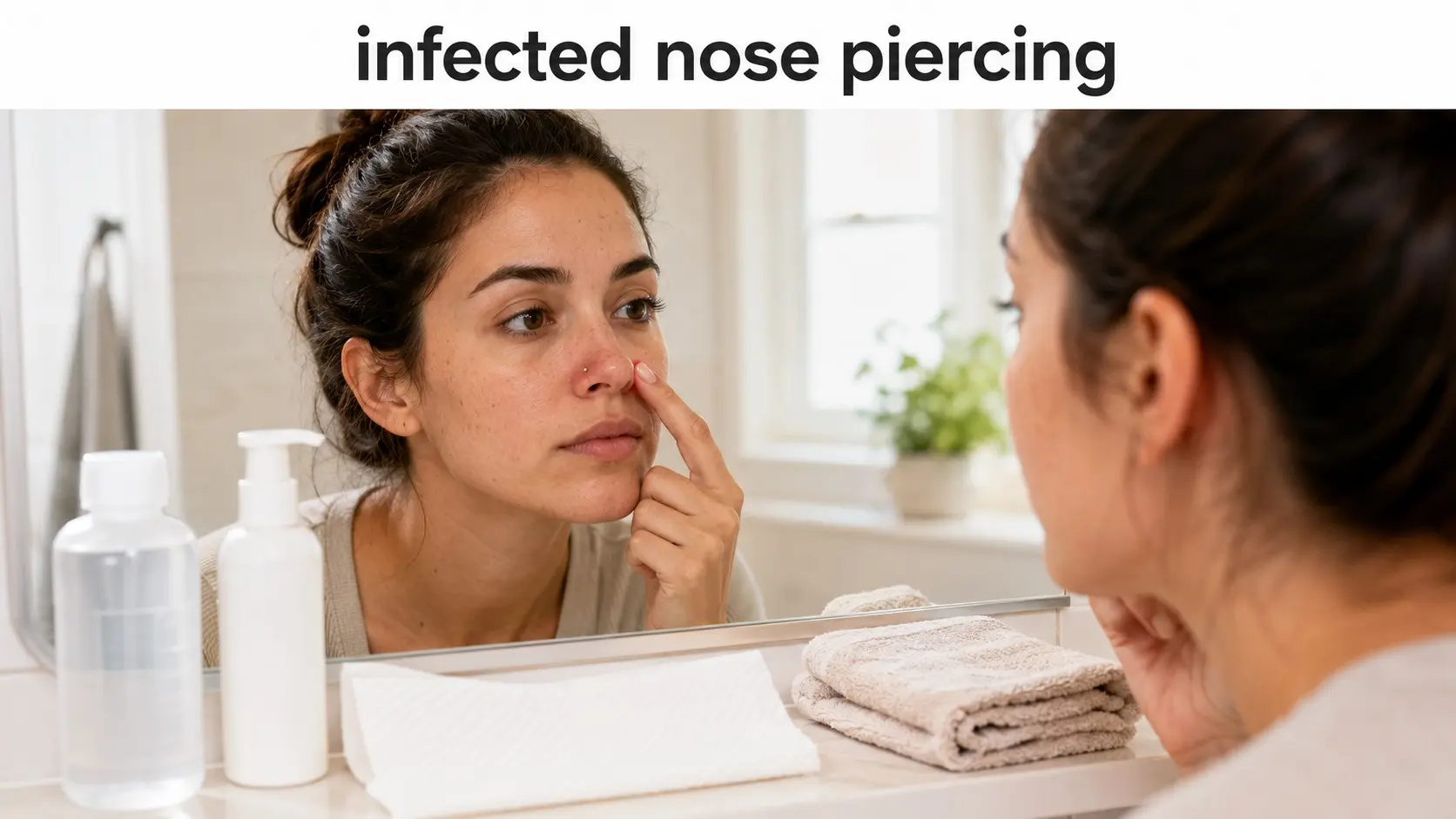
A fresh nose piercing may feel tender or look a little red. This can be part of normal healing. But pain that gets worse, hot skin, pus, or spreading redness may point to an infected nose piercing.
Do not squeeze the area. Do not pour alcohol or hydrogen peroxide on it. Leave the jewelry in unless a qualified healthcare professional tells you to remove it.
For more guidance on safe skin care, visit our Skincare Basics and Routines Guide. A infection should still be assessed through an appropriate healthcare service.
Get urgent medical advice if you think the piercing is infected. Seek emergency help for trouble breathing, trouble swallowing, severe facial swelling, eye swelling, confusion, fainting, or a fast-spreading reaction.
Quick Answer
Wash your hands before touching the piercing. Clean it gently. Leave the jewelry in unless a clinician tells you otherwise. Avoid harsh products. Get medical advice if pain, heat, swelling, pus, or redness is getting worse.
What Can Be Normal After a Nose Piercing?
A new piercing is a small wound. Mild symptoms can happen during early nose piercing healing.
You may notice:
- Mild tenderness
- A little swelling
- Light itching
- Slight redness or a darker area around the hole
- A small amount of pale fluid
- A thin crust around the jewelry
These signs should slowly improve. They should not become hotter, more painful, or more swollen.
Skin colour changes can look different across skin tones. Compare the area with your normal skin and look for heat, pain, swelling, and changes over time.
Signs of an Infected Nose Piercing
Possible infected piercing symptoms include:
- Pain that is getting worse
- Swelling that keeps growing
- Skin that feels hot
- Redness or dark discoloration that spreads
- Thick white, yellow, or green discharge
- A bad smell from the area
- Bleeding that keeps returning
- A painful lump filled with fluid
- Fever or chills
- Feeling weak or unwell
A spreading skin infection is called cellulitis. It needs prompt medical treatment.
Contact a healthcare professional promptly if you think you have a nose piercing infection. Antibiotics may be needed.
What Can Cause a Nose Piercing Infection?
Touching the Piercing
Hands can carry germs. Touching, twisting, or playing with the jewelry can move germs into the healing wound.
Unsafe Piercing Equipment
Poor hygiene or equipment that has not been sterilized correctly can raise the risk of infection. Choose a trained piercer who uses a fresh sterile needle.
Too Much or Too Little Cleaning
Dirt and crust may collect when the piercing is not cleaned. Cleaning too often or scrubbing hard can also damage healing skin.
Harsh Products
Alcohol, hydrogen peroxide, iodine, strong soaps, and undiluted essential oils may irritate the area and slow healing.
Our Skincare Basics Guide explains why gentle products are often safer for irritated or healing skin.
Makeup and Skin Products
Foundation, powder, moisturizer, sunscreen, and hair products can enter the piercing hole. Keep them away from the area while it heals.
Trauma
Towels, masks, glasses, pillows, clothing, and fingernails can catch the jewelry. A pull or hit can reopen the wound.
Water Exposure
Pools, hot tubs, lakes, rivers, and seawater can expose a healing piercing to germs.
Jewelry Problems
Jewelry that is too tight can press into swollen skin. Some metals may cause an allergic reaction, especially when they contain nickel.
Is It Infection, Irritation, Allergy, or a Piercing Bump?
Not every red area is infected. The right response depends on the cause.
| Possible problem | Common signs | What to do |
|---|---|---|
| Infection | Heat, worsening pain, growing swelling, pus, spreading redness, or fever | Seek medical advice promptly |
| Irritation | Mild redness, dryness, tenderness, or crust after rubbing or snagging | Remove the source of irritation and use gentle care |
| Metal allergy | Itching, rash, dry skin, or repeated irritation around the jewelry | Ask a clinician or skilled piercer about suitable jewelry |
| Piercing bump | A small raised lump without fever or spreading redness | Do not squeeze it. Seek advice if it grows or persists |
| Keloid or raised scar | A firm scar that grows beyond the original wound | Ask a dermatologist or qualified clinician for assessment |
A painful piercing bump that contains pus may be an abscess. Do not pop or drain it at home.
What to Do if the Piercing May Be Infected
1. Wash Your Hands
Use soap and clean water. Dry your hands before touching the piercing.
2. Leave the Jewelry In
Keep the jewelry in place unless a doctor or another qualified clinician tells you to remove it.
The hole may start to close after removal. A clinician may decide that the jewelry should be removed or changed if it is trapped, too tight, or damaging the skin.
3. Clean the Area Gently
Use a sterile wound wash saline solution or a mild fragrance-free cleanser with clean water.
Rinse away cleanser. Pat the area dry with a clean disposable paper towel. Do not scrub the skin.
4. Use a Clean Warm Compress
Place a clean, warm damp cloth over the area for about 10 to 15 minutes. It should feel warm, not hot.
A warm compress may ease discomfort. It does not replace medical treatment.
5. Stop Turning the Jewelry
Do not twist or rotate the jewelry. Extra movement can tear healing tissue.
6. Keep Makeup Away
Do not place makeup, cream, sunscreen, or other cosmetic products over the piercing.
7. Avoid Swimming
Stay out of pools, hot tubs, lakes, and rivers while the piercing is healing or infected.
8. Ask for Medical Advice
A suspected infection may need prescription treatment. Visit the NextFitLife Health Hub for general guidance on recognizing symptoms, but use a local healthcare service for diagnosis and treatment.
What Should You Avoid Putting on the Piercing?
Avoid the following products unless a qualified clinician has told you to use them:
- Rubbing alcohol
- Hydrogen peroxide
- Iodine
- Strong antibacterial soap
- Tea tree oil
- Other essential oils
- Toothpaste
- Lemon juice
- Apple cider vinegar
- Baking soda
- Homemade salt mixtures that are too strong
- Makeup
These products may burn, dry, or irritate healing skin. Safe piercing aftercare should be gentle.
When Should You See a Doctor?
Contact a healthcare professional promptly if:
- You think the piercing is infected
- Pain or swelling is getting worse
- The skin feels hot
- Pus is coming from the hole
- Redness or discoloration is spreading
- The jewelry is sinking into the skin
- The jewelry feels too tight
- A lump is growing
- Symptoms are not improving
- You have diabetes
- You have a weakened immune system
- You take medicine that lowers immune function
Seek urgent medical care for fever with worsening symptoms, severe pain, rapidly spreading redness, facial swelling, eye swelling, red streaks, trouble breathing, trouble swallowing, confusion, or fainting.
How Is an Infected Piercing Treated?
A clinician may check the skin, swelling, jewelry, and discharge. They may ask when the piercing was done and how it has been cleaned.
Treatment may include:
- Prescription antibiotic cream or ointment
- Antibiotic tablets
- Professional drainage of an abscess
- Changing or removing trapped jewelry
- Treatment for an allergy or raised scar
- Reviewing your tetanus vaccination history
Do not use old antibiotics. Do not share medicine. Do not try to drain an abscess yourself.
How Long Does a Nose Piercing Take to Heal?
Healing time is different for each person. The piercing location, jewelry, health, aftercare, and repeated trauma all matter.
The outside may look healed before the inside is strong. Do not change the starter jewelry too early.
An infection has no fixed recovery time. Symptoms should begin to improve after effective treatment. Return to the clinician if symptoms stay the same, become worse, or return.
How Can You Prevent Another Infection?
Choose a Skilled Piercer
Use a trained professional. The studio should be clean. The piercer should wash their hands and wear new gloves.
Ask About Sterile Equipment
The piercer should use a fresh sterile needle. Reusable equipment should be sterilized correctly.
Choose Suitable Jewelry
Ask for well-fitting jewelry made from a material with a low allergy risk. Implant-grade titanium is one commonly used option.
Follow the Aftercare Plan
Use gentle nose piercing care. Clean the area as directed without scrubbing or cleaning it all day.
Keep Your Hands Away
Touch the piercing only when needed. Wash your hands first.
Avoid Trauma
Be careful with towels, masks, clothing, pillows, glasses, and face products.
Review Tetanus Protection
A piercing creates a puncture wound. Ask a healthcare professional whether your tetanus vaccination is current if you are unsure.
Common Nose Piercing Care Mistakes
- Removing jewelry as soon as redness appears
- Squeezing a lump or trying to drain it
- Using alcohol or hydrogen peroxide every day
- Applying undiluted essential oils
- Turning the jewelry repeatedly
- Changing jewelry before healing is complete
- Swimming during early healing
- Covering symptoms with makeup
- Waiting too long when redness is spreading
- Using leftover antibiotics
Five High Authority References and Sources
NHS: Infected Piercings
Open guidance covering infection signs, medical care, antibiotics, and leaving jewelry in unless a doctor advises removal.
American Academy of Dermatology: Caring for New Piercings
Dermatologist guidance on hand hygiene, gentle cleansing, and avoiding products that damage healing skin.
Mayo Clinic: Piercings and Complication Prevention
Guidance on piercing infection, allergic reactions, keloids, sterile equipment, and safe studios.
Mayo Clinic: Puncture Wound First Aid
Information about increasing pain, pus, swelling, fever, spreading redness, and when to seek medical help.
CDC: Wound Management to Prevent Tetanus
Current clinical guidance on wound cleaning and reviewing tetanus vaccination needs.
Conclusion
An infected nose piercing needs gentle care and close attention. Do not squeeze it or use harsh home remedies. Leave the jewelry in unless a clinician tells you otherwise.
Call to action: Check the piercing now. If pain, heat, pus, swelling, or redness is getting worse, contact a qualified healthcare professional today.
Related NextFitLife Guides and Hubs
About the Author
Medical Disclaimer
This article provides general educational information. It does not diagnose an infection or replace medical examination, diagnosis, prescriptions, or treatment.
Contact a qualified healthcare professional if you think a piercing is infected. Seek urgent care for rapidly spreading redness, severe pain, fever, facial swelling, eye swelling, trouble breathing, trouble swallowing, fainting, confusion, or another rapidly worsening symptom.
Frequently Asked Questions
Should I remove an infected nose piercing?
Leave the jewelry in unless a qualified healthcare professional tells you to remove it. Get medical help if it is trapped, too tight, or sinking into the skin.
Can I treat an infected nose piercing at home?
Gentle cleaning and a warm compress may help mild irritation. A suspected infection should be assessed by a healthcare professional because prescription treatment may be needed.
What does normal piercing discharge look like?
A small amount of pale fluid that forms a light crust can be normal. Thick white, yellow, or green pus, bad smell, worsening pain, or spreading redness may suggest infection.
Can I use tea tree oil on a nose piercing?
It is safer to avoid tea tree oil and other essential oils. They can irritate healing skin and do not replace medical treatment.
Can I use alcohol or hydrogen peroxide?
No. These products can damage healing skin. Use gentle cleaning with a suitable saline wound wash or mild fragrance free cleanser and water.
Is a nose piercing bump always infected?
No. A bump may result from irritation, allergy, trapped fluid, or scar tissue. Do not squeeze it. Seek advice if it grows, hurts, drains pus, or does not improve.
When should I seek urgent help?
Seek urgent care for fever with worsening symptoms, fast-spreading redness, severe pain, facial or eye swelling, trouble breathing, trouble swallowing, confusion, or fainting.
Can a nose piercing infection spread?
Yes. An untreated infection can spread into nearby skin and tissue. Prompt medical assessment is important when symptoms are worsening.

Health & wellness writer with 30+ years of experience in nutrition, fitness, and healthy aging. Founder of NextFitLife.com — evidence-based health guidance.