✍️ By Adel Galal |
📅 Last Updated: May 13, 2026 |
🔗 Part of the Belly Fat Loss Guide
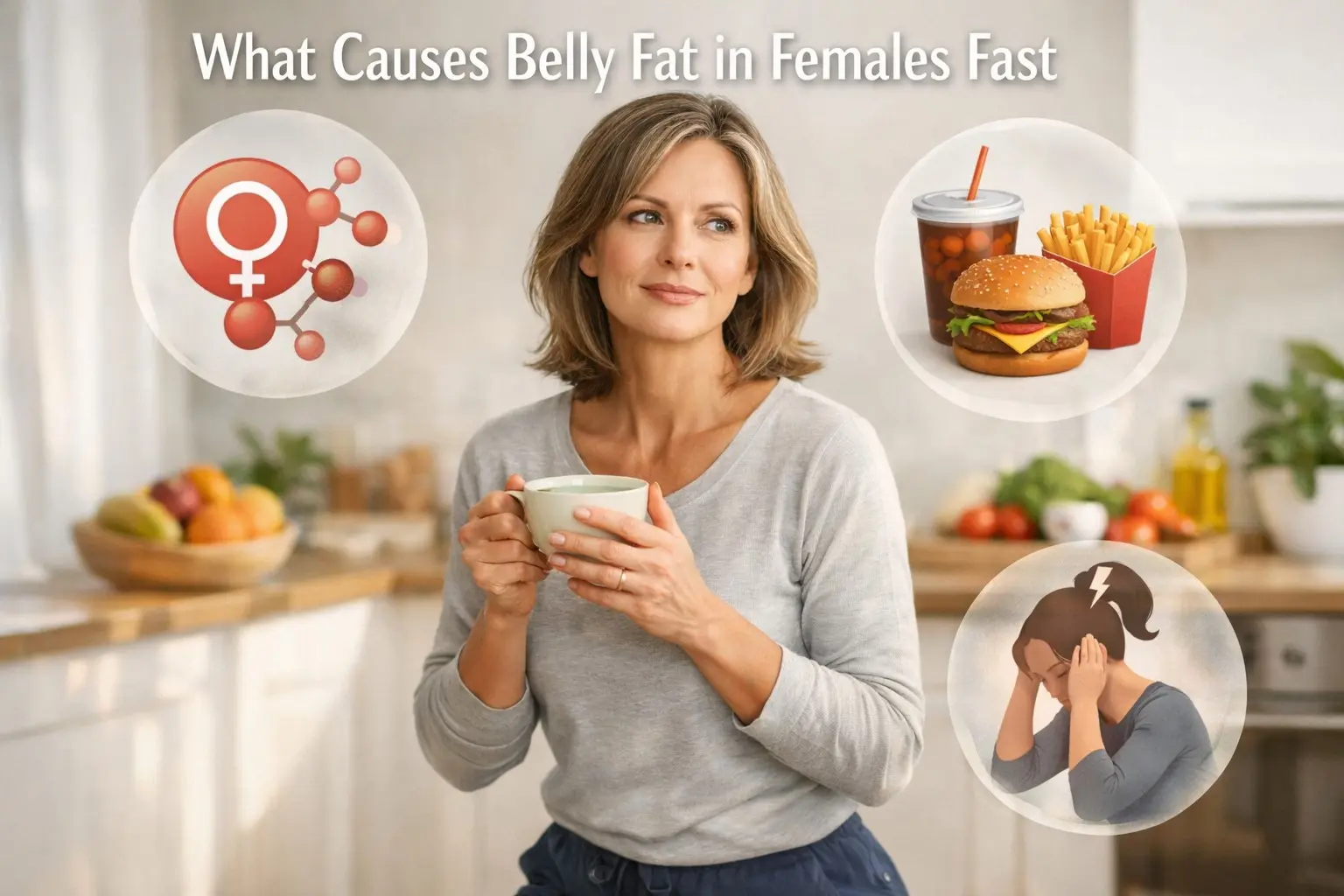
What causes belly fat in females fast is one of the most important questions any woman can ask about her health — because the answer is not simply "eating too much." Female belly fat accumulation is driven by a complex interaction of hormonal shifts, chronic stress, sleep deprivation, dietary patterns, gut microbiome disruption, and age-related metabolic changes — most of which have nothing to do with willpower or laziness. Understanding the root causes is the essential first step, because targeting the wrong cause produces zero results regardless of effort.
This guide covers every evidence-based cause of belly fat in females — from the hormonal drivers that accelerate after 40 to the daily habits that silently add visceral fat year after year — with practical, actionable fixes for each one. All information is supported by current peer-reviewed research updated through 2026.
Once you understand what is causing your belly fat specifically, see our guide to losing belly fat naturally and our home exercise programme to begin addressing it directly.
Two Types of Belly Fat — Why the Distinction Matters for Females
- Subcutaneous fat — sits just under the skin; soft and pinchable. Primarily cosmetic. Less metabolically dangerous. Responds more slowly to intervention
- Visceral fat is packed deep inside the abdomen around the liver, kidneys, and intestines. Cannot be pinched. Significantly more dangerous. Secretes inflammatory hormones directly into the bloodstream. Responds faster to dietary and lifestyle interventions
- Women naturally carry more subcutaneous fat than men, but the hormonal shifts of perimenopause and menopause trigger a dramatic increase in visceral fat, specifically, independent of overall weight gain
- Waist circumference above 88cm (35 inches) in women is the clinical threshold for elevated visceral fat health risk
⚡ Quick Navigation — What Causes Belly Fat in Females
2. Chronic Stress and Cortisol
3. Insulin Resistance
4. Sleep Deprivation
5. Added Sugar and Refined Carbs
6. Alcohol Consumption
8. Gut Microbiome Disruption
9. Sedentary Lifestyle
10. Thyroid and PCOS
11. Genetics and Age
Your Action Plan to Fix Each Cause
What Causes Belly Fat in Females Fast? The 11 Root Causes Explained by Science.
Cause 1- Hormonal Changes - The Primary Driver of Belly Fat in Females After 40
How Estrogen Decline Causes Belly Fat in Females
Estrogen is the single most important hormonal factor in female belly fat accumulation. During the reproductive years, estrogen actively directs fat storage away from the abdomen — preferentially depositing it subcutaneously at the hips, thighs, and buttocks. When estrogen declines during perimenopause (typically from age 40–45) and drops sharply through menopause, this protective mechanism disappears entirely. Fat distribution shifts directly toward the abdomen — particularly the visceral compartment — regardless of whether total body weight changes.
The Progesterone and Testosterone Factor in Female Belly Fat
Progesterone decline during perimenopause raises cortisol sensitivity — meaning the same life stressors that previously had minimal fat-storage impact now produce significantly stronger visceral fat accumulation signals. Simultaneously, declining testosterone (yes, women produce testosterone) reduces muscle mass maintenance capacity, lowering resting metabolic rate and creating a caloric surplus that deposits preferentially as abdominal fat.
Key fact: Research confirms that postmenopausal women have significantly higher visceral-to-subcutaneous fat ratios than premenopausal women at the same BMI — demonstrating that hormonal status, not just weight, determines abdominal fat distribution.
What Helps Address Hormonal Belly Fat in Females:
- Resistance training 2–3× per week — the most powerful stimulator of growth hormone and testosterone available without medication
- Phytoestrogens (flaxseed, soy, lentils) — weakly bind estrogen receptors, partially compensating for declining estrogen in fat distribution
- HRT discussion with your GP — hormone replacement therapy has strong clinical evidence for reducing menopausal visceral fat accumulation in appropriate candidates
- Reducing ultra-processed food — xenoestrogens in processed food packaging disrupts endocrine balance and worsens hormonal belly fat
Cause 2 - Chronic Stress and Cortisol - A Leading Cause of Belly Fat in Females
Why Stress Directly Causes Belly Fat in Females - The Cortisol Mechanism
Cortisol — the body's primary stress hormone — has a direct and documented relationship with visceral fat accumulation. Visceral fat cells contain significantly more cortisol receptors than any other fat depot in the body. When cortisol remains chronically elevated through work stress, relationship strain, financial pressure, or health anxiety, it sends a continuous signal to visceral fat cells to expand and store more fat. This is the physiological mechanism behind "stress belly" — a real, measurable phenomenon with clinical documentation.
The Cortisol-Eating Cycle That Multiplies Female Belly Fat
Cortisol simultaneously drives cravings for high-sugar, high-fat "comfort" foods because these foods temporarily suppress the HPA axis stress response. This creates a self-reinforcing cycle: stress raises cortisol → cortisol drives sugar cravings → sugar consumption raises insulin → insulin stores the sugar as visceral fat → visceral fat produces more cortisol. Breaking this cycle requires addressing the cortisol root cause directly, not just the dietary symptom.
Evidence-Based Methods to Reduce Cortisol-Driven Belly Fat in Females:
- 5 minutes of slow nasal breathing twice daily (4 counts in, 6 counts out) - directly activates vagal tone and reduces cortisol within minutes
- Morning sunlight exposure (10–20 minutes within 60 minutes of waking) - resets the cortisol diurnal rhythm so it peaks in the morning and falls naturally by evening
- Ashwagandha KSM-66 (300–600mg daily) demonstrated 27.9% reduction in serum cortisol in a 2019 randomized controlled trial
- Social connection and laughter — genuine positive social interaction reduces cortisol by up to 23% in controlled studies
- Magnesium glycinate (300–400mg before bed) — lowers HPA axis reactivity and improves sleep quality, addressing both cortisol causes simultaneously
Cause 3 - Insulin Resistance - The Metabolic Root of Belly Fat in Females
How Insulin Resistance Causes and Maintains Belly Fat in Females
Insulin is the master fat-storage hormone. When cells become resistant to insulin's signals - typically from years of high-sugar, high-refined-carbohydrate diets — the pancreas produces more and more insulin to compensate. These chronically elevated insulin levels signal the body to store incoming glucose as fat, preferentially in visceral adipose tissue. As visceral fat accumulates, it secretes free fatty acids and inflammatory cytokines that worsen insulin resistance further - creating a self-reinforcing cycle where belly fat causes the insulin resistance that causes more belly fat.
Signs Your Belly Fat May Be Driven by Insulin Resistance
Insulin resistance is present in an estimated 40% of normal-weight adults and is dramatically underdiagnosed. Specific patterns suggest insulin resistance as a primary belly fat driver in females:
- Belly fat accumulation despite overall normal or low body weight ("skinny fat")
- Strong carbohydrate and sugar cravings — particularly in the afternoon and evening
- Energy crashes 1–2 hours after meals
- Difficulty losing weight despite consistent calorie restriction
- Skin tags around the neck and underarms
- Fasting blood glucose above 5.5 mmol/L or HbA1c above 5.7%
How to Reverse Insulin Resistance and Address This Cause of Belly Fat in Females:
- Eliminate added sugar and liquid calories — the fastest single dietary intervention to lower insulin levels
- Replace refined carbohydrates with high-fibre equivalents — white bread → sourdough, white rice → barley, sugary cereal → oats
- 15-minute walk after every main meal — reduces post-meal blood glucose by 22–30%, directly lowering insulin demand
- Apple cider vinegar (1–2 tbsp before meals) — reduces post-meal glucose response by 19–34% in multiple controlled trials
- Resistance training — skeletal muscle is the largest glucose sink in the body; building muscle is the most powerful long-term insulin sensitizer available
Cause 4 - Sleep Deprivation - The Invisible Cause of Belly Fat in Females
How Poor Sleep Directly Causes Belly Fat in Females
Sleep deprivation is one of the most powerful and most overlooked causes of belly fat in females — and it operates through four simultaneous mechanisms. Sleeping fewer than 6 hours per night elevates cortisol, raises ghrelin (hunger hormone) by 24–28%, suppresses leptin (fullness hormone), and impairs insulin sensitivity — creating a hormonal environment that makes fat loss physiologically almost impossible regardless of dietary effort. Harvard research confirms that chronic 5-hour sleepers accumulate visceral fat significantly faster than 7–8-hour sleepers at identical caloric intake.
Why Female Sleep Disruption Causes More Belly Fat Than in Males?
Women are biologically more vulnerable to the belly fat consequences of sleep deprivation. Research from the University of Warwick found that the association between short sleep duration and abdominal obesity was stronger in women than in men, likely due to estrogen's role in modulating the sleep-cortisol relationship. Sleep disruption during perimenopause (from night sweats and hormonal fluctuations), therefore, creates a compounding effect — hormonal changes both disrupt sleep and promote belly fat, and the sleep disruption then amplifies the hormonal belly fat further.
Sleep Optimization to Stop This Cause of Belly Fat in Females:
- Target 7–9 hours every night — consistent sleep timing is more important than total hours for hormonal rhythm
- Room temperature 18–19°C — cooler sleeping temperatures improve deep sleep quality and activate brown adipose tissue
- No screens 60–90 minutes before bed — blue light suppresses melatonin and delays deep sleep onset
- No alcohol within 3 hours of sleep — alcohol fragments sleep architecture and raises overnight cortisol despite its initial sedative effect
- Consistent wake time 7 days a week — the single strongest circadian rhythm anchor that improves cortisol diurnal pattern
Cause 5 - Added Sugar and Refined Carbohydrates - The Dietary Cause of Belly Fat in Females
Why Sugar Specifically Causes Belly Fat in Females
Added sugar — particularly fructose — is processed exclusively by the liver, where excess amounts are converted directly to fat through de novo lipogenesis. This liver fat deposits primarily in the visceral compartment. Liquid sugar (sodas, juices, energy drinks, sweetened coffees) is the most dangerous form because it delivers fructose rapidly without triggering satiety hormones — meaning the calories are consumed without producing any fullness signal. Harvard Medical School identifies fructose-sweetened beverages as the primary dietary driver of visceral fat accumulation in women.
How Refined Carbohydrates Cause Belly Fat in Females Through Insulin Spikes
Refined carbohydrates (white bread, white rice, pasta, crackers, most breakfast cereals) are stripped of the fibre that slows glucose absorption. They enter the bloodstream rapidly, producing sharp insulin spikes multiple times per day. Each insulin spike signals visceral fat cells to store incoming glucose. Over months and years of frequent refined carbohydrate consumption, this produces progressive visceral fat accumulation even in the absence of overall caloric excess.
Dietary Changes That Address This Cause of Belly Fat in Females:
- Eliminate all sugary drinks immediately — sodas, juices, energy drinks, sweetened teas and coffees. Replace with water, sparkling water, green tea, or black coffee
- Swap refined carbohydrates for high-fibre alternatives — oats, barley, quinoa, sweet potato, lentils, beans
- Read labels — added sugar hides in sauces, dressings, yogurts, bread, and condiments under 56+ different names
- Eat carbohydrates with protein and fat — pairing carbohydrates with protein and fat slows glucose absorption and flattens insulin response by 35–50%
Cause 6 - Alcohol - The Overlooked Cause of Belly Fat in Females
How Alcohol Specifically Causes Belly Fat in Females
Alcohol causes belly fat in females through multiple simultaneous mechanisms. The liver prioritizes metabolizing alcohol over all other functions — meaning dietary fat consumed alongside alcohol is almost entirely stored as visceral fat rather than burned. Alcohol also suppresses fat oxidation by up to 73% for several hours post-consumption, elevates cortisol, fragments sleep architecture, and stimulates appetite for high-calorie foods. At 7 calories per gram, alcohol is the second most calorie-dense substance after fat, with the calories depositing almost exclusively in the abdominal region.
The Wine Trap: Many women believe a nightly glass of red wine is health-neutral or even beneficial. While moderate wine consumption has limited cardiovascular benefits in some studies, the effects of regular alcohol on belly fat accumulation are well-documented and begin at consumption levels well below the recommended weekly limits. Two glasses of wine per night (14 units per week) adds approximately 980 calories weekly — almost all stored as visceral fat.
Practical Fix: Limit to a maximum of 5 units per week during active belly fat reduction. Eliminate for the first 4–6 weeks to allow cortisol normalization and fat oxidation restoration. Replace socially with sparkling water and lime or non-alcoholic alternatives — the ritual of an evening drink is maintained without the metabolic cost.
Cause 7 - Loss of Muscle Mass - The Metabolic Cause of Belly Fat in Females
How Sarcopenia Causes Progressive Belly Fat in Females
Muscle is metabolically expensive — it burns approximately 6× more calories at rest than fat tissue. After age 30, women lose 1–2% of muscle mass per year without active resistance training intervention — a process called sarcopenia that accelerates significantly after menopause. Over a decade, this translates to a resting metabolic rate decline of 150–200 calories per day — a deficit that causes progressive abdominal fat accumulation even without any increase in food intake or decrease in activity.
How to Reverse This Cause of Belly Fat in Females:
- Resistance training 2–3 times per week is the only intervention proven to reverse sarcopenia and raise resting metabolic rate
- Protein intake of 1.6–2.0g per kg bodyweight daily - provides the raw material for muscle protein synthesis
- Progressive overload — gradually increasing resistance over time is what stimulates continued muscle development and an increase in metabolic rate
Cause 8 - Gut Microbiome Disruption - The Hidden Cause of Belly Fat in Females
How Dysbiosis Causes Belly Fat in Females
The gut microbiome — the 100 trillion bacteria living in the intestinal tract — has a direct and now well-established influence on visceral fat levels. Women with lower gut bacterial diversity and reduced populations of beneficial species (particularly Akkermansia muciniphila, Lactobacillus, and Bifidobacterium) consistently show higher visceral fat deposits, worse insulin sensitivity, and higher chronic inflammation markers. Gut dysbiosis increases intestinal permeability — allowing bacterial endotoxins (LPS) to enter the bloodstream and trigger the chronic low-grade inflammation that keeps visceral fat in active storage mode.
What Disrupts the Gut Microbiome and Causes Belly Fat in Females?
The most common gut microbiome disruptors in women are: antibiotics (a single course reduces bacterial diversity by 30%, with effects lasting up to 12 months), ultra-processed foods (disrupt bacterial balance through emulsifiers, artificial sweeteners, and preservatives), chronic stress (the gut-brain axis runs both directions — cortisol damages gut lining integrity), and low dietary fibre intake (starves beneficial bacteria that depend on fermentable plant fibre).
Gut Restoration Protocol to Address This Cause of Belly Fat in Females:
- 30 different plant foods per week — the strongest predictor of gut microbiome diversity per the American Gut Project
- Daily fermented foods — plain Greek yogurt, kefir, kimchi, sauerkraut, kombucha directly introduce beneficial bacteria
- Daily prebiotic foods — garlic, onions, leeks, asparagus feed existing beneficial bacteria populations
- Multi-strain probiotic supplement containing Lactobacillus acidophilus and Bifidobacterium longum (10 billion CFU minimum)
Cause 9 - Sedentary Lifestyle - The Daily Accumulation Cause of Belly Fat in Females
How Sitting Causes Belly Fat in Females Independent of Exercise
Extended sitting is an independent cause of visceral fat accumulation — separate from and in addition to insufficient planned exercise. Research confirms that women who sit for more than 8 hours per day have significantly higher visceral fat levels than women who sit for fewer than 4 hours, even when total weekly exercise time is identical. Prolonged sitting suppresses lipoprotein lipase (LPL) — the enzyme responsible for fat clearance from the bloodstream — causing circulating fat to deposit in the visceral compartment rather than being metabolized.
Non-Exercise Activity to Address This Cause of Belly Fat in Females:
- Stand or walk for 2 minutes every 30 minutes of sitting — restores LPL activity and prevents visceral fat deposition from prolonged sitting
- 10,000 steps daily target (even 7,000 steps shows significant visceral fat reduction benefits)
- Walk after every meal — 15–20 minutes post-meal walking reduces post-meal glucose by 22–30%
- Take calls standing or walking — an effortless way to add 30–60 minutes of daily movement without scheduled exercise time
Cause 10 - Thyroid Dysfunction and PCOS - Medical Causes of Belly Fat in Females
How Hypothyroidism Causes Belly Fat in Females
The thyroid gland regulates basal metabolic rate, and hypothyroidism (underactive thyroid) is significantly more common in women than men, affecting approximately 1 in 8 women over a lifetime. Even subclinical hypothyroidism (TSH slightly elevated but T3/T4 within normal range) reduces resting metabolic rate enough to cause progressive abdominal fat accumulation, fatigue, and difficulty losing weight despite dietary restriction. If you are experiencing belly fat gain alongside fatigue, cold sensitivity, constipation, hair loss, and dry skin, thyroid function testing is essential.
How PCOS Causes Belly Fat in Females
Polycystic ovary syndrome (PCOS) affects approximately 10% of women of reproductive age and is characterized by hyperinsulinemia (chronically elevated insulin), androgen excess, and disrupted ovulation. The hyperinsulinemia of PCOS directly drives visceral fat accumulation — creating a pattern of disproportionate abdominal fat at relatively low overall body weight. PCOS-related belly fat requires specific dietary management (low-glycaemic index diet, inositol supplementation, and metformin in some cases) — standard weight loss approaches are often ineffective without addressing the underlying insulin dysregulation.
Action: If belly fat accumulation is accompanied by fatigue, hair loss, irregular periods, or cold sensitivity — request TSH, Free T3, Free T4, and fasting insulin tests from your GP. These medical causes of belly fat in females will not respond to lifestyle interventions until the underlying condition is diagnosed and treated.
Cause 11 - Genetics and Age - The Background Causes of Belly Fat in Females
How Genetics Influences Belly Fat in Females - And Why It Is Not Destiny
Genetic variants do influence where the body preferentially stores fat — some women are genetically predisposed to abdominal fat distribution independent of lifestyle factors. However, genetics explains only 30–40% of visceral fat variance in population studies — the remaining 60–70% is determined by modifiable lifestyle factors. Genetics loads the gun; lifestyle pulls the trigger. Women with a strong family history of abdominal obesity need to be more consistent with lifestyle interventions — but the interventions work equally well regardless of genetic background.
What Causes Belly Fat in Females - Master Summary and Fix Table.
Complete Cause and Fix Reference for Female Belly Fat
| Cause | Who Is Most Affected | Fastest Fix |
|---|---|---|
| Oestrogen Decline | Women 40+, perimenopause, post-menopause | Resistance training, phytoestrogens, HRT (GP consultation) |
| Chronic Cortisol | High-stress women, caregivers, and perfectionists | Slow breathing, ashwagandha, and sleep consistency |
| Insulin Resistance | High-sugar diet, sedentary, PCOS | Eliminate sugar, post-meal walks, and resistance training |
| Sleep Deprivation | Shift workers, mothers, high-stress women | Consistent sleep schedule, 18°C room, no screens before bed |
| Sugar and Refined Carbs | All women — primary dietary driver | Remove all sugary drinks first, and swap refined carbs for fibre |
| Alcohol | Regular wine/spirit drinkers | Reduce to 5 units/week; eliminate for first 4–6 weeks |
| Muscle Loss | Women 30+, sedentary, post-menopause | Resistance training 2–3×/week + 1.6–2g protein/kg daily |
| Gut Dysbiosis | Post-antibiotic, low-fibre diet, processed food consumers | 30 plant foods/week, daily fermented foods, probiotics |
| Sedentary Lifestyle | Office workers, desk job women | Stand every 30 minutes, 10,000 steps, post-meal walks |
| Thyroid / PCOS | Women with fatigue, irregular cycles, and hair loss | Request TSH + fasting insulin blood test from the GP |
| Genetics / Age | Family history of abdominal obesity | All the above interventions — genetics require more consistency, not different methods |
Now You Know the Causes - Here Is How to Fix Belly Fat
Related Guides in the Belly Fat Series
- How to Lose Belly Fat Naturally Without Exercise — 12 evidence-based methods targeting every cause above
- Exercises to Lose Belly Fat at Home for Beginners — The complete 4-week home programme
- Exercise to Lose Belly Fat Over 50 Females — Age-specific exercise plan for hormonal belly fat
- 20 Best Foods to Burn Belly Fat — The exact foods that address insulin resistance, cortisol, and gut health
- Complete Belly Fat Loss Hub — Every guide in the series in one place
Adel Galal
Health & Fitness Writer | NextFitLife.com
Adel specializes in evidence-based health writing covering hormonal fat loss, female metabolism, and visceral fat reduction — all grounded in current peer-reviewed clinical research. Learn more →
References & Sources
- Harvard Medical School. Aiming for belly fat. Harvard Health Publications, updated 2025.
- Johns Hopkins Medicine. 8 Ways to Lose Belly Fat and Live a Healthier Life. Updated 2025.
- Tchernof A, Després JP. Pathophysiology of human visceral obesity. Physiological Reviews, 2013.
- Lovejoy JC, et al. Increased visceral fat and decreased energy expenditure during the menopausal transition. International Journal of Obesity, 2008.
- Chandrasekhar K, et al. A prospective, randomized double-blind, placebo-controlled study of safety and efficacy of ashwagandha root extract in reducing stress and anxiety. Indian Journal of Psychological Medicine, 2012.
- NAKO Study Group. Healthy lifestyle and lower visceral adipose tissue — 18,000 adult cohort. 2025.

Health & wellness writer with 30+ years of experience in nutrition, fitness, and healthy aging. Founder of NextFitLife.com — evidence-based health guidance.