Published: Feb 5, 2025
Last Updated: July 25, 2026
Next Review: July 2027, or earlier if important prediabetes screening, prevention, or treatment guidance changes
Written and Source Checked by: Adel Galal, Founder and Lead Writer at NextFitLife
Review Status: Editorially reviewed against current NIDDK, CDC, American Diabetes Association, and U.S. Preventive Services Task Force guidance, not medically reviewed by an endocrinologist, registered dietitian, pharmacist, or certified diabetes care and education specialist.
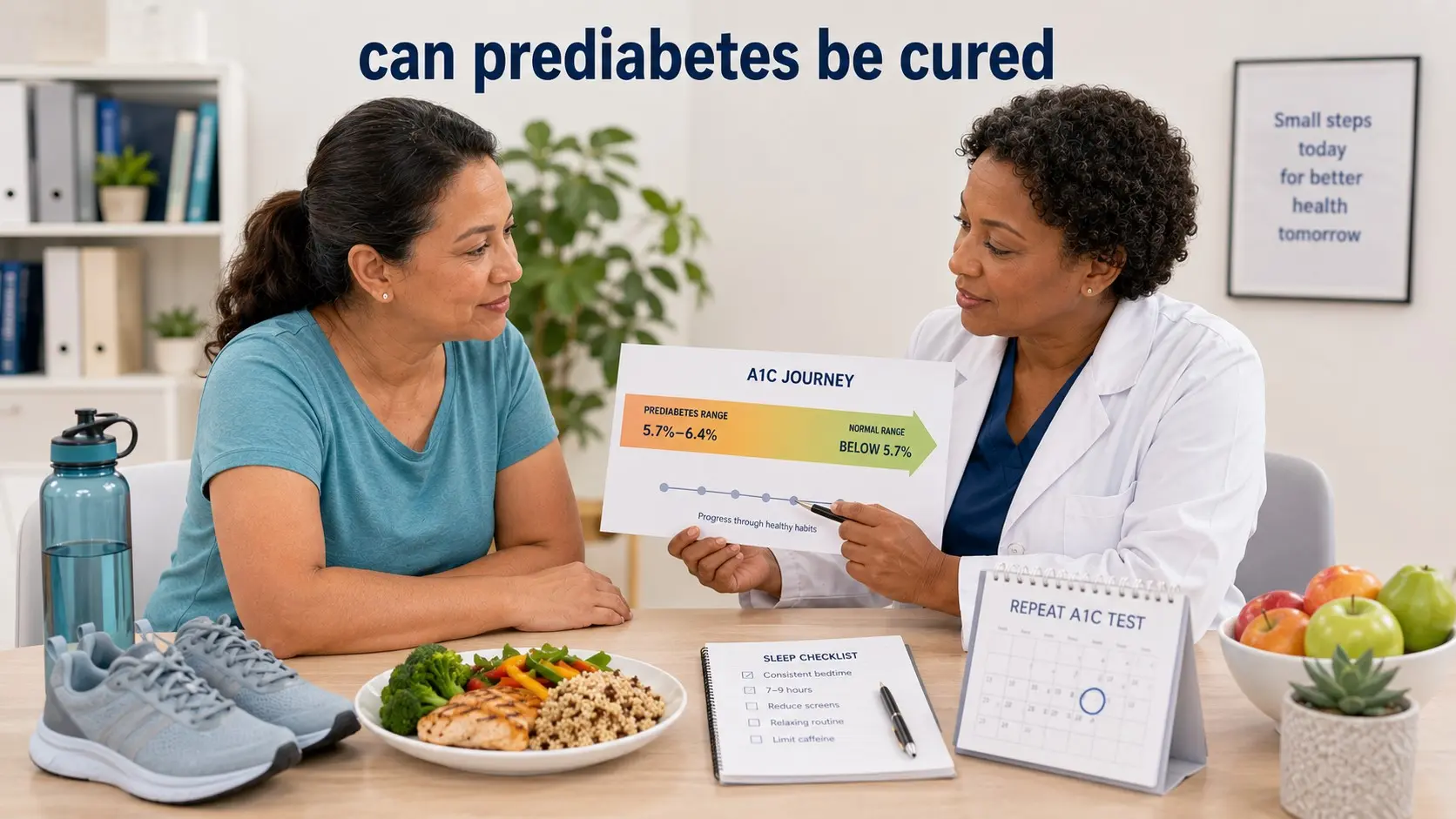
Can prediabetes be cured? Prediabetes can often be reversed, meaning that follow-up blood tests return below the prediabetes range. However, healthcare professionals avoid promising a permanent cure because glucose levels can rise again.
Prediabetes is not a personal failure, or a guaranteed path to Type 2 diabetes. It is an important health signal showing that blood glucose is above the normal range and that early action may substantially reduce future risk.
The strongest evidence supports a sustainable plan involving balanced eating, regular physical activity, weight management when appropriate, adequate sleep, smoking cessation, repeat blood testing, and medical treatment when needed.
Prediabetes usually has no clear symptoms. The only reliable way to know whether it has improved, remained stable, or progressed is through appropriate laboratory testing.
Quick Answer: Can Prediabetes Be Cured?
Prediabetes can often be reversed, but “cured” may be misleading.
Reversal means that a follow-up A1C, fasting plasma glucose, or oral glucose-tolerance test returns below the prediabetes range. It does not mean that the underlying risk can never return.
A major diabetes-prevention study found that a structured lifestyle program reduced the incidence of Type 2 diabetes by 58%. Its goals included losing approximately 5% to 7% of starting weight for participants with excess weight and completing at least 150 minutes of moderate physical activity each week.
Not every person needs to lose weight, and not everyone will achieve normal-range glucose through lifestyle changes alone. Metformin or other medical treatment may be appropriate for selected higher-risk patients.
Prediabetes should usually be rechecked at least annually, although a healthcare professional may recommend earlier testing based on the initial result, pregnancy plans, symptoms, medicines, or other risk factors.
When Prediabetes Symptoms May Mean Something More
Prediabetes commonly causes no symptoms. New symptoms may suggest that glucose has risen into the diabetes range or that another condition needs assessment.
Arrange medical testing if you develop:
- Increased thirst
- Frequent urination
- Unexplained weight loss
- Blurred vision
- Unusual fatigue
- Slow-healing wounds
- Repeated infections
- Tingling or numbness
Seek urgent care for repeated vomiting, abdominal pain, rapid or difficult breathing, severe dehydration, confusion, fainting, or rapidly worsening glucose readings.
What Is Prediabetes?
Prediabetes means that blood glucose is higher than normal but has not reached the diagnostic range for diabetes.
It commonly develops when the body becomes less responsive to insulin. This is known as insulin resistance.
Insulin is a hormone made by the pancreas. It helps glucose move from the bloodstream into cells, where it can be used for energy.
When cells respond less effectively to insulin, the pancreas may initially produce more insulin to compensate. Over time, blood glucose may rise into the prediabetes range.
Is Prediabetes the Same as “Borderline Diabetes”?
“Borderline diabetes” is an informal term sometimes used for prediabetes. It can minimize the importance of the condition.
Prediabetes is a real metabolic condition associated with a higher risk of:
- Type 2 diabetes
- Heart disease
- Stroke
- High blood pressure
- Unhealthy cholesterol or triglyceride levels
- Metabolic fatty liver disease
Progression is not inevitable. Early action can make a meaningful difference.
Can Prediabetes Be Cured or Reversed?
Prediabetes can often be reversed.
In practical terms, reversal means that repeat laboratory testing shows:
- A1C below 5.7%
- Fasting plasma glucose below 100 mg/dL
- Two-hour oral glucose-tolerance result below 140 mg/dL
A person does not need every test to confirm improvement. The healthcare professional will select the appropriate follow-up test.
Why “Cure” Is Not the Best Term
Normal-range blood tests do not guarantee that insulin resistance, genetic susceptibility, or future diabetes risk has permanently disappeared.
Glucose may rise again after:
- Weight regain
- Reduced physical activity
- Illness
- Pregnancy
- Aging
- Sleep disruption
- Medicine changes
- Progression of insulin resistance
A more accurate message is:
Prediabetes can often return to the normal glucose range, but continued habits and follow-up testing are needed to maintain the improvement.
Prediabetes Blood-Test Ranges
Prediabetes is diagnosed using laboratory blood tests.
| Test | Normal | Prediabetes | Diabetes |
|---|---|---|---|
| A1C | Below 5.7% | 5.7%–6.4% | 6.5% or higher |
| Fasting plasma glucose | 99 mg/dL or below | 100–125 mg/dL | 126 mg/dL or higher |
| Two-hour oral glucose-tolerance test | 139 mg/dL or below | 140–199 mg/dL | 200 mg/dL or higher |
What Does A1C Measure?
A1C estimates average glucose exposure during approximately the previous two to three months.
It does not show every daily high or low. It may also be less reliable with:
- Some types of anemia
- Hemoglobin variants
- Recent blood loss
- Blood transfusion
- Pregnancy
- Kidney disease
- Conditions that alter red-blood-cell lifespan
A healthcare professional may use fasting glucose or another test if A1C may be inaccurate.
Does One Test Confirm Prediabetes?
A clinician interprets the result alongside symptoms, health history, medicines, pregnancy status, and other laboratory findings.
Repeat testing may be recommended, particularly when the result is close to a diagnostic threshold or conflicts with other information.
Visit the Medical Tests and Screenings Hub for more guidance on preparing questions about blood tests.
Why Prediabetes Matters
Prediabetes is important because it indicates an increased risk of Type 2 diabetes and cardiovascular disease.
It also creates an opportunity to act before glucose progresses further.
Does Everyone With Prediabetes Develop Type 2 Diabetes?
No.
Some people return to the normal glucose range. Others remain in the prediabetes range for years. Some progress to Type 2 diabetes.
The outcome depends on many factors, including:
- Starting A1C or glucose level
- Genetics
- Age
- Body-fat distribution
- Physical activity
- Sleep
- Food access
- Health conditions
- Medicine use
- Pregnancy history
- Social and environmental factors
Does Prediabetes Cause Symptoms?
Prediabetes usually causes no obvious symptoms.
Some people may have signs associated with insulin resistance, such as darkened, thickened, velvety skin around the neck, armpits, or groin. This is called acanthosis nigricans.
It is not a diagnosis by itself and should be assessed by a qualified healthcare professional.
Who Is at Higher Risk of Prediabetes?
Prediabetes risk may be higher if you:
- Are aged 35 or older
- Have a parent or sibling with Type 2 diabetes
- Have overweight or obesity
- Carry more fat around the abdomen
- Are physically inactive
- Had gestational diabetes
- Have polycystic ovary syndrome
- Have high blood pressure
- Have unhealthy cholesterol or triglyceride levels
- Have cardiovascular disease
- Have sleep apnea
- Have metabolic fatty liver disease
- Take medicines that can raise glucose
Race, Ethnicity, and Social Factors
Prediabetes and Type 2 diabetes occur more frequently in some racial and ethnic populations.
The reasons are complex and may include genetics, healthcare access, income, neighborhood conditions, food access, chronic stress, discrimination, and other social determinants.
Race or ethnicity should not be presented as a personal fault or as the only biological cause.
Step 1: Confirm the Diagnosis
Do not diagnose prediabetes using symptoms, a wellness-app estimate, or one home glucose reading.
Ask which laboratory test was abnormal:
- A1C
- Fasting plasma glucose
- Oral glucose-tolerance test
Ask for the Exact Result
“Slightly high” is less useful than knowing the actual number.
Examples:
- A1C of 5.8%
- Fasting glucose of 108 mg/dL
- Two-hour glucose of 165 mg/dL
The higher the result within the prediabetes range, the higher the future risk may be.
Review Conditions That Can Affect the Test
Ask whether the result could be influenced by:
- Anemia
- Recent illness
- Pregnancy
- Kidney disease
- Blood loss or transfusion
- Steroid medicine
- Another medicine that raises glucose
Review Other Metabolic Risks
A complete evaluation may also include:
- Blood pressure
- Cholesterol
- Triglycerides
- Weight and waist pattern
- Liver health
- Sleep-apnea symptoms
- Smoking
- Family history
Step 2: Understand Your Personal Risk Factors
Prediabetes is not caused by one behavior or one food.
Understanding which factors apply to you helps create a more useful plan.
Factors That May Be Modifiable
- Physical inactivity
- Sugar-sweetened drinks
- Large refined-carbohydrate portions
- Smoking
- Sleep deprivation
- Untreated sleep apnea
- Excess body weight when present
- High blood pressure
- Unhealthy cholesterol or triglycerides
Factors That Cannot Be Changed
- Age
- Family history
- Genetic susceptibility
- Previous gestational diabetes
- Some medical conditions
Having a nonmodifiable risk factor does not make prevention pointless. It may make early support and follow-up even more valuable.
Choose One High-Impact Starting Point
Examples include:
- Replacing one daily sugary drink
- Walking for ten minutes after one meal
- Adding vegetables to dinner
- Addressing sleep apnea
- Joining a structured prevention program
One repeated change is more useful than an extreme plan that lasts only a few days.
Step 3: Use a Structured Diabetes-Prevention Program
A structured lifestyle-change program provides more than general advice to “eat better and move more.”
A CDC-recognized National Diabetes Prevention Program may include:
- A trained lifestyle coach
- An evidence-based curriculum
- Group support
- Food and activity planning
- Problem-solving skills
- Stress-management strategies
- In-person or online participation
What Did the Diabetes Prevention Program Show?
The original Diabetes Prevention Program found that an intensive lifestyle intervention reduced the incidence of Type 2 diabetes by 58%.
For adults aged 60 or older, the reduction was 71%.
The lifestyle goals included:
- Losing approximately 5% to 7% of starting weight when appropriate
- Completing at least 150 minutes of moderate physical activity each week
What the 58% Figure Does Not Mean
It does not mean that 58% of participants were permanently cured.
It means that the lifestyle group experienced a 58% lower incidence of Type 2 diabetes during the original study period compared with the placebo group.
Long-term follow-up still showed a meaningful reduction in diabetes incidence after 15 years.
How to Find a Program
In the United States, ask about:
- A CDC-recognized National DPP provider
- Health-system prevention programs
- Employer or insurance-supported programs
- Community or pharmacy programs
- Online recognized programs
Outside the United States, ask whether your health system offers an evidence-based diabetes-prevention service.
For UK-specific information, read Prediabetes NHS: Prevention, Tests, and Daily Care.
Step 4: Build a Sustainable Prediabetes Eating Pattern
There is no single required prediabetes diet.
A useful eating pattern should be:
- Nutritionally adequate
- Culturally appropriate
- Affordable
- Realistic for your schedule
- Compatible with health conditions and medicines
- Sustainable over the long term
Use the Plate Method
Using a nine-inch plate as a general guide:
- Half: Non-starchy vegetables
- One quarter: Protein
- One quarter: Quality carbohydrate
- Drink: Water or another suitable lower-sugar beverage
Helpful Food Groups
- Leafy greens and other non-starchy vegetables
- Beans and lentils
- Whole fruit
- Oats and higher-fibre grains
- Fish
- Eggs
- Tofu and other suitable protein foods
- Plain Greek yogurt
- Nuts and seeds
- Avocado and olive oil
Reduce Sugar-Sweetened Drinks
Soft drinks, sweetened tea, energy drinks, and many fruit drinks can deliver a large amount of carbohydrate rapidly.
Possible replacements include:
- Water
- Sparkling water without sugar
- Unsweetened tea
- Coffee with limited added sugar
Choose Higher-Fibre Carbohydrates More Often
Examples include:
- Beans
- Lentils
- Oats
- Barley
- Whole grains
- Whole fruit
- Starchy vegetables in suitable portions
Whole grains still contain carbohydrate and can raise glucose. Portion size remains important.
Pair Carbohydrate With Protein or Unsaturated Fat
Examples include:
- Berries with plain Greek yogurt
- An apple with peanut butter
- Oats with nuts and seeds
- Whole-grain toast with eggs
- Beans with vegetables and avocado
Pairing may slow digestion but does not make the carbohydrate unlimited.
Foods to Limit Without Creating Fear
Foods and drinks that may require more planning include:
- Sugar-sweetened drinks
- Large desserts
- Large refined-grain portions
- Highly processed snack foods
- Frequent deep-fried meals
- Processed meats
- Excess alcohol
“Limit” does not have to mean “never.” The overall pattern and portion matter.
Read the detailed Prediabetes Diet Guide for food ideas, portions, benefits, and possible pitfalls.
Step 5: Reach a Safe Physical-Activity Target
Physical activity helps muscles use glucose and can improve insulin sensitivity, fitness, blood pressure, sleep, mood, and mobility.
A widely used prevention target is at least 150 minutes of moderate-intensity activity per week.
What Counts as Moderate Activity?
Moderate activity makes you breathe faster while still allowing you to speak in short sentences.
Examples include:
- Brisk walking
- Cycling
- Swimming
- Dancing
- Active household work
- Low-impact fitness classes
You Do Not Need to Start With 150 Minutes
If you are currently inactive, begin at a safer and more manageable level.
Examples:
- A five- or ten-minute walk
- A short walk after one meal
- Standing or moving during television breaks
- Walking while making a phone call
Increase duration or intensity gradually.
Add Strength Training When Safe
Strength training supports muscle, mobility, balance, and glucose use.
Possible options include:
- Chair squats
- Wall push-ups
- Resistance bands
- Light weights
- Body-weight exercises
Many adults aim for strength activity on two or more days per week when medically appropriate.
Break Up Long Sitting Periods
Brief movement throughout the day can complement planned exercise.
Try standing, stretching, or walking for a few minutes after prolonged sitting.
Ask for Medical Guidance Before Increasing Activity If You Have:
- Chest pain
- Severe shortness of breath
- Unexplained dizziness or fainting
- Significant heart disease
- Severe joint problems
- Active foot wounds
- Major balance limitations
- A recent operation or serious illness
Read Prediabetes Diet and Exercise for additional meal and activity ideas.
Step 6: Manage Weight When Appropriate
For people with overweight or obesity, losing approximately 5% to 7% of starting weight can substantially reduce the risk of Type 2 diabetes.
For a person weighing 200 pounds, 5% to 7% is approximately 10 to 14 pounds.
This is an example—not a required target for every person.
Not Everyone With Prediabetes Needs Weight Loss
Prediabetes can occur in people of any body size.
Some readers may need to:
- Maintain their current weight
- Build muscle
- Improve food quality
- Increase activity
- Treat sleep apnea
- Review glucose-raising medicines
Use a Sustainable Weight Approach
Possible strategies include:
- Reducing sugary drinks
- Building balanced meals
- Planning portions
- Increasing everyday movement
- Strength training
- Improving sleep
- Behavioral or psychological support
- Medical weight-management treatment when appropriate
Avoid Shame-Based Advice
Body weight is affected by genetics, hormones, medicines, sleep, mental health, environment, income, food access, and many other factors.
Weight management should focus on health and sustainable behavior—not blame.
Avoid Crash Diets
Very-low-calorie or highly restrictive diets can cause:
- Muscle loss
- Nutrient deficiencies
- Fatigue
- Gallstones
- Food anxiety
- Weight regain
Medically supervised intensive programs may be appropriate for selected people, but they are not do-it-yourself plans.
Read Natural Weight Loss: Safe and Sustainable Tips for a non-extreme approach.
Step 7: Retest and Discuss Medical Treatment
Only repeat laboratory testing can confirm whether prediabetes has improved.
Adults and children diagnosed with prediabetes should generally be tested for Type 2 diabetes every year.
A healthcare professional may recommend earlier retesting based on:
- A result near the diabetes threshold
- New symptoms
- Pregnancy plans
- Medicine changes
- Significant weight change
- Serious illness
- Other metabolic risks
What Result Counts as Reversal?
Reversal generally means the follow-up test is below the prediabetes range.
Examples include:
- A1C below 5.7%
- Fasting glucose below 100 mg/dL
- Two-hour glucose below 140 mg/dL
Your clinician will determine which result is most appropriate to follow.
Home Glucose Monitoring
Most people with prediabetes do not automatically need to check glucose several times every day.
Home monitoring may be useful in selected situations, such as:
- Symptoms of high or low glucose
- Use of a medicine that may cause hypoglycemia
- Pregnancy
- A clinician-directed food or activity review
- Progression toward the diabetes range
Ask whether home monitoring would provide useful information for you.
Can Metformin Help Prediabetes?
Metformin is a glucose-lowering medicine with extensive evidence for diabetes prevention in selected people with prediabetes.
The 2026 American Diabetes Association Standards state that metformin has the most robust efficacy and safety data among medicines studied for diabetes prevention.
Who May Be More Likely to Benefit?
Evidence suggests that metformin may be particularly useful for selected people who:
- Are younger adults
- Have obesity
- Had gestational diabetes
- Have higher-risk glucose results
- Cannot fully participate in an intensive lifestyle program
The decision is individualized. Metformin is not automatically required for every person with prediabetes.
Medication Is Not Failure
Needing medicine does not mean that food and activity efforts have failed.
Prediabetes is influenced by biology, genetics, health conditions, medicines, environment, and lifestyle.
Medical treatment can be used alongside:
- Balanced eating
- Physical activity
- Weight management
- Sleep improvement
- Risk-factor treatment
Metformin Safety Considerations
Possible issues include:
- Nausea
- Diarrhea
- Kidney-function considerations
- Vitamin B12 deficiency with long-term use
A clinician should determine whether metformin is appropriate and how it should be monitored.
Sleep and Stress Management
Sleep
Insufficient or irregular sleep can affect appetite, activity, insulin sensitivity, and food choices.
Useful habits may include:
- Keeping a consistent sleep schedule
- Reducing bright-screen exposure before bed
- Limiting late caffeine
- Keeping the bedroom dark and comfortable
- Obtaining assessment for loud snoring or daytime sleepiness
Sleep Apnea
Sleep apnea is associated with insulin resistance and metabolic risk.
Ask for evaluation if you experience:
- Loud snoring
- Breathing pauses during sleep
- Morning headaches
- Severe daytime sleepiness
- Unrefreshing sleep
Stress
Stress does not single-handedly cause prediabetes, but it can influence sleep, food, activity, smoking, alcohol use, and glucose-related hormones.
Possible stress-management tools include:
- Slow breathing
- Walking
- Mindfulness
- Counseling
- Social support
- Enjoyable hobbies
- Reducing unrealistic goals
Stress management supports the prevention plan but does not replace food, activity, testing, or medical care.
Smoking and Alcohol
Smoking
Smoking increases cardiovascular risk and can worsen overall metabolic health.
Ask about:
- Behavioral counseling
- Nicotine-replacement therapy
- Prescription treatment
- Local or national stop-smoking services
Multiple attempts may be needed. This does not mean the effort has failed.
Alcohol
Alcohol can add calories and affect appetite, sleep, liver health, triglycerides, and glucose.
Its effects also depend on medicines and whether food is eaten.
People who do not drink do not need to begin for health reasons.
People who drink should ask whether alcohol is safe with their medicines and health conditions.
How Long Does It Take to Reverse Prediabetes?
There is no universal timeline.
A1C reflects approximately two to three months of glucose exposure, so meaningful change may become visible within several months.
Some people need longer because of:
- A higher starting result
- Genetic risk
- Health conditions
- Medicine effects
- Sleep apnea
- Difficulty accessing healthy food or activity
- Limited support
Do Not Promise a 30-Day Cure
Short challenges may improve a few habits, but they cannot guarantee normal-range glucose.
Only repeat testing can confirm the result.
Focus on Process Goals
Examples include:
- Walk after dinner four days this week
- Replace five sugary drinks this week
- Add vegetables to one meal daily
- Complete two strength sessions
- Attend prevention-program sessions
Process goals are under your control even when laboratory changes take longer.
Can Prediabetes Return After Normal Blood Tests?
Yes.
Prediabetes can return after glucose has moved into the normal range.
Possible reasons include:
- Reduced activity
- Weight regain
- Aging
- Pregnancy
- Illness
- Sleep disruption
- Medicine changes
- Progressive insulin resistance
Continue Follow-Up
Normal-range results are encouraging, but they are not a reason to stop every helpful habit.
Continue:
- Periodic blood testing
- Physical activity
- Balanced meals
- Blood-pressure care
- Cholesterol management
- Sleep and smoking support
Can Prediabetes Be Reversed Without Weight Loss?
Yes, improvement may occur without substantial weight loss.
Helpful changes may include:
- Increasing physical activity
- Building muscle
- Reducing sugary drinks
- Improving carbohydrate quality
- Improving sleep
- Treating sleep apnea
- Reviewing glucose-raising medicines
Weight loss is one effective strategy for people with excess weight, but it is not the only measure of progress.
Other Signs of Progress
- Lower A1C or fasting glucose
- Improved blood pressure
- Improved triglycerides
- Greater fitness
- Better strength
- Improved sleep
- Reduced sugary-drink intake
Prediabetes in Children and Teenagers
Children and teenagers can develop prediabetes and Type 2 diabetes.
Management should involve a pediatric healthcare team.
Young people have specific needs related to:
- Growth
- Puberty
- School
- Sports
- Mental health
- Family eating patterns
- Weight stigma
Avoid Restrictive Adult Diets
Do not place a child on an extreme low-carbohydrate, fasting, detox, or very-low-calorie plan without specialist supervision.
A family-based approach may focus on:
- More water and fewer sugary drinks
- Balanced family meals
- Enjoyable activity
- Consistent sleep
- Reducing shame and blame
Prediabetes, Pregnancy, and Gestational-Diabetes History
A history of gestational diabetes increases the future risk of Type 2 diabetes.
People who had gestational diabetes need ongoing glucose screening after pregnancy.
Planning Pregnancy
Ask for preconception testing and treatment review when planning pregnancy, especially if you have:
- Prediabetes
- Previous gestational diabetes
- Polycystic ovary syndrome
- Family history of diabetes
- Previous high glucose
Pregnancy has separate glucose targets and nutrition needs. Do not use an unsupervised weight-loss, fasting, or supplement plan during pregnancy.
What Should You Avoid When Trying to Reverse Prediabetes?
Do Not Rely on Supplements
No supplement has been proven to cure prediabetes.
Products marketed for glucose may:
- Interact with medicines
- Affect the liver or kidneys
- Contain undeclared ingredients
- Delay effective treatment
Do Not Eliminate Every Carbohydrate
Carbohydrate foods include beans, fruit, whole grains, milk, and yogurt—not only sweets.
Quality, amount, and meal composition matter.
Do Not Use Detoxes
Juice cleanses, detox teas, and severe fasting plans do not provide a reliable cure.
They may create dehydration, nutrient deficiencies, digestive problems, or medication interactions.
Do Not Use Shame as Motivation
Prediabetes is not evidence of laziness, weakness, or moral failure.
A supportive plan is more sustainable than fear or punishment.
Do Not Stop Medicine Without Advice
If glucose improves, discuss the result with the prescribing clinician before changing any medicine.
A Realistic 12-Week Prediabetes Starting Plan
This plan offers a gradual structure. It is not an individualized prescription.
| Weeks | Main Focus | Example Actions |
|---|---|---|
| Weeks 1–2 | Understand the diagnosis | Record the exact test result, review medicines and risk factors, and schedule follow-up. |
| Weeks 3–4 | Reduce liquid sugar | Replace one regular sugary drink daily and increase suitable lower-sugar drinks. |
| Weeks 5–6 | Build balanced meals | Use the Plate Method for one meal daily and add a non-starchy vegetable. |
| Weeks 7–8 | Increase activity | Add short walks and gradually work toward a weekly activity target. |
| Weeks 9–10 | Support muscle and sleep | Add safe strength activity and create a more consistent sleep schedule. |
| Weeks 11–12 | Review and continue | Identify habits that were sustainable, review barriers, and confirm the laboratory retesting plan. |
Simple Weekly Checklist
- Did I follow my testing and appointment plan?
- Did I replace sugary drinks more often?
- Did I include vegetables and protein in meals?
- Did I move regularly?
- Did I complete safe strength activity?
- Did I protect my sleep?
- Did I take prescribed medicine?
- Which habit should I repeat next week?
Questions to Ask Your Healthcare Team
- Which test showed that I have prediabetes?
- What was the exact result?
- Could anything make my A1C inaccurate?
- When should the test be repeated?
- How close am I to the diabetes range?
- Should I join a structured diabetes-prevention program?
- Would a registered dietitian help?
- What physical activity is safe for me?
- Would losing 5% to 7% of my weight be appropriate?
- Can I improve my risk without losing weight?
- Should I consider metformin?
- Do any of my medicines raise glucose?
- Should I be assessed for sleep apnea?
- Do I need cholesterol or blood-pressure treatment?
- Should I monitor glucose at home?
- What symptoms suggest progression to Type 2 diabetes?
- What result would mean my prediabetes has reversed?
Key Takeaway
Prediabetes can often be reversed, but a permanent cure cannot be guaranteed.
Reversal means that repeat laboratory testing returns below the prediabetes range.
The strongest evidence supports a structured approach involving balanced eating, at least 150 minutes of weekly moderate activity when safe, weight loss of approximately 5% to 7% when appropriate, adequate sleep, smoking cessation, medical-risk management, and repeat testing.
Metformin may be useful for selected higher-risk people and does not represent failure.
Prediabetes does not always progress to Type 2 diabetes. Early action can substantially reduce the risk, but progress must be confirmed through blood testing rather than symptoms or promises from supplements and quick-fix programs.
Recommended next step: Record your exact A1C or glucose result, ask when it should be repeated, and choose one food habit and one activity habit that you can begin safely this week.
References and Sources
National Institute of Diabetes and Digestive and Kidney Diseases: Insulin Resistance and Prediabetes
NIDDK: Diabetes and Prediabetes Tests and Diagnosis
NIDDK: The A1C Test and Diabetes
Centers for Disease Control and Prevention: Prediabetes—Your Chance to Prevent Type 2 Diabetes
CDC: Diabetes Prevention Program Evidence and Outcomes
CDC: What Is the National Diabetes Prevention Program?
American Diabetes Association: Prediabetes
American Diabetes Association: Prevention or Delay of Diabetes—Standards of Care in Diabetes 2026
U.S. Preventive Services Task Force: Screening for Prediabetes and Type 2 Diabetes
CDC: A1C Testing for Diabetes and Prediabetes
Related NextFitLife Guides and Topic Hubs
Related Prediabetes and Diabetes Guides
- Prediabetes Diet: Food Choices, Benefits, and Risks
- Prediabetes Diet and Exercise
- Prediabetes NHS: Prevention, Tests, and Daily Care
- Type 2 Diabetes: Symptoms, Treatment, and Prevention
- How to Control Diabetes With Food
- Diabetes and Kidney Disease
- Natural Weight Loss: Safe and Sustainable Tips
- Healthy Lifestyle: Practical Daily Habits
NextFitLife Topic Hubs
- Medical Tests and Screenings Hub
- Weight Management and Metabolism Hub
- Foods and Nutrition Hub
- Health Hub
Frequently Asked Questions About Prediabetes Reversal
Can prediabetes be cured?
Prediabetes can often be reversed, meaning follow-up blood tests return below the prediabetes range. A permanent cure cannot be guaranteed because glucose may rise again.
Can prediabetes go away completely?
Glucose can return to the normal range, but continued healthy habits and periodic testing remain important because the underlying risk may persist.
What does reversing prediabetes mean?
It generally means an A1C below 5.7%, fasting glucose below 100 mg/dL, or two-hour glucose below 140 mg/dL on appropriate follow-up testing.
What A1C level indicates prediabetes?
An A1C from 5.7% through 6.4% is within the prediabetes range. An A1C of 6.5% or higher is within the diabetes range.
What fasting glucose indicates prediabetes?
A fasting plasma glucose from 100 through 125 mg/dL is within the prediabetes range. A result of 126 mg/dL or higher is within the diabetes range.
How long does it take to reverse prediabetes?
There is no universal timeline. Some people see improvement within several months, while others need longer. Only repeat laboratory testing can confirm the result.
What is the fastest safe way to improve prediabetes?
Use a sustainable combination of balanced eating, regular activity, weight management when appropriate, adequate sleep, follow-up testing, and medication when recommended.
Can prediabetes return after normal blood tests?
Yes. Glucose can rise again after weight regain, reduced activity, illness, pregnancy, aging, sleep disruption, or medicine changes.
Does everyone with prediabetes develop Type 2 diabetes?
No. Some people return to normal-range glucose, some remain in the prediabetes range, and some progress to Type 2 diabetes.
How much weight should someone lose?
For people with overweight or obesity, losing approximately 5% to 7% of starting weight can significantly lower diabetes risk. Weight loss is not appropriate for everyone.
Can prediabetes be reversed without weight loss?
Yes. Increased activity, improved food quality, muscle development, better sleep, treatment of sleep apnea, and medicine review may improve glucose without major weight loss.
What exercise is best for prediabetes?
Brisk walking and other moderate aerobic activity are useful. Strength training can also support muscle and glucose use. The safest plan depends on health and fitness.
Which foods help with prediabetes?
Helpful food groups include non-starchy vegetables, beans, lentils, whole fruit, higher-fibre grains, fish, eggs, tofu, plain yogurt, nuts, seeds, and unsaturated fats.
Should carbohydrates be avoided?
No. Carbohydrates include beans, fruit, whole grains, milk, and yogurt. Quality, portion, fibre, and meal composition matter more than banning every carbohydrate.
Does metformin reverse prediabetes?
Metformin can delay or prevent progression to Type 2 diabetes in selected higher-risk people. It does not guarantee permanent reversal.
Who should consider metformin?
It may be considered for selected younger adults, people with obesity, people with a history of gestational diabetes, or others at higher risk.
How often should A1C be repeated?
People with prediabetes are generally tested for Type 2 diabetes at least yearly. Earlier testing may be recommended based on the result and individual risks.
Should people with prediabetes monitor glucose at home?
Not everyone needs routine home monitoring. It may be useful for selected patients when recommended by a healthcare professional.
Can children have prediabetes?
Yes. Children and teenagers can develop prediabetes. Management should involve a pediatric healthcare team and avoid restrictive adult diet plans.
Can prediabetes cause symptoms?
Prediabetes usually causes no clear symptoms. Increased thirst, frequent urination, unexplained weight loss, or blurred vision may suggest progression and require testing.
When does prediabetes become Type 2 diabetes?
Diabetes is diagnosed when laboratory results reach the diabetes range, such as an A1C of 6.5% or higher or fasting plasma glucose of 126 mg/dL or higher.
Medical Disclaimer
All health content on NextFitLife is provided for general educational and informational purposes only. It does not diagnose prediabetes, interpret personal A1C or glucose results, prescribe medication, or create an individualized nutrition, activity, or weight-management plan.
Prediabetes can often be reversed, but no result or timeline is guaranteed. Do not start, change, or stop medicine based only on online information.
Seek medical assessment for increased thirst, frequent urination, unexplained weight loss, blurred vision, repeated infections, severe weakness, or worsening glucose readings. Seek urgent medical care for repeated vomiting, abdominal pain, rapid or difficult breathing, severe dehydration, confusion, fainting, or unconsciousness.

Health & wellness writer with 30+ years of experience in nutrition, fitness, and healthy aging. Founder of NextFitLife.com — evidence-based health guidance.