
Updated on: October 15, 2026
Written and source checked by: Adel Galal, Founder and Lead Writer at NextFitLife
Medical review status: This article has not been medically reviewed by an ophthalmologist, dermatologist, endocrinologist, kidney specialist, pharmacist, or other licensed healthcare professional.
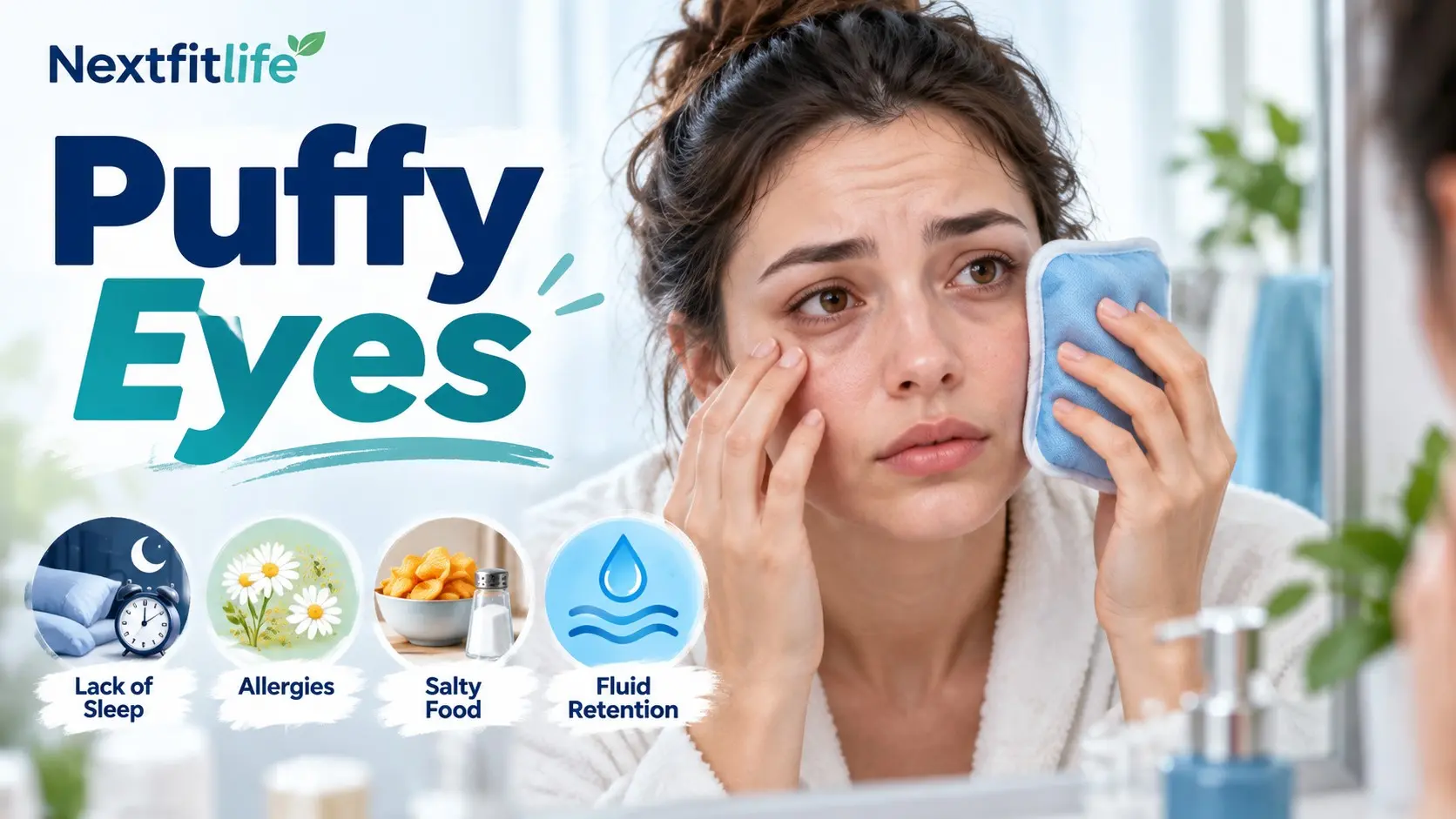
Puffy eyes are usually caused by temporary fluid buildup, lack of sleep, allergies, crying, salty food, or normal changes that happen with age. A cool compress, better sleep, allergy control, and reducing excess salt may help.
But swelling around the eyes is not always cosmetic. Pain, fever, redness, trouble moving an eye, bulging, or any change in vision needs a different response.
This article is for general information and education. It does not replace medical advice, diagnosis, or treatment.
Mayo Clinic notes that ordinary bags under eyes are usually harmless, but persistent swelling may sometimes be related to allergies, dermatitis, thyroid problems, kidney disease, or other health conditions.
Table of Contents
- What puffy eyes mean
- 9 common and important causes
- Fluid retention
- Sleep problems
- Allergies
- Crying
- Salt
- Aging and genetics
- Eyelid inflammation
- Thyroid problems
- Kidney and other medical causes
- Fast ways to reduce puffiness
- Morning puffiness versus illness
- One swollen eye versus both eyes
- Infections and urgent warning signs
- Dark circles and eye bags
- How to prevent puffy eyes
- When to see a doctor
- Frequently asked questions
What Are Puffy Eyes?
Puffy eyes describe swelling around the upper eyelids, lower eyelids, or both.
Sometimes the swelling is caused by extra fluid in the soft tissues around the eyes. In other cases, the tissue looks fuller because fat that normally supports the eye moves forward as the structures around the eyelids change with age.
That means not every person with puffy eyes has the same problem.
There is an important difference between:
- Temporary morning puffiness
- Long term eye bags
- Allergic eyelid swelling
- Inflamed eyelids
- Infection around the eye
- Swelling caused by another medical condition
The appearance can look similar, but the clues around it are different.
9 Common and Important Causes of Puffy Eyes
1. Fluid Retention
Fluid retention is one of the simplest reasons your eyes may look puffier after waking.
While you lie flat during sleep, fluid can collect around the soft tissues beneath the eyes. That is why puffiness may look worse first thing in the morning and gradually improve after you get up.
Mayo Clinic lists fluid retention, especially after waking or after eating a salty meal, as a common factor in under eye bags.
If the swelling fades within a few hours and you otherwise feel well, temporary fluid movement is a likely explanation.
2. Not Getting Enough Sleep
Poor sleep can make the area around your eyes look tired, swollen, or darker.
Sleep loss can also make existing eye bags more noticeable.
A single short night may cause temporary changes. If your eyes look puffy almost every morning, review your sleep schedule rather than looking only for a skin product.
Most adults generally do best with about seven to nine hours of sleep, although individual needs vary.
3. Allergies
Allergic conjunctivitis is a common reason for swollen, itchy, watery eyes.
When your immune system reacts to an allergen, histamine can cause blood vessels and nearby tissues to swell.
Common triggers include:
- Pollen
- Dust mites
- Pet dander
- Mold
- Cosmetics
- Skin products
MedlinePlus notes that allergic conjunctivitis can cause intense itching, watery eyes, redness, and puffy eyelids, often with puffiness being more obvious in the morning.
If allergies affect you often, read What Causes Allergies?
4. Crying
Crying can temporarily make the tissues around the eyes swell.
Tears, rubbing, and changes in fluid around the eyelids all contribute.
This kind of puffiness usually improves on its own.
A cool clean compress can make the area feel more comfortable.
5. Too Much Salt
A salty meal can encourage the body to retain more fluid.
Because the tissues around the eyes are thin and soft, even small changes can become easy to see.
This does not mean you need to eliminate sodium completely.
Instead, look for a pattern. If your eyes are noticeably puffier the morning after very salty meals, reducing excess sodium may help.
6. Aging and Genetics
As we age, tissues and muscles around the eyelids become weaker.
Fat that normally supports the eye can shift forward into the lower eyelid area, creating more permanent under eye bags.
The skin can also become looser.
Mayo Clinic explains that both aging and genetics are common contributors, so some people develop eye bags earlier than others.
This type of puffiness does not always disappear with more water or more sleep because it is partly structural.
7. Blepharitis, Styes, and Eyelid Inflammation
Puffiness can come from the eyelid itself rather than fluid under the eyes.
Blepharitis can cause red, irritated, itchy eyelids and crusting around the eyelashes.
A stye usually causes a small red painful bump near the eyelid edge.
A chalazion is often less painful and forms when an eyelid oil gland becomes blocked.
MedlinePlus lists these among common eyelid disorders that cause redness and swelling.
8. Thyroid Eye Disease
Thyroid eye disease is an autoimmune condition most often linked with Graves disease.
The American Thyroid Association lists puffy or red eyelids among its symptoms.
Other clues may include:
- Dry or gritty eyes
- Eye redness
- Pain behind the eyes
- Pain with eye movement
- Bulging eyes
- Double vision
- Difficulty closing the eyelids fully
Thyroid eye disease can occasionally affect sight, so new visual symptoms need medical attention.
9. Kidney Disease or Other Medical Swelling
Not every swollen eyelid problem comes from the eye.
Kidney disease can cause edema when the body has trouble managing fluid or loses important proteins in the urine.
NIDDK lists puffy eyelids as one symptom of nephrotic syndrome in adults, along with swelling of the legs, ankles, feet, abdomen, or other areas.
In children, swelling around the eyes can be especially noticeable in the morning.
Eye swelling is more likely to need a medical workup when it occurs with:
- Swollen legs or feet
- Foamy urine
- Changes in urination
- Unexplained weight gain from fluid
- High blood pressure
- Persistent swelling elsewhere
For broader kidney health information, visit Healthy Kidneys: How to Know and Protect Them.
Puffy Eyes: Common Causes at a Glance
| Cause | Common Clues | What May Help |
|---|---|---|
| Morning fluid retention | Both eyes, worse after waking | Cool compress, head elevation, time |
| Poor sleep | Tired eyes, dark circles, morning puffiness | Improve sleep routine |
| Allergy | Itching, watering, redness, usually both eyes | Avoid trigger, cool compress, appropriate allergy care |
| Stye or chalazion | Local bump on one eyelid | Warm compress and eye care advice |
| Blepharitis | Red itchy lid edges, crusty lashes | Eyelid hygiene and clinician directed treatment |
| Thyroid eye disease | Puffiness, redness, bulging, double vision | Medical and eye assessment |
| Kidney related edema | Eye swelling plus swelling elsewhere | Medical assessment |
| Orbital infection | Pain, fever, red swelling, painful eye movement, vision changes | Emergency medical care |
How Can You Get Rid of Puffy Eyes Fast?
There is no single instant cure because treatment depends on the cause.
For ordinary morning puffiness, these steps are reasonable.
1. Use a Cool Compress
A cool compress is one of the simplest ways to reduce mild swelling.
Wet a clean washcloth with cool water, wring it out, and place it gently over closed eyes for a few minutes.
Mayo Clinic recommends a cool damp washcloth with light pressure for ordinary under eye bags.
Do not apply ice directly to the eyelid skin.
2. Sit Upright
If your puffiness is worse after waking, simply getting upright can help fluid redistribute.
That is one reason ordinary morning puffiness may fade as the day begins.
3. Raise Your Head During Sleep
Sleeping with your head slightly elevated can reduce overnight fluid buildup around the eyes.
Mayo Clinic suggests using an extra pillow or slightly raising the head of the bed.
Choose a position that is also comfortable for your neck and back.
4. Reduce Excess Salt
If salty food seems to worsen your puffiness, cut back on heavily processed and salty foods.
You do not need a zero sodium diet unless your healthcare professional has prescribed one.
5. Get Enough Sleep
No eye cream can fully replace a healthy sleep routine.
If puffiness follows repeated short nights, work on sleep first.
6. Manage Allergies
When itching and watering occur with the swelling, allergy control may matter more than cosmetic treatment.
Avoid known triggers when possible.
MedlinePlus notes that cool compresses and suitable antihistamine treatment can help allergic eye symptoms.
Should You Rub Puffy Eyes?
No.
Rubbing can make irritation and swelling worse, especially when allergies are involved.
MedlinePlus notes that rubbing can contribute to conjunctival swelling called chemosis.
If your eyes itch, a cool compress is safer than repeatedly rubbing the eyelids.
Does Drinking More Water Get Rid of Puffy Eyes?
Hydration matters for overall health, but drinking large amounts of water is not an instant treatment for every case of puffy eyes.
If you are mildly dehydrated, normal hydration makes sense.
But if swelling is due to allergies, aging, thyroid disease, kidney disease, or an eyelid disorder, extra water does not fix the underlying cause.
People with heart or kidney conditions may even have specific fluid instructions from their healthcare team.
Do Cucumber Slices Really Work?
Cold cucumber slices may feel soothing because they are cool.
There is little reason to think cucumber itself is a medical treatment for most causes of eyelid swelling.
A clean cool compress gives you the same basic cooling effect with less mess.
Do Tea Bags Reduce Puffy Eyes?
Cold tea bags are widely promoted online.
The cool temperature may temporarily make the area feel less swollen, but they are not necessary.
Tea also contains plant compounds that can irritate sensitive eyelid skin in some people.
A clean cool washcloth is simpler and more predictable.
Can Eye Cream Cure Puffy Eyes?
It depends on what you mean by cure.
A moisturizer can improve dry skin around the eyes, and some cosmetic products may temporarily change the appearance of the skin.
But an eye cream cannot correct every cause.
It will not treat:
- Kidney related edema
- Thyroid eye disease
- Orbital cellulitis
- A bacterial eyelid infection
- A large chalazion
If you use skincare around the eyes, choose products made for that area and stop if they cause burning, redness, or swelling.
For more everyday skin guidance, visit Healthy Skin 101.
Why Are My Eyes Puffy Every Morning?
Morning puffiness is often caused by fluid collecting around the eyes while you lie down.
It may be more noticeable after:
- A salty dinner
- Poor sleep
- Alcohol
- Crying
- An allergy flare
- Sleeping completely flat
If the swelling fades after you are upright, simple fluid retention is more likely.
If it stays all day, keeps worsening, or comes with swelling elsewhere, look beyond sleep and salt.
Why Is Only One Eye Puffy?
Swelling in just one eye often points more toward a local eyelid or eye problem than ordinary fluid retention.
Possible causes include:
- A stye
- A chalazion
- An insect bite
- Contact irritation
- Eye rubbing
- Local allergy
- An eyelid infection
- Periorbital cellulitis
One sided swelling becomes more concerning when the eye is painful, very red, warm, difficult to move, or linked with fever or vision problems.
Allergy or Infection: How Can You Tell?
| Clue | Allergy More Likely | Infection More Concerning |
|---|---|---|
| Itching | Very common | May be absent |
| Both eyes | Common | One eye may be more affected |
| Watery eyes | Common | Can occur |
| Fever | Not typical | Raises concern |
| Pain moving the eye | Not typical | Urgent warning sign |
| Reduced vision | Not expected in simple allergy | Needs urgent evaluation |
When Can Puffy Eyes Be an Infection?
A swollen eyelid can sometimes be caused by periorbital cellulitis, an infection of the eyelid and nearby skin.
Orbital cellulitis is deeper and much more serious.
MedlinePlus describes orbital cellulitis as a dangerous infection involving tissues around the eye that can cause lasting visual problems and requires immediate medical care.
Warning signs include
- Fever
- Painful eyelid swelling
- Severe redness
- Pain when moving the eye
- Difficulty moving the eye
- Bulging of the eye
- Double vision
- Reduced vision
- Feeling very unwell
Do not put a cool compress on these symptoms and wait for tomorrow.
Get urgent medical care.
What Is the Difference Between Puffy Eyes and Eye Bags?
The terms overlap, but they are not exactly the same.
Puffy eyes often describe temporary swelling caused by fluid or inflammation.
Eye bags often refer to longer lasting fullness below the eyes related to age, genetics, fat position, and weaker supporting tissues.
A person can have both.
For example, structural eye bags may become more noticeable after a salty dinner or poor sleep because temporary fluid adds to the existing fullness.
What About Dark Circles?
Dark circles are not always caused by the same process as puffiness.
They may be related to:
- Genetics
- Thin skin
- Visible blood vessels
- Shadow from eye bags
- Allergies
- Skin pigmentation
- Sleep loss
Treating puffiness does not always remove dark circles because the two problems can have different causes.
Can Smoking Make Puffy Eyes Worse?
Yes.
Mayo Clinic lists smoking as one factor that can worsen bags under the eyes.
Smoking also affects skin quality and is particularly important for people with thyroid eye disease because cigarette smoke can worsen that condition.
The American Thyroid Association recommends avoiding both smoking and secondhand smoke in people with thyroid eye disease.
Could Puffy Eyes Mean Thyroid Disease?
Sometimes.
Do not assume thyroid disease from puffiness alone.
Consider it more seriously when eye swelling appears with:
- Bulging eyes
- Eye redness
- Double vision
- Pain behind the eyes
- Pain with eye movement
- Difficulty closing the eyelids
- Known Graves disease
The American Thyroid Association explains that thyroid eye disease can occur even when thyroid hormone levels are normal or low, although it is most strongly associated with Graves disease.
Could Puffy Eyes Mean Kidney Disease?
They can, but puffiness alone is not enough to diagnose kidney disease.
NIDDK identifies puffy eyelids as one possible symptom of nephrotic syndrome.
Kidney related swelling becomes more plausible if puffiness comes with swelling in the ankles, legs, feet, or abdomen.
Foamy urine or other urinary changes may provide additional clues.
If you have persistent swelling around the eyes and elsewhere, discuss it with a healthcare professional.
Can Dehydration Cause Puffy Eyes?
Dehydration can change the way the skin and tissues around the eyes look, but it is not the only explanation for puffiness.
Drink according to thirst and your normal health needs unless a clinician has given you different instructions.
Trying to force several liters of extra water is not a proven fast cure for swollen eyelids.
How Can You Prevent Puffy Eyes?
Sleep Consistently
A regular sleep schedule helps reduce one common trigger.
Watch Very Salty Evening Meals
If you see a clear pattern, reduce excess salt at dinner and heavily processed foods.
Elevate Your Head Slightly
A small amount of head elevation may help reduce overnight fluid pooling.
Control Allergies
Avoid known triggers and use allergy medicines only as directed.
Do Not Rub the Eyes
Rubbing can worsen irritation, allergy swelling, and conjunctival inflammation.
Remove Makeup Before Bed
Makeup and skincare residue can irritate sensitive eyelids in some people.
Replace Products That Trigger Swelling
If puffiness follows a new eye cream, cosmetic, hair dye, soap, or skincare product, stop using the suspected trigger.
Do Not Smoke
Smoking can worsen skin aging and is particularly harmful in thyroid eye disease.
When Should You See a Doctor for Puffy Eyes?
Arrange a medical or eye examination if:
- Puffiness persists without an obvious reason
- Only one eye stays swollen
- Swelling keeps returning
- You have a persistent rash
- Your eyelids are painful
- You have recurrent styes
- You have swelling elsewhere in the body
- You have symptoms of thyroid disease
- You have kidney disease or changes in urination
- The swelling interferes with normal vision
Mayo Clinic recommends evaluation when under eye swelling is associated with vision problems, irritation, headaches, or a skin rash because allergy, thyroid disease, infection, kidney disease, and connective tissue conditions may need to be considered.
When Are Puffy Eyes an Emergency?
Seek urgent medical or emergency eye care if swelling comes with:
- Sudden loss or reduction of vision
- Severe eye pain
- Pain with eye movement
- Difficulty moving the eye
- Double vision
- A bulging eye
- Fever with red painful eyelid swelling
- Rapidly worsening swelling
- Severe headache with eye symptoms
MedlinePlus identifies orbital cellulitis as a medical emergency because it can threaten vision and spread to deeper tissues.
A Simple Puffy Eyes Decision Guide
Both eyes are mildly puffy after waking
Fluid retention, sleep, salt, or normal eye bags are more likely. Try a cool compress and watch whether the swelling fades.
Both eyes itch and water
Allergy is more likely. Avoid known triggers and consider appropriate allergy care.
One eyelid has a small sore bump
A stye may be the cause. Warm compresses are often used for this type of blocked or infected eyelid gland.
One eye is very red, swollen, and painful
Get medical assessment, especially if fever or worsening symptoms are present.
The eye hurts when you look around
This is not normal cosmetic puffiness. Seek urgent medical care.
Puffy eyelids occur with swollen ankles or legs
Discuss possible fluid retention and systemic causes with a healthcare professional.
Puffiness comes with bulging eyes or double vision
Thyroid eye disease or another orbital problem needs professional assessment.
Conclusion: Treat the Cause Behind Puffy Eyes
Puffy eyes are most often caused by ordinary problems such as fluid retention, poor sleep, allergies, crying, salty food, aging, or genetics.
For mild morning swelling, a cool compress, better sleep, modest head elevation, allergy control, and reducing excess salt may help.
But do not treat every swollen eyelid as a cosmetic problem. Pain, fever, bulging, painful eye movement, double vision, or reduced sight needs medical care.
Your next step is to look at the pattern. If the swelling is mild and short lived, start with simple care. If it persists, keeps returning, affects one eye strongly, or comes with warning signs, arrange an eye or medical examination.
References and Sources
- Mayo Clinic. Bags Under Eyes: Symptoms and Causes.
Covers fluid retention, aging, sleep, allergies, smoking, genetics, thyroid disease, kidney disease, and other medical contributors to under eye swelling.
https://www.mayoclinic.org/diseases-conditions/bags-under-eyes/symptoms-causes/syc-20369927 - Mayo Clinic. Bags Under Eyes: Diagnosis and Treatment.
Provides guidance on cool compresses, sleep, reducing salt, head elevation, allergy control, cosmetic treatment, and eyelid surgery.
https://www.mayoclinic.org/diseases-conditions/bags-under-eyes/diagnosis-treatment/drc-20369931 - MedlinePlus. Allergic Conjunctivitis.
Explains how allergies can cause puffy eyelids, intense itching, redness, watery eyes, and when symptoms need medical care.
https://medlineplus.gov/ency/article/001031.htm - MedlinePlus. Orbital Cellulitis.
Explains the emergency warning signs of orbital infection, including painful swelling, fever, bulging, reduced vision, and painful or limited eye movement.
https://medlineplus.gov/ency/article/001012.htm - American Thyroid Association. Thyroid Eye Disease.
Covers puffy eyelids, eye redness, dryness, bulging, pain, double vision, and serious visual warning signs linked with thyroid eye disease.
https://www.thyroid.org/thyroid-eye-disease/ - National Institute of Diabetes and Digestive and Kidney Diseases. Nephrotic Syndrome in Adults.
Lists puffy eyelids and swelling elsewhere in the body among symptoms associated with nephrotic syndrome.
https://www.niddk.nih.gov/health-information/kidney-disease/nephrotic-syndrome-adults - MedlinePlus. Eyelid Disorders.
Covers styes, chalazia, blepharitis, eyelid infections, swelling, and other conditions that may change the appearance of the eyelids.
https://medlineplus.gov/eyeliddisorders.html
Internal Links and Helpful NextFitLife Guides
- What Causes Allergies?
- Healthy Kidneys: How to Know and Protect Them
- Healthy Skin 101
- Skin Health Hub
- How to Improve Blood Circulation
- How to Stop Feeling Dizzy
About the Author
Adel Galal is the Founder and Lead Writer at NextFitLife. He researches health, fitness, eye health, skin health, nutrition, wellness, and healthy aging topics and turns current medical and public health guidance into clear information for everyday readers.
I am not a dermatologist or a doctor, and this content does not replace professional medical advice. What I share comes from real life experience, extensive research, and consultation with healthcare providers. Always consult qualified medical professionals for diagnosis and treatment of any health condition.
Learn more about Adel, the NextFitLife editorial approach, and how health information is researched on the About Us page.
Frequently Asked Questions
What is the most common cause of puffy eyes?
Temporary fluid retention is one of the most common causes, especially after waking. Lack of sleep, salty food, allergies, crying, aging, and genetics can also make the eye area look swollen.
How do you get rid of puffy eyes quickly?
For mild ordinary puffiness, use a clean cool compress for a few minutes while sitting upright. Adequate sleep, less excess salt, allergy control, and slight head elevation during sleep may also help.
Why are my eyes puffy when I wake up?
Lying flat can allow fluid to collect around the soft tissues near the eyes. Morning puffiness may be worse after salty food, poor sleep, crying, alcohol, or allergies.
Can allergies cause puffy eyes?
Yes. Allergic conjunctivitis can cause swollen eyelids, itching, redness, and watery eyes. Symptoms often affect both eyes and may be worse after exposure to pollen, dust mites, mold, or pet dander.
Can lack of sleep cause puffy eyes?
Yes. Poor or insufficient sleep can make puffiness and dark circles more visible. Improving sleep may help when this is the main trigger.
Can kidney problems cause puffy eyes?
Yes. Some kidney conditions can cause fluid related swelling around the eyelids as well as in the legs, ankles, feet, or abdomen. Persistent eye swelling with swelling elsewhere needs medical assessment.
Can thyroid problems cause puffy eyes?
Yes. Thyroid eye disease can cause puffy or red eyelids, dry eyes, bulging, pain behind the eyes, and double vision. Visual symptoms need prompt professional assessment.
Why is only one of my eyes puffy?
One sided swelling may come from a stye, chalazion, insect bite, irritation, injury, or eyelid infection. Severe redness, fever, pain with eye movement, bulging, or vision changes need urgent medical care.
Do cold compresses help puffy eyes?
Yes. A clean cool compress can temporarily reduce mild puffiness and soothe allergy related swelling. It does not treat serious infection or a medical cause of edema.
Does drinking water get rid of puffy eyes?
Normal hydration is useful, but extra water is not a cure for every cause. Allergies, aging, thyroid disease, kidney disease, and eyelid inflammation need cause specific care.
When should puffy eyes worry me?
Seek medical care if swelling persists, keeps returning, affects one eye strongly, or occurs with significant redness, pain, fever, swelling elsewhere in the body, or other unexplained symptoms.
When are puffy eyes an emergency?
Get urgent care for reduced vision, severe eye pain, painful or difficult eye movement, double vision, a bulging eye, fever with severe eyelid redness, or rapidly worsening swelling.

Health & wellness writer with 30+ years of experience in nutrition, fitness, and healthy aging. Founder of NextFitLife.com — evidence-based health guidance.

