Last Updated: June 2026 - Updated with 2026 WHO position
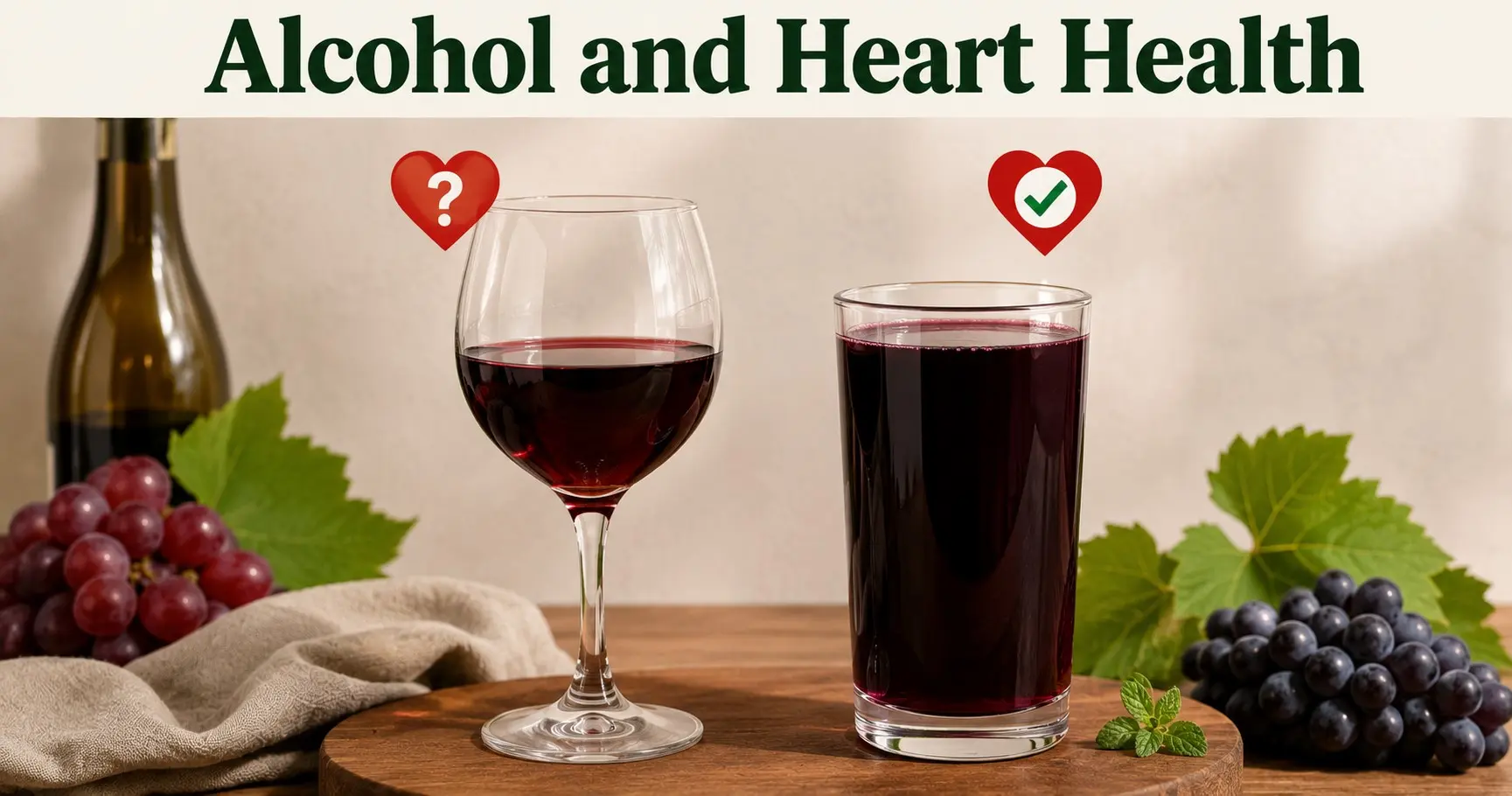
For years, doctors believed moderate drinking was good for the heart. Red wine, especially. A glass a day was said to protect your arteries. This idea shaped public health advice for decades.
The science on alcohol and heart health has changed. The newest and strongest evidence tells a different story. No level of alcohol protects your heart. The old belief was based on flawed research. This guide explains what the evidence shows today.
I want to be straightforward with you here. This topic involves popular beliefs that are hard to let go of. But the research is now very detailed, and you deserve to know what it actually says. Heart health complete guide
| KEY FACTS - 2026 POSITION | WHO 2023: No level of alcohol is safe for your health - this includes any heart benefit claim
The strongest type of study (Mendelian randomization) finds NO heart protection from alcohol. Drinking more than 2 drinks daily is one of the clearest causes of high blood pressure Each extra drink per day raises your risk of irregular heartbeat (atrial fibrillation) by 8% Alcohol raises triglycerides - a type of blood fat linked to heart disease Binge drinking can trigger dangerous heart rhythms even in a healthy heart The red wine 'health' chemical resveratrol exists in such tiny amounts that it has no real effect |
Why did people think red wine was good for the Heart?
The red wine heart health myth came from studies that compared drinkers to non-drinkers. These studies found that moderate drinkers had less heart disease than non-drinkers. This looked like a proof that alcohol protects the heart.
But there was a problem. The non-drinker group in many of these studies included people who used to drink heavily and stopped because they got sick. It also included people in poorer health, those who chose not to drink. This made moderate drinkers look healthier by comparison — not because alcohol helped them, but because the comparison group was unhealthy for other reasons.
This problem is called confounding. It means another hidden factor is creating a false appearance of cause and effect.
The Strongest Evidence - What Mendelian Randomization Studies Show
Scientists have found a clever way to test this properly. They used something called Mendelian randomization. This method uses genetic differences between people to study cause and effect without the confounding problem.
Some people are born with genes that make them drink less — alcohol makes them feel unwell, so they naturally avoid it. Because this is set by genetics at birth, it removes the lifestyle and health confounding factors. When researchers compared heart disease rates using this genetic approach, they found no protective effect from alcohol at all. People genetically predisposed to drink less had similar or better heart health outcomes than those predisposed to drink more.
This is now considered the strongest evidence available. It tells us the old red wine story was very likely a statistical illusion, not a real biological effect.
How Alcohol Actually Harms Your Heart
Rather than protecting the heart, alcohol harms it through several clear pathways. Here is the evidence laid out plainly.
| Effect | What Happens? | At What Level? | Evidence Strength |
| Raises blood pressure | Each drink raises pressure. Regular drinking above 2 units daily raises your baseline | 2 or more drinks daily | Very strong - one of the clearest dietary causes of high BP, the Mediterranean diet and heart health |
| Raises triglycerides | Your liver processes alcohol in a way that creates more blood fats | Any regular drinking | Strong - clear dose relationship |
| Raises the risk of irregular heartbeat | Each extra 10g of alcohol per day (about one drink) raises atrial fibrillation risk by 8% | Any regular level - risk rises with each drink Strong | - multiple large studies |
| Weakens the heart muscle | Years of heavy drinking can directly damage the heart muscle (cardiomyopathy) | Heavy long-term use, typically years | Strong for heavy drinkers |
| Disrupts sleep | Alcohol breaks up deep sleep and stops the normal nighttime blood pressure drop. | Even 2 drinks in the evening | Strong |
| Raises stroke risk | Alcohol raises blood pressure and may increase the risk in the brain | Heavy drinking especially | Strong |
How much alcohol is considered safe for the Heart in 2026?
Current guidance has changed significantly. Health bodies no longer describe alcohol as having any heart protection benefit. The guidance has moved from ‘a little is okay’ to ‘less is always preferable.
If you choose to drink, here is the current guidance from the UK NHS and similar bodies worldwide.
- Maximum 14 units per week - this is roughly 6 medium glasses of wine or 6 pints of average-strength beer, spread across the week.
- At least 2 to 3 alcohol-free days every week - this gives your liver, heart, and sleep a regular chance to recover.
- Never save up your units for one big drinking session - binge drinking is far more harmful to your heart than the same total amount spread out.
- If you have high blood pressure, irregular heartbeat, high triglycerides, or sleep apnea, cutting alcohol completely is likely to help your specific condition the most.
Atrial Fibrillation and Alcohol - The 'Holiday Heart' Effect
Atrial fibrillation causes a rapid, irregular heartbeat. It raises your risk of stroke significantly. Alcohol is one of the most common triggers doctors see for this condition.
It’s even recognized by name, Holiday Heart Syndrome. This describes people who binge drink often at holidays, weekends, or celebrations and develop sudden atrial fibrillation, even though they have no history of heart problems. This is one of the most common reasons for emergency room visits after heavy drinking occasions.
If you already have atrial fibrillation, alcohol is one of the strongest and most controllable triggers. Many doctors recommend cutting alcohol entirely as a first step in managing the condition — before even adjusting medication.
What about resveratrol in red wine?
Resveratrol is a compound found in grape skins. It was once proposed as the magic ingredient that made red wine heart-healthy. Animal studies showed promising effects.
But here is the problem. To get the same dose of resveratrol used in those animal studies, a person would need to drink hundreds of glasses of wine per day. The actual amount of resveratrol in a normal glass of wine is far too small to have any meaningful effect on your heart.
The good news is you do not need wine to get these plant compounds. Dark grapes, blueberries, dark berries, and unsweetened grape juice all contain polyphenols similar to those found in red wine — without any alcohol or its harms.
Stopping Alcohol - What Happens to Your Heart
The good news is that your heart responds quickly to drinking less. These changes are well-documented in research.
| Change | Timeline | What Improves? |
| Blood pressure understanding high blood pressure | Within 2 to 4 weeks | Systolic blood pressure can fall by 3 to 5 mm Hg or more in heavy drinkers who cut back |
| Triglycerides | Within 2 to 4 weeks | Significant drop in this blood fat marker linked to heart disease |
| Sleep quality sleep and heart health | Within days | Deep sleep returns. The normal overnight blood pressure dip is restored |
| Atrial fibrillation frequency | Weeks to months | Fewer episodes in people whose AF was triggered or worsened by drinking |
| Heart rate variability | Weeks | Often improves, reflecting a calmer, more balanced nervous system |
Key Takeaways - Alcohol and Heart Health
| SUMMARY | The strongest evidence (Mendelian randomization studies) shows no heart benefit from any amount of alcohol.
The old red wine benefit was likely a statistical illusion caused by unhealthy non-drinker comparison groups. Alcohol above 2 drinks daily is one of the clearest causes of high blood pressure. Each extra drink per day raises irregular heartbeat (atrial fibrillation) by 8% Binge drinking can trigger sudden atrial fibrillation, even in a healthy heart - holiday heart syndrome. Resveratrol in wine exists in amounts far too small to provide any real heart benefit. If you drink, stay under 14 units weekly with several alcohol-free days Reducing alcohol improves blood pressure and triglycerides within just 2 to 4 weeks |
References and Sources
1- WHO Statement on Alcohol and Health 2023
WHO authority. Use for: no safe level of alcohol statement, 2023 overall health position.
2- Alcohol and Atrial Fibrillation - JACC Meta-analysis
https://pubmed.ncbi.nlm.nih.gov/27614937/
Meta-analysis. Use for: 8% increase in AF risk per 10g of alcohol per day, dose-response data.
3- Mendelian Randomization and Alcohol Cardiovascular Benefit - BMJ 2022
https://pubmed.ncbi.nlm.nih.gov/34853100/
MR study. Use for: no causal cardiovascular benefit from moderate drinking using genetic analysis.
4- Alcohol and Blood Pressure - Cochrane Review
https://www.cochranelibrary.com/cdsr/doi/10.1002/14651858.CD012787.pub2/full
Cochrane review. Use for: alcohol raises blood pressure dose-dependent, with a reduction in the benefit timeline.
5- Holiday Heart Syndrome - American Journal of Cardiology
https://pubmed.ncbi.nlm.nih.gov/6351895/
Classic paper. Use for: binge drinking triggers atrial fibrillation in healthy hearts.
Part of Our Heart Health Series
Part of our complete cardiovascular resource. Read all topics in our Complete Heart Health Guide or browse the Heart Health Resource Directory.
Adel Galal
Health and Wellness Writer | 30+ Years Personal Practice | Founder, NextFitLife.com
Adel Galal has studied cardiovascular health for over 30 years. At 58, he rarely drinks alcohol after reviewing the modern evidence on alcohol and heart health. He is not a doctor. Everything here reflects personal research and published health guidance. Talk to your doctor about alcohol and your own heart health.

Health & wellness writer with 30+ years of experience in nutrition, fitness, and healthy aging. Founder of NextFitLife.com — evidence-based health guidance.