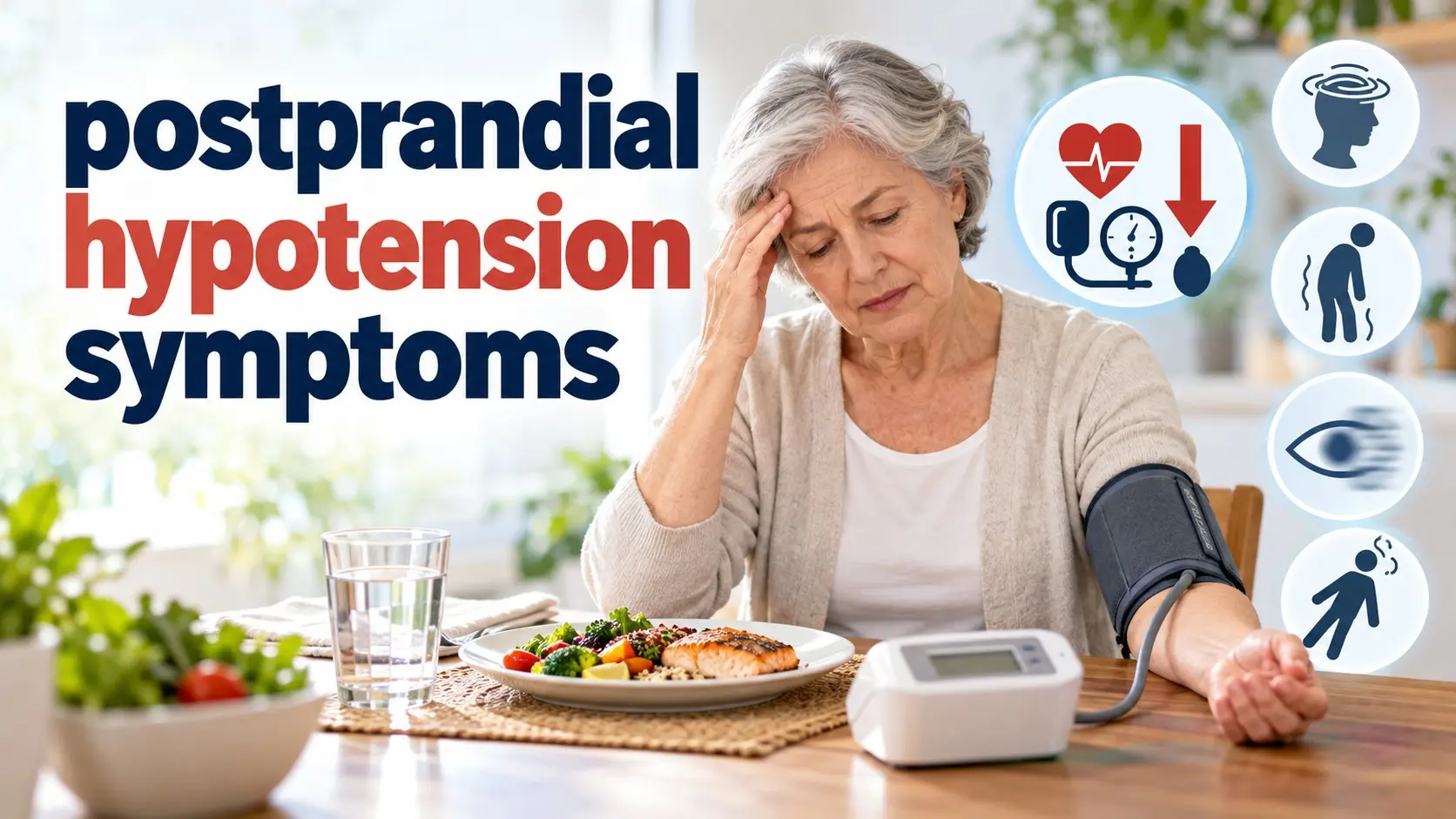
This problem is called postprandial hypotension. “Postprandial” means after a meal. “Hypotension” means low blood pressure.
For some people, blood pressure falls too much after eating. This can cause dizziness, weakness, blurred vision, or even fainting.
It is more common in older adults. It may also occur in people with diabetes, high blood pressure, Parkinson’s disease, or problems with the nerves that control blood pressure.
This guide explains the main postprandial hypotension symptoms, why they happen, and what you can do next.
This article is for education only. It does not replace care from a doctor or other health professional.
Quick Answer: What Are Postprandial Hypotension Symptoms?
Postprandial hypotension symptoms happen after you eat. Common signs include:
- Dizziness
- Feeling lightheaded
- Weakness
- Blurred vision
- Feeling faint
- Tiredness
- Confusion
- Falling or passing out
Symptoms often start within two hours after a meal. Some people notice them much sooner.
A drop in systolic blood pressure of about 20 mmHg or more after eating is often used when doctors check for this condition. However, your symptoms and health history also matter.
Table of Contents
- What is postprandial hypotension?
- 8 warning signs after eating
- When symptoms may start
- Why blood pressure drops after meals
- Who is more likely to get it
- How to check blood pressure after eating
- What may help
- When to call a doctor
- When to get emergency help
- Postprandial vs. orthostatic hypotension
- Frequently asked questions
What is postprandial hypotension?
Your body needs more blood around your gut after you eat. This helps your body digest food.
Your body should adjust to this change.
Your heart may beat a little faster. Blood vessels in other parts of your body may also tighten. These changes help keep your blood pressure steady.
Sometimes this response is too weak.
More blood moves toward the digestive system, but the rest of the body does not adjust enough. Blood pressure can then fall.
This is called postprandial hypotension.
8 Postprandial Hypotension Symptoms to Watch For
1. Dizziness After Eating
Dizziness is one of the most common signs.
You may feel that the room is moving. You may also feel unsteady when you stand or walk.
If this happens often after meals, check your blood pressure and tell your doctor.
2. Feeling Lightheaded
You may feel as if your head is light or empty.
Some people describe it as a floating feeling. Others feel that they may pass out.
Sit down if this happens. This can help lower your risk of falling.
3. Sudden Weakness
A blood pressure drop may make you feel weak.
Your arms or legs may feel heavy. A normal task may suddenly feel hard.
This feeling may improve as your blood pressure returns to normal.
4. Blurred Vision
Your vision may become blurry for a short time.
You may also see dark spots or feel that your vision is fading.
Do not drive when this happens.
5. Feeling Faint
You may feel close to passing out.
This is sometimes called presyncope.
Stop walking and sit or lie down. Do not try to push through the feeling.
6. Tiredness After Meals
Feeling a little sleepy after food can be normal.
But sudden or strong fatigue may be different.
If tiredness comes with dizziness or weakness, a blood pressure drop may be involved.
7. Confusion or Trouble Thinking
A strong blood pressure drop may affect how you feel and think.
You may have trouble focusing. You may also feel confused for a short time.
New or severe confusion needs medical attention.
8. Fainting or Falling
This is one of the more serious warning signs.
A person may lose balance and fall. Some people may pass out.
Falls can cause broken bones or head injuries. This risk is very important in older adults.
When Do Symptoms Start?
The timing can vary.
Some people notice symptoms about 15 to 30 minutes after eating. Others notice them later.
The blood pressure drop can occur during the first two hours after a meal.
Large meals may cause more trouble for some people. Meals high in fast-digesting carbs may also lead to a bigger drop.
Why Does Blood Pressure Drop After Eating?
Digestion needs blood.
After you eat, more blood flows to your stomach and intestines.
Your body usually makes up for this shift. Your heart and blood vessels work together to keep pressure stable.
That response may become weaker with age. Some health problems can also affect it.
As a result, blood pressure falls too much after food.
Who Is More Likely to Have It?
Postprandial hypotension is more common in older adults.
A 2024 review looked at 13 studies with 3,021 older adults. The researchers found that the condition was common. The exact rate varied a lot between the studies.
You may also have a higher chance of this problem if you have:
- High blood pressure
- Diabetes
- Parkinson’s disease
- Autonomic nerve problems
- Other conditions that affect blood pressure control
Some blood pressure medicines may also affect the pattern. Never stop or change a medicine on your own.
How Can You Check Blood Pressure After Eating?
A home blood pressure monitor can help show a pattern.
First, sit quietly for about five minutes.
Then take your blood pressure before you eat.
You can check it again after the meal. Your doctor may ask you to check at set times, such as 30, 60, 90, or 120 minutes later.
Write down:
- Your blood pressure
- Your heart rate
- What you ate
- What time you ate
- Any symptoms
- What time symptoms began
This log can help your doctor see a pattern.
Do not use one reading to diagnose yourself. Blood pressure changes during the day for many reasons.
What Is a 20 mmHg Drop?
Blood pressure has two numbers.
The top number is called systolic pressure.
For example, your pressure may be 140/80 before lunch.
Later, it may fall to 118/72.
The top number fell by 22 points.
That type of drop after eating may need further review, mainly if you also feel dizzy, weak, or faint.
Can You Have Postprandial Hypotension Without Symptoms?
Yes.
Some people have a clear blood pressure drop but feel normal.
Others have strong symptoms.
This is one reason symptoms alone cannot confirm the problem.
Your doctor may need blood pressure readings before and after meals.
What May Help With Postprandial Hypotension?
Treatment depends on the cause.
Your age, medicines, heart health, and other conditions also matter.
Your doctor may suggest simple changes first.
Eat Smaller Meals
A very large meal may send more blood to the digestive system.
Smaller meals may cause a smaller change.
Some people do better with several smaller meals during the day.
Watch Large Carb Loads
Some high-carb meals can cause a larger blood pressure drop.
This does not mean you must remove all carbs.
Instead, ask your doctor or dietitian how to build balanced meals.
Drink Enough Fluid
Low fluid levels can make low blood pressure worse.
Drink enough water unless your doctor has told you to limit fluids.
This is very important if you also have dehydration and blood pressure changes.
Stand Up Slowly
Do not rush to stand after eating if you feel dizzy.
Sit for a moment first. Then stand slowly.
Hold a stable surface if needed.
Review Your Medicines
Some medicines lower blood pressure.
The time you take them may also matter.
Do not skip a dose or change the time by yourself.
Ask your doctor or pharmacist to review your medicines.
Should You Lie Down After Eating?
Some people feel better when they sit or lie down after a meal.
This may reduce the chance of a fall when blood pressure is low.
However, your best plan depends on your health.
For example, lying down after food may make acid reflux worse in some people.
Ask your doctor what is safest for you.
Postprandial Hypotension vs. Orthostatic Hypotension
These two problems are not the same.
Postprandial hypotension happens after food.
Orthostatic hypotension happens after you stand up.
A person can have one or both problems.
If you mainly feel dizzy when you rise from a chair or bed, read our guide to orthostatic hypotension symptoms.
Could It Be Low Blood Sugar Instead?
It is possible.
Low blood sugar can also cause weakness or dizziness.
Other signs may include shaking, sweating, hunger, or a fast heartbeat.
Reactive low blood sugar often occurs about two to four hours after eating.
Postprandial hypotension is about blood pressure, not blood sugar.
The two problems can feel similar. That is why testing matters.
When Should You Call a Doctor?
Talk with a health professional if symptoms keep coming back.
This is even more important if you:
- Often feel dizzy after meals
- Almost faint after eating
- Have fallen
- Have diabetes
- Have Parkinson’s disease
- Take medicine for high blood pressure
- Have heart disease
Bring your blood pressure log if you have one.
When Is It an Emergency?
Some symptoms need urgent care.
Get emergency help for:
- Chest pain
- Severe trouble breathing
- Passing out and not waking quickly
- A serious injury after a fall
- Sudden weakness on one side
- New trouble speaking
- Severe confusion
- Signs of shock
Do not assume every fainting spell after food is harmless.
Simple Example
Imagine that Maria is 72.
Her blood pressure is 138/76 before lunch.
Forty-five minutes later, she feels dizzy and weak.
Her blood pressure is now 114/70.
Her top number fell by 24 mmHg.
This does not prove the cause on its own.
But the pattern gives her doctor useful information.
How to Lower Your Risk of Falls
Falls are a key concern when blood pressure drops.
These simple steps may help keep you safe:
- Sit down when dizziness starts.
- Stand up slowly.
- Keep walkways clear.
- Use good lighting.
- Wear shoes with good grip.
- Do not walk alone if you feel faint.
For more heart and circulation guides, visit our Heart and Cardiovascular Health hub.
What to Tell Your Doctor
Try to give clear details.
Tell your doctor:
- When symptoms begin
- How long they last
- Which meals seem to trigger them
- Your blood pressure before food
- Your blood pressure after food
- Any falls or fainting
- All medicines you take
This can make it easier to find the cause.
Conclusion
Postprandial hypotension symptoms can be easy to miss.
Dizziness, weakness, blurred vision, and faintness after meals are key signs.
One mild episode may have many causes. Repeated symptoms deserve more attention.
Track when your symptoms occur. Check your blood pressure if your doctor recommends it. Most of all, get medical advice if the problem keeps coming back.
You can find more plain-language health guides in the NextFitLife Health Hub.
Internal Links and Health Hubs
- Heart and Cardiovascular Health
- Orthostatic Hypotension Symptoms
- Dehydration and Blood Pressure
- NextFitLife Health Hub
About the Author
NextFitLife Editorial Team
NextFitLife creates clear health, nutrition, and fitness guides for everyday readers. Our goal is to make useful health information easier to understand and use.
Our content is for education only. It is not a diagnosis or a replacement for medical care.
Frequently Asked Questions
What are the main postprandial hypotension symptoms?
Common symptoms include dizziness, weakness, blurred vision, lightheadedness, tiredness, and feeling faint after eating. Some people may fall or pass out.
How soon after eating can blood pressure drop?
It can start soon after a meal. Doctors may watch blood pressure for up to two hours after eating.
Why do I feel dizzy after I eat?
There are many possible causes. A fall in blood pressure is one. Low blood sugar, dehydration, medicines, or other health problems can also cause dizziness.
How is postprandial hypotension diagnosed?
A doctor may compare your blood pressure before and after a meal. A large fall in the top number can support the diagnosis, mainly when symptoms happen at the same time.
Is postprandial hypotension dangerous?
It can be. The main risks include fainting and falls. A severe blood pressure drop may also reduce blood flow to vital organs.
Can eating smaller meals help?
It may help some people. Smaller meals and fewer fast-digesting carbs may reduce the drop in blood pressure. Ask your doctor what is right for you.
Is postprandial hypotension the same as orthostatic hypotension?
No. Postprandial hypotension happens after eating. Orthostatic hypotension happens after standing up. Some people have both.
References and Sources
- Merck Manual — Postprandial Hypotension
https://www.merckmanuals.com/home/heart-and-blood-vessel-disorders/symptoms-of-heart-and-blood-vessel-disorders/postprandial-hypotension
- Huang L, et al. Prevalence of Postprandial Hypotension in Older Adults: Systematic Review and Meta-Analysis
https://pmc.ncbi.nlm.nih.gov/articles/PMC10898335/
- American Heart Association — Low Blood Pressure
https://www.heart.org/en/health-topics/high-blood-pressure/the-facts-about-high-blood-pressure/low-blood-pressure-when-blood-pressure-is-too-low
- Cleveland Clinic — Low Blood Pressure
https://my.clevelandclinic.org/health/diseases/21156-low-blood-pressure-hypotension
- Cleveland Clinic — Orthostatic Hypotension
https://my.clevelandclinic.org/health/diseases/9385-low-blood-pressure-orthostatic-hypotension

Health & wellness writer with 30+ years of experience in nutrition, fitness, and healthy aging. Founder of NextFitLife.com — evidence-based health guidance.