Published on: October 22, 2026
Updated on: October 22, 2026
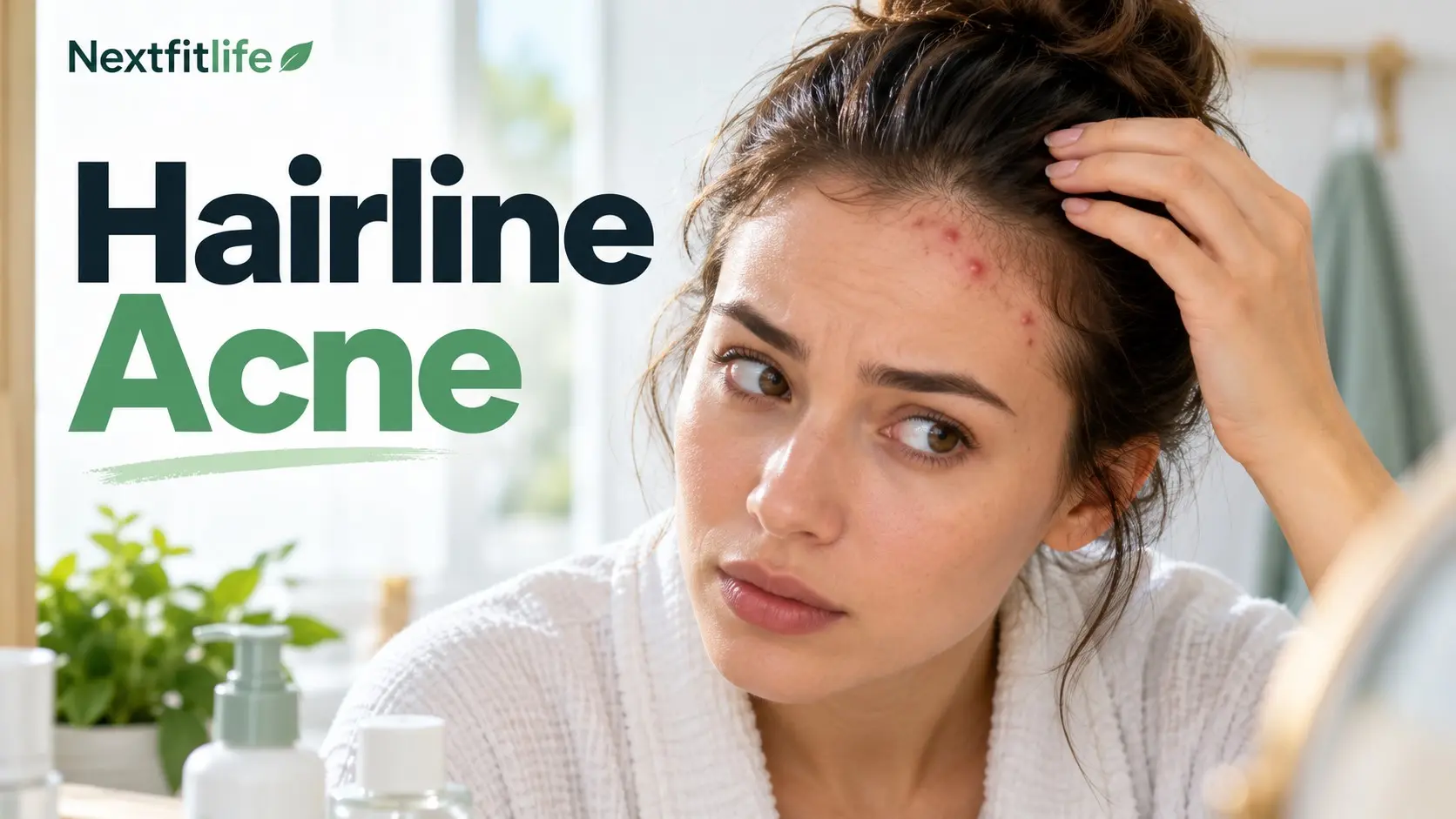
Hairline acne often starts when oil, dead skin, sweat, or hair product residue blocks follicles where the forehead meets the scalp. Pomades, leave in conditioners, styling waxes, dry shampoo, hats, helmets, and oily hair can all contribute.
But there is a catch: not every bump along the hairline is acne.
Quick answer: Hairline acne often comes from pore clogging hair products, scalp oil, sweat, friction, or ordinary acne. Stop suspicious oily products, cleanse gently, keep hats and pillowcases clean, and use a suitable acne treatment. If the bumps are very itchy, all look alike, scale, crust, or keep returning, folliculitis or dermatitis may be the real problem.
Medical note: This article is for general information and education. It does not replace medical advice, diagnosis, or treatment.
I am not a dermatologist or a doctor, and this content does not replace professional medical advice. What I share comes from real life experience, extensive research, and consultation with healthcare providers. Always consult qualified medical professionals for diagnosis and treatment of any health condition.
Get Medical Help for Severe or Unusual Hairline Bumps
Most mild hairline breakouts are not an emergency.
Get medical advice if you develop:
- Deep painful lumps
- Rapidly spreading redness
- Hot or swollen skin
- Heavy crusting
- Drainage or signs of infection
- Hair loss around inflamed bumps
- Severe scalp pain
- Scarring
- Acne that is affecting your mental health
Persistent bumps also deserve a proper diagnosis when ordinary acne treatment keeps making them worse.
Table of Contents
- What hairline acne means
- 11 critical clues
- Hair products
- Residue on fabrics
- Hats and helmets
- Sweat and friction
- Oily scalp and hair
- Makeup and sunscreen
- Ordinary acne
- Folliculitis
- Malassezia folliculitis
- Dermatitis
- Treatment response and red flags
- How to get rid of hairline acne
- Simple morning and evening routine
- Best treatment ingredients
- Hair product reset
- Hairline acne versus fungal acne
- Dandruff and scalp problems
- Acne marks and scars
- When to see a dermatologist
- Common myths
- Frequently asked questions
- References and Sources
What Does Hairline Acne Mean?
Hairline acne describes blackheads, whiteheads, red pimples, pustules, or clogged bumps that appear where your forehead meets your scalp.
The location gives you a clue, but not a diagnosis.
True acne develops when a hair follicle becomes blocked with oil and dead skin cells. Inflammation can then create red or pus filled spots.
Hair products make this area different from the middle of your cheek.
Shampoo, conditioner, pomade, hair oil, gel, wax, edge control, spray, dry shampoo, sunscreen, and makeup can all reach the same narrow strip of skin.
The American Academy of Dermatology calls breakouts caused by pore clogging hair products acne cosmetica.
Hairline Acne: 11 Critical Clues to Check
1. Hair Products Are One of the First Things to Check
This is the classic hairline acne pattern.
AAD explains that oils in hair products can reach the skin, block pores, and produce whiteheads or small flesh colored bumps along the hairline, forehead, and sometimes the back of the neck.
Possible triggers include:
- Pomade
- Hair oils
- Leave in conditioner
- Styling wax
- Gel
- Hair spray
- Dry shampoo
- Heavy styling cream
- Some shampoos and conditioners
If the breakout began soon after you added a product, that product goes high on the suspect list.
Look for labels such as noncomedogenic, oil free, non acnegenic, or won’t clog pores.
2. The Product May Be Gone From Your Hair but Still Be on Your Pillow
This part is easy to miss.
Stopping a pomade while sleeping on the same product coated pillowcase can keep exposing the skin.
AAD recommends washing items that collect hair product residue, including:
- Pillowcases
- Sheets
- Caps
- Hats
- Headbands
- Visors
The rule is simple: if it repeatedly touches the hairline, keep it clean.
3. Hats, Helmets, and Headbands Can Create Acne Mechanica
A breakout that sits exactly under the edge of a helmet or cap tells a different story.
Pressure, rubbing, heat, trapped sweat, oil, and product residue can irritate acne prone skin.
This pattern is often called acne mechanica.
Sports equipment is a known acne trigger, especially where it repeatedly presses against the same skin.
Clean washable liners and headbands regularly and let damp equipment dry properly between uses.
4. Sweat Matters More When It Is Trapped Against the Skin
Sweat itself is not dirt.
The problem is the mix of sweat, oil, product residue, heat, and friction sitting under a cap or helmet for hours.
After heavy sweating, rinse or gently cleanse the hairline when practical.
Do not respond by scrubbing hard. Irritated skin does not need extra friction.
5. An Oily Scalp Can Keep Feeding the Hairline
Hair oil moves.
If your scalp and fringe become oily quickly, that oil can sit against the forehead for much of the day.
AAD advises shampooing oily hair regularly and keeping hair away from acne prone skin when possible.
That does not mean washing your scalp aggressively until it feels stripped.
Choose a wash schedule that keeps heavy oil and product buildup under control without irritating your scalp.
6. Makeup and Sunscreen Can Add Another Occlusive Layer
The hairline is where skincare, makeup, sunscreen, and hair products meet.
That overlap matters.
If you use foundation right into the hairline, a heavy sunscreen, then oily styling products over the same area, it becomes hard to know what is triggering the breakout.
During a flare, keep the area simple.
Choose noncomedogenic skincare and remove makeup and sunscreen gently at night.
7. Sometimes It Is Ordinary Acne That Happens to Reach the Hairline
Not every forehead pimple comes from pomade.
Ordinary acne forms when follicles clog with oil and dead skin cells and become inflamed.
Hormone changes can increase acne tendency during:
- Puberty
- Menstrual cycles
- Pregnancy
- Menopause
- Other hormone shifts
If you also have blackheads, whiteheads, inflamed pimples, or deeper spots across the forehead, cheeks, chin, chest, or back, your hairline may simply be part of a wider acne pattern.
Our Jawline Acne Causes guide explains why location alone should never be used to diagnose “hormonal acne.”
8. Folliculitis Can Look Almost Exactly Like Acne
This is where many home routines go wrong.
Folliculitis means a hair follicle has become inflamed or infected.
It can produce small red bumps, pustules, itch, or tenderness.
Friction, shaving, heavy sweating, bacteria, yeast, and other causes can all play a role.
AAD specifically warns that folliculitis can be mistaken for acne.
If your bumps keep returning despite a sensible acne routine, the diagnosis deserves another look.
9. Very Itchy, Uniform Bumps Raise the Question of Malassezia Folliculitis
Online, this is usually called “fungal acne.”
The more accurate name is Malassezia folliculitis.
Unlike classic acne, it is linked with yeast affecting hair follicles.
Clues can include:
- Many bumps that look almost identical
- Marked itching
- Small follicular papules or pustules
- Forehead or hairline involvement
- Similar bumps on the chest or upper back
Those clues do not confirm the diagnosis on their own.
Do not assume every itchy forehead bump needs antifungal treatment.
If the pattern fits and keeps returning, professional assessment is more useful than random product experiments.
10. Red, Flaky, Burning Skin May Be Dermatitis Instead
If the main problem is burning, itching, scaling, or redness rather than clogged pores, think beyond acne.
Hair dye, fragrance, shampoo, conditioner, gels, sprays, and preservatives can irritate skin or cause contact dermatitis.
Dandruff and seborrheic dermatitis can also affect the scalp and hairline.
Applying stronger salicylic acid to an irritated rash can make the situation worse.
11. Your Response to Treatment Is a Clue Too
If removing a suspicious hair product and using a simple acne routine helps, that supports acne as the problem.
AAD says product related acne can take about four to six weeks to clear after the offending product is stopped.
If six weeks pass and nothing changes, reconsider the diagnosis.
A persistent itchy rash, spreading redness, crusting, hair loss, or worsening pain is not a reason to keep adding stronger acne products.
How to Get Rid of Hairline Acne
I would use a simple sequence rather than attack the skin with everything at once.
Step 1: Remove the Most Likely Trigger
Start with products that stay close to the scalp or hairline.
Pause:
- Hair oils
- Pomades
- Heavy waxes
- Greasy edge control
- Leave in conditioners that reach the forehead
Then watch the pattern.
Do not remove ten products and start six treatments on the same day. You will have no idea which change mattered.
Step 2: Wash Product Residue From Contact Surfaces
Change the pillowcase.
Wash the cap.
Clean the helmet liner according to its instructions.
Wash headbands and anything else that repeatedly presses against the hairline.
Step 3: Wash Gently Twice a Day
Current NHS acne guidance recommends gentle cleansing twice daily.
Use your fingertips and lukewarm water.
A rough washcloth, cleansing brush, or facial scrub adds irritation without unclogging a follicle more effectively.
Step 4: Keep Hair Products Back From the Forehead
If possible, apply styling product mainly to the hair instead of rubbing it into the skin border.
Keep bangs or oily hair away from the forehead during a flare when practical.
Step 5: Choose One Acne Active That Matches the Breakout
Different bump types call for different tools.
| Main Pattern | Common Option | Key Caution |
|---|---|---|
| Whiteheads and clogged bumps | Salicylic acid | Reduce use if skin becomes irritated |
| Red inflammatory pimples | Benzoyl peroxide | Can dry skin and bleach hair or fabric |
| Repeated clogged pores | Adapalene | Can irritate skin when first introduced |
| Acne plus lingering dark marks | Azelaic acid | Can sting at first |
| Very itchy uniform bumps | Diagnosis first | Could be folliculitis rather than acne |
AAD's current acne guideline supports benzoyl peroxide, topical retinoids, salicylic acid, and azelaic acid among evidence based topical options.
Step 6: Moisturize if Treatment Is Drying the Skin
Dry, irritated skin does not mean the treatment is “working harder.”
A light, noncomedogenic moisturizer can make acne treatment easier to tolerate.
This matters around the hairline because shampoo, sweat, hair dye, and acne actives can all irritate the same skin.
Step 7: Stop Picking
Picking adds inflammation and raises the chance of scars or lingering dark marks.
That is especially important if your skin develops post inflammatory hyperpigmentation after pimples heal.
The pimple may last days. The mark can last much longer.
A Simple Hairline Acne Routine
Morning
- Wash gently.
- Use one planned acne treatment if it belongs in your routine.
- Apply a light noncomedogenic moisturizer if needed.
- Use noncomedogenic broad spectrum sunscreen on exposed skin.
- Keep oily styling products away from the forehead.
Evening
- Remove makeup and sunscreen gently.
- Wash the hairline and face.
- Apply your planned acne treatment.
- Moisturize if needed.
That is enough for many mild breakouts.
A longer routine is not automatically a better one.
Should You Use Salicylic Acid for Hairline Acne?
Salicylic acid helps open clogged pores and exfoliate inside the follicle.
It makes sense when small whiteheads, blackheads, and clogged bumps dominate.
AAD includes salicylic acid among recommended topical acne options.
Start with one salicylic product rather than a cleanser, toner, serum, and spot treatment all at once.
Does Benzoyl Peroxide Help Hairline Pimples?
It can help red, inflamed acne.
Benzoyl peroxide is strongly supported in current acne treatment guidance.
There is one practical problem at the hairline: it can bleach hair, towels, pillowcases, and clothing.
Use it carefully around colored hair.
What About Adapalene?
Adapalene is a topical retinoid that helps prevent clogged follicles.
It is useful for blackheads, whiteheads, and some inflammatory acne.
Retinoids work across acne prone skin rather than acting like a quick emergency treatment for one spot.
They also take time.
If pregnancy is possible, discuss acne medicines with a qualified clinician because pregnancy changes which treatments are appropriate.
Can Azelaic Acid Help?
Yes.
Azelaic acid is another guideline supported option.
It can help acne and may also help some lingering discoloration after pimples flatten.
Introduce it slowly if your skin is sensitive.
How Long Does Hairline Acne Take to Clear?
Do not expect an overnight reset.
AAD says acne caused by hair products usually clears slowly after the offending product is removed and can take about four to six weeks.
Ordinary acne treatment also needs time.
If you switch your routine every three days, it becomes almost impossible to judge what is helping.
Hairline Acne or Fungal Acne?
The phrase “fungal acne” is popular online, but it can lead people into self diagnosis.
Malassezia folliculitis is not classic acne.
| Clue | Classic Acne | Malassezia Folliculitis |
|---|---|---|
| Bump variety | Mixed blackheads, whiteheads, pimples | Bumps often look very similar |
| Itching | Usually not the main feature | Often more noticeable |
| Comedones | Blackheads or whiteheads may be present | Typical comedones are less characteristic |
| Other sites | Face, chest, back | Forehead, scalp, chest, upper back can be involved |
The table gives clues, not a home diagnosis.
If the bumps are intensely itchy and uniform, ask a clinician to check what you are actually treating.
What If Hairline Acne Comes With Dandruff?
Dandruff changes the picture.
A flaky, itchy, greasy, or red scalp can point toward seborrheic dermatitis or another scalp problem rather than simple acne alone.
Hair products can also trigger contact dermatitis.
See a clinician if you have:
- Marked flaking
- Strong itching
- Burning
- Crusting
- Hair loss
- A spreading scalp rash
Do not keep treating every scalp bump as acne when the skin is clearly behaving like a rash.
Does Diet Cause Hairline Acne?
The location itself does not point to one food.
Current acne evidence suggests that some dietary patterns may influence acne in some people, but AAD's guideline found insufficient evidence to make strong dietary treatment recommendations for everyone.
I would not remove dairy, gluten, sugar, or several food groups simply because pimples appeared at your hairline.
Start with the local clues first: hair products, friction, scalp oil, sweat, and the type of bumps.
Can Stress Cause Hairline Acne?
Stress can worsen acne in some people, but it is rarely the whole explanation.
The location still makes product contact and scalp factors worth checking.
Do not respond to a stress flare by scrubbing harder or adding several irritating acids.
Keep the treatment steady.
Can Hairline Acne Leave Dark Marks?
Yes.
Inflamed acne can leave flat brown, gray, red, or purple marks after a pimple heals.
Darker skin tones are particularly prone to persistent post inflammatory hyperpigmentation.
Picking makes this more likely.
Treat the active acne first and protect exposed skin from sunlight.
Can Hairline Acne Cause Scars?
Deep inflammatory acne can scar.
The risk is higher with nodules, cysts, repeated picking, and prolonged uncontrolled inflammation.
If you are developing dents, raised scars, or deep painful bumps, do not wait months trying random over the counter products.
Hairline Acne Mistakes That Slow Progress
Mistake 1: Treating the Acne but Keeping the Pomade
If the product is the trigger, medication has to fight new pore clogging every day.
Mistake 2: Scrubbing the Hairline
Acne is not dirt stuck to the surface.
Harsh scrubbing adds irritation.
Mistake 3: Trying Four Acne Actives at Once
If your skin becomes red and sore, you will not know which product caused it.
Mistake 4: Forgetting the Pillowcase and Hat
Anything coated with hair product can move residue back onto the skin.
Mistake 5: Calling Every Itchy Bump Fungal Acne
Itch is a clue, not a diagnosis.
Mistake 6: Picking Small Whiteheads
Picking increases inflammation and the chance of marks.
Mistake 7: Expecting a Two Day Cure
Product related hairline acne can need four to six weeks to settle after the trigger is removed.
When Should You See a Dermatologist?
See a GP or dermatologist if:
- You have tried sensible self care and the acne is not improving
- The spots are deep or painful
- You are developing scars
- The skin looks infected
- The bumps are intensely itchy
- You have significant scalp flaking or hair loss
- The rash spreads
- Standard acne treatment keeps making it worse
- The problem is affecting your confidence or mental health
The NHS recommends medical help when acne is severe, painful, scarring, infected, resistant to self care, or affecting mental wellbeing.
Hairline Acne Myths Worth Dropping
Myth 1: Hairline Acne Means Your Skin Is Dirty
No. Acne develops inside follicles. Scrubbing harder will not solve it.
Myth 2: Natural Hair Oils Cannot Cause Acne
Natural does not mean noncomedogenic. An oil can still reach the skin and contribute to clogged pores.
Myth 3: Every Hairline Bump Is Acne
No. Folliculitis, Malassezia folliculitis, dermatitis, and scalp conditions can mimic acne.
Myth 4: Drying the Skin Clears Acne Faster
Excess irritation can make treatment harder to tolerate.
Myth 5: Toothpaste Is an Acne Treatment
Skip it. Use treatments designed for acne prone skin.
Myth 6: You Have to Stop All Hair Products Forever
No. Remove likely triggers, let the skin clear, then choose lighter or noncomedogenic options.
Myth 7: Face Mapping Can Tell You the Exact Internal Cause
No. Location can give useful exposure clues, but it cannot diagnose hormones, digestion, or another internal problem by itself.
Conclusion: Fix the Trigger Before Adding More Treatment
The best way to approach hairline acne is to start with what touches that strip of skin. Check hair oils, pomades, leave in products, hats, helmet liners, oily bangs, makeup, and sunscreen before building a complicated skincare routine.
Then match treatment to the actual bump type.
Your next step: remove the most suspicious hair product today, wash your pillowcase and headwear, and use one simple acne treatment consistently. If the bumps are very itchy, uniform, flaky, painful, or unchanged after several weeks, get the diagnosis checked instead of adding another product.
References and Sources
- American Academy of Dermatology. Are Your Hair Care Products Causing Breakouts?https://www.aad.org/public/diseases/acne/causes/hair-products
- American Academy of Dermatology. Acne: Diagnosis and Treatment.https://www.aad.org/public/diseases/acne/derm-treat/treat/
- American Academy of Dermatology. Acne Clinical Guideline.https://www.aad.org/member/clinical-quality/guidelines/acne
- NHS. Acne.https://www.nhs.uk/conditions/acne/
- Cleveland Clinic. Scalp Pimples and Acne.https://my.clevelandclinic.org/health/diseases/24397-scalp-pimples-acne
- Cleveland Clinic. Folliculitis.https://my.clevelandclinic.org/health/diseases/17692-folliculitis
- NHS. Dandruff.https://www.nhs.uk/conditions/dandruff/
Internal Links + Hub
- Mask Acne
- Jawline Acne Causes
- Chin Acne Causes
- NextFitLife Health, Fitness, Nutrition and Beauty Hub
About the Author
Adel Galal is a father of four (three sons and a daughter) and a grandfather of four, with 33 years of hands on parenting experience. He is the founder of Parnthub.com, based in Cairo, Egypt, where he shares practical guidance on feeding, development and family life from newborns to teenagers. Adel is not a medical professional; health articles cite trusted sources and are for general information only.
For more information about NextFitLife and its editorial standards, visit the About Us page.
Frequently Asked Questions About Hairline Acne
What does hairline acne mean?
Hairline acne means acne like bumps are appearing where the forehead meets the scalp. Hair products, oil, sweat, friction, ordinary acne, and scalp conditions can all contribute, so the location alone does not reveal the exact cause.
What causes hairline acne?
Common hairline acne causes include oily hair products, pomade, leave in conditioner, scalp oil, sweat, helmets, hats, headbands, makeup, sunscreen, and ordinary acne. Folliculitis or dermatitis can also mimic acne in the same area.
How do I get rid of hairline acne?
Stop suspicious pore clogging hair products, wash residue from pillowcases and headwear, cleanse gently, keep oily hair away from the forehead, and use one suitable acne treatment such as salicylic acid, benzoyl peroxide, adapalene, or azelaic acid when appropriate.
How long does hairline acne take to clear?
AAD says acne caused by hair products can take about four to six weeks to clear after the pore clogging product is stopped.
Can shampoo cause hairline acne?
Yes. AAD says shampoos, conditioners, styling gels, waxes, sprays, and other hair products can contain oils or ingredients that reach the skin and contribute to clogged pores.
Can pomade cause hairline acne?
Yes. Oil rich pomades are a classic trigger for acne cosmetica around the hairline and forehead.
Can helmets cause hairline acne?
Helmet edges can add pressure, rubbing, sweat, heat, and product buildup against acne prone skin. This friction related pattern is often described as acne mechanica.
Is hairline acne fungal acne?
Not usually. Classic acne and Malassezia folliculitis are different conditions. Very itchy, uniform bumps without typical blackheads or whiteheads raise more suspicion for folliculitis.
How can I tell hairline acne from folliculitis?
Classic acne often contains a mixture of blackheads, whiteheads, red pimples, and pustules. Folliculitis often produces follicle centered bumps that can itch or hurt and may look more uniform.
Does salicylic acid help hairline acne?
Yes. Salicylic acid is a guideline supported acne treatment that helps open clogged pores and can suit whiteheads, blackheads, and small pimples.
Does benzoyl peroxide help hairline acne?
Benzoyl peroxide can help inflamed acne. It may dry or irritate skin and can bleach hair, towels, pillowcases, and clothing.
Can I use adapalene on hairline acne?
Adapalene is a topical retinoid used for clogged pores and pimples. Introduce it carefully because irritation can occur, and discuss retinoid use with a clinician if pregnancy is possible.
Can dandruff cause bumps around the hairline?
Dandruff and seborrheic dermatitis can cause scalp and hairline inflammation that may look different from acne. Strong itching, greasy scale, redness, or widespread flaking deserves a closer look.
Should I pop hairline pimples?
No. Picking and squeezing increase inflammation and can raise the risk of scars and lingering dark marks.
When should I see a dermatologist for hairline acne?
Seek professional care for deep painful acne, scarring, infection, severe itching, hair loss, spreading rash, significant scalp inflammation, or bumps that do not improve with a consistent routine.
Medical disclaimer: I am not a dermatologist or a doctor, and this content does not replace professional medical advice. What I share comes from real-life experience, extensive research, and consultation with healthcare providers. Always consult qualified medical professionals for diagnosis and treatment of any health condition.

Health & wellness writer with 30+ years of experience in nutrition, fitness, and healthy aging. Founder of NextFitLife.com — evidence-based health guidance.