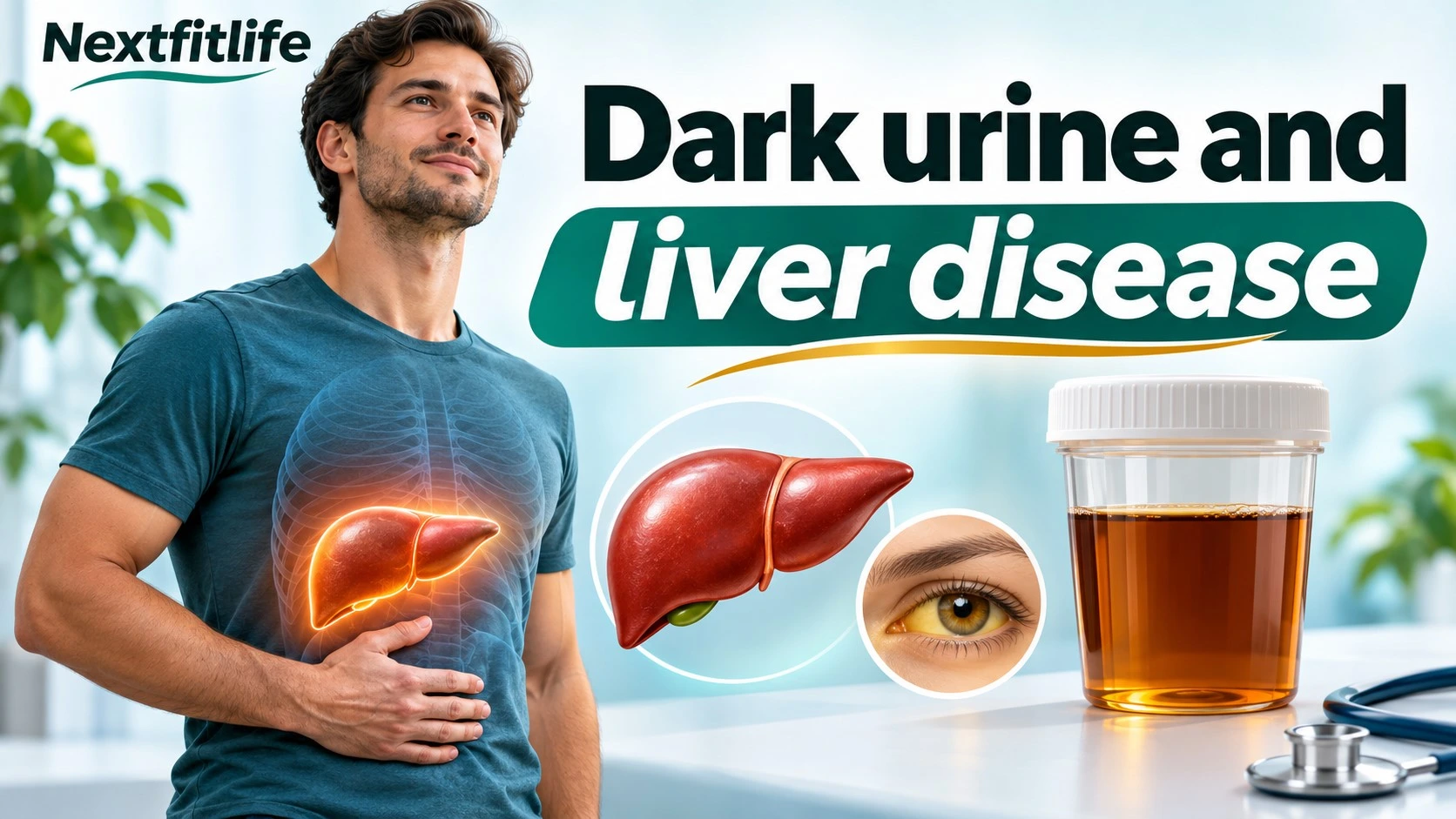
Dark urine and liver disease can be connected, especially when urine looks tea colored or clear dark brown and appears with yellow eyes, pale stool, itching, nausea, or abdominal symptoms.
But dark urine is not automatically a liver problem. Dehydration, blood in the urine, some medicines, food pigments, and serious muscle injury can also change urine color.
Quick Answer
Dark urine can occur in liver disease when conjugated bilirubin builds up in blood and passes into urine. Liver related urine may look tea, cola, or dark brown. Dark urine with jaundice, pale stool, itching, abdominal pain, vomiting, confusion, or bleeding needs medical assessment rather than being assumed to be dehydration.
One detail is especially useful: urine can become dark from conjugated bilirubin before obvious jaundice appears in the skin or eyes.
That makes persistent unexplained dark urine worth noticing, but color by itself still cannot tell you which condition is present.
This article is for general information and education. It does not replace medical advice, diagnosis, or treatment.
Get urgent medical care for serious warning signs
Seek urgent help for dark urine with:
- Confusion or unusual drowsiness
- Vomiting blood
- Black or tarry stool
- Fainting
- Severe abdominal pain
- Severe weakness
- Very little urine
- Severe jaundice with illness
- Tea or cola colored urine with severe muscle pain or weakness after heavy exertion
For the broader liver picture, see the NextFitLife Liver Health Guide and the Liver Health, Fatty Liver, Hepatitis, Gallbladder and Detox Claims Hub.
What You Will Learn
- Why bilirubin can make urine dark
- Why dark urine can appear before visible jaundice
- How pale stool and itching change the picture
- How hepatitis and bile problems can cause dark urine
- Why medicines and supplements matter
- How muscle breakdown can mimic liver related dark urine
- When dark urine needs prompt or urgent medical care
Table of Contents
- What Does Dark Urine Mean?
- Why Liver Disease Can Darken Urine
- 1. Dark Urine With Yellow Eyes
- 2. Dark Urine With Pale Stool
- 3. Dark Urine With Itching
- 4. Hepatitis and Dark Urine
- 5. Medicines and Supplements
- 6. Muscle Injury and Cola Urine
- 7. Blood and Urinary Causes
- Dehydration vs Liver Causes
- Dark Urine Before Jaundice
- Fatty Liver and Dark Urine
- Tests a Clinician May Order
- When to Call a Clinician
- When It Is an Emergency
- Conclusion
- References and Sources
- Internal Links and Hub
- About the Author
- Frequently Asked Questions
What Does Dark Urine Actually Mean?
People use the words “dark urine” for several colors, and they do not all point toward the same cause.
| Urine Color | Possible Explanation | What Adds Concern |
|---|---|---|
| Dark yellow or amber | Concentrated urine, often with dehydration | Persistence despite normal fluid intake |
| Tea or dark brown | Bilirubin, blood, severe dehydration, or muscle pigment | Jaundice, pale stool, itching, muscle pain |
| Red, pink, or smoky | Blood, foods, medicines, or urinary causes | Pain, clots, urinary symptoms, repeated episodes |
| Orange | Concentrated urine, some medicines, vitamins, or pigments | Jaundice or persistent unexplained change |
MedlinePlus lists liver disorders, severe dehydration, medicines, urinary bleeding, foods, and rhabdomyolysis among possible causes of abnormal urine color.
The color is a clue. It is not a diagnosis.
Why Can Liver Disease Make Urine Dark?
The key substance is bilirubin.
Your body makes bilirubin while breaking down old red blood cells. The liver processes bilirubin and helps move it into bile so it can eventually leave the body.
When liver cells are injured or bile cannot flow normally, conjugated bilirubin can build up in the blood.
Conjugated bilirubin is water soluble, so the kidneys can pass some of it into urine. That is called bilirubinuria.
The key distinction:
Conjugated bilirubin can enter urine. Unconjugated bilirubin does not enter urine in the same way because it is not water soluble.
That is why some liver and bile conditions produce dark urine while other causes of increased bilirubin do not.
1. Dark Urine With Yellow Eyes Raises Concern for Bilirubin
Look at the whites of the eyes as well as the urine.
Dark urine plus yellowing of the eyes or skin makes bilirubin much more relevant than dark urine alone.
Jaundice can occur with many liver and bile conditions, including:
- Hepatitis
- Cholestasis
- Cirrhosis
- Bile duct obstruction
- Drug induced liver injury
- Other liver and gallbladder conditions
The combination needs medical assessment because urine color cannot tell you which one is responsible.
For a wider look at these conditions, use the NextFitLife Liver Health Sub Hub.
2. Dark Urine With Pale Stool Points Toward Bile Flow
This combination gives more information than dark urine alone.
Normal stool gets much of its brown color from bile related pigments. When bile production or bile flow is reduced, stool can become pale, gray, or clay colored stool while urine becomes darker.
Possible causes include:
- A blocked bile duct
- Gallstones in a bile duct
- Inflammation affecting the liver
- Cholestatic liver disease
- Other gallbladder, bile duct, or pancreatic problems
Dark urine together with persistent pale stool deserves medical assessment.
3. Dark Urine With Itching Can Fit Cholestasis
Persistent itching without a clear rash can occur when bile flow is impaired.
MedlinePlus lists dark urine, pale stool, itching, nausea, right upper abdominal pain, and jaundice among possible symptoms of cholestasis.
Again, the symptom cluster matters more than one isolated sign.
A pattern worth acting on:
Tea colored urine plus pale stool, itching, and yellow eyes is much more concerning for a liver or bile problem than dark urine after a hot day with obvious thirst.
4. Hepatitis Can Cause Dark Urine
Hepatitis means inflammation of the liver.
Causes include viral infection, alcohol, autoimmune disease, medicines, and other liver injury.
Possible symptoms include dark urine, jaundice, fatigue, nausea, poor appetite, abdominal discomfort, pale stool, and itching.
Some people have few symptoms early in the illness, so absence of severe pain does not exclude liver inflammation.
The Liver Health, Hepatitis and Gallbladder Hub organizes NextFitLife's broader liver content.
5. Medicines and Supplements Can Change the Picture
Think about what you started before the color changed.
Some medicines change urine color directly. Others can cause drug induced liver injury, which can lead to bilirubin buildup and dark urine.
If the change started after a new prescription, over the counter medicine, bodybuilding product, herbal product, or supplement, tell the clinician exactly what you used and when.
Do not stop an essential prescription medicine on your own unless a healthcare professional or emergency service tells you to do so.
6. Cola Colored Urine After Hard Exercise Can Be a Muscle Emergency
This is one of the most important alternatives to liver disease.
Rhabdomyolysis happens when damaged muscle releases substances into the bloodstream. These can harm the kidneys and cause other serious problems.
The CDC highlights three major warning signs:
- Muscle pain or cramps that are more severe than expected
- Dark tea or cola colored urine
- Weakness, unusual tiredness, or reduced exercise tolerance
The dark color can relate to myoglobin, a muscle protein released after muscle injury.
Do not assume this is dehydration:
If urine becomes tea or cola colored after extreme exercise, heat exposure, crush injury, or severe muscle pain, seek medical care promptly. The CDC advises immediate medical attention when rhabdomyolysis is suspected.
7. Blood and Urinary Disease Can Also Look Brown
Blood in urine does not always look bright red.
Pink, smoky, reddish brown, or brown urine can occur with hematuria.
Possible causes include kidney stones, urinary infection, kidney disease, bladder disease, trauma, and other urinary problems.
Burning with urination, urgency, flank pain, visible blood, or clots makes a urinary cause more relevant than pale stool or jaundice would.
Blood in urine should be medically evaluated rather than diagnosed from color alone.
How Can You Tell Dehydration From Liver Related Dark Urine?
You cannot confirm the cause at home from color alone, but the surrounding clues can help you decide what to do next.
| Clue | Dehydration More Likely | Liver or Bile Problem More Concerning |
|---|---|---|
| Urine | Dark yellow or amber | Tea colored or clear dark brown |
| Fluid intake | Often low | Can be normal |
| Thirst | Common | Not required |
| Eyes | Normal color | May become yellow |
| Stool | Usually normal brown | May become pale or clay colored |
| Itching | Not typical | Can occur |
| After normal drinking | Often becomes lighter | May stay dark |
This table is a guide, not a home diagnostic test.
If dark urine stays unexplained despite normal hydration, especially with other symptoms, have it checked.
Can Dark Urine Appear Before Yellow Skin?
Yes.
Merck notes that conjugated hyperbilirubinemia can darken urine before jaundice becomes visibly apparent.
MedlinePlus also notes that bilirubin in urine can be an early sign of a liver or bile duct problem.
Do not use visible jaundice as the only trigger for seeking care.
Persistent tea colored or dark brown urine without a clear explanation deserves attention even if the skin still looks normal.
Does Fatty Liver Usually Cause Dark Urine?
Simple liver fat usually does not announce itself with dark urine.
Metabolic dysfunction associated steatotic liver disease, or MASLD, is often discovered through blood tests or imaging rather than urine color.
Dark urine becomes more relevant when bilirubin handling or bile flow is disturbed, or when another liver or bile condition is present.
If you have metabolic liver disease and sleep apnea, the related Fatty Liver and Sleep Apnea: 7 Critical Questions guide explains how those conditions overlap without assuming that one automatically causes the other.
What Tests Might a Clinician Order?
The tests depend on your symptoms, medical history, medicines, and physical examination.
A clinician may start with urine testing and blood work.
| Test | What It Can Help Assess |
|---|---|
| Urinalysis | Bilirubin, blood, infection clues, and other urine findings |
| Total and direct bilirubin | How bilirubin is elevated |
| ALT and AST | Patterns of liver cell injury |
| Alkaline phosphatase | Can help identify a cholestatic pattern |
| Creatine kinase | Muscle injury when rhabdomyolysis is suspected |
| Imaging | Liver, gallbladder, and bile duct structure when obstruction or another structural problem is suspected |
Merck recommends bilirubin, aminotransferases, and alkaline phosphatase when evaluating jaundice and commonly uses imaging when bile obstruction is a concern.
These tests work together. One abnormal result rarely tells the whole story.
What Does Bilirubin in Urine Mean?
Normally, bilirubin should not be present in urine in meaningful amounts.
When bilirubinuria is detected, it can point toward a liver condition or blocked bile flow because conjugated bilirubin has reached the urine.
It does not automatically mean cirrhosis.
Possible causes include hepatitis, cholestasis, bile duct obstruction, and other hepatobiliary disorders. The result needs to be interpreted alongside blood tests and symptoms.
Is Dark Urine Always a Late Liver Disease Symptom?
No.
Dark urine can occur in acute hepatitis or bile obstruction, and bilirubinuria can appear before visible jaundice.
It can also appear in advanced disease.
That means the timing alone cannot tell you how severe liver disease is.
When Should You Contact a Clinician Promptly?
Arrange medical assessment if dark urine:
- Persists without a clear explanation
- Does not improve despite normal hydration
- Appears with yellow eyes or skin
- Occurs with pale or clay colored stool
- Comes with persistent itching
- Occurs with right upper abdominal pain
- Appears with nausea, vomiting, or poor appetite
- Begins after a new medicine or supplement
- Occurs in someone with known liver or bile disease
- Contains visible blood or repeatedly appears red or brown
Do not keep increasing water intake for days if the urine remains unexplained and dark.
When Is Dark Urine an Emergency?
Seek urgent medical care if dark urine occurs with signs of severe illness.
- New confusion or severe drowsiness
- Vomiting blood
- Black or tarry stool
- Fainting
- Severe or rapidly worsening abdominal pain
- Rapid abdominal swelling
- Very little urine
- Severe weakness
- Marked jaundice with serious illness
- Tea or cola colored urine with severe muscle pain or weakness
The last combination matters because the CDC advises immediate medical attention when rhabdomyolysis is suspected.
What Should You Tell the Clinician?
Give details rather than simply saying the urine looks dark.
- The exact color you noticed
- When it started
- Whether it changes through the day
- How much fluid you have been drinking
- Whether your eyes or skin look yellow
- Whether stool has become pale
- Whether you have itching
- Any fever or abdominal pain
- Nausea or vomiting
- Recent intense exercise or heat exposure
- New medicines or supplements
- Alcohol use
- Known liver or gallbladder disease
- Any visible blood or urinary pain
That history can help separate a liver pattern from dehydration, urinary bleeding, infection, medicine effects, or muscle injury.
A Simple Decision Guide
Dark Yellow After Heat or Low Fluid Intake
Dehydration is a reasonable first thought. Drink normally and watch whether the urine becomes lighter.
Tea Colored Urine Plus Yellow Eyes
This needs medical assessment for bilirubin and liver or bile disease.
Dark Urine Plus Pale Stool and Itching
A bile flow problem becomes more concerning.
Cola Colored Urine Plus Severe Muscle Pain
Seek urgent assessment for possible rhabdomyolysis.
Red or Smoky Urine
Blood and urinary causes need consideration.
Persistent Dark Urine With No Clear Reason
Stop guessing and get it tested.
Conclusion
Dark urine and liver disease can be connected when conjugated bilirubin passes into urine, but liver disease is only one possible explanation.
The useful next step is to look at the whole pattern. Yellow eyes, pale stool, itching, abdominal symptoms, vomiting, or persistent tea colored urine makes liver or bile disease more concerning. Severe muscle pain with cola colored urine points toward a different urgent problem.
Your next step: if the color is persistent, unexplained, or paired with warning signs, arrange a medical assessment rather than trying to diagnose the cause from urine color alone.
References and Sources
- Merck Manual Professional Edition. Jaundice.
https://www.merckmanuals.com/professional/hepatic-and-biliary-disorders/approach-to-the-patient-with-liver-disease/jaundice - MedlinePlus. Bilirubin in Urine.
https://medlineplus.gov/lab-tests/bilirubin-in-urine/ - MedlinePlus. Bilirubin Blood Test.
https://medlineplus.gov/lab-tests/bilirubin-blood-test/ - Centers for Disease Control and Prevention. Signs and Symptoms of Rhabdomyolysis.
https://www.cdc.gov/niosh/rhabdo/signs-symptoms/ - Merck Manual Professional Edition. Laboratory Tests of the Liver and Gallbladder.
https://www.merckmanuals.com/professional/hepatic-and-biliary-disorders/testing-for-hepatic-and-biliary-disorders/laboratory-tests-of-the-liver-and-gallbladder - MedlinePlus Medical Encyclopedia. Urine Abnormal Color.
https://medlineplus.gov/ency/article/003139.htm
Internal Links and NextFitLife Hub
About the Author
Adel Galal is the founder and lead writer of NextFitLife.com. He has more than 15 years of health and wellness writing experience. He is not a licensed healthcare professional. Read the About page for sources and review rules.
Adel is not a medical professional; health articles cite trusted sources and are for general information only.
Frequently Asked Questions
Can liver disease cause dark urine?
Yes. Liver or bile problems can cause conjugated bilirubin to build up in blood and pass into urine, making it look tea colored or dark brown.
Can dark urine appear before jaundice?
Yes. Conjugated bilirubin can darken urine before yellowing of the skin or eyes becomes visibly obvious.
What color is urine with liver disease?
Urine containing excess conjugated bilirubin may look tea colored, cola colored, or clear dark brown. Color alone cannot confirm liver disease.
How can I tell dehydration from liver related dark urine?
Dehydration more often causes concentrated dark yellow or amber urine that becomes lighter with normal hydration. Liver related dark urine becomes more concerning when it stays tea colored or dark brown and appears with jaundice, pale stool, itching, or abdominal symptoms.
What does dark urine with pale stool mean?
Dark urine with pale or clay colored stool can occur when bile flow is impaired. This pattern deserves medical assessment, especially when jaundice or itching is also present.
Can hepatitis cause dark urine?
Yes. Hepatitis can cause dark urine when liver inflammation affects bilirubin processing. Other possible symptoms include jaundice, fatigue, nausea, poor appetite, abdominal discomfort, pale stool, and itching.
Can dark urine after exercise be dangerous?
Yes. Tea or cola colored urine with severe muscle pain, weakness, or unusual fatigue after intense exercise or heat exposure can occur with rhabdomyolysis and needs prompt medical attention.
Does fatty liver usually make urine dark?
Simple fatty liver usually does not cause obvious dark urine by itself. Dark urine becomes more concerning when bilirubin handling or bile flow is disturbed or another liver condition is present.
When should dark urine be checked by a clinician?
Arrange medical assessment when dark urine is persistent, unexplained, does not improve with normal hydration, or appears with jaundice, pale stool, itching, abdominal pain, vomiting, blood in urine, or a new medicine or supplement.

Health & wellness writer with 30+ years of experience in nutrition, fitness, and healthy aging. Founder of NextFitLife.com — evidence-based health guidance.