Published: November 2022
Last updated: September 20, 2026
Next review: September 2027, or sooner if major cancer prevention, vaccination, screening, or risk reduction guidance changes.
Written and source checked by: Adel Galal, Founder and Lead Writer at NextFitLife
Medical review status: This article has not been medically reviewed by an oncologist, preventive medicine physician, cancer genetic counselor, registered dietitian, or other licensed healthcare professional.
Cancer is not one disease.
It is a large group of diseases.
And no routine can guarantee that cancer will never happen.
Age matters.
Genes matter.
Chance matters.
Medical history matters.
Environmental exposure matters too.
But many cancer risks can be reduced.
That makes cancer prevention worth understanding.
In 2026, the World Health Organization and International Agency for Research on Cancer reported that about 37 percent of new cancer cases worldwide in 2022 were linked to preventable causes.
Tobacco was the largest preventable cause.
Cancer causing infections were another major cause.
Alcohol was also important.
Body weight, physical inactivity, ultraviolet radiation, air pollution, and other exposures matter too.
This does not mean people who develop cancer caused it themselves.
Cancer is complex.
Risk reduction is about lowering probability, not assigning blame.
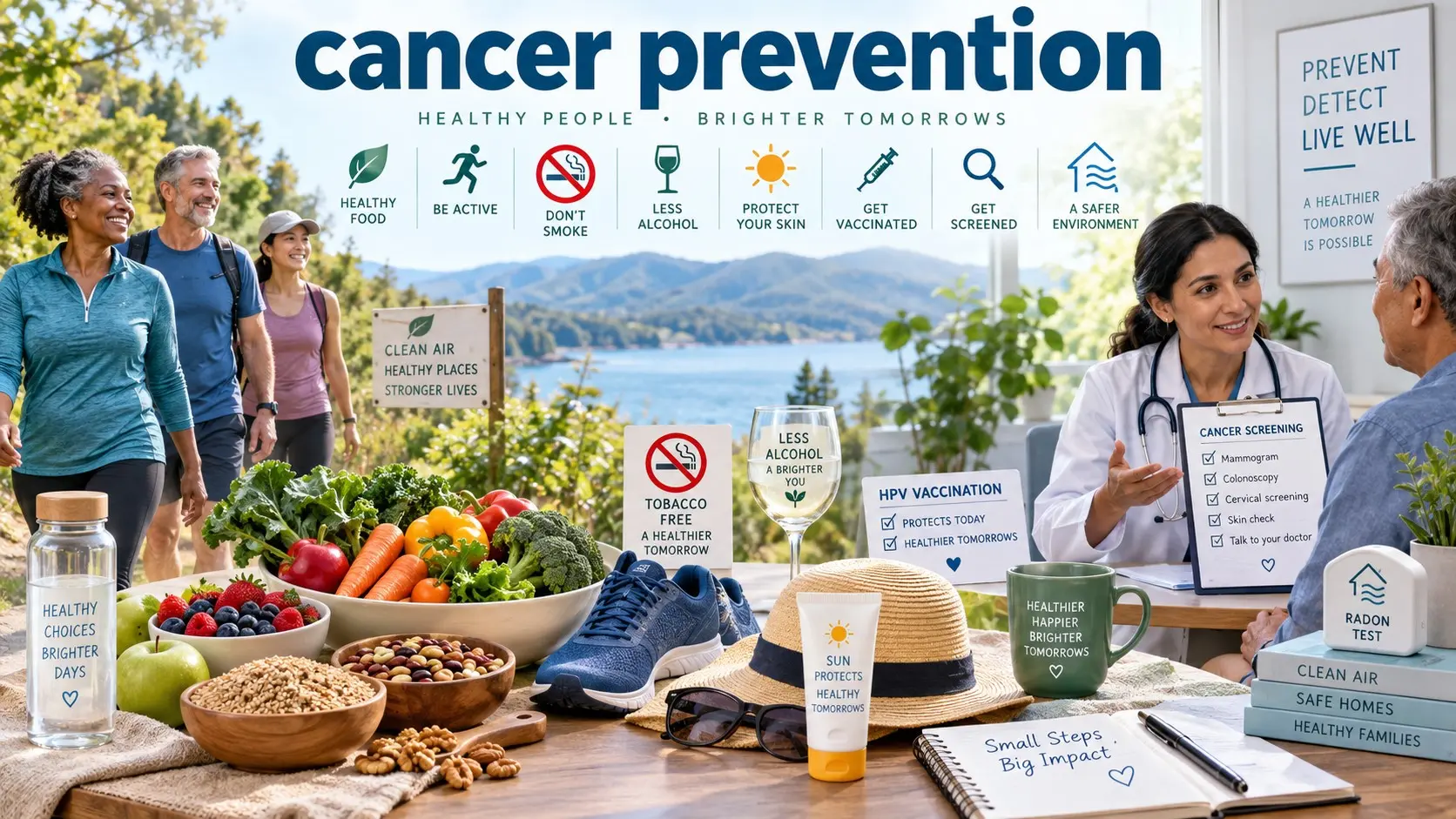
This guide explains 13 practical ways to lower cancer risk using current public health and cancer guidance.
For the wider NextFitLife cancer library, visit the Cancer Awareness and Prevention Hub.
Medical Notice
This content is for general educational purposes and does not replace professional medical advice, diagnosis, or treatment. Consult an appropriately qualified healthcare professional for personal medical concerns.
This article explains published guidance and does not provide a personal clinical assessment.
Always consult qualified medical professionals for diagnosis and treatment of any health condition.
This article explains general cancer risk reduction.
It does not tell you whether you have cancer.
It does not replace cancer screening, diagnostic tests, genetic counseling, biopsy, imaging, or oncology care.
Contact a qualified healthcare professional if you notice a new lump, unexplained bleeding, unexplained weight loss, a persistent change in bowel habits, a changing skin lesion, ongoing pain, or another unusual symptom that does not resolve.
Quick Answer: What Is the Best Way to Prevent Cancer?
There is no single way to prevent all cancer.
The strongest evidence supports a combination of actions.
Do not use tobacco.
Drink less alcohol or none.
Stay physically active.
Maintain a health supportive weight when possible.
Eat a plant rich diet.
Limit processed meat.
Protect your skin from excess ultraviolet radiation.
Receive recommended HPV and hepatitis B vaccines.
Reduce exposure to known carcinogens such as radon and harmful workplace substances.
Know your family history.
Use appropriate cancer screening.
And do not rely on supplements, detoxes, or so called superfoods as cancer shields.
Table of Contents
- What Cancer Prevention Really Means
- 13 Proven Cancer Prevention Steps
- Do Not Use Tobacco
- Drink Less Alcohol or None
- Maintain a Health Supportive Weight
- Move Your Body Regularly
- Eat More Whole Plant Foods
- Limit Processed Meat and Highly Processed Food
- Protect Your Skin From UV Radiation
- Use Cancer Preventing Vaccines
- Reduce Cancer Causing Infections
- Reduce Radon and Workplace Exposure
- Use Screening at the Right Time
- Know Your Family History
- Skip Unproven Prevention Supplements
- Prevention vs Screening
- Food and Cancer Prevention
- Exercise and Cancer Risk
- Family History and Genetics
- Cancer Prevention Myths
- When to See a Doctor
- References and Sources
- Conclusion
- NextFitLife Cancer Resources
- About the Author
- Frequently Asked Questions
What Does Cancer Prevention Really Mean?
Cancer prevention means lowering the chance that cancer develops.
It does not mean removing every possible risk.
Some risk factors can be changed.
Others cannot.
Risk Factors You May Be Able to Change
These include:
- Tobacco exposure
- Alcohol use
- Physical inactivity
- Some aspects of diet
- Excess body weight
- Ultraviolet exposure
- Some infections
- Some workplace exposures
- Radon exposure
Risk Factors You Cannot Fully Control
These can include:
- Age
- Inherited genetic variants
- Some family history
- Previous medical conditions
- Some past medical treatments
- Random genetic changes in cells
Healthy habits cannot erase inherited or unavoidable risk.
But they can still improve overall health and reduce several important cancer risks.
13 Proven Ways to Lower Cancer Risk
1. Do Not Use Tobacco
Tobacco remains one of the clearest cancer risks.
It causes much more than lung cancer.
Tobacco is linked with cancers of the mouth, throat, voice box, esophagus, pancreas, bladder, kidney, cervix, stomach, and other organs.
Secondhand smoke matters too.
If you do not smoke, do not start.
If you smoke, quitting helps at any age.
You do not need to quit without support.
A healthcare professional can help you use evidence based stop smoking treatment.
This may include counseling, nicotine replacement, or prescription medicine.
Do not assume vaping is a proven safe cancer prevention substitute.
Avoid unnecessary tobacco and nicotine exposure.
For more respiratory health information, visit the Lung and Respiratory Health Hub.
2. Drink Less Alcohol or None
Alcohol causes cancer.
It is linked with cancers of the mouth, throat, esophagus, liver, breast, and colon and rectum.
For cancer risk, less alcohol is better.
If you do not drink, you do not need to start for health reasons.
Do not rely on red wine or another alcoholic drink for supposed cancer protection.
The alcohol itself is the problem.
Reducing drinking can also support sleep, blood pressure, liver health, and weight management.
If you drink heavily or think you may be dependent on alcohol, do not suddenly stop without medical advice.
Withdrawal can be dangerous.
3. Maintain a Health Supportive Weight When Possible
Excess body fat is linked with several cancers.
These include cancers of the breast after menopause, colon and rectum, endometrium, kidney, esophagus, and others.
This does not mean body size alone determines cancer risk.
Nor does it mean weight is completely under personal control.
Genes, medicine, hormones, sleep, food access, environment, disability, and many other factors affect body weight.
Focus on habits that support health.
Eat nutritious food.
Move regularly.
Protect sleep.
Avoid crash diets.
If weight loss is medically appropriate, slow and sustainable changes are usually more useful than extreme diets.
4. Move Your Body Regularly
Physical activity is linked with lower risk of several cancers.
It also helps with weight, blood pressure, blood sugar, mood, heart health, and muscle.
The American Cancer Society recommends that adults work toward 150 to 300 minutes of moderate activity each week, or 75 to 150 minutes of vigorous activity, or a suitable combination.
You do not have to begin there.
Start where you are.
Walking counts.
Cycling counts.
Swimming counts.
Dancing counts.
Gardening and active daily tasks count too.
Also spend less time sitting when possible.
Explore the NextFitLife Fitness Hub for practical activity guides.
5. Eat More Whole Plant Foods
No food can guarantee cancer prevention.
There is no single cancer fighting fruit.
There is no vegetable that destroys hidden tumors.
What matters is your overall eating pattern.
A strong cancer prevention diet includes more:
- Vegetables
- Whole fruit
- Beans
- Lentils
- Whole grains
- Nuts
- Seeds
These foods provide fiber, vitamins, minerals, and many plant compounds.
Whole foods are more important than chasing one antioxidant.
Try adding one plant food to a meal you already enjoy.
For general food guidance, visit the Nutrition and Vitamins Hub.
6. Limit Processed Meat and Frequent Highly Processed Foods
Processed meat is linked with colorectal cancer risk.
Examples include:
- Bacon
- Sausage
- Hot dogs
- Salami
- Some deli meats
Current cancer prevention guidance recommends limiting processed meat.
Red meat should also be eaten in moderate amounts rather than becoming the center of every meal.
Try using more fish, beans, lentils, poultry, eggs, or tofu when suitable.
Also limit frequent sugary drinks and highly processed foods that make it harder to maintain a health supportive weight.
You do not need to label every packaged food as dangerous.
Look at your overall eating pattern.
7. Protect Your Skin From Excess Ultraviolet Radiation
Ultraviolet radiation can damage DNA in skin cells.
This increases skin cancer risk.
UV exposure comes from sunlight and tanning devices.
Do not use tanning beds.
When outdoors, combine several protection methods.
- Seek shade
- Wear protective clothing
- Use a wide brimmed hat
- Wear sunglasses
- Use broad spectrum sunscreen with SPF 30 or higher
Sunscreen is not a license to stay in intense sun all day.
Shade and clothing matter too.
People with every skin tone can develop skin cancer.
Learn more in the NextFitLife Skin Health Guide.
8. Receive Recommended Vaccines That Can Prevent Cancer
Some cancers are caused by infections.
Vaccination can prevent some of those infections.
HPV Vaccine
Human papillomavirus can cause cancers of the cervix, anus, penis, vagina, vulva, and throat.
The HPV vaccine can prevent infection with the HPV types that cause many of these cancers.
Ask a healthcare professional whether HPV vaccination is recommended for you or your child based on age and local guidance.
Hepatitis B Vaccine
Chronic hepatitis B infection can lead to liver cancer.
Vaccination prevents hepatitis B infection and can therefore reduce liver cancer risk.
Follow your country's vaccination recommendations.
9. Reduce Risk From Cancer Causing Infections
Vaccines are only part of infection related cancer prevention.
Several infections are linked with cancer.
These include:
- Human papillomavirus
- Hepatitis B
- Hepatitis C
- Helicobacter pylori
- Some other chronic infections
There is no vaccine for every cancer causing infection.
Testing and treatment may be useful when a person has risk factors.
For example, hepatitis C can be treated.
Helicobacter pylori infection can also be treated when diagnosed.
Ask a qualified healthcare professional which infection tests or vaccines apply to your health history.
10. Reduce Radon, Air Pollution, and Workplace Carcinogens
Not every cancer risk comes from food or personal habits.
The environment matters.
Radon is a radioactive gas that can collect inside buildings.
Long term radon exposure can cause lung cancer.
If radon is a concern where you live, follow local public health advice about testing and reducing exposure.
Workplace exposures can matter too.
Some jobs involve contact with carcinogens such as asbestos, silica, radiation, or certain chemicals.
Use required protective equipment.
Follow workplace safety rules.
Do not bring contaminated work dust home on clothing when workplace guidance requires decontamination.
Outdoor air pollution also contributes to cancer risk.
Your personal control over pollution may be limited.
Follow local air quality advice when pollution is severe.
11. Use Cancer Screening at the Right Time
This needs an important explanation.
Cancer screening is not the same thing as primary cancer prevention.
Screening looks for selected cancers or precancerous changes in people who do not have symptoms.
Some screening can prevent cancer.
For example, cervical screening can find precancerous changes.
Colorectal screening can find and remove some precancerous polyps.
Other screening mainly helps find cancer earlier.
Examples include mammography and lung cancer screening.
Screening recommendations depend on:
- Age
- Sex
- Organs present
- Country
- Smoking history
- Family history
- Previous test results
- Genetic risk
- Personal medical history
Do not copy another person's screening schedule.
Use current local guidance.
Visit the Medical Tests and Screenings Hub for more information.
12. Know Your Family History and Ask About Genetic Counseling
Most cancers are not caused by one inherited gene change.
But inherited cancer syndromes are important for some families.
Tell your healthcare professional if you notice patterns such as:
- Cancer at an unusually young age
- Several close relatives with the same cancer
- Several related cancers in one family
- One person with multiple primary cancers
- Male breast cancer
- A known harmful genetic variant in the family
Genetic testing is not right for everyone.
And an online DNA test does not rule out hereditary cancer risk.
A cancer genetic counselor or another qualified professional can help decide whether testing is useful.
If you are interested in breast cancer risk, read our Male Breast Cancer Guide and the Cancer Awareness and Prevention Hub.
13. Do Not Rely on Supplements, Detoxes, or Miracle Foods
This is one of the most common cancer prevention traps.
There is no supplement proven to prevent cancer in the general population.
World Cancer Research Fund specifically advises against using supplements for cancer prevention.
National Cancer Institute reviews also do not support common vitamin supplements as a general cancer prevention strategy.
Do not start high dose antioxidants because a product claims to protect DNA.
Do not start aspirin only to prevent cancer unless a healthcare professional recommends it for your individual situation.
Do not use detox teas.
Do not use extreme fasting.
Do not use herbal products as a substitute for vaccination, screening, or medical care.
Food comes first for most people unless a real nutrient deficiency or another medical reason requires supplementation.
Cancer Prevention and Cancer Screening Are Not the Same
This distinction matters.
Primary prevention tries to stop cancer from developing.
Examples include not smoking, HPV vaccination, sun protection, and reducing alcohol exposure.
Screening looks for cancer or precancer in people who do not have symptoms.
A screening test can be useful.
But it cannot prevent every cancer.
It can also have harms.
Possible harms include false positive results, anxiety, extra procedures, and overdiagnosis.
That is why screening is recommended for specific people at specific ages or levels of risk.
If you have symptoms, you may need diagnostic testing rather than routine screening.
Do not wait for your next screening date if you have a concerning new symptom.
What Is the Best Diet for Cancer Prevention?
There is no perfect cancer prevention menu.
The strongest pattern is simple.
Make plant foods a large part of your diet.
Choose more vegetables.
Choose whole fruit.
Choose beans and lentils.
Choose whole grains.
Use nuts and seeds.
Use healthy protein sources.
Limit processed meat.
Keep red meat moderate.
Limit sugary drinks.
Limit frequent highly processed foods.
What About Superfoods?
The word superfood is marketing language.
Berries are nutritious.
Tomatoes are nutritious.
Broccoli is nutritious.
Garlic is nutritious.
None can guarantee cancer prevention.
Your total eating pattern is more important than one food.
What About Antioxidants?
Foods containing natural antioxidants can be part of a nutritious diet.
That does not mean high dose antioxidant supplements prevent cancer.
Do not confuse nutrients in food with concentrated supplement doses.
How Much Exercise Helps Reduce Cancer Risk?
The American Cancer Society recommends 150 to 300 minutes of moderate activity each week for adults, or 75 to 150 minutes of vigorous activity, or a mixture.
You can spread this across the week.
You do not need a gym.
Try walking.
Try swimming.
Try cycling.
Try dancing.
Add strength work when it is safe for you.
Reduce long sitting periods when possible.
Some movement is better than none.
When Does Family History Suggest Genetic Counseling?
Family history can change your cancer risk.
But one relative with cancer does not always mean an inherited syndrome exists.
Patterns matter.
Ask about genetic counseling if:
- Cancer happened at an unusually young age
- Several close relatives had the same cancer
- Several related cancers appear in the same family
- A person developed more than one primary cancer
- Male breast cancer occurred
- A harmful inherited variant is already known
Testing should ideally begin with a thoughtful family history.
A qualified professional can explain what a positive, negative, or uncertain result means.
Common Cancer Prevention Myths
Myth: Cancer Is Always Preventable
No.
Many cancers occur even when a person follows healthy habits.
Prevention means lowering risk, not guaranteeing protection.
Myth: Sugar Feeds Cancer, So Cutting All Sugar Prevents It
Your cells use glucose for energy.
Avoiding every carbohydrate does not starve hidden cancer cells.
It is still wise to limit sugary drinks and excess added sugar as part of a healthy eating pattern.
Myth: Antioxidant Supplements Prevent Cancer
Not proven.
High dose supplements can also cause harm.
Myth: Stress Directly Causes Cancer
Stress can affect sleep, smoking, alcohol use, eating, and overall health.
But stress management is not considered a proven direct cancer prevention treatment in the same way as avoiding tobacco or receiving recommended vaccines.
Manage stress because mental health matters.
Myth: A Full Body Scan Is the Best Cancer Screening
No.
Routine full body scans are not recommended as a general cancer screening method for healthy people.
They can find harmless abnormalities and lead to unnecessary testing.
Use evidence based screening for your age and risk.
Myth: Self Exams Can Rule Out Cancer
No.
Knowing what is normal for your body can help you notice changes.
But home examination cannot diagnose or exclude cancer.
A new or persistent change needs appropriate medical evaluation.
Can Cancer Ever Be Prevented With Medicine or Surgery?
Sometimes.
This applies mainly to selected people at increased risk.
Examples include medicines that lower breast cancer risk in some high risk individuals.
Risk reducing surgery may also be considered for some people with certain inherited cancer syndromes.
These treatments have benefits and risks.
They are not general prevention tools for everyone.
They require individual specialist advice.
What About Breastfeeding?
For people who are able and choose to breastfeed, breastfeeding is associated with a lower risk of breast cancer.
World Cancer Research Fund includes breastfeeding within its cancer prevention recommendations.
Breastfeeding is a personal decision and may not be possible or appropriate for everyone.
It should never be used as a reason to blame a person who develops breast cancer.
When Should You See a Doctor?
Cancer prevention advice is for lowering future risk.
Symptoms need a different approach.
Contact a healthcare professional for a new or persistent:
- Lump or swelling
- Unexplained bleeding
- Blood in stool or urine
- Cough that does not improve
- Coughing up blood
- Change in bowel habits
- Difficulty swallowing
- Unexplained weight loss
- Persistent hoarseness
- Changing skin lesion
- Unexplained pain
- Breast or nipple change
These symptoms often have noncancerous causes.
But persistent or unexplained changes deserve assessment.
Visit the Cancer Awareness and Prevention Hub for cancer specific symptom guides.
References and Sources
- World Health Organization: Cancer Fact Sheet, 2026
Current global guidance covering tobacco, alcohol, body weight, diet, physical activity, infections, ultraviolet radiation, pollution, vaccination, and cancer prevention.
Read the WHO Cancer Fact Sheet - Centers for Disease Control and Prevention: Preventing Cancer
Open public health guidance covering healthy choices, cancer screening, HPV vaccination, hepatitis B vaccination, and reducing risk for common cancers.
Read the CDC Preventing Cancer guide - National Cancer Institute: Cancer Prevention Overview
Evidence based information on tobacco, infections, radiation, diet, alcohol, physical activity, obesity, environmental exposures, genetic risk, prevention medicines, surgery, and supplements.
Read the NCI Cancer Prevention Overview - American Cancer Society: Diet and Physical Activity Guideline for Cancer Prevention
Current consumer guidance on body weight, physical activity, plant rich eating, red and processed meat, sugary drinks, highly processed food, and alcohol.
Read the American Cancer Society guideline - World Cancer Research Fund: Cancer Prevention Recommendations
Evidence based recommendations covering weight, physical activity, whole grains, vegetables, fruit, beans, processed food, meat, sugary drinks, alcohol, supplements, breastfeeding, and healthy living after cancer.
Read the WCRF Cancer Prevention Recommendations
Conclusion: Make Cancer Prevention Practical
Cancer prevention does not mean living perfectly.
And it cannot guarantee a cancer free life.
It means reducing the risks that can be changed.
Do not use tobacco.
Drink less alcohol or none.
Move your body.
Eat more whole plant foods.
Limit processed meat.
Protect your skin.
Use recommended HPV and hepatitis B vaccines.
Know your environmental risks.
Know your family history.
Use appropriate screening.
And be skeptical of supplements or detoxes that promise cancer protection.
You do not need to change all 13 things today.
Your action today: Choose one prevention step you can improve this week, and check whether your vaccines and recommended cancer screenings are up to date.
Continue Reading on NextFitLife
Use these NextFitLife resources to explore cancer prevention, screening, warning signs, breast health, skin health, and other cancer topics.
- Cancer Awareness and Prevention Hub
- Medical Tests and Screenings Hub
- Male Breast Cancer: Symptoms, Risks, Diagnosis, and Care
- Inflammatory Breast Cancer Symptoms and Diagnosis
- Skin Health and Sun Protection Guide
- Lung and Respiratory Health Hub
- Nutrition and Vitamins Hub
- Fitness Hub
- NextFitLife Health Hub
Frequently Asked Questions About Cancer Prevention
Can cancer be prevented?
Some cancers can be prevented or made less likely by reducing known risk factors. However, no lifestyle can prevent every cancer.
How many cancers are preventable?
A 2026 WHO and IARC analysis estimated that about 37 percent of new cancer cases worldwide in 2022 were linked to preventable causes.
What is the most important cancer prevention habit?
Avoiding tobacco is one of the most important actions because tobacco causes many types of cancer.
Does quitting smoking reduce cancer risk?
Yes. Quitting smoking lowers the risk of several cancers and reduces the risk of dying from cancer. Benefits occur even when a person quits later in life.
Does alcohol cause cancer?
Yes. Alcohol is linked with several cancers including breast, liver, colorectal, mouth, throat, and esophageal cancer. Less alcohol means less alcohol related cancer risk.
What foods prevent cancer?
No individual food prevents cancer. A healthy eating pattern rich in vegetables, whole fruit, whole grains, beans, lentils, nuts, and seeds can support cancer risk reduction.
Should I avoid processed meat?
Cancer prevention guidance recommends limiting processed meat because regular intake is linked with colorectal cancer risk.
Does exercise reduce cancer risk?
Regular physical activity is associated with lower risk of several cancers. It also helps maintain body weight and supports overall health.
How much exercise should adults get?
The American Cancer Society recommends 150 to 300 minutes of moderate activity per week or 75 to 150 minutes of vigorous activity, or a suitable combination.
Does being overweight increase cancer risk?
Excess body fat is linked with several cancer types. Weight is influenced by many factors, so prevention should focus on sustainable health habits rather than blame or extreme dieting.
Can vaccines prevent cancer?
Yes. HPV vaccination can prevent many HPV related cancers. Hepatitis B vaccination helps prevent chronic hepatitis B infection and therefore lowers liver cancer risk.
Can infections cause cancer?
Yes. Cancer linked infections include HPV, hepatitis B, hepatitis C, Helicobacter pylori, and some other infections.
Does sunscreen prevent skin cancer?
Sun protection can reduce harmful ultraviolet exposure. Use shade, protective clothing, a hat, and broad spectrum SPF 30 or higher rather than relying on sunscreen alone.
Do tanning beds cause cancer?
Tanning devices expose skin to ultraviolet radiation and increase skin cancer risk. Avoid them.
Do antioxidant supplements prevent cancer?
No common antioxidant supplement has been proven to prevent cancer in the general population. High dose supplements can also cause harm.
Do multivitamins prevent cancer?
Multivitamins should not be used as a general cancer prevention strategy. Supplements may still be appropriate when a real nutrient need is present.
Can stress cause cancer?
Stress can affect sleep, smoking, alcohol use, eating, and quality of life, but stress reduction is not a proven direct cancer prevention treatment like tobacco avoidance or HPV vaccination.
Is cancer screening the same as cancer prevention?
No. Screening looks for cancer or precancer in people without symptoms. Some screening can prevent cancer by finding precancerous changes, while other screening mainly helps find cancer earlier.
Should everyone have genetic testing for cancer risk?
No. Genetic testing is most useful when personal or family history suggests inherited cancer risk. Genetic counseling can help determine whether testing is appropriate.
Can family history increase cancer risk?
Yes. Some family patterns can suggest inherited risk, especially cancer at a young age, several close relatives with related cancers, or a known harmful genetic variant.
Can a full body scan prevent cancer?
No. Routine full body imaging is not recommended as a general cancer screening strategy for healthy people and can lead to false alarms and unnecessary procedures.
What symptoms should be checked for possible cancer?
New or persistent lumps, unexplained bleeding, blood in stool or urine, unexplained weight loss, a changing skin lesion, a persistent cough, swallowing problems, or other unusual changes should be assessed by a healthcare professional.

Health & wellness writer with 30+ years of experience in nutrition, fitness, and healthy aging. Founder of NextFitLife.com — evidence-based health guidance.