Originally Published: February 4, 2023
Previous Major Update: August 3, 2026
Last Updated: August 28, 2026
Next Review: August 2027, or sooner if major acne treatment guidance changes
Review Status: Fully rewritten and source checked using current dermatology guidance and open medical research
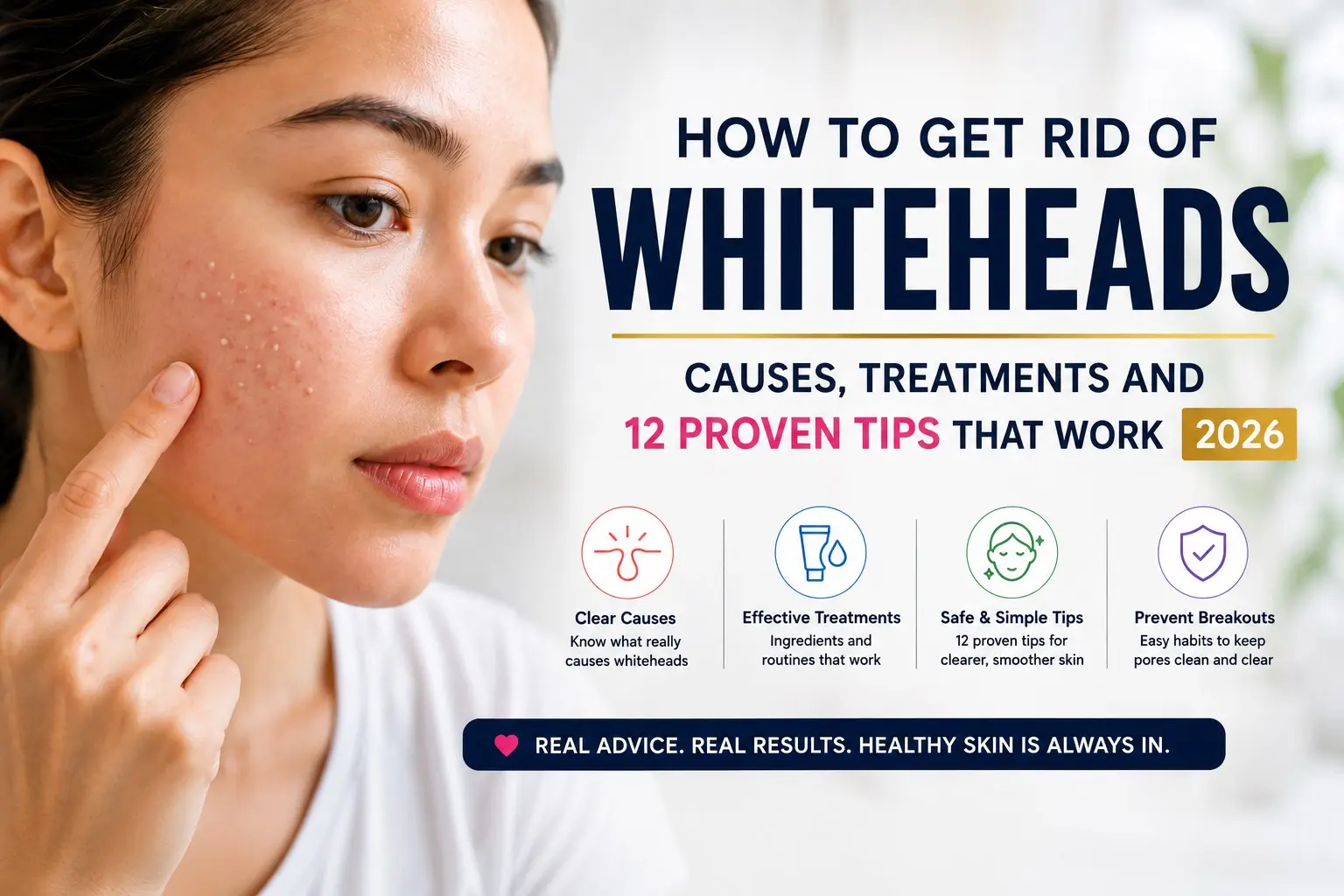
How to Get Rid of Whiteheads starts with treating clogged pores gently.
Whiteheads are not dirt.
They are closed comedones.
Oil and dead skin cells become trapped inside a hair follicle.
The top of the pore stays closed.
This creates a small white or skin colored bump.
The best treatments usually include salicylic acid, a topical retinoid such as adapalene, gentle cleansing, moisturizer, and sunscreen.
But you should not use every acne product at once.
Start slowly.
Give treatment time.
Do not squeeze.
Quick Answer: How to Get Rid of Whiteheads
To learn how to Get Rid of Whiteheads, use a gentle cleanser, then add one proven pore treatment such as salicylic acid or adapalene when appropriate. Use a light moisturizer and broad-spectrum SPF 30 or higher. Do not squeeze or scrape the bumps. Most people need several weeks of steady care, and a full acne treatment trial often takes about 12 weeks.
Medical note: I am not a dermatologist or A doctor, and this content does not replace professional medical advice. This article explains published guidance and does not provide a personal clinical assessment. Always consult qualified medical professionals for diagnosis and treatment of any health condition.
What You Will Learn
- What whiteheads really are
- Why pores become clogged
- How whiteheads differ from blackheads and milia
- Which ingredients work best
- How to use salicylic acid
- How to use adapalene
- When benzoyl peroxide helps
- Which acne products are safer during pregnancy
- How to avoid dark marks and scars
- Why popping whiteheads is risky
- How long treatment takes
- When to see a dermatologist
What Are Whiteheads?
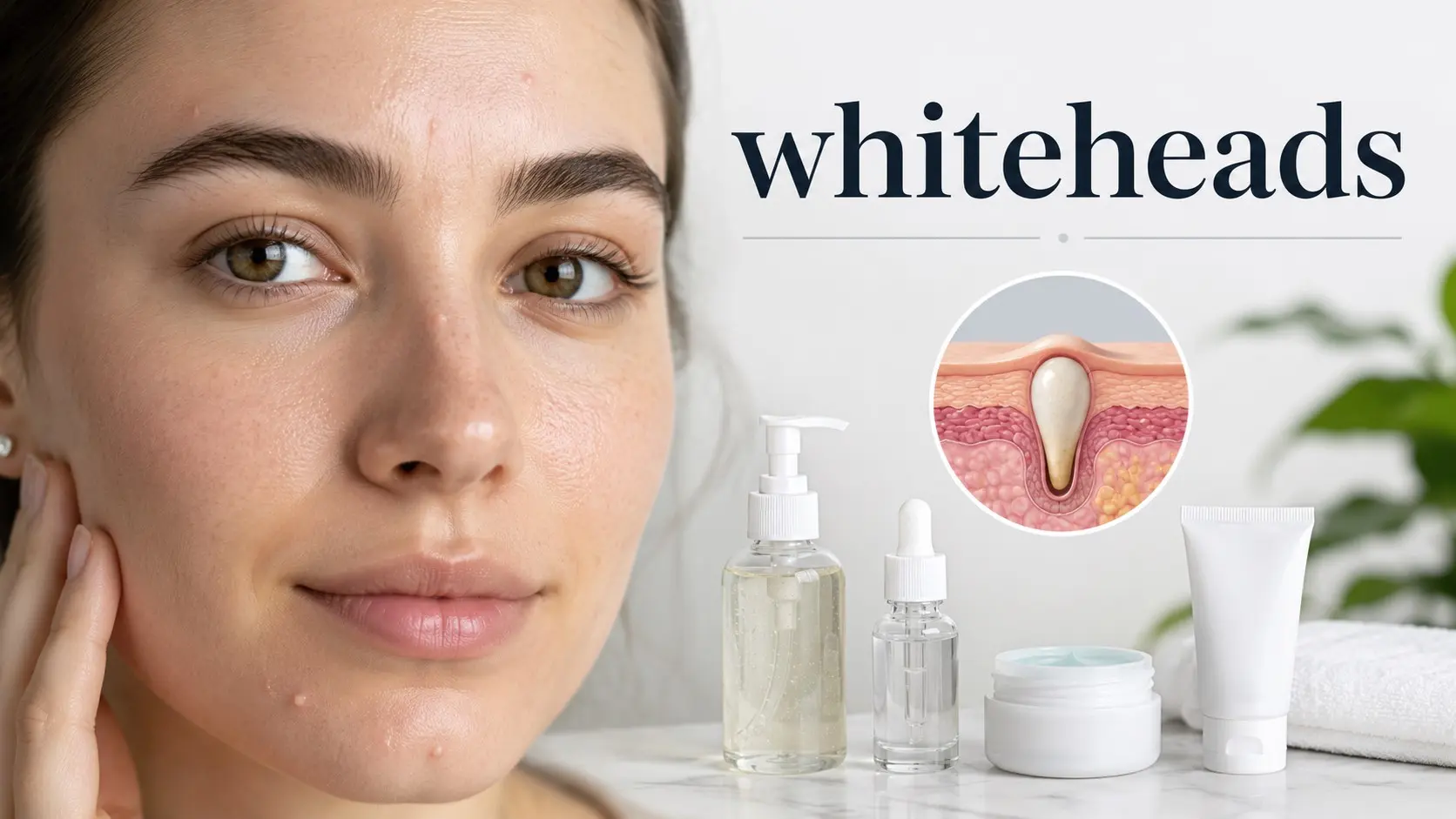
A whitehead forms inside a hair follicle.
Oil and dead skin cells collect inside the follicle.
The opening stays covered.
This creates a small pale bump.
The medical name is closed comedone.
When many closed comedones appear together, the pattern may be called comedonal acne.
Whiteheads commonly appear on the:
- Forehead
- Nose
- Chin
- Cheeks
- Jaw
- Chest
- Back
They are usually not painful unless inflammation develops.
Whiteheads Versus Blackheads, Milia, and Sebaceous Filaments
Not every pale bump is a whitehead.
This matters because treatment is different.
| Skin bump | What it looks like | What it is | Best next step |
|---|---|---|---|
| Whitehead | Small white or skin colored raised bump | Closed blocked follicle | Salicylic acid or topical retinoid |
| Blackhead | Dark open dot | Open comedone | Salicylic acid or topical retinoid |
| Milia | Firm pearl-like bump, often near the eyes | Tiny keratin cyst | Do not squeeze. Ask a professional if persistent |
| Sebaceous filaments | Flat gray, tan, or pale dots, often on the nose | Normal pore structures containing oil | Gentle skin care. They cannot be removed forever |
A blackhead is dark because the material inside is exposed to air.
It is not dark because the pore is dirty.
If you are unsure what your bumps are, a dermatologist can help.
What Causes Whiteheads?
1. Oil and dead skin cells
Your skin naturally makes oil.
It also sheds skin cells.
When the two collect inside a follicle, they can form clogged pores.
2. Hormones
Hormones can increase oil production.
This is common during:
- Puberty
- Menstrual cycles
- Pregnancy
- Adult hormonal changes
3. Genetics
Acne can run in families.
Your genetics can influence oil production, inflammation, and how easily pores clog.
4. Heavy skin products
Some oily creams, makeup, hair oils, pomades, and sunscreens may worsen pore congestion.
Look for products labelled noncomedogenic or designed for acne-prone skin.
If your skin is oily, see the Face Care Routine for Oily Skin.
5. Hair products
Hair oils and pomades can move onto the forehead.
This can cause whiteheads near the hairline.
6. Friction and sweat
Helmets, masks, hats, chin straps, and sports equipment may trap sweat and rub the skin.
This can worsen acne in some areas.
7. Too many strong products
Using several acids, scrubs, retinoids, and masks together can irritate your skin.
A damaged skin barrier may make treatment much harder.
If your skin burns or peels, read the Damaged Skin Barrier Guide.
Does Diet Cause Whiteheads?
Diet does not cause every case of acne.
Hormones, genetics, oil production, inflammation, and skin products often matter more.
But research suggests that a high glycemic eating pattern may worsen acne in some people.
This may include frequent:
- Sugary drinks
- Candy
- Refined snacks
- Highly refined carbohydrates
The evidence about dairy is less clear.
Some studies show an association.
Other studies do not.
The effect may vary by person.
Do not remove several food groups at once.
If you think food affects your acne, track one change at a time.
Where Whiteheads Commonly Appear
Whiteheads on the nose
The nose has many oil glands.
Many small dots on the nose are normal sebaceous filaments.
Raised white bumps are more likely to be true whiteheads.
Whiteheads on the chin
The chin can be affected by hormones, makeup, heavy lip products, and touching.
Whiteheads on the jaw
Jaw acne may have a hormonal pattern, especially in adult women.
If jaw acne is persistent, painful, or appears with irregular periods or unwanted hair growth, medical evaluation may be useful.
Whiteheads on the forehead
Hair oils, pomades, hats, and sweat can collect near the hairline.
Whiteheads on the cheeks
Heavy skin products and picking may worsen cheek acne.
Acne is not caused by poor hygiene.
You do not need to scrub harder.
Best Treatments for Whiteheads in 2026
The current American Academy of Dermatology acne guideline supports several topical treatments.
| Treatment | How it helps | Best use | Main caution |
|---|---|---|---|
| Salicylic acid | Helps unclog pores and remove dead skin | Whiteheads and blackheads | Can sting or dry sensitive skin |
| Adapalene | Normalizes skin cell turnover and prevents comedones | Persistent whiteheads and mixed acne | Can irritate skin. Avoid during pregnancy |
| Benzoyl peroxide | Reduces acne bacteria and inflammation | Whiteheads with red pimples | Can dry skin and bleach fabric |
| Azelaic acid | Helps clogged pores, inflammation, and dark marks | Acne with discoloration or sensitive skin | May tingle at first |
| Niacinamide | Supports the skin barrier and may reduce visible oil | Supportive care | Not the main whitehead treatment |
Salicylic Acid for Whiteheads
Salicylic acid is useful because it helps unclog pores.
AAD specifically lists it as an acne treatment for whiteheads and blackheads.
You can find salicylic acid in:
- Cleansers
- Leave-on liquids
- Gels
- Serums
- Moisturizers
How to start?
Use it once every other day if your skin is sensitive.
Increase only if your skin feels comfortable.
Do not add several exfoliating acids at the same time.
More exfoliation does not mean faster clearing.
Adapalene for Whiteheads
Adapalene is a topical retinoid.
It helps prevent pores from becoming clogged.
It can treat:
- Whiteheads
- Blackheads
- Some pimples
It works best when applied to the whole acne prone area rather than only one bump.
How to begin
Use a pea-sized amount for the entire face.
Start two or three nights each week.
Increase slowly if your skin tolerates it.
Apply moisturizer.
Use sunscreen during the day.
Retinoid Purging Versus Irritation
Some people notice temporary new bumps when starting a retinoid.
This is often called purging.
But not every reaction is purging.
Signs of irritation include:
- Strong burning
- Cracking
- Swelling
- Severe redness
- Raw skin
If your face feels painful or badly irritated, reduce use or stop and ask for professional advice.
Read Skin Purging Versus Breakout for more help.
When Benzoyl Peroxide Helps
Whiteheads themselves are not strongly inflamed.
This means benzoyl peroxide is not always the first ingredient I would choose for pure comedonal acne.
It becomes more useful if you also have:
- Red pimples
- Inflamed bumps
- Pustules
Start with a lower strength when possible.
Higher strength does not always work better.
It may simply irritate more.
Benzoyl peroxide can bleach towels, pillowcases, and clothing.
Azelaic Acid for Whiteheads and Dark Marks
Azelaic acid can help clogged pores and acne inflammation.
It can also help post-inflammatory hyperpigmentation.
This can make it especially useful for people who develop brown or dark marks after acne clears.
Start once a day if your skin is sensitive.
Mild tingling may occur at first.
How to Get Rid of Whiteheads With a Simple Routine
Morning
- Wash with a gentle cleanser.
- Use salicylic acid if it suits your skin.
- Apply a light moisturizer.
- Use broad-spectrum SPF 30 or higher.
Night
- Remove makeup and sunscreen.
- Wash gently.
- Use adapalene if appropriate for you.
- Apply moisturizer.
Start one active ingredient at a time.
This makes irritation easier to identify.
For the correct order of products, read the Skincare Routine Order.
12 Proven Tips to Get Rid of Whiteheads
1. Make Sure the Bumps Are Whiteheads
Milia and sebaceous filaments are different.
Do not treat every small bump with strong acne medicine.
2. Cleanse Gently
Wash up to twice daily and after heavy sweating.
Use your fingertips.
Do not scrub.
3. Start Salicylic Acid Slowly
Use it every other day if needed.
Increase only when the skin stays comfortable.
4. Consider Adapalene
Adapalene is one of the strongest nonprescription treatments for comedonal acne in places where it is available without a prescription.
Use it slowly.
Avoid it during pregnancy.
5. Add Benzoyl Peroxide Only When Needed
If red pimples appear with your whiteheads, benzoyl peroxide can help.
6. Protect Your Skin Barrier
Moisturizer is part of acne treatment.
It can help you tolerate effective ingredients.
7. Wear Sunscreen Every Day
Use SPF 30 or higher.
This is especially important if you develop dark marks after acne.
8. Choose Noncomedogenic Products
Use skin care, sunscreen, and makeup designed not to clog pores.
No label can promise zero breakouts.
But it is a useful starting point.
9. Keep Hair Products Away From the Face
Oily pomades and hair oils can cause bumps near the forehead.
10. Do Not Pop Whiteheads
Pressure can damage the follicle.
This increases the chance of redness, inflammation, dark marks, and scars.
11. Avoid Harsh Home Remedies
Do not use:
- Toothpaste
- Lemon juice
- Baking soda
- Undiluted vinegar
- Rubbing alcohol
These can irritate or burn your skin.
12. Give Treatment Enough Time
Acne medicine does not work overnight.
AAD suggests giving one treatment about six to eight weeks before judging early progress.
NICE often uses a 12-week treatment period before review.
Consistency matters more than changing products every few days.
Can You Pop Whiteheads?
It is safer not to.
A whitehead is closed.
There is no natural open path to the surface.
Squeezing can damage the follicle wall.
This can cause:
- Redness
- Inflammation
- Dark marks
- Scars
Do not puncture whiteheads with a needle at home.
A dermatologist can perform professional comedone extraction when needed.
Do Pore Strips Remove Whiteheads?
Usually not.
Pore strips act on material near the surface.
A true whitehead has a closed top.
This makes pore strips less useful for closed comedones.
They may temporarily remove some surface material from open pores.
Does Steam Open Pores?
No.
Pores do not open and close like doors.
Warm water or steam may soften surface oil.
Very hot steam can irritate or burn skin.
You do not need steam to treat whiteheads.
Do Clay Masks Clear Whiteheads?
A clay mask may absorb surface oil for a short time.
It may make oily skin feel cleaner.
But it does not replace a proven comedonal acne treatment.
Use it only if it does not dry or irritate your skin.
Do Facial Scrubs Remove Whiteheads?
Scrubbing is not the answer.
Whiteheads form inside follicles.
Scrubbing the surface harder does not clean them out.
Strong physical exfoliation can damage the skin barrier.
Use gentle chemical pore treatments instead.
Whiteheads and Skin of Colour
Whiteheads can affect every skin tone.
But irritation and picking can be especially important in darker skin because inflammation can leave long-lasting dark spots after acne.
This is called post inflammatory hyperpigmentation.
To reduce the risk:
- Do not squeeze
- Use acne treatments slowly
- Moisturize
- Use sunscreen
- Consider azelaic acid when suitable
Clearing the acne and protecting the skin barrier are both important.
What If You Have Sensitive Skin?
Do not start salicylic acid, benzoyl peroxide, and adapalene on the same day.
Start with one active ingredient.
Use it less often at first.
NICE recommends alternate-day or short-contact use when topical acne medicines irritate.
You can also apply moisturizer before or after some acne treatments to improve comfort.
How to Get Rid of Whiteheads During Pregnancy
Pregnancy changes acne treatment choices.
This is an area where safety matters more than speed.
Avoid topical retinoids
AAD says experts recommend stopping adapalene and tretinoin during pregnancy.
Tazarotene must not be used during pregnancy.
Oral isotretinoin must never be used during pregnancy.
Azelaic acid
AAD says azelaic acid is thought to be safe during pregnancy.
Benzoyl peroxide
AAD says limited use may be acceptable, but you should first discuss it with your obstetrician or dermatologist.
Salicylic acid
Limited topical use is generally considered acceptable, but pregnancy is still a good time to ask your clinician before starting it.
Do not copy your usual acne routine into pregnancy without checking the ingredients.
What About Whiteheads While Breastfeeding?
Breastfeeding safety can depend on the medicine, dose, and where it is applied.
Do not apply acne medicine where a baby could touch or ingest it.
If you are breastfeeding, ask your clinician which products fit your situation.
This is especially important for prescription acne medicine.
Whiteheads in Teenagers
Whiteheads are common during puberty.
Hormonal changes increase oil production.
A teenager usually does not need an aggressive ten step routine.
A simple plan is better.
- Gentle cleanser
- One proven acne treatment
- Moisturizer
- Sunscreen
Early treatment can help reduce the risk of marks and scarring.
Whiteheads in Adults
Adult acne can continue well beyond the teenage years.
Women may notice acne around the chin and jaw.
Hormonal changes can play a role.
Adult acne may also be affected by:
- Skin products
- Stress
- Medicines
- Hormonal contraception
- Polycystic ovary syndrome
If acne appears suddenly or becomes severe, ask for medical advice.
How Long Do Whiteheads Take to Clear?
There is no exact number of days.
Some people notice early improvement after four to eight weeks.
A more complete acne treatment trial often takes around 12 weeks.
Retinoids may take longer.
Do not judge an acne treatment after three days.
Take a photo before starting.
Compare your skin every four weeks.
This is more useful than checking the mirror several times each day.
Why Your Whiteheads May Not Be Improving
Common reasons include:
- The bumps are not actually whiteheads
- You change products too often
- You use too many active ingredients
- Your moisturizer or makeup may clog pores
- Hair products may reach the skin
- You are squeezing the bumps
- You stop treatment too early
- Your acne needs prescription treatment
If nothing changes after a consistent 12-week routine, ask a dermatologist for help.
When to See a Dermatologist
Get professional help if:
- You develop painful nodules or cysts
- You are developing scars
- Dark marks are becoming severe
- Your acne is spreading quickly
- You see no improvement after a consistent 12-week routine
- You are pregnant or trying to become pregnant
- You are unsure whether the bumps are acne
- Your acne affects your confidence or mental health
What a Dermatologist May Offer
A dermatologist can tailor treatment to your type of acne.
Options may include:
- Prescription topical retinoids
- Combination acne medicine
- Azelaic acid
- Hormonal therapy when appropriate
- Professional comedone extraction
- Oral medicine for more severe acne
- Isotretinoin for severe or resistant acne
Modern acne guidance also recommends limiting antibiotic use.
When antibiotics are needed, they are usually combined with other acne treatments rather than used alone.
My Approach to Whiteheads and Acne Research
I prefer simple skin care.
More products do not always create better skin.
I have spent more than 30 years studying health, fitness, nutrition, skin care, and healthy aging in my own life.
I have also learned from my own acne and whitehead problems.
Trying too many products at once can make the skin dry, sore, and harder to treat.
My background in information technology management trained me to review information, compare sources, question exaggerated claims, and look for patterns.
I use those skills when I research NextFitLife content.
For whiteheads, the best approach is usually simple.
Use the correct treatment.
Protect the skin barrier.
Give it time.
Ask for professional help when the routine is not enough.
Conclusion: How to Get Rid of Whiteheads Safely
How to Get Rid of Whiteheads begins with knowing what the bumps are.
Clean gently.
Use one proven treatment.
Salicylic acid can help unclog pores.
Adapalene can help prevent new comedones when it is safe for you.
Moisturize.
Use sunscreen.
Do not squeeze.
Give treatment several weeks.
Your next step: Choose one proven acne treatment today and use it consistently instead of adding several new products at once.
References and Sources
This article was checked against current dermatology guidelines and open medical research. All five sources below are publicly accessible.
- American Academy of Dermatology. Acne Clinical Guideline.The current AAD guideline supports topical retinoids, benzoyl peroxide, salicylic acid, azelaic acid, and other acne therapies. It also recommends combining treatments with different mechanisms when appropriate and limiting systemic antibiotic use.Read the American Academy of Dermatology Acne Clinical Guideline
- American Academy of Dermatology. Acne Diagnosis and Treatment.This public AAD resource explains that topical retinoids can treat whiteheads and blackheads and that salicylic acid helps open clogged pores. It also discusses azelaic acid and combination acne treatments.Read the AAD Acne Treatment Guide
- American Academy of Dermatology. Acne Treatment During Pregnancy.This guide explains why adapalene, tretinoin, tazarotene, isotretinoin, and spironolactone need special pregnancy restrictions. It also discusses azelaic acid, benzoyl peroxide, and limited topical salicylic acid use.Read the AAD Pregnancy Acne Treatment Guide
- National Institute for Health and Care Excellence. Acne Vulgaris Management.NICE recommends structured acne treatment plans, often reviewed after 12 weeks. It also recommends starting irritating topical treatments less often when needed and confirms that topical retinoids are contraindicated during pregnancy and when planning pregnancy.Read the NICE Acne Guideline
- Diet and Acne: A Systematic Review.This open access systematic review found that higher glycemic intake may worsen acne in some people. The evidence for dairy is more mixed and varies across populations.Read the Open Access Review at PubMed Central
Continue Reading on NextFitLife
Main Acne Guide: Acne Treatment Complete Guide
Acne and Pores Hub: Acne, Whiteheads and Pores Hub
Beauty Hub: NextFitLife Beauty Guide
About the Author
Adel Galal is the founder and health and wellness writer at NextFitLife.
He has more than 30 years of personal experience studying health, fitness, nutrition, skin care, weight management, and healthy aging.
Before focusing on NextFitLife, Adel spent 29 years working in information technology management.
That background developed his skills in research, data review, structured analysis, problem solving, and clear communication.
He now uses those skills to compare dermatology guidance, review open medical research, identify exaggerated skin care claims, and turn complex information into clear steps.
His whitehead and acne content focuses on gentle care, proven ingredients, realistic treatment timelines, skin barrier protection, pregnancy safety, and knowing when professional care is needed.
I am not a dermatologist or A doctor, and this content does not replace professional medical advice. This article explains published guidance and does not provide a personal clinical assessment. Always consult qualified medical professionals for diagnosis and treatment of any health condition.
Read the full Adel Galal author profile and NextFitLife editorial approach.
Frequently Asked Questions About How to Get Rid of Whiteheads
What is the fastest safe way to get rid of whiteheads?
Use a gentle cleanser and one proven pore treatment such as salicylic acid or adapalene when appropriate. Moisturize, use sunscreen, and do not squeeze. Whiteheads usually take several weeks to improve.
Are whiteheads the same as closed comedones?
Yes. A whitehead is a closed comedone. Oil and dead skin cells block a follicle while a thin layer of skin stays over the opening.
Should I pop a whitehead?
No. Squeezing can damage the follicle and increase redness, dark marks, inflammation, and scarring.
Is salicylic acid good for whiteheads?
Yes. Salicylic acid helps unclog pores and is especially useful for whiteheads and blackheads.
Is adapalene good for whiteheads?
Yes. Adapalene helps prevent and clear comedones by normalizing skin cell turnover. It can irritate skin at first and should be avoided during pregnancy.
Which is better for whiteheads, salicylic acid or adapalene?
Both can work. Salicylic acid is often easier for beginners. Adapalene may be more useful for persistent comedonal acne and preventing new clogged pores.
How long do whiteheads take to clear?
Early improvement may appear within four to eight weeks. A fair acne treatment trial often takes about 12 weeks.
Can whiteheads go away overnight?
No proven treatment removes established whiteheads reliably overnight. Gentle, consistent treatment is safer than squeezing or harsh home remedies.
Does toothpaste get rid of whiteheads?
No. Toothpaste can irritate facial skin and is not a recommended acne treatment.
Does steam remove whiteheads?
No. Steam does not open pores or remove closed comedones. Excess heat may irritate sensitive skin.
Can diet cause whiteheads?
Diet is not the only cause. A high glycemic eating pattern may worsen acne in some people, while evidence about dairy is mixed.
Can I use adapalene while pregnant?
No. Most experts recommend stopping topical retinoids such as adapalene during pregnancy. Ask your obstetrician or dermatologist about safer options.
What can I use for whiteheads during pregnancy?
Azelaic acid is thought to be safe. Limited benzoyl peroxide or salicylic acid may also be considered after discussion with your obstetrician or dermatologist.
When should I see a dermatologist for whiteheads?
See a dermatologist if you develop scars, painful acne, worsening dark marks, severe irritation, or no meaningful improvement after a consistent 12 week routine.

Health & wellness writer with 30+ years of experience in nutrition, fitness, and healthy aging. Founder of NextFitLife.com — evidence-based health guidance.