
Published on: Jun 24, 2024
Updated: October 31, 2026
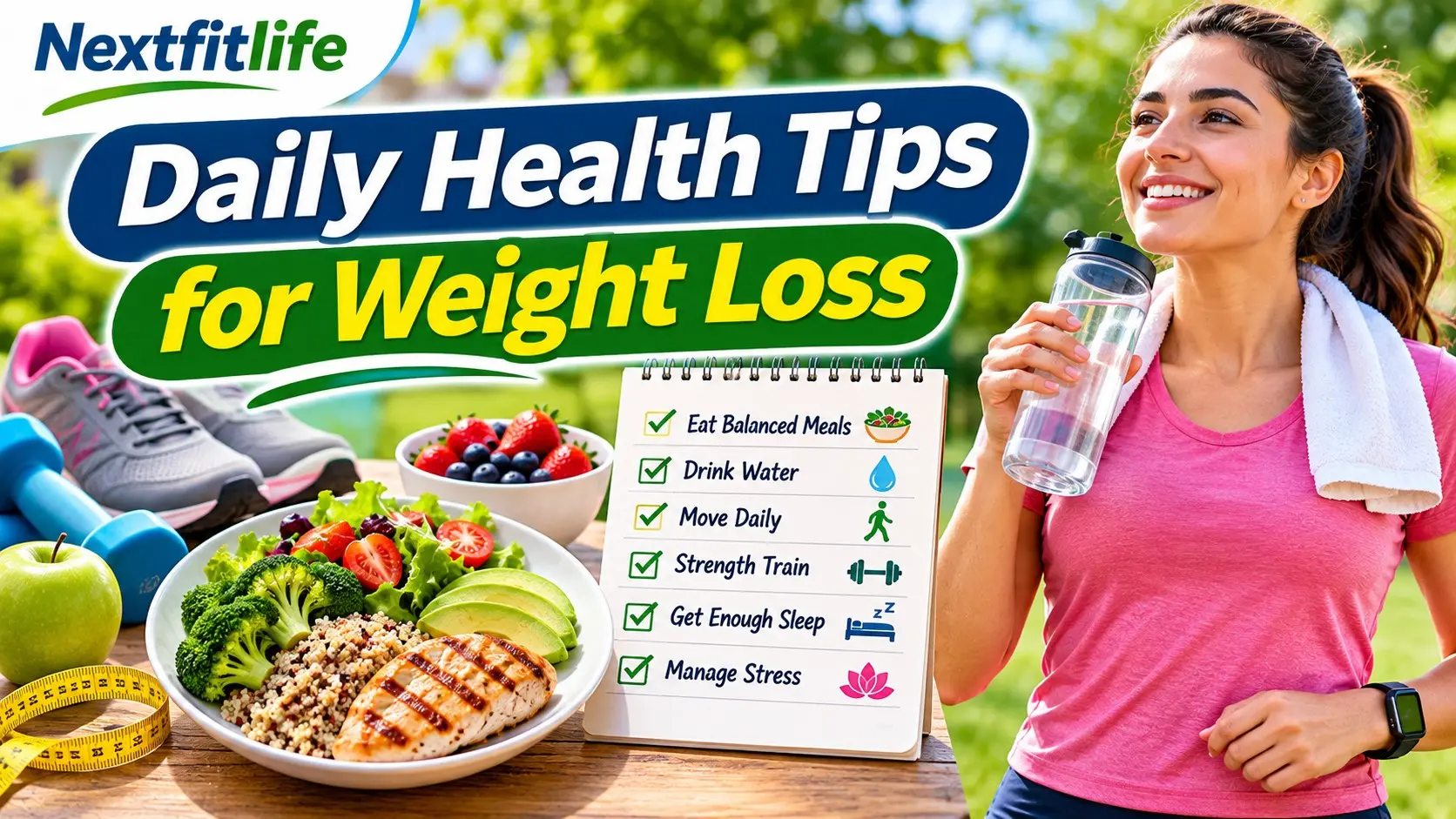
Daily Health Tips for Weight Loss do not need to turn your life into a diet project.
The most useful habits are often simple. Eat filling meals, move more, sleep enough, plan ahead, and make choices you can repeat next week as well as today.
You do not need detox drinks, a perfect meal schedule, endless cardio, or a list of foods you are never allowed to eat.
Small changes can matter because they shape what you do again and again.
This article is for general information and education. It does not replace medical advice, diagnosis, or treatment.
Quick answer: Build meals around vegetables or fruit, a useful protein source, and a high fiber carbohydrate when appropriate. Drink mostly low calorie beverages, walk often, strength train at least twice weekly, protect sleep, manage stress, and track habits that help you stay consistent. Weight loss still requires an appropriate energy deficit over time, but the habits below can make that deficit easier to maintain.
Before trying to lose weight: Ask a qualified healthcare professional for individual advice if you are pregnant or breastfeeding, have diabetes, kidney disease, liver disease, heart disease, an eating disorder history, unexplained weight change, or take medicines that affect appetite, blood sugar, fluid balance, or body weight.
Table of Contents
- What healthy weight loss really means
- 21 smart daily habits
- Start with a realistic goal
- Build meals around protein
- Add fibre-rich foods
- Use vegetables for food volume
- Eat whole fruit
- Choose water most often
- Reduce sugary drinks
- Plan before hunger gets strong
- Use portions you can repeat
- Eat more slowly
- Keep useful foods visible
- Walk every day
- Break up long sitting
- Strength train twice weekly
- Keep cardio realistic
- Protect sleep
- Manage stress eating
- Track useful habits
- Weigh with perspective
- Plan for weekends
- Recover quickly from setbacks
- Simple daily routine
- Seven day starter plan
- Weight loss myths to skip
- When professional help may help
- Frequently asked questions
What Healthy Weight Loss Really Means
Weight loss happens when your body uses more energy than it receives over time.
This is often called a calorie deficit.
But that does not mean you need to count every calorie forever.
Your daily habits can change how much you eat, how hungry you feel, how active you are, and how easy the plan is to maintain.
CDC describes gradual weight loss of about 1 to 2 pounds per week as more likely to stay off than faster loss.
That is general guidance, not a required target for every person.
Body size, age, medicines, hormones, health conditions, sleep, activity, and many other factors can affect progress.
For a full roadmap, read the Complete Weight Loss Guide.
Do Small Daily Changes Really Matter?
They can.
A ten minute walk is small, but doing it most days creates much more activity than waiting for the perfect one hour workout.
Replacing one large sugary drink with water can matter when you repeat the choice often.
Going to bed a little earlier may help if short sleep is part of the reason you feel tired and hungry.
The value comes from repetition.
A habit does not need to look impressive to be useful.
21 Daily Health Tips for Weight Loss
1. Start With a Realistic Goal
Do not begin by promising yourself that you will lose 20 pounds in two weeks.
CDC warns that unrealistic goals can leave people feeling frustrated and defeated.
Start with something you can control.
For example:
- Walk after dinner four days this week
- Cook dinner at home three nights
- Drink water instead of soda at lunch
- Strength train twice
These goals give you something useful to do today.
2. Build Meals Around Protein
Protein can make meals more satisfying and helps support lean tissue, especially when you are also doing resistance training.
Useful options include:
- Eggs
- Greek yogurt
- Fish
- Chicken
- Lean meat
- Beans
- Lentils
- Tofu
- Tempeh
- Cottage cheese
Protein is helpful, but it is not magic.
A high-protein diet does not cancel out total calorie intake.
For practical meal ideas, see High Protein Foods for Weight Loss.
3. Add Fiber-Rich Foods
High fibre foods can make meals more filling and support digestive health.
Good sources include:
- Vegetables
- Whole fruit
- Beans
- Lentils
- Oats
- Whole grains
- Nuts
- Seeds
Increase fibre gradually if your current intake is low.
Large sudden increases can cause gas or stomach discomfort.
4. Use Vegetables for Food Volume
Vegetables can make a plate look and feel bigger without adding a large amount of energy.
You do not need plain steamed broccoli at every meal.
Try:
- Roasted vegetables
- Salad
- Vegetable soup
- Stir fried vegetables
- Tomato and cucumber
- Frozen vegetables
Choose preparations you actually enjoy.
5. Eat Whole Fruit
Whole fruit can satisfy a desire for something sweet while providing water, fibre, vitamins, and minerals.
Berries, apples, oranges, kiwi, bananas, mango, guava, and other fruits can all fit a weight loss plan.
You do not need to avoid fruit because it contains natural sugar.
For a closer look at fruit and protein, read High Protein Fruits for Weight Loss.
6. Choose Water Most Often
Water is a useful default drink because it has no calories.
But you do not need a universal two, three, or four liter target.
Fluid needs vary with:
- Body size
- Climate
- Food intake
- Exercise
- Pregnancy
- Medicines
- Health conditions
Drink according to your needs and medical advice when relevant.
Water does not melt fat or meaningfully “boost metabolism” in a way that replaces a calorie deficit.
7. Reduce Sugary Drinks
This can be one of the easiest changes because liquid calories can add up quickly.
Common sources include:
- Soda
- Sweet tea
- Energy drinks
- Large flavored coffees
- Sweetened juice drinks
Good swaps include water, sparkling water, unsweetened tea, or coffee with less added sugar.
8. Plan Food Before Hunger Gets Strong
Planning helps when life gets busy.
You do not need to prepare 21 identical containers every Sunday.
A simple plan might include:
- Two breakfast choices
- Two easy lunches
- Three dinners
- Two useful snacks
Keep the ingredients ready.
That is enough structure for many people.
9. Use Portions You Can Repeat
You do not need tiny plates or extreme restriction.
Build portions that satisfy you without leaving you uncomfortably full.
A simple plate might include:
- A generous amount of vegetables
- A useful protein source
- A suitable portion of rice, potatoes, bread, pasta, or another carbohydrate
- A small amount of healthy fat
Your exact needs will vary.
10. Eat More Slowly
Eating more slowly can make it easier to notice satisfaction before you become overly full.
You do not need to count every chew.
Try one simple change:
- Put your fork down sometimes
- Sit at a table
- Take a short pause halfway through
- Reduce phone or TV distractions
The goal is awareness, not perfect eating behavior.
11. Keep Useful Foods Visible
Your environment affects your choices.
Make the easier option visible.
Keep:
- Fruit where you can see it
- Yogurt ready in the fridge
- Frozen vegetables available
- Cooked protein ready for busy days
- Water nearby
You are making the healthy choice easier, not relying on willpower every hour.
12. Walk Every Day
Daily walking is one of the simplest ways to increase activity.
Start with what fits your current level.
That might be:
- Ten minutes after lunch
- Ten minutes after dinner
- A longer weekend walk
- Walking during phone calls
You do not need 10,000 steps for walking to count.
13. Break Up Long Sitting
A workout does not make the other 15 waking hours disappear.
Stand up when practical.
Walk to refill water, take the stairs, do a household task, or walk during a break.
These small movements can help increase your total daily activity.
14. Strength Train at Least Twice Weekly
Strength training is especially useful during weight loss because it can support strength and lean tissue.
U.S. physical activity guidance recommends muscle strengthening work on at least two days each week.
You can use:
- Dumbbells
- Resistance bands
- Machines
- Bodyweight exercises
Beginners can start with Strength Training Exercises at Home for Beginners.
15. Keep Cardio Realistic
You do not need to run every day.
Adults are generally advised to work toward 150 to 300 minutes of moderate aerobic activity each week.
Examples include:
- Brisk walking
- Cycling
- Swimming
- Dancing
- Hiking
If you currently do very little activity, start below that target and build gradually.
16. Protect Your Sleep
Sleep and weight loss are connected, but the biology is more complex than simply saying one hormone goes up and another goes down.
A randomized trial found that extending sleep in adults who usually slept too little reduced energy intake.
More recent randomized evidence also suggests sustained sleep restriction can modestly increase body weight and waist size.
Protect enough time for sleep before adding a complicated morning fitness routine.
17. Manage Stress Eating
Stress does not automatically create body fat through cortisol alone.
But stress can change sleep, appetite, food choices, movement, and routines.
If you tend to eat when stressed, build a short pause.
Try:
- Take five slow breaths.
- Drink some water if thirsty.
- Walk for five minutes.
- Name what you are feeling.
- Then decide whether you still want food.
If you still want the food, you can eat it.
The pause simply gives you a choice.
18. Track Useful Habits
You do not need to track everything.
Choose two or three behaviours.
For example:
- Walking
- Protein at meals
- Vegetables
- Sleep time
- Strength sessions
- Sugary drinks
This helps you see what is actually changing.
19. Weigh Yourself With Perspective
Body weight can change from day to day because of water, food in the digestive system, sodium, menstrual cycle changes, carbohydrate intake, and other factors.
A single higher number does not mean you suddenly gained that amount of body fat.
If weighing helps you, look at the longer trend.
If it creates anxiety or obsessive behaviour, use other measures or discuss tracking with a qualified professional.
20. Plan for Weekends
Many plans work Monday through Thursday and disappear on Friday night.
You do not need a strict weekend diet.
Keep a few anchors:
- Eat normal meals
- Include protein
- Keep some vegetables or fruit
- Move your body
- Enjoy treats in realistic portions
This prevents the cycle of restriction followed by overeating.
21. Recover Quickly From Setbacks
One large meal does not ruin a week.
One missed workout does not erase your fitness.
Do not punish yourself with starvation or an extreme workout the next day.
Return to your normal routine at the next meal or next planned session.
This is one of the most important weight loss habits you can build.
21 Daily Habits at a Glance
| Habit | Simple Action | Main Purpose |
|---|---|---|
| Realistic goal | Choose one weekly action | Consistency |
| Protein | Add a protein source to meals | Fullness and lean tissue |
| Fiber | Add beans, fruit, veg, or whole grains | Fullness and digestion |
| Vegetables | Increase food volume | Meal quality |
| Whole fruit | Use for snacks or dessert | Fiber and nutrients |
| Water | Use as default drink | Hydration |
| Sugary drinks | Swap one frequent drink | Lower liquid calories |
| Meal planning | Plan a few easy meals | Reduce impulse choices |
| Portions | Serve food before eating | Energy awareness |
| Slow eating | Pause during meals | Notice fullness |
| Food environment | Keep useful foods ready | Make choices easier |
| Walking | Walk after a meal | Daily activity |
| Less sitting | Take movement breaks | Total movement |
| Strength | Train twice weekly | Strength and muscle |
| Cardio | Build toward weekly target | Fitness and activity |
| Sleep | Protect bedtime | Recovery and eating control |
| Stress | Use a short reset | Reduce reactive eating |
| Tracking | Track two habits | Feedback |
| Weight trend | Look beyond one reading | Perspective |
| Weekends | Keep basic meal anchors | Consistency |
| Setbacks | Return at the next chance | Long term progress |
A Simple Daily Weight Loss Routine
Morning
Start the day in a way that fits your schedule.
You do not need lemon water, a 5 a.m. alarm, or a special fat-burning drink.
A useful morning might include:
- Water if you are thirsty
- A short walk or normal movement
- A balanced breakfast if you like breakfast
A breakfast could be eggs with vegetables, Greek yogurt with berries, or oatmeal with yogurt and fruit.
Breakfast is optional.
It is not a metabolism switch.
Midday
Build lunch around protein, vegetables, and a useful carbohydrate source.
Examples:
- Chicken, vegetables, and rice
- Lentil soup with whole grain bread
- Tuna, potatoes, and salad
- Tofu with vegetables and rice
Walk for a few minutes after lunch if your schedule allows.
Afternoon
If you become hungry, use a planned snack.
Try:
- Greek yogurt and fruit
- Apple with a small amount of peanut butter
- Boiled eggs
- Cottage cheese and berries
- Vegetables with hummus
You do not need to snack if you are not hungry.
Evening
Eat a normal dinner rather than saving nearly all your food for night.
Move if you have been sitting most of the day.
A short walk after dinner is enough to count.
Night
Give yourself enough time to sleep.
Keep caffeine timing in mind if it makes it harder for you to fall asleep.
A complicated nighttime wellness routine is not required.
Seven Day Starter Plan
| Day | Food Habit | Movement Habit | Recovery Habit |
|---|---|---|---|
| Day 1 | Add protein to one meal | Walk 10 minutes | Set a bedtime target |
| Day 2 | Eat one whole fruit | Take two movement breaks | Five minute stress reset |
| Day 3 | Swap one sugary drink | Strength workout | Normal bedtime |
| Day 4 | Add vegetables at dinner | Walk 10 to 20 minutes | Reduce late screen time if helpful |
| Day 5 | Plan weekend meals | Extra daily movement | Check stress level |
| Day 6 | Use a balanced plate | Strength workout | Protect sleep time |
| Day 7 | Review what worked | Easy walk | Choose three habits to repeat |
Repeat the habits that felt easiest.
You do not need to add another 21 rules next week.
How Much Exercise Do You Need for Weight Loss?
There is no exact exercise number that guarantees weight loss.
U.S. guidance recommends adults work toward at least 150 to 300 minutes of moderate aerobic activity each week plus muscle strengthening on two days.
NIDDK notes that some people may need around 300 minutes of aerobic activity weekly for greater weight control benefits.
That does not mean beginners should start with five hours.
Start at your current level and build gradually.
Why Strength Training Belongs in a Weight Loss Plan
Cardio is not the only useful exercise.
Strength training helps maintain or improve strength and can support lean tissue while weight is coming down.
The old idea that a little extra muscle turns your body into a calorie burning furnace is exaggerated.
Muscle does use energy, but the resting calorie effect is not large enough to replace food intake and activity management.
Strength training is valuable even without that claim.
See the NextFitLife Fitness Hub for more training guidance.
Protein Helps, but More Is Not Always Better
Protein can help with fullness and lean mass retention.
A 2026 International Society of Sports Nutrition position stand suggests that for generally healthy active adults pursuing fat loss, total protein intake can be an important part of the plan.
But protein still contains calories.
More protein is not automatically more weight loss.
Your total diet still matters.
Do You Need to Count Calories?
No.
Some people find calorie tracking useful.
Others find it stressful or hard to maintain.
You can create more awareness by:
- Reducing liquid calories
- Using balanced plates
- Planning snacks
- Eating more vegetables
- Choosing portions intentionally
If progress stops, more detailed tracking can sometimes show where extra calories are entering the day.
Do You Need to Eat Breakfast?
No.
Breakfast is useful for some people and unnecessary for others.
If skipping breakfast makes you extremely hungry later, eating breakfast may help.
If you feel fine without it and still meet your nutritional needs, there is no universal reason to force breakfast.
Do You Need Six Small Meals?
No.
Meal frequency can be flexible.
The number of times you eat is much less important than your total intake, food quality, protein, fibre, and ability to follow the plan.
Choose a pattern that fits your work and hunger.
Does Drinking Water Before Meals Cause Weight Loss?
Water can help hydration and may help some people feel more comfortable or full before eating.
But water does not directly burn body fat.
You also do not need to drink large amounts before every meal.
Drink in a way that fits your needs.
Does Lemon Water Burn Fat?
No.
Lemon water is simply water with lemon.
If it helps you drink water instead of soda, it can be useful.
It does not detox the body or melt fat.
Do You Need to Stop Eating After 7 p.m.?
No universal cutoff exists.
Late eating can become a problem when it adds a large amount of extra food, especially after a full day of eating.
But 7:01 p.m. does not change how calories work.
Choose meal timing that fits your schedule and helps you manage hunger.
Do Carbs Stop Weight Loss?
No.
Rice, potatoes, oats, fruit, bread, pasta, beans, and other carbohydrate foods can fit a weight loss diet.
Portion, preparation, total calorie intake, and food quality matter more than simply labelling all carbs as bad.
Do You Need to Avoid Fat?
No.
Healthy fats can fit.
Examples include:
- Olive oil
- Nuts
- Seeds
- Avocado
- Fatty fish
These foods are energy dense, so portions still matter when weight loss is the goal.
Can You Have Dessert?
Yes.
A sustainable plan can include enjoyable foods.
The goal is not to make every dessert a “healthy” recipe.
A small serving of the real food you enjoy can fit.
For ideas, see Best Desserts for Weight Loss.
How Sleep Can Affect Weight Management
Sleep is not a fat loss hack.
But it can affect appetite, food choices, energy, recovery, and activity.
In one randomized clinical trial, adults with overweight who usually slept less than 6.5 hours increased sleep by about 1.2 hours and consumed about 270 fewer calories per day during the intervention.
That result does not mean everyone will lose weight simply by sleeping longer.
It does show why sleep deserves a place in a complete plan.
How Stress Fits Into Weight Loss
Stress management is useful, but avoid the simple claim that cortisol directly stores all belly fat.
Stress can affect:
- Sleep
- Hunger
- Food choices
- Alcohol intake
- Activity
- Motivation
Address the real stressor when possible.
Breathing exercises and walks can help you settle, but they do not replace changes at work, home, or in healthcare when those are needed.
A Better Way to Measure Progress
The scale is useful, but it is not the whole story.
You can also track:
- Waist measurement
- How clothes fit
- Walking pace
- Strength
- Energy
- Blood pressure when relevant
- Blood sugar when medically indicated
- Consistency with habits
Progress can happen even during a week when body weight does not change much.
What to Do When Weight Loss Stalls
A short stall is normal.
Body weight can fluctuate.
If the trend stays unchanged for several weeks, review:
- Portions
- Drinks
- Weekend eating
- Snacks
- Activity
- Sleep
- Consistency
Do not immediately cut food to an extreme level.
For a more detailed plan, see How to Weight Lose Fast Safely.
Weight Loss Advice You Can Skip
You Need a Detox
No. Your liver, kidneys, lungs, and digestive system already handle waste processing.
You Must Drink a Gallon of Water
No. Fluid needs vary.
You Must Eat Every Three Hours
No. Meal frequency can be flexible.
You Must Remove Carbs
No. Carbohydrates can fit a healthy calorie controlled diet.
You Must Do Fasted Cardio
No. Exercise timing can be based on comfort and schedule.
Sweating Means You Burned More Fat
No. Sweat mainly helps your body manage heat.
One Cheat Meal Ruins the Week
No. Your longer term pattern matters more.
You Need 10,000 Steps
No. There is no magic step threshold that suddenly turns weight loss on.
More Muscle Makes Calories Melt Away
No. Muscle is valuable, but its effect on resting calorie use is often exaggerated.
Rapid Loss Is Always Better
No. Very aggressive diets can be harder to maintain and may increase lean tissue loss or nutritional problems.
When Lifestyle Tips May Not Be Enough
Weight management can be affected by health conditions and medicines.
Talk with a qualified healthcare professional if you have:
- Unexplained weight gain or weight loss
- Severe fatigue
- Persistent dizziness
- Symptoms of an eating disorder
- Diabetes
- Kidney or liver disease
- Heart disease
- Major hormonal concerns
- Pregnancy or breastfeeding
Medical weight management can also include structured nutrition care, behavioral treatment, prescription medicines, or bariatric and metabolic surgery when appropriate.
Lifestyle habits remain useful, but they are not the only valid treatment.
Conclusion
Daily Health Tips for Weight Loss work best when they make your normal life easier rather than harder.
Start with a balanced meal, a short walk, enough sleep, and two strength sessions each week. Then add another useful habit only when the first ones feel normal.
You do not need to be perfect.
You need a plan you can repeat.
Your next step: choose three habits from this guide and follow them for the next seven days. Keep the habits that work, then build from there.
References and Sources
- Centers for Disease Control and Prevention. Steps for Losing Weight.
https://www.cdc.gov/healthy-weight-growth/losing-weight/ - National Institute of Diabetes and Digestive and Kidney Diseases. Tips for Starting Physical Activity.
https://www.niddk.nih.gov/health-information/weight-management/tips-get-active/tips-starting-physical-activity - U.S. Office of Disease Prevention and Health Promotion. Physical Activity Guidelines Questions and Answers.
https://odphp.health.gov/our-work/nutrition-physical-activity/physical-activity-guidelines/about-physical-activity-guidelines/questions-answers - Tasali E, et al. Effect of Sleep Extension on Objectively Assessed Energy Intake Among Adults With Overweight in Real Life Settings.
https://pubmed.ncbi.nlm.nih.gov/35129580/ - Prolonged Short Sleep and Its Effect on Body Weight and Composition. Pooled Analysis of Randomized Trials, 2026.
https://pubmed.ncbi.nlm.nih.gov/42407080/ - International Society of Sports Nutrition. Position Stand: Diets for Body Weight Reduction, 2026.
https://pubmed.ncbi.nlm.nih.gov/42867412/ - Dietary Protein and Appetite Sensations in Individuals With Overweight and Obesity. Systematic Review.
https://pubmed.ncbi.nlm.nih.gov/32648023/
Explore More Health and Wellness Guides
- Complete Weight Loss Guide
- Weight Management & Metabolism Hub
- Weight Loss and Metabolism Food Guide
- Healthy Eating Lifestyle
- High Protein Foods for Weight Loss
- High Protein Breakfast for Weight Loss
- High Protein Fruits for Weight Loss
- Best Desserts for Weight Loss
- Basic Weight Loss Tips
- Healthy Weight Loss Techniques
- How to Weight Lose Fast Safely
- NextFitLife Fitness Hub
- Fitness Program Guide
- Strength Training Exercises at Home for Beginners
- Quick Effective Workout Routines
Frequently Asked Questions
What are the best Daily Health Tips for Weight Loss?
Useful daily habits include balanced meals, adequate protein and fiber, whole fruit and vegetables, less liquid sugar, regular walking, strength training, enough sleep, stress management, and realistic portions.
What should I do every day to lose weight?
Focus on repeatable habits. Eat balanced meals, move during the day, choose mostly low calorie drinks, sleep enough, and keep portions suitable for your needs.
How fast should I lose weight?
CDC says gradual loss of about 1 to 2 pounds per week is more likely to stay off than faster loss. Your personal rate may differ.
Do I need to count calories?
No. Calorie tracking can help some people, but balanced portions, meal planning, reducing sugary drinks, and increasing filling foods can also support an energy deficit.
What is the easiest first habit?
Choose your biggest gap. That might be a ten-minute walk, replacing a sugary drink, adding protein to lunch, or going to bed earlier.
Does drinking water help with weight loss?
Water can replace higher-calorie drinks and supports normal hydration, but it does not directly burn body fat.
How much water should I drink?
There is no single amount for everyone. Fluid needs vary with body size, climate, exercise, food, pregnancy, medicines, and medical conditions.
Does lemon water burn fat?
No. Lemon water can be a pleasant low-calorie drink, but it does not detox the body or melt fat.
Should I eat protein at every meal?
Including a useful protein source at meals can help with fullness and lean tissue support. Exact needs vary by person.
Does protein automatically cause weight loss?
No. Protein can support fullness and muscle retention, but total energy intake still matters.
Should I eat more fibre?
Fibre-rich foods can support fullness and digestive health. Increase intake gradually if you currently eat very little fibre.
Can I eat fruit while losing weight?
Yes. Whole fruit can fit very well because it provides water, fiber, vitamins, and minerals.
Should I stop eating carbs?
No. Whole grains, potatoes, fruit, beans, rice, bread, and pasta can fit a weight loss plan when portions and total intake are appropriate.
Do I need breakfast for weight loss?
No. Breakfast is optional. Choose a meal pattern that helps you manage hunger and meet your nutritional needs.
Do I need six small meals a day?
No. Meal frequency can be flexible. Choose a schedule you can maintain.
Should I stop eating after 7 p.m.?
No universal evening cutoff is required. Total intake and eating habits matter more than a specific clock time.
How much walking should I do?
Start with an amount you can repeat. Even short walks count, and you can build gradually toward broader activity guidelines.
Do I need 10,000 steps?
No. Ten thousand is not a required medical threshold. More movement than your current level can still be useful.
Should I do cardio every day?
No. Spread aerobic activity across your week in a way that fits your fitness, health, and recovery.
Does strength training help weight loss?
Strength training supports strength and lean tissue and is an important part of overall fitness during weight loss.
Does muscle dramatically boost metabolism?
No. Muscle does use energy, but the effect on resting calorie burn is often exaggerated. Strength training is valuable for many other reasons.
Can sleeping more help weight loss?
Sleep can affect appetite, food intake, recovery, and activity. Improving short sleep may help some people manage weight more effectively.
Does stress cause belly fat?
Stress can affect sleep, eating, and activity, but it is too simple to say cortisol directly causes all abdominal fat.
What should I do after overeating?
Return to your usual meals and activity. Do not starve yourself or use extreme exercise to compensate.
Why did my weight go up overnight?
Daily weight changes can reflect water, sodium, carbohydrate intake, digestion, and hormonal changes. One reading does not show a sudden change in body fat.
When should I get medical help with weight loss?
Seek professional guidance when weight change is unexplained, you have significant medical conditions, take medicines that affect weight, are pregnant or breastfeeding, or have an eating disorder history.

