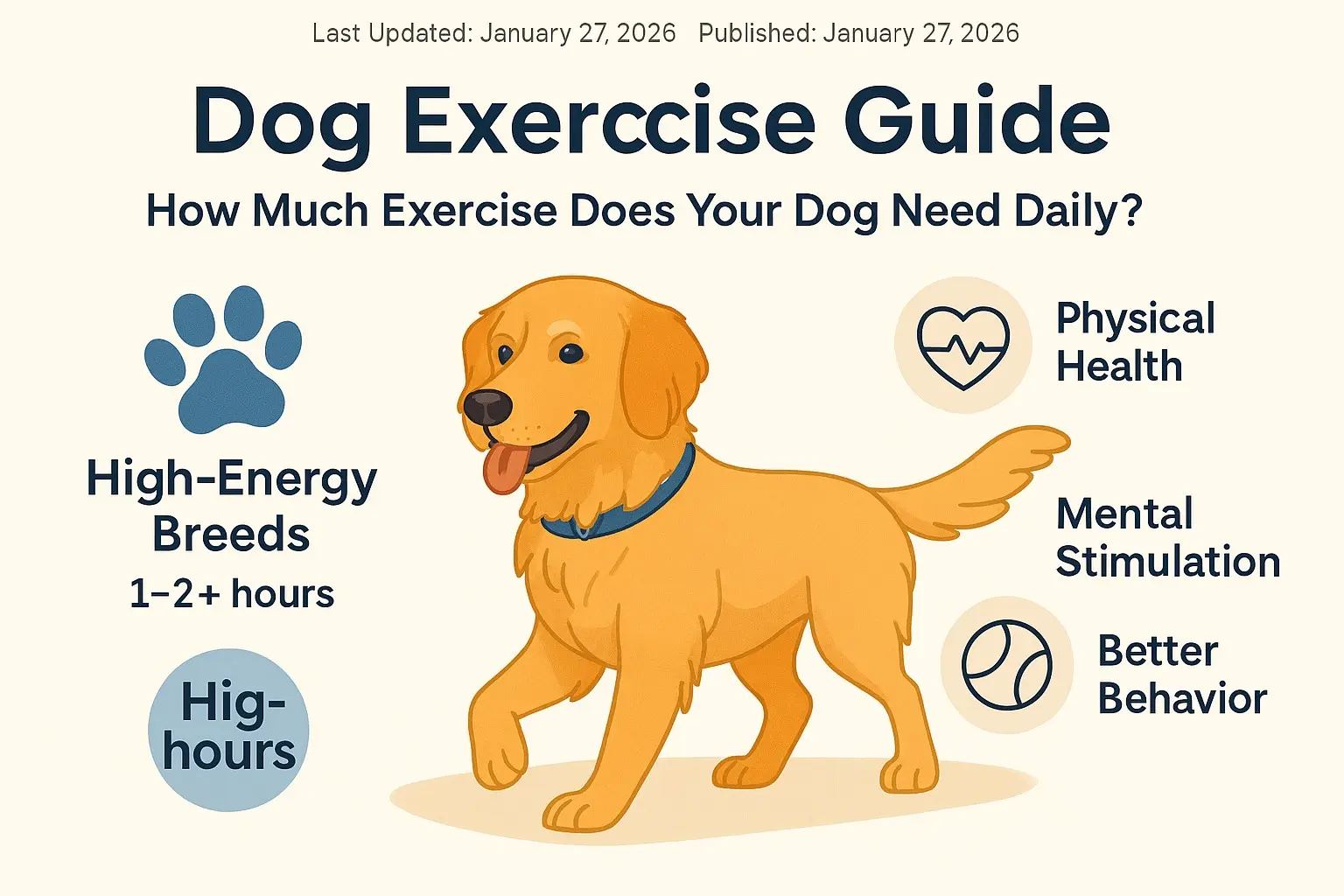
Last Updated: January 27, 2026, Published: January 27, 2026
.Dog exercise is one of the most important things you can do for your pet’s health and happiness. When I adopted my Golden Retriever, Max, I thought a quick 15-minute walk would be enough.
I was wrong. His destructive behaviour, excessive barking, and weight gain taught me that understanding how much exercise dogs truly need isn’t optional. Once I learned about proper dog fitness requirements, everything changed.
Why Exercise is Essential for Dog Health
I’ll never forget coming home to find my couch cushions destroyed. Max sat in the corner looking guilty, but the real problem wasn’t misbehaviours – it was my failure to meet his exercise needs.
Physical Health Benefits
Regular dog workout sessions transform your dog’s physical health.
Key Benefits
- Strengthens the cardiovascular system
- Maintains a healthy weight and prevents obesity
- Builds muscle strength and endurance
- Keeps joints mobile and flexible
- Boosts the immune system
- Increases lifespan (2-3 years longer on average)
Mental Stimulation
Canine fitness isn’t just physical – it’s mental too. Exercise provides mental enrichment through new sights and smells, reduces boredom, decreases anxiety, and improves sleep quality.
After implementing proper exercise, Max’s anxiety during thunderstorms decreased noticeably.
Behavioral Improvements
Within two weeks of increasing Max’s daily dog exercise, his destructive behaviours stopped completely.
Behavioural Changes
- Reduced destructive chewing and digging
- Less excessive barking
- Better focus during training
- Calmer demeanour indoors
- Improved social behaviour
A tired dog is a well-behaved dog – this saying is true.
Weight Management
Dog activity levels directly impact weight. Before I understood this, Max gained 15 pounds. Losing it required strict control AND increased exercise.
Combined with proper nutrition (learn more in our dog nutrition guide), exercise keeps weight under control naturally.
Exercise Needs by Breed Type
The biggest mistake I made was treating all dogs the same. A Border Collie’s needs differ drastically from a Bulldog’s.
High-Energy Breeds
Breeds: Border Collies, Australian Shepherds, Siberian Huskies, Belgian Malinois, Jack Russell Terrier, Weimaraners
Exercise Requirements:
- Duration – 1-2+ hours daily minimum
- Intensity – High – running, hiking, agility work
- Activities – Fetch, frisbee, running, agility training, herding
Without adequate exercise, these breeds develop serious behavioural problems – destructive behaviour, obsessive habits, excessive barking, and even aggression.
Medium-Energy Breeds
Max falls into this category. These dogs need substantial exercise but aren’t quite as intense.
Breeds: Labrador Retrievers, Golden Retriever, Beagles, Boxers, Cocker Spaniels, Brittany Spaniels
Exercise Requirements
- Duration: 45-60 minutes daily
- Intensity: Moderate – brisk walking, jogging, swimming
- Activities: Walking, fetching, swimming, hiking
I split Max’s exercise into two 30-minute sessions – morning walk and afternoon fetch or swimming.
Low-Energy Breeds
Some dogs need gentler, shorter exercise sessions.
Breeds: Bulldogs, Basset Hound, Shih Tzus, Pugs, Cavalier King Charles Spaniel, Great Danes
Exercise Requirements:
- Duration: 30-45 minutes daily
- Intensity: Low to moderate – leisurely walks
- Activities: Gentle walks, light play, mental games
Even low-energy breeds need daily activity. Skipping exercise leads to obesity and joint problems.
Best Exercises for Dogs
Different dog workout types provide different benefits. I rotate activities to keep Max engaged.
Exercise Comparison Table
| Exercise Type | Benefits | Best For |
| Walking | Cardiovascular health, bonding | All breeds |
| Running | High calorie burn, endurance | Active breeds, healthy adults |
| Swimming | Low-affected, full-body workout | Older dogs, dogs with arthritis |
| Fetch | Mental + physical stimulation | Most breeds |
| Agility Training | Coordination, mental challenge | Intelligent, active breeds |
| Hiking | Adventure, varied terrain | Medium to high-energy breeds |
My Weekly Exercise Rotation
Weekdays: 30-minute morning walk + 30-minute fetch or swimming
Weekends: Longer hikes (60-90 minutes) or dog park visits
Variety prevents boredom and works different muscle groups.
Exercise by Life Stage
How much exercise for dogs changes dramatically as they age.
Puppy Exercise (0-12 Months)
Critical Rule: Less is more for puppies.
Puppies have open growth plates that can be damaged by excessive exercise.
Puppy Guidelines:
- Rule of thumb: 5 minutes per age month, twice daily.
- 3-month puppy: 15 minutes, twice daily
- 6-month puppy: 30 minutes, twice daily
- Avoid: Repetitive jumping, running on hard surfaces
Safe Activities: Short walks, gentle fetch, socialization, swimming, basic training
Large breed puppies especially need restricted exercise to prevent developmental bone and joint issues.
Adult Dog Fitness (1-7 Years)
Adults can handle full dog fitness routines appropriate for their breed’s energy level. Follow breed-specific guidelines, increase intensity gradually, maintain daily consistency, and mix activities for variety.
Senior Dog Modifications (7+ Years)
At age 10, Max needed exercise adjustments.
Senior Changes –
- Shorter duration (20-30 minutes instead of 60)
- Lower intensity (walking instead of running)
- More frequent breaks
- Gentler activities (swimming over jogging)
- Joint-friendly exercises
I switched Max to swimming and gentle walks. His joints thank me, and he still gets mental stimulation and cardiovascular benefits.
Signs Your Dog Needs More Exercise
Before I understood dog activity levels, I missed obvious signs.
Your dog likely needs more exercise if they –
- Destroy furniture, shoes, or household items
- Dig holes excessively
- Bark constantly without a clear reason
- Jump on people uncontrollably
- Pace or can’t settle down
- Exhibit hyperactive behaviour indoors
- Show weight gain despite controlled portions
Max checked almost every box before I increased his exercise. These behaviours disappeared within three weeks.
For more on the connection between exercise and behaviour, see our dog mental health guide.
Exercise Safety Tips
I’ve made safety mistakes that taught me valuable lessons.
Weather Considerations
Hot Weather –
- Exercise early in the morning or evening only
- Test pavement with your hand (if too hot to touch, too hot for paws)
- Watch for excessive pain, drooling, or weakness
- Never leave dogs in cars
Cold Weather –
- Short-coated dogs need jackets below 40°F
- Protect paws with boots or balm
- Limit time in extreme cold
- Dry dogs thoroughly after snow exposure
Hydration Needs
- Bring water on walks for over 20 minutes
- Offer water every 15-20 minutes during intense exercise
- Provide fresh water immediately after exercise
- Carry collapsible water bowls
Recognizing Exhaustion
Stop Exercise If Your Dog –
- Lies down and refuses to continue
- Pants excessively with tongue hanging far out
- Seems disoriented or uncoordinated
- Has bright red or pale gums
- Vomits
I pushed Max too hard once on a hike. He lay down and wouldn’t move. Now I watch closely for early fatigue signs.
Paw Protection
- Check paws regularly for cuts or cracks
- Use paw balm on rough terrain
- Consider boots for extreme conditions
- Trim nails regularly to prevent splitting
Indoor Exercise Ideas
Bad weather doesn’t excuse skipping dog exercise.
Rainy Day Activities
Treadmill Training: I taught Max to walk on a treadmill. It took patience, but now he’ll do 20-minute sessions during extreme weather.
Stair Workouts: Walk up and down stairs 10-15 times or play fetch upstairs.
Hide and Seek: Hide treats around the house or play actual hide and seek with family members.
Apartment-Friendly Workouts
Hallway Fetch: Evening hallway fetches sessions work great when we can’t go outside.
Tug-of-War: Great strength workout that doesn’t need much space. I use 15-minute sessions multiple times daily.
Indoor Agility: Create obstacle courses with household items.
Mental Exercise Games
Mental stimulation tires dogs as much as physical activity:
Puzzle Toys: I rotate three different puzzle toys. Max works for his meals through these on rest days.
Training Sessions: Learning new tricks burns mental energy. We practice 10-15 minutes daily.
Scent Work: Hide treats around the house in increasingly hard spots.
Creating Your Exercise Plan
Step 1 – Identify your dog’s breed energy level
Step 2 – Calculate daily exercise needs based on breed and age
Step 3 –Choose 3-4 activities your dog enjoys
Step 4 – Create a weekly schedule with variety
Step 5 – Start conservatively and build gradually
Step 6 – Monitor your dog’s response and adjust
Consistency matters more than intensity. Regular moderate exercise beats occasional intense sessions.
Key Takeaways
- Dog exercise requirements vary by breed, age, and individual energy levels
- High-energy breeds need 1-2+ hours daily, medium-energy breeds need 45-60 minutes, low-energy breeds need 30-45 minutes
- Dog fitness provides physical health benefits, plus mental stimulation and behavioural improvements
- Puppies need restricted exercise – follow the 5-minute-per-month rule
- Senior dogs require modified exercise with lower intensity and shorter duration
- Insufficient activity causes destructive behaviours that disappear with proper exercise
- Safety is paramount – watch for weather extremes, dehydration, and exhaustion
- Indoor exercise options exist for any weather or apartment living
- Consistency matters more than intensity
FAQs about Dog Exercise
How much exercise does my dog need daily?
Dog exercise depends on the breed’s energy level, age, and temperament. High-energy breeds (Border Collies, Huskies) need 1-2+ hours daily. Medium-energy breeds (Golden Retrievers, Beagles) need 45-60 minutes. Low-energy breeds (Bulldogs, Pugs) need 30-45 minutes.
From my experience with Max, a Golden Retriever, 60 minutes split into two sessions works perfectly. Age matters significantly – puppies need restricted exercise (5 minutes per month of age, twice daily) while seniors need shorter, gentler sessions.
What happens if my dog doesn’t get enough exercise?
Insufficient daily dog exercise causes serious behavioural and health problems. Behavioural consequences include destructive chewing, excessive barking, hyperactivity, jumping, and leash reactivity. Physical consequences include weight gain, muscle loss, joint stiffness, and shortened lifespan.
Within two weeks of proper exercise, Max’s destructive behaviours stopped completely. For more on behavioural issues, see our dog mental health guide.
Can I over-exercise my dog?
Yes, over-exercise is possible and dangerous, especially for puppies and senior dogs. Signs include excessive panting that doesn’t stop, limping, refusal to continue, vomiting, and disorientation.
High-risk situations include puppies under 18 months, senior dogs with arthritis, hot weather exercise, and immediate post-meal activity. Build canine fitness gradually, starting with 15-20 minutes and increasing by 5-10 minutes weekly.
What are the best exercises for senior dogs?
Senior dog exercise requires modifications for aging joints. Best activities include swimming (low-impact, full-body), gentle walks (20-30 minutes), mental games, light fetch, and slow hiking on flat terrain.
Avoid running, jumping, stairs, extreme weather, and long-duration activities. I switched Max to primarily swimming and gentle walks. His arthritis improved with regular low-impact exercise.
How do I exercise my dog in an apartment?
Apartment living doesn’t prevent proper dog workout routines. Indoor options include hallway fetch, treadmill training, stair workouts, tug-of-war, mental games, and indoor agility courses.
Outdoor solutions include multiple short walks throughout the day, dog parks, hiking trails on weekends, and doggy daycare. I combine 30-minute morning walks, 15-minute indoor play, and 30-minute evening walks. Mental stimulation through training supplements physical activity.
Final Thoughts
Understanding dog exercise needs transformed my relationship with Max. His destructive behaviours vanished. His anxiety decreased. His health improved dramatically.
Your dog’s breed determines baseline needs, but individual personality matters too. Watch your dog’s behaviour and adjust accordingly.
Start today. Add 10 extra minutes to your walk. Throw the ball five more times. Your dog will thank you with better behaviour and improved health.
Proper nutrition fuels all this activity – make sure you’re feeding your dog appropriately for their exercise level. For comprehensive information on all wellness aspects, visit our complete dog health guide.
Medical Disclaimer: I am not a veterinarian, and this content does not replace professional veterinary advice. What I share comes from real-life experience as a dog owner, extensive research, and consultation with veterinary professionals. Always consult qualified veterinarians for exercise recommendations specific to your dog’s health and physical condition
References
American Kennel Club (AKC)
“Dog Exercise and Activity Guidelines”
https://www.akc.org/expert-advice/health/how-much-exercise-does-dog-need/
Cornell University College of Veterinary Medicine
“Canine Fitness and Exercise Science”
https://www.vet.cornell.edu/departments-centers-and-institutes/riney-canine-health-center

Adel Galal is a health and wellness writer with over 30 years of experience studying and writing about health, fitness, nutrition, and healthy living. He is the founder of NextFitLife.com, where he shares practical, evidence-based guidance to support long-term health at any age. Adel’s mission is simple:
to help people make smarter health choices that fit real life, at any age.