First published: Jun 10, 2023
Last updated: July 29, 2026
Written and source checked by: Adel Galal
Clinical review status: This article has not been reviewed by a dermatologist, ophthalmologist, or optometrist.
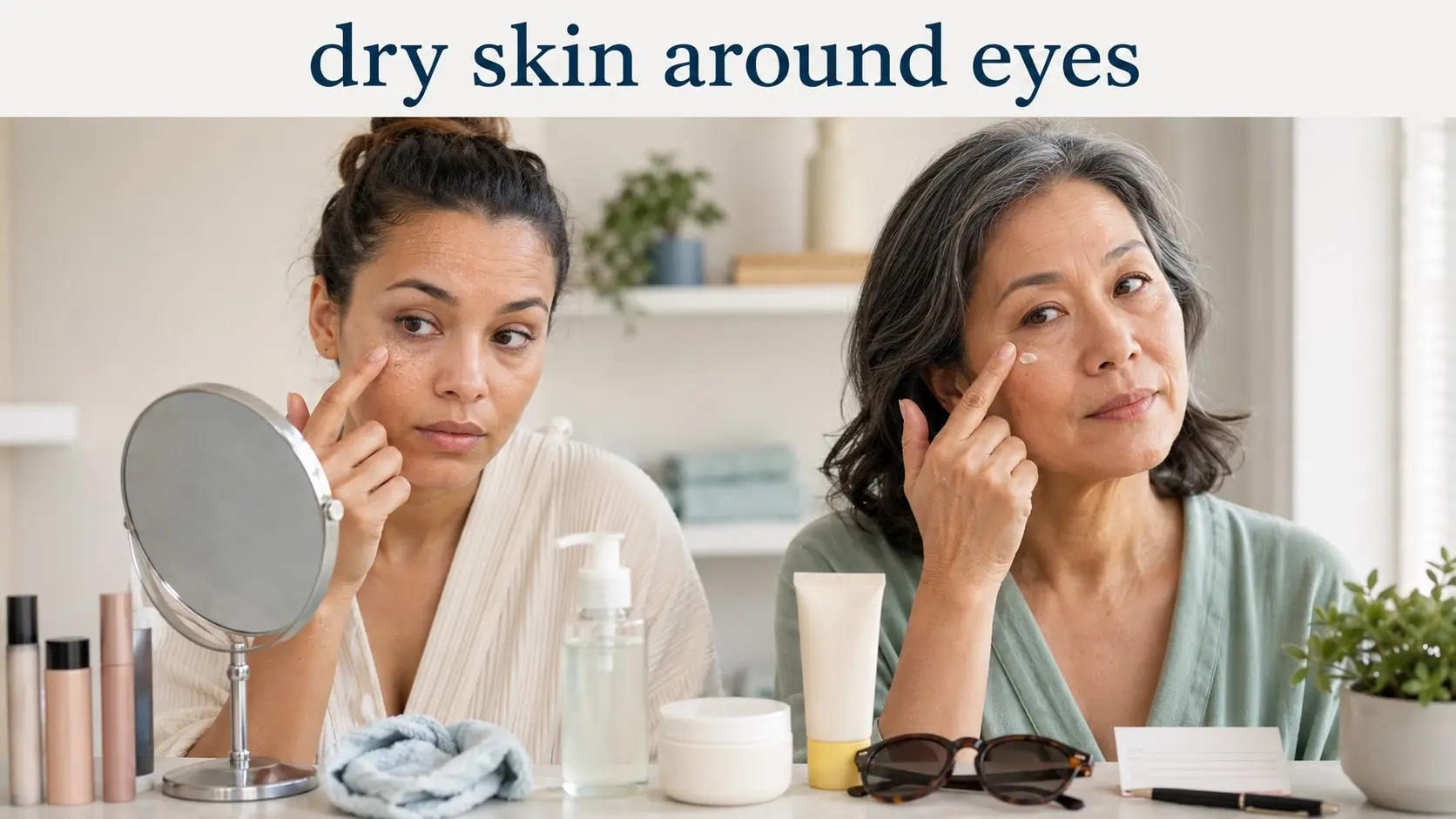
Dry skin around eyes may look flaky, rough, red, darker, swollen, or cracked. It may also itch, sting, or feel tight.
Sometimes the cause is simple dryness. Other times it is eyelid eczema, a reaction to cosmetics, blepharitis, or another eye problem.
The skin near the eyes needs gentle care. Scrubs, acids, retinol, fragrance, strong creams, and repeated rubbing can make the problem worse.
This guide explains common causes, a safe home routine, products to avoid, and the signs that need medical or eye care.
For a wider daily routine, visit the Skincare Basics and Routines Guide. You can also explore the NextFitLife Eye Care Guide.
Get urgent help for eye pain, a change in vision, strong light sensitivity, a very red eye, a hot painful swollen eyelid, fever, or trouble opening the eye.
Quick Answer
To care for dry skin around eyes, stop new or irritating products. Wash with lukewarm water and a mild cleanser. Apply a small amount of plain fragrance-free moisturizer to the surrounding skin. Keep it out of the eye and away from the wet eyelid edge.
Do not scrub or exfoliate. Do not use retinol, acids, essential oils, perfume, or steroid cream near the eyes without professional advice.
See a dermatologist when the rash keeps returning. See an eye professional when the eye itself feels painful, dry, gritty, red, or sensitive to light.
Is the Skin Dry or Is the Eye Dry?
These are unique problems.
| Problem | What you may notice | Who may help |
|---|---|---|
| Dry eyelid skin | Flakes, roughness, itching, redness, darkening, or tight skin | A pharmacist, doctor, or dermatologist |
| Dry eye symptoms | Burning, gritty feeling, red eye, watering, light sensitivity, or changing blur | An optometrist or ophthalmologist |
| Blepharitis | Crusts near lashes, sticky lids, itchy eyes, sore eyelid edges, or a gritty feeling | A pharmacist, doctor, optometrist, or ophthalmologist |
| Cosmetic allergy | Itchy, swollen, burning, flaky, or blistered skin after a product | A doctor or dermatologist |
| Eye infection or deeper inflammation | Eye pain, strong redness, discharge, light sensitivity, fever, or vision change | Urgent medical or eye care |
A face cream can help dry skin. It cannot treat the tear film inside the eye.
Eye drops can help some eye surface problems. They do not treat a skin allergy around the eyelids.
Common Symptoms
Flaky skin around eyes may cause:
- Fine white flakes
- Rough skin
- Tightness
- Itching
- Burning or stinging
- Red, pink, brown, grey, or purple skin changes
- Mild swelling
- Cracking
- Sensitivity to products
- Makeup sitting unevenly
Skin colour changes may look different on each skin tone.
Do not use makeup to hide a new painful or swollen rash.
What Causes Dry Skin Around the Eyes?
Simple Dryness
Cold air, wind, indoor heating, air conditioning, hot water, and frequent washing can weaken the skin barrier.
Contact Dermatitis
Contact dermatitis occurs when something irritates the skin or causes an allergic reaction.
Atopic Dermatitis
Atopic dermatitis can affect the eyelids and surrounding skin. It often causes itch, dryness, scaling, and swelling.
Blepharitis
Blepharitis affects the eyelid edge. It can cause crusting, sore lids, itch, and a gritty eye feeling.
Seborrheic Dermatitis
This condition can cause flakes around the eyebrows, nose, scalp, lashes, and eyelids.
Dry Eye
When tears do not work well, the eye may burn, sting, water, feel gritty, or become blurry.
Contact Dermatitis Around the Eyes
The eyelids are a common place for a product reaction.
A trigger does not always touch the eyelid directly.
You may transfer it with your fingers.
Possible triggers include:
- Eye cream
- Face moisturizer
- Sunscreen
- Makeup remover
- Mascara
- Eyeliner
- Eye shadow
- False lash glue
- Fragrance
- Essential oils
- Shampoo
- Hair dye
- Nail polish
- Artificial nails
- Hand cream
- Cleaning spray
- Air freshener
The rash may appear after you have used a product for a long time. A new allergy can develop later.
A product labelled natural, clean, hypoallergenic, or suitable for sensitive skin can still cause a reaction.
Read the full ingredient list.
A dermatologist may use medical patch testing when the trigger is hard to find.
Skin Care Ingredients That May Cause Irritation
The sensitive eye area may react to products that the rest of the face can tolerate.
Common irritants include:
- Retinol
- Prescription retinoids
- Glycolic acid
- Lactic acid
- Salicylic acid
- Vitamin C products
- Benzoyl peroxide
- Facial scrubs
- Peeling solutions
- Fragrance
- Essential oils
- Strong makeup remover
- Alcohol rich products
A product may move toward the eyes through sweat, tears, or moisturizer.
Keep active products away from the eyelids unless the label clearly allows eye area use.
Eyelid Eczema
Eyelid eczema may cause:
- Strong itch
- Dry scales
- Thickened skin
- Swelling
- Skin colour changes
- Cracks
- Repeated flares
Do not rub the eyes. Frequent rubbing can damage the skin and may also affect the eye.
A dermatologist can decide whether the cause is atopic eczema, contact allergy, seborrheic dermatitis, or another condition.
Prescription treatment may be needed.
Do not start steroid cream around the eyes on your own. The eyelid skin is delicate. A healthcare professional should choose the product, strength, location, and treatment time.
Adults with eczema should arrange eye care when symptoms continue or when the eye becomes painful, red, watery, gritty, or sensitive to light.
Could It Be Blepharitis?
Blepharitis affects the edges of the eyelids.
Signs may include:
- Flakes near the lashes
- Crusts at the lash roots
- Sticky eyelids in the morning
- Itchy eyes
- Sore eyelids
- A gritty feeling
- Watery eyes
- Dry eye symptoms
Blepharitis often comes and goes.
A basic care plan may include a warm compress and gentle cleaning of the eyelid edge.
Use clean hands and a clean cloth.
Do not scrub the skin.
Stop wearing eye makeup and contact lenses while symptoms are active.
Ask a pharmacist or eye professional which eyelid cleaning product is suitable.
See a doctor or eye professional when symptoms do not improve or keep returning.
Could It Be Dry Eye?
Dry eye symptoms come from the eye surface, not only the skin.
Symptoms may include:
- Burning
- Stinging
- A scratchy feeling
- A gritty feeling
- Red eyes
- Watering
- Light sensitivity
- Blur that changes
Dry eye may be linked with:
- Age
- Contact lenses
- Screen use
- Wind
- Air conditioning
- Some medicines
- Autoimmune conditions
- Eyelid gland problems
For mild symptoms, an eye professional or pharmacist may suggest sterile artificial tears.
Follow the label. Do not share eye drops. Do not let the bottle tip touch the eye or lashes.
Do not put moisturizer, oil, honey, homemade water, or cosmetic serum into the eye.
Read our Eye Care Tips at Home Guide for more eye surface safety information.
A Safe Routine for Mild Dry Skin Around Eyes
1. Stop New Products
Stop any product added shortly before the problem began.
This may include makeup, remover, eye cream, sunscreen, hair products, nail products, or fragrance.
Do not add several new products to fix the reaction.
2. Wash Gently
Use lukewarm water.
Use a mild fragrance-free cleanser when needed.
Keep soap and cleanser out of the eyes.
Do not use a washcloth to scrub the eyelids.
Pat the skin dry with a clean, soft towel.
3. Use a Simple Moisturizer
Choose a plain fragrance-free moisturizer made for sensitive facial skin.
A cream or ointment may hold moisture better than a thin lotion.
Apply a very small amount to the dry surrounding skin.
Keep it out of the eyes.
Do not place it directly on the wet eyelid edge or inside the lashes.
Stop if it causes burning, swelling, or more redness.
4. Use a Cool Compress
A cool, clean compress may calm mild itching or burning.
Wet a clean cloth with cool water.
Place it over the closed eyes for a few minutes.
Do not place ice directly on the skin.
5. Avoid Rubbing
Rubbing can create more inflammation.
It can also move allergens from the hands to the eyelids.
Keep fingernails short.
Wash your hands before touching your face.
6. Pause Eye Makeup
Stop mascara, eyeliner, eye shadow, lash glue, and concealer until the skin settles.
Do not use old or shared eye makeup.
Replace products that may have caused the reaction.
Do not place makeup over cracked, wet, or infected skin.
7. Protect the Area Outdoors
Wear sunglasses that block UVA and UVB radiation.
Choose a sunscreen suitable for sensitive facial skin.
Keep sunscreen out of the eyes.
Stop using it near the eyelids if it causes burning or swelling.
Use a hat and shade when sunscreen is difficult to tolerate.
8. Reduce Dry Air
Move fans and air vents away from the face.
A clean humidifier may help when indoor air is very dry.
Clean the humidifier as directed.
Take screen breaks and blink fully when the eyes also feel dry.
How to Test a New Skin Product
Do not test a new product directly on irritated eyelids.
Test it on a small area of normal skin first.
- Choose the inside of the arm or elbow.
- Apply the normal amount.
- Use it twice each day.
- Continue for seven to ten days.
- Leave wash-off products on for the time shown on the label.
- Stop if redness, itch, swelling, or burning appears.
A home product test is not the same as medical patch testing.
A dermatologist may perform formal testing for repeated cosmetic allergy.
What to Avoid Around Dry or Irritated Eyes
Do not use:
- Facial scrubs
- Exfoliating brushes
- Retinol
- Strong acids
- Chemical peels
- Home laser devices
- Essential oils
- Tea tree oil
- Lemon juice
- Apple cider vinegar
- Baking soda
- Toothpaste
- Fragranced oils
- Hot compresses on an unknown rash
- Unapproved eye drops
- Homemade eye drops
Do not exfoliate flaky eyelid skin.
The flakes may be part of eczema, allergy, or blepharitis. Scrubbing can make the cause worse.
Chemical peels and laser resurfacing are not basic treatments for unexplained eyelid dryness.
Professional Treatment
Treatment depends on the cause.
A dermatologist may:
- Review every skin, hair, nail, and cosmetic product
- Look for eczema or contact dermatitis
- Recommend medical patch testing
- Prescribe a suitable anti-inflammatory treatment
- Refer you to an ophthalmologist when the eye is involved
An eye professional may:
- Check the eyelids and lashes
- Look for blepharitis
- Check the tear film
- Check the cornea
- Recommend suitable eye drops
- Treat infection or inflammation when present
Bring the products you use to the appointment.
Photos from the start of the rash may also help.
Dry Eyelid Skin in Children
Children may develop eczema or product reactions around the eyes.
Use gentle skin care.
Do not use adult active products near a child’s eyes.
Do not apply steroid cream unless a healthcare professional gives clear instructions.
Seek care when:
- The child cannot stop rubbing
- The eye becomes red
- The eyelid becomes hot or painful
- The skin leaks fluid
- There are blisters or sores
- The child is sensitive to light
- Vision seems different
- The rash keeps returning
When to Seek Medical Care
Arrange a Routine Appointment
See a doctor, dermatologist, pharmacist, optometrist, or ophthalmologist when:
- Symptoms last more than several days
- The rash keeps returning
- The skin becomes thick or cracked
- The eyelids remain swollen
- There is crusting near the eyelashes
- The eyes often feel gritty
- A product reaction is hard to identify
- You need treatment near the eyelids
- The condition affects sleep or daily life
Seek Urgent Care
Get urgent help for:
- Pain inside the eye
- Blurred or reduced vision
- A very red eye
- Strong sensitivity to light
- A red, hot, painful, or tender eyelid
- Fast growing swelling
- Trouble opening the eye
- Fever or feeling very unwell
- Blisters around the eye
- A serious allergic reaction
- Eye symptoms with headache, nausea, or vomiting
Call emergency services for trouble breathing, swelling of the tongue or throat, fainting, or another severe allergic reaction.
Common Myths About Dry Skin Around Eyes
Myth: Drinking More Water Will Cure It
Water supports general health. It will not remove a cosmetic allergy, eczema, or blepharitis.
Myth: Flakes Need Exfoliation
Scrubbing can increase irritation and damage the skin barrier.
Myth: Expensive Eye Cream Is Always Better
A simple fragrance-free moisturizer may be easier to tolerate.
Myth: Natural Products Cannot Cause Allergy
Plant extracts, essential oils, and fragrance can cause a reaction.
Myth: Dry Skin and Dry Eye Are the Same
One affects the skin. The other affects the tear film and eye surface.
Myth: Steroid Cream Is Safe Anywhere
Treatment near the eyes should be selected and monitored by a qualified professional.
Myth: Makeup Can Protect the Rash
Makeup may add irritation and make it harder to identify the cause.
Myth: The Problem Can Be Removed Forever
Symptoms can return when the trigger, allergy, eczema, or blepharitis remains.
A Simple Three-Day Reset
Morning
- Rinse gently with lukewarm water.
- Use a mild cleanser only when needed.
- Apply a small amount of plain moisturizer.
- Wear sunglasses outdoors.
- Skip eye makeup.
During the Day
- Do not rub the eyes.
- Wash hands before touching the face.
- Move air vents away from the eyes.
- Take screen breaks.
- Note any product that causes stinging.
Evening
- Remove products gently.
- Use a cool compress when needed.
- Apply a small amount of moisturizer.
- Keep active ingredients away from the eye area.
Book professional care if symptoms become worse or do not begin to settle.
Five High Authority References and Sources
American Academy of Dermatology: Contact Dermatitis Signs and Symptoms
Open dermatologist guidance on eyelid contact dermatitis, dry cracked skin, itch, burning, swelling, cosmetics, shampoo, nail products, and transferred allergens.
American Academy of Dermatology: Eczema and Eye Problems
Open guidance on eyelid eczema, red or swollen eyes, eye rubbing, keratitis warning signs, and referral to an eye doctor.
NHS: Blepharitis
Open guidance on itchy or sore eyelids, crusts near the lashes, eyelid cleaning, contact lenses, makeup, and urgent eye warning signs.
National Eye Institute: Dry Eye
Open guidance on burning, scratchy eyes, redness, light sensitivity, blurry vision, artificial tears, environmental triggers, and eye examinations.
United States Food and Drug Administration: Allergens in Cosmetics
Open guidance on cosmetic allergy, fragrance, preservatives, dyes, metals, ingredient labels, patch testing, and severe allergic reactions.
Conclusion
Dry skin around eyes needs gentle care, not aggressive beauty treatment.
Stop irritating products. Wash gently. Use a small amount of plain moisturizer. Avoid rubbing, exfoliation, strong active ingredients, and unapproved treatments.
Remember that eczema, contact allergy, blepharitis, and dry eye can look similar.
Call to action: Review every product that touches your face, hair, nails, and hands today. Begin a simple routine, and arrange professional care if symptoms persist, return, or affect the eye itself.
Related NextFitLife Guides and Hubs
Medical Disclaimer
This article gives general education. It does not diagnose eczema, contact dermatitis, blepharitis, dry eye, allergy, or infection.
It does not replace a skin examination, eye examination, diagnosis, prescription, treatment plan, or emergency medical care.
Always consult a qualified dermatologist, ophthalmologist, optometrist, doctor, nurse, or pharmacist for persistent eyelid symptoms, eye pain, vision changes, or treatment close to the eyes.
About the Author
Frequently Asked Questions
What causes dry skin around eyes?
Common causes include simple dryness, cosmetics, fragrance, contact dermatitis, eczema, blepharitis, weather, frequent washing, and rubbing.
What is the safest treatment for mild dry eyelid skin?
Stop irritating products, wash gently, and apply a very small amount of plain fragrance-free moisturizer to the surrounding skin.
Can I exfoliate dry skin around my eyes?
No. Scrubs and acids can make irritation worse. Flaking may be caused by eczema, allergy, or blepharitis.
Can retinol cause dry skin around eyes?
Yes. Retinol and other active ingredients can move toward the eyelids and cause dryness, burning, or peeling.
Can eye cream cause eyelid eczema?
Yes. Eye creams, preservatives, fragrance, botanical extracts, and other ingredients can cause irritant or allergic contact dermatitis.
Can nail polish cause a rash around the eyes?
Yes. A person can transfer an allergen from nail polish or artificial nails to the eyelids by touching the eyes.
How can I tell blepharitis from dry skin?
Blepharitis often causes crusts near the lashes, sticky lids, itchy eyes, sore eyelid edges, and a gritty feeling.
Are dry skin and dry eye the same?
No. Dry skin affects the eyelid or surrounding skin. Dry eye affects the tears and surface of the eye.
Can I use hydrocortisone around my eyes?
Do not self-treat the eyelids with steroid cream. Ask a qualified healthcare professional to choose the correct treatment.
How do I test a new eye area product?
Test it on normal skin inside the arm twice daily for seven to ten days before using it near the eyes.
When should I see a dermatologist?
See a dermatologist when the rash is severe, keeps returning, becomes thick or cracked, or does not improve with simple care.
When is eyelid dryness urgent?
Seek urgent care for eye pain, vision changes, strong redness, light sensitivity, fever, a hot, painful eyelid, or trouble opening the eye.

Health & wellness writer with 30+ years of experience in nutrition, fitness, and healthy aging. Founder of NextFitLife.com — evidence-based health guidance.