Last Updated: September 8, 2026
Next Review: September 2027 or sooner if major nutrition guidance changes
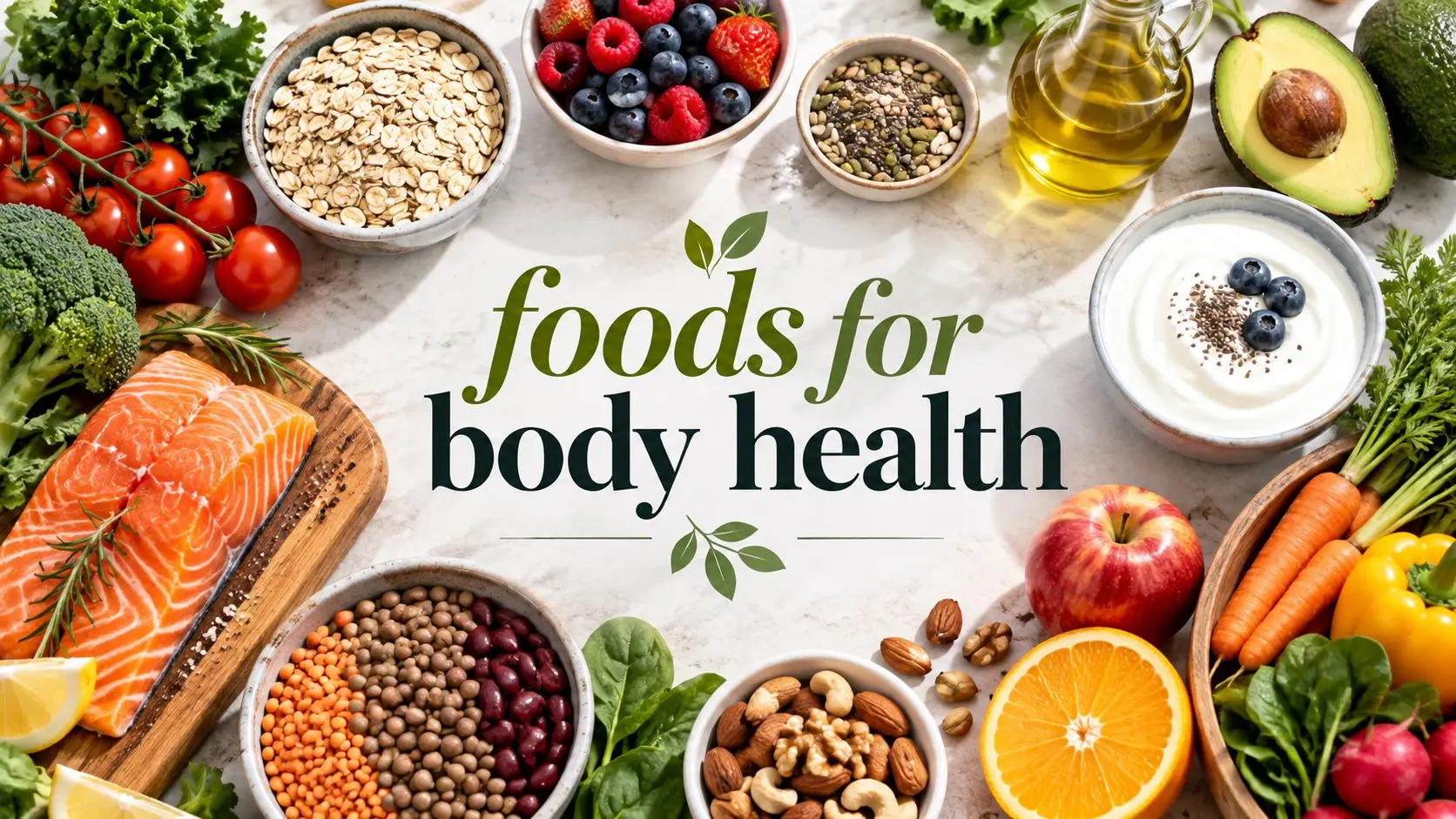
Topic: Foods for Body Health
Reading Time: About 18 minutes
Written and Source Checked by: Adel Galal, Founder and Lead Writer at NextFitLife
Review Status: Written and source checked using current nutrition guidance. This article has not been medically reviewed by a doctor, registered dietitian, pharmacist, or other licensed healthcare professional.
No food can keep your whole body healthy by itself.
Spinach cannot do it.
Salmon cannot do it.
Blueberries cannot do it.
What works better is variety.
Eat vegetables.
Eat fruit.
Add protein.
Use beans and whole grains.
Include suitable dairy or alternatives.
Choose useful sources of fat.
Then repeat that pattern.
Quick answer: Useful foods for body health include vegetables, fruit, beans, lentils, whole grains, fish, eggs, yogurt, tofu, nuts, seeds, olive oil, and avocado. These foods supply protein, fiber, healthy fats, vitamins, minerals, and other nutrients. No single food is best. Food variety and your overall eating pattern matter more.
Nutrition note: A general healthy food list is not a medical diet. Diabetes, kidney disease, liver disease, heart disease, food allergies, pregnancy, digestive disease, medicine use, and eating disorders can change what foods and portions are suitable for you.
For the full food library, visit the NextFitLife Foods and Nutrition Hub.
For practical everyday habits, use the Healthy Eating and Lifestyle Guide.
What are foods for body health?
The phrase sounds more complicated than it is.
Foods for body health are foods that help you build a varied and adequate diet.
They can provide:
- Protein
- Carbohydrate
- Fiber
- Unsaturated fat
- Vitamins
- Minerals
- Water
- Plant compounds
The current Dietary Guidelines for Americans emphasize whole, nutrient dense foods.
WHO also describes adequacy, balance, moderation, and diversity as core parts of a healthy diet.
That is the idea behind this list.
Not superfoods.
Not miracle ingredients.
Just useful food.
Is there one healthiest food in the world?
No.
I would not call any food number one.
Different foods do different jobs.
Salmon gives you nutrients that an orange does not.
An orange gives you nutrients that salmon does not.
Lentils are different again.
This is why a balanced diet uses different foods.
Variety fills more gaps than chasing one so called superfood.
What should a healthy plate look like?
You do not need an exact formula.
But a simple plate can help.
Try to include:
- Vegetables or fruit
- A protein food
- A whole grain, bean, potato, or another useful carbohydrate
- A suitable source of fat
Water can be a practical main drink for many people.
Harvard's Healthy Eating Plate uses a similar idea.
It puts strong emphasis on vegetables, fruit, whole grains, useful protein sources, and plant oils.
21 powerful foods for body health
1. Spinach
Spinach is an easy leafy green.
It provides folate, vitamin K, carotenoids, and other nutrients.
It also adds fiber without making a meal heavy.
Try it:
- In eggs
- In soup
- In salads
- With beans
- Mixed into cooked rice
Spinach is one example of leafy green vegetables.
You can also use kale, lettuce, collard greens, or another green you enjoy.
If you take warfarin, do not suddenly make huge changes in vitamin K rich foods without discussing consistency with your healthcare team.
2. Broccoli
Broccoli gives you fiber, vitamin C, folate, and several plant compounds.
It is part of the cruciferous vegetable family.
That family also includes cabbage, cauliflower, Brussels sprouts, and kale.
Steam it.
Roast it.
Add it to soup.
Or chop it into a stir fry.
You do not need to eat it raw to make it healthy.
3. Blueberries
Blueberries are an easy way to add fruit.
They provide fiber, vitamin C, and plant pigments called anthocyanins.
Fresh is fine.
Frozen is fine too.
Add berries to:
- Oatmeal
- Plain yogurt
- Whole grain cereal
- A fruit bowl
Do not worry if blueberries are expensive where you live.
They are not required.
Use another fruit.
4. Oranges
Oranges provide vitamin C, water, carbohydrate, and fiber.
Whole oranges are different from orange juice.
The whole fruit contains more intact fiber.
Peel one and eat it.
Simple works.
You can learn more in the Fruits and Vegetables Guide.
5. Tomatoes
Tomatoes give meals color and flavor.
They provide vitamin C, potassium, and carotenoids such as lycopene.
You can eat them raw.
You can cook them too.
Canned tomatoes can be very practical.
If sodium matters for you, compare labels.
Choose a lower sodium or no salt added version when useful.
6. Sweet potatoes
Sweet potatoes are a useful carbohydrate food.
They provide fiber and carotenoids that the body can use to make vitamin A.
They also contain potassium.
Bake them.
Roast them.
Mash them.
Eat them with beans, fish, eggs, tofu, or another protein food.
7. Oats
Oats are cheap in many places.
They are easy to store.
And they work in many meals.
Oats provide whole grain carbohydrate and fiber.
They also contain a type of soluble fiber called beta glucan.
Try oats with:
- Fruit
- Plain yogurt
- Milk or a suitable fortified alternative
- Nuts
- Seeds
Oats are a simple example of whole grains.
8. Quinoa
Quinoa is another useful grain like food.
It supplies carbohydrate, fiber, minerals, and protein.
Quinoa contains all nine essential amino acids.
That does not make it magical.
It simply makes it one useful plant protein option.
Use it instead of rice sometimes.
Or use rice if that fits your food culture and budget better.
9. Lentils
Lentils do a lot for a small food.
They provide plant protein.
They provide fiber.
They also contain folate, iron, potassium, and other minerals.
Lentils can make meals more filling.
Try them in:
- Soup
- Curry
- Salads
- Rice dishes
- Stews
Canned lentils can save time.
Rinse them if you want to reduce some of the sodium.
10. Chickpeas
Chickpeas are another useful legume.
They supply protein, carbohydrate, and fiber together.
You can use them whole.
Or turn them into hummus.
Add chickpeas to:
- Salads
- Soup
- Grain bowls
- Roasted vegetable meals
Beans, peas, chickpeas, and lentils are some of the most practical fiber rich foods.
11. Plain yogurt
Plain yogurt can provide protein and calcium.
Some yogurts also contain live cultures.
Check the label if that matters to you.
Choose a product that fits your diet.
Then add fruit for sweetness.
This often gives you more control over added sugar than buying a very sweet flavored yogurt.
Lactose free yogurt can work for some people with lactose intolerance.
A fortified plant alternative may suit others.
12. Eggs
Eggs are simple.
They provide protein, choline, vitamin B12, selenium, and other nutrients.
Boil them.
Scramble them.
Add them to vegetables.
Or use them in a sandwich.
Eggs can fit a healthy eating pattern.
The full pattern still matters more than one food.
13. Salmon
Salmon provides protein.
It also supplies long chain omega 3 fats.
Fish can be part of a heart healthy eating pattern.
Try salmon with:
- Vegetables
- Potatoes
- Brown rice
- Quinoa
- Salad
Salmon does not need to be fresh.
Frozen and canned options can work too.
14. Sardines
Sardines are small fish.
They provide protein and omega 3 fats.
When the soft bones are eaten, canned sardines can also provide calcium.
They are easy to keep in a cupboard.
Use them on toast.
Add them to a salad.
Or eat them with potatoes and vegetables.
Compare sodium if you buy canned fish.
15. Tofu
Tofu is a useful soy protein food.
It provides protein.
Some tofu also provides a useful amount of calcium.
The calcium amount depends on how the tofu was made.
Check the label.
Tofu works in:
- Stir fries
- Soups
- Curries
- Rice bowls
- Scrambles
You do not need to be vegetarian to eat tofu.
16. Almonds
Almonds provide unsaturated fat, fiber, protein, vitamin E, magnesium, and other nutrients.
They are also energy dense.
That is not bad.
It simply means a small amount contains a lot of energy.
Use almonds with fruit.
Add them to oats.
Or use almond butter.
Read our Almond Butter Guide for more practical ideas.
17. Walnuts
Walnuts provide unsaturated fats.
They also contain the plant omega 3 fat alpha linolenic acid.
They are not a special “brain food.”
No food deserves that title.
Walnuts are simply one nutritious nut.
Add a small handful to:
- Oatmeal
- Yogurt
- Salad
- Fruit
18. Chia seeds
Chia seeds provide fiber, plant omega 3 fat, protein, and minerals.
They absorb liquid.
That makes them useful in oats and pudding style foods.
Add them gradually if your normal fiber intake is low.
A sudden jump in fiber can make some people feel bloated.
Drink enough fluid unless you have been told to limit fluids.
19. Olive oil
Olive oil is mainly fat.
Most of that fat is unsaturated.
It can replace butter or other fats in some meals.
Use it for:
- Salad dressing
- Roasted vegetables
- Cooking
- Beans
- Whole grain dishes
Olive oil is still energy dense.
Healthy fat does not mean unlimited fat.
The type and amount both matter.
20. Avocado
Avocado provides unsaturated fat, fiber, potassium, folate, and other nutrients.
Use it on toast.
Add it to salad.
Put it in a bean bowl.
Or make guacamole.
Avocado is one example of healthy fats.
You do not need it if it is expensive or hard to find.
Nuts, seeds, fish, and plant oils are other options.
21. Apples
Apples are ordinary.
That is part of their value.
They are easy to carry.
They provide carbohydrate, water, and fiber.
Eat the skin when it is suitable and washed.
Pair an apple with yogurt, nuts, or nut butter if you want a more substantial snack.
Healthy eating does not need exotic food.
Are these really the 21 best foods?
No list can prove that.
This is not a ranking from first to last.
These are 21 practical examples of nutrient dense foods that can fit a healthy pattern.
You can swap them.
No blueberries?
Use strawberries.
No quinoa?
Use brown rice, barley, oats, or another whole grain.
No salmon?
Use another suitable fish, tofu, beans, eggs, or poultry.
No yogurt?
Use another suitable calcium and protein source.
Healthy eating should fit real life.
What foods should you eat every day?
You do not need the same 21 foods every day.
A better goal is a good pattern across the week.
Try to eat some:
- Vegetables
- Fruit
- Protein foods
- Fiber rich carbohydrate foods
- Healthy fat sources
Rotate your choices.
That gives you a wider mix of nutrients.
This is the idea behind food variety.
Should half your plate be vegetables?
It can be a useful visual guide.
Harvard's Healthy Eating Plate suggests making about half of the plate vegetables and fruit, with more emphasis on vegetables.
It is not a medical prescription.
Your meal might be soup.
Curry.
A sandwich.
A rice bowl.
Or several small dishes.
The same idea can still work.
Include a good amount of plants.
Add protein.
Add a useful carbohydrate.
Add fat as needed.
Do fresh foods have to be better?
No.
Fresh food can be excellent.
So can frozen food.
Canned foods can help too.
Useful options include:
- Frozen vegetables
- Frozen berries
- Canned beans
- Canned tomatoes
- Canned fish
These foods can reduce cost and waste.
They can also save time.
Compare added sugar, sodium, and sauces when needed.
Does processed always mean unhealthy?
No.
Yogurt is processed.
Oats are processed.
Frozen vegetables are processed.
Canned beans are processed.
Tofu is processed.
Processing is a broad word.
What matters is what the food contains and how it fits your diet.
Current guidance does encourage reducing many highly processed foods that provide large amounts of added sugar, sodium, refined carbohydrate, or less useful fats.
But you do not need fear of every package.
What foods should you limit?
I prefer the word limit over ban.
Eating should leave room for real life.
Try to keep foods and drinks that are very high in added sugar, sodium, or saturated fat from crowding out more nutritious foods.
Examples can include frequent:
- Sugary drinks
- Large portions of sweets
- Processed meats
- Very salty snacks
- Some highly processed convenience foods
One dessert does not ruin your health.
One healthy meal does not create perfect health either.
The pattern matters.
What about red meat?
You do not have to call all red meat unhealthy.
If you eat meat, choose portions and types that fit your needs.
The American Heart Association recommends emphasizing fish, beans, peas, lentils, nuts, and other healthy protein sources while choosing lean meat and limiting processed forms.
You can also use meat less often and build more meals around beans or lentils.
Do healthy foods give you more energy?
Your body gets energy from calories in food.
Carbohydrate, fat, and protein all provide energy.
Eating an adequate healthy eating pattern can support normal daily function.
But constant fatigue is not proof that your diet is bad.
Fatigue can have many causes.
These include anemia, sleep problems, thyroid disease, diabetes, depression, infections, medicines, and other conditions.
See a healthcare professional if fatigue is persistent or unexplained.
Do these foods boost the immune system?
Do not think of immunity like a switch.
No food “boosts” immunity on demand.
Your immune system needs adequate nutrition.
Protein, vitamins, minerals, energy, and other nutrients all play roles in normal immune function.
A varied diet helps provide them.
But food does not make you immune to infection.
Do antioxidants stop disease?
Many plant foods contain compounds with antioxidant activity.
That does not mean eating one antioxidant rich food prevents a specific disease.
Use fruits, vegetables, beans, nuts, seeds, and whole grains as part of the whole diet.
Do not chase foods because a marketing label says antioxidant.
Do you need a multivitamin if you eat these foods?
Not automatically.
Food first can be a useful foundation.
But some people still need supplements.
Examples may include a confirmed deficiency, certain pregnancy needs, restricted diets, or problems with absorption.
Do not use symptoms alone to diagnose a vitamin deficiency.
For more detail, visit the NextFitLife Nutrition and Vitamins Guide.
How can you make these foods affordable?
You do not need 21 foods in your shopping cart.
Start with affordable staples.
For example:
- Oats
- Lentils
- Beans
- Eggs
- Seasonal fruit
- Frozen vegetables
- Canned tomatoes
- Rice
- Plain yogurt
- Canned fish
Buy what you actually eat.
Wasted “healthy” food helps nobody.
A simple one day meal example
This is a general example.
It is not a personal diet plan.
Breakfast
Oatmeal with plain yogurt, blueberries, and chia seeds.
Lunch
Lentils with quinoa, tomatoes, spinach, and olive oil.
Snack
An apple with almonds.
Dinner
Salmon with broccoli and sweet potato.
Vegetarian option:
Use tofu or chickpeas instead of salmon.
For more ideas, visit the Meal Prep and Recipes Hub.
A simple plant focused day
Breakfast
Oats with fortified soy drink, berries, and walnuts.
Lunch
Chickpea salad with tomatoes, spinach, quinoa, and olive oil.
Snack
Apple with almond butter.
Dinner
Tofu, broccoli, sweet potato, and another vegetable.
A vegan diet needs reliable vitamin B12 from fortified foods or supplements.
Individual nutrient needs still matter.
What if you have diabetes?
These foods are not a diabetes treatment plan.
Fruit, oats, beans, sweet potatoes, quinoa, and other carbohydrate foods can affect blood glucose.
Portions, medicines, meal timing, and individual glucose response matter.
If you use insulin or medicine that can cause low blood sugar, major diet changes should be discussed with your care team.
What if you have kidney disease?
Do not copy this list as a kidney diet.
Kidney disease can change suitable amounts of:
- Protein
- Potassium
- Phosphorus
- Sodium
- Fluid
Several foods on this page can be high in nutrients that some kidney patients need to limit.
Follow your kidney clinician and registered dietitian's plan.
What if you have food allergies?
Do not eat a food just because it appears on a healthy food list.
A food that causes an allergic reaction is not healthy for you.
Nuts, eggs, milk, fish, soy, and other foods on this page can be major allergens.
Use safe alternatives.
Read labels.
Seek emergency help for trouble breathing, throat swelling, fainting, or another severe allergic reaction.
What if you have digestive problems?
More fiber is not always better overnight.
Beans, lentils, whole grains, fruit, vegetables, nuts, and seeds can increase fiber quickly.
Add them gradually if your diet is currently low in fiber.
Some digestive conditions need more specific changes.
For more help, use the Mind Body and General Wellness Foods Guide or the digestive section of the Foods and Nutrition Hub.
Common mistakes with healthy foods
Calling foods superfoods
Food variety is stronger than food worship.
Buying expensive foods because they look healthy
Oats and lentils count too.
Ignoring portions of oils, nuts, and nut butter
They are nutritious and energy dense.
Assuming fresh is always better
Frozen and canned foods can be useful.
Removing all carbohydrates
Whole grains, beans, fruit, and potatoes can fit a healthy diet.
Thinking food can cure disease
Food can support health.
It does not replace medical treatment.
Changing everything at once
Start with one meal.
Then repeat it.
How to start eating better this week
- Add one vegetable to a meal you already eat.
- Add one whole fruit each day.
- Use beans or lentils in one meal.
- Choose oats or another whole grain for one meal.
- Add a suitable protein food.
- Use nuts, seeds, olive oil, avocado, or fish as useful fat sources.
- Repeat the foods you actually enjoy.
You do not need to complete all seven steps today.
One useful change is enough to begin.
Conclusion
The best foods for body health are not rare foods with dramatic promises.
They are ordinary foods you can eat again and again.
Vegetables.
Fruit.
Beans.
Lentils.
Whole grains.
Fish.
Eggs.
Tofu.
Yogurt.
Nuts.
Seeds.
Useful fats.
The goal is not to eat all 21 foods.
The goal is to build variety.
Your next step: Choose three foods from this list that already fit your budget and meals. Add them to your next shopping list. Repeat those choices before buying expensive foods you may never use.
References and Sources
These five high authority sources are open and publicly accessible.
- United States Department of Health and Human Services and United States Department of AgricultureResource: Dietary Guidelines for Americans 2025 to 2030
Published: January 2026
Online content updated: June 10, 2026
Use: Current U.S. guidance on whole nutrient dense foods, protein, dairy, vegetables, fruit, healthy fats, whole grains, and reducing highly processed foods.
Website: Health.gov
- World Health OrganizationResource: Healthy Diet
Published: January 26, 2026
Use: Current healthy diet principles including adequacy, balance, moderation, diversity, food safety, and emphasis on minimally processed foods.
Website: WHO.int
URL: https://www.who.int/news-room/fact-sheets/detail/healthy-diet
- Centers for Disease Control and PreventionResource: Healthy Eating Tips
Updated: March 2, 2026
Use: Current guidance on vegetables, fruit, protein foods, dairy, healthy fats, whole grains, fiber, added sugar, and sodium.
Website: CDC.gov
URL: https://www.cdc.gov/nutrition/features/healthy-eating-tips.html
- American Heart AssociationResource: Diet and Lifestyle Recommendations
Use: Healthy dietary pattern guidance covering vegetables, fruit, whole grains, beans, lentils, nuts, fish, seafood, lean protein, and healthy fats.
Website: Heart.org
- United States Department of Agriculture Agricultural Research ServiceResource: FoodData Central
Use: Public food composition database for checking nutrients in vegetables, fruit, grains, legumes, dairy, fish, eggs, nuts, seeds, and other foods.
Website: FDC.NAL.USDA.gov
Related NextFitLife Guides and Hubs
- NextFitLife Foods and Nutrition Hub
- Healthy Eating and Lifestyle Guide
- Fruits and Vegetables Guide
- Meal Prep and Recipes Hub
- Mind Body and General Wellness Foods Guide
- Nutrition and Vitamins Guide
- Weight Loss and Metabolism Hub
- Almond Butter Guide
Author Bio
Adel Galal is the founder and lead writer of NextFitLife.
He has maintained a personal interest in health, fitness, nutrition, sleep, wellness, and healthy aging for more than 30 years.
His health and wellness writing and research communication experience spans more than 15 years.
NextFitLife launched in January 2022.
Before focusing full time on publishing, Adel spent 29 years working as an IT Manager for the Nestlé Egypt Region.
His professional background included data, information systems, planning, structured review, problem solving, and information management.
He now applies those research and communication skills to health and wellness publishing.
For food content, Adel compares current nutrition guidance, public health sources, nutrition databases, and relevant medical references before explaining the information in simple language.
These are research and communication skills.
They are not medical or nutrition qualifications.
This content is for general educational purposes and does not replace professional medical advice, diagnosis, or treatment. Consult an appropriately qualified healthcare professional for personal medical concerns. This article explains published guidance and does not provide a personal clinical assessment. Always consult qualified medical professionals for diagnosis and treatment of any health condition.
For this topic, Adel Galal is also not a physician, registered dietitian, pharmacist, allergist, endocrinologist, gastroenterologist, or licensed nutrition professional.
NextFitLife aims to avoid miracle food claims, fear based nutrition rules, guaranteed results, and statements that one food can prevent, diagnose, or cure disease.
Personal nutrition needs can change with age, pregnancy, allergies, medical conditions, medicines, activity, food access, culture, and laboratory results.
Learn more about Adel Galal, NextFitLife, source checking, medical review, corrections, and editorial standards on the About Us page.
Frequently Asked Questions
What foods are best for body health?
Useful foods include vegetables, fruit, beans, lentils, whole grains, fish, eggs, yogurt, tofu, nuts, seeds, olive oil, and avocado. Variety matters more than choosing one best food.
What is the number one healthiest food?
There is no single number one food. Different foods provide different nutrients, so a varied eating pattern is more useful than relying on one superfood.
What should I eat every day for health?
Try to include vegetables or fruit, suitable protein foods, fiber rich carbohydrate foods, and useful sources of unsaturated fat across your meals.
What are nutrient dense foods?
Nutrient-dense foods provide useful amounts of protein, fibre, vitamins, minerals, healthy fats, or other nutrients relative to the amount of food eaten.
Are vegetables the healthiest foods?
Vegetables are an important part of a healthy diet, but they do not provide everything the body needs. Protein foods, whole grains, fruit, fats, and other foods also matter.
Are frozen vegetables healthy?
Yes. Frozen vegetables can be a nutritious and practical choice. Check for added sauces, sodium, or other ingredients when relevant.
Are canned foods healthy?
Some are. Canned beans, tomatoes, vegetables, fruit, and fish can be useful foods. Compare sodium, syrup, added sugar, and ingredients.
Are processed foods always unhealthy?
No. Yogurt, oats, frozen vegetables, tofu, canned fish, and canned beans are processed foods. Processing alone does not tell you whether a food fits a healthy diet.
Are eggs healthy?
Eggs provide protein, choline, vitamin B12, selenium, and other nutrients and can fit a balanced eating pattern.
Is salmon healthy?
Salmon provides protein and long chain omega 3 fats. Fish is included among useful protein foods in heart healthy eating patterns.
Are beans good for your body?
Yes. Beans and lentils provide plant protein, fiber, carbohydrate, minerals, and other nutrients.
Are nuts healthy even though they contain fat?
Yes. Nuts provide mostly unsaturated fat plus protein, fiber, vitamins, and minerals. They are energy dense, so portions still matter.
Should I avoid carbohydrates?
No. Fruit, oats, beans, lentils, potatoes, quinoa, and whole grains are carbohydrate foods that can fit a healthy diet.
Do superfoods exist?
Superfood is mainly a popular nutrition term. No single food supplies everything your body needs or guarantees protection from disease.
Can healthy foods prevent disease?
A healthy eating pattern can support health and can reduce some long term health risks. No individual food guarantees that you will avoid a disease.
Do I need supplements if I eat healthy food?
Not everyone needs supplements. Needs depend on diet, age, pregnancy, medical conditions, medicines, absorption, and laboratory results.
What is the easiest way to start eating healthier?
Add one vegetable or fruit to a meal you already eat, include a suitable protein food, and repeat that simple meal before making more changes.

Health & wellness writer with 30+ years of experience in nutrition, fitness, and healthy aging. Founder of NextFitLife.com — evidence-based health guidance.