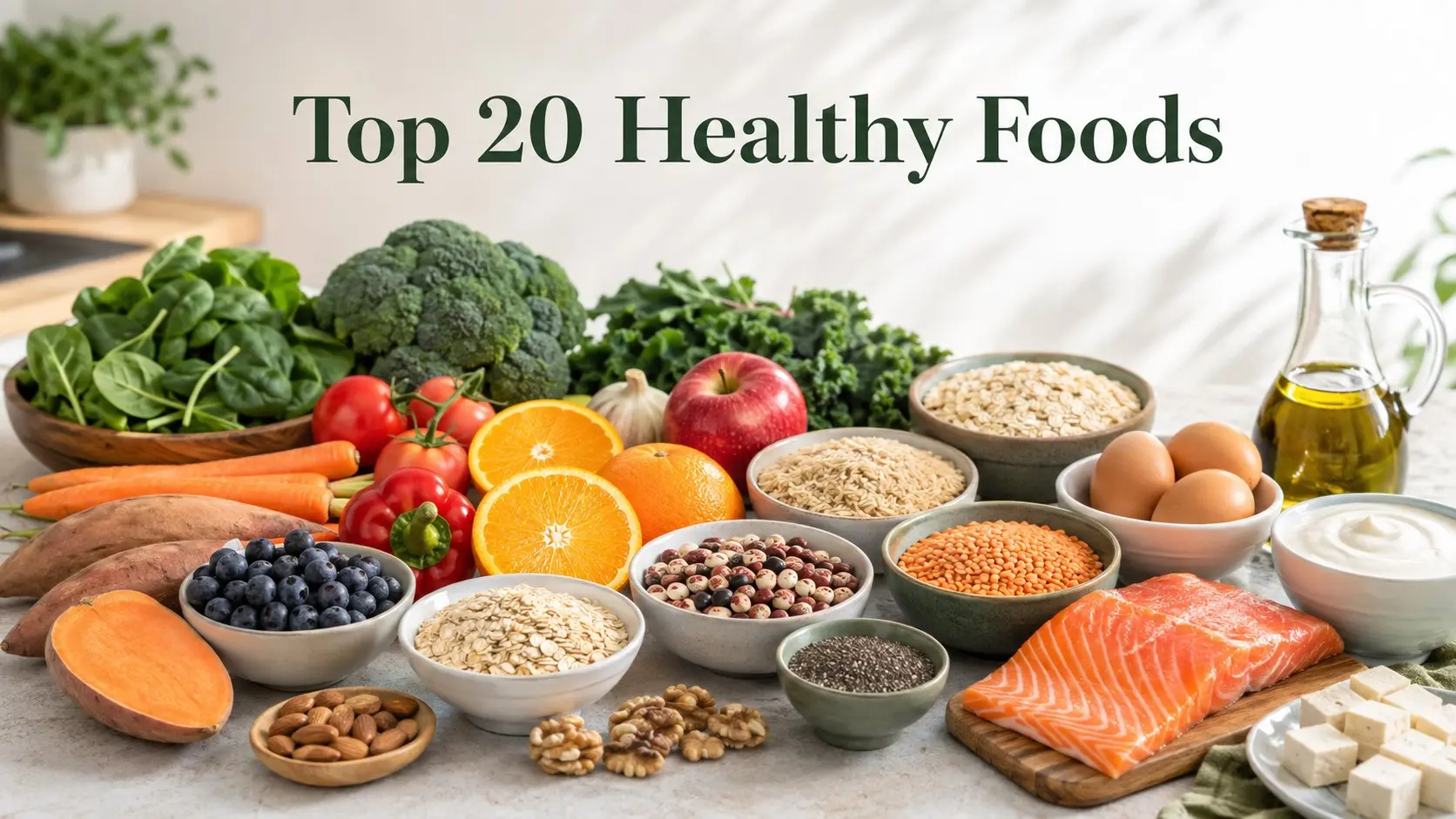
The Top 20 Healthy Foods are not magic foods.
No single food can provide everything your body needs.
Broccoli cannot fix a poor diet.
Salmon cannot prevent every disease.
Berries cannot detox your body.
And olive oil does not make unlimited portions healthy.
A healthy diet comes from variety.
WHO updated its healthy diet guidance in January 2026.
It describes four core principles.
- Adequacy
- Balance
- Moderation
- Diversity
That means eating enough nutrients.
It means balancing food groups.
It means limiting foods that provide too much sodium, free sugar, or unhealthy fat.
And it means eating many different nutritious foods.
The healthiest foods are usually simple.
Think vegetables.
Fruit.
Beans.
Lentils.
Whole grains.
Fish.
Eggs.
Suitable dairy foods.
Soy.
Nuts.
Seeds.
And healthier plant oils.
These foods provide combinations of dietary fiber, protein, vitamins, minerals, and healthy fats.
The goal is not to eat all 20 foods every day.
The goal is to build a varied healthy eating pattern over time.
Healthy Food Is Not the Same for Every Person
General nutrition advice does not replace individual medical nutrition care.
Your food needs may change if you have:
- Kidney disease
- Diabetes
- Celiac disease
- Food allergies
- Digestive disease
- Heart failure
- Difficulty swallowing
- Pregnancy
- A diagnosed nutrient deficiency
A food that is healthy for one person may need to be limited or changed for another person.
Work with a qualified healthcare professional or registered dietitian when a medical condition affects your diet.
What Are the Top 20 Healthy Foods?
A practical list of the Top 20 Healthy Foods includes:
- Spinach
- Broccoli
- Tomatoes
- Carrots
- Berries
- Oranges
- Apples
- Beans
- Lentils
- Oats
- Brown rice and other whole grains
- Sweet potatoes
- Salmon
- Eggs
- Plain Greek yogurt
- Tofu and other soy foods
- Almonds
- Walnuts
- Chia seeds
- Olive oil
This is not a medical ranking.
Food number one is not healthier than food number twenty for every person.
The list is designed to give you variety.
It includes vegetables, fruit, pulses, grains, protein foods, nuts, seeds, and unsaturated fat.
What Makes a Food Healthy?
A healthy food usually provides useful nutrition without excessive amounts of substances that should be limited.
Nutrient Density Matters
Nutrient dense foods provide vitamins, minerals, protein, fiber, healthy fats, or other useful nutrients.
The Full Diet Matters More Than One Food
You can eat broccoli every day and still have a poor overall diet.
You can also eat cake sometimes and still have a healthy overall eating pattern.
Variety Matters
Different foods provide different nutrients.
That is why WHO emphasizes diversity.
Processing Is Not Always Bad
Frozen vegetables are processed.
Plain yogurt is processed.
Canned beans are processed.
These foods can still be nutritious.
The issue is often the overall product and how much added sugar, sodium, or unhealthy fat it contains.
1. Spinach
Spinach is a dark green leafy vegetable.
It provides several vitamins and minerals.
It also adds fiber and food volume for few calories.
Spinach Provides
- Folate
- Vitamin K
- Vitamin A compounds
- Magnesium
- Fiber
Simple Ways to Eat Spinach
- Add it to eggs
- Add it to soup
- Use it in salad
- Mix it into pasta
- Cook it with beans
Fresh or Frozen?
Both can be useful.
Frozen spinach is convenient and can reduce food waste.
2. Broccoli
Broccoli is a cruciferous vegetable.
It provides fiber, vitamin C, folate, and other plant compounds.
Easy Cooking Methods
- Steam it
- Roast it
- Add it to soup
- Add it to rice dishes
- Cook it with eggs
Do Not Overthink the Cooking Method
The best broccoli is often the broccoli you actually enjoy eating.
Use a reasonable amount of oil and seasoning.
3. Tomatoes
Tomatoes provide vitamin C, potassium, and plant compounds such as lycopene.
Fresh and Cooked Tomatoes Both Count
You can use:
- Fresh tomatoes
- Canned tomatoes
- Tomato sauce with moderate sodium
- Roasted tomatoes
Check Prepared Sauces
Some sauces contain large amounts of added salt or sugar.
Read the label when needed.
4. Carrots
Carrots are an easy and affordable vegetable.
They provide fiber and carotenoids that the body can use to make vitamin A.
Eat Them Raw or Cooked
Try carrots:
- Raw with hummus
- Roasted
- In soup
- In stew
- Mixed into rice
Healthy Food Does Not Need to Be Expensive
Carrots are a good example.
Simple foods can provide excellent nutrition.
5. Berries
Berries provide fiber, vitamins, and colorful plant compounds.
Examples Include
- Strawberries
- Blueberries
- Raspberries
- Blackberries
Fresh or Frozen?
Both are good options.
Frozen berries can be less expensive and last much longer.
Simple Uses
Add berries to:
- Plain yogurt
- Oats
- Whole grain cereal
- Fruit bowls
6. Oranges and Other Citrus Fruit
Oranges provide vitamin C, folate, potassium, water, and fiber.
Choose Whole Fruit Often
Whole oranges contain fiber.
Juice contains much less fiber and can be easy to drink quickly.
Other Citrus Options
- Mandarins
- Grapefruit
- Lemons
- Limes
Medication Note
Grapefruit can interact with some medicines.
Ask a pharmacist or healthcare professional if your medicine has a grapefruit warning.
7. Apples
Apples are simple, portable, and widely available.
They provide water, fiber, and plant compounds.
Keep the Skin When Appropriate
Much of the fiber is found in or near the skin.
Wash fruit before eating it.
Pair Fruit With Protein or Healthy Fat
Try an apple with:
- Plain yogurt
- A small portion of nuts
- Peanut butter
This can make a more satisfying snack.
8. Beans
Beans are one of the most useful everyday foods.
They provide both plant protein and dietary fiber.
Examples Include
- Black beans
- Kidney beans
- White beans
- Pinto beans
- Chickpeas
Beans Provide
- Protein
- Fiber
- Folate
- Iron
- Magnesium
- Potassium
Canned Beans Can Be Healthy
Choose lower sodium products when available.
Draining and rinsing can also remove some sodium.
Easy Meal Ideas
- Bean soup
- Bean salad
- Chickpea bowls
- Beans with rice
9. Lentils
Lentils are another excellent pulse.
They provide protein, fiber, iron, folate, and minerals.
They Cook Quickly
Many lentils cook faster than dried beans.
Easy Uses
- Lentil soup
- Lentil salad
- Vegetable stew
- Lentil curry
- Lentils with whole grains
Budget Benefit
Lentils are often inexpensive.
Healthy eating does not require premium products.
10. Oats
Oats are a whole grain.
They provide soluble fiber, including beta glucan.
Simple Oatmeal
Combine oats with:
- Fruit
- Plain yogurt
- Nuts
- Seeds
- Milk or a suitable alternative
Watch Added Sugar
Some flavored instant oatmeal contains a lot of added sugar.
Plain oats give you more control.
11. Brown Rice and Other Whole Grains
Whole grains retain more of the grain than refined grains.
They can provide fiber, minerals, and B vitamins.
Useful Whole Grains Include
- Brown rice
- Oats
- Barley
- Whole wheat
- Bulgur
- Quinoa
WHO 2026 Guidance
WHO recommends getting much of dietary carbohydrate from whole grains, vegetables, fruit, and pulses.
You Do Not Need to Fear Carbohydrates
Carbohydrate is a major source of energy.
The source and overall eating pattern matter.
12. Sweet Potatoes
Sweet potatoes provide carbohydrate, fiber, potassium, and carotenoids.
Simple Preparation
You can:
- Bake them
- Roast them
- Mash them
- Add them to soup
They Are Not Automatically Better Than White Potatoes
Both can fit into a nutritious diet.
Preparation and the full meal matter.
13. Salmon
Salmon provides high quality protein and long chain omega 3 fats.
Protein Supports
- Muscle
- Tissue repair
- Normal body functions
Fish and Heart Health
The American Heart Association includes fish and seafood among healthy protein choices.
Other Fish Count Too
You do not need salmon specifically.
Options can include:
- Sardines
- Trout
- Herring
- Tuna
- Cod
Cooking Matters
Baked, grilled, steamed, or lightly cooked fish may be easier to fit into a healthy pattern than heavily fried fish.
14. Eggs
Eggs provide protein and several vitamins and minerals.
Eggs Can Fit Into Many Meals
Try them:
- Boiled
- Poached
- Scrambled with vegetables
- In a vegetable omelet
The Whole Meal Matters
Eggs with vegetables and whole grain toast create a very different meal from eggs served with large amounts of processed meat and fried food.
15. Plain Greek Yogurt
Plain Greek yogurt can provide protein and calcium.
Yogurt with live cultures may also provide beneficial bacteria.
Choose Plain When Possible
Some flavored yogurts contain substantial added sugar.
Add Your Own Flavor
Try:
- Berries
- Apple
- Cinnamon
- Oats
- Walnuts
Dairy Is Not Suitable for Everyone
People with milk allergy must avoid milk proteins.
People with lactose intolerance may tolerate some yogurt or may need lactose free alternatives.
Read Health Benefits of Yogurt for more detail.
16. Tofu and Other Soy Foods
Tofu provides plant protein.
Depending on preparation, it may also provide calcium, iron, and other nutrients.
Other Soy Foods Include
- Edamame
- Tempeh
- Unsweetened fortified soy milk
Soy Can Replace Some Meat Meals
Plant protein can add variety to the diet.
Preparation Matters
Try tofu:
- Stir cooked with vegetables
- Added to soup
- Roasted
- Added to grain bowls
17. Almonds
Almonds provide unsaturated fat, plant protein, fiber, magnesium, and vitamin E.
A Small Portion Goes a Long Way
Nuts are nutritious.
They are also energy dense.
Choose Unsalted Nuts Often
This can help keep sodium lower.
Simple Uses
- Add to oats
- Add to yogurt
- Use as a snack
- Add to salad
18. Walnuts
Walnuts provide unsaturated fat, protein, fiber, minerals, and plant based omega 3 fat.
Use Reasonable Portions
A small handful may be enough.
Use Walnuts With Other Foods
Add them to:
- Oats
- Salad
- Yogurt
- Fruit
No Nut Is a Miracle Food
Walnuts support a healthy eating pattern.
They do not prevent disease on their own.
19. Chia Seeds
Chia seeds provide fiber, plant based omega 3 fat, minerals, and some protein.
Easy Uses
Add chia to:
- Oatmeal
- Yogurt
- Smooth bowls
- Chia pudding
Increase Fiber Gradually
A sudden large increase in fiber can cause gas or bloating.
Start with a modest amount.
Chia Is Optional
You do not need expensive seeds to eat well.
Beans, lentils, oats, vegetables, and fruit are also excellent fiber sources.
20. Olive Oil
Olive oil is rich in monounsaturated fat.
It can replace some sources of saturated fat in cooking and meals.
Use Olive Oil For
- Salad dressing
- Roasting vegetables
- Light cooking
- Adding flavor to beans
Olive Oil Still Contains Calories
Healthy fat does not mean unlimited fat.
Use an amount that fits your nutrition and energy needs.
Other Unsaturated Oils Can Also Be Healthy
WHO also recognizes several plant oils rich in unsaturated fats.
You do not need one specific brand or one premium oil.
Are Frozen and Canned Foods Healthy?
Yes.
Fresh is not the only healthy option.
WHO and CDC both recognize that frozen and canned fruit and vegetables can be useful choices.
Frozen Vegetables
They can be:
- Nutritious
- Convenient
- Affordable
- Long lasting
Canned Vegetables
Look for lower sodium options.
Canned Fruit
Choose fruit without large amounts of added sugar when possible.
Canned Beans
Drain and rinse them if you want to reduce some sodium.
How Can You Build a Healthy Meal?
You do not need to count 20 different foods.
Build a balanced plate instead.
Start With Vegetables
Use one or more colors.
Add Protein
Choose:
- Beans
- Lentils
- Fish
- Eggs
- Poultry
- Tofu
- Yogurt
Add a Quality Carbohydrate
Examples include:
- Brown rice
- Oats
- Whole grain bread
- Potatoes
- Whole grain pasta
Add Healthy Fat When Needed
Examples include:
- Olive oil
- Nuts
- Seeds
- Avocado
Add Fruit
Fruit can be part of a meal or snack.
For broader meal planning guidance, read Healthy Eating.
Which Healthy Foods Are High in Protein?
Protein foods help build and maintain body tissues.
Animal Protein Sources
- Fish
- Eggs
- Plain yogurt
- Poultry
- Lean meat
Plant Protein Sources
- Beans
- Lentils
- Tofu
- Tempeh
- Nuts
- Seeds
Variety Is Useful
You do not need every protein source at every meal.
Mix plant and animal foods according to your preferences, culture, health, and budget.
For more options, read High Protein Foods for Weight Loss.
Which Healthy Foods Provide Fiber?
Dietary fiber supports digestive health and can help with fullness.
Excellent Sources Include
- Beans
- Lentils
- Oats
- Whole grains
- Berries
- Apples
- Vegetables
- Nuts
- Seeds
WHO 2026 Fiber Guidance
WHO recommends that people older than age 10 aim for at least 25 grams of naturally occurring dietary fiber each day.
Increase Fiber Slowly
Too much fiber too quickly can cause bloating or gas.
Increase it gradually.
Which Foods Provide Healthy Fats?
Healthy fats generally refers to unsaturated fats.
Useful Sources Include
- Olive oil
- Walnuts
- Almonds
- Seeds
- Avocado
- Fish
Replace Rather Than Simply Add
Adding large amounts of olive oil on top of an already high calorie diet may not improve the overall balance.
A better strategy is often to replace foods higher in saturated fat with unsaturated fat sources.
Which Foods Should You Limit?
Healthy eating does not require a list of forbidden foods.
But some foods are better eaten less often or in smaller amounts.
Limit Foods With Large Amounts of
- Added sugar
- Free sugar
- Sodium
- Saturated fat
- Industrial trans fat
Examples Can Include
- Sugary drinks
- Candy
- Large desserts
- Many fried fast foods
- Processed meats
- Some packaged snack foods
You Do Not Need Perfection
One dessert does not make your diet unhealthy.
One salad does not make your diet healthy.
Your usual pattern matters most.
Can You Eat Healthy on a Budget?
Healthy eating does not have to mean expensive organic food or imported superfoods.
Budget Friendly Foods Include
- Oats
- Beans
- Lentils
- Eggs
- Carrots
- Potatoes
- Frozen vegetables
- Seasonal fruit
- Canned fish
- Brown rice
Buy Foods You Will Actually Use
A cheaper food that gets eaten is better than an expensive vegetable that ends up in the trash.
Use Frozen Food
Frozen vegetables and fruit can reduce waste.
Use Beans and Lentils
They provide protein and fiber at a relatively low cost in many places.
Simple Meals Using the Top 20 Healthy Foods
Breakfast Option 1
Oats with plain Greek yogurt, berries, walnuts, and chia seeds.
Breakfast Option 2
Eggs with spinach, tomatoes, and whole grain toast.
Lunch Option 1
Lentil soup with carrots and spinach, served with whole grain bread.
Lunch Option 2
Bean bowl with brown rice, tomatoes, broccoli, and a small amount of olive oil.
Dinner Option 1
Salmon with roasted broccoli and sweet potato.
Dinner Option 2
Tofu with vegetables and brown rice.
Snack Option 1
Apple with a small portion of almonds.
Snack Option 2
Plain Greek yogurt with berries.
Snack Option 3
Orange with walnuts.
Common Myths About the Top 20 Healthy Foods
Myth: There Is One Healthiest Food in the World
No.
Your body needs many nutrients.
Diet variety matters.
Myth: Superfoods Prevent Disease by Themselves
No.
One food cannot guarantee disease prevention.
Myth: Fresh Produce Is Always Healthier Than Frozen Produce
No.
Frozen fruit and vegetables can be nutritious choices.
Myth: Canned Food Is Always Unhealthy
No.
Canned beans, vegetables, fish, and fruit can fit into a healthy diet.
Check sodium and added sugar where relevant.
Myth: Carbohydrates Are Unhealthy
No.
Whole grains, beans, lentils, fruit, and vegetables all contain carbohydrates.
Myth: Fruit Contains Too Much Sugar to Be Healthy
No.
Whole fruit provides fiber, water, vitamins, minerals, and other nutrients.
Myth: Eggs Are Unhealthy for Everyone
No.
Eggs can fit into many healthy eating patterns.
Individual needs may differ.
Myth: You Must Eat Salmon
No.
Other fish and other protein foods can provide good nutrition.
Myth: Olive Oil Is Calorie Free
No.
Olive oil is an unsaturated fat, but it still provides energy.
Myth: Organic Food Is Always More Nutritious
No.
Organic status alone does not determine a food's complete nutritional quality.
Myth: Healthy Eating Requires Supplements
No.
Many people can obtain most needed nutrients from a varied diet.
Supplements are useful when there is a specific need.
References and Sources
This guide was checked against current open 2026 nutrition guidance about healthy eating patterns, vegetables, fruit, whole grains, protein, fiber, healthy fats, and minimally processed foods.
- World Health Organization: Healthy DietUpdated January 26, 2026 guidance on adequacy, balance, moderation, diversity, whole grains, vegetables, fruit, pulses, fiber, fats, sugar, sodium, and nutrient rich foods.
- Dietary Guidelines for Americans, 2025 to 2030Current United States federal dietary guidance supporting whole and nutrient rich foods including protein foods, vegetables, fruits, healthy fats, whole grains, and appropriate dairy foods.
- Centers for Disease Control and Prevention: Healthy Eating TipsUpdated March 2, 2026 guidance emphasizing nutrient rich foods, vegetables, fruit, protein, dairy without added sugars, healthy fats, whole grains, and limiting highly processed foods and added sugars.
- Centers for Disease Control and Prevention: How to Have Healthier Meals and SnacksUpdated April 29, 2026 guidance on protein foods, vegetables, fruit, whole grains, healthy fats, meal planning, and nutritious choices at home and away from home.
- American Heart Association: Life's Essential 8, How to Eat BetterGuidance supporting vegetables, fruit, whole grains, beans, legumes, nuts, plant protein, fish, seafood, lean protein, water, and healthier plant oils.
Conclusion
The Top 20 Healthy Foods are not a prescription to eat the same foods every day.
Use the list as inspiration.
Eat vegetables.
Eat whole fruit.
Use beans and lentils.
Choose whole grains.
Include suitable protein foods.
Use nuts and seeds.
Choose unsaturated fats.
Try different colors.
Use fresh, frozen, and canned foods when they fit your needs.
Most importantly, build a diet that is nutritious, affordable, enjoyable, culturally appropriate, and realistic enough to continue.
Take action today: Choose five foods from this Top 20 Healthy Foods guide and add them to meals you already enjoy this week. You do not need a perfect diet. You need a better pattern that you can repeat.
Continue Reading on NextFitLife
Use these related guides for deeper information about healthy eating, nutrition, protein, weight management, and everyday food choices.
- NextFitLife Health Hub
- Nutrition and Vitamins Hub
- General Wellness and Lifestyle Hub
- Healthy Eating
- Nutrition Tips for Improving Your Health
- Foods for Weight Loss and Metabolism
- High Protein Foods for Weight Loss
- Healthy Foods to Burn Belly Fat
- Health Benefits of Yogurt
Main Health Hub: Return to the NextFitLife Health Hub for the complete health library.
Nutrition: Use the Nutrition and Vitamins Hub for vitamins, minerals, food sources, suspected deficiencies, supplements, and nutrition safety.
Healthy Eating: Read Healthy Eating for practical guidance on building balanced meals and making everyday food choices.
Nutrition Habits: Read Nutrition Tips for Improving Your Health for broader healthy eating strategies.
Weight Management: Visit Foods for Weight Loss and Metabolism if your food choices are also part of a weight management plan.
Protein: Use High Protein Foods for Weight Loss for detailed animal and plant protein choices.
Yogurt: Read Health Benefits of Yogurt for protein, calcium, cultures, sugar choices, and dairy safety.
Medical Disclaimer
This content is for general educational purposes and does not replace professional medical advice, diagnosis, or treatment. Consult an appropriately qualified healthcare professional for personal medical concerns.
This article explains published guidance and does not provide a personal clinical assessment.
Always consult qualified medical professionals for diagnosis and treatment of any health condition.
I am also not a registered dietitian, nutrition specialist, endocrinologist, gastroenterologist, nephrologist, cardiologist, allergist, or other licensed healthcare professional.
This article provides general nutrition education only.
It does not prescribe a personal diet.
It does not diagnose a nutrient deficiency.
It does not recommend a personal calorie, protein, carbohydrate, fat, sodium, potassium, or fluid target.
People with food allergies, kidney disease, diabetes, digestive disorders, heart disease, pregnancy, swallowing problems, or other medical conditions may need individualized nutrition advice.
Frequently Asked Questions About the Top 20 Healthy Foods
What are the Top 20 Healthy Foods?
A practical list includes spinach, broccoli, tomatoes, carrots, berries, oranges, apples, beans, lentils, oats, whole grains, sweet potatoes, salmon, eggs, plain Greek yogurt, tofu, almonds, walnuts, chia seeds, and olive oil.
What is the healthiest food in the world?
There is no single healthiest food. Different foods provide different nutrients, so variety is more useful than choosing one supposed superfood.
What makes a food healthy?
A healthy food generally provides useful nutrients such as vitamins, minerals, protein, fiber, or unsaturated fats without excessive amounts of sodium, free sugar, or unhealthy fat.
What foods should I eat every day?
A daily eating pattern can include vegetables, whole fruit, whole grains, protein foods, beans or lentils, nuts or seeds, and suitable healthy fats. Exact needs vary.
How many fruits and vegetables should adults eat?
WHO recommends that people older than age 10 aim for at least 400 grams of fruit and vegetables per day.
How much fiber should adults eat?
WHO recommends that people older than age 10 aim for at least 25 grams of naturally occurring dietary fiber each day.
Are frozen vegetables healthy?
Yes. Frozen vegetables can be nutritious, convenient, affordable, and useful when fresh produce is not available.
Are canned vegetables healthy?
Yes. Choose options with less sodium when possible.
Are canned beans healthy?
Yes. Beans provide protein and fiber. Lower sodium choices are useful, and draining and rinsing can remove some sodium.
Are eggs healthy?
Eggs provide protein and several vitamins and minerals and can fit into many healthy eating patterns.
Is yogurt healthy?
Plain yogurt can provide protein, calcium, and other nutrients. Flavored products may contain more added sugar.
Is salmon healthy?
Salmon provides protein and omega 3 fats and can be part of a heart healthy eating pattern.
Are beans healthier than meat?
They provide different nutrients. Beans are rich in fiber and plant protein. Lean animal foods can also provide useful protein and nutrients. A varied diet can include either or both.
Are lentils good for you?
Yes. Lentils provide plant protein, fiber, iron, folate, and minerals.
Are oats healthy?
Yes. Oats are a whole grain and provide soluble fiber, vitamins, and minerals.
Is brown rice healthier than white rice?
Brown rice contains more intact grain components and usually more fiber. White rice can still fit into a balanced eating pattern.
Are potatoes healthy?
Yes. Potatoes provide carbohydrate, potassium, and other nutrients. Preparation and portion size affect the overall meal.
Is fruit too high in sugar?
Whole fruit provides natural sugar together with fiber, water, vitamins, minerals, and plant compounds. It is different from sugary drinks.
Are nuts healthy?
Yes. Nuts provide unsaturated fats, protein, fiber, vitamins, and minerals. They are energy dense, so portion size can matter.
Are chia seeds necessary for good health?
No. Chia seeds are nutritious, but they are optional. Beans, lentils, oats, vegetables, fruit, and other foods can also provide fiber.
Is olive oil healthy?
Olive oil provides mostly unsaturated fat and can replace some saturated fat sources. It still contains calories.
Are carbohydrates unhealthy?
No. WHO recommends getting much of dietary carbohydrate from whole grains, vegetables, fruits, and pulses.
Which healthy foods contain protein?
Fish, eggs, yogurt, poultry, beans, lentils, tofu, nuts, and seeds are examples of protein foods.
Which healthy foods contain healthy fats?
Olive oil, nuts, seeds, avocado, salmon, and other oily fish provide unsaturated fats.
Which foods are best for heart health?
A heart healthy eating pattern can include vegetables, fruit, whole grains, beans, lentils, nuts, fish, and unsaturated plant oils.
Which foods support gut health?
Fiber rich foods such as vegetables, fruit, beans, lentils, oats, and whole grains support digestive health. Fermented foods such as yogurt may also be useful for some people.
Do I need organic food to eat healthy?
No. Conventional and organic foods can both provide useful nutrition.
Do I need expensive superfoods?
No. Beans, lentils, oats, eggs, carrots, frozen vegetables, and seasonal fruit can provide excellent nutrition at lower cost.
Can healthy foods help with weight management?
Many nutrient rich foods can make a balanced eating pattern easier, especially foods containing protein, fiber, and water. Weight change still depends on the complete diet and other factors.
Can one healthy food prevent disease?
No. Disease risk depends on many factors. A varied healthy diet can support health but cannot guarantee prevention.
Do I need supplements if I eat healthy food?
Not necessarily. Supplements can be useful for specific deficiencies, life stages, or medical needs, but they are not automatically required for everyone.
What is the easiest way to start eating healthier?
Add one vegetable or fruit to meals, choose a useful protein source, replace some refined grains with whole grains, and keep simple foods such as beans, oats, eggs, and frozen vegetables available.

Health & wellness writer with 30+ years of experience in nutrition, fitness, and healthy aging. Founder of NextFitLife.com — evidence-based health guidance.