First published: October 2024
Updated on: October 14, 2026
Written and source checked by: Adel Galal, Founder and Lead Writer at NextFitLife
Medical review status: This article has not been medically reviewed by a dermatologist, podiatrist, or doctor.
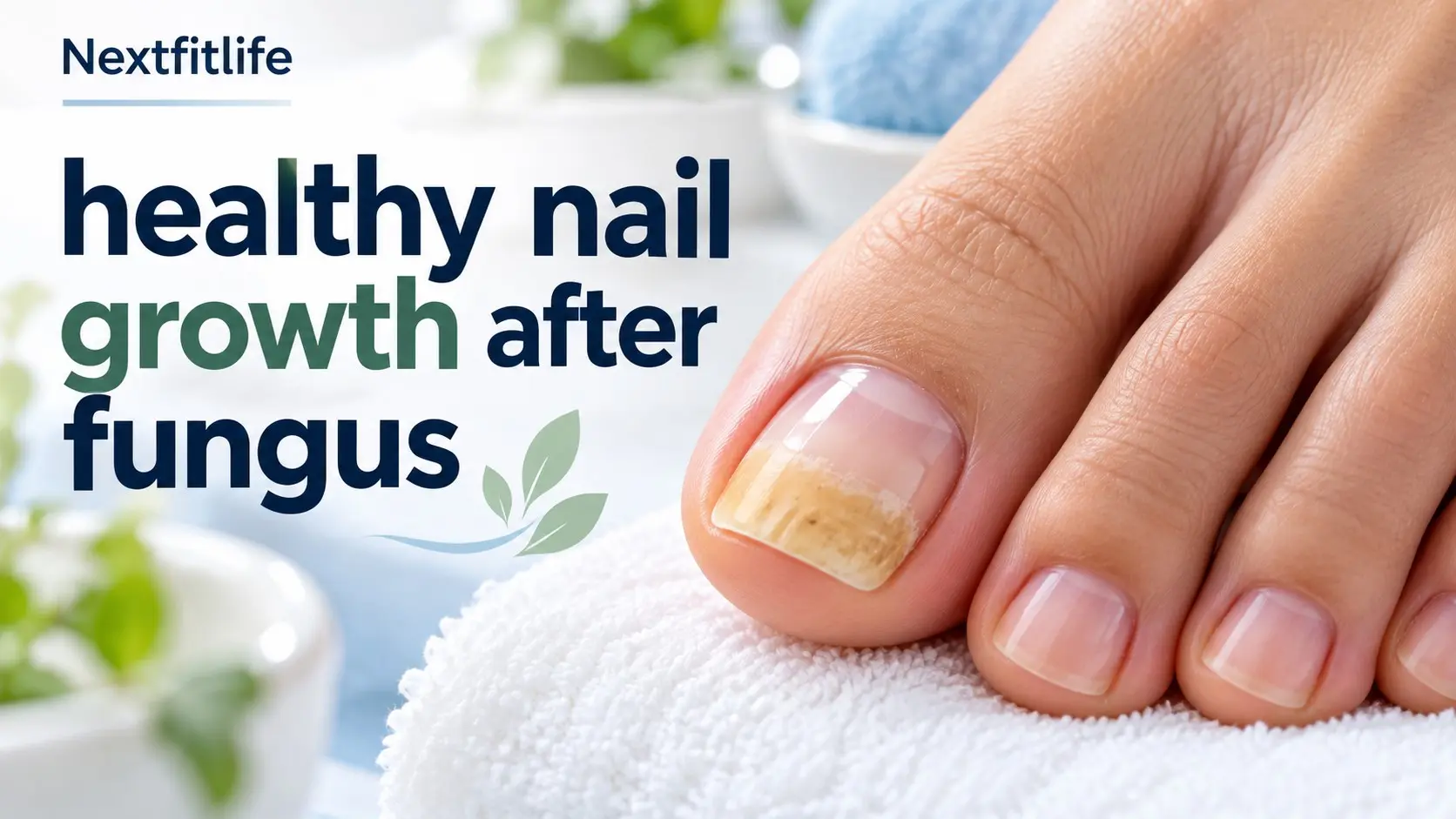
Healthy nail growth after fungus usually starts as a clearer, smoother strip of new nail growing from the base near the cuticle. The old yellow, thick, brittle, or damaged nail does not suddenly repair itself. It has to move forward and be trimmed away as healthy nail slowly replaces it.
Quick answer:
After nail fungus is controlled, look for clear new growth at the base rather than expecting the whole nail to change at once. Keep treatment consistent, protect the growing nail, control athlete's foot, keep feet dry, and expect toenail recovery to take many months.
This article is for general information and education. It does not replace medical advice, diagnosis, or treatment.
The waiting is what frustrates most people.
You may finish an antifungal treatment and still see an ugly yellow tip. That does not automatically mean the treatment failed. The damaged nail plate is already formed, so much of the visible improvement comes from waiting for a new, noninfected nail to replace it.
The American Academy of Dermatology notes that a toenail can take a year or longer to fully grow out after treatment. If an entire toenail is removed, regrowth can take about 12 to 18 months. Fingernails grow faster and may take six months or longer after complete removal.
For a broader overview of nail care, visit the NextFitLife Nail Care Hub. If you are still treating active fungus, see our Nail Fungus Treatment guide.
One key distinction: clearing the fungus and restoring the nail's appearance are not the same milestone. The infection may improve before the old damaged nail has had time to grow out.
Table of Contents
- What healthy nail regrowth looks like
- How long recovery takes
- 11 proven recovery tips
- Confirm the fungus is controlled
- Watch growth at the nail base
- Finish treatment as directed
- Trim gently
- Keep feet dry
- Treat athlete's foot
- Protect the new nail
- Clean nail tools
- Use nutrition sensibly
- Skip weak home remedies
- Prevent reinfection
- Signs the nail is healing
- Signs fungus may be returning
- Why a nail may stay abnormal
- When to see a dermatologist or podiatrist
- References and Sources
- Internal Links and Hub
- About the Author
- Frequently Asked Questions
What Does Healthy Nail Growth After Fungus Look Like?
The most useful place to look is the base of the nail.
The nail matrix, which produces the nail plate, sits beneath the skin near the nail base. As the nail grows, new nail moves slowly toward the tip.
After successful treatment, you may begin to see a band of clear nail growth near the cuticle. It may look smoother, more even in color, and less thick than the older damaged section.
Farther toward the tip, the old nail may still look yellow, white, brown, thick, crumbly, or ridged.
That contrast is expected.
| What You See | What It May Mean | What to Do |
|---|---|---|
| Clearer nail at the base | Encouraging new growth | Keep following your treatment and prevention plan |
| Yellow damaged tip remains | Old nail may still be growing out | Trim it gradually as it reaches the end |
| Discoloration moving toward the tip | Can fit normal recovery | Take monthly photos to compare |
| Discoloration spreading back toward the base | Possible persistent or recurrent fungus | Arrange medical review |
| Increasing pain, redness, or drainage | May indicate another problem or secondary infection | Seek medical assessment |
If you want more detail on signs of progress, read How to Know If Toenail Fungus Is Dying.
How Long Does Nail Regrowth After Fungus Take?
Longer than most people expect.
The American Academy of Dermatology explains that even when an oral antifungal clears the infection in weeks, the toenail may take a year or longer to completely grow out.
If an entire nail has been removed, AAD gives these broad regrowth timelines:
- Fingernail: about six months or longer
- Toenail: about 12 to 18 months
MedlinePlus likewise notes that even after successful treatment, a new clear nail may take up to a year to appear fully.
Your own timeline can differ. Age, circulation, repeated shoe pressure, the amount of nail involved, damage to the nail matrix, and other health conditions can affect growth.
Why Does the Nail Still Look Fungal After Treatment?
Because treatment does not repaint the nail you already have.
The thick or discolored portion is old keratin that was formed while the nail was diseased.
That part has to move forward.
Imagine putting a mark on the bottom of a slow conveyor belt. The mark does not vanish because the machine is working correctly. It moves forward until it finally reaches the end.
Nail regrowth after fungus works in a similar way.
11 Proven Tips for Healthy Nail Growth After Fungus
1. Make Sure the Problem Really Was Nail Fungus
This comes before oils, supplements, or nail hardeners.
Not every yellow or thick nail is fungal.
Nail psoriasis, repeated trauma, bacterial infection, and other nail disorders can resemble onychomycosis. The American Academy of Dermatology and Mayo Clinic both note that nail clippings or scrapings may be tested to confirm the cause.
This matters most when:
- Treatment has repeatedly failed
- Only one unusual nail is affected
- The nail keeps getting worse
- The diagnosis was never tested
- You are considering oral antifungal medicine
Do not keep switching fungal treatments forever if nobody has confirmed the diagnosis.
2. Judge Progress at the Base, Not the Tip
The tip is the oldest part of the nail.
It may remain ugly for months.
Look near the cuticle for new healthy nail growth. A clearer band that slowly becomes wider is far more useful than expecting the old damaged section to turn clear.
Take one well lit photo every four weeks from the same angle.
Daily inspection makes nail growth look frozen because the change is so slow.
3. Finish Antifungal Treatment Exactly as Prescribed
Do not stop just because the base looks better.
Some prescription topical treatments for toenail fungus are used for many months. AAD notes that medicines such as efinaconazole and tavaborole are commonly applied for 48 weeks.
Oral treatment is much shorter, but visible recovery still continues long after the medicine course ends.
If your clinician prescribed treatment, follow the planned duration unless they tell you to change it.
Do not extend prescription treatment on your own either.
4. Do Not Expect OTC Terbinafine Skin Cream to Cure the Nail
This is an important correction to a lot of online advice.
Over the counter terbinafine cream is useful for fungal infections of the skin, including athlete's foot.
AAD specifically says that the OTC cream does not effectively treat fungus inside the nail because the medicine needs to penetrate the nail plate.
Nail treatments and skin treatments are not interchangeable.
If you also have athlete's foot, however, treating that skin infection matters because it can help reduce the chance of fungus spreading back to the nail.
5. Keep the Nail Short, but Do Not Dig Into It
Shorter nails are easier to keep clean and less likely to catch on socks or shoes.
Trim them gently and file rough edges.
Do not dig aggressively beneath a lifted nail or scrape away thick material with sharp tools.
Dermatologists sometimes thin or debride thick fungal nails in the office because reducing thickness can improve comfort and help some treatments penetrate.
That is different from cutting deeply into your own nail at home.
If a nail is very thick or painful to trim, a dermatologist or podiatrist can help.
6. Keep Feet Dry Without Trying to “Dry Out” the Nail
Fungi do well in warm, damp environments.
That makes basic nail hygiene useful:
- Dry your feet after bathing
- Dry between the toes
- Change sweaty socks
- Let damp shoes dry before wearing them again
- Choose footwear that fits properly
But this does not mean you need to make the nail brittle.
Dry skin around a recovering nail can still be moisturized. Focus on reducing trapped moisture and long periods in sweaty footwear.
7. Treat Athlete's Foot Instead of Ignoring It
This is one of the strongest prevention steps.
Fungal skin infection between the toes or across the foot can act as a nearby source of reinfection.
The NHS and AAD both recommend treating athlete's foot promptly as part of preventing fungal nail infection.
Dry, flaky skin between the toes is not always just “dry feet.”
If you are unsure what it is, ask a pharmacist, doctor, dermatologist, or podiatrist.
8. Protect the New Nail From Repeated Trauma
A recovering toenail does not benefit from spending every day crushed against the end of a shoe.
Repeated pressure can injure the nail and make the appearance harder to interpret.
Wear shoes that fit correctly and leave enough room for the toes.
Keep the nail at a practical length, but do not cut the corners deeply.
For general nail protection, see How to Prevent Nail Breakage and our Nail Care Routine.
9. Clean Nail Tools and Do Not Share Them
A nail clipper should not move from an infected nail to a healthy nail without proper cleaning.
AAD recommends cleaning nail tools and not sharing clippers or other grooming items.
At a salon, choose one that follows good instrument hygiene.
At home, keep your own clippers and files rather than sharing them between family members.
10. Support Nail Growth With Food, Not Supplement Hype
Your body needs protein, vitamins, minerals, and enough energy to produce normal nail tissue.
That makes a balanced diet useful during recovery.
Good food choices include:
- Eggs
- Fish
- Lean meat
- Beans and lentils
- Dairy or fortified alternatives
- Nuts and seeds
- Fruit
- Vegetables
- Whole grains
But more supplements do not automatically mean faster nails.
Biotin is heavily marketed for nails. Some limited research suggests it may help certain people with brittle nails, but it has not been shown to clear fungal infection or reliably speed normal postfungal regrowth.
High dose biotin supplements can also interfere with some laboratory tests, and the FDA has issued warnings about this problem.
If you want a food first approach, read Foods for Healthy Nail Growth and Biotin Rich Foods.
11. Prevent the Next Infection While This Nail Is Growing
A long regrowth period gives fungus plenty of time to return if the same exposures continue.
Useful prevention habits include:
- Wear sandals in shared showers, pools, and locker rooms
- Do not share towels or nail tools
- Treat athlete's foot promptly
- Change damp socks
- Let shoes dry
- Keep nails trimmed
- Avoid footwear that keeps feet hot and sweaty
- Check other nails for new changes
AAD also notes that fungi can remain in footwear, so disinfecting or sanitizing footwear may be useful when trying to prevent another infection.
How Can You Tell if Nail Fungus Is Healing?
The strongest visual clue is healthier nail emerging from the base.
Look for:
- A growing clear or more normal colored band near the cuticle
- Less new thickening
- Less new crumbling
- The damaged area slowly moving toward the tip
- No spread into previously normal nail
Do not expect the entire nail to become clear from one week to the next.
That is not how the nail plate repairs itself.
Can the Old Yellow Nail Become Normal Again?
Usually the damaged part has to grow out.
A nail plate is made from dead keratin cells. Once that section has become thick, broken, or discolored, it does not heal in the same way living skin does.
The visual recovery comes from new nail replacing it.
This is why trimming the old portion gradually is part of the process.
Why Is My Nail Still Thick After the Fungus Is Gone?
Several explanations are possible.
The old thick nail may simply still be growing out.
But long standing infection can also leave persistent nail changes. Trauma, psoriasis, pressure from shoes, or damage to the nail matrix can also produce a thick or distorted nail.
NCBI's clinical review notes that residual nail dystrophy can remain even after fungal infection is successfully treated.
That is why a perfectly cosmetic nail and a microbiologically cleared infection are not always the same outcome.
Can a Nail Stay Damaged Permanently?
Sometimes.
If the nail matrix has been significantly scarred or injured, future nail growth may remain ridged, thick, or misshapen.
That does not necessarily mean fungus is still present.
A dermatologist can help distinguish old structural damage from active infection.
What About Tea Tree Oil, Vinegar, Garlic, and Other Home Remedies?
I would not make them the foundation of treatment.
AAD notes that small studies have looked at tea tree oil and mentholated ointment, but the evidence is too limited to know how effective they really are or what side effects may occur.
Evidence for vinegar and garlic as reliable cures for onychomycosis is even weaker.
Natural does not mean proven, and concentrated oils or acids can irritate skin.
If the fungus is still active, use a treatment plan supported by evidence rather than losing months to a remedy that has not been shown to clear the infection reliably.
Should You Use Nail Polish While the Nail Grows Out?
That depends on your treatment.
Some prescription nail medicines have specific instructions about polish or cosmetic nail products.
Follow the directions for the medicine you are using.
If you are no longer treating active fungus, occasional polish may be possible, but avoid covering a nail simply to ignore new changes underneath it.
Artificial nails can also hide worsening discoloration or separation.
Should You Use a Nail Hardener?
A hardener does not kill fungus.
Some products may make a fragile nail feel stronger temporarily, but they do not repair infection damage at the nail matrix.
Some hardening products can also make nails too rigid or dry with repeated use.
Protective care matters more than coating the nail with every product sold for “strength.”
If general brittleness remains after the infection has cleared, see our How to Get Strong Nails guide.
Does Drinking More Water Make Nails Grow Faster?
Normal hydration supports general health, but drinking extra water does not act like fertilizer for your nails.
If you are adequately hydrated, forcing more water is not a proven way to speed healthy toenail growth.
Focus instead on controlling the infection, protecting the nail, eating adequately, and giving the nail enough time to grow.
When Should You See a Dermatologist or Podiatrist?
Arrange a medical review if:
- The nail keeps becoming more discolored or thick
- No healthy growth appears despite appropriate treatment
- Several nails become involved
- The nail becomes painful
- The nail is lifting significantly
- Skin around the nail becomes red or swollen
- There is pus or drainage
- The diagnosis was never confirmed
- Treatment keeps failing
- The fungus keeps returning
Seek care earlier if you have diabetes, poor circulation, peripheral neuropathy, a weakened immune system, or another condition that makes foot infections more risky.
The NHS specifically advises medical review for fungal nail infection in people with diabetes or a weakened immune system.
Do not ignore spreading redness, increasing warmth, swelling, strong pain, or pus around a nail. These are not normal signs of simple nail regrowth and need medical assessment.
What if the Fungus Comes Back?
Recurrence is possible.
Before assuming your treatment “never worked,” look for a new pattern.
Did a clear band grow in and later become discolored again?
Did athlete's foot return?
Are the same sweaty shoes being worn every day?
Did a family member have untreated foot or nail fungus?
Those details can help distinguish persistent disease from a new infection.
For early warning signs, read Early Stage Toenail Fungus.
A Simple Recovery Timeline
| Stage | What You May See | Best Focus |
|---|---|---|
| Early treatment | Little visible cosmetic change | Use treatment consistently |
| New growth begins | Clearer strip near the nail base | Protect the new nail |
| Middle regrowth | Healthy section becomes larger while damaged nail remains toward the tip | Trim old nail gradually and prevent reinfection |
| Late regrowth | Most or all damaged nail has moved outward | Keep prevention habits |
| Unexpected setback | New discoloration, thickening, lifting, or pain near fresh growth | Get the nail reassessed |
The table is a pattern, not a promise of exact dates.
Toenails are slow.
Conclusion: Protect Healthy Nail Growth After Fungus
The best approach to healthy nail growth after fungus is less dramatic than most product ads suggest. Confirm that the infection is controlled, look for healthy growth at the base, protect that new nail, keep feet dry, treat athlete's foot, and prevent another exposure while the damaged section grows out.
Do not judge recovery by one yellow tip that has not disappeared yet.
Take a clear photo today, compare it again in about a month, and contact a dermatologist or podiatrist if the healthy band is not progressing or the nail is getting worse.
References and Sources
- American Academy of Dermatology. Nail Fungus: Diagnosis and Treatment. Guidance on diagnosis, antifungal treatment, nail debridement, regrowth timelines, oral terbinafine, topical treatments, and home remedies.
https://www.aad.org/public/diseases/a-z/nail-fungus-treatment - American Academy of Dermatology. 11 Tips to Prevent Nail Fungus. Guidance on reducing reinfection, footwear, athlete's foot, nail tools, and shared environments.
https://www.aad.org/public/diseases/a-z/prevent-another-nail-infection - NHS. Fungal Nail Infection. Patient guidance on symptoms, treatment, prevention, antifungal medicines, testing, and when to seek medical care.
https://www.nhs.uk/conditions/fungal-nail-infection/ - MedlinePlus, U.S. National Library of Medicine. Fungal Nail Infection. Information on diagnosis, treatment, regrowth, prognosis, and prevention.
https://medlineplus.gov/ency/article/001330.htm - Mayo Clinic. Nail Fungus: Diagnosis and Treatment. Information on testing, oral and topical medicines, nail thinning, treatment timelines, and recurrence.
https://www.mayoclinic.org/diseases-conditions/nail-fungus/diagnosis-treatment/drc-20353300 - NCBI Bookshelf. Onychomycosis. Updated clinical review of diagnosis, treatment, recurrence, nail growth, and persistent nail dystrophy.
https://www.ncbi.nlm.nih.gov/books/NBK441853/ - U.S. Food and Drug Administration. Biotin Interference With Laboratory Tests. Safety information about high dose biotin and incorrect laboratory results.
https://www.fda.gov/medical-devices/in-vitro-diagnostics/biotin-interference-troponin-lab-tests-assays-subject-biotin-interference
Internal Links and Hub
- Nail Care Hub
- Skin, Hair and Nail Health Hub
- NextFitLife Beauty Hub
- Best Nail Fungus Treatment at Home
- How to Know If Toenail Fungus Is Dying
- Early Stage Toenail Fungus
- Healthy Nails and Unhealthy Nails
- How to Get Strong Nails
- Foods for Healthy Nail Growth
- How to Prevent Nail Breakage
- Nail Care Routine
- Biotin Rich Foods
About the Author
Adel Galal is the Founder and Lead Writer at NextFitLife. He researches and writes educational content about health, fitness, nutrition, beauty, nail care, healthy aging, and everyday wellness.
His approach is to compare recognized medical and dermatology sources, separate established guidance from weak or early claims, and explain health information in clear language that ordinary readers can use.
I am not a dermatologist or A doctor, and this content does not replace professional medical advice. What I share comes from real-life experience, extensive research, and consultation with healthcare providers. Always consult qualified medical professionals for diagnosis and treatment of any health condition.
Adel is not a dermatologist, podiatrist, pharmacist, or physician. This article is educational and does not diagnose nail fungus or prescribe antifungal treatment.
Learn more about Adel Galal, his background, and NextFitLife's editorial approach on the About Us page.
Frequently Asked Questions
How can I tell if healthy nail is growing after fungus?
Look at the base of the nail near the cuticle. A clearer, smoother band of new nail that gradually grows toward the tip is an encouraging sign. The old damaged section can remain yellow or thick until it grows out.
How long does a toenail take to look normal after fungus?
Toenails grow slowly. AAD notes that complete toenail regrowth can take about 12 to 18 months when an entire nail must regrow, while visible recovery after treatment commonly takes many months.
Why is my nail still yellow after antifungal treatment?
The yellow section may be old damaged nail that still needs to grow out. If new discoloration appears near the base or keeps spreading, ask a healthcare professional to check whether fungus is still active.
Does clear nail at the base mean fungus is gone?
Clear new growth is an encouraging sign, but appearance alone cannot always prove that the infection has completely cleared. Follow the treatment plan and ask your clinician if the diagnosis or response is uncertain.
Can toenail fungus come back after successful treatment?
Yes. Reinfection or recurrence can happen. Keeping feet dry, treating athlete's foot, cleaning nail tools, protecting feet in shared wet areas, and managing contaminated footwear can reduce risk.
Does tea tree oil cure nail fungus?
Evidence is too limited to rely on tea tree oil as a proven cure. The American Academy of Dermatology notes that small studies have shown possible benefit, but larger studies are still needed to know its effectiveness and risks.
Can apple cider vinegar cure nail fungus?
There is not strong clinical evidence that apple cider vinegar reliably cures onychomycosis. It should not replace evidence based antifungal treatment when a fungal nail infection has been confirmed.
Does biotin make nails grow faster after fungus?
Biotin has limited evidence for some brittle nails, but it does not kill nail fungus and has not been shown to reliably speed normal postfungal nail regrowth. High dose supplements can also interfere with certain laboratory tests.
Can OTC terbinafine cream treat toenail fungus?
OTC terbinafine cream treats fungal infections of the skin, but the American Academy of Dermatology states that it does not effectively treat fungus inside the nail because it cannot adequately penetrate the nail plate.
Should I cut away the damaged fungal nail?
Trim loose nail gradually and keep the edge smooth, but do not dig deeply beneath the nail or aggressively cut attached tissue. A very thick or painful nail may need professional trimming or debridement.
Why is the new toenail still thick after the fungus is gone?
Old fungal damage may still be growing out, or the nail may have lasting changes from trauma or damage to the nail matrix. Persistent thickening does not always mean fungus is still present.
When should I see a doctor about nail fungus recovery?
Seek medical advice if the nail becomes painful, red, swollen, drains pus, continues worsening, spreads to other nails, or does not show expected improvement. Get help earlier if you have diabetes, poor circulation, neuropathy, or a weakened immune system.

Health & wellness writer with 30+ years of experience in nutrition, fitness, and healthy aging. Founder of NextFitLife.com — evidence-based health guidance.