Written and source checked by: Adel Galal, Founder and Editor of NextFitLife
Medical review status: Editorially reviewed against current CDC, American Heart Association, ACOG, USPSTF, and 2025–2026 AHA/ACC cardiovascular guidance. This article has not been medically reviewed by a cardiologist, gynecologist, primary-care physician, nurse, pharmacist, or other licensed healthcare professional.
Quick Answer: What Are the Biggest Heart Health Mistakes Women Make?
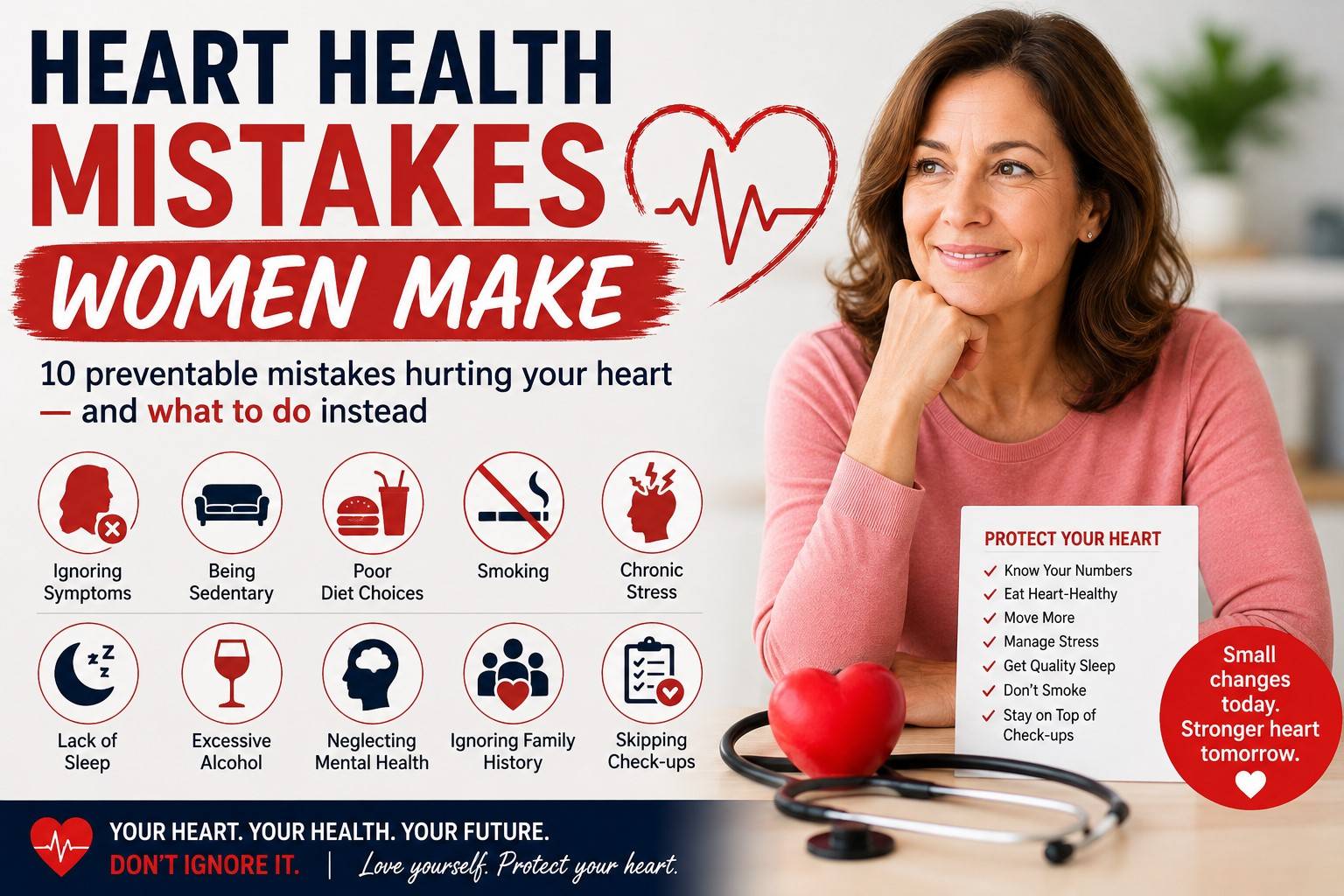
Heart health mistakes women make are often less about one “bad habit” and more about missed risk information: dismissing possible heart-attack symptoms, assuming heart disease mainly affects men, not knowing blood pressure or cholesterol, smoking or vaping, staying inactive, following diet or alcohol myths, neglecting sleep, and overlooking pregnancy or menopause-related risk.
Heart disease remains the leading cause of death for women in the United States. Prevention works best when it combines healthy daily habits with accurate risk assessment and prompt action when warning symptoms appear.
This guide focuses on 10 preventable pitfalls and what to do instead.
Possible Heart Attack Symptoms in Women: Call Emergency Services
Do not wait for symptoms to become severe. Women and men can both have chest pressure, squeezing, fullness, or pain. Women may also have symptoms such as:
- shortness of breath
- pain in the back, neck, jaw, shoulder, arm, or upper abdomen
- nausea or vomiting
- cold sweat
- lightheadedness
- unusual tiredness or weakness
Chest pain or discomfort is still the most common heart-attack symptom in women. Do not assume that a woman must have only “atypical” symptoms.
Medical and Editorial Notice
This page provides general education. It cannot calculate your personal cardiovascular risk, diagnose heart disease, or determine whether you need blood-pressure medicine, statins, aspirin, hormone therapy, imaging, or another treatment.
If you have chest discomfort, severe shortness of breath, fainting, new neurological symptoms, or another possible cardiovascular emergency, seek emergency care rather than relying on a prevention article.
10 Heart Health Mistakes Women Make: Summary
| Mistake | Why it matters | Better action |
|---|---|---|
| Dismissing symptoms | Delays emergency treatment | Know heart-attack warning signs and call emergency services |
| Thinking heart disease is mainly male | Can lead to underestimating personal risk | Review your own cardiovascular risk factors |
| Ignoring BP, cholesterol, or glucose | These risks can be silent | Screen and treat according to current guidance |
| Smoking or vaping | Raises cardiovascular risk | Quit nicotine and avoid secondhand smoke |
| Too little activity | Worsens cardiovascular fitness and metabolic risk | Build regular aerobic and strength activity |
| Poor diet pattern | Can worsen blood pressure, lipids, and glucose | Use a heart-healthy dietary pattern |
| Drinking for “heart health” | Alcohol is not a proven cardiovascular treatment | Do not start drinking for health benefits |
| Ignoring sleep | Sleep is part of cardiovascular health | Aim for healthy sleep and assess possible sleep disorders |
| Ignoring reproductive history | Pregnancy complications and menopause can refine risk | Include these in cardiovascular history |
| Using a generic checkup list | Can cause both missed care and unnecessary testing | Use age-, risk-, and history-based prevention |
1. Dismissing Possible Heart-Attack Symptoms
This is one of the most dangerous mistakes because treatment for a heart attack is time sensitive.
The American Heart Association emphasizes that chest pain or discomfort remains the most common heart-attack symptom in women, just as it is in men. Women may also experience shortness of breath, nausea, back or jaw pain, cold sweat, lightheadedness, or unusual tiredness.
Do not wait to see whether symptoms “go away on their own” if a heart attack is possible. Call emergency services.
2. Thinking Heart Disease Is Mainly a Men's Problem
CDC reports that heart disease is the leading cause of death for women in the United States and can affect women at any age.
The myth that heart disease is mainly male can create two problems:
- women may underestimate their personal risk, and
- symptoms may be blamed on stress, aging, reflux, or anxiety without appropriate assessment.
Risk is shaped by blood pressure, cholesterol, diabetes, smoking, kidney disease, family history, age, activity, reproductive history, and other factors—not sex alone.
For the broader cardiovascular framework, visit the Heart & Cardiovascular Health Hub.
3. Not Knowing Your Blood Pressure, Cholesterol, or Blood Sugar
Many cardiovascular risk factors are silent until complications develop.
Blood Pressure
The 2025 AHA/ACC guideline defines normal blood pressure as below 120/80 mm Hg, stage 1 hypertension as 130–139 or 80–89, and stage 2 hypertension as 140/90 or higher.
High blood pressure is one of the most important modifiable cardiovascular risk factors. If an office reading is high, proper repeat measurements and home or ambulatory monitoring may help confirm hypertension.
Cholesterol
The 2026 AHA/ACC dyslipidemia guideline uses overall ASCVD risk rather than a one-size-fits-all LDL threshold. It also recommends measuring lipoprotein(a), or Lp(a), at least once in a lifetime.
Blood Sugar
Diabetes substantially increases cardiovascular risk. Screening frequency depends on age, body weight, pregnancy history, prior results, and other risk factors rather than being identical for every woman.
For a broader preventive schedule, see Women’s Health Screenings and Checkups.
4. Smoking, Vaping, or Ignoring Secondhand Smoke
Smoking remains a major cardiovascular risk factor.
Cardiovascular prevention should also include nicotine exposure more broadly. The American Heart Association's Life's Essential 8 uses nicotine exposure rather than cigarette smoking alone because vaping and secondhand exposure also matter.
If you smoke or use nicotine, evidence-based cessation support can include behavioral counseling and, when appropriate, medications selected with a clinician or pharmacist.
5. Sitting Too Much and Moving Too Little
Physical activity benefits cardiovascular health at nearly every adult age.
The American Heart Association recommends that adults aim for:
- at least 150 minutes of moderate-intensity aerobic activity each week, or
- 75 minutes of vigorous activity, or an equivalent combination, and
- muscle-strengthening activity at least 2 days per week.
You do not need to become a runner. Brisk walking, cycling, swimming, dancing, resistance training, and other activities can all contribute.
For older adults, read Heart Health After 50.
6. Following a Weak “Heart-Healthy” Diet
A heart-healthy diet is a dietary pattern, not a single “superfood.”
The American Heart Association's 2026 dietary guidance emphasizes:
- vegetables and fruits
- whole grains
- healthy protein sources
- unsaturated fats in place of saturated fats
- minimally processed foods rather than heavily ultraprocessed foods
- less sodium
- less added sugar
Cardiovascular eating should also fit diabetes, kidney disease, pregnancy, food access, culture, allergies, and other individual needs.
7. Drinking Alcohol Because You Think It Protects the Heart
This is an important correction to older heart-health advice.
The American Heart Association does not recommend drinking wine or another alcoholic beverage to obtain cardiovascular benefits. Observational studies that linked moderate alcohol intake to better heart outcomes do not establish that alcohol itself caused the benefit.
Alcohol can raise blood pressure, and heavier or binge drinking is linked with hypertension, arrhythmias, stroke, cardiomyopathy, and heart failure.
If you do not drink, do not start for heart health. If you drink, discuss what level—if any—is appropriate for your health, medicines, pregnancy status, and cancer risk.
8. Treating Sleep as Optional
Sleep is one of the American Heart Association's Life's Essential 8 cardiovascular-health measures.
Most adults should aim for about 7 to 9 hours of sleep per night. Poor sleep is associated with high blood pressure, diabetes, obesity, and cardiovascular disease.
Do not assume persistent exhaustion is simply part of being busy. Loud snoring, witnessed pauses in breathing, gasping during sleep, unrefreshing sleep, or marked daytime sleepiness can justify evaluation for sleep apnea.
Stress, depression, and anxiety also deserve attention because they can affect sleep, physical activity, smoking, alcohol use, medication adherence, and overall health. For support, visit the Mental Health & Wellness Hub.
9. Ignoring Pregnancy, Menopause, and Other Female-Specific Risk History
Women's cardiovascular history is broader than cholesterol and blood pressure.
ACOG identifies several female-specific or female-predominant factors that can matter, including:
- gestational hypertension
- preeclampsia
- gestational diabetes
- polycystic ovary syndrome
- some autoimmune diseases such as lupus and rheumatoid arthritis
- menopause and hormonal treatment decisions
A history of preeclampsia or gestational diabetes should remain part of the cardiovascular record years after pregnancy ends.
Menopause is also an important time to reassess cardiovascular risk, but hormone therapy should not be started solely to prevent heart disease.
For the detailed evidence, read Heart Health and Hormones.
10. Treating Preventive Care as a Generic Annual Checklist
“Get an annual physical and every heart test” is not precise prevention.
The useful questions are:
- What is my blood pressure?
- What do my current lipid results mean for my total risk?
- Have I ever had Lp(a) measured?
- Do I meet diabetes-screening criteria?
- Do pregnancy complications or family history change my risk?
- Do I smoke, vape, or have significant secondhand exposure?
- Do I have symptoms that need diagnostic testing rather than screening?
Routine ECGs, stress tests, coronary calcium scans, aspirin, or other interventions are not automatically appropriate for every healthy woman.
Good prevention is individualized and based on actual risk rather than a fixed list of tests.
A Simple Heart-Health Prevention Plan for Women
- Know emergency symptoms. Call emergency services when a heart attack or stroke is possible.
- Know your numbers. Track blood pressure and review cholesterol and diabetes risk appropriately.
- Ask once about Lp(a). Current 2026 lipid guidance supports at least one lifetime measurement.
- Avoid tobacco and nicotine.
- Move each week. Build aerobic activity plus muscle strengthening.
- Choose a strong dietary pattern. Emphasize minimally processed foods, plants, whole grains, healthy proteins, and unsaturated fats.
- Do not drink alcohol for heart benefits.
- Prioritize healthy sleep.
- Tell clinicians about pregnancy complications and menopause history.
- Use individualized preventive care. Avoid unnecessary testing while treating important risks early.
Key Takeaway
The most important heart health mistakes women make are often preventable: dismissing symptoms, underestimating risk, ignoring silent risk factors, and relying on outdated lifestyle myths.
Heart disease prevention is not about perfection. It is about knowing your actual risks, acting on high-value habits, using appropriate preventive care, and seeking emergency help quickly when symptoms suggest a heart attack or stroke.
References and Authoritative Sources
- CDC: About Women and Heart Disease
- American Heart Association: Heart Attack Symptoms in Women
- AHA/ACC: 2025 High Blood Pressure Guideline
- AHA/ACC: 2026 Dyslipidemia Guideline
- American Heart Association: 2026 Dietary Guidance to Improve Cardiovascular Health
- American Heart Association: Life's Essential 8
- American Heart Association: Alcohol and Heart Health
- ACOG: Heart Health for Women
Source review date: August 10, 2026
These organizations do not endorse NextFitLife.
Frequently Asked Questions About Heart Health Mistakes Women Make
What is one of the most dangerous heart-health mistakes women can make?
Dismissing possible heart-attack symptoms is particularly dangerous because treatment is time sensitive. Chest pressure or pain, shortness of breath, nausea, back or jaw pain, cold sweat, lightheadedness, or unusual fatigue can warrant emergency evaluation.
Are women's heart-attack symptoms completely different from men's?
No. Chest pain or discomfort remains the most common heart-attack symptom in women. Women can also experience other symptoms such as shortness of breath, nausea, back or jaw pain, and unusual fatigue.
Is heart disease really the leading cause of death in women?
Yes. CDC identifies heart disease as the leading cause of death for women in the United States.
What heart-health numbers should women know?
Blood pressure, cholesterol and triglycerides, blood sugar when indicated, and overall cardiovascular risk are important. Current 2026 lipid guidance also recommends at least one lifetime Lp(a) measurement.
Should women drink red wine for heart health?
No. The American Heart Association does not recommend starting alcohol for cardiovascular benefit. Any potential associations seen in observational studies do not prove that alcohol itself protects the heart.
How much exercise supports heart health?
The American Heart Association recommends at least 150 minutes of moderate aerobic activity or 75 minutes of vigorous activity each week, plus muscle-strengthening activity at least two days weekly.
How much sleep should adults get for heart health?
Most adults should aim for about 7 to 9 hours per night. Sleep is one of the American Heart Association's Life's Essential 8 cardiovascular-health measures.
Can pregnancy complications affect future heart risk?
Yes. Preeclampsia, gestational hypertension, and gestational diabetes can increase later cardiovascular risk and should remain part of a woman's medical history.
Does menopause increase cardiovascular risk?
Menopause and the surrounding midlife period can be associated with changes in cholesterol, blood pressure, body composition, glucose regulation, and sleep. Risk should be assessed as a whole rather than attributed to estrogen alone.
Should hormone therapy be used to protect the heart?
No. Menopausal hormone therapy may be appropriate for bothersome menopause symptoms in selected patients, but ACOG says it should not be used solely to prevent heart disease.
Does every woman need an annual ECG or heart scan?
No. Tests such as ECGs, stress tests, and coronary calcium scans are used according to symptoms and individual risk, not simply because someone is female or reaches a certain age.
Is this article medically reviewed?
No. It was source checked against current CDC, AHA, ACOG, USPSTF, and AHA/ACC guidance but has not been medically reviewed by a licensed cardiovascular professional.
Medical Disclaimer
NextFitLife provides general educational information. This article cannot diagnose heart disease, heart attack, hypertension, dyslipidemia, diabetes, sleep apnea, or another condition and cannot replace professional cardiovascular assessment, prescription treatment, or emergency care.

Health & wellness writer with 30+ years of experience in nutrition, fitness, and healthy aging. Founder of NextFitLife.com — evidence-based health guidance.