First published: Mar 28, 2023
Last updated: September 27, 2026
Written and source- checked by: Adel Galal, Founder and Lead Writer at NextFitLife
Medical review status: This article has not been medically reviewed by a hepatologist, infectious disease specialist, doctor, pharmacist, or vaccine specialist.
Hepatitis B prevention starts with vaccination, but it does not end there. Testing, safer sex, sterile needles, pregnancy care, newborn protection, and fast action after a exposure can all reduce the chance of hepatitis B virus infection.
There is also good news: hepatitis B is one of the major forms of viral hepatitis we can prevent with a highly effective vaccine.
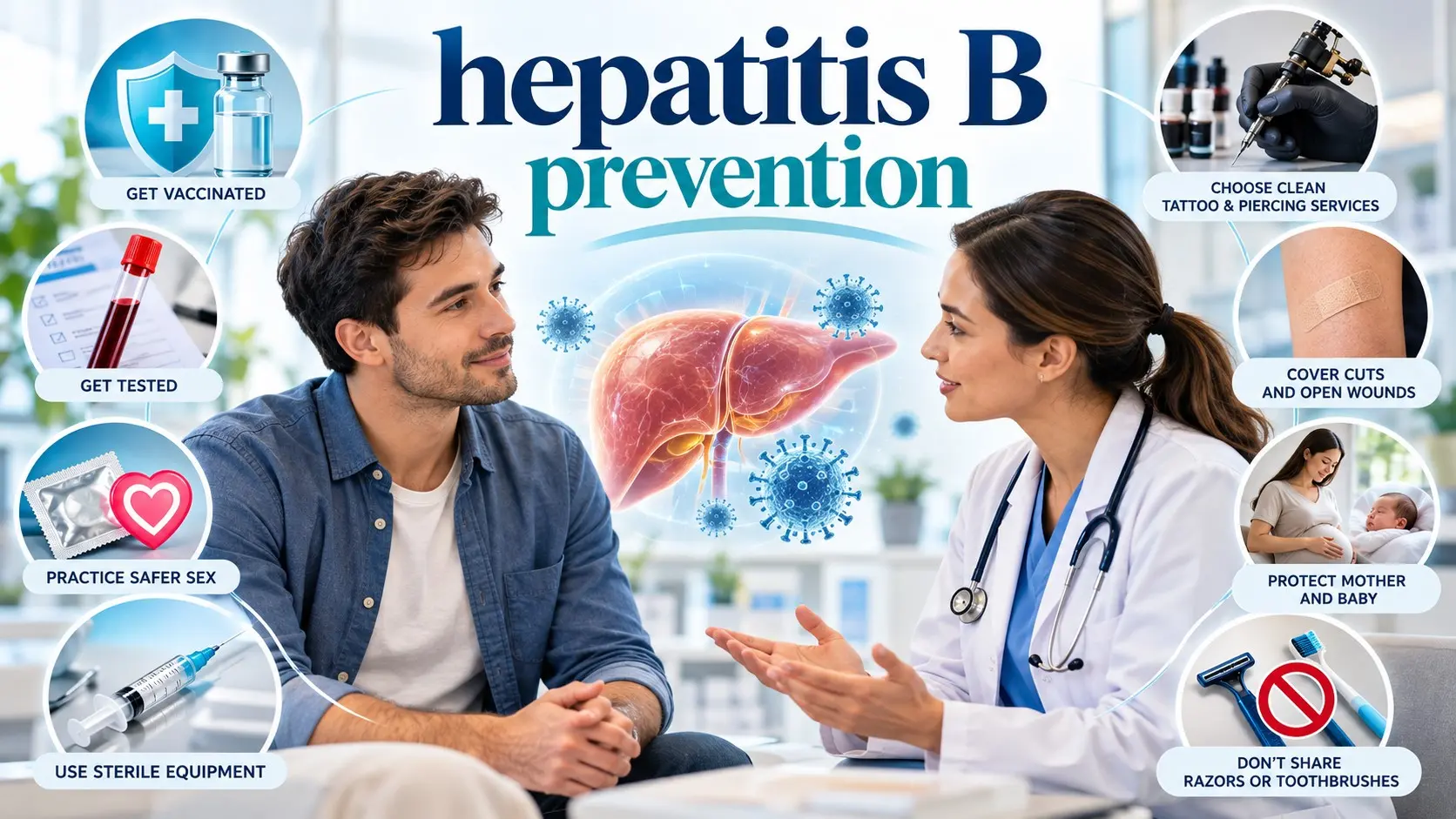
Quick answer: The strongest way to prevent hepatitis B is vaccination. You can lower risk further by knowing your hepatitis B status, using safer sex practices, never sharing needles, using sterile tattoo and piercing equipment, avoiding shared razors and toothbrushes, protecting newborns when a mother has HBV, and getting medical help quickly after a known blood or sexual exposure.
Hepatitis B spreads through infected blood, semen, and certain other body fluids.
It does not spread through normal hugging, coughing, sneezing, food, water, or ordinary social contact.
Medical notice: This content is for general educational purposes and does not replace professional medical advice, diagnosis, or treatment. Consult an appropriately qualified healthcare professional for personal medical concerns. This article explains published guidance and does not provide a personal clinical assessment. Always consult qualified medical professionals for diagnosis and treatment of any health condition.
Table of Contents
- Why hepatitis B prevention matters
- How hepatitis B spreads
- 17 proven prevention steps
- Hepatitis B vaccination
- Adult vaccination
- Pregnancy and newborn protection
- Sex and hepatitis B prevention
- Needles, tattoos, and piercings
- Household prevention
- What to do after an exposure
- Travel prevention
- Testing and the triple panel
- What does not spread hepatitis B
- If you already have hepatitis B
- References and Sources
- Related NextFitLife guides
- About the author
- Frequently asked questions
Why Does Hepatitis B Prevention Matter?
Hepatitis B is caused by the hepatitis B virus, or HBV.
Some infections are short term. Others become chronic hepatitis B, which can stay in the body for years.
Long term HBV can lead to:
- Liver inflammation
- Liver fibrosis
- Cirrhosis
- Liver failure
- Hepatocellular carcinoma, the main form of primary liver cancer
WHO estimated that about 240 million people were living with chronic hepatitis B in 2024.
Yet HBV is vaccine preventable.
That makes prevention one of the most useful actions in liver health.
For a full overview of infection, testing, treatment, and monitoring, read 19 Essential Hepatitis B Facts.
How Does Hepatitis B Spread?
You prevent an infection better when you understand its route.
HBV spreads when infected blood or certain body fluids enter another person's body.
Common routes include:
- Mother to baby during childbirth
- Sex with someone who has HBV
- Sharing needles or syringes
- Sharing other drug injection equipment
- Unsafe medical injections
- Needlestick injuries
- Unsterile tattoo equipment
- Unsterile piercing equipment
- Direct contact with infected blood
- Sharing blood contaminated razors or toothbrushes
HBV is very infectious, and tiny amounts of blood can matter.
17 Proven Ways to Prevent Hepatitis B
1. Get Vaccinated
The hepatitis B vaccine is the most effective prevention tool.
WHO describes current vaccines as safe and highly effective. Protection after a completed series is long lasting.
Do not wait until you think you have had an exposure if vaccination is already recommended for you.
The vaccine works best before contact with HBV occurs.
2. Complete the Full Vaccine Series
Starting the vaccine is useful. Finishing the recommended series gives the intended protection.
Different vaccine products use different schedules.
For adults, some schedules contain two doses, while others contain three or four depending on the product and situation.
If you miss a dose, the series usually does not need to be restarted.
Ask your healthcare professional when to receive the next dose.
3. Check Whether You Have Already Been Vaccinated or Infected
Many adults do not remember their hepatitis B status.
Testing can help.
CDC recommends the hepatitis B triple panel for adults receiving first time HBV screening.
It checks:
- HBsAg
- Anti HBs
- Total anti HBc
Together, those results can show current infection, past infection, vaccine immunity, or susceptibility.
Testing should not create an unnecessary barrier to vaccination when vaccination is otherwise indicated.
4. Protect Babies From the Start
Infection acquired during infancy has a much higher chance of becoming chronic than infection acquired in adulthood.
That makes infant vaccination especially valuable.
WHO recommends that all babies receive a hepatitis B vaccine dose as soon as possible after birth, ideally within 24 hours, followed by completion of the vaccine series.
National schedules differ, so parents should follow the current schedule in their country.
5. Test for Hepatitis B During Pregnancy
Pregnancy screening is a key prevention step.
A mother can pass HBV to her baby around childbirth even if she feels perfectly healthy.
Pregnancy testing allows the healthcare team to plan newborn protection before delivery.
In the United States, CDC recommends hepatitis B screening during every pregnancy.
6. Check HBV DNA When a Pregnant Patient Has Hepatitis B
If a pregnant patient tests positive for HBsAg, the next question is how active the virus is.
HBV DNA testing measures viral activity.
A high viral load increases the chance of mother to child transmission.
Current AASLD guidance recommends antiviral prevention with tenofovir disoproxil fumarate or tenofovir alafenamide starting around pregnancy week 28 when HBV DNA is above 200,000 IU/mL.
This is specialist treatment, not something to start without an obstetric and liver care team.
7. Protect an Exposed Newborn Immediately
If a baby's mother has hepatitis B, timing matters.
In the United States, infants born to an HBsAg positive mother should receive:
- Hepatitis B vaccine within 12 hours of birth
- Hepatitis B immune globulin, or HBIG, within 12 hours of birth
- The rest of the hepatitis B vaccine series on schedule
- Follow up blood testing after the vaccine series
This combination sharply reduces mother to child transmission.
8. Test and Vaccinate Household Members
People living with someone who has chronic HBV should know their own status.
Household members who are not infected and are not immune should be vaccinated.
This is particularly important because blood exposure can happen through small cuts or shared personal objects even in a normal home.
Family members do not need separate dishes, bathrooms, or living spaces.
9. Protect Sexual Partners
HBV can spread through sexual contact.
Sex partners of someone with hepatitis B should be tested.
If they are susceptible, vaccination offers long term protection.
Until immunity is confirmed where testing is appropriate, condoms or other barrier methods can lower exposure risk.
Having HBV does not mean a person cannot have relationships or a normal sex life. The goal is informed prevention, not stigma.
10. Never Share Needles or Injection Equipment
Blood can remain on needles, syringes, cookers, and other injection equipment even when it is not visible.
Never share them.
Use new sterile equipment for every injection.
Where available, syringe service and harm reduction programs can reduce blood borne infection risk and connect people with testing, vaccination, and treatment.
11. Choose Safe Tattoo and Piercing Services
Tattoos and piercings should be performed with sterile equipment.
Look for a professional facility that:
- Uses new sterile needles
- Uses proper infection control
- Changes gloves
- Uses sterile or properly processed equipment
- Handles blood safely
The artistic quality of a studio tells you nothing about its infection control.
Ask.
12. Do Not Share Razors, Toothbrushes, or Similar Personal Items
A toothbrush or razor can carry tiny amounts of blood.
Avoid sharing:
- Razors
- Toothbrushes
- Nail clippers when blood contamination is possible
- Needles
- Blood glucose monitoring equipment
This advice matters most in households where someone has HBV.
13. Cover Cuts and Handle Blood Safely
Open wounds create a path for blood exposure.
Cover cuts and sores.
If you must handle someone else's blood, use appropriate barriers such as disposable gloves.
Clean blood spills using proper infection control guidance.
Healthcare workers should follow their workplace bloodborne pathogen procedures rather than relying on household cleaning advice.
14. Use Safe Medical and Dental Care
Healthcare settings prevent HBV by using:
- Single use needles
- Sterile instruments
- Safe injection practices
- Screened blood products
- Proper equipment cleaning
- Standard infection control
Medical procedures in settings with weak infection control can carry HBV risk.
This is especially relevant when receiving injections, dental treatment, blood products, cosmetic procedures, or surgery in areas where safety standards are uncertain.
15. Get Help Quickly After a Possible Exposure
This is one of the most useful prevention steps because people often wait.
If you have had a meaningful blood or sexual exposure to someone with hepatitis B, seek medical care quickly.
Depending on your vaccine history, immunity, and the source person's HBV status, treatment may include:
- Hepatitis B vaccine
- Completion of an unfinished vaccine series
- A vaccine booster in some exposure situations
- HBIG
For an unvaccinated person exposed to an HBsAg positive source, CDC guidance uses vaccine plus HBIG as soon as possible, preferably within 24 hours.
Do not wait for symptoms after a known exposure. Post exposure prevention works best when started quickly, and the exact plan depends on the exposure and your vaccination history.
16. Prepare Before Travel
If you are traveling to a place where hepatitis B is more common, check your vaccination status before the trip.
HBV travel prevention means:
- Get vaccinated if needed
- Avoid shared injection equipment
- Use safer sex practices
- Choose reputable tattoo or piercing services
- Use safe medical and dental facilities
- Avoid unnecessary injections
Food and water precautions do not specifically prevent hepatitis B.
Those precautions are much more relevant to hepatitis A and hepatitis E.
For the differences among viral hepatitis types, read the NextFitLife Hepatitis Causes Guide.
17. If You Already Have Hepatitis B, Prevent Transmission and Liver Damage
Prevention still matters after diagnosis.
A person living with HBV can help protect others by:
- Making sure partners and household members are tested
- Encouraging vaccination of susceptible contacts
- Not sharing needles
- Not sharing razors or toothbrushes
- Covering cuts
- Telling healthcare professionals about HBV
- Not donating blood
Regular monitoring and antiviral treatment when indicated can also reduce liver complications and lower viral activity.
Hepatitis B Prevention at a Glance
| Situation | Best Prevention Step | Timing |
|---|---|---|
| No known HBV exposure | Vaccination when recommended | Before exposure |
| Adult never screened | Triple panel screening | At least once under current U.S. CDC guidance |
| Pregnancy | HBsAg testing and further assessment if positive | During every pregnancy under U.S. CDC guidance |
| Baby born to HBsAg positive mother | HepB vaccine plus HBIG | Within 12 hours of birth |
| Unvaccinated person exposed to known HBsAg positive blood | Vaccine plus HBIG when indicated | As soon as possible, preferably within 24 hours |
| Household or sexual contact of infected person | Testing and vaccination if susceptible | As soon as practical |
Who Should Get the Hepatitis B Vaccine?
Vaccination recommendations vary by country.
WHO recommends universal infant hepatitis B vaccination, beginning with a timely birth dose and completion of the vaccine series.
In the United States, current CDC adult guidance recommends hepatitis B vaccination for:
- Adults age 19 through 59
- Adults age 60 and older with HBV risk factors
- Adults age 60 and older who want protection
Children and teenagers who have not completed vaccination should receive catch up vaccination according to the current national schedule.
Do You Need a Hepatitis B Booster?
Most healthy people who complete a hepatitis B vaccine series do not need routine booster doses.
WHO states that protection lasts at least 20 years and probably for life in people who respond normally to vaccination.
Some groups, such as people receiving hemodialysis or certain immunocompromised patients, may need antibody testing and additional doses based on medical guidance.
Do not schedule routine boosters simply because many years have passed.
Who Needs Antibody Testing After Vaccination?
Most healthy adults do not need routine blood testing after hepatitis B vaccination.
Post vaccination testing is useful for selected groups where knowing immunity matters.
Examples can include:
- Infants born to mothers with hepatitis B
- Healthcare workers with occupational blood exposure risk
- People on hemodialysis
- Some immunocompromised patients
- Sex partners of people with chronic HBV in some clinical settings
The test used to check vaccine response is anti HBs.
The timing matters, so testing should follow the recommended schedule for that group.
Can Hepatitis B Spread Through Kissing?
Ordinary kissing is not considered a usual way hepatitis B spreads.
CDC states that HBV is not spread by kissing or sharing utensils.
Blood exposure is different.
If both people have bleeding sores or open wounds in the mouth, the situation becomes more complicated because blood can carry HBV.
Can Hepatitis B Spread Through Breastfeeding?
CDC states that hepatitis B is not spread through breastfeeding.
A mother with HBV can usually breastfeed when the newborn receives appropriate hepatitis B prevention after birth.
If nipples are cracked and bleeding, ask the mother's healthcare team for individual advice because blood exposure changes the situation.
Can You Get Hepatitis B From Food or Drinking Water?
No.
This is a major difference between hepatitis B and hepatitis A or E.
Hepatitis B is primarily a blood and body fluid infection.
Unsafe food or water is not a standard HBV transmission route.
Good food hygiene is healthy, but it should not replace vaccination or blood exposure precautions.
Can Hepatitis B Spread Through Saliva?
HBV can be detected in saliva, but casual saliva exposure is not the usual route of transmission.
CDC specifically notes that the virus is not spread by ordinary kissing or sharing utensils.
The main prevention focus remains blood, semen, childbirth, sexual exposure, unsafe injections, and contaminated sharp equipment.
Does Good Hygiene Prevent Hepatitis B?
Basic hygiene helps with blood exposure, but handwashing alone is not a complete hepatitis B prevention plan.
General hygiene does not replace vaccination and measures to prevent blood or sexual exposure.
The core prevention tools are:
- Vaccination
- Testing
- Safer blood practices
- Safer sex
- Sterile injection equipment
- Pregnancy screening
- Newborn protection
- Prompt post exposure care
What If You Already Live With Someone Who Has Hepatitis B?
You do not need to isolate them.
You do need to know your own HBV status.
Household members should ask about testing and vaccination.
A person with chronic HBV should keep personal blood exposure items separate, including razors and toothbrushes.
Normal activities such as:
- Eating together
- Hugging
- Sitting together
- Sharing a bathroom
- Using the same kitchen
do not need to stop.
Can Treatment Help Prevent Hepatitis B Transmission?
Yes, in specific settings.
Antiviral therapy can strongly lower HBV DNA.
This is especially important during pregnancy when a mother has a high viral load.
For people with chronic HBV who meet treatment criteria, viral suppression also helps protect the liver.
Medicine does not replace vaccination for susceptible contacts.
How Does Hepatitis D Fit Into Prevention?
Hepatitis D can only infect someone who also has hepatitis B.
That means hepatitis B vaccination prevents hepatitis D infection too.
This is an extra benefit of HBV vaccination that is easy to overlook.
If someone already has chronic hepatitis B, vaccination will not prevent HDV because the person already carries HBV. In that situation, HDV testing may be appropriate based on current guidance and risk.
Does Diet Prevent Hepatitis B?
No food prevents hepatitis B infection.
Garlic, lemon, herbal tea, turmeric, supplements, green juice, and detox drinks do not replace vaccination.
A nutritious diet supports overall health but does not create specific HBV immunity.
For evidence based nutrition guidance, use the NextFitLife Nutrition and Vitamins Hub.
Key Principles for Hepatitis B Prevention
Prevention depends on vaccination, exposure precautions, pregnancy screening and timely post-exposure care.
- Food and water are not main hepatitis B travel risks. That advice belongs more to hepatitis A and E prevention.
- Handwashing is not the main defense. Vaccination is.
- Testing after exposure is not enough. Some exposures need rapid vaccine and HBIG before test results or symptoms can guide you.
- Pregnancy prevention needs more detail. Maternal HBV DNA, antiviral treatment for high viral load, newborn vaccination, and HBIG can all matter.
- The household does not need isolation. Contacts need testing, vaccination, and sensible blood precautions.
- The vaccine prevents infection but does not treat existing HBV.
- HBV prevention also prevents hepatitis D.
Conclusion
The strongest hepatitis B prevention plan is layered. Start with vaccination, know your HBV status, avoid shared needles and blood contaminated personal items, use sterile tattoo and medical equipment, protect sexual partners, and make pregnancy screening and newborn prevention a priority.
If a possible exposure has already happened, do not wait for symptoms. Contact a healthcare professional promptly and tell them exactly when the exposure occurred and whether you have completed hepatitis B vaccination. Fast action can prevent an exposure from becoming an infection.
References and Sources
The prevention, vaccination, pregnancy, testing, and post exposure guidance in this article was checked against current authoritative sources. Full URLs are included for direct verification.
- World Health Organization.
Hepatitis B Fact Sheet.
Updated July 28, 2026.
Used for global HBV burden, vaccination, birth dose timing, mother to child prevention, transmission, and vaccine protection.
URL:
https://www.who.int/news-room/fact-sheets/detail/hepatitis-b
- Centers for Disease Control and Prevention.
Hepatitis B Prevention and Control.
Used for transmission routes, vaccination, household protection, pregnancy screening, newborn protection, travel prevention, and what does not spread HBV.
URL:
https://www.cdc.gov/hepatitis-b/prevention/index.html
- Centers for Disease Control and Prevention.
Hepatitis B Vaccine Administration.
Used for current adult vaccination recommendations, vaccine series information, screening before vaccination, and vaccination of higher risk groups.
URL:
https://www.cdc.gov/hepatitis-b/hcp/vaccine-administration/index.html
- National Institute of Diabetes and Digestive and Kidney Diseases.
Hepatitis B.
Used for HBV transmission, vaccine prevention, safer blood practices, post exposure prevention, pregnancy, and preventing transmission to others.
URL:
https://www.niddk.nih.gov/health-information/liver-disease/viral-hepatitis/hepatitis-b
- Centers for Disease Control and Prevention.
Viral Hepatitis: STI Treatment Guidelines.
Used for vaccine and HBIG post exposure prophylaxis, timing after exposure, protection of vaccinated people, and management after sexual or blood exposure.
URL:
https://www.cdc.gov/std/treatment-guidelines/hbv.htm
- American Association for the Study of Liver Diseases.
2025 Practice Guideline on Treatment of Chronic Hepatitis B.
Used for current pregnancy prevention guidance, maternal HBV DNA above 200,000 IU/mL, and antiviral prophylaxis with tenofovir during pregnancy.
URL:
https://www.aasld.org/practice-guidelines/hepatitis-b
Continue With NextFitLife Liver Health Guides
Use these related guides to understand hepatitis B, other viral hepatitis infections, complications, testing, nutrition, and liver health.
Hepatitis B
- Hepatitis B: 19 Essential Facts for Safer Care
- Hepatitis Causes, Symptoms, Treatment, and Prevention
Hepatitis C and Liver Disease
Nutrition and General Health
About the Author
Adel Galal is the founder and lead writer of NextFitLife. He has written about health, fitness, nutrition, wellness, and healthy aging for more than 15 years.
His approach is to compare health claims with current public health and medical guidance, correct information that has become outdated, and explain practical health choices in plain language.
For viral hepatitis content, that means clearly separating how each virus spreads, what vaccination can prevent, what testing can show, and which situations need urgent medical prevention after exposure.
This content is for general educational purposes and does not replace professional medical advice, diagnosis, or treatment. Consult an appropriately qualified healthcare professional for personal medical concerns. This article explains published guidance and does not provide a personal clinical assessment. Always consult qualified medical professionals for diagnosis and treatment of any health condition.
Learn more about Adel Galal, NextFitLife, and the site's research standards on the NextFitLife About Us page.
Frequently Asked Questions About Hepatitis B Prevention
What is the best way to prevent hepatitis B?
Vaccination is the strongest hepatitis B prevention method. Other useful steps include safer sex, avoiding shared needles, using sterile tattoo and medical equipment, testing household and sexual contacts, and protecting babies during childbirth.
How effective is the hepatitis B vaccine?
Hepatitis B vaccines are highly effective. WHO states that vaccination provides nearly complete protection for most people who complete the recommended series and respond normally.
Does the hepatitis B vaccine last for life?
Protection is long lasting. WHO states that it lasts at least 20 years and probably for life in people who respond normally to vaccination. Routine boosters are not generally needed for healthy people after a complete series.
Can I get hepatitis B even if I was vaccinated?
Breakthrough infection is uncommon in people who respond to a complete vaccine series. Some people with weak immune responses may not develop enough protection and may need post vaccination testing or additional doses.
Can hepatitis B spread through food?
No. Hepatitis B is not a food borne infection. It spreads mainly through infected blood, semen, childbirth, and certain other body fluid exposures.
Can hepatitis B spread through kissing?
Ordinary kissing is not a usual hepatitis B transmission route. CDC states that HBV is not spread through kissing or sharing utensils.
Can hepatitis B spread through breastfeeding?
CDC states that hepatitis B is not spread through breastfeeding. A mother with HBV can usually breastfeed when the baby receives appropriate newborn hepatitis B prevention.
Can sharing a razor spread hepatitis B?
Yes. A razor can contain tiny amounts of blood, so people should not share razors, especially in a household where someone has hepatitis B.
Can tattoos spread hepatitis B?
Yes, if needles or equipment contaminated with infected blood are reused or not properly sterilized. Use reputable tattoo and piercing services that follow proper infection control.
What should I do if I was exposed to hepatitis B?
Contact a healthcare professional as soon as possible. Depending on your vaccine history and the source person's status, you may need hepatitis B vaccine, HBIG, or both. Post exposure prevention works best when started quickly.
How soon should HBIG be given after hepatitis B exposure?
For certain exposures to an HBsAg positive source, CDC recommends HBIG and vaccine as soon as possible, preferably within 24 hours. The exact treatment depends on the exposure and previous vaccine response.
How is hepatitis B prevented during pregnancy?
Pregnant patients should be tested for hepatitis B. If HBV is present, viral load testing helps guide care. People with high HBV DNA may receive tenofovir during pregnancy to reduce transmission to the baby.
How is a newborn protected if the mother has hepatitis B?
In the United States, a baby born to an HBsAg positive mother should receive hepatitis B vaccine and HBIG within 12 hours of birth, then complete the vaccine series and receive follow up blood testing.
Should people living with someone who has hepatitis B get vaccinated?
Household contacts should be tested. Those who are susceptible should receive hepatitis B vaccination. They do not need to avoid ordinary household contact.
Does hepatitis B vaccination prevent hepatitis D?
Yes. Hepatitis D can only establish infection in someone who has hepatitis B, so preventing HBV through vaccination also prevents hepatitis D infection.
Can healthy eating prevent hepatitis B?
No food or supplement creates specific immunity to HBV. Healthy eating supports general health, but vaccination and avoiding infected blood or body fluid exposure are the main prevention tools.
Do I need a hepatitis B booster?
Most healthy people who completed the vaccine series do not need routine boosters. Some people with dialysis, weakened immunity, or special occupational risks may need antibody testing or additional doses.

Health & wellness writer with 30+ years of experience in nutrition, fitness, and healthy aging. Founder of NextFitLife.com — evidence-based health guidance.