
Home
Last Updated:
August 16, 2026
Next Review:
August 2027, or sooner if major public health guidance changes
Written and source checked by:
Adel Galal,
Founder and Lead Writer of NextFitLife
Medical Review Status:
This article has not been formally reviewed by a physician or another licensed healthcare professional.
Your appetite has changed.
You have pain that was not there before.
Maybe you feel dizzy.
Maybe you are sleeping badly.
Maybe you simply feel that something is not right.
Then comes the question:
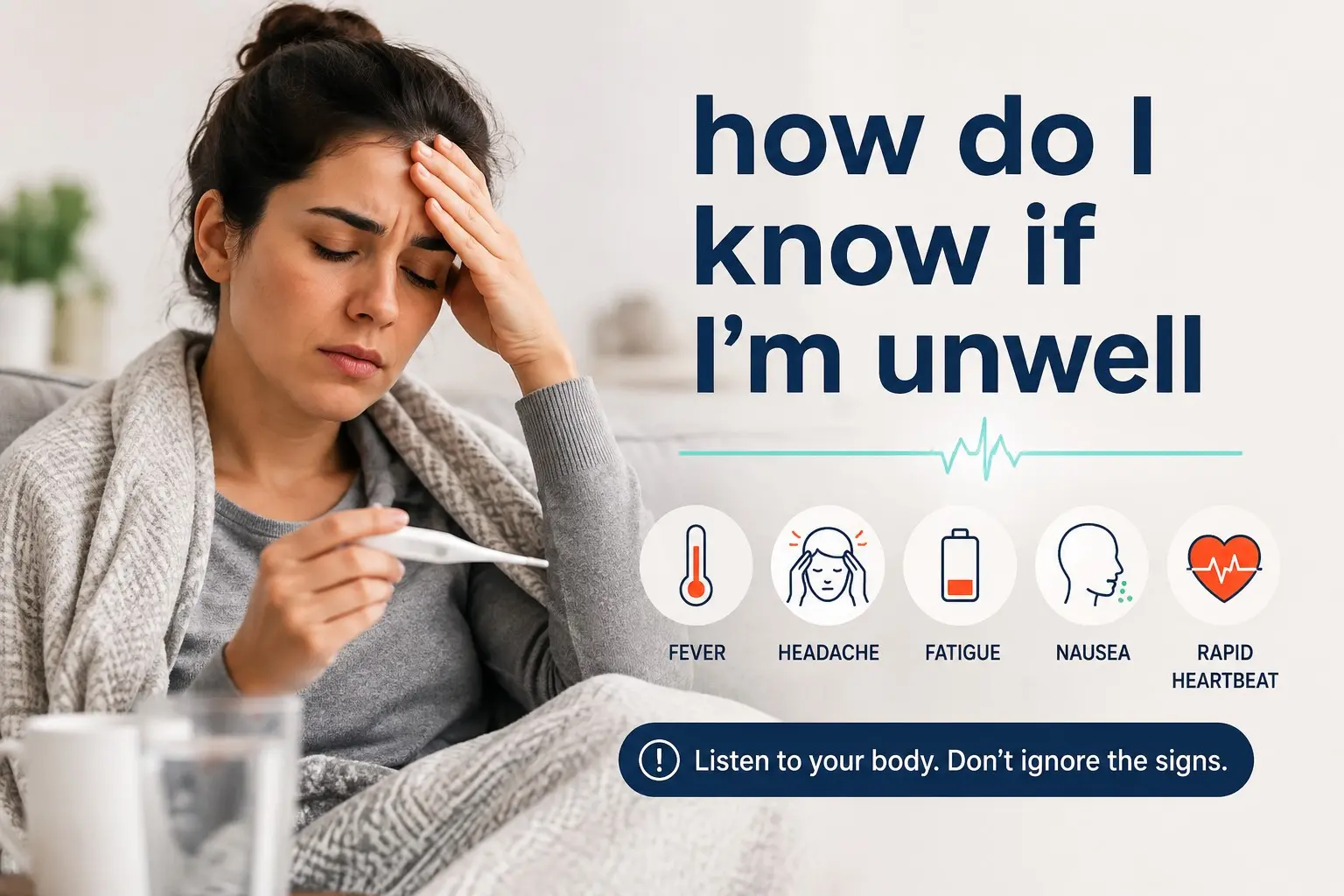
How do I know if I'm unwell?
There is no single sign.
Your body can change for many reasons.
A short night can make you tired.
Stress can affect sleep and appetite.
A mild infection may cause a few uncomfortable days.
But some symptoms deserve more attention.
The most useful clues are often a change from your normal,
how long the change lasts,
how severe it is,
and whether it affects normal daily life.
This guide will help you sort symptoms into four simple groups:
- Changes you can watch
- Symptoms that should be checked
- Symptoms that may need urgent care
- Emergency warning signs
It will not tell you what disease you have.
That requires proper medical assessment.
Quick Answer: How Do I Know If I'm Unwell?
You may be unwell when you notice a new or meaningful change in how your body or mind normally works.
Common clues can include unusual fatigue,
persistent pain,
fever,
changes in appetite,
unexplained weight changes,
breathing problems,
digestive changes,
dizziness,
sleep changes,
new weakness,
or changes in mood or thinking.
One mild symptom does not always mean serious illness.
Pay more attention when a symptom is:
- New
- Persistent
- Getting worse
- Severe
- Unexplained
- Different from your normal
- Stopping you from doing normal activities
Serious symptoms such as severe breathing difficulty,
sudden weakness,
loss of consciousness,
or severe chest symptoms need urgent medical attention.
Medical note:
This content is for general educational purposes and does not replace professional medical advice, diagnosis, or treatment. Consult an appropriately qualified healthcare professional for personal medical concerns. This article explains published guidance and does not provide a personal clinical assessment. Always consult qualified medical professionals for diagnosis and treatment of any health condition.
Health Warning Signs at a Glance
- Know what is normal for you.
- Pay attention to meaningful changes.
- A mild symptom that improves may only need monitoring.
- A symptom that lasts or keeps returning deserves more attention.
- Persistent symptoms should not always be blamed on stress or aging.
- Sudden severe symptoms can be more concerning than mild, gradual changes.
- Several symptoms appearing together can matter.
- Symptoms that affect normal daily function deserve attention.
- Existing medical conditions can change how urgently symptoms need assessment.
- Preventive care is important even when you feel well.
- A website cannot diagnose a medical condition.
- Emergency symptoms should not be monitored at home.
Start With One Question: What Is Normal for You?
Your normal matters.
One person normally sleeps seven hours.
Another may sleep eight.
One person has a bowel movement twice each day.
Another may have one every other day.
One person walks several miles.
Another has limited mobility.
That is why health changes should often be compared with your own usual pattern.
Ask:
- Is this new?
- Is it different from my normal?
- Is it getting worse?
- Is it affecting my normal activities?
- Is another new symptom happening at the same time?
A change from your normal can be more useful than trying to match yourself to a perfect checklist.
Four Levels of Health Symptoms
| Level | What It May Look Like | What to Do |
|---|---|---|
| Watch | Mild symptom, apparent cause, improving | Rest, monitor, use safe self-care |
| Medical review | Persistent, unexplained, or affecting daily life | Contact a healthcare professional |
| Urgent | Rapid change, significant pain, worsening breathing, dehydration, severe weakness | Seek prompt medical advice |
| Emergency | Life threatening symptoms or risk of serious permanent harm | Call your local emergency service |
These categories are general.
Age,
pregnancy,
existing medical conditions,
medicines,
and immune problems can change what is urgent.
12 Signs That You May Be Unwell
1. Your Energy Has Changed
Everyone feels tired sometimes.
A busy day can do it.
Poor sleep can do it.
Stress can do it.
But unexplained fatigue that keeps going is different.
Pay attention if you:
- Wake tired most days
- Struggle with normal tasks
- Need much more rest than usual
- Feel weak instead of simply sleepy
- Have fatigue that keeps getting worse
Persistent fatigue can have many causes.
These can include sleep problems,
anemia,
infection,
thyroid conditions,
mental health conditions,
medicines,
and other medical problems.
Do not diagnose the cause from fatigue alone.
2. Your Sleep Has Changed
One bad night is common.
A new pattern deserves more thought.
Notice if you suddenly:
- Cannot fall asleep
- Wake repeatedly
- Sleep much longer than usual
- Wake feeling exhausted
- Become very sleepy during the day
Sleep changes can come from stress,
pain,
medicines,
work schedules,
mental health problems,
or sleep disorders.
Loud snoring,
gasping,
breathing pauses,
or severe daytime sleepiness should be discussed with a healthcare professional.
Read
Sleep Science
and
Sleep Deprivation
.
3. Your Appetite Has Changed
Appetite changes for many reasons.
Stress can affect it.
Illness can affect it.
Medicine can affect it.
A short change may not be serious.
Get advice if you have a major or persistent change,
especially with:
- Unexplained weight loss
- Vomiting
- Pain when eating
- Difficulty swallowing
- Severe weakness
- Signs of dehydration
4. Your Weight Is Changing Without Trying
Weight can move up and down.
A small change is not always a problem.
But unexplained weight loss or a large unexpected change deserves attention.
Possible causes can range from changes in food intake to digestive,
hormonal,
mental health,
or other medical problems.
Do not assume unexplained weight loss is a good thing just because weight loss is often discussed as a health goal.
5. You Have New or Persistent Pain
Pain is a signal.
It does not always mean serious disease.
A sore muscle after exercise may be easy to explain.
But persistent pain deserves more attention.
Get medical advice when pain:
- Has no clear cause
- Gets worse
- Keeps returning
- Wakes you often
- Stops normal movement
- Comes with swelling
- Comes with fever
- Comes with weakness or numbness
Sudden severe pain may need urgent care.
6. Your Breathing Has Changed
Breathing can become faster during exercise.
That can be normal.
New shortness of breath is different.
Pay attention if you:
- Become breathless during activities that were easy before
- Feel short of breath while resting
- Wake because you cannot breathe comfortably
- Have new wheezing
- Have chest discomfort with breathing symptoms
- Feel that breathing is getting worse quickly
Severe breathing difficulty is an emergency.
7. Your Digestion Has Changed
Digestive symptoms are common.
One unusual meal can change your stomach for a day.
But pay attention to persistent digestive changes.
Examples include:
- Ongoing diarrhea
- Persistent constipation
- Repeated vomiting
- Severe abdominal pain
- Blood in stool
- Black stool
- Difficulty swallowing
- Persistent bloating with other symptoms
A meaningful change in your normal bowel pattern can also be worth discussing.
Visit the
Digestive Health and Gut Hub
.
8. You Feel Dizzy, Faint, or Unsteady
Dizziness has many possible causes.
It can happen with dehydration,
medicine,
blood pressure changes,
ear problems,
low blood sugar,
and other conditions.
A brief mild episode may have a simple cause.
But new or repeated dizziness should not always be ignored.
Get medical help if dizziness is:
- Persistent
- Severe
- Associated with fainting
- Associated with weakness
- Associated with trouble speaking
- Associated with new vision changes
- Associated with chest symptoms
9. Your Mood or Thinking Has Changed
Physical health and mental health are connected.
Stress can affect mood.
Poor sleep can affect concentration.
But meaningful changes deserve attention.
Watch for:
- Persistent low mood
- Severe anxiety
- New confusion
- Major difficulty concentrating
- Loss of interest in normal activities
- Sudden behavior changes
Sudden confusion can be a medical emergency,
especially in an older adult or someone who is acutely ill.
Visit the
Mental Health and Wellness Hub
.
10. Your Ability to Do Normal Tasks Has Changed
This is one of the most useful warning signs.
Ask:
“Can I still do what I normally do?”
A meaningful fall in daily function can matter.
Examples include suddenly having trouble:
- Walking
- Climbing normal stairs
- Preparing food
- Getting dressed
- Concentrating at work
- Doing normal household tasks
A gradual decline should be checked.
A sudden major loss of function can require urgent care.
11. You Have a Fever or Feel Acutely Ill
A fever can happen when your body responds to infection or other causes.
The number alone does not tell the full story.
How you feel matters too.
Get medical advice when fever comes with concerning symptoms such as:
- Breathing difficulty
- Severe weakness
- Confusion
- Severe headache with neck stiffness
- Repeated vomiting
- Signs of dehydration
- A rapidly worsening condition
Infants,
older adults,
pregnant people,
and people with weakened immune systems may need different advice.
12. You Simply Feel Very Different From Normal
Sometimes symptoms do not fit a neat list.
You may simply feel significantly unwell.
That feeling should not automatically be dismissed.
Look at the whole pattern.
Is something new?
Is it getting worse?
Are several symptoms happening together?
Can you still function normally?
If you are concerned,
contact a qualified healthcare professional.
When Is It Reasonable to Watch a Symptom at Home?
Some mild symptoms can improve without medical treatment.
Watching may be reasonable when:
- The symptom is mild
- You know a likely cause
- You can eat and drink
- You can breathe normally
- You can stay awake and alert
- You can complete basic daily activities
- The symptom is improving
For example,
mild tiredness after a poor night of sleep may improve with rest.
A minor muscle ache after a new workout may improve with time.
Keep watching the pattern.
If it stops improving,
gets worse,
or new symptoms appear,
change your plan.
When Should You Make a Medical Appointment?
Consider contacting a healthcare professional when a symptom is:
- Persistent
- Repeated
- Unexplained
- Getting worse
- Affecting sleep
- Affecting appetite
- Affecting work or school
- Affecting movement
- Causing unexplained weight change
- Different from your normal health
You may also need earlier advice if you:
- Are pregnant
- Are older
- Have a weakened immune system
- Have several chronic conditions
- Take medicines that affect immunity or bleeding
- Recently had surgery
A medical professional can decide whether you need examination,
testing,
treatment,
or simple monitoring.
When Might You Need Urgent Medical Care?
Urgent care means the problem should not simply be left for weeks.
Examples can include:
- Symptoms that are worsening quickly
- Repeated vomiting that makes drinking difficult
- Signs of significant dehydration
- Severe weakness
- Persistent dizziness
- Significant new pain
- New breathing difficulty
- A high fever with concerning symptoms
- A wound that may need treatment
- A new allergic reaction without severe breathing problems
The right urgent care service depends on your country and local health system.
If you are unsure how urgent a symptom is,
contact a local medical advice service,
urgent care service,
or healthcare professional.
Emergency Red Flags: Get Help Now
Some health red flags should not be watched at home.
Call your local emergency number or seek emergency medical help for symptoms such as:
- Severe difficulty breathing
- Breathing that stops
- Severe chest pain or pressure
- Sudden loss of consciousness
- A person who is very difficult to wake
- Sudden severe confusion
- Sudden weakness or numbness on one side of the body
- Sudden trouble speaking or understanding speech
- Sudden major vision problems
- Sudden inability to walk normally
- A sudden severe headache unlike usual headaches
- A seizure with concerning features
- Heavy bleeding that will not stop
- Coughing up or vomiting blood
- A severe allergic reaction with breathing difficulty or facial swelling
- Severe sudden pain
- Serious poisoning or overdose
- Thoughts of immediate self-harm or suicide
Do not drive yourself if you are seriously unwell or may lose consciousness.
Use your local emergency service.
Know the Warning Signs of Stroke
Stroke needs fast treatment.
CDC guidance includes sudden:
- Numbness or weakness of the face, arm, or leg
- Symptoms that affect one side of the body
- Confusion
- Trouble speaking
- Trouble understanding speech
- Vision problems
- Difficulty walking
- Dizziness
- Loss of balance
- Severe headache with no known cause
If stroke is possible,
call your local emergency service immediately.
Do not wait to see if it passes.
When Is Shortness of Breath an Emergency?
Mild breathlessness during exercise may be normal.
Severe or sudden breathing problems are different.
Seek emergency help when:
- You are struggling to breathe
- You cannot speak normally because of breathlessness
- You are gasping or choking
- You have chest pain or pressure
- You become confused or very drowsy
- Your lips or skin become blue or gray
Do not try to diagnose severe breathing difficulty online.
When Should Chest Symptoms Worry You?
Chest discomfort has many possible causes.
Some are mild.
Some are serious.
Emergency warning signs can include:
- Severe chest pain or pressure
- Chest symptoms with shortness of breath
- Chest symptoms with fainting
- Chest symptoms with heavy sweating
- Pain spreading to the arm, back, neck, or jaw
- Chest discomfort with sudden severe weakness
Do not wait for every possible symptom to appear.
Seek urgent medical help when a heart emergency is possible.
How Can You Tell If You May Be Dehydrated?
Dehydration means the body has lost more fluid than it has taken in.
Possible clues include:
- Thirst
- Dry mouth
- Less urine than usual
- Dizziness
- Weakness
Vomiting,
diarrhea,
heavy sweating,
fever,
and heat can increase fluid loss.
Severe dehydration can become dangerous.
Confusion,
loss of consciousness,
or severe worsening symptoms need urgent medical help.
How Long Should You Wait Before Seeing a Doctor?
There is no single number of days for every symptom.
The correct timing depends on:
- The symptom
- Its severity
- Your age
- Your medical history
- Whether it is improving
- Other symptoms happening at the same time
Do not follow a rule such as:
“I will always wait seven days.”
Some symptoms can be watched.
Others need help immediately.
A useful rule is:
The more severe,
sudden,
unexplained,
or disabling a symptom is,
the sooner you should seek advice.
How to Track Symptoms Before a Medical Visit
Simple symptom tracking can help.
Write down:
- What the symptom feels like
- When it started
- Whether it is constant or comes and goes
- What makes it better
- What makes it worse
- Other symptoms happening with it
- Any new medicine or supplement
- Recent illness
- Recent travel
- Major changes in food or sleep
- How the symptom affects daily life
You can also record useful measurements if you already have a safe and reliable way to take them.
Do not become obsessed with checking.
The goal is to give useful information to a healthcare professional.
Can Home Health Devices Tell You If You Are Unwell?
Home devices can provide useful information.
Examples include:
- A thermometer
- A blood pressure monitor
- A glucose meter when medically appropriate
- A pulse oximeter in some situations
- Wearable activity or heart rate devices
But a number needs context.
Home devices can also give incorrect readings.
Do not let one device reading replace your symptoms or professional medical advice.
If you feel seriously unwell,
seek care even if a wearable says everything looks normal.
Can You Be Unwell Even If Basic Tests Look Normal?
Yes.
One normal test does not rule out every medical problem.
Different tests answer different questions.
A healthcare professional combines:
- Your symptoms
- Your history
- Your examination
- Your risk factors
- Test results when needed
Do not keep ordering random tests on your own.
More tests are not always better.
The right test depends on the question being investigated.
Can You Have a Health Problem Without Feeling Unwell?
Yes.
Some medical problems may cause few obvious symptoms in their early stages.
That is why feeling well does not replace preventive care.
CDC guidance explains that routine preventive care may include:
- Medical checkups
- Screening tests
- Vaccines
- Dental care
- Health counseling
Screening is different from testing a symptom.
Screening looks for some conditions before symptoms appear.
Visit the
Medical Tests and Screenings Hub
.
Can Stress Make You Feel Unwell?
Yes.
Stress can affect the body.
It can change:
- Sleep
- Appetite
- Muscle tension
- Digestion
- Concentration
- Mood
But do not assume every symptom is stress.
That can delay medical care.
If a symptom is new,
persistent,
severe,
or unexplained,
get appropriate advice.
Can Health Anxiety Make Symptoms Feel Worse?
Yes.
Anxiety can increase attention to normal body sensations.
You may check your pulse repeatedly.
You may search every symptom.
You may become more frightened with each search.
The answer is not to ignore real symptoms.
It is to use a safer process.
- Notice the symptom.
- Check whether it is severe or urgent.
- Track it when appropriate.
- Get professional advice when needed.
- Avoid repeatedly diagnosing yourself online.
If health worry is taking over daily life,
mental health support may help.
Visit the
Mental Health and Wellness Hub
.
Health Warning Signs Can Mean Different Things at Different Ages
Children
Children may not be able to explain symptoms clearly.
Changes in breathing,
alertness,
feeding,
urination,
behavior,
or activity can be important.
Very young infants need special medical guidance for fever and illness.
Adults
Adults should pay attention to new symptoms,
especially when they persist,
worsen,
or affect daily function.
Older Adults
Illness can sometimes appear differently in older adults.
Sudden confusion,
weakness,
falls,
loss of appetite,
or a sudden decline in function may be important.
Do not assume every new problem is simply aging.
Visit the
Healthy Aging and Longevity Hub
.
What If You Already Have a Chronic Condition?
Your usual symptoms matter.
A change from your normal pattern can be important.
CDC guidance for people living with chronic conditions recommends telling the healthcare team about new or worsening symptoms or other concerning changes.
Your doctor may give you a personal plan that explains:
- Which symptoms can be managed at home
- When to call the clinic
- When to seek urgent care
- When to use emergency services
Your personal care plan should take priority over a general web article.
A Simple Health Change Checklist
This is not a diagnostic test.
| Question | Why It Matters |
|---|---|
| Is the symptom new? | A new change may need attention |
| Is it different from my normal? | Your normal pattern provides context |
| Is it getting worse? | Worsening symptoms may need faster care |
| How long has it lasted? | Persistent symptoms often deserve review |
| Is it severe? | Severity affects urgency |
| Are several symptoms happening together? | A group of symptoms can change the picture |
| Can I eat and drink? | Poor intake can increase risk |
| Can I breathe normally? | Breathing problems can be urgent |
| Am I alert and thinking normally? | Confusion can be a serious warning sign |
| Can I do normal daily activities? | Loss of function can signal illness |
Common Myths About Knowing When You Are Unwell
Myth: If You Do Not Have a Fever, You Are Not Sick
No.
Many health problems do not cause fever.
Myth: If You Look Healthy, You Must Be Healthy
No.
Appearance cannot show every medical condition.
Myth: Every New Symptom Means Something Serious
No.
Many symptoms have minor causes.
The pattern,
severity,
duration,
and other symptoms matter.
Myth: Stress Explains Every Unusual Symptom
No.
Stress can cause real physical symptoms,
but it should not automatically be used to explain every new health change.
Myth: Normal Blood Work Means Nothing Is Wrong
No.
Each medical test has a specific purpose.
No single test rules out every condition.
Myth: You Should Wait Until a Symptom Becomes Severe
No.
Persistent or concerning symptoms may deserve medical advice before they become severe.
Myth: Searching Symptoms Online Can Diagnose You
No.
Online information can help you understand possibilities and urgency.
It cannot replace a medical history,
physical examination,
or appropriate testing.
How I Approach Health Warning Signs
One challenge in health writing is finding the line between ignoring symptoms and frightening people.
Both can cause harm.
If every headache is treated like an emergency,
health information becomes frightening.
If every headache is treated like stress,
important symptoms may be missed.
My approach at NextFitLife is to look at the pattern.
I ask:
Is the symptom new?
Is it severe?
Is it lasting?
Is it getting worse?
Is it changing normal function?
Are there emergency warning signs?
I also compare health information with current public health,
medical,
government,
and academic sources before turning it into simpler guidance.
My goal is not to diagnose a reader.
It is to help readers understand when watching a symptom may be reasonable,
when professional advice is sensible,
and when waiting is unsafe.
That distinction is especially important for an article answering:
how do I know if I'm unwell?
References and Sources
The medical warning signs and care guidance in this article were checked against these high-authority public sources.
- MedlinePlus, U.S. National Library of Medicine.
Recognizing Medical Emergencies.
Reviewed January 8, 2025.
This resource explains common emergency warning signs and when immediate medical help may be needed.
Open MedlinePlus emergency guidance
. - NHS.
When to Use NHS 111 Online or Call 111.
This resource explains how urgent health advice can help people decide whether they need emergency care,
urgent treatment,
a healthcare professional,
a pharmacist,
or safe home care.
Open NHS urgent care guidance
. - Centers for Disease Control and Prevention.
Signs and Symptoms of Stroke.
Updated May 19, 2026.
This resource explains sudden stroke warning signs and the need for immediate emergency action.
Open CDC stroke guidance
. - Centers for Disease Control and Prevention.
Are You Up to Date on Your Preventive Care?
Updated August 15, 2025.
This resource explains checkups,
screening,
vaccines,
dental care,
and why preventive care matters even before symptoms appear.
Open CDC preventive care guidance
. - World Health Organization.
Health Literacy.
This resource explains the importance of being able to find,
understand,
assess,
and use health information and services.
Open WHO health literacy guidance
.
These organizations do not endorse NextFitLife.
Conclusion
If you are asking,
how do I know if I'm unwell,
start with what has changed.
Look at severity.
Look at duration.
Look at whether symptoms are getting worse.
Look at whether you can still eat,
drink,
breathe,
think,
move,
and manage normal daily life.
Mild symptoms may improve.
Persistent symptoms may need medical review.
Severe or sudden health red flags may need urgent or emergency care.
Your next step:
If something feels different today,
write down the symptom,
when it started,
and how it is changing.
Then seek the level of care that fits the warning signs rather than guessing at the diagnosis.
Editorial Policies and Trust
About the Author

Frequently Asked Questions About Knowing If You Are Unwell
How do I know if I'm unwell?
Look for a meaningful change from your normal health.
New,
persistent,
worsening,
severe,
or unexplained symptoms deserve more attention,
especially when they affect normal daily activities.
What are common signs that you may be unwell?
Possible signs include unusual fatigue,
fever,
persistent pain,
changes in appetite,
unexplained weight changes,
breathing problems,
digestive changes,
dizziness,
sleep changes,
weakness,
and changes in mood or thinking.
Can you be unwell without having a fever?
Yes.
Many health conditions do not cause fever.
Fever is only one possible symptom.
Can you be sick even if you look healthy?
Yes.
Appearance cannot show every health problem.
Some conditions may cause few visible signs.
How long should I wait before seeing a doctor?
There is no single waiting period for every symptom.
Seek advice sooner when a symptom is severe,
worsening,
unexplained,
persistent,
or affecting normal daily life.
When should fatigue worry me?
Fatigue deserves medical attention when it is persistent,
unexplained,
getting worse,
or making normal tasks difficult,
especially when it occurs with other symptoms.
Is unexplained weight loss a warning sign?
Yes.
A meaningful weight loss that happens without trying should be discussed with a healthcare professional,
especially when it continues or occurs with other symptoms.
When is dizziness a warning sign?
New or repeated dizziness deserves attention.
Seek urgent help when dizziness occurs with fainting,
weakness,
trouble speaking,
new vision problems,
chest symptoms,
or another sudden neurological change.
When is shortness of breath serious?
Severe or sudden breathing difficulty can be an emergency.
Get urgent help if you are gasping,
cannot speak normally because of breathlessness,
have chest pain,
become confused,
or develop blue or gray lips or skin.
What symptoms should never be ignored?
Emergency warning signs include severe breathing difficulty,
severe chest symptoms,
loss of consciousness,
sudden one-sided weakness,
sudden trouble speaking,
serious bleeding,
a severe allergic reaction,
or other sudden severe symptoms.
Can stress make you feel physically unwell?
Yes.
Stress can affect sleep,
appetite,
muscle tension,
digestion,
mood,
and concentration.
Do not automatically blame new or persistent symptoms on stress.
Can anxiety make me think I am sick?
Anxiety can increase attention to body sensations and make health worries stronger.
That does not mean every symptom should be ignored.
Use appropriate medical care rather than repeated self diagnosis.
Can you be unwell even if blood tests are normal?
Yes.
No single blood test checks every possible health condition.
Doctors use symptoms,
history,
physical examination,
risk factors,
and suitable testing together.
Why do I feel unwell but cannot explain why?
Many conditions can cause general feelings of being unwell.
Track what has changed,
how long it has lasted,
and whether other symptoms appear.
Seek professional advice if the feeling persists or worsens.
Should I monitor symptoms at home?
Mild symptoms may sometimes be watched when you are otherwise well and the problem is improving.
Do not monitor severe,
rapidly worsening,
or emergency symptoms at home.
How should I prepare for a doctor visit?
Write down when symptoms started,
what they feel like,
what makes them better or worse,
other symptoms,
medicines,
recent illness,
and how the problem affects daily life.
Why is preventive care important if I feel well?
Some health problems may develop before obvious symptoms appear.
Suitable checkups,
screening,
vaccines,
and dental care can help protect health and find some conditions earlier.
When should I call emergency services?
Use your local emergency service for life threatening symptoms such as severe breathing difficulty,
severe chest symptoms,
loss of consciousness,
stroke warning signs,
uncontrolled bleeding,
a severe allergic reaction,
or another sudden severe medical emergency.
Medical Disclaimer
NextFitLife provides general educational information.
It does not provide medical advice,
diagnosis,
treatment,
emergency care,
or personal medical recommendations.
Always speak with an appropriately qualified healthcare professional about new,
persistent,
severe,
worsening,
or unexplained symptoms,
medical conditions,
screening,
medicines,
or treatment decisions.
Do not delay medical or emergency care because of information you read online.

Health & wellness writer with 30+ years of experience in nutrition, fitness, and healthy aging. Founder of NextFitLife.com — evidence-based health guidance.