First published: Jun 30, 2024
Last updated: July 29, 2026
Written and source checked by: Adel Galal
Clinical review status: This article has not been reviewed by a dermatologist.
Many people ask how to open the pores on your nose before removing blackheads.
The phrase is common, but pores do not open and close like doors.
Heat may soften surface oil. It may also make the skin feel warm. It does not change a pore into an open hole.
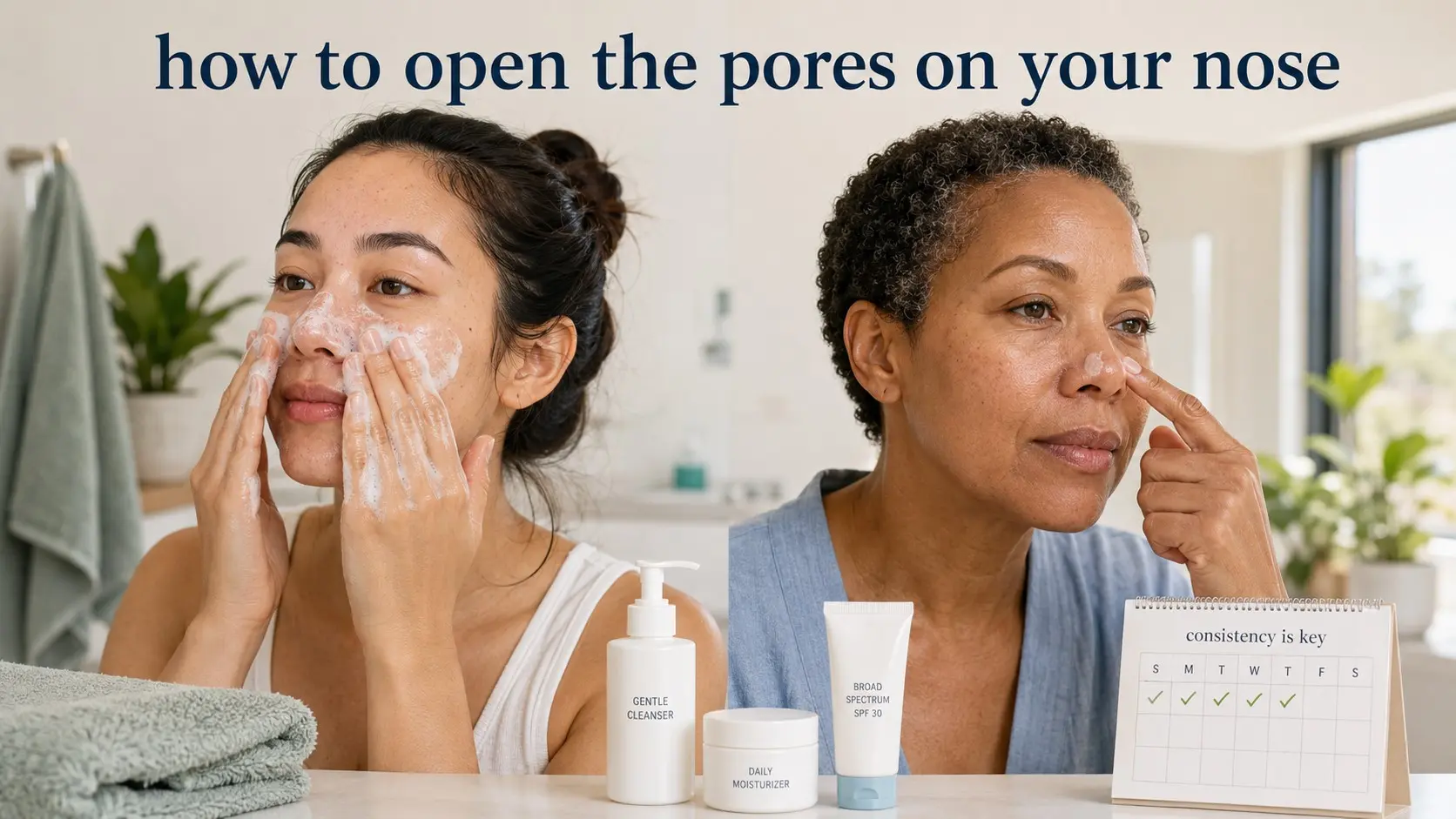
The safer goal is to clean the skin, loosen clogged material, control excess oil, and avoid damage.
Dark dots on the nose may be blackheads. They may also be sebaceous filaments, which are normal structures that help move oil to the skin surface.
This guide explains the difference, a safe nose routine, ingredients that may help, what to avoid, and when to see a dermatologist.
For wider guidance, visit the Acne, Whiteheads and Pores Guide and the Skincare Basics and Routines Guide.
Do not squeeze the nose with fingernails or metal tools. This can cause broken skin, infection, swelling, dark marks, and scars.
Quick Answer
You cannot truly open nose pores.
To improve clogged pores on nose skin, wash gently, use a salicylic acid product when suitable, apply moisturizer, and use sunscreen.
A topical retinoid such as adapalene may help repeated blackheads and clogged pores. It can irritate the skin and should not be used during pregnancy.
Warm water is enough for cleansing. Hot steam is not required.
Do not squeeze, scrape, vacuum, or pierce the pores.
What Are Nose Pores?
Pores are small openings in the skin.
They allow oil and sweat to reach the surface.
The nose often has more visible pores because it contains many oil glands.
Pore size is affected by:
- Genetics
- Oil production
- Age
- Skin thickness
- Sun damage
- Clogging
- Loss of skin support
You cannot remove pores.
You need them for normal skin function.
Do Pores Open and Close?
No.
Pores do not contain muscles that open and close.
Warmth may soften oil and dead skin near the surface.
Cold water may make the skin feel firm for a short time.
Neither method permanently changes pore size.
A pore may look smaller when it is less clogged and the surrounding skin is healthy.
Blackheads or Sebaceous Filaments?
| Feature | Blackhead | Sebaceous filament |
|---|---|---|
| What it is | A clogged pore containing oil and dead skin | A normal structure that helps oil flow through a pore |
| Color | Often dark brown or black | Often pale gray, yellow, tan, or skin colored |
| Pattern | May appear alone or in uneven groups | Often appears in an even pattern across the nose |
| Texture | May feel raised or firm | Usually feels flat or smooth |
| Can it return? | Yes | Yes, because it is part of normal skin function |
| Main goal | Reduce the clog and prevent new ones | Make it less visible without damaging the skin |
Sebaceous filaments are normal. Trying to remove every filament can lead to repeated squeezing and skin damage.
Why Do Nose Pores Look Large?
Excess Oil
An oily nose can make pores look darker or wider.
Dead Skin
Dead cells can mix with oil and form a clog.
Blackheads
A blackhead can stretch the opening and make it more visible.
Sun Damage
Ultraviolet damage may reduce support around pores.
Skin Aging
Natural changes in collagen and elasticity may make pores look larger.
Heavy Products
Some makeup, sunscreen, or hair products may add to clogging.
A Safe Routine for Nose Pores
1. Wash Gently
Use a gentle face cleanser.
Wash in the morning and before bed.
Wash after heavy sweating.
Use lukewarm water.
Use clean fingertips.
Do not scrub with a brush or rough cloth.
2. Use Salicylic Acid
Salicylic acid can move into oily pores and help loosen dead skin and oil.
It may help:
- Blackheads
- Whiteheads
- Mild clogged pores
- Oily skin
It is available in cleansers and products left on the skin.
Start with one salicylic acid product.
Use it every other day at first when the skin is sensitive.
Follow the product label.
Stop for strong burning, swelling, cracking, or a painful rash.
3. Apply Moisturizer
A noncomedogenic moisturizer helps protect the skin barrier.
It may reduce dryness caused by acne treatment.
Choose a light fragrance free product when the skin is oily or sensitive.
Oily skin can still need moisturizer.
4. Use Sunscreen
Choose broad spectrum SPF 30 or higher.
An oil free sunscreen or other noncomedogenic formula may suit oily skin.
Sun protection helps prevent further skin damage.
It also helps stop acne marks from becoming darker.
5. Keep Hair Products Away
Hair oil, pomade, wax, and leave in products may move onto the nose and forehead.
Keep heavy products away from facial skin.
Wash pillowcases and clean glasses regularly.
How to Start Salicylic Acid Safely
- Choose one product.
- Read the age and use instructions.
- Test it on a small area.
- Begin every other day.
- Use a small amount.
- Keep it away from the eyes and lips.
- Apply moisturizer.
- Use sunscreen each morning.
Do not use a salicylic acid cleanser, toner, serum, mask, and peel at the same time.
Using more products may cause irritation without clearing pores faster.
During pregnancy, discuss salicylic acid use with a qualified healthcare professional. High strength and large area use need extra caution.
Can Adapalene Clear Nose Pores?
Adapalene gel is a topical retinoid.
It helps normal skin cell turnover and reduces clogged pores.
It may help repeated:
- Blackheads
- Whiteheads
- Comedonal acne
- Small pimples
Use a pea sized amount for the whole acne prone area.
Do not apply a thick layer only to the nose.
Begin two or three nights each week.
Use moisturizer.
Mild dryness may occur at first.
Do not use topical retinoids during pregnancy. Discuss pregnancy plans and breastfeeding with a qualified healthcare professional.
Does Facial Steaming Open Nose Pores?
Facial steaming does not open pores.
Warm moisture may soften surface oil.
It may also feel relaxing.
Strong steam can cause:
- Burns
- Redness
- Dryness
- Rosacea flares
- Eczema irritation
- Broken small blood vessels
You do not need steam before salicylic acid or cleansing.
Lukewarm water is enough.
Never place the face over boiling water.
Can You Use a Warm Compress?
A clean warm cloth may soften surface oil before gentle cleansing.
- Wash your hands.
- Wet a clean cloth with warm water.
- Test the temperature on your arm.
- Place it on the nose for a short time.
- Remove it if the skin feels hot or painful.
- Wash gently.
The cloth should feel warm, not hot.
This step is optional.
It does not open pores or remove deep clogs.
Do Pore Strips Work?
Pore strips can pull away surface oil, dead skin, and part of a filament or blackhead.
The nose may look clearer for a short time.
The effect does not last.
Pore strips do not prevent new clogs.
They may irritate:
- Sensitive skin
- Sunburned skin
- Eczema
- Rosacea
- Skin using retinoids
- Skin after a peel
Do not use them over broken skin.
Stop if they remove skin or cause pain.
Can Clay Masks Help?
A clay mask may absorb surface oil for a short time.
It does not open pores.
It does not remove every blackhead.
Use it only as directed.
Do not wait until the mask becomes painful and cracked.
Apply moisturizer after use.
Stop if the skin becomes very dry or irritated.
Should You Extract Blackheads?
Do not squeeze blackheads at home.
Do not use:
- Fingernails
- Metal loops
- Needles
- Safety pins
- Tweezers
- Vacuum pore devices
Pressure can push material deeper.
It may also cause:
- Broken skin
- Bruising
- Infection
- Inflammation
- Dark marks
- Scarring
Professional extraction may be performed by a trained clinician for selected blackheads.
Extraction does not prevent them from returning.
Home Remedies to Avoid
Do not apply:
- Lemon juice
- Baking soda
- Toothpaste
- Apple cider vinegar
- Glue masks
- Raw egg
- Crushed aspirin
- Undiluted essential oils
- Rubbing alcohol
- Hydrogen peroxide
- Salt scrubs
- Sugar scrubs
These products may irritate or burn the skin.
They do not safely open pores.
Are Pore Vacuum Devices Safe?
Pore vacuums use suction.
Strong suction may cause:
- Bruising
- Redness
- Broken blood vessels
- Swelling
- Skin injury
- Dark marks
They may remove a little surface material.
They do not fix the cause of repeated clogging.
A gentle skin care routine is safer for regular use.
Professional Treatments for Stubborn Nose Pores
Prescription Retinoids
A dermatologist may prescribe a stronger retinoid for repeated clogged pores or acne.
These products can cause dryness and irritation.
Chemical Peels
A professional chemical peel may improve clogged pores, texture, and some acne marks.
Possible risks include burns, pigment changes, infection, and scarring.
Comedone Extraction
A trained professional may remove selected blackheads with sterile tools.
Laser or Energy Treatment
Some treatments may improve skin texture or the look of pores.
They do not remove pores.
Results and risks vary by device and skin tone.
A qualified dermatologist should explain realistic results.
Simple Nose Pore Routine Options
Routine for Oily Skin and Blackheads
Morning:
- Gentle cleanser
- Light moisturizer
- Sunscreen
Evening:
- Gentle cleanser
- Salicylic acid every other night
- Moisturizer
Routine for Sensitive Skin
Morning:
- Gentle fragrance free cleanser
- Moisturizer
- Sunscreen
Evening:
- Gentle cleanser
- Salicylic acid cleanser two or three times each week
- Moisturizer
Routine for Repeated Comedonal Acne
Morning:
- Gentle cleanser
- Moisturizer
- Sunscreen
Evening:
- Gentle cleanser
- Adapalene two or three nights each week
- Moisturizer
These examples are for general education. Product rules, age limits, pregnancy advice, and availability differ by country.
How Long Does It Take to Clear Nose Pores?
| Time | What may happen |
|---|---|
| First week | The skin may feel cleaner, but irritation may occur if treatment is too strong |
| Weeks two to four | Oil and surface roughness may begin to improve |
| Weeks four to eight | Some blackheads and clogged pores may become less visible |
| Weeks eight to twelve | A clearer treatment result can be judged |
| Long term | Continued gentle care is needed because oil and dead skin keep forming |
No treatment keeps every pore empty forever.
Consistency matters more than harsh treatment.
Common Nose Pore Mistakes
Using Hot Steam
Hot steam may burn or irritate the skin.
Squeezing Every Dark Dot
Many dark dots are normal sebaceous filaments.
Using Several Acids
Too many exfoliating products can damage the skin barrier.
Skipping Moisturizer
Dry irritated skin may produce more visible flakes and texture.
Using a Strong Scrub
Scrubs affect the surface. They do not clean deep pores safely.
Expecting Permanent Results
Oil and dead skin continue to form.
Using a Pore Strip Every Day
Frequent adhesive use can irritate or damage the skin.
Ignoring Sunscreen
Sun damage can make pores and skin texture look more noticeable.
When to See a Dermatologist
Arrange professional care when:
- Blackheads do not improve after several weeks
- The skin becomes painful
- Deep pimples appear
- Scars develop
- Dark marks keep increasing
- The nose is very red or swollen
- Products cause repeated rashes
- The diagnosis is unclear
- You have eczema or rosacea
- You want a peel or extraction
When Is Nose Skin Care Urgent?
Seek urgent medical care for:
- Fast facial swelling
- Trouble breathing
- Severe eye swelling
- A spreading painful infection
- Fever with red swollen skin
- Blisters or peeling skin
- A serious chemical burn
- A severe allergic reaction
Common Nose Pore Myths
Myth: Steam Opens Pores
Warmth may soften oil, but pores do not open like doors.
Myth: Cold Water Closes Pores
Cold water may make skin feel firm for a short time. It does not close pores.
Myth: Every Dark Dot Is a Blackhead
Many nose dots are normal sebaceous filaments.
Myth: Squeezing Cleans the Pore
Squeezing may injure the skin and the material can return.
Myth: Pore Strips Give Permanent Results
They remove some surface material for a short time.
Myth: Baking Soda Clears Pores
Baking soda may irritate the skin barrier.
Myth: Oily Skin Does Not Need Moisturizer
A light noncomedogenic moisturizer can support oily skin.
Myth: Pores Can Be Removed
Pores are normal and necessary parts of the skin.
Five High Authority References and Sources
American Academy of Dermatology: What Can Treat Large Facial Pores
Open dermatologist guidance on gentle cleansing, noncomedogenic products, salicylic acid, retinoids, sunscreen, and avoiding squeezing.
Cleveland Clinic: Sebaceous Filaments
Open medically reviewed guidance on normal sebaceous filaments, how they differ from blackheads, and why they return.
NHS: Acne Treatment
Open guidance on blackheads, whiteheads, benzoyl peroxide, topical retinoids, azelaic acid, treatment timelines, and professional care.
British Association of Dermatologists: Acne
Open dermatologist guidance on clogged pores, salicylic acid, benzoyl peroxide, acne care, scarring prevention, and when to seek help.
American Academy of Dermatology: Pregnancy Skin Care
Open guidance on avoiding retinoids and discussing high strength salicylic acid and other active ingredients during pregnancy.
Conclusion
The honest answer to how to open the pores on your nose is that pores do not open and close.
The safer goal is to reduce clogs and protect the skin.
Wash gently. Use salicylic acid when suitable. Apply moisturizer and sunscreen. Consider a topical retinoid only when it is safe for you.
Do not squeeze, scrape, steam, or vacuum the nose.
Call to action: Stop harsh pore treatments today. Choose one gentle routine, follow it for several weeks, and arrange a dermatologist visit if blackheads, acne, irritation, or scarring continue.
Related NextFitLife Guides and Hubs
Medical Disclaimer
This article provides general education. It does not diagnose acne, rosacea, eczema, infection, allergy, or another skin condition.
It does not replace a skin examination, diagnosis, pregnancy assessment, prescription, treatment plan, or emergency medical care.
Always consult a qualified dermatologist, doctor, nurse, or pharmacist before using prescription skin care, treating severe acne, or having an extraction, peel, laser treatment, or another procedure.
About the Author
Frequently Asked Questions
Can you really open the pores on your nose?
No. Pores do not open and close. Warmth may soften surface oil, while skin care can reduce clogging and make pores less visible.
Does steam open pores?
No. Steam may soften surface oil, but it does not open pores. Hot steam can burn or irritate the skin.
Does cold water close pores?
No. Cold water may make the skin feel firm for a short time, but it does not close pores.
What are the small dark dots on my nose?
They may be blackheads or normal sebaceous filaments. Filaments are often smaller, flatter, and evenly spread across the nose.
Can salicylic acid clear nose pores?
Salicylic acid may loosen oil and dead skin inside pores. It can help mild blackheads and whiteheads.
Can adapalene reduce blackheads?
Yes. Adapalene can help prevent clogged pores and treat blackheads, but it may irritate the skin and should not be used during pregnancy.
Are pore strips safe?
They may remove surface material for a short time. They can irritate sensitive, damaged, sunburned, or retinoid-treated skin.
Should I squeeze sebaceous filaments?
No. They are normal and will return. Repeated squeezing can damage the skin.
Can baking soda clean nose pores?
No. Baking soda can irritate the skin barrier and is not a safe pore treatment.
Do pore vacuum devices work?
They may remove some surface material, but strong suction can cause bruising, redness, and broken blood vessels.
How long does salicylic acid take to work?
Some improvement may appear after several weeks. A fuller result often needs eight to twelve weeks of consistent care.
When should I see a dermatologist?
Seek care for painful acne, scars, repeated rashes, severe redness, swelling, infection, or clogged pores that do not improve.

Health & wellness writer with 30+ years of experience in nutrition, fitness, and healthy aging. Founder of NextFitLife.com — evidence-based health guidance.