First published: Mar 14, 2023
Last updated: September 27, 2026
Written and source -checked by: Adel Galal, Founder and Lead Writer at NextFitLife
Medical review status: This article has not been medically reviewed by a gastroenterologist, doctor, pharmacist, or registered dietitian.
An IBS constipation diet should do two jobs at the same time. It should help stool stay soft and easier to pass without making abdominal pain, gas, and bloating worse.
That is why simply eating as much fiber as possible can backfire.
For many people with IBS C, soluble fiber is easier to tolerate than coarse wheat bran. A low FODMAP diet can also help some people, but it should be a short test followed by food reintroduction, not a permanent list of foods you are afraid to eat.
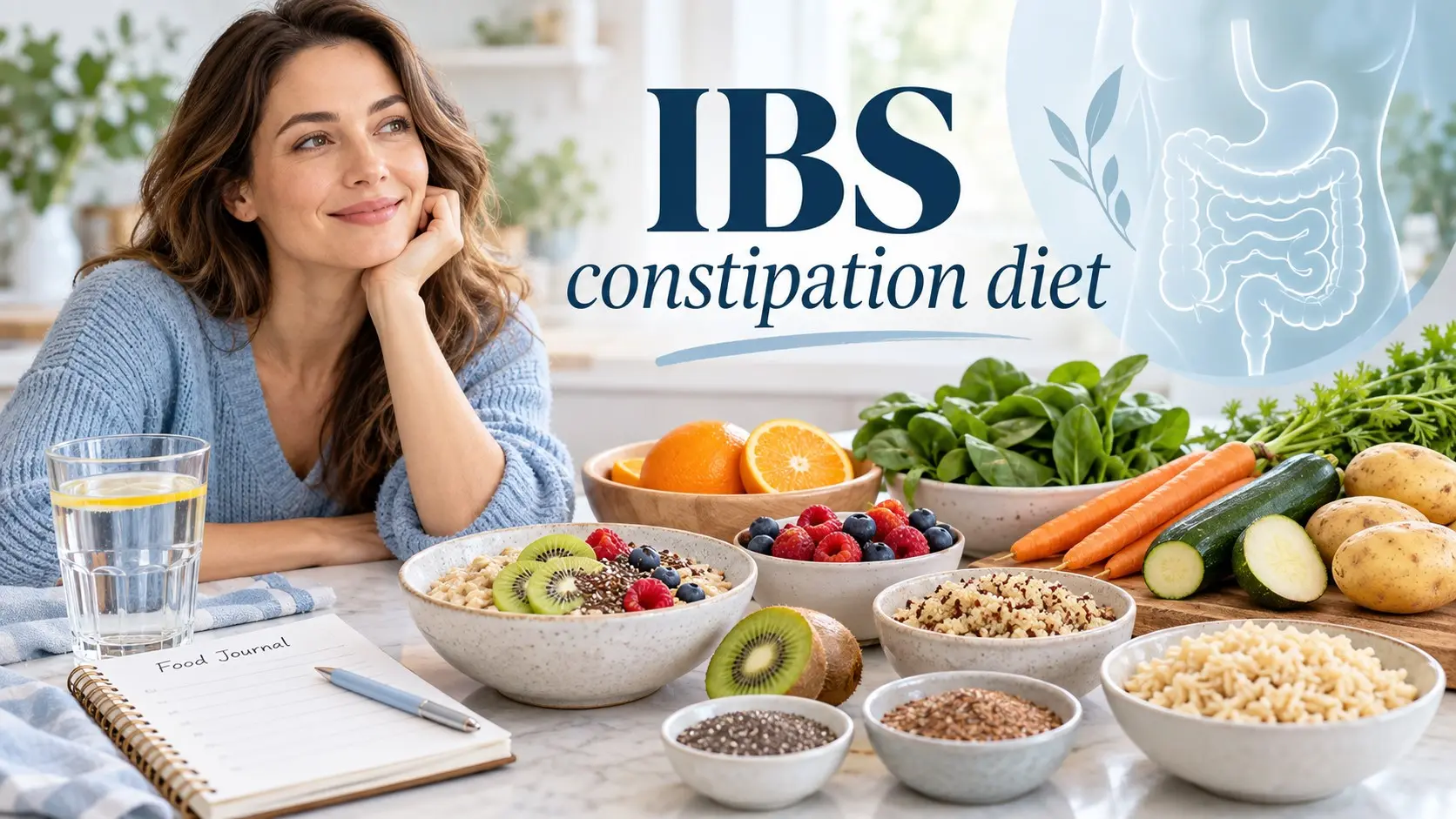
Quick answer: A practical IBS constipation diet starts with regular meals, gradual soluble fiber, enough fluid, and foods you tolerate. Oats, psyllium, kiwi, carrots, potatoes, quinoa, berries, citrus, chia, and ground flax can fit many plans. If symptoms remain troublesome, a short supervised low FODMAP trial can help identify personal triggers before foods are added back.
Medical notice: This content is for general educational purposes and does not replace professional medical advice, diagnosis, or treatment. Consult an appropriately qualified healthcare professional for personal medical concerns. This article explains published guidance and does not provide a personal clinical assessment. Always consult qualified medical professionals for diagnosis and treatment of any health condition.
IBS is a disorder of gut brain interaction. Food matters, but it is only one part of the picture.
Stress, bowel movement patterns, pelvic floor function, medicines, sleep, activity, and how the nervous system responds to gut signals can all affect symptoms.
Table of Contents
- What IBS with constipation means
- Why ordinary constipation advice can fail
- 13 smart IBS constipation diet steps
- Soluble versus insoluble fiber
- Best foods for IBS C
- Foods that may trigger symptoms
- The three step low FODMAP diet
- Kiwi, prunes, and fruit choices
- Psyllium and fiber supplements
- Dairy, wheat, caffeine, and coffee
- A simple one day meal plan
- When diet is not enough
- Medicines and pelvic floor problems
- Warning signs
- References and Sources
- Related NextFitLife guides
- About the author
- Frequently asked questions
What Is IBS With Constipation?
IBS C means irritable bowel syndrome in which constipation is the main bowel pattern.
IBS is not the same as simply being constipated.
People with IBS have repeated abdominal pain linked with changes in bowel habits. With IBS C, stool is often hard or lumpy, and bowel movements can be difficult or incomplete.
Other common symptoms include:
- Abdominal pain
- Bloating
- Gas
- Straining
- Hard stool
- Infrequent bowel movements
- A feeling that the bowel did not fully empty
- A feeling of blockage during a bowel movement
Constipation itself can make bloating and abdominal pain feel worse.
For a broader explanation of constipation causes and treatment, read the NextFitLife Chronic Constipation Guide.
Why Can Normal Constipation Advice Make IBS C Worse?
The usual advice is simple: eat more fiber.
For IBS, the type and amount of fiber matter.
Coarse insoluble fiber, especially wheat bran, can make gas, pain, and bloating worse in some people. Soluble fiber tends to be better tolerated.
The American College of Gastroenterology recommends soluble rather than insoluble fiber for global IBS symptoms.
So do not measure success by how much roughage you can force into your diet.
The goal is softer stool with less pain and bloating.
13 Smart IBS Constipation Diet Steps
1. Start With Regular Meals
Do not begin by banning twenty foods.
First make your eating pattern more regular.
Try to eat meals at similar times each day. Avoid long gaps followed by one very large meal if that pattern triggers pain or bloating.
Regular meals also give the bowel more predictable signals. Eating naturally stimulates colon activity through the gastrocolic reflex.
Breakfast can be particularly useful for building a morning bowel routine.
2. Choose Soluble Fiber First
Soluble fiber mixes with water and can form a soft gel. This can help stool hold water and become easier to pass.
Useful sources include:
- Oats
- Psyllium
- Ground flaxseed
- Chia seeds
- Kiwi
- Citrus fruit
- Carrots
- Potatoes
- Some tolerated legumes
Foods contain mixtures of fiber types, so these groups are not absolute.
The practical point is to build fiber gently instead of starting with large amounts of bran.
3. Increase Fiber Slowly
A sudden fiber jump is one of the easiest ways to make an IBS stomach angry.
NIDDK advises adding fiber a little at a time because a large increase can cause gas and bloating.
Start with one change.
For example, add oats at breakfast for several days. If that feels comfortable, add another fiber food.
This approach also tells you what your body tolerates.
4. Keep Fluid Intake Adequate
Fiber needs fluid to work well.
If fluid intake is too low, stool can remain hard and difficult to pass.
There is no single water amount that suits every adult. Needs change with body size, weather, activity, food, pregnancy, medicine, and health conditions.
The NHS gives around 1.5 litres as a general IBS starting point for many adults, but your needs may differ.
If you have heart failure, kidney disease, liver disease, or a prescribed fluid limit, follow your healthcare team's advice.
For practical drink choices, see the NextFitLife Morning Drinks for Gut Health Guide.
5. Consider Psyllium
Psyllium is a soluble fiber supplement and one of the better supported fiber options for IBS.
It can help stool hold water while usually producing less irritation than coarse wheat bran.
Start with a small amount and increase according to product or professional guidance.
Take it with enough fluid.
Ask a doctor or pharmacist first if you have trouble swallowing, bowel narrowing, severe unexplained abdominal symptoms, or medicines that may need to be spaced away from fiber supplements.
6. Try Kiwi as a Food Based Option
Kiwifruit deserves more attention than another generic “eat more fruit” statement.
Clinical studies have found that kiwi can improve bowel movement frequency and constipation symptoms in adults with functional constipation and IBS C.
Kiwi also tends to fit a low FODMAP eating plan at suitable portions.
This makes it an interesting option for someone who wants food based fiber without starting with a large dose of bran.
No fruit works for everyone, though.
Start with a normal portion and see how your gut responds.
7. Be Careful With Prunes if FODMAPs Trigger You
Prunes help ordinary constipation because they provide fiber and sorbitol.
That same sorbitol can be a problem in IBS.
Sorbitol is a polyol, one of the carbohydrate groups included in FODMAPs. It can draw water into the bowel and ferment in the colon, which may increase gas, bloating, cramps, or loose stool.
So prunes are not automatically the best constipation food for every person with IBS C.
If you tolerate them, they can help. If they make pain or bloating worse, choose another option.
8. Use Low FODMAP Foods to Keep Fiber in the Diet
A common low FODMAP mistake is cutting high FODMAP foods but forgetting to replace their fiber.
That can make constipation worse.
Depending on portions and personal tolerance, useful options can include:
- Oats
- Kiwi
- Oranges and mandarins
- Berries
- Carrots
- Zucchini
- Spinach
- Eggplant
- Potatoes
- Quinoa
- Rice
- Chia seeds
- Ground flaxseed
- Firm tofu
- Suitable portions of some canned legumes
FODMAP content depends heavily on serving size.
Food testing also changes over time, so use current Monash FODMAP information when following the diet closely rather than relying on an old internet food chart.
9. Treat Low FODMAP as a Short Test, Not a Life Sentence
The low FODMAP diet is one of the best known IBS diets, but it is often used incorrectly.
Monash University describes it as a three step process.
| Step | What You Do | Goal |
|---|---|---|
| 1. Low FODMAP | Swap high FODMAP foods for suitable low FODMAP choices for about 2 to 6 weeks | See whether IBS symptoms improve |
| 2. Reintroduction | Test FODMAP groups in a structured way | Learn which groups and portions trigger symptoms |
| 3. Personalization | Bring tolerated foods back into your long term diet | Keep the diet as varied and flexible as possible |
Staying in the strict first phase forever is not the goal.
FODMAP reintroduction is where you learn what you actually need to limit and what can come back.
10. Test Lactose Instead of Banning All Dairy
IBS does not automatically mean dairy intolerance.
The main issue for many people is lactose, the natural sugar in milk.
Someone who struggles with regular milk may still tolerate:
- Lactose free milk
- Lactose free yogurt
- Some hard or aged cheeses
- Other dairy foods in smaller amounts
Your tolerance is individual.
Removing all dairy without a reason can make it harder to get enough calcium, protein, vitamin B12, and other nutrients.
11. Do Not Assume Wheat Means Gluten Is the Problem
Wheat contains gluten, but it also contains fructans, which are FODMAP carbohydrates.
That means a person with IBS can react to a wheat based meal without gluten itself being the trigger.
This distinction matters.
A strict gluten free diet is not automatically needed for IBS C.
If celiac disease is a concern, talk with your healthcare professional before removing gluten because dietary restriction can affect diagnostic testing.
12. Reduce Large Fatty and Highly Processed Meals
Large meals that are very high in fat can trigger IBS symptoms in some people.
The same is true for meals built mainly from fried or heavily processed food.
You do not need a fat free diet.
Instead, notice whether very large portions of fried food, pizza, creamy meals, rich desserts, or fast food reliably increase pain, fullness, or constipation.
For foods that commonly make constipation harder to manage, read the NextFitLife Foods That Can Cause Constipation Guide.
13. Track Triggers Instead of Copying Someone Else's Ban List
No IBS food list fits every person.
Use a short food and symptom record.
Write down:
- What you ate
- Approximate portion
- Meal time
- Abdominal pain
- Bloating
- Gas
- Bowel movement time
- Stool form
- Straining
- Stress
- Menstrual cycle when relevant
- Medicines and supplements
Look for repeated patterns instead of blaming a food after one uncomfortable meal.
Change one major factor at a time whenever possible.
Which Fiber Is Better for IBS Constipation?
This is worth putting side by side.
| Fiber Type | Examples | IBS C Take |
|---|---|---|
| Soluble fiber | Psyllium, oats, some fruit, chia, flax | Usually the better supported choice for IBS symptoms |
| Coarse insoluble fiber | Wheat bran and some very rough cereal fibers | Can worsen pain, gas, and bloating in some people |
| Mixed food fiber | Fruit, vegetables, seeds, whole foods | Useful when foods and portions are personally tolerated |
Fiber is not just one substance.
That is why “eat more fiber” is not enough advice for someone with IBS.
Best Foods to Build an IBS Constipation Diet Around
There is no universal safe list, but these foods can fit many IBS C diets when portions are tolerated:
| Food | Why It Can Fit | Simple Use |
|---|---|---|
| Oats | Provides soluble fiber | Porridge or overnight oats |
| Kiwi | Fiber plus direct constipation research | Breakfast or snack |
| Ground flaxseed | Adds soluble and insoluble fiber | Add a small amount to oats or yogurt |
| Chia seeds | Absorbs fluid and provides fiber | Porridge, pudding, or yogurt |
| Carrots | Fiber and often easy to use in IBS meals | Cooked, roasted, or in soup |
| Zucchini | Vegetable fiber with flexible meal use | Roasted or cooked |
| Spinach | Plant fiber and nutrients | Eggs, rice bowls, or cooked sides |
| Quinoa | Whole grain style option with fiber | Meal bowl or side |
| Citrus fruit | Fruit fiber and fluid | Snack or breakfast |
Remember that FODMAP classification depends on serving size. A food can be tolerated at one amount and trigger symptoms at another.
Which Foods May Trigger IBS C Symptoms?
There is no permanent “never eat” list.
Common triggers for some people include:
- Large servings of onion or garlic
- Some beans and legumes
- Some wheat based foods
- High lactose dairy
- Apples
- Pears
- Stone fruit
- Watermelon
- Large amounts of dried fruit
- Honey
- Products containing sorbitol
- Products containing mannitol
- Products containing xylitol or maltitol
- Very fatty meals
- Large amounts of alcohol
- Some carbonated drinks
The key words are some people.
Do not remove all of these foods just because you have IBS.
What About Beans and Lentils?
Beans and lentils create an IBS C dilemma.
They provide fiber, protein, and useful nutrients, but they also contain fermentable carbohydrates that can cause gas and pain.
The answer is not always complete avoidance.
Portion size and preparation matter. Monash testing shows that certain smaller servings of canned legumes can fit a low FODMAP plan because some fermentable carbohydrates move into the liquid and are discarded when the food is drained and rinsed.
If beans trigger severe symptoms, use another fiber source during the strict phase and test legumes later during reintroduction.
What About Coffee and Caffeine?
Coffee is not automatically bad for constipation.
It can stimulate bowel activity in some people.
For others, caffeine can increase gut discomfort, anxiety, urgency, reflux, or other IBS symptoms.
The NHS suggests limiting caffeine when it worsens IBS symptoms rather than treating coffee as a universal ban.
Your own response is more useful than a rule copied from someone else's diet.
Do Probiotics Help IBS Constipation?
The old version of this article was too confident here.
Probiotic effects depend on the exact strain, dose, product, symptom, and person.
The American College of Gastroenterology suggests against routine probiotics for global IBS symptoms because available studies are too inconsistent to recommend them as a group.
This does not prove every probiotic is useless.
It means “take probiotics for IBS” is too broad to be good advice.
Yogurt and kefir can still be nutritious foods if you tolerate them. A fermented food and a tested probiotic product are not the same thing.
Do Healthy Fats Treat IBS C?
No specific fat has been proven to cure IBS constipation.
Olive oil, avocado, nuts, seeds, and fish can all fit a healthy eating pattern when tolerated.
But the old claim that healthy fats have a reliable laxative action or that omega 3 fats directly treat gut inflammation in IBS was too strong.
Keep fat intake balanced and watch portion size because very fatty meals can trigger symptoms in some people.
A Simple One Day IBS Constipation Meal Plan
This is an example, not a prescription. FODMAP tolerance is personal and serving size matters.
| Meal | Example | Why It Fits |
|---|---|---|
| Breakfast | Oatmeal with kiwi, chia, and lactose free yogurt | Soluble fiber plus a gentle fruit option |
| Lunch | Quinoa bowl with firm tofu, carrots, zucchini, spinach, and olive oil | Fiber, protein, and cooked vegetables |
| Snack | Orange or kiwi with a tolerated portion of nuts | Fruit fiber with a simple snack |
| Dinner | Grilled fish or eggs with potatoes, green beans, and cooked carrots | Protein plus tolerated plant foods |
Drink enough fluid during the day for your health needs.
What If IBS C Comes With Severe Bloating?
Constipation itself can increase gas and bloating.
Then a sudden fiber increase can add even more fermentation.
This creates an annoying cycle:
Constipation → more bloating → sudden fiber increase → more gas → more food restriction
Break the cycle slowly.
Choose one or two tolerated soluble fiber sources, increase them gradually, keep fluids adequate, and avoid stacking several new high fiber foods into one day.
For more help, see the NextFitLife Foods That Can Reduce Bloating Guide.
Does Stress Really Affect IBS C?
Yes, but that does not mean IBS is “all in your head.”
The gut and brain communicate in both directions.
Stress can change gut sensitivity, bowel movement patterns, muscle tension, sleep, and how strongly you notice digestive signals.
That is why treatment can include diet alongside exercise, stress management, cognitive behavioral therapy, or gut directed hypnotherapy for selected people.
Food is one tool, not the entire treatment.
When an IBS Constipation Diet Is Not Enough
Diet should not become a reason to live with uncontrolled symptoms.
Current medical options for IBS C include treatments aimed at constipation and medicines aimed more specifically at IBS C.
The American Gastroenterological Association guidance includes options such as:
- Polyethylene glycol
- Linaclotide
- Plecanatide
- Lubiprostone
- Tenapanor
These treatments are not interchangeable.
For example, polyethylene glycol can help constipation, but improving stool frequency does not guarantee that IBS abdominal pain will also improve.
Linaclotide and several other IBS C medicines target a broader set of symptoms.
Discuss treatment choices with a healthcare professional rather than choosing medicine from an online list.
What If You Strain Even When the Stool Is Soft?
This deserves special attention.
If stool is soft but you still:
- Strain heavily
- Feel blocked
- Spend a very long time on the toilet
- Feel that stool remains inside
- Need to press around the pelvis
- Need to use a finger to help stool pass
the problem may involve pelvic floor dysfunction.
The American College of Gastroenterology suggests anorectal testing in people with IBS who have symptoms of a pelvic floor problem or constipation that does not respond to standard treatment.
No food can retrain poorly coordinated pelvic floor muscles.
That may require pelvic floor physical therapy and biofeedback.
What I Would Change From the Old IBS Diet Approach
I would remove several blanket rules from the old version.
- I would not promise that every person needs 25 to 35 grams of fiber immediately.
- I would not call all dairy a constipation trigger.
- I would not call coffee simply dehydrating.
- I would not recommend probiotics as a proven IBS treatment.
- I would not claim healthy fats have a dependable laxative effect.
- I would not promise that omega 3 foods reduce IBS inflammation.
- I would not give every person a fixed 64 ounce fluid goal.
- I would not keep someone on strict low FODMAP restriction long term.
- I would not tell someone with severe bloating to suddenly add large amounts of bran.
The stronger approach is personal, gradual, and evidence based.
When Should You See a Doctor?
IBS symptoms should not be used to explain every new digestive problem.
Speak with a healthcare professional if symptoms are new, changing, persistent, or difficult to control.
Get prompt medical care for symptoms such as:
- Blood in the stool
- Black stool
- Unexplained weight loss
- Persistent vomiting
- Severe or constant abdominal pain
- Fever
- Marked abdominal swelling
- An inability to pass stool or gas
- Anemia
- A major new change in bowel habits
If you need to remove many foods just to function, ask for help from a gastroenterologist or registered dietitian rather than making the diet smaller and smaller.
Conclusion
A good IBS constipation diet is not the diet with the longest banned food list. It is the one that gives you enough tolerated soluble fiber, adequate fluid, regular meals, and as much food variety as your symptoms allow.
Start with one step: choose a tolerated soluble fiber food such as oats or kiwi and add it gradually. If symptoms remain difficult, track what you eat and how your bowel responds, then discuss a structured low FODMAP trial, psyllium, medicine, or pelvic floor assessment with the right healthcare professional.
References and Sources
The IBS C diet and treatment guidance in this article was checked against current gastroenterology, government, university, and health service resources. Full URLs are included below for verification.
- American College of Gastroenterology.
ACG Clinical Guideline: Management of Irritable Bowel Syndrome.
Used for soluble versus insoluble fiber, the limited trial of a low FODMAP diet, pelvic floor testing, probiotics, and evidence based IBS management.
URL:
https://webfiles.gi.org/links/PCC/ACG_Clinical_Guideline__Management_of_Irritable.11.pdf
- National Institute of Diabetes and Digestive and Kidney Diseases.
Eating, Diet, and Nutrition for Irritable Bowel Syndrome.
Used for fiber guidance, gradual fiber increases, IBS diet options, and the role of a low FODMAP eating plan.
URL:
https://www.niddk.nih.gov/health-information/digestive-diseases/irritable-bowel-syndrome/eating-diet-nutrition
- Monash University FODMAP.
IBS Diets and the Three Step FODMAP Diet.
Used for the 2 to 6 week low FODMAP phase, structured reintroduction, personalization, and the importance of avoiding unnecessary long term restriction.
URL:
https://www.monashfodmap.com/ibs-central/diets/
- American Gastroenterological Association.
Pharmacological Management of Irritable Bowel Syndrome With Constipation.
Used for current treatment recommendations involving linaclotide, plecanatide, tenapanor, lubiprostone, polyethylene glycol, and other IBS C therapies.
URL:
https://gastro.org/clinical-guidance/pharmacological-management-of-irritable-bowel-syndrome-with-constipation-ibs-c/
- NHS.
Diet, Lifestyle and Medicines for Irritable Bowel Syndrome.
Used for practical IBS guidance on regular meals, soluble fiber, fluids, caffeine, activity, and when dietitian or medical support is needed.
URL:
https://www.nhs.uk/conditions/irritable-bowel-syndrome-ibs/diet-lifestyle-and-medicines/
Continue With NextFitLife Digestive Health Guides
These guides build on the fiber, constipation, bloating, hydration, and food tolerance topics covered above.
IBS and Gut Health
Constipation
- Ways to Improve Chronic Constipation
- Foods That Can Cause Constipation
- Exercises to Relieve Constipation
Fluids and Morning Routine
About the Author
Adel Galal is the founder and lead writer of NextFitLife. He has more than 30 years of personal interest in nutrition, fitness, healthy aging, wellness, and practical health research.
His work focuses on comparing health claims with established medical guidance and research, then turning that information into clear steps readers can understand and discuss with qualified professionals.
For IBS and digestive topics, the goal is to avoid fear based food lists. Food tolerance is personal, and restrictive diets should have a clear reason, a time limit, and a plan for bringing tolerated foods back.
This content is for general educational purposes and does not replace professional medical advice, diagnosis, or treatment. Consult an appropriately qualified healthcare professional for personal medical concerns. This article explains published guidance and does not provide a personal clinical assessment. Always consult qualified medical professionals for diagnosis and treatment of any health condition.
Learn more about Adel Galal, NextFitLife, and the site's editorial approach on the NextFitLife About Us page.
Frequently Asked Questions About an IBS Constipation Diet
What is the best diet for IBS with constipation?
There is no single best diet for every person. A useful starting plan includes regular meals, gradual soluble fiber, enough fluid, and foods you tolerate. Psyllium, oats, kiwi, chia, flax, vegetables, and suitable fruit can fit many IBS C diets.
What fiber is best for IBS constipation?
Soluble fiber is generally better supported for IBS than coarse insoluble fiber. Psyllium is one of the most studied options. Oats, chia, flax, fruit, and some vegetables can also add useful fiber.
Can too much fiber worsen IBS C?
Yes. A sudden fiber increase can cause gas, bloating, cramps, and abdominal discomfort. Coarse wheat bran can also worsen symptoms in some people. Increase fiber slowly and watch how your body responds.
Is a low FODMAP diet good for IBS constipation?
A limited low FODMAP trial can reduce IBS symptoms for some people. It should normally be followed by structured food reintroduction and personalization rather than staying highly restrictive long term.
How long should I stay on a strict low FODMAP diet?
Monash University recommends the strict first phase for about 2 to 6 weeks. If symptoms improve, move to reintroduction so you can identify the FODMAP groups and serving sizes you actually tolerate.
Is kiwi good for IBS constipation?
Kiwi provides fiber and has clinical research supporting improved bowel habits in people with constipation, including IBS C. Individual tolerance still matters, and food portions matter when following a low FODMAP plan.
Are prunes good for IBS C?
Prunes can improve ordinary constipation because they contain fiber and sorbitol. Sorbitol is a FODMAP, so prunes can increase gas, bloating, or pain in some people with IBS. Use them only if you tolerate them.
Should I avoid dairy if I have IBS C?
Not automatically. Lactose can trigger symptoms in people who do not digest it well, but many people tolerate lactose free dairy or lower lactose foods. Remove only what you have a reason to limit.
Should I avoid gluten with IBS constipation?
Not automatically. Wheat contains both gluten and fructans, so wheat related symptoms do not prove that gluten is the cause. If celiac disease is a concern, discuss testing before starting a gluten free diet.
Do probiotics help IBS constipation?
Probiotic research in IBS is inconsistent and depends on the exact strain and product. The American College of Gastroenterology does not recommend probiotics as a group for global IBS symptoms based on current evidence.
What if diet does not fix my IBS constipation?
Speak with a healthcare professional. Options can include polyethylene glycol or IBS C medicines such as linaclotide, plecanatide, lubiprostone, or tenapanor. Persistent straining or blockage can also require assessment for pelvic floor dysfunction.
When should IBS constipation be checked urgently?
Get medical care for blood in stool, black stool, unexplained weight loss, persistent vomiting, severe or constant abdominal pain, fever, major abdominal swelling, inability to pass stool or gas, or a major unexplained change in bowel habits.

Health & wellness writer with 30+ years of experience in nutrition, fitness, and healthy aging. Founder of NextFitLife.com — evidence-based health guidance.