Published: March 2024
Last updated: July 16, 2026
Next review: July 2027
Written by: Adel Galal, Founder and Lead Writer at NextFitLife
Review status: Editorially reviewed and checked against current NIH, CDC, FDA, WHO, and NCCIH guidance. This page has not been medically reviewed by a doctor, immunologist, pharmacist, or registered dietitian.
Reading time: About 20 minutes
But no drink can instantly strengthen every part of the immune system.
No drink can guarantee that you will avoid a cold, the flu, or another infection.
No juice can replace vaccination, sleep, medicine, or medical care.
The immune system is a complex network of cells, tissues, organs, and proteins.
It needs enough energy, protein, vitamins, minerals, sleep, and general health support.
Vitamin C, vitamin D, zinc, vitamin A, vitamin E, selenium, and other nutrients have roles in normal immune function.
More is not always better.
Large supplement doses can cause side effects or interact with medicine.
The best immunity booster drinks are therefore simple drinks that add fruit, vegetables, protein, or fortified foods without excessive sugar or unsafe herbal claims.
This guide provides 16 practical recipes, evidence-based safety advice, sugar guidance, juice safety, supplement cautions, and signs that need medical care.
Immunity Booster Drinks - Quick Answer
No drink can supercharge the immune system.
A useful drink can provide fluid and nutrients as part of a balanced diet.
Good ingredients may include:
- Whole berries
- Citrus fruit
- Kiwi
- Mango
- Carrots
- Leafy greens
- Tomatoes
- Plain pasteurized yogurt
- Pasteurized kefir
- Fortified milk or soy drink
- Oats
- Nuts or seeds
Choose whole fruit smoothies more often than large glasses of juice.
Avoid large amounts of added sugar.
Do not add raw eggs.
Use pasteurized milk and juice.
Ask a doctor or pharmacist before adding herbal extracts, elderberry concentrate, echinacea, high-dose zinc, or vitamin powders.
Editorial and Advertising Disclosure
This guide was written and editorially reviewed by Adel Galal.
Adel is a health and wellness writer.
He is not a doctor, immunologist, pharmacist, or registered dietitian.
This page cannot assess an immune disorder, infection, vitamin deficiency, or medicine interaction.
NextFitLife uses display advertising to support the website.
Advertising does not decide the advice, recipes, sources, safety warnings, or conclusions on this page.
Read the
Editorial Policy,
Medical Review Policy,
and
Corrections Policy.
Important Immune Health Safety Note
Do not use a smoothie, tea, juice, herb, or supplement to replace medical care.
Do not delay vaccines because a drink contains vitamin C or zinc.
Do not use immunity drinks to treat breathing trouble, severe infection, sepsis, pneumonia, or an immune disorder.
Contact a doctor if you have repeated, unusual, severe, or long-lasting infections.
Get urgent help for severe breathing trouble, blue or gray lips, confusion, fainting, severe dehydration, chest pain, or a rapidly worsening illness.
What Immunity Booster Drinks Can Do
The phrase immunity booster drinks is popular.
A more accurate phrase is drinks that support normal nutrition and immune health.
A balanced drink may:
- Help you meet fluid needs
- Add fruit or vegetables
- Provide protein
- Provide vitamin C
- Provide vitamin D when fortified
- Provide zinc from dairy, soy, seeds, or other foods
- Help when chewing or appetite is difficult
These benefits come from the nutrients and fluid.
They do not mean the drink activates unlimited immunity.
Normal Immune Function Needs Balance
An immune system can be underactive.
It can also become overactive and contribute to allergy or autoimmune disease.
The goal is normal function, not maximum activity.
What Immunity Booster Drinks Cannot Do?
No drink has been proven to:
- Prevent every cold
- Prevent flu
- Prevent COVID-19
- Replace vaccination
- Cure an infection
- Eliminate the need for antibiotics when they are prescribed
- Treat an immune deficiency
- Stop autoimmune disease
- Remove toxins from the body
Antioxidants Are Not Magic
Fruit and vegetables provide antioxidant-rich foods.
These foods can be part of a healthy diet.
The word antioxidant does not mean a drink prevents disease or reverses an infection.
More Vitamins Are Not Always Better
High doses of vitamins and minerals may cause harm.
Large zinc doses can cause nausea and copper deficiency.
Too much vitamin C may cause stomach upset and may increase kidney stone risk in some people.
Very high vitamin D intake can raise calcium to dangerous levels.
How to Build Better Immunity Booster Drinks
Use a simple formula for healthy smoothie recipes.
Choose One Liquid
- Water
- Pasteurized milk
- Unsweetened fortified soy drink
- Plain pasteurized kefir
- A small amount of pasteurized juice
Add One or Two Produce Foods
- Berries
- Orange
- Kiwi
- Mango
- Banana
- Carrot
- Spinach
- Tomato
- Cucumber
Add Protein or Healthy Fat
- Plain yogurt
- Pasteurized kefir
- Fortified soy drink
- Smooth nut butter
- Ground flax
- Chia seeds
- Oats
Keep Sugar Low
Most recipes do not need honey, syrup, dates, or table sugar.
Fruit already provides sweetness.
These recipes are designed as low-sugar drinks, but portions still matter.
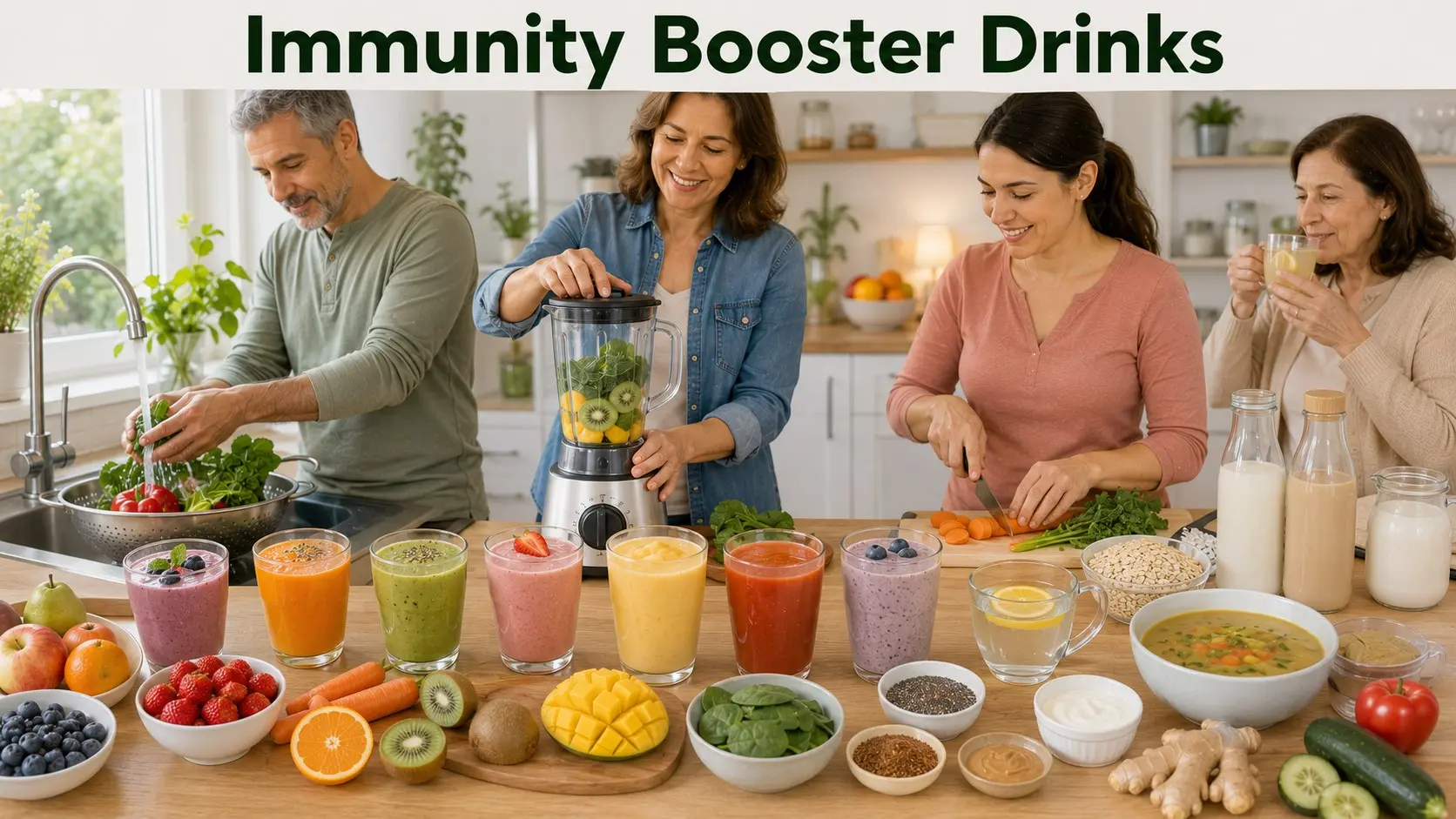
16 Immunity Booster Drinks With Safe, Simple Ingredients
These recipes support hydration and nutrition.
They do not prevent or cure infection.
Each recipe makes about one adult serving.
Use pasteurized dairy and juice.
Wash produce under running water before cutting.
1. Berry Yogurt Smoothie
Ingredients
- One cup mixed berries
- Three-quarters of a cup of plain pasteurized yogurt
- One quarter cup of water
- One tablespoon ground flax
Method
Blend until smooth.
Add more water when needed.
This is one of the easiest protein-rich smoothies.
2. Orange Carrot Smoothie
Ingredients
- One small peeled orange
- One-half cup cooked or finely grated carrot
- One-half banana
- One-half cup of water
- A small piece of fresh ginger
Method
Blend until very smooth.
Use less ginger when it causes reflux.
3. Kiwi Spinach Smoothie
Ingredients
- Two peeled kiwi fruit
- One small handful of spinach
- One-half banana
- Three-quarters of a cup of unsweetened fortified soy drink
Method
Blend until smooth.
People taking warfarin should keep leafy green intake consistent.
4. Strawberry Oat Kefir Smoothie
Ingredients
- One cup strawberries
- Three-quarters of a cup of plain pasteurized kefir
- Two tablespoons of oats
- One quarter cup of water
Method
Blend until smooth.
Let it sit for two minutes if you prefer a thicker texture.
5. Mango Yogurt Drink
Ingredients
- Three-quarters of a cup of mango
- Three-quarters of a cup of plain pasteurized yogurt
- One quarter cup of water
- A pinch of cinnamon
Method
Blend until smooth.
No added sugar is needed.
6. Pineapple Ginger Smoothie
Ingredients
- Three-quarters of a cup of pineapple
- One-half banana
- One-half cup of water
- One quarter cup plain pasteurized yogurt
- A small piece of fresh ginger
Method
Blend well.
Use a small amount of ginger when you take blood-thinning medicine or have reflux.
7. Blueberry Oat Smoothie
Ingredients
- One cup blueberries
- One-half banana
- Two tablespoons of oats
- Three-quarters of a cup of pasteurized milk or fortified soy drink
Method
Blend until creamy.
This drink provides fruit, grain, and protein in one serving.
8. Watermelon Mint Cooler
Ingredients
- One and one-half cups of watermelon
- One quarter cup of cold water
- Three fresh mint leaves
- One teaspoon lime juice
Method
Blend briefly.
Serve cold.
People with a fluid limit should count this drink toward their daily fluid intake.
9. Pear Cucumber Smoothie
Ingredients
- One ripe pear
- One-half cucumber
- One-half cup plain pasteurized yogurt
- One quarter cup of water
Method
Blend until smooth.
Keep the peel when your blender can process it well.
10. Tomato and Red Pepper Drink
Ingredients
- Two ripe tomatoes
- One-half red pepper
- One quarter cucumber
- One teaspoon of olive oil
- Lemon juice to taste
- Black pepper
Method
Blend until smooth.
Do not add salt when sodium is a concern.
Use a smaller serving if potassium is restricted.
11. Banana Cocoa Milk
Ingredients
- One small banana
- One cup of pasteurized milk or fortified soy drink
- One teaspoon unsweetened cocoa powder
- A pinch of cinnamon
Method
Blend until smooth.
Choose an unsweetened milk product.
12. Fortified Soy Berry Shake
Ingredients
- One cup of unsweetened fortified soy drink
- Three-quarters of a cup of berries
- One tablespoon of smooth peanut butter
- One tablespoon of oats
Method
Blend until smooth.
This is a useful dairy-free protein option.
13. Pumpkin Oat Smoothie
Ingredients
- One-half cup of plain cooked pumpkin
- One small banana
- Three-quarters of a cup of pasteurized milk or fortified soy drink
- Two tablespoons of oats
- Cinnamon to taste
Method
Blend until smooth.
Use plain pumpkin without added sugar.
14. Warm Lemon Ginger Drink
Ingredients
- One cup of warm water
- One teaspoon of lemon juice
- Two thin slices of fresh ginger
Method
Steep the ginger in warm water for five minutes.
Add lemon.
This drink can feel soothing, but it does not cure a cold.
Do not give honey to a child under 12 months.
15. Apple Cinnamon Oat Smoothie
Ingredients
- One small apple, cored and chopped
- Two tablespoons of oats
- Three-quarters of a cup of pasteurized milk or fortified soy drink
- One quarter cup plain yogurt
- Cinnamon to taste
Method
Blend until very smooth.
Leave the peel on for more fibre when tolerated.
16. Drinkable Vegetable Soup
Ingredients
- One cup cooked carrot
- One-half cup cooked cauliflower
- One quarter cup cooked onion
- One cup low-sodium vegetable stock
- One teaspoon of olive oil
- Black pepper and herbs
Method
Blend the cooked vegetables and warm stock.
Heat until steaming before serving.
Check sodium when using packaged stock.
Key Nutrients in Immunity Booster Drinks
Vitamin C
Vitamin C supports normal immune function.
It also helps the body make collagen and absorb iron from plant foods.
Food sources include citrus fruit, kiwi, berries, peppers, tomatoes, and broccoli.
These recipes can serve as practical vitamin C drinks.
Vitamin C does not guarantee that you will avoid infection.
Vitamin D
Vitamin D has roles in immune function and bone health.
Few foods naturally contain much vitamin D.
Fortified milk and soy drinks may provide it.
A blood test and clinician guidance may be needed when deficiency is suspected.
Zinc
Zinc supports normal immune function, growth, healing, and protein production.
Food sources include dairy, soy foods, meat, seafood, beans, nuts, and seeds.
High-dose zinc supplements can cause nausea and reduce copper absorption.
Protein
Protein is needed to build and repair body tissues.
Yogurt, kefir, milk, soy drink, and nut butter can add protein to a smoothie.
Fiber
Whole fruit, vegetables, oats, nuts, and seeds provide fibre.
Fibre supports digestion and gut health.
Juice contains less fibre than a smoothie made with whole produce.
Is a Smoothie Better Than Juice?
A whole fruit smoothie usually keeps more fibre than juice.
Fibre can help with fullness and blood sugar control.
Juice is easy to drink quickly.
This can provide a large amount of natural sugar in a short time.
Use juice as an Ingredient
When you use juice, keep the amount small.
Use water, yogurt, or milk for the rest of the liquid.
Do Not Strain Smoothies
Straining removes some of the useful fibre.
Whole Fruit Still Matters
A smoothie should not replace every serving of whole fruit and vegetables.
Chewing whole food supports fullness and food variety.
Sugar in Immunity Booster Drinks
A drink can contain several fruit portions.
It can also contain honey, syrup, sweetened yogurt, juice, and sweetened milk.
The total sugar can become high.
Ways to Reduce Sugar
- Use one or two fruit portions
- Choose plain yogurt
- Choose unsweetened milk
- Use water as part of the liquid
- Avoid added honey or syrup
- Add oats, yogurt, or nut butter for balance
Diabetes
Fruit, milk, yogurt, oats, and juice contain carbohydrates.
A smoothie may raise blood glucose quickly.
People with diabetes should count the full drink as part of the meal plan.
Use a smaller serving and check glucose as advised.
Kidney Disease and Smoothie Safety
Many smoothie ingredients are high in potassium.
Examples include banana, orange, tomato, avocado, milk, yogurt, and some plant drinks.
High potassium can be dangerous when the kidneys cannot remove enough.
Do not copy a general recipe
Ask a kidney dietitian which fruits, vegetables, milk products, and portions fit your blood results.
Fluid may also need to be counted during dialysis or advanced kidney disease.
Read Plant Drink Labels
Some plant drinks contain potassium or phosphate additives.
Check the ingredient list.
Food Safety for Homemade Immunity Booster Drinks
Fresh produce can carry harmful germs.
Good food safety matters because smoothies are often consumed without cooking.
Wash Your Hands
Wash with soap and water before and after preparing food.
Wash Produce Under Running Water
Wash fruit and vegetables before cutting or peeling.
Do not use soap, bleach, or household detergent on produce.
Use Clean Equipment
Clean the blender, lid, knife, board, and cups.
Do not leave smoothie residue inside blender seals.
Use Pasteurized Juice and Dairy
Untreated juice may contain harmful bacteria.
Pasteurized products are safer for pregnant people, children, older adults, and people with weakened immunity.
Refrigerate Promptly
Drink the recipe soon after preparation.
Refrigerate leftovers at once.
Discard a drink that has remained warm for too long or smells unusual.
Immunity Booster Drinks for Children
Children need food, water, sleep, vaccines, and medical care.
They do not need concentrated immunity shots.
Keep Portions Small
A large smoothie can fill a child’s stomach and reduce appetite for meals.
Avoid Choking Risks
Blend nuts and seeds fully.
Do not add whole nuts to a young child’s drink.
No Honey Under 12 Months
Honey can cause infant botulism.
Avoid Herbal Supplements
Do not give elderberry, echinacea, or high dose vitamin products without pediatric advice.
Use Pasteurized Products
Do not give a young child untreated juice or raw milk.
Pregnancy and Reduced Immunity
Pregnant people and people with reduced immunity have a higher risk from some foodborne infections.
Use Pasteurized Juice and Dairy
Avoid raw milk and untreated juice.
Wash Produce Carefully
Wash every fruit and vegetable before cutting.
Avoid Raw Eggs
Do not add raw egg to a smoothie.
Review Herbs and Supplements
Pregnancy safety information is limited for many herbal products.
Ask a doctor, midwife, or pharmacist before using concentrated ginger, elderberry, echinacea, or vitamin products.
Elderberry, Echinacea, and Herbal Immunity Drinks
Elderberry
Elderberry is promoted for colds and flu.
There is no good evidence that it prevents COVID-19.
Research on other respiratory symptoms remains limited.
Raw or unripe elderberries and some other plant parts may contain toxic substances.
Do not make homemade elderberry products unless you understand correct species identification and preparation.
Echinacea
Echinacea may slightly reduce the chance of catching a cold in some studies.
It is still unclear whether it shortens a cold.
Some people develop allergic reactions.
Children should not receive it without medical advice.
Herbs Can Interact With Medicine
Herbal products can affect blood pressure medicine, diabetes medicine, blood thinners, immune-suppressing medicine, and other treatments.
Tell your pharmacist about every tea, powder, extract, gummy, and supplement you use.
What to Drink When You Are Sick
During a mild illness, the first goal may be normal hydration.
Water, soup, milk, tea, or an oral rehydration drink may be suitable depending on the illness.
Vomiting and Diarrhea
Frequent vomiting or diarrhea can cause loss of water and salts.
A proper oral rehydration solution is more suitable than a fruit smoothie for significant fluid loss.
Sore Throat
Cool or warm drinks may feel soothing.
They do not treat strep throat or other bacterial infections.
Fever
Drink enough unless a clinician has given you a fluid limit.
Seek medical advice when the fever is severe, persistent, or linked with warning signs.
What Truly Supports the Immune System?
Immune health comes from more than drinks.
Eat a Varied Diet
Include vegetables, fruit, grains, protein foods, and suitable dairy or alternatives.
Get Recommended Vaccines
Vaccines train the immune system to recognize specific diseases.
A smoothie cannot provide this protection.
Sleep
Good sleep supports general physical and emotional health.
Seek help for ongoing sleep problems.
Move Regularly
Use an activity that suits your health and ability.
Do Not Smoke
Smoking damages the lungs and increases the risk of many diseases.
Manage Health Conditions
Follow treatment for diabetes, lung disease, kidney disease, cancer, immune disorders, and other conditions.
Use Antibiotics Correctly
Antibiotics treat certain bacterial infections.
They do not treat viral infections.
Use them only as prescribed.
When Illness Needs Medical Care
Seek Emergency Help for
- Severe breathing trouble
- Blue or gray lips
- Severe chest pain
- Confusion
- Collapse or fainting
- A seizure
- Severe dehydration
- A stiff neck with severe illness
- A rapidly spreading rash with fever
Contact a Doctor for
- A fever that is high or persistent
- Repeated infections
- Unusual infections
- Unplanned weight loss
- Swollen lymph nodes that do not settle
- Symptoms that worsen after improving
- Inability to keep fluids down
- Symptoms in a person with reduced immunity
Do not delay care while testing another drink or supplement.
Common Immunity Drink Myths
Myth: Vitamin C Juice Prevents Every Cold
No.
Vitamin C supports normal immune function but does not provide complete protection.
Myth: More zinc means stronger immunity
No.
Too much zinc can cause harm and may weaken immune function over time.
Myth: Elderberry Prevents Flu
Evidence is limited.
Elderberry does not replace the flu vaccine or medical treatment.
Myth: A detox drink removes viruses
No.
A drink cannot wash a virus from the body.
Myth: Juice is always healthier than whole fruit
No.
Whole fruit provides more fibre and is usually more filling.
Myth: Natural Drinks Cannot interact with Medicine
No.
Herbs, grapefruit, concentrated ginger, and supplements can affect medicines.
Conclusion
Immunity booster drinks cannot supercharge the immune system or prevent every infection.
They can provide fluid, fruit, vegetables, protein, and useful nutrients.
Choose whole -food smoothies more often than large juices.
Keep added sugar low.
Use pasteurized ingredients.
Be careful with herbs and high-dose supplements.
Keep vaccines, sleep, balanced meals, and medical care at the center of your health plan.
Choose one of these immunity booster drinks as part of your next balanced meal, and speak with a qualified health professional before using herbal extracts or large vitamin doses.
References and Sources
- National Institutes of Health, Office of Dietary Supplements. Dietary Supplements for Immune Function and Infectious Diseases.Current evidence about vitamins, minerals, herbs, immune function, infection claims, effectiveness, and supplement safety.
- National Institutes of Health, Office of Dietary Supplements. Vitamin C Fact Sheet.Open guidance about vitamin C, immune function, food sources, recommended intake, upper limits, side effects, and medicine interactions.
- National Institutes of Health Office of Dietary Supplements. Vitamin D Fact Sheet.Open information about vitamin D, immune function, food sources, deficiency, testing, supplements, and toxicity.
- National Institutes of Health Office of Dietary Supplements. Zinc Fact Sheet.Current information about zinc, immune function, food sources, deficiency, excess intake, copper deficiency, and interactions.
- National Center for Complementary and Integrative Health. Elderberry.Open evidence and safety information about elderberry products, respiratory claims, raw plant toxicity, pregnancy, and medicine interactions.
- National Center for Complementary and Integrative Health. Echinacea.Open information about cold research, evidence limits, digestive effects, allergy risks, children, and product differences.
- United States Food and Drug Administration. What You Need to Know About Juice Safety.Official guidance about untreated juice, pasteurization, produce washing, food-borne illness, and higher-risk groups.
- Centers for Disease Control and Prevention. Vaccines and Immunizations.Current vaccine information, schedules, disease prevention guidance, and resources for children and adults.
Continue Reading on NextFitLife
Frequently Asked Questions
What are the best immunity booster drinks?
Useful choices include whole fruit smoothies with yogurt, kefir, fortified milk, soy drink, vegetables, oats, nuts, or seeds. They support nutrition but do not prevent every infection.
Can immunity booster drinks prevent colds?
No drink can guarantee cold prevention. A balanced diet may support normal immune function.
Which drink has the most vitamin C?
Drinks containing kiwi, citrus fruit, berries, peppers, or tomatoes may provide vitamin C. Portion size and preparation affect the amount.
Is orange juice an immunity booster?
Orange juice provides vitamin C, but it contains little fiber and can provide a large amount of sugar. A small pasteurized serving can fit a balanced diet.
Are smoothies better than juice?
Whole fruit smoothies usually keep more fiber. Juice is easier to consume quickly and may raise blood sugar faster.
Does ginger boost the immune system?
Ginger can add flavour and may help with some types of nausea. It has not been proven to supercharge immunity or prevent infection.
Does elderberry prevent the flu?
Evidence is limited. Elderberry does not replace the flu vaccine, antiviral medicine, or medical care.
Can children drink immunity smoothies?
Yes, in small children, suitable portions made with safe ingredients. Avoid untreated juice, raw milk, herbal supplements, whole nuts, and honey for children under 12 months.
Are immunity drinks safe during pregnancy?
Use washed produce and pasteurized dairy and juice. Avoid raw eggs and review herbs or supplements with a doctor, midwife, or pharmacist.
Can people with diabetes drink fruit smoothies?
Yes, but carbohydrate and portion size matter. Use whole fruit, no added sugar, and a protein source, then follow the diabetes plan.
Can people with kidney disease drink smoothies?
Some smoothies contain a large amount of potassium and fluid. A renal dietitian should help choose ingredients and portions.
Should I add vitamin powder to a smoothie?
Not without checking the total dose. Powders can duplicate nutrients in food, fortified drinks, and other supplements.
Do immunity drinks replace vaccines?
No. Vaccines train the immune system against specific diseases. Food and drinks cannot provide the same protection.
Is this article medical advice?
No. It provides general education. A qualified health professional should assess repeated infections, immune disorders, severe illness, or supplement interactions.
Immune Health and Medical Disclaimer
This content is for education only.
It does not replace vaccination, diagnosis, blood tests, prescribed medicine, infection treatment, nutrition therapy, or emergency care.
I am not a doctor or other licensed healthcare professional.
What I share comes from real-life experience, extensive research, and consultation with health care providers.
Always consult qualified medical professionals for diagnosis and treatment of any health condition.
Seek urgent care for severe breathing trouble, chest pain, blue or gray lips, confusion, collapse, severe dehydration, a seizure, or rapidly worsening illness.

Health & wellness writer with 30+ years of experience in nutrition, fitness, and healthy aging. Founder of NextFitLife.com — evidence-based health guidance.