Published on: Oct 17, 2025
Last updated: August 6, 2026
Written and source- checked by: Adel Galal, Founder and Lead Writer at NextFitLife
Reading time: About 13 minutes
Kidney stones symptoms can begin without warning. You may feel normal one moment. Then you may feel sharp pain in your side or back.
Some stones cause no symptoms. Others cause severe pain, blood in the urine, nausea, vomiting, or trouble passing urine.
I have researched health and wellness topics for more than 15 years. I compare trusted medical sources and turn complex information into simple steps. Kidney stones are a good example of why careful research matters. Their symptoms can look like a urinary infection, a back problem, or another medical condition.
This guide explains the main warning signs, where the pain occurs, how stones are diagnosed, what treatment may involve, and when urgent care is needed.
For a wider overview, visit the NextFitLife Kidney Stones Guide.
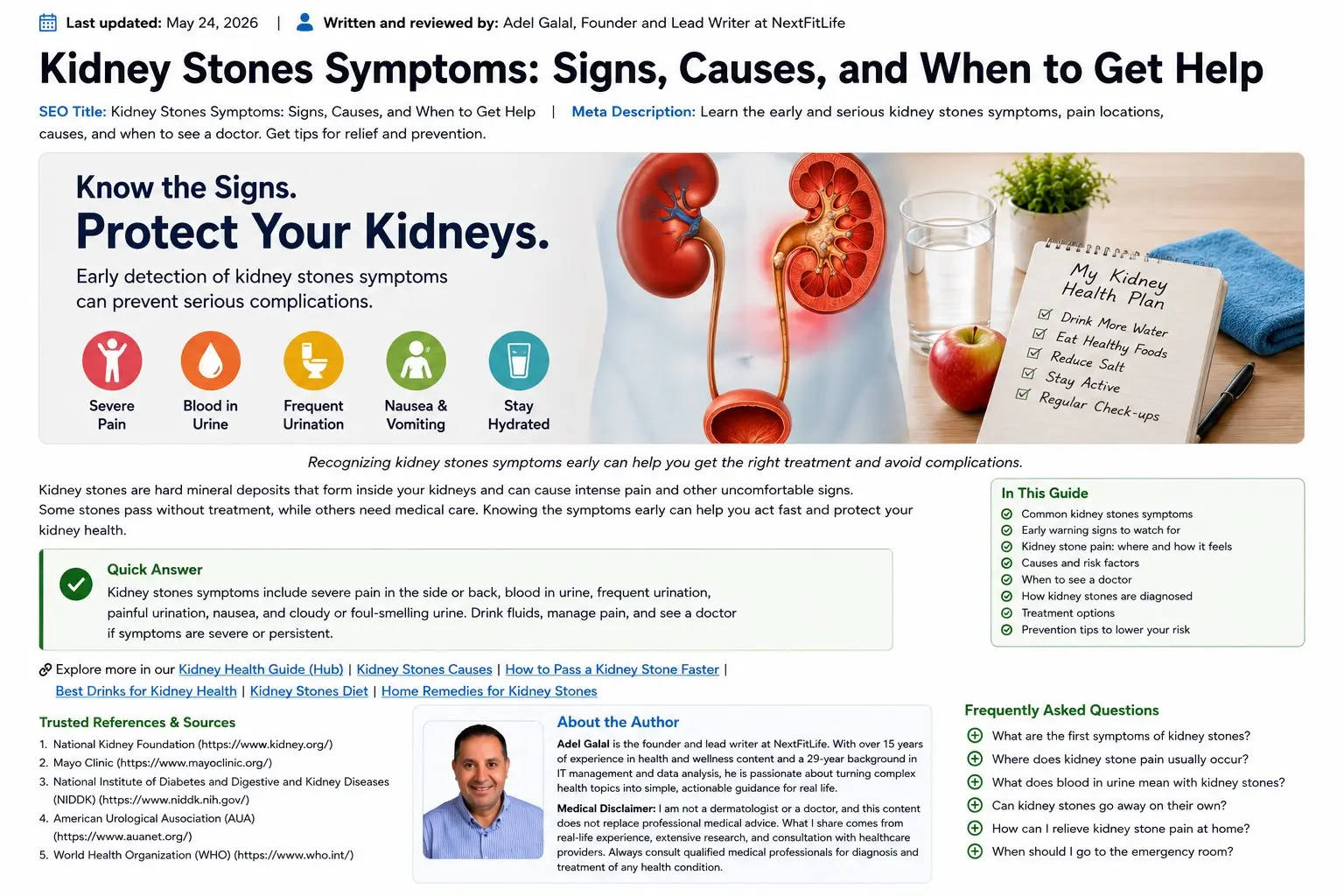
Quick answer: Common kidney stone symptoms include sharp pain in the side or back, pain that moves toward the lower abdomen or groin, blood in urine, burning during urination, frequent urination, nausea, vomiting, and cloudy or bad-smelling urine. Fever, chills, severe pain, or inability to urinate needs urgent medical care.
What are kidney stones?
Kidney stones are hard pieces of material that form from minerals and salts in urine.
They may be as small as a grain of sand. Some are much larger.
A stone may remain inside a kidney without causing a problem. Symptoms often begin when the stone moves into a ureter.
The ureters are narrow tubes that carry urine from the kidneys to the bladder.
A moving stone can irritate the urinary tract. It can also block the flow of urine. This may cause severe kidney stone pain.
Kidney Stones Symptoms at a Glance
| Symptom | What it may feel or look like |
|---|---|
| Flank pain | Sharp pain in the side or back below the ribs |
| Moving pain | Pain that travels toward the lower abdomen, pelvis, or groin |
| Blood in urine | Urine that looks pink, red, or brown |
| Painful urination | Burning, stinging, or discomfort while passing urine |
| Frequent urination | A constant or urgent need to use the bathroom |
| Nausea and vomiting | Feeling sick or vomiting during waves of pain |
| Cloudy urine | Urine that looks cloudy or smells unusual |
| Fever or chills | Possible signs of infection that need urgent care |
Where Does Kidney Stone Pain Start?
Kidney stone pain often begins in the side or back below the ribs.
This area is called the flank. The pain may affect only one side.
As the stone moves, the pain may spread toward:
- The lower abdomen
- The groin
- The lower pelvis
- The testicle in some men
- The vulva in some women
The location can change because the stone is moving through the urinary tract.
What Does the Pain Feel Like?
The pain may feel:
- Sharp
- Severe
- Cramping
- Hard to ignore
- Better and worse in waves
This wave pattern is called renal colic.
You may find it hard to sit still. Changing position may not fully relieve the pain.
A small stone can still cause strong pain. Size is not the only factor. The stone location and level of blockage also matter.
Can kidney stones cause blood in Urine?
Yes. Blood in urine is a common sign.
The urine may look:
- Pink
- Red
- Brown
Sometimes the blood is too small to see. A urine test may find it.
Blood may appear when the stone rubs against the lining of the urinary tract.
Blood in the urine can also have other causes. These include infection and other urinary conditions. Always ask a healthcare professional to check it.
Urinary Symptoms of Kidney Stones
A stone that moves closer to the bladder may cause more urinary symptoms.
These symptoms can include:
- Painful urination
- Burning while urinating
- Frequent urination
- A sudden urgent need to urinate
- Passing only a small amount of urine
- Trouble starting the urine flow
- Inability to pass urine
Inability to pass urine may mean there is a urinary tract blockage. Seek urgent medical care.
Can Kidney Stones Cause Nausea and Vomiting?
Yes. Severe pain may cause nausea and vomiting.
The nerves linked to the kidneys and digestive system can react to the intense pain.
Repeated vomiting may cause dehydration. It may also stop you from keeping fluids or medicine down.
Get medical care if vomiting continues or you cannot drink.
Can kidney stones cause fever and Chills?
Fever and chills may point to an infection.
A kidney stone may block urine. If infection is also present, the condition can become serious very quickly.
Urgent warning: Get urgent medical care if pain happens with fever, chills, confusion, severe weakness, repeated vomiting, or trouble passing urine.
Can You Have a Kidney Stone Without Symptoms?
Yes. Some stones are silent.
A silent stone may remain inside the kidney without blocking urine.
It may be found during an ultrasound, CT scan, or another test done for a different reason.
Symptoms often begin when the stone moves or blocks urine flow.
Early Kidney Stones Symptoms
Early symptoms may be mild.
They may include:
- A dull ache in the side or back
- Mild burning during urination
- More frequent urination
- Cloudy urine
- A strong urine smell
- A small amount of blood in urine
These symptoms can also happen with a urinary infection.
Do not try to diagnose a stone from symptoms alone.
Kidney Stones or a Urinary Infection?
| Sign | Kidney stone | Urinary infection |
|---|---|---|
| Side or back pain | Often sharp and may move toward the groin | May occur if the infection reaches a kidney |
| Burning urination | Possible | Common |
| Blood in urine | Common | Possible |
| Fever and chills | May mean an infection is also present | Possible |
A clinician may need to perform tests to identify the cause.
How Are Kidney Stones Diagnosed?
A proper kidney stone diagnosis may use your symptoms, health history, physical examination, laboratory tests, and imaging.
Urine Test
A urine test may look for:
- Blood
- Signs of infection
- Crystals
- Minerals that may form stones
Blood Test
A blood test may check:
- Kidney function
- Calcium levels
- Uric acid levels
- Signs of infection
Imaging
Imaging can show the stone size, location, and level of blockage.
Tests may include:
- A CT scan
- An ultrasound
- An X ray in selected cases
The test used may depend on your symptoms, age, pregnancy status, medical history, and local clinical practice.
What causes kidney stones?
Stones may form when urine contains high levels of stone forming substances and not enough fluid to dilute them.
Risk factors can include:
- Dehydration
- A past kidney stone
- A family history of kidney stones
- A high sodium intake
- Some medical conditions
- Obesity
- Gout
- Digestive disease or surgery
- Repeated urinary infections
- Some medicines and supplements
Main Kidney Stone Types
The main types include:
- Calcium oxalate stones
- Calcium phosphate stones
- Uric acid stones
- Struvite stones
- Cystine stones
The best treatment and prevention plan depends on the type.
How Are Kidney Stones Treated?
Kidney stone treatment depends on the stone size, location, symptoms, infection risk, and whether urine flow is blocked.
Treatment for a Small Stone
Some small stones pass without a procedure.
A healthcare professional may recommend:
- A suitable fluid intake
- Pain medicine
- Medicine for nausea
- An alpha blocker in selected cases
- A urine strainer to catch the stone
Do not force large amounts of water if you are vomiting, unable to urinate, or have been told to restrict fluids.
Try to catch the stone if your clinician asks you to do so. Testing it can help guide future prevention.
Treatment for a Larger or Blocked Stone
A stone may need a procedure when it:
- Is too large to pass
- Blocks urine flow
- Causes severe pain
- Causes infection
- Affects kidney function
Possible procedures include:
- Shock wave lithotripsy
- Ureteroscopy
- Percutaneous nephrolithotomy
- Placement of an ureteral stent
A urologist will choose the treatment that fits your condition.
Read How to Get Rid of Kidney Stones for more information.
Can You Treat Kidney Stone Pain at Home?
Some small stones may be managed at home after medical advice.
Your clinician may recommend pain medicine, fluids, rest, or medicine that helps the ureter relax.
Do not rely only on home care if you have:
- Fever
- Chills
- Severe pain
- Repeated vomiting
- Inability to urinate
- Only one working kidney
- Pregnancy
These situations need prompt medical assessment.
Does Lemon Water Dissolve Kidney Stones?
Lemon contains citrate.
Citrate may help reduce the formation of some stones.
Lemon water does not dissolve every existing kidney stone.
It should not replace testing, medicine, or a needed procedure.
Ask a healthcare professional before making large diet changes if you have kidney disease, diabetes, stomach problems, or fluid restrictions.
How to Help Prevent Kidney Stones
The right kidney stone prevention plan depends on the type of stone and your medical history.
Drink Enough Fluid
Drinking enough fluid can help keep urine diluted.
Water is usually the best choice.
The right amount varies. It depends on your body, climate, work, exercise, medications, and medical conditions.
Ask your clinician about fluid intake if you have heart failure, kidney failure, or another reason to limit fluids.
Reduce Sodium
A high sodium intake can increase the risk of some calcium stones.
Try to reduce:
- Salty snacks
- Processed meats
- Fast food
- Packaged soups
- Very salty sauces
Do Not Remove Calcium Without Advice
Many people think all calcium causes stones.
That is not correct for everyone.
Normal calcium from food may help bind oxalate inside the digestive system.
Ask a doctor or kidney dietitian before changing calcium intake or taking calcium supplements.
Use a Personal Diet Plan
There is no single kidney stone diet for every person.
Advice may change based on whether you form calcium, uric acid, struvite, or cystine stones.
A clinician may recommend changes in:
- Sodium
- Animal protein
- Calcium
- Oxalate
- Added sugar
- Fluid intake
When Should You Seek Urgent Medical Care?
Seek urgent medical care if you have:
- Severe pain that you cannot control
- Fever or chills
- Repeated vomiting
- Inability to urinate
- Only a very small amount of urine
- Confusion
- Severe weakness
- Symptoms during pregnancy
- Symptoms with only one functioning kidney
These signs may point to infection, blockage, dehydration, or another serious condition.
Conclusion
Kidney stones symptoms may include severe side or back pain, pain that moves toward the groin, blood in urine, burning urination, nausea, vomiting, and changes in urine flow.
Do not ignore fever, chills, inability to urinate, repeated vomiting, or severe pain.
Take action today. Write down your symptoms and contact a qualified healthcare professional for the correct diagnosis and treatment.
High Authority References
National Institute of Diabetes and Digestive and Kidney Diseases: Kidney Stones Symptoms and Causes
National Institute of Diabetes and Digestive and Kidney Diseases: Kidney Stone Diagnosis
National Institute of Diabetes and Digestive and Kidney Diseases: Kidney Stone Treatment
National Kidney Foundation: Kidney Stones
Mayo Clinic: Kidney Stones Symptoms and Causes
Explore More NextFitLife Health Guides
Continue with the NextFitLife Kidney Stones Guide for more information about causes, testing, treatment, food choices, and prevention.
About the Author

Adel Galal, Founder and Lead Writer at NextFitLife
Adel Galal is the founder and lead writer at NextFitLife.
He has more than 15 years of health and wellness writing experience. His work covers health, fitness, foods and nutrition, sleep, weight management, beauty, and healthy aging.
Adel also spent 29 years as an IT Manager for the Nestlé Egypt Region. His work involved data analysis, information systems, planning, structured review, and problem solving.
He uses these skills to compare trusted sources, identify important limits, and explain complex health topics in clear language.
Medical disclaimer: This content is for general educational purposes and does not replace professional medical advice, diagnosis, or treatment. Consult an appropriately qualified healthcare professional for personal medical concerns. This article explains published guidance and does not provide a personal clinical assessment. Always consult qualified medical professionals for diagnosis and treatment of any health condition.
Frequently Asked Questions
What Are the first symptoms of kidney stones?
Early symptoms may include a dull side or back ache, burning during urination, frequent urination, cloudy urine, or a small amount of blood in urine. Some stones cause no symptoms until they move.
Where does kidney stone pain start?
Kidney stone pain often begins in the side or back below the ribs. It may move toward the lower abdomen, pelvis, or groin.
Can kidney stones cause blood in Urine?
Yes. The urine may look pink, red, or brown. Blood may also be found only during a laboratory test.
Can kidney stones cause fever?
Fever or chills may mean an infection is present. Kidney stone pain with fever or chills needs urgent medical care.
Can a kidney stone pass without a Procedure?
Some small stones pass without a procedure. Treatment may include fluids, pain medicine, nausea medicine, or medicine that helps the ureter relax.
How do doctors confirm kidney stones?
Doctors may use your symptoms, medical history, a physical examination, urine tests, blood tests, ultrasound, CT scans, or other imaging.
When Is a kidney stone an Emergency?
Seek urgent help for fever, chills, inability to urinate, severe uncontrolled pain, repeated vomiting, confusion, or symptoms during pregnancy.
Does lemon water dissolve kidney stones?
Lemon contains citrate, which may help prevent some stones. It does not dissolve every existing stone and should not replace medical treatment.

Health & wellness writer with 30+ years of experience in nutrition, fitness, and healthy aging. Founder of NextFitLife.com — evidence-based health guidance.