
Published on: March 30, 2024
Updated on: October 26, 2026
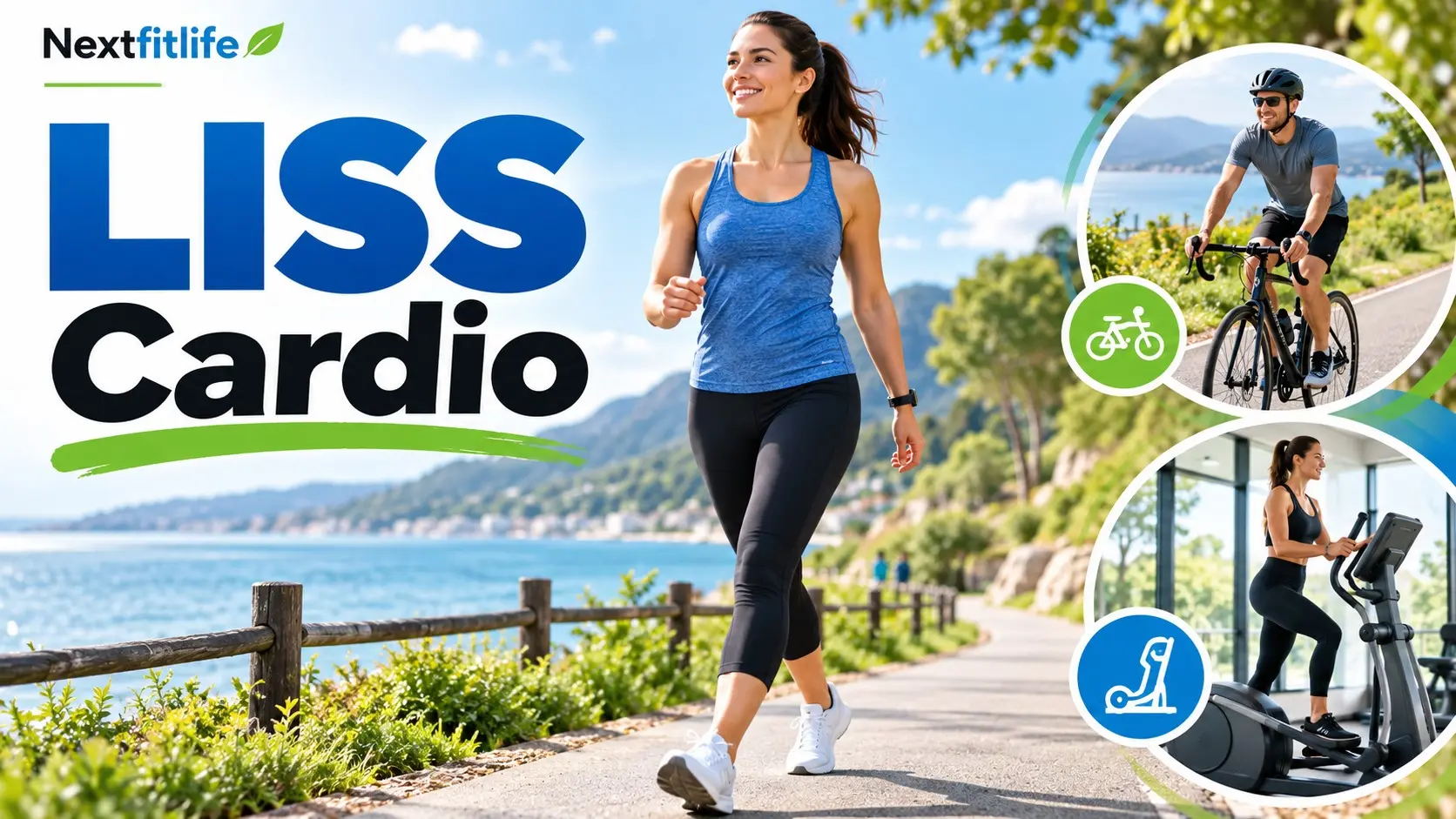
LISS cardio means doing continuous aerobic exercise at a steady, manageable effort instead of alternating hard bursts with rest. Brisk walking, easy cycling, swimming, and elliptical training can all fit when the effort stays controlled.
It can support fat loss, heart health, fitness, and weekly activity goals. But LISS is not a secret fat burning method, and it is not automatically better than HIIT. The bigger factors are how much activity you can repeat, your total energy balance, and whether the plan fits your life.
That is why LISS works well for many people. It is simple enough to repeat.
This article is for general information and education. It does not replace medical advice, diagnosis, or treatment.
Stop exercising and seek medical care for chest pain, fainting, severe or unusual shortness of breath, sudden weakness, a new irregular heartbeat with symptoms, or another serious reaction to exercise. If you have heart disease, significant lung disease, uncontrolled blood pressure, or another condition that affects exercise safety, ask a qualified healthcare professional what intensity is appropriate for you.
LISS Cardio: What Is the Quick Answer?
LISS cardio is steady aerobic exercise performed at an effort you can maintain for an extended period. A brisk walk, easy bike ride, swim, or elliptical session can work. Use the talk test: for moderate effort, you should be able to talk but not comfortably sing.
LISS can help increase weekly activity and energy use, which can support fat loss. It does not melt fat from one area, and low-intensity exercise is not automatically superior to harder cardio for long-term fat loss.
Table of Contents
- What LISS cardio means
- How hard LISS should feel
- 9 smart benefits
- LISS and fat loss
- The fat-burning zone explained
- LISS versus HIIT
- Best LISS activities
- Beginner LISS workout
- Four-week progression plan
- How long LISS should last
- How often to do LISS
- LISS with strength training
- LISS for active recovery
- Common mistakes
- Who should be careful
- Internal links and hubs
- About the author
- Frequently asked questions
- References and Sources
What Is LISS Cardio?
LISS stands for low intensity steady state.
It describes continuous aerobic exercise performed at a fairly steady effort rather than repeated bursts of very hard exercise.
Common examples include:
- Brisk walking
- Comfortable cycling
- Swimming at an easy steady pace
- Elliptical exercise
- Easy rowing
- Light hiking on gentle terrain
LISS is a fitness term rather than a strict medical exercise category. That matters because one person's “low intensity” walk can be another person's moderate workout.
Your fitness level changes the meaning of intensity.
For more aerobic training options, visit the NextFitLife Cardio and Endurance Hub.
How Hard Should LISS Cardio Feel?
Do not obsess over one exact heart rate number.
The simplest guide is the talk test.
CDC guidance describes moderate intensity exercise as an effort where you can talk but cannot comfortably sing. Vigorous exercise is harder, and you usually cannot say more than a few words without pausing for breath.
For many LISS sessions, aim for the easier end of that aerobic range.
You should feel:
- Warm
- Slightly more breathless than at rest
- In control
- Able to maintain your pace
- Able to speak in sentences
If you are gasping, sprinting, or repeatedly needing to slow down, you have moved away from the steady nature of LISS.
Should You Use Heart Rate for LISS?
You can, but it is optional.
Heart rate watches are useful tools, not perfect judges of exercise intensity.
ACSM guidance places moderate aerobic exercise around roughly 65% to 75% of estimated maximum heart rate, while perceived effort and the talk test are also accepted ways to judge intensity.
Maximum heart rate formulas are estimates. Medicines, temperature, stress, fitness, sleep, caffeine, and individual biology can all change your heart rate response.
If you take a medicine that affects heart rate, such as some beta blockers, use clinician guidance and perceived effort instead of blindly chasing a percentage.
9 Smart Benefits of LISS Cardio
1. It Makes Weekly Cardio Easier to Accumulate
Adults are advised to get at least 150 minutes of moderate-intensity aerobic activity each week, or 75 minutes of vigorous activity, or an equivalent mix.
LISS-style sessions can make that weekly total easier to build because the effort is manageable.
You do not need to complete all 150 minutes at once.
Thirty minutes on five days is one simple example.
2. It Can Support Fat Loss
Aerobic exercise uses energy.
A large systematic review of 116 randomized trials involving 6,880 adults with overweight or obesity found that increasing aerobic exercise was associated with reductions in body weight, waist size, body fat percentage, and visceral fat.
The effect grew as weekly aerobic exercise increased, with benefits seen through higher weekly exercise volumes.
This does not mean cardio alone guarantees weight loss.
Fat loss still depends heavily on long term energy balance.
3. It Is Easier to Repeat Than All Out Training
An exercise plan only works when you can keep doing it.
LISS does not demand repeated maximal efforts, long recovery breaks, or complex interval timing.
For someone who dislikes hard intervals, a steady walk or bike ride may simply be easier to repeat week after week.
That supports exercise adherence, which matters more than choosing a fashionable workout that you quit after two weeks.
4. It Builds Aerobic Fitness
Regular steady-state cardio challenges the heart, lungs, and working muscles to sustain activity.
Over time, regular aerobic activity can improve cardiorespiratory fitness and your ability to perform daily tasks with less effort.
Walking faster without becoming as breathless is one simple sign that your aerobic fitness may be improving.
5. It Works Well for Beginners
High-intensity exercise is not required to begin improving fitness.
A new exerciser can start with short walking sessions, then gradually increase time or pace.
CDC guidance is clear that some activity is better than none.
If you are starting from a low activity level, ten or fifteen minutes can be a useful first step.
Visit the Fitness for Beginners Hub if you are returning after a long break.
6. It Can Be Low Impact
Brisk walking, cycling, swimming, and elliptical training can all provide aerobic exercise without repeated jumping.
That makes LISS useful for people who prefer lower impact training.
Low impact does not mean no impact or no injury risk. Walking can still irritate a sore foot, cycling can aggravate a poorly fitted knee position, and swimming can bother a sensitive shoulder.
Choose an activity your body tolerates.
7. It Can Fit Beside Strength Training
Strength and cardio do different jobs.
A weekly plan can include both.
For example:
- Two or three strength sessions
- Several easy or moderate aerobic sessions
- Walking on recovery days
This gives you cardiovascular work without replacing the resistance training needed to build and maintain strength.
Use the Strength Training Hub to build the strength side of the plan.
8. It Can Work as Easy Movement Between Hard Sessions
A relaxed walk can be a pleasant way to move on a day when you do not want another demanding workout.
This is sometimes called active recovery.
Do not turn recovery into another hard training session.
If your legs are exhausted from strength work, an easy walk may make more sense than a steep hour-long hike.
9. It Requires Very Little Equipment
Walking is the obvious example.
You need comfortable shoes and a safe place to walk.
You do not need a heart rate chest strap, expensive treadmill, complicated app, or special supplement.
Simple training is easier to start.
Does LISS Cardio Burn Fat?
Yes, your body uses fat as one fuel source during aerobic exercise.
But this fact is commonly turned into a misleading promise.
At lower exercise intensities, a greater percentage of the energy used during exercise can come from fat. At harder intensities, the body relies more heavily on carbohydrate.
That does not mean low-intensity cardio automatically causes more body fat loss.
Long-term fat loss depends on the full energy picture across days and weeks.
A systematic review comparing interval training with moderate-intensity continuous training found very small differences in long-term changes in body fat and fat-free mass between the two approaches.
So do not choose LISS because someone says it “targets stubborn fat.”
Choose it because it is an aerobic activity you can perform consistently.
The Fat Burning Zone Is Easy to Misunderstand
You have probably seen cardio machines display a “fat burn” zone.
The label makes it sound like staying inside one heart rate range guarantees more fat loss.
It does not.
Lower intensity exercise does use a larger proportion of fat for fuel during the session. Higher intensity exercise can use more total energy per minute.
Neither point alone tells you how much body fat you will lose over the next month.
That outcome depends on:
- Total activity
- Food intake
- Body size
- Training duration
- Exercise intensity
- Sleep
- Recovery
- Consistency
Use exercise intensity to guide training, not to hunt for a magical metabolic zone.
LISS Cardio vs HIIT: Which Is Better?
Neither wins every category.
| Factor | LISS Cardio | HIIT |
|---|---|---|
| Effort | Steady and manageable | Repeated hard intervals |
| Conversation | Usually possible | Very limited during hard intervals |
| Session length | Usually longer | Usually shorter |
| Recovery demand | Usually lower when truly easy or moderate | Usually higher |
| Time efficiency | Lower | Higher |
| Beginner access | High | Needs more careful progression |
| Fat loss | Can contribute | Can contribute |
If you enjoy hard intervals and have limited time, HIIT can be useful.
If you prefer steady exercise that is easier to repeat, LISS can be useful.
You can also use both.
Read our HIIT Workouts Guide for the high intensity side of the comparison.
What Are the Best LISS Cardio Activities?
Brisk Walking
Brisk walking is hard to beat for simplicity.
Increase the pace enough that your breathing becomes noticeably faster while you can still talk.
For a complete progression plan, see our Walking for Weight Loss Guide.
Cycling
Cycling makes intensity easy to adjust.
Use enough resistance to feel like you are exercising, but avoid turning every climb into a hard interval.
Swimming
Swimming can provide steady aerobic training with little impact through the legs.
Use a stroke and pace you can maintain safely.
Elliptical Training
The elliptical is useful when you want a predictable steady session indoors.
Adjust resistance or incline gradually.
Easy Rowing
Rowing uses more of the body, but technique matters.
Keep the stroke smooth rather than racing the monitor.
Gentle Hiking
Easy hiking can work when terrain does not push you into repeated hard climbs.
A steep hike can quickly move from LISS into vigorous exercise.
A Simple LISS Cardio Workout for Beginners
25 Minute Beginner Walking Session
Minutes 0 to 5: Easy walk to warm up.
Minutes 5 to 20: Increase to a steady pace where you can talk in sentences but feel clearly warmer and more active.
Minutes 20 to 25: Slow down gradually.
If 25 minutes is too much, start with 10 or 15.
If it feels easy, add time before chasing speed.
A 4 Week LISS Cardio Progression Plan
| Week | Sessions | Duration | Goal |
|---|---|---|---|
| 1 | 3 | 15 to 20 minutes | Find a comfortable steady pace |
| 2 | 3 | 20 to 25 minutes | Keep the effort even |
| 3 | 3 to 4 | 25 to 30 minutes | Build weekly volume |
| 4 | 3 to 4 | 30 to 40 minutes | Maintain a repeatable routine |
This is an example, not a requirement.
If you are already fit, you may start with more. If you are new to exercise, you may need less.
How Long Should LISS Cardio Last?
There is no magic 45 minute threshold.
Your body does not suddenly begin burning fat at minute 46.
A useful session might last:
- 10 to 20 minutes for someone just starting
- 20 to 40 minutes for a regular easy or moderate session
- Longer when fitness, time, and recovery allow
The weekly total matters more than forcing every workout to reach a fixed duration.
Current public health guidance allows aerobic activity to be spread throughout the week.
How Often Should You Do LISS Cardio?
Frequency depends on how hard the sessions actually are.
A gentle walk can be repeated more often than a demanding uphill cycling session.
For many people, three to five steady aerobic sessions each week can fit comfortably around strength training and daily life.
That is not a universal prescription.
Your total activity, recovery, health, and fitness level matter.
Does LISS Cardio Help With Weight Loss?
It can support weight loss by increasing energy expenditure.
But exercise does not cancel unlimited food intake.
A useful fat loss plan combines activity with a sustainable eating pattern that creates an appropriate calorie deficit over time.
Do not punish yourself with extra cardio after a large meal.
Do not try to earn food with exercise.
Instead, build a weekly routine you can maintain.
Our Best Healthy Way to Lose Weight Guide explains the broader food, activity, sleep, and strength picture.
Does LISS Reduce Belly Fat?
LISS cannot choose where your body loses fat.
No cardio method can specifically target belly fat while leaving fat elsewhere untouched.
Aerobic exercise can help reduce overall and visceral fat as part of a consistent program.
The large 2024 systematic review of aerobic exercise found reductions in waist circumference, body fat, visceral fat, and subcutaneous fat as weekly aerobic activity increased.
For a full explanation, see the Belly Fat Loss Guide.
Should You Do LISS Before or After Strength Training?
If strength is your main goal, do your important strength work while you are fresh.
Easy cardio can come afterward or on another day.
If aerobic fitness is your main priority, you may choose cardio first.
The answer depends on the training goal rather than one universal rule.
A light walk after strength training is very different from an hour of demanding cycling.
Keep the total workload sensible.
Is LISS Good for Active Recovery?
Easy movement can fit on a recovery day.
The word active recovery should still include the word recovery.
A gentle walk, relaxed bike ride, or easy swim may feel good between harder sessions.
If the session leaves your legs more exhausted, it was probably not recovery work.
Use the Recovery and Injury Prevention Hub for broader recovery guidance.
Can Beginners Do LISS Cardio?
Yes.
That is one of its strengths.
Start from your current level rather than copying someone else's treadmill speed.
If a brisk walk feels hard, begin with slower walking.
If ten minutes is enough, stop at ten minutes.
Build gradually.
Some activity is better than none, and the habit is easier to grow when your first week does not leave you exhausted.
Is LISS Cardio Joint Friendly?
Some forms can be lower impact than running or jumping.
Good options can include:
- Walking on level ground
- Stationary cycling
- Elliptical training
- Swimming
But “low impact” is not the same as “safe for every joint problem.”
If cycling hurts your knee or walking aggravates a foot injury, choose another activity and get appropriate assessment.
Can You Do LISS Every Day?
Some people can perform easy walking every day.
That does not mean every LISS session should be long or challenging.
Watch the total workload.
Reduce training if you develop:
- Persistent joint pain
- Increasing fatigue
- Declining performance
- Sleep disruption
- Pain that changes your walking or cycling form
Exercise should build capacity, not slowly grind it down.
Common LISS Cardio Mistakes
Treating LISS as a Magic Fat Burning Zone
Your body uses fat during low intensity exercise, but that does not make LISS uniquely superior for body fat loss.
Going So Easy That You Barely Exercise
If your goal is moderate aerobic training, the effort needs to raise your breathing and heart rate.
A slow stroll can still be useful movement, but it may not count as moderate exercise for you.
Going Too Hard
If you are gasping and cannot talk, you are no longer doing the easy steady session you planned.
Believing You Must Exercise for 45 to 60 Minutes
Short sessions count.
Build the weekly habit first.
Only Doing Cardio
Adults also benefit from muscle strengthening work.
Current public health guidance recommends strengthening the major muscle groups on at least two days each week.
Using Exercise to Compensate for Food
That creates an unhealthy relationship with training and makes weight management harder to sustain.
Ignoring Pain
Steady cardio should not require you to push through sharp or worsening pain.
A Balanced Weekly LISS Plan
| Day | Example Activity | Purpose |
|---|---|---|
| Monday | Strength training | Strength and muscle |
| Tuesday | 30 minute brisk walk | Steady aerobic work |
| Wednesday | Easy walk or rest | Recovery |
| Thursday | Strength training | Strength and muscle |
| Friday | 30 to 40 minute easy cycling | Aerobic volume |
| Saturday | Longer walk or swim | Enjoyable steady activity |
| Sunday | Rest or gentle walk | Recovery |
This is only an example.
You can move the days around to match your schedule.
How Do You Know LISS Is Working?
Do not judge progress only by calories on a watch.
Useful signs include:
- You can walk farther at the same effort.
- The same route feels easier.
- You can use a slightly faster pace while still passing the talk test.
- You recover more quickly after exercise.
- Your weekly activity becomes more consistent.
- Your resting or exercise heart rate may change as fitness improves.
If fat loss is the goal, also look at longer term body weight or waist trends rather than expecting one workout to change the scale.
Who Should Be Careful With LISS Cardio?
Ask for individual medical advice before increasing exercise if you have:
- Known heart disease
- Significant lung disease
- Uncontrolled blood pressure
- Recent surgery
- A serious joint or bone condition
- Frequent dizziness or fainting
- Exercise related chest pain
- A medical condition that limits safe physical activity
Pregnancy does not automatically mean you must avoid aerobic exercise, but your plan should match your pregnancy, health, and clinician guidance.
Internal Links and Hub
Continue with these related NextFitLife guides:
- NextFitLife Fitness Hub for cardio, strength, beginner workouts, recovery, and home training.
- Cardio and Endurance Hub for walking, running, aerobic fitness, and endurance training.
- HIIT Workouts Guide for high intensity interval training and its differences from steady cardio.
- Strength Training Hub for resistance training and muscle building.
- Recovery and Injury Prevention Hub for soreness, rest, pain, and safer progression.
- Walking for Weight Loss Guide for a structured walking approach.
- Belly Fat Loss Guide for realistic visceral and total fat loss strategies.
- Best Healthy Way to Lose Weight for nutrition, movement, strength, sleep, and sustainable weight management.
- Weight Loss Options for the broader range of evidence based weight management approaches.
Conclusion
LISS cardio works best when you stop treating it as a secret fat burning trick and use it for what it really is: simple, repeatable aerobic exercise.
Walk briskly, ride a bike, swim, row, or use an elliptical at an effort you can sustain. Build the weekly minutes gradually, keep strength training in your routine, and use nutrition rather than endless cardio to manage the bigger energy balance picture.
Your next step: choose one LISS activity you enjoy and do 20 to 30 minutes this week at a pace where you can still talk. Repeat it three times before deciding whether you need anything more complicated.
About the Author
Adel Galal is a father of four (three sons and a daughter) and a grandfather of four, with 33 years of hands-on parenting experience. He is the founder of Parnthub.com, based in Cairo, Egypt, where he shares practical guidance on feeding, development and family life from newborns to teenagers. Adel is not a medical professional; health articles cite trusted sources and are for general information only.
Learn more on the NextFitLife About Us page.
Frequently Asked Questions
What is LISS cardio?
LISS cardio means low intensity steady state cardio. It is continuous aerobic exercise performed at a steady, manageable effort without repeated hard intervals and recovery periods.
Does LISS cardio burn fat?
Yes, your body uses fat as one fuel source during steady aerobic exercise. However, this does not make LISS uniquely better for body fat loss. Long term fat loss depends on total activity, food intake, energy balance, and consistency.
Is LISS cardio good for weight loss?
LISS can support weight loss by increasing physical activity and energy expenditure. It works best as part of a sustainable plan that also includes appropriate nutrition and strength training.
How long should a LISS workout be?
There is no fixed duration. Beginners may start with 10 to 20 minutes, while regular sessions may last 20 to 40 minutes or longer. Weekly activity volume matters more than reaching a magic session length.
How many times per week should I do LISS cardio?
Many people can use steady aerobic exercise three to five times per week, but the right frequency depends on session intensity, other training, health, and recovery. Easy walking can often be repeated more frequently.
What heart rate should I use for LISS?
There is no single heart rate that defines LISS for everyone. Moderate aerobic exercise is often around 65% to 75% of estimated maximum heart rate, but the talk test and perceived effort can also guide intensity.
Is walking considered LISS cardio?
Yes, walking can be LISS when performed continuously at a steady effort. For it to count as moderate intensity exercise for public health guidelines, the pace needs to be challenging enough for your fitness level.
Is LISS better than HIIT for fat loss?
No clear long term fat loss advantage makes LISS universally better than HIIT. HIIT is more time efficient, while LISS is easier to sustain and recover from for many people. Both can support fat loss.
Can beginners do LISS cardio?
Yes. Beginners can start with a short walk, easy bike ride, or another manageable activity and gradually increase duration as fitness improves.
Can I do LISS every day?
Easy walking can be appropriate every day for many healthy adults, but longer or more demanding sessions still create fatigue. Adjust frequency according to your total training, soreness, pain, and recovery.
Does LISS reduce belly fat?
LISS cannot target belly fat directly. Regular aerobic exercise can contribute to reductions in overall and visceral fat when combined with an appropriate long term energy balance.
Should I do LISS before or after weights?
If strength is your main goal, perform your important strength work while fresh and place easy cardio afterward or on another day. If aerobic fitness is your main goal, you may choose cardio first.
References and Sources
- Centers for Disease Control and Prevention. Adult Activity: An Overview.
https://www.cdc.gov/physical-activity-basics/guidelines/adults.html - Centers for Disease Control and Prevention. How to Measure Physical Activity Intensity.
https://www.cdc.gov/physical-activity-basics/measuring/index.html - American College of Sports Medicine. Tips for Monitoring Aerobic Exercise Intensity.
https://www.acsm.org/docs/default-source/files-for-resource-library/exercise-intensity-infographic.pdf - JAMA Network Open / PubMed. Aerobic Exercise and Weight Loss in Adults: A Systematic Review and Dose Response Meta Analysis.
https://pubmed.ncbi.nlm.nih.gov/39724371/ - Sports Medicine / PubMed. Slow and Steady, or Hard and Fast? A Systematic Review and Meta Analysis Comparing Interval Training and Moderate Intensity Continuous Training.
https://pubmed.ncbi.nlm.nih.gov/34822354/ - Centers for Disease Control and Prevention. What Counts as Physical Activity for Adults.
https://www.cdc.gov/physical-activity-basics/adding-adults/what-counts.html

Health & wellness writer with 30+ years of experience in nutrition, fitness, and healthy aging. Founder of NextFitLife.com — evidence-based health guidance.

