Published: Jun 19, 2023
Last updated: July 2026
Reviewed for accuracy: Editorially reviewed and fact-checked against heart-health and nutrition sources
Reading time: 15–20 minutes
A low cholesterol diet plan does not need to be hard. You do not need strange foods. You do not need a strict cleanse. You do not need to stop all fat.
The goal is simple: eat less saturated fat, avoid trans fat, eat more fibre, choose more whole foods, and build meals that support your heart.
This guide is NHS-aligned, not NHS-approved. That means it follows public guidance from the NHS and other trusted heart-health sources, but it has not been reviewed or approved by the NHS.
High cholesterol usually has no obvious symptoms. You can feel normal and still have high cholesterol. A blood test is the best way to know your numbers.
For more heart-health help, visit our Heart & Cardiovascular Health Hub. You can also explore our Health Hub, Nutrition & Vitamins Hub, and Medical Tests & Screenings Hub.
Medical note: This article is for education only. It does not diagnose or treat high cholesterol. Do not stop or change cholesterol medicine without medical advice. If you have chest pain, trouble breathing, face drooping, arm weakness, trouble speaking, sudden vision change, or severe symptoms, seek urgent medical care.
Quick Answer: What Is a Low Cholesterol Diet Plan?
A low cholesterol diet plan is a heart-friendly way of eating. It helps lower LDL cholesterol, often called “bad” cholesterol.
The main steps are:
- Eat less saturated fat.
- Avoid trans fat.
- Eat more soluble fibre.
- Choose unsaturated fats.
- Eat more vegetables and fruit.
- Choose oats, beans, lentils, and whole grains.
- Eat fish, beans, tofu, chicken, or lean protein.
- Use olive oil or rapeseed oil instead of butter.
- Limit processed meat, fried food, cakes, biscuits, and full-fat dairy.
- Take cholesterol medicine if your doctor prescribed it.
The best diet is not perfect. It is one you can repeat.
Important: High Cholesterol Usually Has No Symptoms
You cannot always feel high cholesterol.
You may not have:
- Pain
- Tiredness
- Eye signs
- Face signs
- Foot symptoms
- Chest symptoms
A lipid blood test can check your cholesterol. It usually includes total cholesterol, LDL, HDL, and triglycerides.
For a full guide, read High Cholesterol: Symptoms, Causes, Treatment, and Warning Signs.
What to Eat on a Low Cholesterol Diet
Build your meals around simple foods.
Eat More of These
- Oats
- Beans
- Lentils
- Chickpeas
- Vegetables
- Fruit
- Whole grains
- Barley
- Brown rice
- Whole-grain bread
- Potatoes with skin
- Fish
- Chicken without skin
- Tofu
- Low-fat yogurt
- Unsweetened soy milk
- Nuts and seeds
- Olive oil
- Rapeseed oil
- Avocado
Eat Less of These
- Butter
- Ghee
- Lard
- Cream
- Full-fat cheese
- Fatty meat
- Sausages
- Bacon
- Processed meat
- Fried food
- Cakes
- Biscuits
- Pastry
- Coconut oil
- Palm oil
- Sugary drinks
You do not need to ban every treat. But daily habits matter most.
Why Saturated Fat Matters?
Saturated fat can raise LDL cholesterol in many people. LDL can build up in arteries and raise the risk of heart disease and stroke.
Foods high in saturated fat include:
- Butter
- Ghee
- Lard
- Fatty cuts of meat
- Processed meat
- Full-fat milk
- Cream
- Cheese
- Cakes
- Biscuits
- Pastry
- Coconut oil
- Palm oil
NHS guidance says the average man should have no more than 30g of saturated fat per day, and the average woman should have no more than 20g per day.
Do not focus only on the number. Focus on swaps.
Best Saturated Fat Swaps
Small swaps can help a lot.
| Instead of | Choose |
|---|---|
| Butter | Olive oil or rapeseed oil |
| Ghee | Vegetable oil spread or olive oil |
| Full-fat milk | Semi-skimmed, skimmed, or unsweetened fortified soy milk |
| Creamy sauce | Tomato sauce or yogurt-based sauce |
| Fatty meat | Fish, chicken, beans, lentils, or tofu |
| Sausages and bacon | Eggs, beans, fish, or lean protein |
| Crisps | Unsalted nuts, fruit, or popcorn |
| Cake or pastry daily | Fruit, yogurt, oats, or a smaller treat less often |
Soluble Fibre: A Key Cholesterol Helper
Soluble fibre can help lower LDL cholesterol. It works in the gut. It helps reduce how much cholesterol is absorbed.
Excellent sources include:
- Oats
- Barley
- Beans
- Lentils
- Chickpeas
- Apples
- Pears
- Carrots
- Sweet potatoes
- Ground flaxseed
- Psyllium, if safe for you
Add fibre slowly. Drink water. Too much fibre too fast can cause gas and bloating.
If you get gas often, read Stomach Gurgling and Gas: Causes, Quick Fixes, and When to Worry.
Simple Low Cholesterol Plate Method
Use this plate for lunch and dinner.
- Half plate: vegetables or salad.
- One quarter: protein like fish, chicken, beans, lentils, tofu, eggs, or yogurt.
- One quarter: whole grains or starchy foods like oats, brown rice, potatoes, barley, or whole-grain bread.
- Small amount of healthy fat: olive oil, rapeseed oil, nuts, seeds, or avocado.
This plate can help with cholesterol, blood sugar, weight, and blood pressure.
Low Cholesterol Breakfast Ideas
Breakfast can be simple.
Good Choices
- Oats with berries and ground flaxseed
- Whole-grain toast with avocado and tomato
- Low-fat yogurt with fruit and oats
- Boiled eggs with whole-grain toast and vegetables
- Beans on whole-grain toast
- Smoothie with oats, berries, and unsweetened soy milk
- Whole-grain cereal with low-fat milk
Limit These
- Butter-heavy toast
- Fried breakfast every day
- Sausages and bacon often
- Pastries
- Sugary cereal
- Full-fat creamy coffee drinks
Low Cholesterol Lunch Ideas
- Lentil soup with whole-grain bread
- Tuna salad with beans and vegetables
- Chicken and avocado whole-grain wrap
- Chickpea salad bowl
- Bean chili with brown rice
- Vegetable omelette with salad
- Tofu stir-fry with vegetables
- Turkey or hummus sandwich on whole-grain bread
Keep sauces light. Use olive oil, lemon, herbs, yogurt, mustard, or vinegar instead of creamy sauces.
Low Cholesterol Dinner Ideas
- Grilled fish with potatoes and vegetables
- Chicken stew with beans and salad
- Lentil curry with brown rice
- Vegetable pasta with tomato sauce
- Salmon with barley and greens
- Tofu and vegetable stir-fry
- Bean soup with salad
- Lean turkey chilli with vegetables
Try to cook by baking, grilling, steaming, boiling, or air-frying instead of deep-frying.
Low Cholesterol Snacks
Snacks can help if they are simple.
- Fruit
- Carrot sticks
- Cucumber sticks
- Low-fat yogurt
- Unsalted nuts
- Oatcakes
- Whole-grain crackers
- Hummus
- Popcorn without lots of butter
- Boiled egg
Watch portions with nuts. They are healthy but high in calories.
Best Drinks for a Low Cholesterol Diet
Drinks can support your plan. They cannot replace the plan.
Good choices include:
- Water
- Unsweetened tea
- Green tea
- Paper-filtered coffee
- Oat smoothie with real oats
- Unsweetened soy milk
- Berry smoothie with fibre
- Low-fat milk if tolerated
Limit:
- Soda
- Sweet tea
- Energy drinks
- Full-fat milkshakes
- Butter coffee
- Creamy coffee drinks
- Heavy alcohol
- Juice cleanses
For a full drink guide, read Cholesterol-Lowering Drinks: Best Natural Drinks for Heart Health.
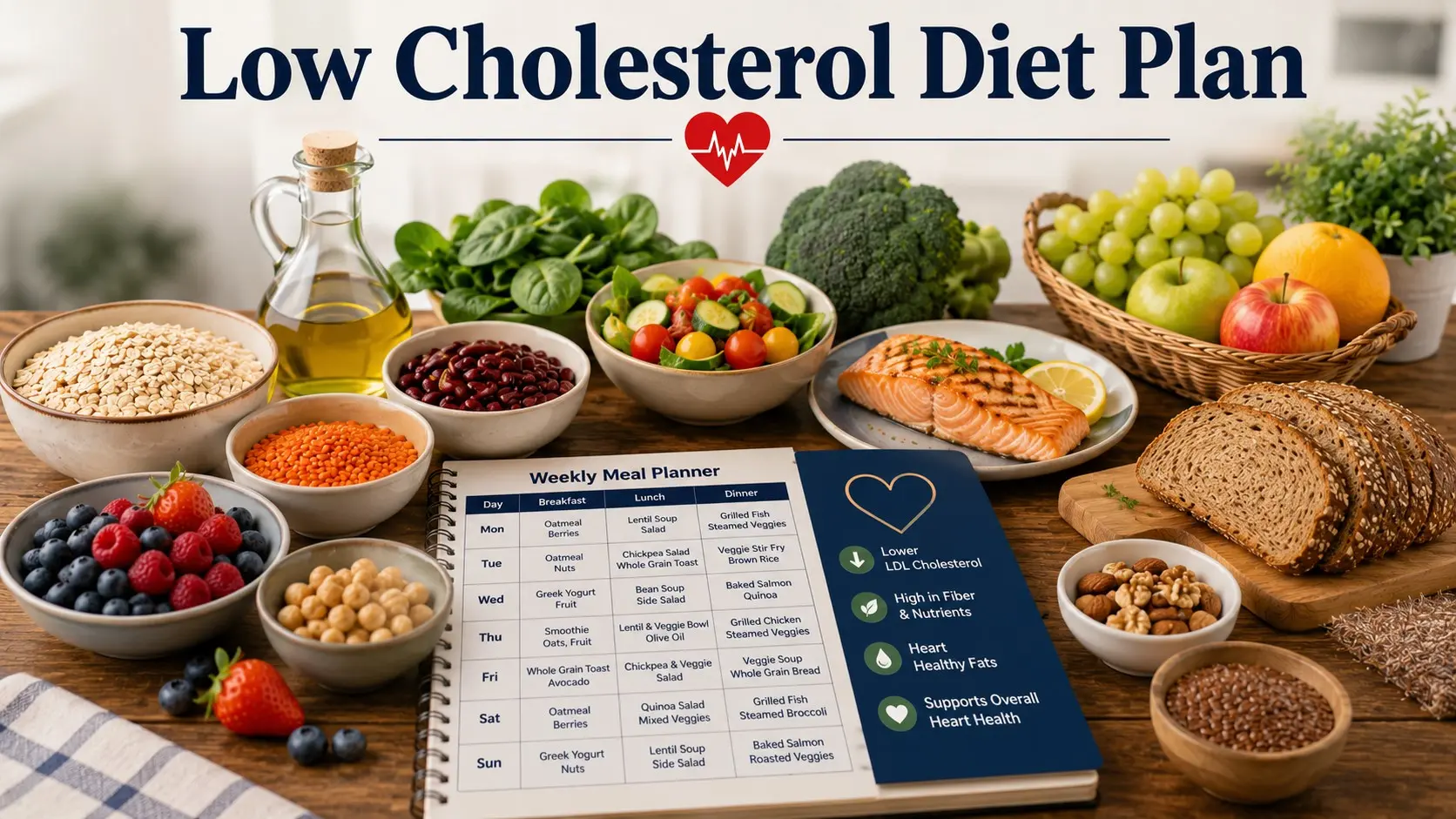
7-Day Low Cholesterol Diet Plan
This plan is a simple guide. Change meals based on your culture, budget, allergies, medical needs, and taste.
Day 1
- Breakfast: Oats with berries and ground flaxseed.
- Lunch: Lentil soup with whole-grain bread.
- Dinner: Grilled fish with potatoes and vegetables.
- Snack: Apple with a small handful of unsalted nuts.
Day 2
- Breakfast: Low-fat yogurt with fruit and oats.
- Lunch: Chickpea salad with olive oil and lemon.
- Dinner: Chicken and vegetable stew with brown rice.
- Snack: Carrot sticks with hummus.
Day 3
- Breakfast: Whole-grain toast with avocado and tomato.
- Lunch: Tuna and bean salad.
- Dinner: Lentil curry with vegetables.
- Snack: Pear or orange.
Day 4
- Breakfast: Oat smoothie with berries and unsweetened soy milk.
- Lunch: Hummus and vegetable whole-grain wrap.
- Dinner: Tofu stir-fry with vegetables and brown rice.
- Snack: Low-fat yogurt.
Day 5
- Breakfast: Boiled eggs with whole-grain toast and tomatoes.
- Lunch: Bean chili with salad.
- Dinner: Salmon with barley and greens.
- Snack: Unsalted nuts and fruit.
Day 6
- Breakfast: Whole-grain cereal with low-fat milk and fruit.
- Lunch: Vegetable soup with beans.
- Dinner: Turkey or bean burgers with salad and baked potatoes.
- Snack: Oatcakes with hummus.
Day 7
- Breakfast: Oats with apple, cinnamon, and seeds.
- Lunch: Chicken salad bowl with whole grains.
- Dinner: Tomato-based vegetable pasta with side salad.
- Snack: Fruit and low-fat yogurt.
Low Cholesterol Shopping List
Vegetables
- Spinach
- Broccoli
- Carrots
- Tomatoes
- Cucumber
- Peppers
- Onions
- Leafy greens
- Frozen mixed vegetables
Fruit
- Apples
- Pears
- Berries
- Oranges
- Bananas
- Grapes
Protein
- Beans
- Lentils
- Chickpeas
- Fish
- Chicken
- Eggs
- Tofu
- Low-fat yogurt
Grains and Starches
- Oats
- Barley
- Brown rice
- Whole-grain bread
- Whole-grain pasta
- Potatoes
- Sweet potatoes
Healthy Fats
- Olive oil
- Rapeseed oil
- Unsalted nuts
- Seeds
- Avocado
Foods to Limit: Simple List
Try to limit these to most days:
- Butter
- Ghee
- Lard
- Cream
- Full-fat cheese
- Fatty meat
- Processed meat
- Sausages
- Bacon
- Fried food
- Pastry
- Cakes
- Biscuits
- Coconut oil
- Palm oil
- Sugary drinks
- Heavy alcohol
What About Eggs?
Eggs can fit into many heart-healthy diets. The bigger issue for many people is not the egg. It is what comes with it.
For example:
- Egg with vegetables and whole-grain toast is a better choice.
- Eggs with bacon, sausage, butter, and fried bread every day is not a good pattern.
If you have diabetes, heart disease, or very high cholesterol, ask your doctor or dietitian what is right for you.
What About Cheese?
Cheese can be high in saturated fat and salt. You do not always need to remove it, but portions matter.
Try:
- Use smaller amounts.
- Choose lower-fat cheese sometimes.
- Use strong-tasting cheese so you need less.
- Do not add cheese to every meal.
- Try hummus, avocado, or yogurt-based dips instead.
What About Red Meat?
Fatty red meat and processed meat can raise saturated fat intake.
Better choices include:
- Fish
- Chicken without skin
- Beans
- Lentils
- Chickpeas
- Tofu
- Lean meat in smaller portions
You do not need to become a vegetarian unless you want to. But more plant-based meals can help.
What About Plant Sterols and Stanols?
Plant sterols and stanols can help lower cholesterol for some people. They are added to some spreads, yogurts, and drinks.
They are not a replacement for statins or prescribed medicine. They should be used as part of a healthy diet.
They are usually meant for people with high cholesterol. They are not usually recommended for pregnant or breastfeeding women or young children unless a healthcare professional advises it.
Ask your doctor or dietitian before using them if you take cholesterol medicine or have a medical condition.
What About Statins?
Some people need cholesterol medicine. Statins are common. They help lower LDL cholesterol and reduce heart risk in many people.
Needing medicine does not mean you failed. It means your body needs more support.
Do not stop statins because your diet improves. Better numbers may mean the full plan is working.
Low Cholesterol Diet and Blood Pressure
A heart-friendly diet can also help blood pressure when it is low in salt and rich in fruits, vegetables, beans, and whole grains.
If you have high blood pressure, too, read:
- Lower Blood Pressure: Safe Steps, Fast Tips, Symptoms, and Long-Term Control
- What Causes High Blood Pressure and How to Prevent It
How to Make the Diet Easier
Do not change everything at once.
Start with one or two habits:
- Eat oats 3 times this week.
- Swap butter for olive oil.
- Add beans or lentils twice this week.
- Eat fish once or twice this week.
- Replace soda with water.
- Walk after dinner.
- Choose whole-grain bread.
- Use less cheese.
- Cook at home one extra day.
Small steps work when you repeat them.
Common Mistakes
- Eating “low cholesterol” food but still eating too much saturated fat.
- Drinking sugary smoothies every day.
- Using coconut oil because it sounds healthy.
- Eating too little fibre.
- Removing all fat instead of choosing better fats.
- Stopping medicine without medical advice.
- Never checking cholesterol again.
- Thinking that one good meal fixes the problem.
When to Get a Cholesterol Blood Test
Ask your healthcare professional about a lipid panel if you have:
- Family history of high cholesterol
- Family history of early heart disease
- High blood pressure
- Diabetes
- Kidney disease
- Smoking history
- Overweight or obesity
- Yellow patches near your eyelids
- Leg pain when walking
- Past heart attack or stroke
For test education, visit our Medical Tests & Screenings Hub.
Questions to Ask Your Doctor or Dietitian
- What are my LDL, HDL, total cholesterol, and triglyceride numbers?
- What is the risk to my heart?
- What LDL goal is right for me?
- Do I need medicine?
- Should I see a dietitian?
- How much saturated fat should I eat?
- Is a plant sterol product right for me?
- Is psyllium safe with my medicines?
- How often should I repeat my blood test?
- Should my family members be tested?
What Not to Do
- Do not call this plan a cure.
- Do not stop cholesterol medicine without medical advice.
- Do not use detox drinks to “clean arteries.”
- Do not cut all fat from your diet.
- Do not rely only on supplements.
- Do not eat large amounts of coconut oil or butter coffee.
- Do not ignore chest pain or stroke symptoms.
- Do not wait for symptoms to check cholesterol.
FAQ
What is the best low cholesterol diet plan?
The best low cholesterol diet plan is rich in oats, beans, lentils, vegetables, fruit, whole grains, fish, lean protein, and unsaturated fats. It limits saturated fat, trans fat, processed meat, fried food, cakes, biscuits, and full-fat dairy.
Is this low cholesterol diet plan NHS-approved?
No. This article is NHS-aligned, not NHS-approved. It follows public NHS guidance, but the NHS has not reviewed or approved this page.
What foods lower cholesterol?
Helpful foods include oats, barley, beans, lentils, chickpeas, vegetables, fruit, nuts, seeds, fish, olive oil, and whole grains.
What foods should I avoid with high cholesterol?
Limit butter, ghee, lard, fatty meat, processed meat, full-fat dairy, cream, fried food, cakes, biscuits, pastry, coconut oil, palm oil, sugary drinks, and heavy alcohol.
Can I eat eggs on a low cholesterol diet?
Many people can include eggs as part of a balanced diet. How you cook them and what you eat with them matters. Ask your doctor if you have diabetes, heart disease, or very high cholesterol.
Can oats lower cholesterol?
Oats contain beta-glucan, a soluble fibre that can help lower LDL cholesterol as part of a heart-healthy diet.
Can I lower cholesterol without medicine?
Some people can improve their cholesterol with diet, exercise, weight control, and smoking cessation. Others need medicine because of high risk, very high LDL, diabetes, heart disease, or family history.
How long does a low cholesterol diet take to work?
It often takes weeks to months to see changes. Your doctor may repeat your lipid blood test after you follow a plan or start medicine.
Is olive oil good for cholesterol?
Olive oil is an unsaturated fat. Using it instead of butter or ghee can help reduce saturated fat intake and support heart health.
Should I stop my statin if my diet improves?
No. Do not stop statins or any cholesterol medicine without medical advice. Better numbers may mean your full plan is working.
Related Reading
- High Cholesterol: Symptoms, Causes, Treatment, and Warning Signs
- Cholesterol-Lowering Drinks: Best Natural Drinks for Heart Health
- Heart & Cardiovascular Health Hub
- Health Hub
- Nutrition & Vitamins Hub
- Medical Tests & Screenings Hub
- Weight Management & Metabolism Hub
- Diabetes & Blood Sugar Management Hub
- Lower Blood Pressure: Safe Steps, Fast Tips, Symptoms, and Long-Term Control
- What Causes High Blood Pressure and How to Prevent It
- Healthy Lifestyle Roadmap: 14 Practical Tips for Better Health
- Effect of Unhealthy Lifestyle: Warning Signs, Health Risks, and How to Reset
Key Takeaway
A low cholesterol diet plan should be simple. Eat more oats, beans, lentils, vegetables, fruit, whole grains, fish, lean protein, nuts, seeds, and unsaturated fats.
Eat less butter, ghee, fatty meat, processed meat, fried food, full-fat dairy, cakes, biscuits, pastry, coconut oil, palm oil, sugary drinks, and heavy alcohol.
Do not wait for symptoms. High cholesterol usually needs a blood test. If your doctor gives you medicine, take it as prescribed. Food can support your heart, but it should not replace medical care when care is needed.
Sources
- NHS — High Cholesterol
- NHS — How to Lower Your Cholesterol
- NHS — How to Eat Less Saturated Fat
- British Heart Foundation — Lower Your Cholesterol
- British Heart Foundation — Cholesterol-Lowering Foods
- American Heart Association — Saturated Fats
- CDC — Treat and Manage High Cholesterol

Health & wellness writer with 30+ years of experience in nutrition, fitness, and healthy aging. Founder of NextFitLife.com — evidence-based health guidance.