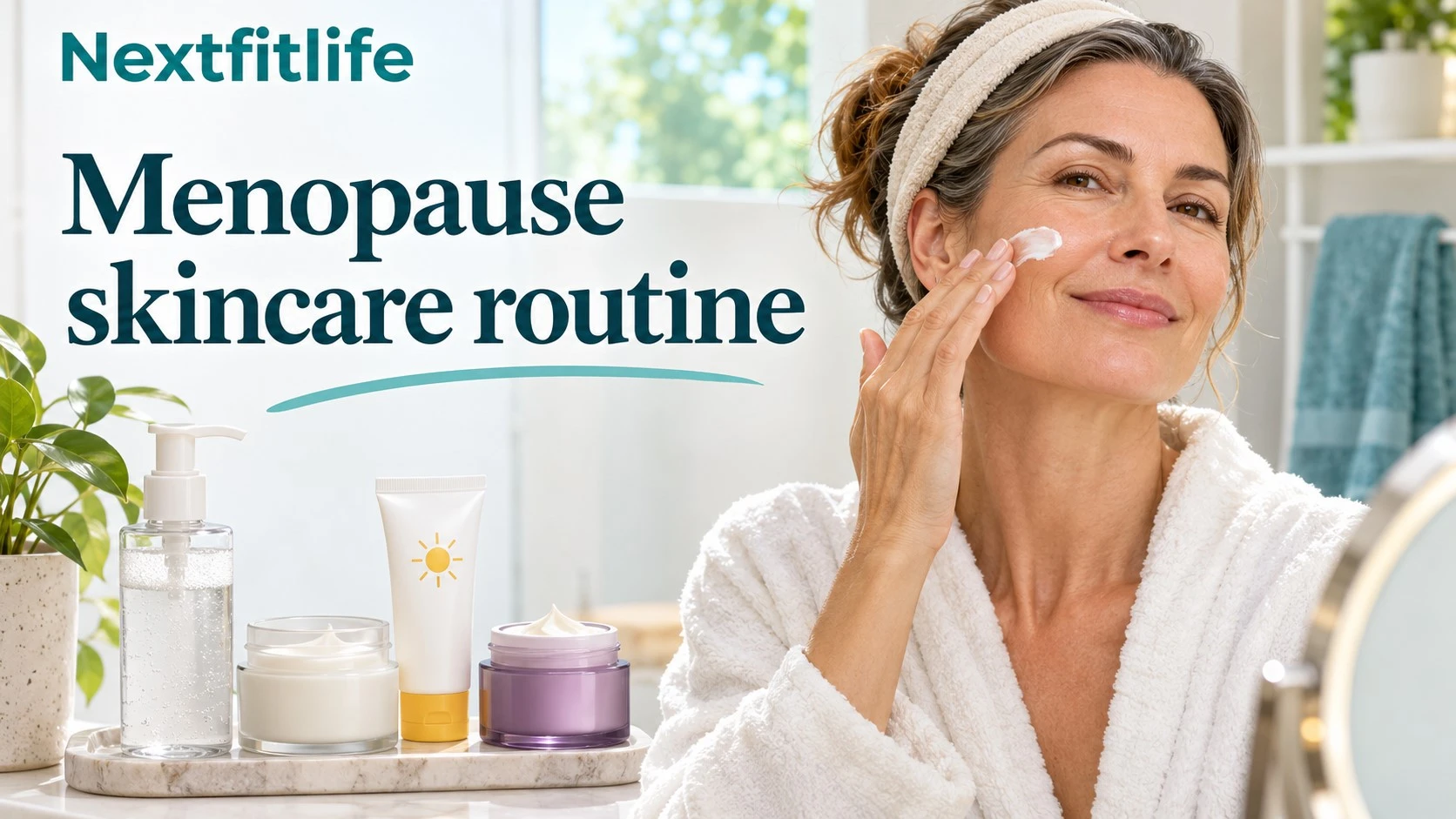
If your skin feels drier, tighter, more reactive, or less firm during menopause, you do not need ten new products.
A good menopause skincare routine starts with three things: protect the skin from ultraviolet damage, support the skin barrier, and add one treatment only when your skin can tolerate it.
Quick Answer
A simple menopause skincare routine uses a gentle cleanser, fragrance free moisturizer, and broad spectrum SPF 30 or higher every morning. At night, cleanse gently, moisturize, and consider a low strength retinoid if your skin tolerates it. Add other products only for a clear reason because menopausal skin can become drier, thinner, and more sensitive.
That simple order matters more than filling a shelf with products labeled for mature skin.
This article is for general information and education. It does not replace medical advice, diagnosis, or treatment.
See a dermatologist for concerning skin changes:
Do not assume every new spot, rash, rough patch, bleeding area, or nonhealing sore is part of menopause. Seek medical assessment for changing moles, unexplained bleeding, persistent scaling, severe irritation, rapidly worsening acne, or any skin change that concerns you.
For the wider basics of healthy skin, start with the NextFitLife Skin Health Guide.
What You Will Learn
- Why menopause changes the skin
- The three products that matter most
- How to cleanse without stripping the skin
- How moisturizer supports dry menopausal skin
- Why sunscreen outranks most anti aging products
- How to introduce retinol carefully
- What to do about acne, dark spots, and sensitivity
- Where vitamin C, niacinamide, and peptides fit
- Why facial estrogen creams need medical caution
Table of Contents
- Why Menopause Changes Skin
- Simple Morning Routine
- Simple Evening Routine
- Step 1: Gentle Cleansing
- Step 2: Moisturizer
- Step 3: Sunscreen
- Step 4: Retinoids
- Step 5: Treat One Concern
- Step 6: Exfoliate Less
- Step 7: Keep It Simple
- Hyaluronic Acid
- Ceramides
- Vitamin C
- Niacinamide
- Peptides
- Menopause Acne
- Pigmentation
- Hormone and Estrogen Creams
- 4 Week Starter Plan
- When to See a Dermatologist
- Conclusion
- References and Sources
- Internal Links and Hub
- About the Author
- Frequently Asked Questions
Why Does Skin Change During Menopause?
Menopause does not suddenly make your skin unhealthy. It changes the hormonal environment that helps support normal skin structure and hydration.
Declining estrogen and other ovarian hormones are linked with lower collagen production, reduced water retention, less sebum, thinner skin, lower elasticity, and slower repair.
A 2026 review in Menopause describes changes in skin thickness, hydration, pigmentation, elasticity, wound healing, and dryness after menopause.
This is why many women notice several things at once:
- dry skin
- more visible fine lines
- less firmness
- skin sensitivity
- uneven pigmentation
- slower healing
- occasional adult acne
The useful takeaway:
Changing skin needs a calmer routine, not a more aggressive one. Protect first, support the barrier second, then treat one concern at a time.
Your Simple Menopause Morning Routine
| Step | Product | Purpose |
|---|---|---|
| 1 | Gentle cleanser or water rinse | Clean without stripping dry skin |
| 2 | Moisturizer | Support hydration and the skin barrier |
| 3 | Broad spectrum SPF 30 or higher | Reduce further UV damage and photoaging |
That is enough for a real morning routine.
You can add vitamin C or niacinamide later if there is a clear reason, but neither is more important than daily sunscreen.
Your Simple Menopause Evening Routine
| Step | Product | Purpose |
|---|---|---|
| 1 | Gentle cleanser | Remove sunscreen, makeup, oil, and dirt |
| 2 | Retinoid on selected nights | Target fine lines, texture, acne, and some pigmentation |
| 3 | Moisturizer | Support hydration and reduce dryness |
On nights when you do not use a retinoid, cleanse and moisturize.
A two step night routine is still a complete routine.
1. Stop Over Cleansing
If your face feels tight immediately after washing, your cleanser may be too harsh for your current skin.
Menopausal skin often needs less stripping, not more.
Choose a mild cleanser that removes sunscreen, makeup, and dirt without leaving your face squeaky.
I would look for:
- Low fragrance or fragrance free formulas if you are sensitive
- Cream or gentle gel textures
- No harsh scrubbing particles
- Comfort after rinsing
Use lukewarm water rather than very hot water.
If your skin is very dry in the morning, a simple water rinse may be enough for some people.
2. Moisturizer Matters More Than Another Serum
If your budget covers only one skincare product besides sunscreen, buy a moisturizer you will actually use.
Useful ingredients include glycerin, hyaluronic acid, ceramides, and squalane.
These ingredients do different jobs, but the goal is simple: help the skin hold water and support the barrier.
| Ingredient | Main Role |
|---|---|
| Glycerin | Helps draw water into the outer skin |
| Hyaluronic acid | Supports hydration and temporary plumping |
| Ceramides | Support the skin barrier |
| Squalane | Adds emollience and reduces dry feel |
You do not need all four in separate products.
One well tolerated moisturizer is enough.
3. Sunscreen Outranks Most Anti Aging Products
If someone asks me whether to buy a peptide serum or sunscreen first, sunscreen wins.
UV exposure contributes to wrinkles, pigmentation, loss of elasticity, and skin cancer risk.
Use a broad spectrum sunscreen with SPF 30 or higher on exposed skin.
Do not stop at the jawline.
Protect the neck, upper chest, ears, and hands too.
Those areas collect years of UV exposure and often show visible aging later.
If chest aging is already a concern, read the NextFitLife Chest Wrinkles Guide. For hand aging, see the Hand Wrinkles Guide.
4. Introduce Retinol Slowly
Retinoids have much stronger evidence for fine lines, uneven texture, acne, and photoaging than many fashionable anti aging products.
They can also irritate dry menopausal skin.
That means the correct starting question is not, “What is the strongest retinol?”
It is, “What can my skin tolerate consistently?”
A Simple Retinoid Start
First: get cleanser, moisturizer, and sunscreen comfortable.
Then: use a small amount of a mild retinoid one or two evenings each week.
Next: increase slowly only if your skin remains comfortable.
Back off: if you develop persistent burning, heavy peeling, swelling, or significant redness.
More irritation does not mean better results.
Pregnancy caution:
Retinoids should be avoided during pregnancy. This can still matter during perimenopause because pregnancy remains possible before menopause is established. Ask your healthcare professional if pregnancy is possible or planned.
5. Treat One Main Concern at a Time
This is where routines often become too complicated.
Someone notices dryness, lines, a few dark spots, and chin acne, then buys five active products in one weekend.
The result is often irritation.
| Main Concern | Start Here | Optional Next Step |
|---|---|---|
| Dryness | Gentle cleanser and richer moisturizer | Hyaluronic acid or an occlusive night layer |
| Fine lines | SPF and moisturizer | Retinoid |
| Dark spots | Strong sun protection | Vitamin C or dermatologist treatment |
| Acne | Gentle routine | Salicylic acid or medical acne treatment |
| Sensitivity | Fragrance free basics | Add actives only after skin settles |
6. Exfoliate Less Than Beauty Marketing Suggests
Daily acid peeling is not required for healthy menopausal skin.
Neither is aggressive scrubbing.
If your skin is already thinner, dry, and reactive, too much exfoliation can leave it red and uncomfortable.
If you use a retinoid, you may not need a separate exfoliating product at all.
A good test:
If your routine leaves your face persistently tight, burning, flaky, or shiny from irritation, do less before you buy more.
7. Keep the Routine Boring Enough to Follow
Good skincare is repetitive.
That is not exciting marketing, but it is easier on your skin and easier on your budget.
Your morning can be:
Your evening can be:
That is a legitimate skincare routine.
Where Does Hyaluronic Acid Fit?
Hyaluronic acid is mainly a hydration ingredient.
It can help dehydrated skin feel softer and look temporarily plumper.
That is useful.
It does not rebuild all lost collagen or lift loose skin.
If your moisturizer already contains it, you may not need a separate serum.
Why I Like Ceramides for Menopausal Skin
Ceramides help support the outer skin barrier.
That makes them a sensible ingredient when dryness and sensitivity are becoming more noticeable.
You can find ceramides in cleansers, serums, and moisturizers.
You do not need all three.
A good moisturizer with ceramides is enough for many people.
Is Vitamin C Worth Adding?
Vitamin C can be useful for antioxidant support and uneven pigmentation.
Recent menopause skin literature includes topical vitamin C among reasonable options for skin health after menopause.
I still see it as optional.
If your budget is limited, I would buy sunscreen, moisturizer, and an appropriate retinoid before a costly vitamin C serum.
If vitamin C stings every morning, stop forcing it because an article called it essential.
What About Niacinamide?
Niacinamide can fit well into routines aimed at barrier support, uneven tone, and redness.
The easiest way to use it is often inside a moisturizer you already like.
You do not automatically need a separate niacinamide serum on top of everything else.
Do Peptides Deserve a Place?
Peptides are another optional category.
Some formulations have supportive evidence for skin appearance, but results depend on the specific peptide and product.
I would place peptides below three basics:
- Daily sunscreen
- A moisturizer you tolerate
- A retinoid when appropriate
A peptide cream can be a pleasant extra.
It is not a substitute for sun protection.
Menopause Acne Can Happen While the Rest of Your Face Is Dry
Menopause acne sounds contradictory until you experience dry cheeks and new chin breakouts at the same time.
Hormone changes can allow adult acne to persist or appear around the menopause transition.
Do not respond by drying your whole face with harsh acne cleansers.
A gentler plan works better:
- Keep the basic routine mild
- Treat acne prone areas rather than punishing dry skin
- Consider salicylic acid or a retinoid if appropriate
- See a dermatologist if acne is persistent, painful, or scarring
If stress is also triggering breakouts, your NextFitLife Beauty section includes current acne guides such as Stress Acne and other adult acne topics.
Dark Spots Need Sun Protection First
Menopause, age, previous sun exposure, and hormone changes can all influence pigmentation.
The first step is not a brightening serum.
It is reliable sun protection.
Depending on your skin tone and pigmentation concern, tinted sunscreen with iron oxides can be useful because visible light may worsen some pigmentation disorders.
If a spot is new, changing, irregular, bleeding, or simply looks different from the rest, have it assessed before trying to fade it cosmetically.
Do You Need Products Labeled “Menopause Skincare”?
No.
The hormonal changes are real, but the jar does not need the word menopause printed on it.
A fragrance free moisturizer with ceramides still works if it was marketed simply for dry skin.
A good sunscreen does not need a midlife label.
Buy by function:
Choose products by your skin concern, ingredients, texture, tolerance, and budget rather than the age group printed on the box.
Be Careful With Estrogen Face Creams
This is the area where current skincare trends are moving faster than routine medical guidance.
Declining estrogen clearly contributes to collagen loss, dryness, thinning, and lower elasticity.
Studies suggest topical estrogen can improve some measures of hydration, collagen, firmness, and wrinkles.
That does not make facial estrogen cream a standard cosmetic product.
A 2026 review in Menopause states that topical estrogen used for facial aging is not approved for this purpose and that safety questions remain, especially around systemic exposure.
Another 2026 expert discussion also notes that topical estrogen treatments are not FDA approved for anti aging and that long term safety data are limited.
Do not treat hormone creams like normal moisturizer:
Do not use prescription vaginal estrogen, compounded estriol, or another hormone product on your face just because a social media post recommends it. Discuss hormonal skin treatment with a qualified clinician who knows your medical history.
Should You Start Hormone Therapy for Better Skin?
Hormone therapy can improve some skin measures when it is prescribed for appropriate menopause indications.
Current medical reviews do not recommend starting systemic hormone therapy solely to improve skin appearance.
That decision belongs in a full menopause consultation that considers symptoms, bone health, cardiovascular risk, cancer history, clotting risk, and personal preferences.
A 4 Week Way to Build the Routine
Week 1: Build the Base
Use only a gentle cleanser, moisturizer, and sunscreen. Let your skin settle.
Week 2: Fix Dryness First
If skin still feels tight, change the moisturizer or cleansing routine before adding more active ingredients.
Week 3: Add One Treatment
If your skin is comfortable, consider adding one treatment for your main concern. A gentle retinoid is reasonable for fine lines or acne when appropriate.
Week 4: Review Rather Than Add
If the routine feels comfortable, keep it. You do not need a new serum simply because another week has passed.
This same simple approach fits the wider healthy aging philosophy in the NextFitLife Healthy Lifestyle Roadmap.
What I Would Remove First From an Overloaded Routine
- Daily physical scrubs
- Strong acid toners used every night
- Several retinoids at the same time
- Heavily fragranced products on sensitive skin
- Several serums with overlapping jobs
- Products that repeatedly burn or sting
- Hormone creams bought because of social media claims
Irritated skin does not mean the product is working harder.
When Should You See a Dermatologist?
A skincare routine cannot diagnose skin disease.
Arrange an assessment for:
- Persistent redness or burning
- Acne that is painful, scarring, or not responding to gentle care
- Worsening eczema or rosacea
- A changing mole
- A new or rapidly changing growth
- A sore that does not heal
- Unexplained bleeding or scaling
- Persistent widespread itching
- Significant hair loss
- New facial hair growth plus other signs of excess androgen activity
For general skin warning signs and routine care, revisit the Skin Health Complete Guide.
Conclusion
Your menopause skincare routine should become simpler when your skin becomes drier or more sensitive, not more complicated.
Start with gentle cleansing, a moisturizer that keeps the skin comfortable, and broad spectrum SPF 30 or higher every morning. Add a retinoid slowly if fine lines, texture, pigmentation, or acne are concerns and your skin can tolerate it.
Everything else is optional until there is a clear reason to add it.
Your next step: look at your current shelf and choose the three products that cover cleansing, moisturizing, and sun protection. Use those consistently before adding anything else.
References and Sources
- American Academy of Dermatology. Caring for Your Skin During Menopause.
https://www.aad.org/public/everyday-care/skin-care-secrets/anti-aging/skin-care-during-menopause - American Academy of Dermatology. Retinoid or Retinol?
https://www.aad.org/public/everyday-care/skin-care-secrets/anti-aging/retinoid-retinol/ - American Academy of Dermatology. How to Select Sunscreen.
https://www.aad.org/public/everyday-care/sun-protection/shade-clothing-sunscreen/how-to-select-sunscreen - Wentworth A. Menopause and Skin. Menopause. 2026.
https://pmc.ncbi.nlm.nih.gov/articles/PMC13502372/ - Fabi SG and colleagues. Aesthetic Treatment Considerations for the Perimenopausal and Menopausal Patient.
https://pmc.ncbi.nlm.nih.gov/articles/PMC12747467/ - Managing Menopausal Skin Changes. Narrative Review of Skin Quality, Menopause, and Hormone Replacement Therapy.
https://pmc.ncbi.nlm.nih.gov/articles/PMC12374573/
Internal Links and NextFitLife Hub
About the Author
Adel Galal is a father of four, three sons and a daughter, and a grandfather of four, with 33 years of hands on parenting experience. He is the founder of Parnthub.com, based in Cairo, Egypt, where he shares practical guidance on feeding, development and family life from newborns to teenagers.
Adel is not a medical professional. Health articles cite trusted sources and are for general information only.
Learn more on the NextFitLife About Us page.
Frequently Asked Questions
What is the best menopause skincare routine?
Start with a gentle cleanser, moisturizer, and broad spectrum SPF 30 or higher. At night, cleanse and moisturize, then add a mild retinoid slowly if your skin tolerates it and you want help with fine lines, texture, pigmentation, or acne.
Why does skin become dry during menopause?
Hormone changes during menopause affect sebum production, water retention, collagen, skin thickness, and barrier function. These changes can make the skin feel drier, tighter, and more sensitive.
Should I use retinol during menopause?
Retinol or another retinoid can help fine lines, texture, pigmentation, and acne, but menopausal skin may be sensitive. Start with a mild product slowly and reduce use if significant irritation develops.
What moisturizer is best for menopausal skin?
Choose a moisturizer that keeps your skin comfortable. Ingredients such as glycerin, ceramides, hyaluronic acid, and squalane can support hydration and the skin barrier.
Is hyaluronic acid good for menopausal skin?
Yes, it can help hydrate dehydrated skin and make it feel softer and look temporarily plumper. It does not rebuild all lost collagen or lift loose skin.
Do I need special menopause skincare products?
No. Choose products by function, ingredients, texture, tolerance, and budget. A standard fragrance free moisturizer or good sunscreen does not need a menopause label to work well.
Can menopause cause acne?
Yes. Adult acne can persist or appear during the menopause transition even when other areas of the face become dry. Use gentle care and seek dermatology treatment for persistent, painful, or scarring acne.
Is vitamin C useful during menopause?
Vitamin C can support antioxidant care and help with uneven pigmentation, but it is optional. Daily sunscreen and a good moisturizer deserve higher priority in a basic routine.
Should I use estrogen cream on my face?
Do not use prescription or compounded estrogen products on the face without medical guidance. Topical estrogen for facial aging is not a standard approved cosmetic treatment, and long term safety and systemic exposure remain important questions.
Should hormone therapy be started for better skin?
Current medical reviews do not recommend starting systemic hormone therapy solely to improve skin appearance. Hormone therapy decisions should be based on appropriate menopause indications and individual medical risk and benefit.

Health & wellness writer with 30+ years of experience in nutrition, fitness, and healthy aging. Founder of NextFitLife.com — evidence-based health guidance.