Published: Jul 8, 2024
Last updated: July 2026
Reviewed for accuracy: Editorially reviewed and fact-checked against NHS, NIMH, CDC, WHO, SAMHSA, and trusted mental-health sources
Reading time: 15–20 minutes
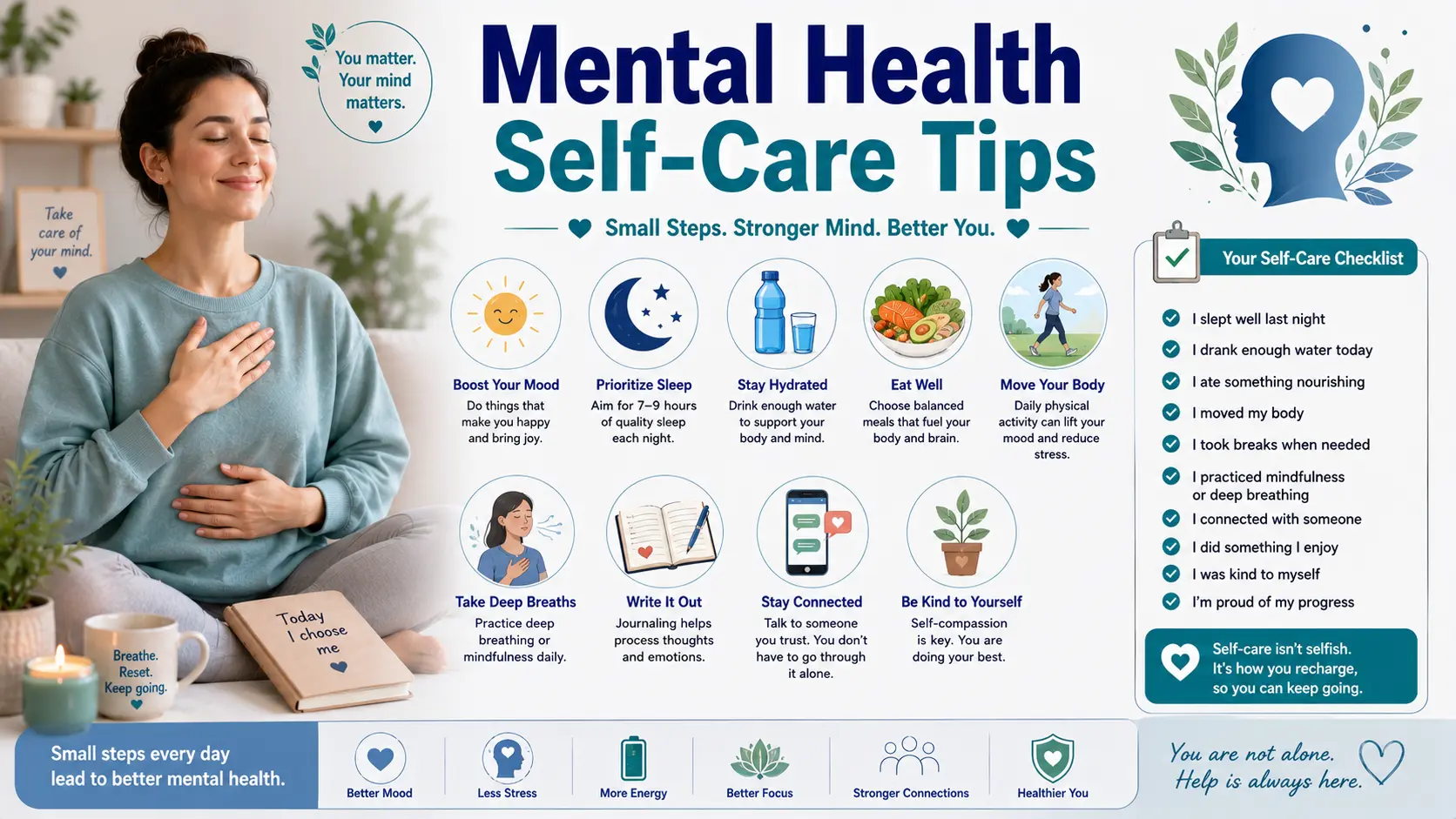
Mental health self-care tips do not have to be big. You do not need a perfect morning routine. You do not need expensive tools. You do not need to change your whole life in one day. Self-care can start with one small step.
A glass of water. A short walk. A deep breath. A text to someone safe. A sleep routine. A quiet break from your phone. This guide gives you 7 simple steps to boost your mood. It also gives you a mental health self-care checklist you can use today.
For more help, visit our Mental Health & Wellness Hub, General Wellness & Lifestyle Hub, Healthy Aging & Longevity Hub, Medical Tests & Screenings Hub, and Health Hub.
Important safety note: This article is for education only. It does not diagnose or treat depression, anxiety, trauma, panic attacks, burnout, bipolar disorder, eating disorders, suicidal thoughts, or any mental health condition. If you may hurt yourself or someone else, call emergency services now. In the United States, call or text 988. Outside the United States, call your local emergency number or a local crisis line.
Quick Answer: What are mental health self-care tips?
Mental Health Self-Care Tips are small actions that help your mind and body feel safer, calmer, and more supported.
Good self-care can include:
- Sleep
- Water
- Food
- Movement
- Rest
- Breathing
- Journaling
- Time outside
- Less screen stress
- Talking to safe people
- Asking for help
Self-care is not selfish.
It is basic care.
But self-care is not a replacement for therapy, medicine, crisis care, or medical help when you need them.
What self-care is
Self-care means taking regular action to protect your health and well-being.
It can help you:
- Feel calmer
- Lower stress
- Sleep better
- Think more clearly
- Handle hard days
- Support your mood
- Build a safer routine
Self-care does not have to look pretty. It has to help.
What self-care is not
Self-care is not:
- Ignoring problems
- Forcing happy thoughts
- Spending money you do not have
- Doing everything alone
- Replacing medical care
- Pushing through burnout
- Hiding pain
- Pretending you are okay
Real self-care is honest. It asks, “What do I need right now?”
When self-care is not enough
Self-care can help. But some symptoms need more support.
Get help if you have:
- Low mood most days
- Loss of joy
- Panic attacks
- Strong anxiety
- Trauma flashbacks
- Not sleeping for days
- Not eating enough
- Using alcohol or drugs to cope
- Feeling hopeless
- Feeling unsafe
- Thoughts of self-harm
- Thoughts of not wanting to wake up
If you may hurt yourself, call emergency services now.
Step 1: Start with your body
Your mind lives in your body.
When your body is hungry, tired, tense, or dry, your mood can drop.
Start with simple body care.
Try this today
- Drink water.
- Eat one real meal.
- Stretch your shoulders.
- Take 10 slow breaths.
- Step outside for 2 minutes.
- Rest your eyes from screens.
You do not need to fix everything. Start with the next kind step.
Step 2: Sleep, as it matters
Sleep affects mood, focus, stress, and energy.
Poor sleep can make minor problems feel huge.
Try a simple sleep routine:
- Wake at the same time each day.
- Get morning light.
- Limit caffeine late in the day.
- Make your room dark.
- Keep your room cool.
- Stop heavy work before bed.
- Put your phone away if you can.
- Use a calm wind-down habit.
A wind-down habit can be simple.
Try warm tea, prayer, light reading, soft music, or deep breathing.
Ask a doctor if you snore loudly, wake gasping, or feel very sleepy in the day.
Step 3: Move a Little
Movement can help mood.
You do not need a hard workout.
Slight movements count.
Try:
- 5-minute walk
- Gentle stretching
- Dancing to one song
- Chair exercises
- Slow yoga
- Light cleaning
- Walking outside
If you feel very tired, start smaller.
Stand up. Stretch. Walk to the door. That still counts.
Step 4: Eat and Drink for a Steady Mood
Your brain needs fuel.
Skipping meals can make you feel shaky, tired, angry, or foggy.
Try to build simple meals with:
- Protein
- Fiber
- Healthy fats
- Colorful plants
- Water
Easy ideas:
- Eggs with toast
- Yogurt with fruit
- Rice with chicken and vegetables
- Lentil soup
- Tuna with beans
- Oatmeal with nuts
- Banana with peanut butter
Also, notice caffeine and alcohol.
Too much caffeine can worsen anxiety. Alcohol can worsen sleep and mood.
For food support, visit our Nutrition & Vitamins Hub.
Step 5: Calm Your Nervous System
Stress can make your body feel unsafe.
Your chest may feel tight. Your jaw may clench. Your thoughts may race.
A calm body can help the mind slow down.
Try 60-second breathing
- Put one hand on your chest.
- Breathe in through your nose.
- Breathe out slowly.
- Relax your shoulders.
- Repeat for 60 seconds.
Try the 5-4-3-2-1 grounding tool
- Name 5 things you see.
- Name 4 things you feel.
- Name 3 things you hear.
- Name 2 things you smell.
- Name 1 thing you taste.
This can help when your mind feels too loud.
Step 6: Connect with safe people
Stress feels heavier when you carry it alone.
Connection can be care.
Try one small contact:
- Text a friend.
- Call a family member.
- Sit with someone safe.
- Ask to walk together.
- Join a support group.
- Tell someone, “I am not doing great.”
You do not have to share everything.
You can start with one honest sentence.
Example:
“I have been feeling low. Can we talk for a few minutes?”
Step 7: Make a Small Daily Checklist
A checklist helps when your mind feels tired.
It gives you a simple path.
Do not make it too long.
Start with 5 to 7 items.
Simple daily mental health self-care checklist
- Drink water.
- Eat one steady meal.
- Move for 5 minutes.
- Take 10 slow breaths.
- Go outside or see daylight.
- Message one safe person.
- Write one thought down.
- Do one small task.
- Rest without guilt.
- Sleep at a reasonable time.
You do not need to finish all of it.
Even one item is progress.
The 10-Step Inner Peace Checklist
Use this when you feel stressed, sad, or overwhelmed.
- Pause.
- Take 3 slow breaths.
- Drink water.
- Name what you feel.
- Lower one demand.
- Move your body for 2 minutes.
- Write one worry down.
- Text one safe person.
- Do one small, helpful task.
- Rest for 10 minutes.
This checklist will not fix every problem.
But it can help you return to the present moment.
Mental Health Self-Care for Anxiety
Anxiety can make your body feel on alert.
Self-care for anxiety may include:
- Slow breathing
- Grounding
- Less caffeine
- Short walks
- Fewer alerts
- Writing worries down
- Breaking tasks into small steps
- Talking to a therapist if anxiety is strong
Try not to fight anxiety with shame.
Use care, support, and safe action.
Mental Health Self-Care for Low Mood
Low mood can make action feel hard.
Start very small.
Try:
- Open curtains.
- Drink water.
- Wash your face.
- Change clothes.
- Eat something simple.
- Sit near daylight.
- Send one message.
- Take out the trash.
- Walk for 2 minutes.
Minor tasks can create a brief movement.
If low mood lasts more than 2 weeks or feels heavy, ask for help.
Mental Health Self-Care for Burnout
Burnout can happen after long-term stress.
You may feel drained, numb, angry, or empty.
Self-care for burnout may include:
- Reducing tasks
- Taking real breaks
- Sleeping more
- Saying no
- Asking for help
- Taking time off if possible
- Talking to a professional
- Reviewing work or caregiving load
Burnout often needs less pressure, not more pressure.
Mental Health Self-Care for Brain Fog
Brain fog can make focus hard.
Helpful steps include:
- Use one task at a time.
- Write things down.
- Use reminders.
- Sleep better.
- Drink water.
- Eat steady meals.
- Take screen breaks.
- Ask about blood tests if fog lasts.
For more, read Brain Fog: Causes, Symptoms, NHS-Style Advice, and 12 Clarity Strategies.
Mental Health Self-Care for Depression Symptoms
Depression can make self-care feel impossible.
Do not wait until you feel motivated.
Use very small steps.
- Keep water near your bed.
- Eat easy food.
- Open a window.
- Take medicine as prescribed.
- Message one person.
- Book a doctor or therapist.
- Make a safety plan if you feel unsafe.
For more, read High Functioning Depression Symptoms: Signs, Self-Check, and When to Get Help.
Self-Care at Work
Work can drain your mind.
Try simple support:
- Use a short task list.
- Work in 25-minute blocks.
- Take eye breaks.
- Stand up once each hour.
- Turn off extra alerts.
- Take lunch away from your screen.
- Ask for clear deadlines.
- Say no when you can.
You do not need to prove your worth by being exhausted.
Self-Care at Night
Night can be hard for many people.
Thoughts may feel louder.
Try a gentle night plan:
- Lower lights.
- Put your phone away.
- Write tomorrow’s top 3 tasks.
- Take a warm shower.
- Do slow breathing.
- Listen to calm audio.
- Keep the room cool.
- Go to bed at a steady time.
If nights feel unsafe, reach out for support.
Self-Care When You Have No Energy
Some days are low-energy days.
Use “minimum care.”
Minimum care may be:
- Drink water.
- Eat something.
- Use the bathroom.
- Take medicine as prescribed.
- Send one message.
- Rest.
This is still care.
You are not lazy. You are tired.
What Not to Do
- Do not blame yourself for struggling.
- Do not wait until you break down.
- Do not use alcohol or drugs to cope.
- Do not ignore thoughts of self-harm.
- Do not replace therapy with self-care if you need therapy.
- Do not force toxic positivity.
- Do not compare your healing to others.
- Do not build a routine that is too hard to keep.
- Do not shame yourself for resting.
- Do not stop mental-health medicine without medical advice.
When to Talk to a Professional
Talk to a doctor, therapist, counsellor, or mental-health professional if:
- You feel low most days.
- You feel anxious most days.
- You have panic attacks.
- You cannot sleep well.
- You sleep too much.
- You feel numb.
- You feel hopeless.
- You are pulling away from people.
- You use alcohol or drugs to cope.
- You cannot do daily tasks.
- You feel unsafe.
Getting help is self-care.
Crisis Support
If you may hurt yourself or someone else, get help now.
- Call emergency services.
- Go to the nearest emergency department.
- Call or text 988 in the United States.
- Call your local crisis line outside the United States.
- Stay with a safe person if possible.
- Move away from anything you could use to hurt yourself.
You do not have to handle a crisis alone.
Questions to Ask Yourself
- What do I need right now?
- Am I hungry?
- Am I thirsty?
- Am I tired?
- Am I overstimulated?
- Do I need support?
- What is one small thing I can do?
- What can wait until tomorrow?
- Who feels safe to contact?
- Do I need professional help?
Questions to Ask a Therapist or Doctor
- Could I have anxiety or depression?
- Could burnout be part of this?
- Do I need therapy?
- Would medication help?
- Could sleep problems be making this worse?
- Could my medicine affect my mood?
- Do I need blood tests?
- How can I make a safety plan?
- What should I do in a crisis?
- How often should I follow up?
Simple 7-Day Mental Health Self-Care Plan
This is not a cure. It is a soft start.
Day 1: Drink and Eat
Drink water. Eat one steady meal.
Day 2: Sleep Reset
Pick one wake time. Keep it steady.
Day 3: Move Gently
Walk, stretch, or move for 5 minutes.
Day 4: Calm Your Body
Use 60 seconds of slow breathing.
Day 5: Connect
Message one safe person.
Day 6: Clear One Small Task
Pick one task. Make it tiny. Finish it.
Day 7: Review
Ask what helped. Keep the easiest step.
FAQ
What are mental health self-care tips?
Mental health self-care tips are simple actions that support your mood, stress level, sleep, energy, and daily coping. They can include sleep, water, food, movement, breathing, journaling, rest, and connection.
What is a good mental health self-care checklist?
A good checklist is short and realistic. It may include drinking water, eating one meal, moving for 5 minutes, breathing slowly, getting daylight, texting one safe person, writing one thought, doing one small task, and resting.
Can self-care improve mood?
Yes, self-care can support mood for many people. Sleep, movement, connection, food, water, calming skills, and reduced stress can help. But self-care does not replace professional care when symptoms are strong.
What is the first step in mental health self-care?
Start with your body. Drink water, eat something simple, breathe slowly, stretch, or rest. Small body care can make the mind feel safer.
How do I practice self-care when I have no energy?
Use minimum care. Drink water, eat something, use the bathroom, take prescribed medicine, send one message, and rest. Very small care still counts.
Is self-care selfish?
No. Self-care helps you stay well enough to live, work, love, and support others. It is basic care, not selfishness.
Can self-care cure depression or anxiety?
Self-care can help with symptoms, but it may not cure depression or anxiety. Strong or lasting symptoms may need therapy, medicine, medical checks, or crisis support.
What should I avoid for mental health self-care?
Avoid blaming yourself, using alcohol or drugs to cope, forcing toxic positivity, ignoring self-harm thoughts, and replacing needed professional care with self-care only.
When should I get professional help?
Get help if low mood, anxiety, panic, sleep problems, hopelessness, numbness, or daily struggle lasts more than 2 weeks or affects work, school, relationships, or safety.
What should I do in a mental health crisis?
If you may hurt yourself or someone else, call emergency services now. In the United States, call or text 988. Outside the United States, call your local emergency number or crisis line.
Related Reading
- Mental Health & Wellness Hub
- High Functioning Depression Symptoms: Signs, Self-Check, and When to Get Help
- Brain Fog: Causes, Symptoms, NHS-Style Advice, and 12 Clarity Strategies
- Menopause Brain Fog: Causes, Symptoms, and 12 Mental Clarity Strategies
- Self-Care Habits: Simple Steps for Better Daily Health
- Healthy Lifestyle Roadmap: 14 Practical Tips for Better Health
- Effect of Unhealthy Lifestyle: Warning Signs, Health Risks, and How to Reset
- General Wellness & Lifestyle Hub
- Healthy Aging & Longevity Hub
- Medical Tests & Screenings Hub
- Health Hub
Key Takeaway
Mental Health Self-Care Tips work best when they are simple.
Start with your body. Sleep. Move a little. Eat and drink. Calm your nervous system. Connect with safe people. Use a small checklist.
You do not need to do everything.
One small step can help.
Self-care can support your mood, but it does not replace professional help when symptoms are strong, long-lasting, or unsafe.
If you may hurt yourself or someone else, call emergency services now. In the United States, call or text 988. Outside the United States, call your local emergency number or crisis line.
Sources
- NHS — 5 Steps to Mental Wellbeing
- NIMH — Caring for Your Mental Health
- CDC — Managing Stress
- CDC — Improve Your Emotional Well-Being
- CDC — Social Connection
- WHO — Self-Care for Health and Well-Being
- WHO — Mental Health
- SAMHSA — 988 Suicide & Crisis Lifeline
- NIMH — Warning Signs of Suicide
- NHS — Where to Get Urgent Help for Mental Health

Health & wellness writer with 30+ years of experience in nutrition, fitness, and healthy aging. Founder of NextFitLife.com — evidence-based health guidance.