
First published: Jun 25, 2023
Last updated: July 30, 2026
Written and source checked by: Adel Galal
Professional review status: This article has not been reviewed by a barber, dermatologist, or doctor.
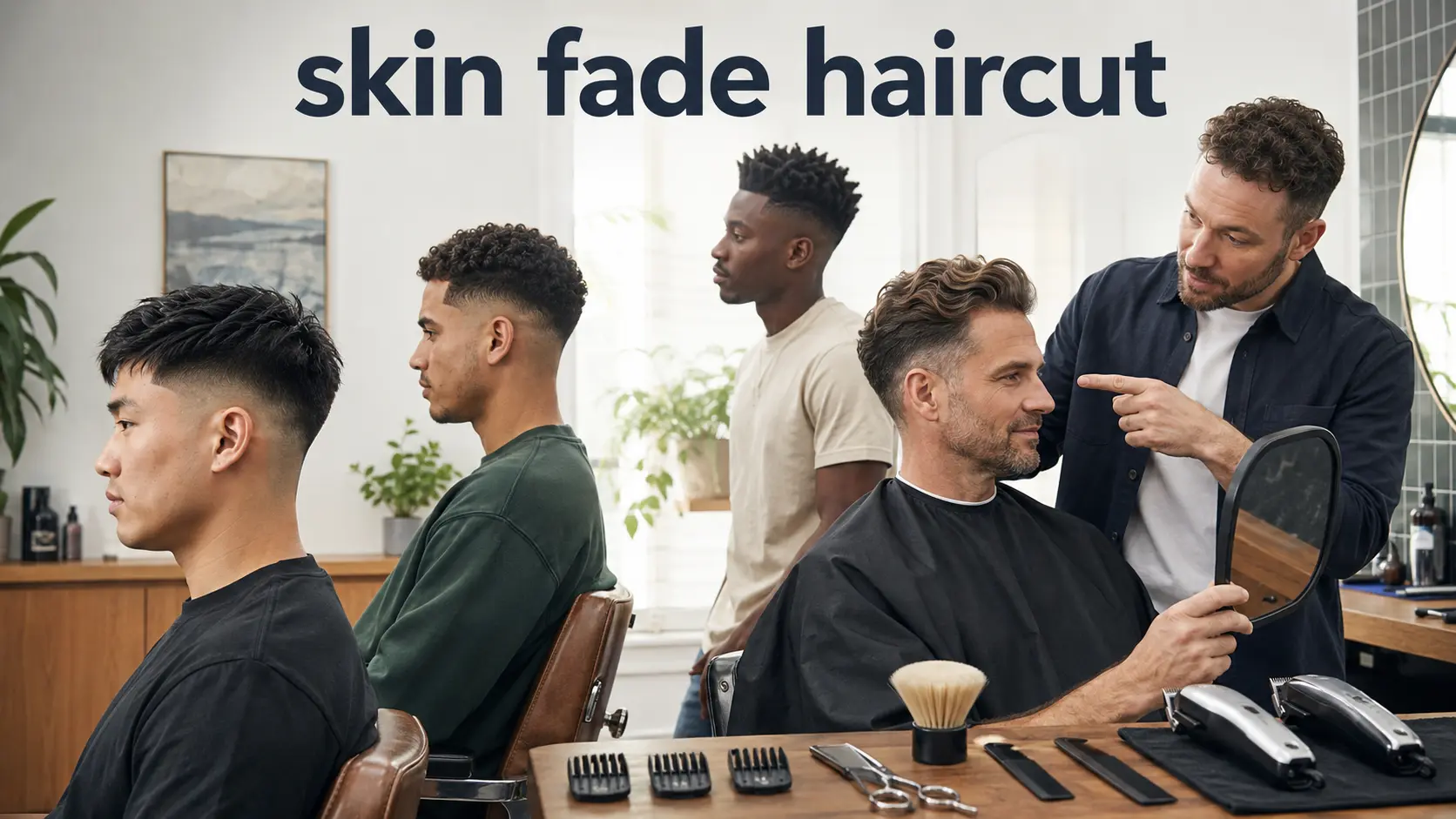
A skin fade haircut blends longer hair into very short hair until the sides and back reach bare skin or an almost bare finish.
The result can look sharp and clean.
It can work with straight, wavy, curly, or coiled hair.
It can also suit many ages, genders, face shapes, and personal styles.
The main choice is where the shortest area begins.
A low fade stays close to the ears and neckline.
A mid fade begins around the middle of the sides.
A high fade begins closer to the temples.
The top may remain short, curly, textured, long, brushed back, braided, or shaped into a crop.
A skin fade needs more maintenance than a soft taper.
It may also irritate sensitive skin when it is cut too close or repeated too often.
This guide explains skin fade styles, hair texture choices, face shape ideas, barber communication, maintenance, scalp care, and warning signs.
For more grooming guidance, visit the Hair Care Guide, the Complete Hair Care Hub, and the NextFitLife Beauty Guide.
Important: Do not cut closely over painful bumps, open sores, infection, active eczema, severe psoriasis, or an unexplained area of hair loss. Seek professional care when scalp symptoms continue.
Quick Answer
A skin fade removes hair very close to the scalp around the sides and back, then blends it smoothly into longer hair.
The three main options are:
- Low skin fade
- Mid skin fade
- High skin fade
Choose a low fade for a softer look.
Choose a mid fade for a balanced shape.
Choose a high fade for a stronger contrast.
Show your barber a clear reference photo and explain how much hair you want left on top.
Most very sharp skin fades need a cleanup about every one to three weeks.
What Is a Skin Fade?
A skin fade is a graduated haircut.
The hair changes from longer at the top to very short around the sides and back.
At the lowest point, the barber may use:
- A clipper with no guard
- A trimmer
- A foil shaver
- A razor where local rules and skin condition allow it
The barber then blends each length so there is no hard line.
A good fade should look smooth from every angle.
The shortest area should connect cleanly with the neckline, temples, sideburns, and beard when present.
Skin Fade, Bald Fade and Zero Fade
| Term | Typical finish | Important note |
|---|---|---|
| Skin fade | Ends at bare or nearly bare skin | The exact finish depends on the barber and client request |
| Bald fade | Usually means the same as a skin fade | Often finished with a foil shaver or razor |
| Zero fade | Ends at a clipper zero length | May leave a little visible stubble |
| Shadow fade | Leaves a soft dark shadow | May suit sensitive skin or lower maintenance needs |
Barber terms are not identical in every shop or country.
Ask what the barber means before the haircut begins.
Types of Skin Fade Haircuts
Low Skin Fade
The blend begins near the ears and neckline. It keeps more weight around the sides and creates a subtle result.
Mid Skin Fade
The fade begins around the middle of the head. It balances contrast with a natural head shape.
High Skin Fade
The blend begins near the temples. It removes more side volume and creates a bold outline.
Drop Skin Fade
The fade line curves lower behind the ear, following the shape of the head.
Burst Fade
The short area curves around the ear and often leaves more length at the back.
Temple Fade
The fade is focused around the temples and sideburns rather than the full side of the head.
Low Skin Fade
A low skin fade starts just above the ears.
It can look neat without removing too much hair from the sides.
It may work well with:
- Classic side parts
- Short crops
- Waves
- Curls
- Longer textured tops
- Professional styles
A low fade may also grow out more softly than a high fade.
Mid Skin Fade
A mid skin fade begins between the temples and ears.
It provides clear contrast without placing the transition too high.
It pairs well with:
- Textured crops
- Short curls
- Pompadours
- Brush backs
- Short twists
- Beards
This is often a flexible starting point when you are unsure which fade height to choose.
High Skin Fade
A high skin fade begins near the upper sides of the head.
It produces strong contrast between the top and sides.
It may make the top appear taller or fuller.
It also exposes more scalp.
This may make scars, bumps, pigmentation, or uneven head shape more visible.
Discuss these concerns with the barber before cutting.
Skin Fade Compared With a Taper Fade
A taper usually shortens the hair around the temples, sideburns, and neckline.
It leaves more hair across most of the sides.
A full fade removes more hair and creates a larger blended area.
| Feature | Skin fade | Taper fade |
|---|---|---|
| Shortest length | Bare or nearly bare skin | Usually short hair rather than bare skin |
| Blended area | Most of the sides and back | Mainly temples and neckline |
| Contrast | Strong | Soft |
| Maintenance | Usually frequent | Usually easier to grow out |
| Scalp exposure | High | Lower |
A skin taper is a middle option.
It may reach skin only at the temples and neckline.
Skin Fade for Different Hair Textures
Straight Hair
Straight hair can show every line in the blend.
A skilled barber should remove visible steps between clipper lengths.
Popular top styles include:
- Textured crop
- Side part
- Brush back
- Short fringe
- Pompadour
Wavy Hair
Waves add movement and can soften the contrast.
A low or mid fade often keeps enough side weight to support the wave pattern.
Curly Hair
A skin fade with curls can highlight curl texture while keeping the sides controlled.
The barber should consider curl shrinkage before cutting the top.
Do not judge top length while the hair is stretched or very wet.
Coiled Hair
Coiled hair works with waves, twists, sponge curls, short coils, afros, and shaped tops.
The hairline should not be pushed far backward to create an artificial straight edge.
Repeated aggressive lining may irritate the skin and alter the visible hairline.
Fine Hair
A high fade may reduce side bulk and make the top appear more prominent.
It can also reveal scalp contrast.
A low fade may provide a softer result.
Thick Hair
Thick hair may need careful weight removal to prevent a shelf above the fade.
The barber may use scissors, clippers, or controlled texturizing.
Top Styles That Work With a Skin Fade
- Buzz cut
- French crop
- Textured crop
- Crew cut
- Side part
- Quiff
- Pompadour
- Brush back
- Short curls
- Afro top
- Waves
- Twists
- Braids
- Mohawk
- Faux hawk
The top style should match your hair density, growth pattern, routine, and available styling time.
Skin Fade and Face Shape
Face shape suggestions are optional style ideas.
They are not strict rules.
Round Face
More height on top and less side volume may create a longer visual shape.
A mid or high fade may provide this effect.
Square Face
Many fade heights can work with a strong jaw.
A textured or slightly rounded top may soften the overall outline.
Oval Face
An oval face can suit many top lengths and fade heights.
A very high fade with extreme top height may make the face look longer.
Long Face
A low fade with moderate top height may maintain balance.
A very high style may add more visual length.
Heart Shaped Face
A low or mid fade with some side texture may balance a wider forehead and narrower chin.
Choose the haircut you enjoy rather than treating face shape advice as a requirement.
Skin Fade With a Beard
A skin fade with beard can connect the haircut and facial hair.
The barber may fade the sideburn into the beard.
Decide whether you want:
- A natural beard line
- A sharp cheek line
- A short boxed beard
- Heavy stubble
- A full beard
A very sharp beard line may require frequent maintenance.
Close shaving may also cause bumps on curly facial hair.
Who Can Wear a Skin Fade?
A skin fade is not limited to men.
Women and gender diverse people may wear:
- Skin fades with pixie cuts
- Faded undercuts
- Curly tops
- Braided tops
- Mohawks
- Short crops
- Designs
A good gender neutral haircut consultation should focus on the result you want rather than assumptions about gender.
How to Ask Your Barber for a Skin Fade
- Show two or three clear photos.
- Choose low, mid, or high.
- Say whether you want skin, foil, razor, or clipper zero.
- Explain how much hair should remain on top.
- Explain how you normally style the top.
- Show where you want the neckline.
- Discuss the sideburns and beard.
- Mention sensitive skin, bumps, scars, or scalp conditions.
- Ask how the haircut will grow out.
Use photos with hair texture similar to your own when possible.
A reference image shows the goal more clearly than haircut names alone.
Questions to Ask Before the Cut
- How high will the fade begin?
- Will the shortest area be bare skin or stubble?
- Will you use a foil shaver or razor?
- How much will you remove from the top?
- How will you handle my crown or cowlick?
- Will this expose my scalp scar or thinning area?
- How often will it need maintenance?
- What product should I use at home?
A professional barber should be willing to explain the plan.
Protecting the Hairline
A barber may sharpen the forehead and temple outline.
The line should respect the natural hairline.
Pushing the line too far backward can create an unnatural result and remove growing hair.
Repeated close edging may irritate sensitive skin.
Ask for a natural line when you want easier growth and less frequent correction.
How Often Does a Skin Fade Need Maintenance?
The shortest area begins to show growth within days.
Maintenance depends on how sharp you want the fade to look.
| Goal | Possible timing |
|---|---|
| Very sharp professional finish | About every 7 to 14 days |
| Clean but slightly grown finish | About every 2 to 3 weeks |
| Relaxed grow out | About every 3 to 5 weeks |
| Top length maintenance | Depends on style and growth |
Hair growth differs.
These are general estimates, not rules.
How Does a Skin Fade Grow Out?
The bare area becomes stubble first.
The blend may then look less smooth as different areas grow.
A low fade often grows more softly because more hair remains on the sides.
A high fade may show a greater change between the top and sides.
To grow it out:
- Allow the shortest area to gain length.
- Ask for light cleanup around the neckline.
- Avoid taking the fade back to skin.
- Use a low taper during the transition.
- Trim the top only when needed for balance.
Daily Care After a Skin Fade
- Wash the scalp based on oil, sweat, and hair needs.
- Use a gentle shampoo.
- Rinse styling product fully.
- Pat the scalp dry.
- Apply fragrance-free moisturizer when the skin feels dry.
- Protect exposed scalp from the sun.
- Keep hats and pillowcases clean.
Do not scrub freshly shaved skin.
Avoid strong fragrance or alcohol when it burns.
Sun Protection for a Fresh Fade
A skin fade exposes areas that may normally be covered by hair.
The scalp and back of the neck can burn.
Use:
- Broad-spectrum SPF 30 or higher
- A clean hat
- Shade
- Protective clothing
Apply sunscreen around the ears, temples, scalp, and neck.
Reapply based on activity and product directions.
Barber Hygiene and Tool Safety
Choose a clean, professional shop.
Look for:
- Clean capes or disposable neck strips
- Clean hands
- Disinfected clipper guards
- Disinfected combs
- Clean work surfaces
- Single-use blades
- Proper waste disposal
- No reuse of dirty towels
A blade used on one client should not be reused on another person.
Tools should be cleaned and disinfected according to local public health rules.
Do not accept a cut over visible infection or open wounds.
Razor Bumps After a Skin Fade
Razor bumps form when shaved hairs curve back into the skin.
They are more common with tightly curled or coiled hair.
They may appear as itchy, sore, or dark bumps around the neckline and temples.
To reduce the risk:
- Avoid an extremely close finish
- Shave with hair growth
- Do not stretch the skin
- Avoid repeated passes
- Use clean, sharp equipment
- Do not pick the bumps
- Consider a clipper finish instead of bare skin
A dermatologist can help when bumps continue or leave scars.
Acne Keloidalis Nuchae
Acne keloidalis nuchae causes inflamed bumps and scars around the back of the scalp and neck.
It is not ordinary acne.
Frequent close haircuts, friction, collars, helmets, and some head coverings may trigger or worsen it in people who are prone to the condition.
Early signs may include:
- Small itchy bumps
- Tender bumps
- Pus filled spots
- Scars
- Hair loss around the bumps
Ask the barber not to shave closely over this area.
Seek dermatology care early because continued inflammation may cause permanent scarring and hair loss.
Folliculitis After a Haircut
Folliculitis is inflammation around hair follicles.
It may appear as small, tender or itchy spots.
Possible triggers include:
- Close shaving
- Friction
- Sweat
- Bacteria
- Fungi
- Heavy products
Do not squeeze the bumps.
Pause close shaving.
Seek medical advice when the area is painful, spreading, producing pus, or not improving.
Scalp Ringworm
Scalp ringworm is a fungal infection.
It is not caused by a worm.
Possible signs include:
- Itching
- Scaling
- Round areas of hair loss
- Broken hairs
- Tender swelling
- Crusting
Scalp ringworm usually needs prescription medicine taken by mouth.
Do not share combs, hats, towels, or clippers.
Do not apply steroid cream to an unexplained ring-shaped rash without professional advice.
Dry Scalp and Dandruff
A fresh fade may make flakes more visible.
Dry scalp and dandruff are not always the same.
Dandruff may be linked with seborrheic dermatitis.
A medicated shampoo may help when correctly selected.
Do not scrape flakes with clipper blades or combs.
Persistent redness, thick scaling, pain, or hair loss needs assessment.
Skin Fade With Scalp Psoriasis
A close haircut may reveal scalp psoriasis.
It may also irritate active plaques when clippers scrape the skin.
Tell the barber before the cut.
Avoid cutting over cracked, bleeding, or painful plaques.
Use treatment as directed by a healthcare professional.
Gentle combing and brushing can reduce irritation.
Skin Fade With Eczema or Sensitive Skin
Choose a slightly longer clipper finish when bare skin shaving causes burning.
Ask the barber to avoid:
- Strong aftershave
- Fragrance
- Alcohol based sprays
- Repeated blade passes
- Hot towels on inflamed skin
Apply a plain fragrance-free moisturizer after the skin settles.
Do not cut closely over active weeping eczema.
What to Do After a Small Barber Cut
- Stop the bleeding with clean, gentle pressure.
- Wash the area carefully.
- Keep it clean.
- Avoid touching it with dirty hands.
- Watch for increasing pain, redness, swelling, or pus.
Seek medical advice for a deep cut, ongoing bleeding, or signs of infection.
Can You Do a Skin Fade at Home?
You can try, but a smooth blend takes practice.
You need:
- Clean clippers
- Several guards
- A trimmer
- Two mirrors
- Good lighting
- Enough time
Begin longer than the final length.
Create small guide areas.
Remove each visible line gradually.
Do not use a razor when you are unsure about technique or skin safety.
Stop if the clipper becomes hot or pulls the hair.
Skin Fades for Children
A child can have a fade when the haircut is comfortable and age-appropriate.
Some children may find close clippers noisy, frightening, or irritating.
Consider:
- A zero fade instead of bare skin
- A low taper
- Short sessions
- Breaks
- A barber experienced with children
Do not cut over an itchy rash, scalp infection, or unexplained hair loss.
Skin Fades for Older Adults
A fade may create a clean outline around gray or thinning hair.
Choose a softer fade when the scalp bruises or tears easily.
Blood-thinning medicine and certain health conditions may increase bleeding risk from cuts.
Tell the barber about fragile skin or recent scalp treatment.
Common Skin Fade Mistakes
- Choosing the fade height without discussing it
- Using a reference photo with very different hair texture
- Cutting the hairline too far back
- Taking the fade too high on the first visit
- Ignoring the crown growth pattern
- Shaving over active bumps
- Using dirty clippers
- Applying strong aftershave to broken skin
- Skipping scalp sunscreen
- Expecting the fade to stay sharp for a month
Common Skin Fade Myths
Myth: A Skin Fade Is One Haircut
It can be low, mid, high, drop, burst, or focused at the temples.
Myth: Skin Fade and Taper Are the Same
A taper usually affects smaller areas and leaves more hair.
Myth: Every Skin Fade Uses a Razor
Some barbers use trimmers or foil shavers instead.
Myth: A High Fade Suits Everyone
The best height depends on style, head shape, hair, and personal preference.
Myth: Close Shaving Makes Hair Grow Thicker
Cutting hair does not change the number of follicles or the true thickness of new growth.
Myth: Razor Bumps Mean Poor Hygiene
Hair growth direction and close shaving are major factors.
Myth: A Fade Stops Hair Loss
A haircut can change appearance but cannot treat a medical cause of hair loss.
Myth: Dirty Clippers Only Cause Minor Irritation
Contaminated tools may contribute to bacterial or fungal infection.
When to See a Dermatologist or Doctor
Arrange professional care for:
- Repeated painful razor bumps
- Scarring bumps at the back of the neck
- Pus-filled spots
- A spreading rash
- Round areas of hair loss
- Broken hairs with scaling
- Severe itching
- Thick scalp plaques
- A painful swollen lump
- A sore that does not heal
- Sudden patchy hair loss
A barber should not diagnose or treat a scalp disease.
When Scalp Symptoms Are Urgent
Seek urgent medical care for:
- Fast facial or neck swelling
- Trouble breathing
- Fever with a rapidly spreading painful rash
- Severe swelling around the eyes
- Heavy bleeding that does not stop
- A serious allergic reaction
- Severe pain after a chemical product
Do not return to close shaving until a painful, infected, or severely inflamed area has been assessed and healed.
Five High Authority References and Sources
American Academy of Dermatology: Razor Bump Prevention
Open dermatologist guidance on preparing the skin, using shaving cream, shaving technique, and reducing irritation.
American Academy of Dermatology: How to Shave
Open guidance on shaving with hair growth, using clean blades, limiting passes, and reducing razor burn.
American Academy of Dermatology: Acne Keloidalis Nuchae Causes
Open information on close haircuts, friction, bumps, scarring, and permanent hair loss at the back of the scalp.
Centers for Disease Control and Prevention: Ringworm Basics
Current open guidance explaining fungal ringworm infections of the skin, scalp, and nails.
American Academy of Dermatology: Folliculitis
Open dermatologist guidance on inflamed hair follicles, acne like bumps, shaving irritation, and when treatment may be needed.
Conclusion
A skin fade haircut creates a clean blend from longer hair to very short hair or bare skin.
A low fade gives a softer result.
A mid fade creates balance.
A high fade creates strong contrast.
The best option depends on your hair texture, style, scalp condition, and maintenance plan.
Use a clean qualified barber.
Protect the exposed scalp.
Avoid close shaving over bumps, rash, or infection.
Call to action: Save two reference photos, choose your preferred fade height, and discuss your hair texture, scalp sensitivity, top length, and maintenance needs with your barber before the cut begins.
Related NextFitLife Guides and Hubs
Hair, Skin and Medical Disclaimer
This article provides general education about haircut styles, grooming, and scalp care.
It does not diagnose folliculitis, fungal infection, psoriasis, eczema, acne keloidalis nuchae, alopecia, or another medical condition.
It does not replace assessment by a qualified barber for haircut planning or by a dermatologist or doctor for scalp symptoms.
I am not a dermatologist or a doctor, and this content does not replace professional medical advice. This article explains published guidance and does not provide a personal clinical assessment. Always consult qualified medical professionals for diagnosis and treatment of any health condition.
About the Author
Frequently Asked Questions
What is a skin fade haircut?
A skin fade blends longer hair into very short hair and ends at bare or nearly bare skin around the sides and back.
What is the difference between a skin fade and a bald fade?
The terms usually describe the same very close finish, though barber definitions may differ.
What is the difference between a skin fade and a zero fade?
A skin fade normally reaches bare skin. A zero fade may leave short visible stubble from a clipper with no guard.
Should I choose a low, mid, or high skin fade?
Choose low for a subtle look, mid for balance, and high for strong contrast and less hair on the sides.
Does a skin fade work with curly hair?
Yes. A fade can highlight curls while controlling side volume. The barber should account for curl shrinkage.
Does a skin fade work with coiled hair?
Yes. It can pair with waves, coils, twists, afros, braids, and short textured tops.
How long does a skin fade last?
The sharp finish may soften within one or two weeks. Many people book maintenance every one to three weeks.
Can a skin fade cause razor bumps?
Close shaving may cause ingrown hairs and razor bumps, especially with tightly curled hair.
Can a skin fade cause hair loss?
The haircut does not normally cause pattern hair loss, but repeated severe irritation or scarring conditions may damage follicles.
Can I get a fade with scalp psoriasis?
You may be able to, but avoid cutting closely over painful, cracked, bleeding, or active plaques.
How do I prevent bumps after a fade?
Avoid an extremely close shave, use clean tools, shave with hair growth, reduce repeated passes, and do not pick the skin.
How do I ask a barber for a skin fade?
Show a reference photo, choose the fade height, explain the shortest length, and say how much hair you want left on top.
Does a skin fade need sunscreen?
Yes. The exposed scalp, temples, ears, and neck may burn and should be protected.
When should scalp bumps be checked by a doctor?
Seek care for painful, spreading, pus-filled, scarring, or persistent bumps, or bumps linked with hair loss.

Health & wellness writer with 30+ years of experience in nutrition, fitness, and healthy aging. Founder of NextFitLife.com — evidence-based health guidance.