Home
Published:
June 1, 2024
Last Updated:
August 16, 2026
Next Review:
August 2027, or sooner if major sleep medicine guidance changes
Written and source checked by:
Adel Galal,
Founder and Lead Writer of NextFitLife
Medical Review Status:
This article has not been formally reviewed by a sleep physician or another licensed healthcare professional.
Sometimes it is not.
A person may snore because they sleep on their back.
Another person may have a blocked nose.
Alcohol may make snoring worse.
Airway anatomy can also matter.
And in some people, loud snoring is linked with obstructive sleep apnea.
That is why the best snoring treatment starts with one question:
What is causing the snoring?
Simple snoring may improve with sleep position, nasal care, lifestyle changes, or an appropriate dental device.
Snoring caused by sleep apnea may need a sleep study, CPAP, an oral appliance, or another treatment chosen by a healthcare professional.
This guide explains 15 practical options, what each option may help, and when home care is not enough.
Quick Answer: What Is the Best Snoring Treatment?
The best snoring treatment depends on the cause.
For simple snoring, useful steps may include:
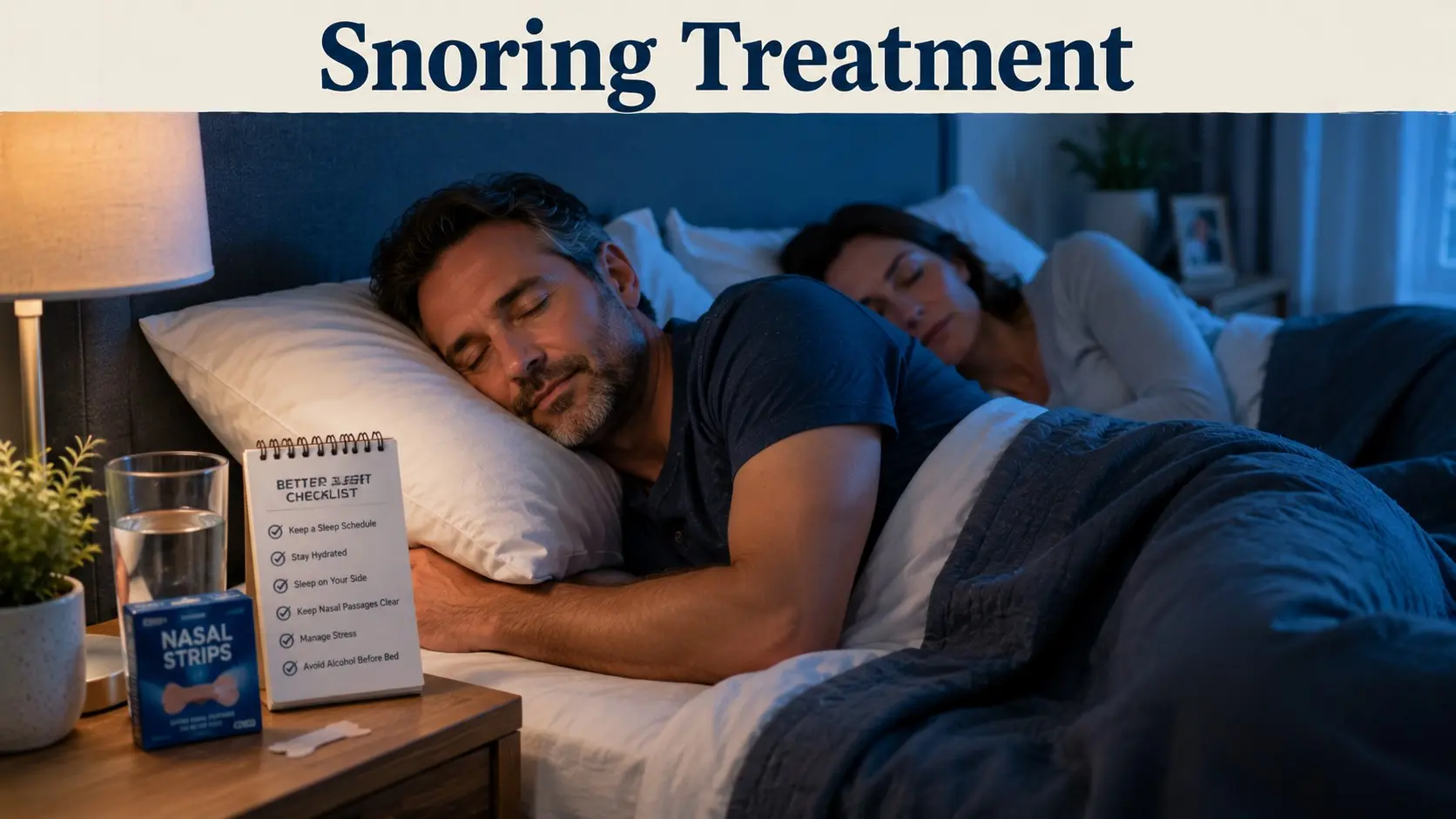
- Sleeping on your side
- Reducing alcohol before bed
- Treating nasal blockage
- Using a nasal strip when the nose is the problem
- Stopping smoking
- Getting enough sleep
- Managing weight when it contributes to airway narrowing
If snoring happens with breathing pauses, gasping, choking, or severe daytime sleepiness, do not rely only on home remedies.
Those symptoms can occur with sleep apnea.
A healthcare professional may recommend testing and medical treatment.
Medical note:
This content is for general educational purposes and does not replace professional medical advice, diagnosis, or treatment. Consult an appropriately qualified healthcare professional for personal medical concerns. This article explains published guidance and does not provide a personal clinical assessment. Always consult qualified medical professionals for diagnosis and treatment of any health condition.
Snoring Treatment at a Glance
- The correct treatment depends on the cause.
- Side sleeping may help position related snoring.
- Alcohol can make snoring worse.
- Treating nasal congestion may help when nasal breathing is limited.
- Nasal strips may help some nasal snorers but do not treat sleep apnea.
- Weight management may help some people but is not the answer for everyone.
- Smoking can irritate the airway.
- Enough sleep matters.
- Some medicines can affect breathing or airway muscle tone during sleep.
- A custom oral appliance can help selected adults.
- CPAP is an important treatment for obstructive sleep apnea.
- A sleep study may be needed when sleep apnea is possible.
What Is Snoring?
Snoring is the sound made when air moves past relaxed tissues in the upper airway during sleep.
Those tissues can vibrate.
That vibration creates sound.
The narrowing may involve the nose, tongue, soft palate, throat, or another part of the airway.
Snoring can be mild.
It can also become loud enough to disturb a partner or wake the person who snores.
Snoring by itself does not prove that you have a disease.
But frequent loud snoring deserves more attention when other symptoms are present.
What Causes Snoring?
There is no single cause.
Common contributors include:
- Sleeping on the back
- Nasal congestion
- Allergies
- A narrow nasal passage
- Mouth breathing
- Alcohol before sleep
- Smoking
- Sleep loss
- Airway anatomy
- Enlarged tonsils or adenoids
- A recessed or smaller jaw
- Some sedating medicines
- Weight around the upper airway in some people
- Obstructive sleep apnea
This is why one snoring remedy cannot work for everyone.
Snoring Versus Sleep Apnea
This difference is very important.
Simple snoring is noise caused by tissue vibration.
Obstructive sleep apnea involves repeated narrowing or blockage of the upper airway during sleep.
Breathing may become shallow.
It may also stop for short periods.
Possible warning signs include:
- Loud frequent snoring
- Breathing that stops and starts
- Gasping during sleep
- Choking sounds
- Waking often
- Morning headaches
- Dry mouth
- Feeling unrefreshed after sleep
- Severe daytime sleepiness
- Problems with focus
Not every person who snores has sleep apnea.
But these symptoms should not be ignored.
15 Practical Snoring Treatment Options
1. Sleep on Your Side
Back sleeping can make snoring worse for some people.
The tongue and other soft tissues may move backward and narrow the airway.
Side sleeping may help keep the airway more open.
You can try:
- A body pillow
- A pillow behind your back
- A comfortable side sleep pillow
- A positional device recommended for sleep
This approach is sometimes called positional therapy.
It may help when snoring is clearly worse while lying on the back.
It does not replace sleep apnea treatment when sleep apnea is present.
2. Raise Your Upper Body Slightly
Some people find that mild upper body elevation reduces snoring.
You can use:
- A wedge pillow
- An adjustable bed
- A safely raised head section of the bed
Avoid piling many soft pillows under your head.
That may bend the neck and make sleep less comfortable.
The goal is gentle upper body elevation.
3. Avoid Alcohol Close to Bedtime
Alcohol relaxes muscles.
That includes muscles around the upper airway.
For some people, alcohol makes snoring louder.
It may also make obstructive sleep apnea worse.
If you snore, try avoiding alcohol near bedtime and compare the difference.
If you drink heavily or think you may be dependent on alcohol, do not suddenly stop without medical guidance.
4. Treat Nasal Congestion
A blocked nose can make breathing harder during sleep.
It can also increase mouth breathing.
Possible causes include:
- Colds
- Allergies
- Sinus problems
- Dry air
- A deviated septum
- Other nasal structure problems
Depending on the cause, helpful options may include:
- Saline nasal spray
- Saline nasal rinse
- Allergy treatment recommended by a healthcare professional
- Reducing bedroom allergens
- Medical review for persistent blockage
Do not keep using medicated decongestant sprays for long periods unless a healthcare professional tells you to.
5. Try a Nasal Strip or Nasal Dilator
A nasal dilator or nasal strip may help when narrow nasal airflow is contributing to snoring.
These products work around the nose.
They do not stop the throat from collapsing.
That means they are not a treatment for obstructive sleep apnea.
They may be worth trying if:
- Your nose feels blocked at night
- Your snoring gets worse during allergies
- You breathe through your mouth because the nose feels narrow
Persistent one-sided nasal blockage should be checked.
6. Manage Weight When It Is Relevant
Weight is one risk factor for snoring and sleep apnea.
It is not the only one.
People in smaller bodies can snore too.
People in larger bodies should not automatically be told that weight is the only cause.
When excess weight contributes to airway narrowing, gradual weight management may help reduce snoring or sleep apnea severity.
Useful habits may include:
- Regular walking
- Strength activity
- A varied eating pattern
- Enough sleep
- Professional support when needed
Visit the
Weight Management and Metabolism Hub
.
7. Stop Smoking
Smoking can irritate the nose and airway.
That irritation may make snoring worse in some people.
Stopping smoking has benefits far beyond snoring.
If quitting is hard, ask a healthcare professional about:
- Counseling
- Nicotine replacement
- Medicines when suitable
- Quit support programs
Avoid secondhand smoke when possible too.
8. Get Enough Sleep
Going to bed very tired can worsen snoring in some people.
Do not treat sleep loss as a snoring cure.
Protect enough time for sleep.
Useful sleep hygiene habits include:
- A fairly regular wake time
- Enough time in bed
- A calm bedtime routine
- A comfortable bedroom
- Less caffeine late in the day if it affects you
- Less stimulating screen use before sleep
Read
Sleep Hygiene
and
Sleep Science
.
9. Review Sedating Medicines With Your Healthcare Professional
Some medicines can increase sleepiness or relax muscles.
That can affect breathing during sleep in some people.
If snoring became worse after a new medicine, tell the professional who prescribed it.
Do not stop a prescribed medicine by yourself.
Ask whether:
- The medicine may affect sleep breathing
- The dose or timing matters
- Another option is appropriate
10. Ask About a Custom Oral Appliance
An oral appliance is worn in the mouth during sleep.
Some devices move the lower jaw forward.
This can help keep the upper airway more open.
Professional sleep guidance supports oral appliance therapy for selected adults with primary snoring and for some people with obstructive sleep apnea.
A custom device fitted and followed by a qualified dentist is different from a random mouth guard bought online.
Possible side effects can include:
- Jaw discomfort
- Tooth discomfort
- Dry mouth
- Extra saliva
- Bite changes over time
Follow-up matters.
If sleep apnea may be present, get evaluated before treating snoring as a simple dental problem.
11. Use PAP or CPAP When Sleep Apnea Is Diagnosed
CPAP means continuous positive airway pressure.
The machine sends air through a mask.
That air helps keep the airway open during sleep.
PAP therapy is a major treatment for obstructive sleep apnea.
It can also reduce snoring caused by airway collapse.
Some people need time to become comfortable with PAP.
If treatment is difficult, ask your sleep team about:
- Mask fit
- Dry mouth
- Nasal congestion
- Humidification
- Pressure comfort
Do not simply stop prescribed PAP because the first mask is uncomfortable.
Ask for help adjusting the treatment.
12. Ask Whether Orofacial Therapy Is Appropriate
Some people with sleep breathing problems may be advised to perform exercises for the tongue, lips, mouth, and facial muscles.
This is sometimes called orofacial therapy or myofunctional therapy.
It should not be treated as a guaranteed cure for snoring.
It may be used as part of a broader plan for selected people.
Ask a sleep professional whether it makes sense for your condition.
13. Get an ENT Assessment When Airway Structure May Matter
An ear, nose, and throat specialist can examine possible structural causes of snoring.
Examples include:
- Persistent nasal obstruction
- A deviated septum
- Large tonsils
- Airway anatomy
- Chronic sinus problems
- Persistent mouth breathing
An ENT assessment does not mean you will need surgery.
It helps identify whether anatomy is part of the problem.
14. Consider Surgery Only When the Cause and Evidence Support It
Surgery is not the first snoring treatment for everyone.
Different procedures target different parts of the airway.
For selected people with obstructive sleep apnea, specialist treatment can include procedures that change airway anatomy or stimulate nerves that help keep the airway open.
The right option depends on:
- Your diagnosis
- Your airway anatomy
- Sleep study results
- The severity of sleep apnea
- Previous treatment attempts
- Your overall health
A specialist should explain the likely benefits, limits, and risks.
15. Get a Sleep Study When Sleep Apnea Is Possible
This may be the most important step on the list.
A sleep study can help determine whether snoring is simple snoring or part of sleep apnea.
Depending on the situation, testing may happen at home or in a sleep center.
Sleep testing may monitor:
- Breathing
- Airflow
- Blood oxygen
- Heart rate
- Other sleep signals
Ask about a sleep study if you have:
- Loud frequent snoring
- Breathing pauses
- Gasping
- Choking during sleep
- Severe daytime sleepiness
- Morning headaches
- Repeated unrefreshing sleep
Diagnosis matters because simple snoring and obstructive sleep apnea may need very different treatment.
How Can I Stop Snoring Naturally?
Natural changes may help when snoring is related to position, alcohol, smoking, nasal blockage, or sleep habits.
You can try:
- Sleep on your side
- Use gentle upper body elevation
- Avoid alcohol near bedtime
- Treat nasal congestion appropriately
- Stop smoking
- Get enough sleep
- Exercise regularly
- Manage weight if it is a contributing factor
These steps are not guaranteed to stop snoring.
They also do not treat every case of sleep apnea.
Which Home Remedies for Snoring May Be Worth Trying?
Some simple remedies are reasonable when there are no sleep apnea warning signs.
| Option | When It May Help |
|---|---|
| Side sleeping | Snoring that is worse on the back |
| Nasal strip | Narrow nasal airflow |
| Saline rinse | Nasal congestion when appropriate |
| Reducing alcohol | Snoring worsened by alcohol |
| Stopping smoking | Airway irritation |
| Sleep routine | Snoring worsened by sleep loss |
| Upper body elevation | Some position-related snoring |
Should You Use Mouth Taping for Snoring?
Mouth taping is widely promoted online.
It is not a universal snoring treatment.
It may be a poor choice if your nose is blocked.
It should also not be used to hide signs of possible sleep apnea.
If you snore because you breathe through your mouth, first ask why the mouth breathing is happening.
The cause may be nasal congestion, airway anatomy, sleep apnea, or another problem.
Treat the cause instead of simply sealing the mouth.
Do Anti Snoring Gadgets Work?
Some devices can help specific causes.
Many products are sold as if they work for everyone.
Be cautious with:
- Generic mouth guards
- Unproven throat sprays
- Herbal products that promise to cure snoring
- Devices that do not explain which cause they treat
- Phone apps that claim to diagnose sleep apnea
A snoring recording app can show that noise happened.
It cannot replace a medical diagnosis.
How Do You Help Someone Who Snores?
Snoring can affect two people's sleep.
Try not to make the conversation about blame.
Talk during the day.
Explain what you notice.
Useful information includes:
- How loud the snoring is
- Whether it happens every night
- Whether breathing stops
- Whether there is gasping or choking
- Whether the person seems very sleepy during the day
Partner observations can be useful because the person who snores may not know what happens while asleep.
If you hear repeated breathing pauses, encourage medical evaluation.
What About Snoring in Children?
Children can snore during a cold.
Frequent loud snoring is different.
Potential causes can include nasal problems, enlarged tonsils or adenoids, and sleep breathing disorders.
Talk with a healthcare professional if a child regularly has:
- Loud snoring
- Breathing pauses
- Gasping
- Restless sleep
- Persistent mouth breathing
- Daytime behaviour or attention changes
Do not use adult snoring devices on a child unless an appropriate healthcare professional recommends them.
What About Snoring During Pregnancy?
Snoring can begin or become louder during pregnancy.
Changes in nasal tissues, body weight, fluids, and the airway can all play a role.
Tell your pregnancy care professional about new loud snoring, especially when it happens with:
- Breathing pauses
- Gasping
- Severe daytime sleepiness
- Morning headaches
- High blood pressure
Do not start medicines, herbal products, or snoring devices during pregnancy without suitable professional guidance.
When Should You See a Doctor About Snoring?
Get medical advice if snoring is:
- Loud
- Frequent
- Getting worse
- Disturbing sleep
- Seriously affecting your partner
Medical assessment is especially important when snoring happens with:
- Breathing pauses
- Gasping
- Choking
- Severe daytime sleepiness
- Morning headaches
- Difficulty concentrating
- Repeated unrefreshing sleep
If you are so sleepy that you may fall asleep while driving, do not drive.
Seek medical help.
When Is Snoring Linked With an Emergency?
Snoring itself is usually not an emergency.
But severe breathing or other serious symptoms can be.
Seek urgent medical help for:
- Severe difficulty breathing
- Blue or gray lips or skin
- Loss of consciousness
- Severe chest pain or pressure
- Severe new confusion
- A person who cannot be awakened normally
Do not rely on a snoring remedy during a medical emergency.
How to Prepare for a Sleep Appointment
Bring useful information.
Write down:
- How often you snore
- How loud it is
- Whether another person notices breathing pauses
- Whether you gasp or choke
- How sleepy you feel during the day
- Morning headaches
- Dry mouth on waking
- Your sleep schedule
- Your medicines
- Alcohol use
- Smoking
- Nasal blockage
- Recent weight changes
A short recording of the snoring may also help show what your partner hears.
It cannot diagnose sleep apnea by itself.
Questions to Ask About Snoring Treatment
- Could my snoring be sleep apnea?
- Do I need a sleep study?
- Could nasal blockage be causing it?
- Would side sleeping help me?
- Is a custom oral appliance appropriate?
- Would PAP treatment be needed?
- Should I see an ENT specialist?
- Could one of my medicines make snoring worse?
- What treatment fits the cause of my snoring?
Common Snoring Treatment Myths
Myth: All Snoring Is Harmless
No.
Many people have simple snoring.
Loud frequent snoring can also occur with obstructive sleep apnea.
Myth: Everyone Who Snores Has Sleep Apnea
No.
Snoring is common.
Sleep apnea involves additional breathing problems during sleep.
Myth: One Anti-Snoring Device Works for Everyone
No.
The right treatment depends on the cause.
Myth: Thin People Cannot Have Sleep Apnea
False.
Body weight can affect risk, but airway anatomy and other factors also matter.
Myth: CPAP Is Only for Very Loud Snoring
No.
CPAP treats diagnosed sleep apnea.
Treatment is based on the breathing disorder, not simply the volume of snoring.
Myth: Surgery Is the Best First Treatment
No.
Surgery is appropriate only for selected people after the cause and treatment options are considered.
How I Approach Snoring Treatment Research
I have spent more than fifteen years researching and writing about health, fitness, nutrition, sleep, and wellness.
I also bring more than thirty years of personal experience with fitness, nutrition, sleep habits, and everyday wellness.
One lesson comes up again and again when I research sleep.
A symptom and its cause are not the same thing.
Snoring is a good example.
Two people may make the same sound at night for very different reasons.
One may need a change in sleep position.
Another may have nasal blockage.
Another may have obstructive sleep apnea.
That is why I do not like advice that promises one simple cure for every person who snores.
When I research snoring treatment, I compare guidance from sleep medicine, respiratory health, medical, and public health sources.
I look for treatments that match a clear cause.
I also look for warning signs that mean home remedies should stop and medical evaluation should begin.
My goal is simple.
Help readers make a safer next decision.
References and Sources
The main sleep apnea and snoring treatment guidance in this article was checked against these five high-authority and publicly accessible sources.
- National Heart, Lung, and Blood Institute.
Sleep Apnea Symptoms.
Updated January 9, 2025.This source explains breathing pauses, loud snoring, gasping, daytime sleepiness, headaches, and other signs of sleep apnea. - National Heart, Lung, and Blood Institute.
Sleep Apnea Diagnosis.
Updated January 9, 2025.This source explains medical assessment and the role of sleep studies in diagnosing sleep apnea. - National Heart, Lung, and Blood Institute.
Sleep Apnea Treatment.
Updated January 9, 2025.This source explains PAP therapy, oral devices, orofacial therapy, and specialist procedures used for sleep apnea. - NHS.
Snoring.This resource explains common snoring causes, lifestyle changes, nasal treatments, oral devices, and when snoring should be medically assessed. - American Academy of Sleep Medicine and American Academy of Dental Sleep Medicine.
Clinical Guidance for Oral Appliance Therapy.This guidance supports professionally prescribed oral appliance therapy for selected adults with primary snoring and obstructive sleep apnea.
These organizations do not endorse NextFitLife.
Conclusion
Good snoring treatment starts with the cause.
Side sleeping may help one person.
Nasal care may help another.
A custom oral appliance may help someone else.
If obstructive sleep apnea is present, PAP or another medical treatment may be needed.
Do not judge snoring only by how annoying the sound is.
Pay attention to breathing pauses, gasping, choking, and daytime sleepiness.
Your next step:
Notice when the snoring happens and whether any sleep apnea warning signs are present.
If there are warning signs, arrange a medical assessment instead of trying more home remedies.
Editorial Policies and Trust
About the Author

Frequently Asked Questions About Snoring Treatment
What is the best snoring treatment?
The best treatment depends on the cause.
Side sleeping, reducing alcohol, treating nasal blockage, stopping smoking, and getting enough sleep may help simple snoring.
Sleep apnea may need PAP, an oral appliance, or another medical treatment.
How can I stop snoring naturally?
Natural options may include side sleeping, avoiding alcohol near bedtime, treating nasal congestion, stopping smoking, getting enough sleep, exercising, and managing weight when it contributes to airway narrowing.
Does sleeping on your side stop snoring?
It can help some people whose snoring becomes worse while sleeping on the back.
It will not treat every cause of snoring.
Can raising the head of the bed reduce snoring?
Gentle upper body elevation may help some people.
Avoid stacking soft pillows in a way that bends the neck forward.
Does alcohol make snoring worse?
Yes.
Alcohol can relax muscles around the airway and can make snoring or sleep apnea worse in some people.
Can nasal congestion cause snoring?
Yes.
A blocked nose can increase mouth breathing and may contribute to snoring.
Persistent nasal blockage should be assessed.
Do nasal strips stop snoring?
Nasal strips may help when narrow nasal airflow contributes to snoring.
They do not treat airway collapse from obstructive sleep apnea.
Can losing weight reduce snoring?
Weight management may help when excess weight contributes to airway narrowing.
People of any size can still snore or have sleep apnea.
Can smoking make snoring worse?
Smoking can irritate the nose and airway and may contribute to snoring.
Stopping smoking also provides many other health benefits.
Can lack of sleep make snoring worse?
Being very sleep-deprived may make snoring worse in some people.
Getting enough sleep is part of a healthy sleep routine.
What is an oral appliance for snoring?
An oral appliance is a dental device worn during sleep.
Some devices move the lower jaw forward to help keep the upper airway open.
Professional fitting and follow up are important.
Does CPAP stop snoring?
CPAP helps keep the airway open in people with obstructive sleep apnea.
It commonly reduces snoring that is caused by airway collapse.
Can snoring mean sleep apnea?
Yes.
Not every person who snores has sleep apnea, but loud, frequent snoring with breathing pauses, gasping, choking, or major daytime sleepiness should be evaluated.
Do I need a sleep study for snoring?
A sleep study may be recommended when symptoms suggest obstructive sleep apnea.
A healthcare professional can decide what type of testing is appropriate.
Is mouth taping a good snoring treatment?
Mouth taping is not a universal treatment.
It may be inappropriate when nasal blockage or sleep apnea is possible.
The reason for mouth breathing should be identified first.
Do anti snoring mouth guards work?
Professionally prescribed oral appliances can help selected adults.
A generic mouth guard is not the same as a custom device fitted and monitored by a qualified dentist.
Can surgery stop snoring?
Surgery may help selected people when airway anatomy is an important cause.
It is not the first treatment for everyone, and results depend on the specific problem.
When should snoring be checked by a doctor?
Get medical advice when snoring is loud, frequent, worsening, or linked with breathing pauses, gasping, choking, severe daytime sleepiness, or repeated unrefreshing sleep.
How can I help a partner who snores?
Talk calmly during the day.
Explain what you hear, especially breathing pauses or gasping.
Encourage appropriate treatment rather than blaming the person for the noise.
Is snoring dangerous in children?
Occasional snoring during a cold may happen.
Frequent loud snoring, breathing pauses, gasping, persistent mouth breathing, or daytime problems in a child should be discussed with a healthcare professional.
Medical Disclaimer
NextFitLife provides general educational information.
It does not provide medical advice, diagnosis, treatment, emergency care, or personal medical recommendations.
Always speak with an appropriately qualified healthcare professional about frequent snoring, breathing pauses, daytime sleepiness, medicines, sleep apnea, medical conditions, or treatment decisions.
Do not delay medical or emergency care because of information you read online.

Health & wellness writer with 30+ years of experience in nutrition, fitness, and healthy aging. Founder of NextFitLife.com — evidence-based health guidance.