
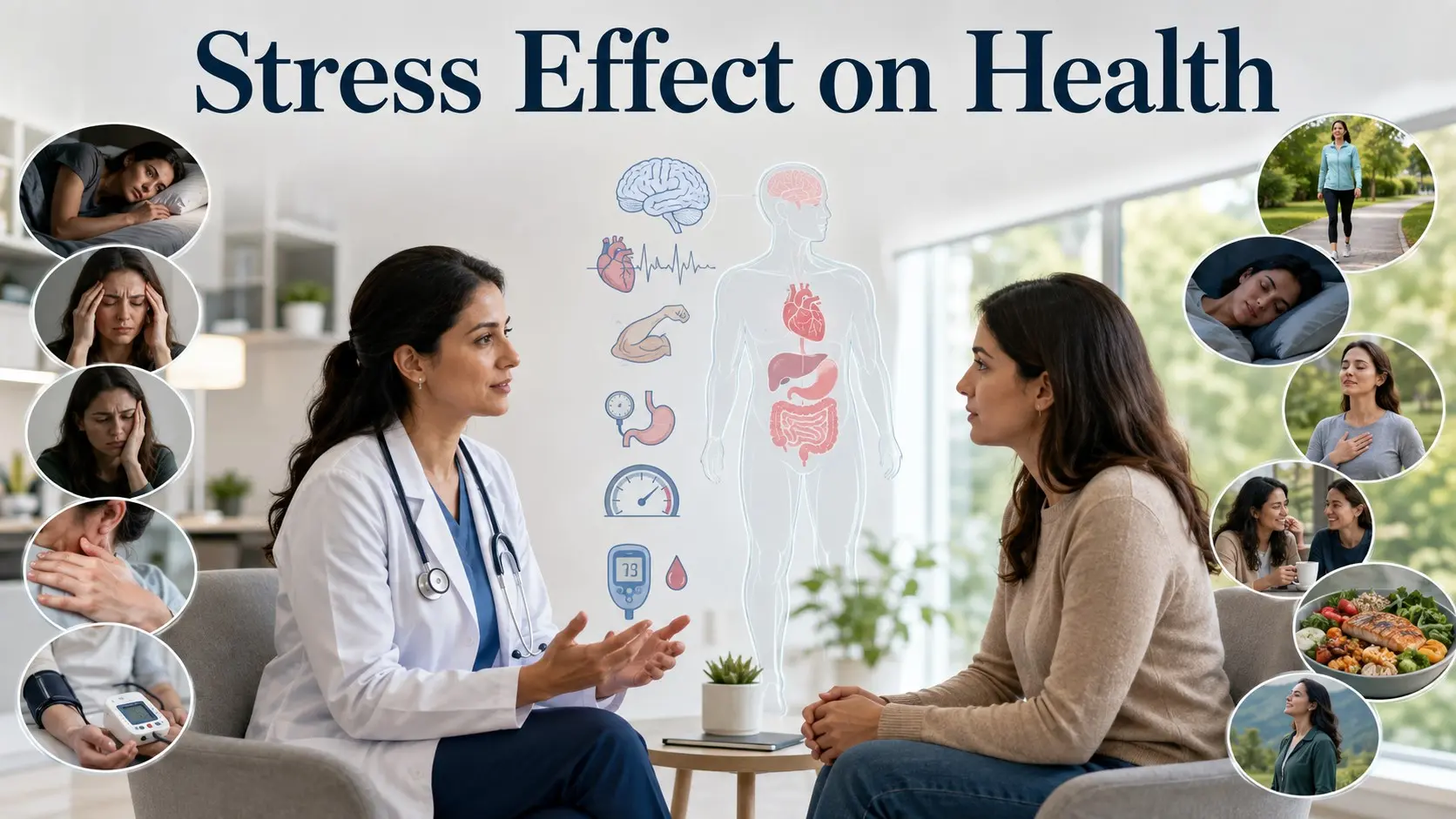
Stress Effect on Health can be seen in both the body and mind.
Stress itself is not always bad.
Your body has a normal stress response.
It helps you react to danger.
It can also help you focus before an exam, interview, deadline, or important event.
The problem is different when stress does not stop.
Chronic stress can keep your body under repeated pressure.
You may notice poor sleep.
You may get headaches.
Your muscles may stay tense.
Your stomach may feel upset.
You may feel tired, angry, worried, or unable to focus.
Your blood pressure and heart rate may rise during stressful moments.
Stress can also change eating, exercise, smoking, alcohol use, and how well people follow medical treatment.
Over time, these patterns can affect health.
But there is one important rule.
Do not blame every new symptom on stress.
Chest pain may come from stress.
It may also come from the heart, lungs, or another serious problem.
Stomach pain may happen during stress.
It may also have another medical cause.
New symptoms deserve proper assessment when they are severe, persistent, unusual, or getting worse.
When Stress Symptoms May Need Urgent Medical Care
Stress can cause real physical symptoms.
But serious illness can look similar.
Seek urgent medical care for:
- New severe chest pressure or chest pain
- Severe trouble breathing
- Fainting
- Sudden weakness on one side
- New trouble speaking
- Sudden severe confusion
- A seizure
- A sudden severe headache
- Vomiting blood
- Black stools with weakness or faintness
- Rapidly worsening illness
If emotional distress makes you feel unsafe, unable to care for yourself, or at risk of harming yourself or someone else, seek immediate professional or emergency help in your location.
What Is the Stress Effect on Health?
The Stress Effect on Health depends on how strong the stress is and how long it lasts.
Short stress can be useful.
It can increase alertness and help you respond quickly.
Long-lasting stress is different.
It can affect:
- Sleep
- Mood
- Concentration
- Blood pressure
- Heart rate
- Digestion
- Blood sugar
- Headaches
- Muscle tension
- Pain
- Immune regulation
- Eating habits
- Alcohol use
- Smoking
- Physical activity
Managing stress does not mean removing every challenge from life.
The goal is to reduce unnecessary stress and improve how your body and mind recover.
What Is Stress?
Stress is your physical and emotional response to a challenge or demand.
A stressful event is sometimes called a stressor.
Stressors can be physical.
They can also be emotional or social.
Common Stressors Include
- Work pressure
- Financial problems
- Relationship problems
- Illness
- Caregiving
- Loss of a loved one
- Moving
- Divorce
- Job loss
- Exams
- Parenting
- Lack of sleep
- Major life changes
Even a positive event can create stress.
A wedding can be stressful.
A new job can be stressful.
Having a baby can be stressful.
Your body reacts to the demand, not only to whether the event is good or bad.
What Is the Difference Between Acute Stress and Chronic Stress?
Acute Stress
Acute stress is short.
It may happen before an exam.
It may happen during an argument.
It may happen when you almost have an accident.
Your body becomes alert.
Then the response settles when the event ends.
Chronic Stress
Chronic stress continues for weeks, months, or longer.
Examples may include:
- Long lasting financial pressure
- A difficult work environment
- Ongoing caregiving stress
- A troubled relationship
- Chronic illness
- Housing problems
- Social isolation
The body may keep switching into a stress response again and again.
This repeated activation can affect health and daily functioning.
What Happens to Your Body During Stress?
Your brain detects a challenge.
The nervous system responds.
Stress hormones are released.
Two important hormones are adrenaline and cortisol.
The Fight or Flight Response
The fight or flight response prepares the body to act.
Your:
- Heart may beat faster
- Breathing may become faster
- Blood pressure may rise
- Muscles may tighten
- Attention may increase
- Blood glucose may rise
This response can be useful during a true threat.
The problem comes when the body keeps returning to this state even when you do not need to run or fight.
How Does Stress Affect the Brain?
Stress can change how you think and feel.
Concentration
You may find it hard to focus.
You may read the same sentence several times.
You may forget simple tasks.
Decision Making
When you feel overwhelmed, choices may feel harder.
You may put things off.
You may act more quickly without thinking.
Mental Fatigue
Long lasting emotional stress can leave you feeling mentally tired.
This can happen even when you have not done much physical work.
Stress Is Not the Only Cause of Brain Fog
Problems with focus can also be caused by:
- Poor sleep
- Depression
- Anxiety
- Medicines
- Anemia
- Thyroid problems
- Infections
- Other medical conditions
Persistent cognitive changes deserve assessment.
How Can Stress Affect Mental Health?
Stress can affect emotional wellbeing.
You may feel:
- Irritable
- Worried
- Overwhelmed
- Angry
- Sad
- Restless
- Emotionally tired
Long-lasting stress is linked with mental health problems such as anxiety and depression.
But stress and a mental health disorder are not the same thing.
When Does Stress Need More Than Self-Care?
Professional help becomes more important when symptoms:
- Keep returning
- Last for weeks
- Make work difficult
- Damage relationships
- Change your eating
- Prevent sleep
- Cause substance use
- Make normal daily tasks hard
Use the Mental Health and Wellness Hub for more guidance on stress, anxiety, depression, sleep, and emotional support.
How Does Stress Affect Sleep?
Sleep problems are one of the most common effects of stress.
Your mind may stay busy at night.
You may replay conversations.
You may worry about tomorrow.
Your body may still feel alert when you want to rest.
Stress Can Cause
- Trouble falling asleep
- Frequent waking
- Early waking
- Nightmares
- Restless sleep
- Feeling tired the next day
Poor Sleep Can Then Increase Stress
This can create a cycle.
Stress makes sleep harder.
Then poor sleep makes coping harder the next day.
Do Not Assume Every Sleep Problem Is Stress
Persistent sleep trouble may also be linked with:
- Sleep apnea
- Pain
- Depression
- Anxiety disorders
- Menopause
- Medicines
- Restless legs
If you are also concerned about cardiovascular sleep risks, read Sleep and Heart Health.
How Does Stress Affect Heart Health?
The relationship between chronic stress and heart health is complex.
During stress, adrenaline can make the heart beat faster.
Blood pressure can rise for a short time.
Blood vessels may narrow.
Stress Can Also Change Behavior
A stressed person may be more likely to:
- Smoke
- Exercise less
- Sleep poorly
- Drink more alcohol
- Eat more highly processed food
- Forget medicines
These behaviours can affect cardiovascular risk.
Does Stress Cause Heart Disease?
It is more accurate to say that long-lasting stress may contribute to cardiovascular risk.
It should not be treated as the only cause.
Heart disease is influenced by many factors.
These include:
- Blood pressure
- Cholesterol
- Smoking
- Diabetes
- Family history
- Age
- Physical activity
Visit the Heart and Cardiovascular Health Hub for more information about heart risk.
Never Assume Chest Pain Is Only Stress
Chest symptoms can come from many causes.
If pain is new, severe, occurs with exertion, or comes with sweating, faintness, nausea, or trouble breathing, seek urgent medical care.
Our Left Side Chest Pain guide explains why location alone cannot reveal the cause.
Can Stress Raise Blood Pressure?
Yes.
Your blood pressure can rise temporarily during stress.
Stress hormones increase heart activity and change blood vessel tone.
Does Stress Cause Permanent High Blood Pressure?
The long-term relationship is more complex.
Research is still studying exactly how chronic stress contributes to hypertension.
Stress can also encourage habits that raise blood pressure.
These include poor diet, low activity, smoking, and too much alcohol.
Do Not Treat High Blood Pressure With Relaxation Alone
If you have hypertension, keep following your prescribed treatment.
Stress management can support health.
It does not replace blood pressure medicine when medicine is needed.
How Does Stress Affect Digestion?
The brain and digestive system communicate constantly.
Stress can change this communication.
You may notice digestive problems such as:
- Stomach discomfort
- Nausea
- Diarrhea
- Constipation
- Bloating
- Changes in appetite
Can Stress Make IBS Worse?
Stress can worsen symptoms in some people with irritable bowel syndrome.
But stress does not mean every digestive symptom is IBS.
Does Stress Cause Stomach Ulcers?
Do not assume ordinary emotional stress is the main cause of a stomach ulcer.
Common causes of peptic ulcers include Helicobacter pylori infection and some pain medicines.
Persistent stomach pain, vomiting, black stool, blood, or weight loss needs medical assessment.
Can Stress Raise Blood Sugar?
Yes.
The stress response can raise blood glucose.
This makes energy available quickly.
Why Does This Matter in Diabetes?
People with diabetes may notice that stressful periods make blood sugar harder to manage.
Stress can also affect:
- Food choices
- Exercise
- Sleep
- Medicine routines
Stress management can support diabetes care.
It does not replace diabetes medicine or glucose monitoring.
Visit the Diabetes and Blood Sugar Management Hub for more guidance.
Does Stress Weaken the Immune System?
The relationship between stress and immune function is complex.
It is better to talk about immune regulation than simply saying stress switches immunity off.
Long lasting stress can affect immune and inflammatory processes.
It can also affect health indirectly through poor sleep, nutrition, alcohol, smoking, and other behaviors.
Can Stress Make You Catch Every Infection?
No.
Infection risk depends on many things.
These include:
- Exposure to a germ
- Vaccination
- Age
- Medical conditions
- Medicines
- Sleep
- Nutrition
Stress management is one part of health.
It does not create immunity from infection.
For the wider picture, read How to Build Your Immunity System.
Can Stress Cause Headaches and Muscle Pain?
Yes.
Muscle tension is a common stress response.
You may tighten your:
- Jaw
- Neck
- Shoulders
- Back
This can contribute to aches and discomfort.
Stress and Headaches
Headaches may occur during stressful periods.
Stress can also trigger headaches in some people who are already prone to them.
Stress and Chronic Pain
Stress and pain can influence each other.
Pain can create stress.
Stress can make pain feel harder to cope with.
Do Not Assume Severe Pain Is Stress
New severe pain deserves the right assessment.
A sudden severe headache is especially important.
Seek urgent care if it comes with:
- Weakness
- Speech trouble
- Confusion
- Fainting
- Fever with severe illness
- Vision loss
Can Stress Affect Your Skin?
Stress can affect some skin conditions.
People may notice worsening:
- Itching
- Acne
- Eczema
- Some inflammatory skin symptoms
Stress Is Not the Only Cause of a Rash
A rash can also come from:
- Allergy
- Infection
- Medicine reactions
- Contact dermatitis
- Other skin diseases
Do not diagnose a new rash as stress without considering other causes.
Use the Skin Health Guide for more information.
Can Stress Affect Weight?
Yes.
Stress can change appetite and eating behavior.
Some people eat more.
Some eat less.
Stress Eating
Food may give short emotional relief.
But frequent emotional eating can make weight management harder.
Stress Can Also Affect Weight Through Sleep
Poor sleep can change appetite.
It can reduce energy for exercise.
It may also make food planning harder.
Weight Change Can Have Other Causes
Do not assume major weight gain or loss is caused only by stress.
Possible causes include:
- Thyroid disease
- Diabetes
- Medicines
- Depression
- Digestive disease
- Other illness
What Is the Difference Between Stress and Anxiety?
Stress usually has an identifiable cause.
You may feel stressed because of money, work, health, or a relationship.
Anxiety is a response that may continue even when there is no immediate threat.
They Can Feel Similar
Both may cause:
- Worry
- Restlessness
- Poor sleep
- Rapid heartbeat
- Muscle tension
- Trouble concentrating
When Anxiety Needs Professional Care
Talk with a qualified professional if anxiety:
- Feels constant
- Causes panic
- Stops you from doing normal activities
- Causes major avoidance
- Does not improve
What Are Signs That Stress Is Affecting Your Health?
Physical Signs
- Headache
- Jaw tension
- Neck pain
- Stomach upset
- Fast heartbeat
- Feeling tense
- Tiredness
- Poor sleep
Emotional Signs
- Irritability
- Worry
- Feeling overwhelmed
- Anger
- Sadness
- Feeling unable to cope
Thinking Signs
- Poor concentration
- Forgetfulness
- Difficulty making decisions
- Racing thoughts
Behavior Changes
- Smoking more
- Drinking more alcohol
- Eating much more or less
- Withdrawing from people
- Skipping exercise
- Not taking medicine correctly
How Can You Reduce the Stress Effect on Health?
Good stress management does not require a perfect lifestyle.
Small repeatable steps can help.
1. Find the Main Stressor
Write down what is creating the most pressure.
Do not try to fix ten problems at once.
2. Separate What You Can Control
Ask:
What can I change?
What can I plan?
What do I need to accept?
3. Protect Sleep
Try to keep a regular sleep schedule.
Give yourself enough time to sleep.
4. Move Your Body
Walking is a useful start.
Regular physical activity can support mood and general health.
5. Eat Regular Meals
Long periods without food can make some people feel more tired or irritable.
Aim for a balanced eating pattern.
6. Watch Caffeine
Large amounts of caffeine may worsen nervousness, palpitations, or sleep in some people.
7. Avoid Using Alcohol as Treatment
Alcohol may feel relaxing for a short time.
It can worsen sleep and create other health risks.
8. Stay Connected
Talk with people you trust.
Social support can make difficult periods easier to manage.
9. Use Relaxation Skills
Try a method you can repeat.
Examples include:
- Slow breathing
- Progressive muscle relaxation
- Mindfulness
- Guided imagery
10. Get Professional Support When Needed
Therapy, counselling, medical care, or another form of professional support may be appropriate when stress becomes persistent or disabling.
For broader lifestyle support, visit the General Wellness and Lifestyle Hub.
Can Deep Breathing Reduce Stress?
Deep breathing can help activate the body's relaxation response.
NCCIH reports that slow breathing may modestly reduce blood pressure and cortisol in some studies.
Simple Slow Breathing
- Sit comfortably.
- Relax your shoulders.
- Breathe in slowly through your nose.
- Let your belly move gently outward.
- Breathe out slowly.
- Repeat for a few minutes.
Do not force very large breaths.
Stop if you become dizzy.
Relaxation Is Supportive Care
Relaxation techniques may help with stress.
They should not replace treatment for a serious medical or mental health condition.
Can Mindfulness Help With Stress?
Mindfulness means bringing attention to the present moment.
It is often practiced through meditation or simple awareness exercises.
Research suggests that mindfulness practices may help reduce perceived stress in some people.
It Does Not Work the Same for Everyone
Some people find meditation calming.
Others may feel uncomfortable or more anxious.
This can be especially important for people with trauma histories or some psychiatric conditions.
If a practice makes you feel worse, stop and choose another approach.
Can Exercise Reduce Stress?
Physical activity can support both physical and mental health.
You do not need an extreme workout.
Simple Options
- Walking
- Cycling
- Swimming
- Strength training
- Dancing
- Gardening
Choose something you can repeat.
If you are new to exercise, our Safe Beginner Fitness Guide explains how to start gradually.
Exercise Is Not a Cure for Every Mental Health Problem
Movement can help.
It should not replace psychotherapy, medicine, or other treatment when those are needed.
How Can Better Sleep Help With Stress?
A regular sleep routine can make coping easier.
Try These Simple Steps
- Keep a regular waking time
- Reduce late caffeine
- Make the bedroom dark
- Keep the room comfortable
- Reduce stressful work near bedtime
- Give yourself time to wind down
Do Not Ignore Persistent Insomnia
If poor sleep continues and affects daily life, talk with a healthcare professional.
Chronic insomnia may need more than relaxation tips.
What Can You Do About Work Stress?
Work can be a major source of chronic stress.
Start With the Problem You Can Name
Is the problem:
- Too much work?
- Long hours?
- Conflict?
- Unclear expectations?
- No control?
- Job insecurity?
The answer may change what helps.
Set Realistic Boundaries
When possible:
- Take breaks
- Use leave
- Set work limits
- Ask for priorities
- Reduce unnecessary notifications
- Seek support from management or occupational health
Burnout Is Not Just Being Tired
Burnout is linked with chronic workplace stress.
Persistent exhaustion, detachment from work, and declining effectiveness deserve attention.
When Should You Get Professional Help for Stress?
Talk with a healthcare or mental health professional if stress:
- Does not go away
- Is getting worse
- Prevents sleep
- Causes repeated panic
- Changes appetite significantly
- Makes work or school difficult
- Damages relationships
- Leads to heavy alcohol use
- Leads to drug use
- Causes persistent physical symptoms
What Treatment Can Help?
The best treatment depends on the cause.
Options may include:
- Medical evaluation
- Psychotherapy
- Cognitive behavioural therapy
- Stress management training
- Treatment for anxiety or depression
- Sleep treatment
- Workplace changes
Do Not Self Diagnose Persistent Physical Symptoms
Stress may be part of the picture.
It may not be the whole picture.
Common Myths About the Stress Effect on Health
Myth: All Stress Is Bad
No.
Short stress can help you react, focus, and solve a problem.
Myth: Stress Is Only in Your Head
No.
The stress response involves real changes in hormones, heart rate, breathing, muscles, blood pressure, and metabolism.
Myth: Stress Causes Every Illness
No.
Stress can contribute to or worsen some health problems.
It should not replace proper diagnosis.
Myth: Chest Pain From Stress Is Always Safe
No.
Heart and lung conditions can cause similar symptoms.
Myth: More Cortisol Is Always Bad
No.
Cortisol is a normal hormone.
Your body needs it.
The issue is abnormal or prolonged stress physiology, not the existence of cortisol itself.
Myth: Meditation Works for Everyone
No.
Some people find it helpful.
Others prefer exercise, breathing, therapy, hobbies, or social contact.
Myth: Alcohol Is a Good Way to Relax
No.
Alcohol can worsen sleep and create additional health problems.
Myth: You Must Remove All Stress From Life
No.
That is not realistic.
The goal is healthier coping and recovery.
A Simple Daily Stress Management Plan
Morning
- Get out of bed at a regular time
- Eat a balanced meal if breakfast fits your routine
- Decide on your top priorities
- Avoid starting the day with endless negative news
During the Day
- Take short movement breaks
- Eat regular meals
- Drink enough fluid
- Pause before reacting when possible
- Talk to someone you trust
Evening
- Reduce work before bedtime
- Try slow breathing or another relaxing activity
- Limit late caffeine
- Prepare for sleep
Each Week
- Do something enjoyable
- Exercise regularly
- Spend time with supportive people
- Review what is creating the most stress
- Ask for help when a problem is becoming too much
References and Sources
This guide was checked against current open stress, mental health, cardiovascular, relaxation, and medical education sources.
- Centers for Disease Control and Prevention: Managing StressUpdated May 2026 guidance on stress symptoms, chronic stress, sleep, appetite, concentration, physical symptoms, healthy coping, and when additional support may be needed.
Read the CDC Managing Stress Guide
- National Center for Complementary and Integrative Health: StressNational Institutes of Health guidance explaining the stress response, chronic stress, digestion, headaches, sleep, mental health, relaxation techniques, breathing, mindfulness, and safety limitations.
Read the NIH NCCIH Stress Guide
- National Institute of Mental Health: I am So Stressed Out Fact SheetGuidance explaining stress versus anxiety, coping strategies, sleep, exercise, food, social support, and signs that professional mental health support may be appropriate.
Read the NIMH Stress and Anxiety Fact Sheet
- American Heart Association: Stress and Heart HealthGuidance explaining the stress response, temporary increases in heart rate and blood pressure, behavioral cardiovascular risks, chronic stress, and the complex relationship between stress and heart disease.
Read the American Heart Association Stress and Heart Health Guide
- MedlinePlus: StressUnited States National Library of Medicine information on acute and chronic stress, physical symptoms, sleep, digestion, headaches, mental health, blood pressure, blood glucose, and when medical help may be needed.
Read the MedlinePlus Stress Guide
Conclusion
The Stress Effect on Health is real.
But it is also complex.
Short stress can be normal and useful.
Chronic stress can affect sleep, mood, concentration, digestion, headaches, pain, blood pressure, and daily habits.
It can also make existing health problems harder to manage.
You do not need a perfect stress-free life.
Start with the basics.
Sleep regularly.
Move your body.
Eat regular meals.
Use slow breathing or another relaxation method.
Stay connected with people you trust.
Reduce alcohol and avoid smoking.
Ask for professional support when stress becomes persistent or overwhelming.
Take action today: Choose one source of stress that you can change and one recovery habit you can repeat. If the Stress Effect on Health is affecting your work, sleep, relationships, or physical health, discuss it with a qualified healthcare or mental health professional.
Continue Reading on NextFitLife
Use these related guides to understand stress, mental health, sleep, heart health, movement, and general wellbeing.
- NextFitLife Health Hub
- Mental Health and Wellness Hub
- General Wellness and Lifestyle Hub
- Heart and Cardiovascular Health Hub
- Sleep and Heart Health
- Left Side Chest Pain Guide
- Safe Beginner Fitness Guide
- How to Build Your Immunity System
- Diabetes and Blood Sugar Management Hub
- Skin Health Guide
Main Health Hub: Return to the NextFitLife Health Hub for symptoms, prevention, medical conditions, nutrition, screening, and healthy living.
Mental Health: Use the Mental Health and Wellness Hub for stress, anxiety, depression, sleep, brain fog, emotional health, relaxation, and professional support.
General Wellness: Visit the General Wellness and Lifestyle Hub for sleep, movement, nutrition, social connection, tobacco choices, alcohol, and preventive health.
Heart Health: Visit the Heart and Cardiovascular Health Hub for blood pressure, cholesterol, cardiovascular risk, exercise, and warning signs.
Sleep: Read Sleep and Heart Health to understand why sleep deserves attention when stress is affecting both mind and body.
Exercise: Use the Safe Beginner Fitness Guide if you want to add regular movement without starting an extreme exercise plan.
Medical Disclaimer
This content is for general educational purposes and does not replace professional medical advice, diagnosis, or treatment. Consult an appropriately qualified healthcare professional for personal medical concerns.
This article explains published guidance and does not provide a personal clinical assessment.
Always consult qualified medical professionals for diagnosis and treatment of any health condition.
I am also not a psychologist, psychotherapist, counsellor, cardiologist, gastroenterologist, neurologist, endocrinologist, or other licensed healthcare professional.
This article provides general education only.
It does not diagnose chronic stress, anxiety, depression, panic disorder, heart disease, hypertension, diabetes, digestive disease, or another medical or mental health condition.
Do not assume a new physical symptom is caused by stress without considering other causes.
Do not stop prescribed medicine because you believe stress is the real cause of your condition.
Medical history, age, pregnancy, medicines, mental health, physical illness, substance use, trauma, and other factors can change which stress management options are appropriate.
Frequently Asked Questions About Stress Effect on Health
What is the Stress Effect on Health?
Stress can affect sleep, mood, concentration, heart rate, blood pressure, digestion, headaches, muscle tension, blood sugar, pain, and daily health habits. Long lasting stress can have a greater effect than short stress.
Is all stress harmful?
No. Short term stress can help you react to danger, focus, and solve problems. Chronic stress is more likely to cause health and daily functioning problems.
What is chronic stress?
Chronic stress is stress that continues for weeks, months, or longer. It may come from work, money, caregiving, relationships, illness, isolation, or other ongoing problems.
What happens to the body when you are stressed?
The body releases stress hormones. Heart rate, breathing, blood pressure, muscle tension, alertness, and blood glucose may increase for a short time.
What is the fight or flight response?
The fight or flight response is the body's rapid reaction to a threat. It prepares the brain, heart, muscles, and other systems to respond quickly.
What does cortisol do during stress?
Cortisol is a normal hormone involved in energy regulation and the stress response. The body needs cortisol, but long-lasting stress can alter normal stress hormone patterns.
Can stress raise blood pressure?
Yes. Blood pressure can rise temporarily during a stressful event. The relationship between chronic stress and permanent hypertension is more complex.
Can stress cause heart disease?
Long lasting stress may contribute to cardiovascular risk, but heart disease has many causes. Stress can also affect smoking, alcohol use, diet, exercise, sleep, and medicine use.
Can stress cause chest pain?
Stress can be associated with chest discomfort, but heart, lung, and other serious problems can cause similar symptoms. New or severe chest pain needs proper assessment.
Can stress affect digestion?
Yes. Stress can cause or worsen symptoms such as stomach discomfort, nausea, diarrhea, constipation, bloating, and appetite changes.
Can stress cause IBS?
Stress can worsen irritable bowel syndrome symptoms in some people. It is not correct to assume that every digestive symptom is caused by stress.
Can stress raise blood sugar?
Yes. Stress hormones can increase blood glucose. Stress can also affect sleep, eating, exercise, and medicine routines in people with diabetes.
Does stress weaken the immune system?
Long lasting stress can affect immune regulation and inflammation. It is more accurate to describe this as a complex effect on immune function rather than simply switching immunity off.
Can stress cause headaches?
Yes. Stress and muscle tension can contribute to headaches in some people. A new sudden severe headache needs urgent assessment.
Can stress cause muscle pain?
Yes. Stress can cause muscles in the jaw, neck, shoulders, and back to stay tense, which may contribute to pain.
Can stress affect your skin?
Stress can worsen some skin symptoms such as itching, eczema, and acne. A new rash can have many other causes.
Can stress make you gain weight?
Stress can change eating, sleep, activity, and appetite. These changes can affect weight, but major weight changes may also have medical causes.
Can stress make you lose weight?
Yes. Some people lose appetite during stress. Persistent unexplained weight loss should still be assessed by a healthcare professional.
What is the difference between stress and anxiety?
Stress often has a clear external cause. Anxiety may continue even when there is no immediate threat. The symptoms can overlap.
How can I reduce stress naturally?
Useful strategies can include regular sleep, walking, exercise, slow breathing, relaxation exercises, mindfulness, healthy meals, realistic boundaries, and social support.
Does deep breathing reduce stress?
Slow breathing may help activate the relaxation response and can reduce perceived stress in some people.
Does meditation help stress?
Mindfulness and meditation may help some people reduce stress. They do not work equally well for everyone and should not replace needed professional treatment.
Does exercise help stress?
Regular physical activity can support mood, sleep, cardiovascular health, and stress management. Choose an activity that matches your health and fitness level.
How does sleep affect stress?
Poor sleep can make coping harder. Stress can also make sleep harder, creating a cycle of poor sleep and greater stress.
When should I see a doctor about stress?
Seek professional help if stress lasts, keeps returning, affects sleep or eating, causes major physical symptoms, interferes with work or relationships, or becomes difficult to manage.
When are stress symptoms an emergency?
Seek urgent help for severe chest pain, serious breathing trouble, fainting, sudden weakness, new speech trouble, severe confusion, seizure, or another rapidly worsening symptom.

Health & wellness writer with 30+ years of experience in nutrition, fitness, and healthy aging. Founder of NextFitLife.com — evidence-based health guidance.


Why Does Social Support Matter During Stress?
Stress can make people withdraw.
But isolation may make coping harder.
Useful Support Can Come From
You Do Not Need to Explain Everything
A simple message can be enough.
Tell someone that you are having a difficult week.
Ask for practical help when you need it.