Vitamins for bone health are not just another health trend. They’re essential to build blocks your bones need to stay strong and keep you mobile. I’ve watched friends and family members struggle with weak bones, fractures from simple falls, and the loss of independence that comes with them. It’s heartbreaking.
The bright side is that it’s avoidable. By understanding which essential nutrients for healthy bones your body needs, you can take control of your bone strength starting today. Most people overlook bone health until a fracture happens—like ignoring your engine until it fails. This guide reveals the key vitamins your bones need and how to fuel them simply.
What Are Vitamins for Bone Health?
The Simple Truth About Strong Bones
Your bones are made of minerals, mainly calcium, held together by protein. Think of calcium as bricks and protein as the mortar. Vitamins and minerals for bone health act as the workers building and maintaining that structure. Without the right vitamins, your body can’t absorb the minerals, and your bones become weak and brittle over time.
Why Your Body Loses Bone Strength
Your bones naturally break down and rebuild. After age 30, most people lose more bone than they build. Women lose bone faster after menopause because estrogen (which protects bones) drops dramatically. Preventing bone loss of vitamins means starting early and staying consistent.
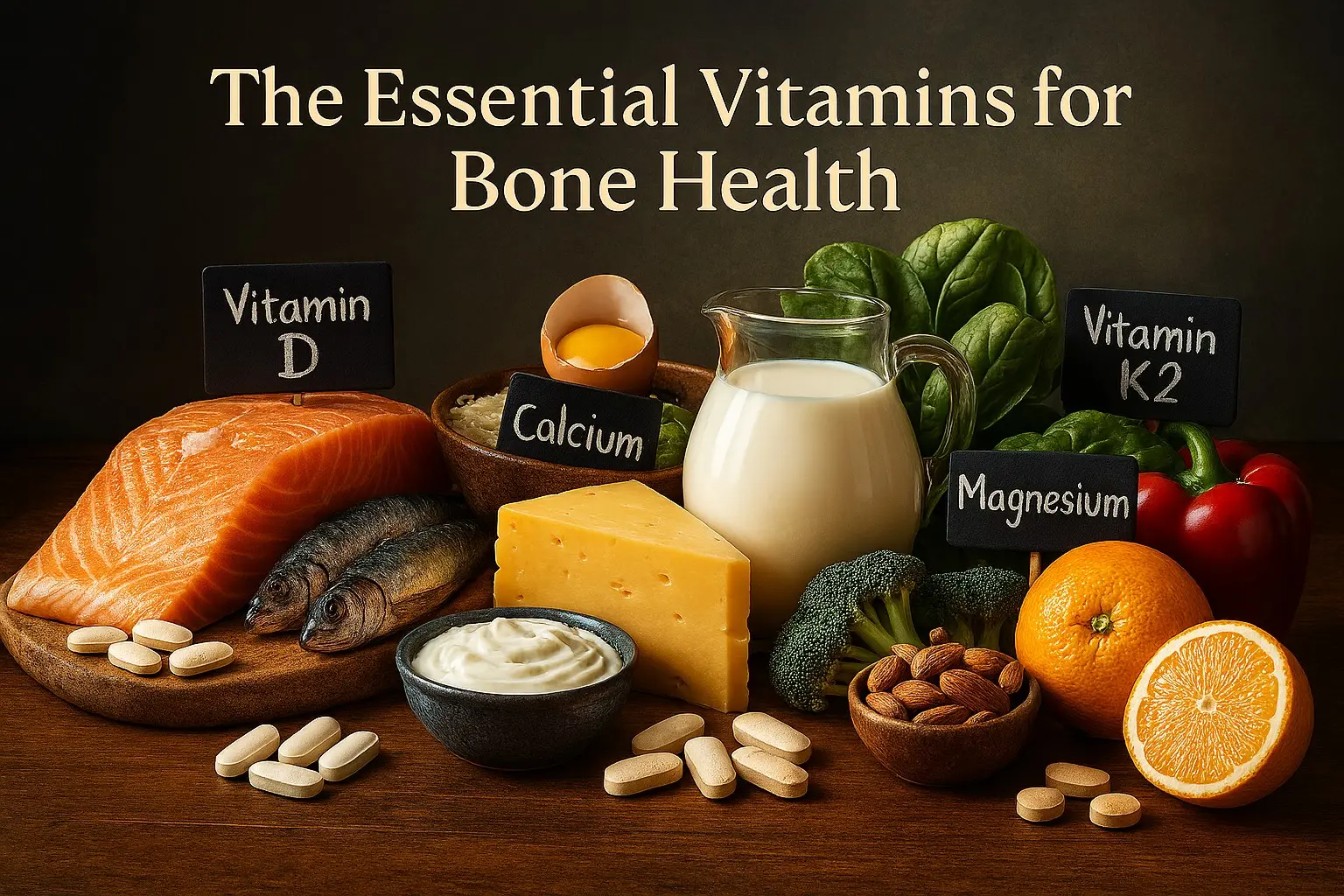
The Essential Vitamins for Bone Health
1. Vitamin D – The Absorption Master
Vitamin D is the quarterback of bone health vitamins for adults. Without it, your body can’t absorb calcium, no matter how much you eat.
What it does:
- Help calcium enter your bones
- Supports muscle strength (preventing falls)
- Reduces inflammation
Daily needs: 600-800 IU for adults under 50; 800-1,000 IU for adults over 50
Best sources:
- Fatty fish (salmon, mackerel, sardines with bones)
- Egg yolks
- Fortified milk and plant-based milk
- Sunlight (15-20 minutes daily helps your skin make Vitamin D.
2. Calcium – The Foundation Mineral
Calcium is what everyone knows about, and for good reason. Calcium supplements and calcium-rich foods form 99% of your bone structure.
Daily needs:
- Ages 19-50: 1,000 mg daily
- Ages 51+: 1,200 mg daily (from food + supplements combined)
High-calcium foods:
| Food | Serving | Calcium (mg) |
| Yogurt (plain, low-fat) | 6 oz | 310 |
| Milk | 8 oz | 300 |
| Cheddar cheese | 1 oz | 205 |
| Sardines (with bones) | 3 oz | 325 |
| Spinach (cooked) | 8 oz | 180 |
| Broccoli (cooked) | 8 oz | 60 |
Pro tip: Your body absorbs only 500-600 mg of calcium at once. Spread it throughout the day instead of taking it all together.
3. Vitamin K2 – The Activator
Here’s a nutrient many people miss: Vitamin K2 benefits your bones by activating proteins that hold calcium in place. Without it, calcium floats around and doesn’t strengthen your bones effectively.
What it does:
- Activates bone-building proteins
- Works with Vitamin D for maximum absorption
- Improves bone mineral density
Best sources:
- Fermented foods (sauerkraut, kimchi, natto)
- Cheese (especially Gouda and Brie)
- Chicken and beef
- Egg yolks
Recommended dose: 45-180 mcg daily (higher than K1 foods typically provide)
4. Magnesium – The muted Helper
About half of Americans don’t get enough magnesium, and magnesium’s role in bone health is critical. Magnesium is part of your bone structure itself.
What it does:
- Make up about 60% of bone mineral
- Helps convert Vitamin D to its active form
- Reduces inflammation
Daily needs: 310-420 mg for women; 400-420 mg for men
Best sources:
- Pumpkin seeds (one ounce = 150 mg)
- Almonds
- Spinach
- Black beans
- Cashews
Absorption tip: Magnesium glycinate absorbs better than magnesium oxide (which can cause digestive issues).
5. Vitamin C – The Collagen Builder
Bones rely on collagen, the body’s natural glue. Vitamin C collagen production is essential for bone flexibility.
What it does:
- Builds collagen in bone structure
- Acts as an antioxidant
- Reduces bone fracture risk
Daily needs: 75 mg for women; 90 mg for men
Best sources:
- Oranges (one medium = 70 mg)
- Bell peppers (one cup = 150 mg)
- Strawberries
- Kiwi
- Broccoli
Secondary Nutrients That Matter
Boron, Silicon & Other Minerals for Osteoporosis
Boron supplements and silicon nutrition sound exotic, but they genuinely support bone density. Research shows that bone helps calcium absorption, while silicon strengthens bone structure.
Where to find them:
- Boron: apples, pears, nuts, legumes
- Silicon: green beans, bananas, brown rice, whole grains
Realistic amounts: You don’t need supplements for these if you eat varied whole foods. Focus on the “Big 5” first.
Building Your Personal Bone Health Strategy
For Different Life Stages
Young Adults (20-35): Build Your Peak Bone Mass
Your 20s and 30s are when you deposit bone strength. What you build now matters for life.
Focus on:
- Calcium and vitamin D for bones from food first
- Weight-bearing exercise (walking, running, strength training)
- Consistent nutrient intake
- Avoid smoking and excessive alcohol use
Middle-aged adults (35-50): Maintain & Prevent Loss
This is where consistency pays off. Women approaching menopause need extra attention.
Key changes:
- Bump calcium to 1,000-1,200 mg daily
- Check Vitamin D levels (aim for 30-50 ng/ml)
- Add Vitamin K2 osteoporosis prevention
- Start strength training if you haven’t
Older Adults (50+): Slow the Decline
Bone loss accelerates, but you can still build and maintain strength.
Priority nutrients:
- All five main vitamins above
- Possibly supplements if food intake is low
- Medical supervision for osteoporosis prevention
- Regular bone density testing
For Special Diets
Vegans and Vegetarians:
- Plant-based calcium for bones: fortified plant milks, tofu (if made with calcium), leafy greens
- Vitamin D: fortified plant milks, mushrooms, supplements (especially important for you)
- Vitamin B12: fortified foods or supplements (affects bone health indirectly)
People with Lactose Intolerance:
- Lactose-free dairy (calcium still present)
- Fortified non-dairy milks
- Leafy greens, sardines, tofu
Real Talk: Supplements vs. Food
The Honest Assessment
I like the food-first approach because it works. Food provides nutrients in combinations of nature. However, I’ve also seen people who genuinely need supplements, especially older adults who struggle to eat enough, or those with absorption issues.
When you probably need supplements:
- Vitamin D: Everyone in northern climates or with limited sun exposure
- Calcium: If you can’t hit 800 mg from food
- Vitamin K2: Difficult to get enough from a regular diet
- Magnesium: Many modern diets are deficient
When food is enough:
- Vitamin C: Easy to get from fruits and veggies
- Boron, Silicon: You’ll get them from varied whole foods
Quality Matters
Not all supplements are equal. Look for:
Trusted brands
- USP Verified mark on label
- “Purified” designation
- Third-party tested (NSF, ConsumerLab)
Red flags
- No label information
- Suspiciously cheap
- Unusual claims (“cure osteoporosis”)
The Bone Strengthening Nutrients Checklist
Your Daily Goal Sheet
Here’s what I recommend tracking:
| Nutrient | Daily Target | Food Source | Supplement Option |
| Calcium | 1,000-1,200 mg | Dairy, greens | Citrate form |
| Vitamin D | 800-1,000 IU | Fish, egg yolks, sun | D3 (cholecalciferol) |
| Vitamin K2 | 45-180 mcg | Fermented, cheese | Yes, if lacking K2 |
| Magnesium | 310-420 mg | Seeds, nuts, greens | Glycinate form |
| Vitamin C | 75-90 mg | Citrus, peppers | Usually, food is sufficient |
Personal Experience: What I’ve Discovered
I started paying attention to Vitamins for bone health after watching my mother develop osteoporosis in her 60s. She’d been active her whole life but never considered her nutrition. By the time she was diagnosed, the damage was done.
That motivated me to research this deeply. Over two years, I tested different approaches: food-based nutrition, targeted supplements, and combinations. Here’s what worked for me:
- Building a routine was harder than choosing the right vitamins. I set phone reminders for magnesium and Vitamin D.
- Food first, supplements second, gave me the best results. When I tried supplements without fixing my diet, I didn’t see improvements.
- Testing bone density changes (DEXA scans) showed real progress after 18 months of consistency. I went from declining bone density to stable, then improving.
- Combining Vitamin D with Vitamin K2 made a noticeable difference—more stable joints, fewer minor injuries.
FAQs About Vitamins for Bone Health
What Vitamin Is Best for Bone Health?
It’s not one vitamin—it’s a team. Vitamin D is most critical because without it, nothing else works. But calcium, K2, and magnesium are equally important. Think of them as a sports team: each player has a position, and you need all of them to play well.
Is Vitamin C or D Better for Bones?
Vitamin D is non-negotiable; most people are deficient. Vitamin C is important but easier to get from food. If you choose one supplement, make it Vitamin D.
What’s the Fastest Way to Increase Bone Density?
There’s no quick fix, but this combination works fastest:
- Strength training 3x weekly (this is THE most powerful tool)
- Consistent calcium and vitamin D for bones intake
- Adequate protein (builds bone structure)
- Time (expect 6-18 months to see meaningful changes)
What Fruit Is Best for Bones?
Oranges win for Vitamin C. But don’t overlook dried figs (calcium), bananas (magnesium), and kiwis (Vitamin C). Variety beats single foods.
What Is the “Silent Killer” of Osteoporosis?
Inactivity. Bones need weight-bearing stress to stay strong. People who sit all day lose bone density faster than anything else. Exercise matters more than any vitamin.
Which Organ Is Most Affected by Osteoporosis?
Your bones themselves, obviously. But osteoporosis causes fractures that damage your hip, spine, and wrist most commonly. Hip fractures are particularly serious—they often mean loss of independence.
Key Takeaways: Vitamins for bone health
✓ Start with the Big 5: Calcium, Vitamin D, Vitamin K2, Magnesium, and Vitamin C
✓ Get food first, supplement second: Most nutrients work better from real food
✓ Check your Vitamin D level: This is THE most common deficiency
✓ Build strength training into your week: This matters as much as vitamins
✓ Stay consistent: Bone health is built over months and years, not days
✓ Get tested: DEXA scans show if your strategy is working (age 65+ for women, 70+ for men, or earlier if risk factors exist)
Final Thoughts: Vitamins for bone health
Whether you’re 25 or 75, it’s never too late to improve your bone health vitamins intake and lifestyle. I’ve seen people in their 70s reverse bone density decline through consistent nutrition and exercise. The key is starting now, not waiting for a doctor to diagnose osteoporosis.
Your bones have carried you through life. They deserve the same care and attention you give to other important things. Small, consistent changes—adding a magnesium supplement, eating more sardines, taking a 20-minute walk—add up to real, measurable bone strength.
Start today. Your future self will thank you.
Reference
- 6 Supplements That Support Bone Health as You Age – Verywell Health Verywell Health
- Best Supplements For Bone Health 2025 – Hypervibe
- Bone Support Vitamins: The 8 Essential Nutrients – Vitamins For Woman

Adel Galal is a health and wellness writer with over 30 years of experience studying and writing about health, fitness, nutrition, and healthy living. He is the founder of NextFitLife.com, where he shares practical, evidence-based guidance to support long-term health at any age. Adel’s mission is simple:
to help people make smarter health choices that fit real life, at any age.