Published: January 15, 2024 |
Last Updated: June 10, 2026 |
Reviewed by: Adel Galal, Health & Wellness Writer
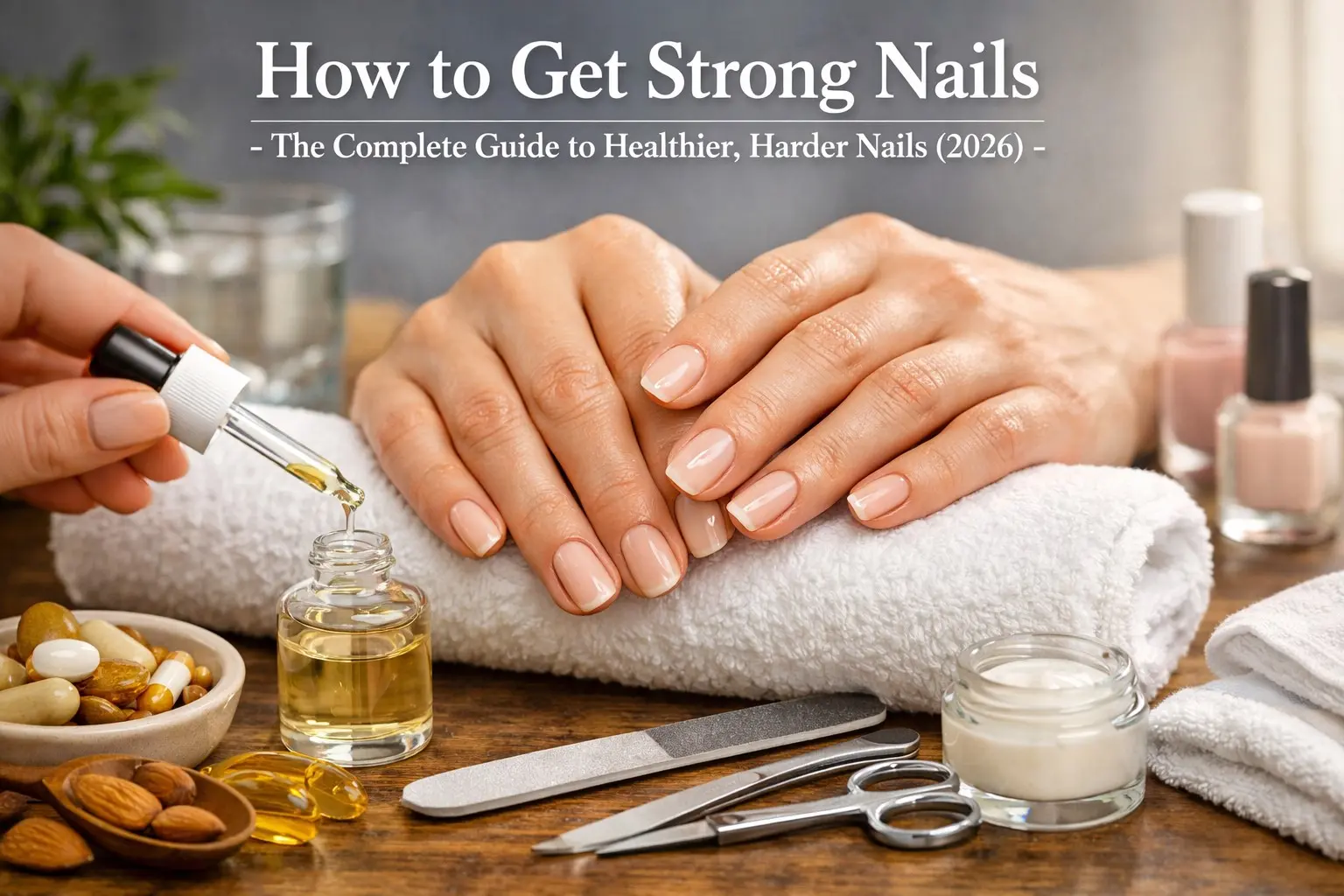
How to get strong nails is not only about using a nail hardener or applying cuticle oil. Stronger nails usually come from a combination of better nutrition, gentle nail care, less chemical exposure, hydration, and enough time for healthier nail growth to replace the older, weaker nail plate.
If your nails keep peeling, splitting, bending, cracking, or breaking at the same length, the cause may be daily damage, water exposure, polish removal, gel or acrylic damage, nutrient gaps, or an underlying health issue that needs medical attention.
Who This Guide Is For
This guide is for anyone dealing with brittle nails, peeling nails, weak nails, slow nail growth, or nail breakage after gel polish, acrylic nails, frequent washing, cleaning chemicals, or dieting.
This article is part of the NextFitLife Beauty Hub, Nail Care Hub, and Skin, Hair & Nail Health Hub.
For related guides, see our how to prevent nail breakage guide, nail fungus treatment guide, and evidence-based nail care guide.
What You’ll Learn
- Why do nails become weak, brittle, or easy to break?
- The key nutrients that support stronger nail growth.
- Daily nail care habits that protect the nail plate.
- How to recover after gel or acrylic nail damage.
- Which habits silently damage your nails?
- How long does it really take to see stronger nails?
- When nail changes should be checked by a doctor or dermatologist.
Why Are Your Nails Weak?
Weak nails usually happen for one of four reasons: repeated moisture changes, chemical exposure, physical trauma, nutrition gaps, or medical issues. More than one cause can happen at the same time.
The first step is to understand what type of weakness you have.
| Nail Problem | Potential Cause | What to Try First |
|---|---|---|
| Soft peeling nails | Too much water exposure, frequent washing, or harsh products | Wear gloves, moisturize after washing, and use cuticle oil |
| Hard nails that crack | Dryness, low flexibility, harsh polish remover, or nutrient gaps | Moisturize, use less acetone, and improve nutrition |
| Breakage at the same length | Mechanical stress from long nails or using nails as tools | Keep nails shorter, round corners, and avoid pressure |
| Yellow, thick, or lifting nails | Possible fungal infection, trauma, or other nail condition | See a doctor or dermatologist |
| Spoon-shaped nails | Possible iron deficiency or another medical issue | Ask for a medical evaluation and blood tests |
| Horizontal ridges | Past illness, stress, trauma, or medical condition | Monitor and seek medical advice if severe or persistent |
1. Nutrition gaps can make nails brittle
Nails are made mainly from keratin, a strong structural protein. Your body needs enough protein, vitamins, minerals, and calories to build healthy nail cells at the nail matrix, which is the growth area under the skin at the base of the nail.
If your diet is too low in protein, iron, zinc, vitamin C, healthy fats, or overall calories, nails may grow weaker, thinner, or more prone to splitting.
This can happen after crash dieting, long-term restrictive eating, illness, poor digestion, or an unbalanced diet.
2. Too much water exposure weakens the nail plate
Repeated wet-dry cycles can weaken nails. When nails absorb water, they swell slightly. When they dry, they shrink again. Over time, this repeated movement can contribute to peeling, splitting, and fragile nail layers.
This is common for people who wash dishes often, clean without gloves, work in healthcare, style hair, swim frequently, or wash their hands many times per day.
The solution is not to avoid washing. It is to protect and re-moisturize nails after repeated water exposure.
3. Chemicals and Nail Products Can Cause Damage
Acetone remover, harsh cleaning products, repeated gel polish, acrylic nails, and improper removal can weaken the top layers of the nail plate.
The most damaging habit is peeling off gel or acrylic nails. This can remove layers of your natural nail with the product, leaving nails thin, bendy, and painful.
If your nails become weak after gel or acrylics, the damaged part cannot be repaired instantly. It has to grow out.
4. Medical conditions can affect nail Strength
Sometimes nail changes are not just cosmetic. Thyroid problems, iron deficiency, vitamin B12 deficiency, fungal infection, psoriasis, eczema, diabetes, circulation problems, and other conditions can affect nail appearance and strength.
Speak with a healthcare professional if nail changes are sudden, painful, spreading, or not improving after consistent care.
The Nutrients That Help Build Strong Nails
Nutrition supports the new nail that is growing from the matrix. It will not instantly repair the nail you already see, but it can help improve future growth over time.
| Nutrient | Why It Matters for Nails | Food Sources |
|---|---|---|
| Protein | Provides amino acids needed to build keratin | Eggs, fish, chicken, Greek yogurt, beans, lentils, tofu |
| Biotin | Supports keratin structure and may help brittle nails in some people | Eggs, salmon, almonds, sweet potatoes, seeds |
| Iron | Supports oxygen delivery to growing tissues | Lean meat, lentils, spinach, beans, tofu |
| Zinc | Supports cell growth and tissue repair | Pumpkin seeds, seafood, beef, lentils, chickpeas |
| Vitamin C | Supports collagen formation and helps iron absorption | Citrus, kiwi, strawberries, bell peppers, broccoli |
| Omega-3 fats | Support skin and cuticle moisture | Salmon, sardines, chia seeds, flaxseeds, walnuts |
| Vitamin E | Supports skin barrier and antioxidant protection | Sunflower seeds, almonds, avocado, olive oil |
Best Foods for Strong Nails
The best nail-strengthening diet is not complicated. Focus on protein, colourful plants, healthy fats, and minerals.
Eggs
Eggs provide protein and biotin, both of which support keratin production. If you eat eggs, they are one of the simplest nail-supporting foods.
Salmon and Sardines
Fatty fish provides protein, omega-3 fats, and minerals that support skin, hair, and nail health.
Lentils and Beans
Lentils and beans provide plant protein, iron, zinc, and fiber. Pairing them with vitamin C-rich foods, such as bell peppers or lemon, can improve iron absorption.
Pumpkin Seeds
Pumpkin seeds are a useful source of zinc, which supports normal cell growth and tissue repair.
Bell Peppers and Citrus Fruits
These foods provide vitamin C, which supports collagen production and helps the body absorb iron from plant foods.
Greek Yogurt
Greek yogurt provides protein and can be used as a simple snack or breakfast base. Choose plain versions when possible.
Almonds and Sunflower Seeds
These provide vitamin E, healthy fats, and minerals that support skin and cuticle health.
Should You Take Biotin for Strong Nails?
Biotin may help some people with brittle nails, especially if they have low intake or a deficiency. However, biotin is not a guaranteed fix for everyone.
Biotin supplements can also interfere with certain blood tests, including some thyroid and heart-related tests. Tell your doctor before blood testing if you take biotin, especially high-dose biotin.
Food-first is a safer starting point for most people. If your nails are severely brittle or you suspect a deficiency, ask a healthcare professional whether testing or supplementation makes sense.
15 Daily Habits to Get Stronger Nails
1. Keep Nails Short While They Recover
Long nails act like levers. The longer the nail extends past the fingertip, the easier it is to bend, crack, or break.
Keep nails short to medium length until breakage improves. This protects new growth while the weaker nail grows out.
2. File in One Direction
Sawing back and forth can create tiny tears at the nail edge. These small tears can turn into bigger cracks.
Use a fine-grit file and file gently from the side toward the center.
3. Choose a Rounded or Squoval Shape
Sharp square corners catch on clothing, hair, and surfaces. Rounded or squoval shapes spread pressure more evenly and reduce breakage.
4. Use Cuticle Oil Nightly
Cuticle oil helps soften the skin around the nail and supports a healthier nail environment. Apply a small drop to each nail and massage around the cuticle area.
Jojoba oil, vitamin E oil, and simple cuticle oils can all be useful. Consistency matters more than using an expensive product.
5. Moisturize after hand washing
Hand washing can dry the skin and nail area. After drying your hands, apply hand cream or lotion, especially around the nails.
This is especially important if you wash your hands often during the day.
6. Wear Gloves for Dishes and Cleaning
This is one of the highest-impact habits for weak nails. Gloves protect nails from hot water, detergents, cleaning chemicals, and repeated wet-dry cycles.
Use rubber, vinyl, or nitrile gloves whenever you wash dishes or clean.
7. Avoid Using Nails as Tools
Do not use your nails to open cans, scrape labels, peel stickers, or pry objects. Use the pads of your fingers or an actual tool instead.
This one habit can reduce sudden breaks quickly.
8. Stop Peeling Gel or Acrylic Nails
Peeling gel or acrylic nails can strip away layers of your natural nail plate.
If you use gel or acrylic nails, remove them properly or have them removed professionally.
9. Limit Harsh Polish Removers
Acetone works well for removal, but frequent use can be drying. Use it only when needed, and moisturize afterward.
For regular polish, consider a gentler remover if your nails are very dry or brittle.
10. Take Breaks From Gel and Acrylic Nails
If your nails are thin, painful, peeling, or bending after enhancements, give them time to recover.
A break of several weeks or months may be needed depending on the damage.
11. Avoid Cutting Cuticles
The cuticle helps protect the nail growth area. Cutting cuticles can increase irritation and infection risk.
Instead, soften with oil and gently push back only if needed.
12. Protect Nails During Cold or Dry Weather
Cold air, dry indoor heating, and frequent hand washing can worsen brittleness.
Use hand cream more often in winter and wear gloves outdoors when needed.
13. Get Enough Sleep
Sleep supports tissue repair and overall health. Poor sleep can affect recovery, stress hormones, and daily habits that influence nail health.
For help, read our sleep hygiene guide.
14. Manage Stress
Stress can contribute to nail picking, biting, poor sleep, and inconsistent eating. It can also make it harder to maintain a steady routine.
Walking, breathing exercises, journaling, and simple routines can help reduce stress-related nail damage.
15. Track progress with photos
Nails grow slowly, so daily changes are hard to notice. Take a photo every 2 to 4 weeks in the same lighting.
This helps you see whether breakage, peeling, and new growth are improving.
Daily Nail Routine: Morning and Night
Morning Routine
- Apply hand cream after washing your hands.
- Use a protective base coat if wearing polish.
- Check for lifting, splitting, or painful areas.
- Keep a nail file nearby to smooth snags before they break.
Evening Routine
- Wash and dry your hands gently.
- Apply cuticle oil to each nail.
- Massage the oil around the nail fold for 30 seconds.
- Apply hand cream after the oil.
- If nails are very dry, use cotton gloves for 30 to 60 minutes after moisturizing.
Weekly Routine
- File nails once weekly, not every day.
- Check for yellowing, thickening, lifting, or pain.
- Remove polish if it is chipped or has been on too long.
- Review whether you wore gloves during cleaning and washing dishes.
- Check whether your meals included protein, vitamin C, iron, zinc, and healthy fats.
How to Recover Nails After Gel or Acrylic Damage
Gel and acrylic damage can make nails thin, flexible, peeling, or sore. The damaged nail cannot be glued back to full strength. It must grow out gradually.
Use this recovery plan:
| Stage | What to Do | Goal |
|---|---|---|
| Weeks 1–2 | Stop enhancements, keep nails short, apply oil and cream daily | Reduce further damage |
| Weeks 3–6 | Use gloves, avoid harsh removers, and eat enough protein and minerals | Protect new growth |
| Weeks 6–12 | Continue routine, file gently, avoid peeling or picking | Allow a stronger nail to grow in |
| Months 4–6 | Reassess nail strength and consider safer polish habits | Complete more nail replacement |
If nails are painful, separating from the nail bed, green, yellow, thick, or infected-looking, see a dermatologist.
Habits That Silently Damage Nails
- Biting nails or picking cuticles
- Using nails as tools
- Peeling off gel polish or acrylic nails
- Washing dishes without gloves
- Cleaning with harsh chemicals without protection
- Using acetone too often without moisturizing
- Filing roughly or using a coarse file
- Crash dieting or very low-protein eating
- Ignoring possible fungal infection or nail separation
How Long Does It Take to get strong nails?
Nails grow slowly. You may see less peeling or better cuticle softness within a few weeks, but meaningful nail strength takes longer because the new nail must grow from the base.
| Timeframe | What You May Notice |
|---|---|
| Weeks 1–2 | Cuticles feel softer, and nails look less dry |
| Weeks 3–4 | Less edge peeling if gloves and moisture habits are consistent |
| Weeks 6–8 | Recent growth at the base may look healthier |
| Weeks 10–12 | Breakage may reduce as the stronger nail grows out |
| Months 4–6 | A large portion of the nail plate has had time to replace itself |
The key is patience. Nail improvement is slow because nail growth is slow.
Nail Supplements: What to Know
Supplements may help if you have a real deficiency, but they are not always necessary.
Biotin
Biotin is commonly used for brittle nails. Some people may benefit, but results take months and are not guaranteed. High-dose biotin can interfere with lab tests, so tell your doctor if you take it.
Iron
Iron should not be taken unless blood tests show a deficiency or a doctor recommends it. Too much iron can be harmful.
Collagen
Collagen supplements may support skin and nail health for some people, but they are not a replacement for enough protein and a balanced diet.
Multivitamins
A multivitamin may help if your diet is limited, but targeted testing is better if you suspect a deficiency.
When to See a Doctor or Dermatologist
See a healthcare professional if you notice:
- Sudden nail changes
- Yellow, green, black, or brown discoloration
- Thickened or crumbling nails
- Nails lifting from the nail bed
- Pain, swelling, bleeding, or pus
- Spoon-shaped nails
- Dark streaks under the nail
- Severe ridges or dents
- No improvement after 8 to 12 weeks of consistent care
Nail changes can sometimes reflect infection, nutrient deficiency, thyroid problems, psoriasis, eczema, trauma, or other health issues.
Strong Nail Action Plan
| When | Action |
|---|---|
| Today | Trim nails to a safer length, buy gloves, cuticle oil, and a gentle file |
| This week | Wear gloves for dishes and cleaning every time |
| This week | Add protein and vitamin C to at least one meal daily |
| Every night | Apply cuticle oil and hand cream |
| Every 2–4 weeks | Take progress photos |
| After 8–12 weeks | If there is no improvement, ask about iron, thyroid, B12, and other possible causes |
Bottom Line on How to Get Strong Nails
Strong nails come from protecting the nail you already have while supporting the healthier nail that is still growing. That means better nutrition, less water and chemical damage, gentle filing, consistent moisturizing, cuticle care, and patience.
Start with the high-impact habits: keep nails short while they recover, wear gloves during dishes and cleaning, use cuticle oil nightly, moisturize after hand washing, stop peeling gel polish, and eat enough protein and key nutrients.
If nail changes are painful, discoloured, thick, lifting, or not improving, do not keep guessing. Ask a doctor or dermatologist for a proper evaluation.
Related Guides on Nail Health, Beauty, and Nutrition
Use these guides to build a stronger nail and beauty routine:
- Nail Care Hub
- Beauty Hub
- Skin, Hair & Nail Health Hub
- How to Prevent Nail Breakage
- Best Nail Fungus Treatment at Home
- Natural Skin Care for Men
- Nutrition & Vitamins Foods Hub
- Foods & Nutrition Hub
FAQs About How to Get Strong Nails
How long does it take to strengthen nails?
You may notice softer cuticles and less dryness within 1 to 2 weeks, but a stronger nail structure usually takes 8 to 12 weeks or longer because nails grow slowly. Full nail plate replacement may take several months.
Can nails recover after gel or acrylic damage?
Yes, nails can improve after gel or acrylic damage, but the damaged layers must grow out. Keep nails short, avoid peeling products, moisturize daily, use cuticle oil, and allow several months for healthier nail growth.
Why do my nails keep breaking at the same length?
This often happens because the nail becomes too long for its current strength. Longer nails experience more bending and pressure. Keep nails shorter, round the corners, file gently, and avoid using nails as tools while they recover.
Do nails need to breathe?
Nails do not breathe like skin. They receive nutrients from the blood supply at the nail matrix. However, polish-free breaks can help you monitor nail health, reduce or remove use, and prevent repeated drying or damage.
What is the difference between peeling nails and cracking nails?
Peeling nails are often linked to repeated water exposure, harsh products, or nail trauma. Cracking nails may be linked to dryness, brittleness, mechanical stress, or nutrient gaps. Many people have more than one cause.
What vitamin deficiency causes weak nails?
Weak nails can sometimes be linked with low iron, low zinc, low biotin, low protein intake, vitamin B12 issues, or other medical causes. Do not guess based only on nails. Ask a healthcare professional about testing if symptoms persist.
When should I see a doctor for nail problems?
See a doctor or dermatologist if nails become painful, yellow, green, black, thick, lifting, bleeding, infected-looking, spoon-shaped, or suddenly changed. Also seek help if brittle nails do not improve after consistent care.
Sources and References
- American Academy of Dermatology — Nail Care Secrets https://www.aad.org/public/everyday-care/nail-care-secrets
- American Academy of Dermatology — Nail Changes a Dermatologist Should Examine https://www.aad.org/public/everyday-care/nail-care-secrets/basics/nail-changes-dermatologist-should-examine
- Mayo Clinic — Fingernails: Do's and Don'ts for Healthy Nails https://www.mayoclinic.org/healthy-lifestyle/adult-health/in-depth/nails/art-20044954
- MedlinePlus — Nail Abnormalities https://medlineplus.gov/ency/article/003247.htm
- NIH Office of Dietary Supplements — Biotin Fact Sheet https://ods.od.nih.gov/factsheets/Biotin-Consumer/
- NIH Office of Dietary Supplements — Iron Fact Sheet https://ods.od.nih.gov/factsheets/Iron-Consumer/


Health & wellness writer with 30+ years of experience in nutrition, fitness, and healthy aging. Founder of NextFitLife.com — evidence-based health guidance.