Published:
Apr 18, 2024
Last Updated:
August 23, 2026
Next Review:
August 2027, or sooner if important dry mouth, sleep apnea, medicine, dental, or salivary gland guidance changes
Written and Source Checked by:
Adel Galal, Founder and Lead Writer of NextFitLife
Medical Review Status:
This article has not been formally reviewed by a physician, dentist, sleep physician, pharmacist, rheumatologist, or another licensed healthcare professional.
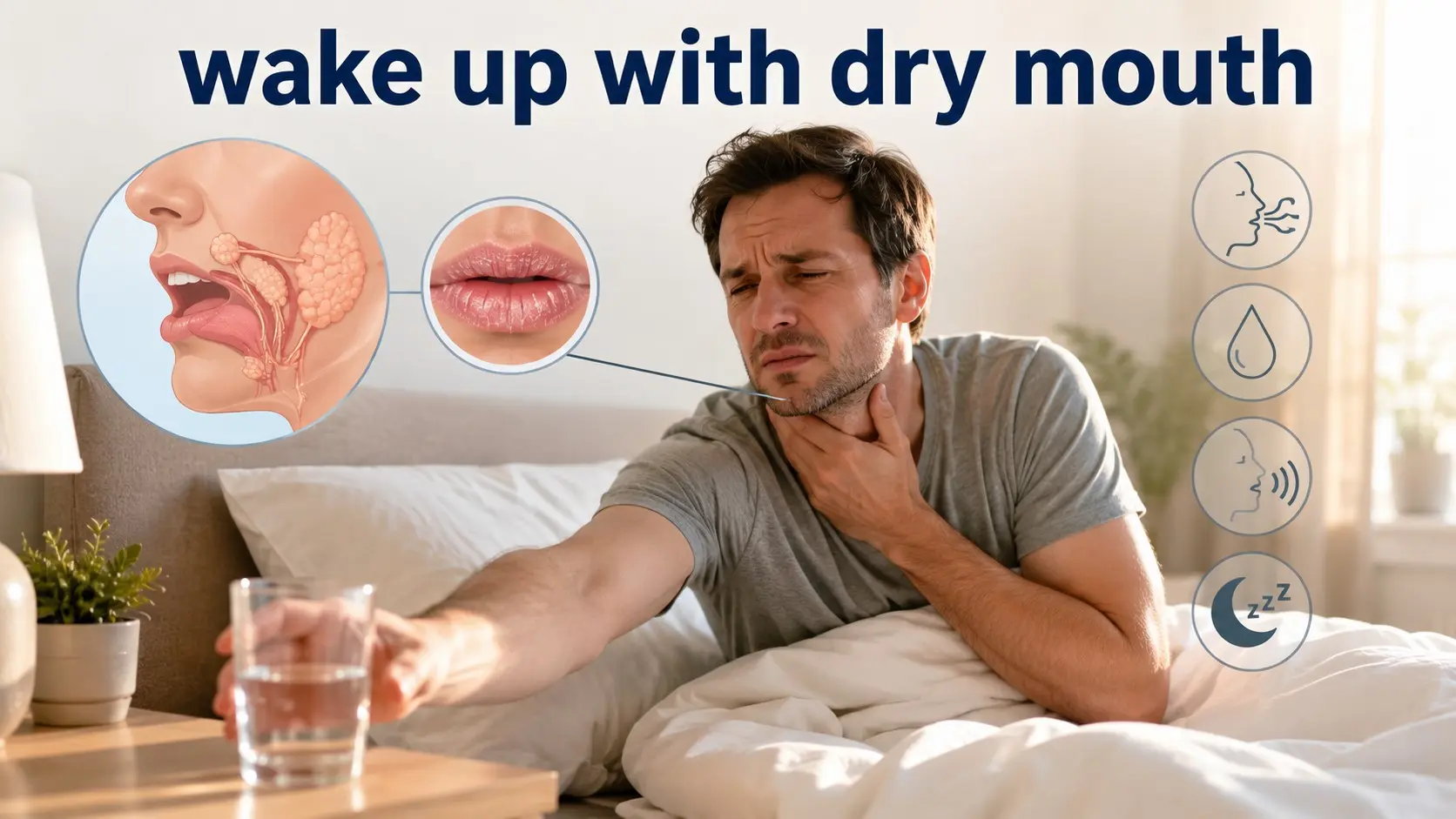
Your tongue feels dry.
Your lips may stick together.
Your throat may feel rough.
You reach for water before you even get out of bed.
If you often wake up with dry mouth, there is usually a reason.
Sometimes you simply slept with your mouth open.
Sometimes your nose was blocked.
A medicine may be reducing your saliva.
You may be dehydrated.
Snoring or sleep apnea can also be part of the pattern.
Less often, ongoing dry mouth can be linked with diabetes, Sjögren's disease, cancer treatment, or a salivary gland problem.
A dry mouth once in a while is common.
Dry mouth that happens often deserves more attention.
Saliva protects the mouth.
It helps you chew.
It helps you swallow.
It helps protect teeth from decay.
This guide explains ten common reasons for morning dry mouth, safe ways to get relief, dental risks, sleep apnea clues, and when to see a dentist or doctor.
Quick Answer: Why Do I Wake Up With Dry Mouth?
Common reasons you may wake up with dry mouth include:
- Mouth breathing
- A blocked nose or nasal congestion
- Snoring or sleep apnea
- Medicines that reduce saliva
- Dehydration
- Alcohol, tobacco, or too much caffeine
- Diabetes
- Sjögren's disease
- Cancer treatment
- Salivary gland or nerve problems
The mouth also naturally makes less saliva while you sleep.
That can make another problem more noticeable in the morning.
If dry mouth happens most nights, affects eating or speaking, causes frequent cavities, or occurs with loud snoring, gasping, dry eyes, frequent urination, or mouth infections, get it checked.
Medical note:
This content is for general educational purposes and does not replace professional medical advice, diagnosis, or treatment. Consult an appropriately qualified healthcare professional for personal medical concerns. This article explains published guidance and does not provide a personal clinical assessment. Always consult qualified medical professionals for diagnosis and treatment of any health condition.
When Dry Mouth Needs Urgent Help
Dry mouth alone is rarely an emergency.
Get urgent medical help if it occurs with:
- Trouble breathing
- Severe tongue or throat swelling
- Trouble swallowing fluids
- Confusion
- Fainting
- Signs of severe dehydration
- A serious allergic reaction
- Rapidly worsening facial or neck swelling
Do not treat breathing trouble as a simple dry mouth problem.
What Is Dry Mouth?
Dry mouth is also called xerostomia.
It means your mouth feels too dry.
Sometimes you really are making less saliva.
Sometimes the mouth feels dry even when saliva flow is not very low.
Saliva is important.
It:
- Keeps the mouth wet
- Helps break down food
- Helps you chew
- Helps you swallow
- Helps you speak
- Washes food from teeth and gums
- Helps protect teeth from decay
- Helps control germs in the mouth
This is why long term dry mouth is more than an annoying feeling.
Why Is Dry Mouth Often Worse in the Morning?
Your body makes less saliva while you sleep.
Saliva flow reaches a low point at night.
That is normal.
But it can make another problem more obvious.
For example:
- Sleeping with your mouth open dries the mouth more
- Medicines may reduce saliva
- Dry bedroom air may add discomfort
- Snoring may go with mouth breathing
- Nasal blockage may force you to breathe through your mouth
This explains why you may feel fine during the day but have strong dry mouth at night or when you first wake up.
1. Mouth Breathing
Mouth breathing is one of the simplest explanations for morning dryness.
Air passes over the mouth for hours.
Moisture is lost.
You may wake with:
- A dry tongue
- Sticky saliva
- A dry throat
- Cracked lips
- Bad breath
Why Do People Breathe Through Their Mouth at Night?
Possible reasons include:
- A blocked nose
- Allergies
- A cold
- Nasal structure problems
- Snoring
- Sleep apnea
If mouth breathing happens every night, try to find the reason rather than only keeping water beside the bed.
2. A Blocked Nose or Allergies
A blocked nose can make nasal breathing difficult.
You may open your mouth while asleep.
That can dry the mouth and throat.
Common causes of nasal congestion include:
- A cold
- Allergic rhinitis
- Sinus inflammation
- Nasal structure problems
Be Careful With Allergy and Cold Medicines
Some antihistamines and decongestants can cause or worsen dry mouth.
This means the medicine used for a blocked nose may sometimes add to the dryness.
Do not stop prescribed medicine on your own.
Ask a pharmacist or doctor what option is best for you.
3. Snoring and Sleep Apnea
Snoring and morning dry mouth can occur together.
But loud snoring should not always be treated as harmless.
Dry mouth can also occur with sleep apnea.
Sleep Apnea Clues
Talk with a healthcare professional if morning dry mouth happens with:
- Frequent loud snoring
- Breathing that stops and starts during sleep
- Gasping for air
- Morning headache
- Daytime sleepiness
- Poor concentration
- Frequent waking during the night
You may not know your breathing stops.
A partner may notice it first.
Does Dry Mouth Prove You Have Sleep Apnea?
No.
Dry mouth has many causes.
But dry mouth plus loud snoring, gasping, and breathing pauses is a stronger reason to get checked.
What About CPAP Dry Mouth?
Some people using positive airway pressure treatment still notice CPAP dry mouth.
Possible reasons include mouth opening or air leaks.
Do not stop prescribed sleep apnea treatment because of dryness.
Talk with your sleep team about:
- Mask fit
- Air leaks
- Humidification
- Nasal blockage
Read:
Sleep Apnea and Hypercapnia
.
4. Medicines
Medicines are one of the most important causes of ongoing dry mouth.
Many medicines can reduce saliva production or make the mouth feel dry.
Examples can include some:
- Antidepressants
- Antihistamines
- Decongestants
- Blood pressure medicines
- Diuretics
- Bladder medicines
- Pain medicines
- Muscle relaxants
- Seizure medicines
Taking Several Medicines Can Increase the Risk
Dry mouth is more common in people who take several medicines.
This helps explain why it may become more common with age.
But dry mouth itself is not simply a normal part of getting older.
Do Not Stop Medicine by Yourself
If dry mouth started after:
- A new medicine
- A dose change
- Adding another medicine
tell your doctor, dentist, or pharmacist.
They may review:
- The dose
- The timing
- Possible alternatives
- Other ways to control the dryness
Do not change a prescription without medical advice.
5. Dehydration
Dehydration can cause dry mouth.
Possible reasons include:
- Not drinking enough
- Heavy sweating
- Fever
- Vomiting
- Diarrhea
- Hot weather
- Some medicines
Other Dehydration Signs
You may also notice:
- Thirst
- Dark urine
- Less urine
- Tiredness
- Dizziness
Will Drinking More Water Always Fix Morning Dry Mouth?
No.
Water helps when dehydration is part of the problem.
If you still wake dry despite normal fluid intake, look for another cause such as mouth breathing, medicines, sleep apnea, or low saliva production.
6. Alcohol, Tobacco and Caffeine
Alcohol and tobacco can make mouth dryness worse.
Caffeine may also worsen symptoms for some people.
Alcohol
Alcohol can contribute to dryness.
Alcohol containing mouthwash can also irritate a dry mouth.
Tobacco
Smoking can irritate oral tissue.
It can make existing mouth problems worse.
Caffeine
You do not need to assume one cup of coffee causes all dry mouth.
But large amounts of caffeine may make dryness harder to manage for some people.
Look at your own pattern.
7. Diabetes
Diabetes can be linked with dry mouth.
This does not mean that every person with morning dry mouth has diabetes.
When Diabetes Is More Worth Checking
Talk with a healthcare professional if dry mouth occurs with:
- Frequent urination
- Strong thirst
- Unexplained weight loss
- Blurred vision
- Slow healing
- Repeated infections
A blood glucose test can help when diabetes is suspected.
8. Sjögren's Disease
Sjögren's disease is an autoimmune condition.
The immune system attacks glands that make moisture.
This can reduce saliva and tears.
Possible Sjögren's Clues
Dry mouth may occur with:
- Dry eyes
- Burning or gritty eyes
- Trouble swallowing dry food
- Frequent cavities
- Mouth infections
- Joint pain
- Other dryness symptoms
Dry mouth plus ongoing dry eyes is worth discussing with a healthcare professional.
9. Cancer Treatment
Some cancer treatments can cause dry mouth.
Radiation Treatment
Radiation to the head or neck can damage salivary glands.
This can reduce saliva for a long time.
Cancer Medicines
Some cancer medicines can change saliva or make it thicker.
The mouth may feel dry even when some saliva is still present.
Why Dental Care Is Important
Treatment related dry mouth may increase the risk of:
- Tooth decay
- Mouth infections
- Mouth sores
- Problems eating
- Problems swallowing
Work with your cancer team and dentist.
10. Salivary Gland or Nerve Problems
Your salivary glands make saliva.
A problem with the glands or the nerves that control them can reduce saliva.
Possible Causes
- Salivary gland blockage
- Salivary gland infection
- Head injury
- Neck injury
- Nerve damage
- Previous surgery
- Some medical disorders
Signs That Need Assessment
See a dentist or doctor if dry mouth occurs with:
- A lump near the jaw or ear
- Swelling under the tongue
- Repeated salivary gland swelling
- Pain when eating
- A bad taste or drainage
- Facial numbness or weakness
Other Things That Can Make Morning Dry Mouth Worse
Anxiety and Stress
Anxiety can make the mouth feel dry.
Occasional dry mouth during stress is common.
Persistent nighttime dryness still deserves a look at other possible causes.
Dry Bedroom Air
Very dry air may make mouth and throat discomfort worse.
A clean humidifier may help some people.
Keep it clean according to the manufacturer instructions.
Older Age
Dry mouth is more common in older adults.
But it is not simply a normal result of aging.
Older adults are more likely to:
- Take several medicines
- Have health conditions linked with dry mouth
- Have had cancer treatment
Look for the actual cause.
What Are the Signs of Ongoing Dry Mouth?
Dry mouth can cause more than thirst.
Possible symptoms include:
- Sticky mouth
- Thick or stringy saliva
- Dry tongue
- Rough or cracked tongue
- Dry throat
- Cracked lips
- Bad breath
- Trouble chewing
- Trouble swallowing
- Trouble speaking
- Taste changes
- Burning mouth
- Mouth sores
- Repeated mouth infections
Dry Mouth Only in the Morning Versus All Day
| Pattern | Possible Clues |
|---|---|
| Only when waking | Mouth breathing, snoring, nasal blockage, dry room air |
| Morning plus daytime dryness | Medicines, Sjögren's disease, diabetes, salivary gland problems, cancer treatment |
| Dry mouth with loud snoring and gasping | Sleep apnea needs consideration |
| Dry mouth with dry eyes | Sjögren's disease or another dryness condition may need evaluation |
| Dry mouth with frequent urination and strong thirst | Diabetes or dehydration may need evaluation |
How Can I Stop Waking Up With Dry Mouth?
The best fix depends on the cause.
These simple steps may help.
1. Sip Water During the Day
Stay normally hydrated.
Keep water near your bed if you often wake dry.
You do not need to force huge amounts of water.
2. Use Sugar-Free Gum or Candy During the Day
Sugar-free gum or sugar-free candy may stimulate saliva when your glands can still make it.
Avoid sugary sweets because dry mouth already increases cavity risk.
3. Try a Clean Humidifier
A humidifier may reduce discomfort when bedroom air is dry.
Clean it regularly.
4. Address Mouth Breathing
If your nose is often blocked, find out why.
A pharmacist or doctor can help with allergy or congestion treatment.
Remember that some antihistamines and decongestants can worsen dry mouth.
5. Review Your Medicines
Ask:
- Could one of my medicines cause dry mouth?
- Did the problem start after a dose change?
- Is there another safe option?
Do not stop prescribed medicine without advice.
6. Avoid Tobacco
Tobacco can irritate a dry mouth.
7. Limit Alcohol if It Makes Symptoms Worse
Alcohol may add to dryness.
Avoid alcohol containing mouthwash if it irritates your mouth.
8. Reduce Excess Caffeine if Needed
Notice whether large amounts of coffee, tea, energy drinks, or cola make symptoms worse.
9. Ask About Saliva Substitutes
Saliva substitutes and oral moisturizing products may give temporary relief.
Options can include:
- Gels
- Sprays
- Lozenges
- Artificial saliva products
A pharmacist or dentist can help you choose one.
10. Treat the Cause
This is the most important step.
Water cannot fix:
- Untreated sleep apnea
- Sjögren's disease
- A medication side effect
- A salivary gland problem
- Uncontrolled diabetes
Persistent symptoms need a cause-based plan.
Should I Tape My Mouth Shut at Night?
Do not use mouth taping as a substitute for finding out why you breathe through your mouth.
This is especially important if you have:
- A blocked nose
- Loud snoring
- Gasping during sleep
- Possible sleep apnea
If nighttime mouth breathing is persistent, discuss it with a qualified healthcare professional.
Can Dry Mouth Damage Your Teeth?
Yes.
Long term dry mouth raises the risk of tooth decay.
Saliva normally helps:
- Wash food away
- Control mouth germs
- Neutralize acids
- Protect tooth minerals
When saliva is reduced, cavities can develop faster.
Dry Mouth Can Also Increase the Risk of
- Gum problems
- Mouth sores
- Oral fungal infections
- Cracked lips
- Bad breath
- Problems wearing dentures
How to Protect Your Teeth
Brush twice a day with fluoride toothpaste.
Clean between the teeth every day.
Avoid frequent sugary snacks and drinks.
See a dentist regularly.
A dentist may recommend extra fluoride if your cavity risk is high.
Read:
Oral Hygiene
.
Can Dry Mouth Cause Bad Breath?
Yes.
Bad breath can become worse when the mouth has less saliva.
Saliva normally helps wash food and bacteria away.
Dry mouth can let odor causing material stay longer.
Good oral care helps.
Can Dry Mouth Cause Mouth Ulcers?
Dry oral tissue can become sore and irritated.
Persistent dry mouth may occur with mouth sores.
But many other problems cause ulcers.
Read:
Mouth Ulcers
.
Can Dry Mouth Cause Oral Thrush?
Long term dry mouth can increase the risk of fungal infection in the mouth.
Possible oral thrush signs include:
- White patches
- Sore mouth
- Burning
- Taste changes
White patches or persistent mouth pain should be checked.
Does Waking With Dry Mouth Mean Diabetes?
No.
Diabetes is only one possible cause.
More common explanations may include:
- Mouth breathing
- A blocked nose
- Medicines
- Dehydration
- Snoring
Diabetes becomes more important to consider when dry mouth occurs with frequent urination, strong thirst, unexplained weight loss, blurred vision, or repeated infections.
Does Morning Dry Mouth Mean Sleep Apnea?
No.
But it can be one clue.
The pattern is more concerning when dry mouth occurs with:
- Loud snoring
- Witnessed breathing pauses
- Gasping
- Morning headaches
- Daytime sleepiness
A healthcare professional may recommend a sleep study.
Why Is My Mouth Dry Even When I Drink Plenty of Water?
Because dehydration is only one cause.
Water may not solve dryness caused by:
- A medicine
- Mouth breathing
- Sleep apnea
- Sjögren's disease
- Salivary gland damage
- Cancer treatment
Persistent dryness despite normal fluid intake is a good reason to look for another cause.
What Vitamin Deficiency Causes Dry Mouth?
There is no single common vitamin deficiency that explains most cases of nighttime dry mouth.
Do not start high-dose supplements because your mouth feels dry.
If you also have anemia symptoms, mouth sores, tongue changes, weight loss, or a restricted diet, a healthcare professional can decide whether blood testing is useful.
Can Anxiety Cause Dry Mouth at Night?
Anxiety can make the mouth feel dry.
It may also change breathing and sleep.
But anxiety should not automatically be blamed when dry mouth happens every night.
Check for medicines, mouth breathing, nasal blockage, snoring, and other causes too.
How Do Dentists and Doctors Find the Cause of Dry Mouth?
The first step is your history.
A healthcare professional may ask:
- When did the dryness start?
- Is it only at night?
- Is it present all day?
- Do you breathe through your mouth?
- Do you snore?
- Has anyone seen you stop breathing in sleep?
- Do you have dry eyes?
- Are you very thirsty?
- Do you urinate often?
- What medicines do you take?
- Have you had head or neck radiation?
The Mouth Examination
A dentist or doctor may look for:
- Dry oral tissue
- A dry cracked tongue
- Low saliva pooling
- Cavities
- Gum inflammation
- Mouth sores
- Thrush
- Salivary gland swelling
Tests May Include
- Blood tests
- Blood glucose testing
- Tests for Sjögren's disease
- Saliva flow measurement
- Salivary gland imaging in selected cases
- A sleep study if sleep apnea is suspected
Not everyone needs every test.
When Should You See a Dentist or Doctor for Dry Mouth?
Arrange an assessment if:
- Dry mouth continues for several weeks
- It happens most nights
- It makes eating difficult
- It makes speaking difficult
- You have trouble swallowing
- Your taste changes and does not return
- Your mouth is painful
- You have white patches
- You keep getting mouth infections
- You develop many new cavities
- You also have persistent dry eyes
- You urinate much more than normal
- You are very thirsty
- You think a medicine is causing the problem
- You snore loudly or gasp during sleep
Should You See a Dentist or a Doctor?
Either can be a useful starting point.
See a dentist when you have:
- Cavities
- Mouth pain
- Gum problems
- Mouth sores
- Thrush
- Dental concerns from chronic dryness
See a doctor when you have:
- Dry eyes
- Frequent urination
- Strong thirst
- Possible sleep apnea
- Medicine concerns
- Other body symptoms
Often both dental and medical care are useful.
Common Myths About Waking With Dry Mouth
Myth: Morning Dry Mouth Always Means Dehydration
False.
Mouth breathing, medicines, nasal blockage, snoring, sleep apnea, and reduced saliva can also cause it.
Myth: Dry Mouth Is a Normal Part of Aging
False.
Dry mouth becomes more common with age mainly because health conditions and medicine use become more common.
Myth: Drinking More Water Fixes Every Case
False.
Water cannot correct every cause of low saliva or mouth breathing.
Myth: Antihistamines Always Fix Dry Mouth From Allergies
False.
Some antihistamines can worsen dry mouth.
Myth: Decongestants Cannot Cause Dry Mouth
False.
Some decongestants can contribute to oral dryness.
Myth: Dry Mouth Means You Have Diabetes
False.
Diabetes is only one possible cause.
Myth: Snoring With Dry Mouth Is Always Harmless
False.
Loud snoring with gasping or breathing pauses may point to sleep apnea.
A Simple Seven Night Dry Mouth Check
This is a tracking tool.
It is not a reason to delay medical care.
Each Morning Write Down
- How dry your mouth feels
- Whether your throat is dry
- Whether your nose was blocked
- Whether you woke with your mouth open
- Whether someone heard you snoring
- Whether anyone noticed breathing pauses
- Any morning headache
- How sleepy you feel during the day
- Medicine taken the night before
- Alcohol or caffeine use
- How much fluid you drank during the day
A simple pattern may help you and your healthcare professional find the cause faster.
Key Takeaway
If you often wake up with dry mouth, do not assume you only need more water.
Look at the whole pattern.
Do you sleep with your mouth open?
Is your nose blocked?
Do you snore?
Do you take medicines that cause dryness?
Do you also have dry eyes or frequent urination?
Finding the cause gives you a better chance of finding the right solution.
How I Research Morning Dry Mouth
I have spent more than fifteen years researching and writing about health and wellness.
I also bring more than thirty years of personal experience with fitness, nutrition, sleep habits, and everyday wellness.
Dry mouth looks simple.
But the cause can come from several systems.
It can start with breathing.
It can start with a medicine.
It can involve sleep.
It can involve saliva glands.
It can also be linked with another health condition.
That is why I do not start with one quick fix.
I look at the pattern.
Is the mouth dry only in the morning?
Is it dry all day?
Is there loud snoring?
Are the eyes dry too?
Did a medicine change?
Are new cavities appearing?
These clues can point in different directions.
Before focusing on NextFitLife, I spent twenty-nine years in information technology management.
That background strengthened my skills in research, troubleshooting, data review, systems thinking, and comparing different explanations for the same problem.
I use the same structured process when researching health topics.
For this guide, I reviewed current information from NIDCR, the American Dental Association, NHLBI, NHS, and MedlinePlus.
My goal is not to diagnose the cause of dry mouth online.
My goal is to help readers understand the most useful clues and know when dental, medical, or sleep assessment is appropriate.
References and High Authority Sources
This article was checked against these five public and accessible sources.
National Institute of Dental and Craniofacial Research
Dry Mouth.This resource explains saliva, dry mouth symptoms, medicine-related dryness, Sjögren's disease, diabetes, cancer treatment, nerve damage, dental risks, saliva substitutes, water, and sugar-free gum.
American Dental Association
Xerostomia.This professional resource covers nighttime saliva reduction, mouth breathing, medicines, cancer treatment, dental complications, sugar free gum, saliva substitutes, fluoride, and dry mouth treatment.
National Heart, Lung, and Blood Institute
Sleep Apnea Symptoms.This NIH resource lists breathing pauses, loud snoring, gasping, daytime sleepiness, morning headache, and dry mouth among symptoms that can occur with sleep apnea.
NHS
Dry Mouth.This public health resource covers dehydration, medicines, mouth breathing at night, anxiety, cancer treatment, oral thrush, diabetes, Sjögren's disease, self care, pharmacy products, and signs that need medical assessment.
MedlinePlus
Dry Mouth.This National Library of Medicine resource explains causes, symptoms, diagnosis, saliva testing, medicines, mouth breathing, alcohol, tobacco, saliva substitutes, and dental care.
Source Review Date:
August 23, 2026
These organizations do not endorse NextFitLife.
Conclusion
There are many reasons you may wake up with dry mouth.
Mouth breathing is common.
A blocked nose can contribute.
Medicines are an important cause.
Dehydration can play a role.
Snoring and sleep apnea also deserve attention.
Persistent dryness can sometimes point to diabetes, Sjögren's disease, cancer treatment effects, or a salivary gland problem.
Start with simple care.
Stay normally hydrated.
Protect your teeth.
Review your medicines with a professional.
Look for mouth breathing and sleep symptoms.
Your next step:
If you repeatedly wake up with dry mouth, track your symptoms for several nights and arrange dental or medical advice if the problem continues, affects your mouth health, or occurs with loud snoring, gasping, dry eyes, frequent urination, or other warning signs.
Editorial Policies and Trust
Frequently Asked Questions About Waking With Dry Mouth
Why do I wake up with dry mouth?
Common reasons include mouth breathing, a blocked nose, snoring, sleep apnea, medicines, dehydration, alcohol, tobacco, diabetes, Sjögren's disease, and salivary gland problems.
Why is my mouth only dry in the morning?
Saliva production falls during sleep. Mouth breathing, snoring, nasal blockage, medicines, or dry bedroom air can make the morning dryness more noticeable.
How can I stop waking up with dry mouth?
Stay normally hydrated, address nasal blockage and mouth breathing, review medicines with a professional, avoid tobacco, consider a clean humidifier, and get checked for sleep apnea when symptoms fit.
Does waking with dry mouth mean I am dehydrated?
Not always. Dehydration is one cause, but mouth breathing, medicines, sleep apnea, nasal blockage, and reduced saliva can also cause morning dryness.
Does dry mouth mean diabetes?
No. Diabetes is one possible cause. It becomes more important to consider when dry mouth comes with strong thirst, frequent urination, weight loss, or repeated infections.
Can sleep apnea cause dry mouth?
Dry mouth can occur with sleep apnea. Loud snoring, gasping, breathing pauses, daytime sleepiness, and morning headaches make sleep apnea more important to consider.
Does snoring cause dry mouth?
Snoring often occurs with mouth breathing, which can dry the mouth during sleep.
Can mouth breathing cause dry mouth?
Yes. Breathing through the mouth for hours can dry the tongue, lips, mouth, and throat.
Can allergies cause morning dry mouth?
Yes. Allergies can block the nose and lead to mouth breathing. Some antihistamines can also worsen dry mouth.
Can decongestants cause dry mouth?
Yes. Some decongestants can contribute to dry mouth.
Can antihistamines cause dry mouth?
Yes. Dry mouth is a known effect of many antihistamine medicines.
What medicines commonly cause dry mouth?
Many medicines can cause it, including some antidepressants, antihistamines, blood pressure medicines, decongestants, diuretics, bladder medicines, pain medicines, and muscle relaxants.
Should I stop my medicine if it causes dry mouth?
No. Do not stop prescribed medicine without professional advice. Ask your doctor, dentist, or pharmacist about safe options.
Why is my mouth dry even though I drink plenty of water?
Your dryness may have another cause, such as mouth breathing, medicines, sleep apnea, Sjögren's disease, salivary gland damage, or cancer treatment.
Can anxiety cause dry mouth?
Yes. Anxiety can cause temporary dry mouth. Persistent nightly dryness should still be checked for other causes.
Is dry mouth a normal part of aging?
No. Dry mouth is not considered a normal part of aging. Medicines and health conditions become more common with age and can increase the risk.
Can Sjögren's disease cause dry mouth?
Yes. Sjögren's disease can reduce saliva and tears, causing persistent dry mouth and dry eyes.
Can dry mouth cause cavities?
Yes. Saliva protects teeth. Long-term dry mouth can raise the risk of tooth decay.
Can dry mouth cause bad breath?
Yes. Less saliva means food particles and odor causing bacteria may remain in the mouth longer.
Can dry mouth cause oral thrush?
Persistent dry mouth can increase the risk of fungal infections such as oral thrush.
Can dry mouth cause mouth sores?
Dry oral tissue may become irritated and sore. Mouth sores have many other causes too.
What can I use for dry mouth at night?
Water, a clean humidifier, sugar-free gum during the day, and saliva substitutes or oral moisturizing products may help. The main goal is still to identify the cause.
Is sugar-free gum good for dry mouth?
Yes. Sugar-free gum may stimulate saliva when the salivary glands still have useful function.
Should I use alcohol mouthwash when my mouth is dry?
Alcohol containing mouthwash may irritate a dry mouth. An alcohol free product may be more comfortable.
Should I tape my mouth shut for dry mouth?
Do not use mouth taping instead of finding the reason for nighttime mouth breathing, especially if you have nasal blockage, loud snoring, gasping, or possible sleep apnea.
Can CPAP cause dry mouth?
Some people using positive airway pressure notice dry mouth because of mouth opening, mask leaks, or other airflow issues. Do not stop treatment. Ask your sleep team about mask fit and humidification.
What vitamin deficiency causes dry mouth?
There is no single common vitamin deficiency that explains most nighttime dry mouth. Testing should be based on your symptoms and health history.
When should I see a doctor about dry mouth?
Get medical advice if dry mouth lasts for several weeks, affects eating or speaking, occurs with dry eyes or frequent urination, or may be linked with medicine or sleep apnea.
When should I see a dentist for dry mouth?
See a dentist if ongoing dry mouth causes cavities, gum problems, mouth sores, oral thrush, bad breath, or other changes in your mouth.
Medical Disclaimer
NextFitLife provides general educational and informational health content.
This article cannot diagnose dehydration, sleep apnea, diabetes, Sjögren's disease, salivary gland disease, oral thrush, medicine side effects, or another cause of dry mouth.
Do not stop prescribed medicine because of dry mouth without speaking with a qualified healthcare professional.
Persistent dry mouth can increase the risk of tooth decay and oral infection.
Seek urgent medical care for trouble breathing, severe tongue or throat swelling, inability to swallow fluids, confusion, fainting, severe dehydration, or another serious symptom.

Health & wellness writer with 30+ years of experience in nutrition, fitness, and healthy aging. Founder of NextFitLife.com — evidence-based health guidance.