
Published on: May 30, 2023
Updated on: October 22, 2026
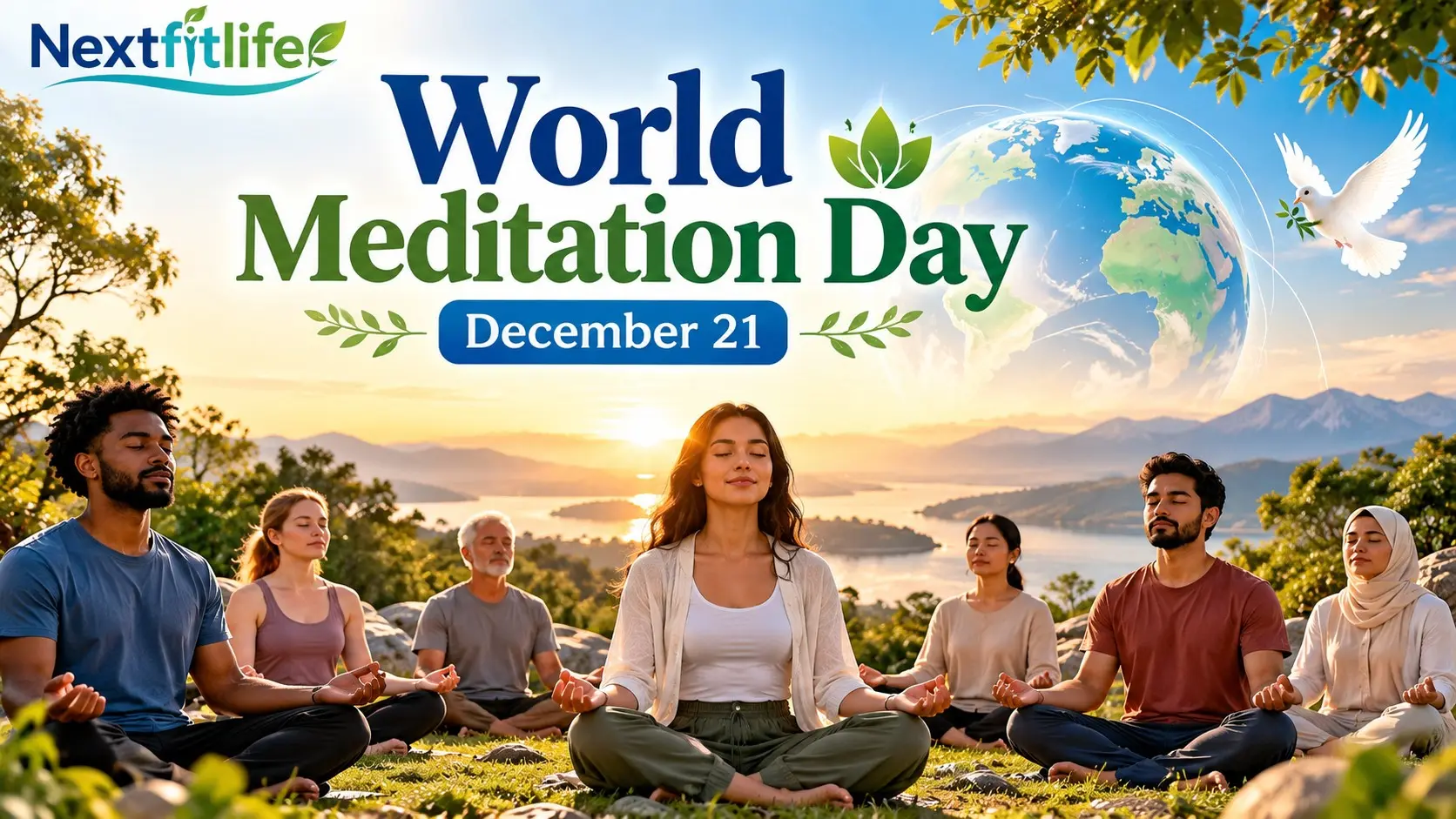
World Meditation Day is officially observed every year on December 21. The United Nations General Assembly proclaimed the day in December 2024 to raise awareness of meditation and its possible role in health, wellbeing, reflection and peaceful coexistence.
For 2026, World Meditation Day falls on Monday, December 21, 2026.
Quick answer: World Meditation Day is a United Nations observance held on December 21. Anyone can take part. You can sit quietly for five minutes, follow your breath, take a mindful walk, use a guided practice or meditate with other people. You do not need special equipment, beliefs or previous meditation experience.
Medical note: This article is for general information and education. It does not replace medical advice, diagnosis, or treatment.
I am not a dermatologist or a doctor, and this content does not replace professional medical advice. What I share comes from real life experience, extensive research, and consultation with healthcare providers. Always consult qualified medical professionals for diagnosis and treatment of any health condition.
World Meditation Day Is December 21, Not May 21
This is the first fact to get right.
Older websites often describe May 21 as World Meditation Day. That date came from an informal wellness calendar that existed before the United Nations created an official international observance.
The United Nations General Assembly adopted Resolution 79/137 on December 6, 2024.
The resolution officially proclaimed December 21 as World Meditation Day.
That makes December 21 the date to use for current articles, events, social posts and calendars that refer to the United Nations observance.
Table of Contents
- What World Meditation Day is
- When it is celebrated
- How the United Nations created it
- Why December 21 was chosen
- 11 meaningful ways to celebrate
- Five quiet minutes
- Breath awareness
- Body scan
- Mindful walking
- Guided meditation
- Compassion practice
- Meditate together
- Create a digital pause
- Join a community event
- Reflect on peace
- Continue after December 21
- Five minute beginner meditation
- What meditation may help with
- Meditation safety
- World Meditation Day at work and school
- Common myths
- Frequently asked questions
- References and Sources
What Is World Meditation Day?
World Meditation Day is a United Nations observance that encourages people around the world to learn about meditation and consider how reflective practices may support personal wellbeing and peaceful communities.
The UN describes meditation as an ancient practice found in spiritual, yogic and secular traditions across many cultures.
Modern meditation may involve:
- Mindfulness
- Focused attention
- Breathing awareness
- Compassion practice
- Silent reflection
- Body awareness
- Walking meditation
You do not need to follow a religion to meditate.
You also do not need to reject religion if meditation forms part of your spiritual tradition.
The practice exists in both secular and spiritual settings around the world.
When Is World Meditation Day in 2026?
World Meditation Day 2026 is Monday, December 21, 2026.
The observance repeats every year on December 21.
| Year | Date |
|---|---|
| 2026 | Monday, December 21 |
| 2027 | Tuesday, December 21 |
| 2028 | Thursday, December 21 |
How Did World Meditation Day Become a United Nations Observance?
The United Nations General Assembly adopted Resolution A/RES/79/137 on December 6, 2024.
The resolution recognized the widespread practice of meditation around the world and its possible contribution to health and wellbeing.
It also connected the observance with the broader right to physical and mental health.
The resolution recalled the United Nations Sustainable Development Goals, including the goal of promoting mental health and wellbeing.
December 21 was then proclaimed as World Meditation Day each year.
Was There a World Meditation Day Before the United Nations?
Yes, but this is where online confusion comes from.
Before the United Nations proclamation, various wellness calendars and meditation groups used May 21 as an informal World Meditation Day.
Many older articles still show that date.
Those pages are not necessarily fraudulent. They are often simply outdated.
Since December 2024, the official United Nations observance has been December 21.
Why Is World Meditation Day on December 21?
December 21 occurs around the solstice.
In the Northern Hemisphere, it is around the shortest day and longest night of the year.
The date has therefore become associated with ideas such as reflection, renewal and the return of light.
However, the most important fact is simple: December 21 is the date established by the United Nations resolution.
Meditation Has a Long History at the United Nations
The United Nations relationship with meditation did not begin in 2024.
The Meditation Room at United Nations Headquarters in New York opened in 1952.
It was later shaped under the guidance of Secretary General Dag Hammarskjöld as a place for quiet reflection.
The room represents an idea that fits well with World Meditation Day: people with different beliefs and backgrounds can still share moments of silence and reflection.
World Meditation Day: 11 Meaningful Ways to Celebrate
1. Begin With Five Quiet Minutes
You do not need to begin with a long meditation retreat.
Set a timer for five minutes.
Sit in a comfortable position and notice your breathing.
Your mind will wander.
That is normal.
Notice where your thoughts went, then gently return attention to the breath.
2. Practice Breath Awareness
Breath awareness is one of the simplest meditation techniques.
You do not have to change how you breathe.
Simply notice:
- Air entering your nose
- Your chest moving
- Your abdomen moving
- The pause between breaths
If concentrating on breathing makes you anxious, choose another anchor such as sounds or sensations in your hands.
3. Try a Short Body Scan
A body scan directs attention through different parts of the body.
Start at your feet and gradually move upward.
Notice pressure, warmth, tension or other sensations without trying to change everything you feel.
This can help develop self awareness and present moment attention.
4. Take a Mindful Walk
Meditation does not require sitting still.
During a mindful walk, notice:
- Your feet touching the ground
- Your breathing
- Your surroundings
- Sounds
- Changes in temperature
When your mind moves to another subject, return attention to walking.
You can combine this practice with our Walking guide.
5. Use a Guided Meditation
Guided meditation can make starting easier.
A recorded voice can lead you through breathing, body awareness, compassion or relaxation.
Using guidance does not make the practice less real.
Choose recordings from reputable health organizations, universities or established meditation programs.
6. Practice Compassion
Meditation does not have to focus only on your own calm.
A simple compassion practice can begin with a few quiet wishes.
You might think:
- May I be safe
- May my family be well
- May people who are struggling find support
- May communities live with greater understanding
This fits the wider themes of compassion and global peace connected with World Meditation Day.
7. Meditate With Family or Friends
Meditation can also be social.
Invite family members or friends to sit quietly for five minutes.
You do not need a teacher or formal ceremony.
Agree on a start time, sit comfortably and finish together.
Children may prefer a much shorter practice.
8. Create a Short Digital Pause
World Meditation Day can also be a reason to step away from constant alerts for a few minutes.
Put your phone on silent.
Close work notifications.
Sit somewhere comfortable and notice what your mind does when no new information arrives.
This is not a digital detox.
It is simply a short break from stimulation.
9. Join a Community Meditation
Community centres, meditation groups, wellness organizations and online groups may organize events around December 21.
Some events are secular.
Others come from religious or contemplative traditions.
Choose an event that fits your beliefs and comfort level.
No one should pressure you into paying for expensive training, joining a spiritual group or abandoning healthcare.
10. Reflect on Peace Beyond Your Own Mind
The United Nations observance connects individual reflection with wider ideas of peace, wellbeing and shared humanity.
You might spend a few minutes thinking about:
- How you respond during conflict
- How you listen to other people
- What creates tension in your community
- One action that could make your home calmer
Inner peace does not automatically create world peace.
But calmer reflection may help people respond with more care.
11. Continue After World Meditation Day
A single day can introduce meditation, but repeated practice matters more.
You might continue with:
- Five minutes each morning
- A short practice before bed
- Mindful walking three times a week
- One guided meditation each weekend
There is no perfect schedule.
Our Morning Meditation guide gives you a simple way to build the habit.
The 11 Ideas at a Glance
| Idea | Simple Action |
|---|---|
| 1. Quiet pause | Sit for five minutes |
| 2. Breathing | Notice natural breaths |
| 3. Body scan | Notice body sensations |
| 4. Walking | Walk with full attention |
| 5. Guided practice | Use a trusted recording |
| 6. Compassion | Reflect on kindness |
| 7. Connection | Meditate with others |
| 8. Digital pause | Silence notifications briefly |
| 9. Community | Attend a suitable event |
| 10. Peace | Reflect on relationships and community |
| 11. Continue | Repeat the practice after December 21 |
A Five Minute World Meditation Day Practice
Try this if you have never meditated before.
Minute 1: Settle
Sit comfortably.
Your posture can be upright without becoming rigid.
Place your hands somewhere comfortable.
Minute 2: Notice Your Breath
Let your breathing remain natural.
Notice where you feel it most clearly.
Minute 3: Notice Your Mind
Thoughts will appear.
You do not need to fight them.
Notice the thought, then return attention to breathing.
Minute 4: Notice Your Body
Feel your face, shoulders, hands and feet.
Notice tension without demanding that it disappear.
Minute 5: Finish Slowly
Notice the room around you.
Open your eyes if they were closed.
Choose one calm action for the next part of your day.
What Are the Evidence Based Benefits of Meditation?
The evidence is encouraging, but meditation should not be described as a cure for every health problem.
The US National Center for Complementary and Integrative Health reports that mindfulness and meditation have been studied for:
- Stress management
- Anxiety symptoms
- Depression
- Sleep quality
- Pain
- Blood pressure
- General wellbeing
Results differ between studies and populations.
Meditation is therefore best viewed as one possible wellbeing tool rather than a guaranteed treatment.
Can Meditation Reduce Anxiety?
Mindfulness based programs can help some people with anxiety.
A 2026 meta analysis examining newer mindfulness interventions found significant reductions in anxiety and depression symptoms across dozens of studies.
Benefits were larger in some clinical groups.
That does not mean meditation should replace therapy or medicine when those treatments are needed.
Can Meditation Improve Sleep?
There is promising evidence.
A 2025 systematic review of standalone digital mindfulness programs included 18 randomized trials and 4,870 participants for sleep outcomes.
Sleep improved on average, although the researchers rated the certainty of the evidence as very low because the studies differed and possible publication bias existed.
This is a good example of why wellness claims need context.
Meditation may help sleep.
It does not guarantee good sleep.
For a wider plan, read our Sleep for Fitness guide.
Can Meditation Improve Focus?
Meditation trains attention.
Research suggests mindfulness practices may improve some parts of:
- Attention
- Working memory
- Executive function
- Emotional regulation
The effect is not identical in every study.
Meditation should therefore not be sold as a guaranteed productivity trick.
Does Meditation Change the Brain?
The brain can change through experience, learning and repeated practice.
This ability is called neuroplasticity.
Meditation studies have reported differences in brain activity and connectivity in areas involved in attention, emotion and self awareness.
However, structural brain findings are less consistent.
It is too strong to claim that a short meditation permanently rewires your brain.
World Meditation Day Is About More Than Personal Relaxation
The official UN observance also connects meditation with wider ideas of human wellbeing, dialogue and peace.
The United Nations notes that meditation is practiced across regions and cultures and can offer a shared space for reflection.
This does not mean meditation alone can solve:
- War
- Poverty
- Discrimination
- Climate problems
- Mental health system gaps
Those issues require policy, resources, cooperation and action.
Meditation may support reflection, but reflection should not replace action.
Can Schools Celebrate World Meditation Day?
Yes, when activities are voluntary, inclusive and appropriate for age and culture.
Simple ideas include:
- One minute of quiet breathing
- A mindful listening activity
- A short nature walk
- A discussion about stress and healthy coping
- Drawing or journaling quietly
Schools should avoid presenting one religious practice as required for everyone.
Can Workplaces Take Part?
Yes.
A workplace might offer:
- A five minute optional pause
- A quiet room
- A guided mindfulness session
- A short wellbeing workshop
- A walking meditation during lunch
Participation should remain optional.
Meditation should also never be used as a substitute for fixing unreasonable workload, bullying or unsafe working conditions.
Do You Need Special Equipment?
No.
You do not need:
- A meditation cushion
- Special clothing
- Incense
- A subscription
- A smartphone app
- A retreat
A chair and a few quiet minutes are enough.
Do You Have to Sit Cross Legged?
No.
You can meditate:
- On a chair
- On the floor
- Lying down
- Standing
- While walking
Choose a position that is safe and comfortable.
Meditation Does Not Mean Stopping All Thoughts
This is one of the most common beginner misconceptions.
Your brain will continue producing thoughts.
Meditation usually involves noticing when attention has moved and returning it to the chosen focus.
That return is part of the practice.
Is Meditation Safe for Everyone?
Meditation is usually considered a low risk practice, but it is not harmless for every person.
NCCIH notes that some people report negative experiences.
These may include:
- More anxiety
- Low mood
- Distressing thoughts
- Uncomfortable memories
- Feeling detached
NHS guidance also notes that mindfulness can make some people feel worse.
If meditation repeatedly increases distress, stop forcing it.
Speak with a qualified mental health professional if symptoms are significant.
Meditation Does Not Replace Mental Health Care
World Meditation Day should not encourage people to delay care.
Meditation can complement treatment.
It cannot replace professional assessment for serious:
- Depression
- Anxiety disorders
- Trauma
- Psychosis
- Suicidal thoughts
- Other major mental health problems
If somebody is in immediate danger, seek emergency help rather than relying on meditation.
World Meditation Day Myths
Myth 1: World Meditation Day Is May 21
The official United Nations observance is December 21. May 21 appears on older informal wellness calendars.
Myth 2: World Meditation Day Has Existed at the UN for Decades
No. The General Assembly established the official observance in December 2024.
Myth 3: Meditation Requires a Religion
No. Meditation exists in religious and secular forms.
Myth 4: You Must Empty Your Mind
No. Thoughts are normal. The practice often involves noticing them without automatically following them.
Myth 5: Longer Meditation Is Always Better
No. A brief practice can be a better starting point if it is easier to maintain.
Myth 6: Meditation Guarantees Inner Peace
No. Meditation may help some people feel calmer, but every session and every person is different.
Myth 7: Meditation Cures Anxiety and Depression
No. Mindfulness can help symptoms for some people, but it should not replace needed professional treatment.
Myth 8: Meditation Is Always Safe
No. A minority of people report increased anxiety, low mood or other distressing experiences.
Myth 9: You Need a Meditation App
No. Guided technology can help, but simple breath awareness requires no app.
Myth 10: Collective Meditation Alone Creates World Peace
Meditation can encourage reflection and compassion, but peace also requires social, diplomatic, political and community action.
Conclusion: Make World Meditation Day a Beginning
World Meditation Day is officially observed on December 21 and now has formal recognition from the United Nations.
You do not need a complicated ceremony to take part. Five quiet minutes, a mindful walk, a compassion practice or a shared meditation can be enough.
Your next step: choose one of the 11 practices above for December 21, then repeat it once or twice during the following week. The real value comes when one global day helps you create a healthier and more thoughtful routine.
References and Sources
- United Nations. World Meditation Day.https://www.un.org/en/observances/meditation-day
- United Nations General Assembly. Resolution A/RES/79/137, World Meditation Day.https://documents.un.org/doc/undoc/gen/n24/397/70/pdf/n2439770.pdf
- National Center for Complementary and Integrative Health. Meditation and Mindfulness: Effectiveness and Safety.https://www.nccih.nih.gov/health/meditation-and-mindfulness-effectiveness-and-safety
- National Institutes of Health. Mindfulness.https://health.nih.gov/health-topics-a-z/mindfulness
- NHS. Mindfulness.https://www.nhs.uk/mental-health/self-help/tips-and-support/mindfulness/
- PubMed. Effectiveness of Second Generation Mindfulness Interventions on Anxiety and Depression.https://pubmed.ncbi.nlm.nih.gov/41512699/
- PubMed. Standalone Digital Mindfulness Interventions and Sleep in Adults.https://pubmed.ncbi.nlm.nih.gov/41339476/
Internal Links + Hub
- Morning Meditation
- Lifestyle Fitness
- Fitness Program Hub
- Regular Exercise
- Benefits of Regular Exercise
- Walking
- Sleep for Fitness
About the Author
Adel Galal is a father of four (three sons and a daughter) and a grandfather of four, with 33 years of hands-on parenting experience. He is the founder of Parnthub.com, based in Cairo, Egypt, where he shares practical guidance on feeding, development and family life from newborns to teenagers. Adel is not a medical professional; health articles cite trusted sources and are for general information only.
For more information about NextFitLife and its editorial standards, visit the About Us page.
Frequently Asked Questions About World Meditation Day
When is World Meditation Day?
Official United Nations World Meditation Day is observed every year on December 21.
When is World Meditation Day 2026?
World Meditation Day 2026 falls on Monday, December 21, 2026.
Is World Meditation Day May 21 or December 21?
The official United Nations observance is December 21. May 21 appears on older informal wellness calendars that existed before the United Nations proclaimed World Meditation Day in 2024.
When did the United Nations create World Meditation Day?
The United Nations General Assembly adopted Resolution A/RES/79/137 on December 6, 2024, proclaiming December 21 as World Meditation Day.
What is the purpose of World Meditation Day?
The observance raises awareness of meditation and its possible contribution to physical and mental wellbeing while encouraging reflection, peace and shared understanding.
Do I have to be religious to celebrate World Meditation Day?
No. Meditation exists in religious, spiritual and secular forms. You can practice simple breath awareness or mindfulness without adopting a particular belief system.
How long should I meditate on World Meditation Day?
There is no required length. A beginner can start with two to five minutes and increase the time only if the practice feels useful and comfortable.
Do I need special equipment for meditation?
No. You can meditate on a normal chair, while walking or in another comfortable position. Cushions, apps and special clothing are optional.
Can children take part in World Meditation Day?
Yes. Children can try very short, age appropriate activities such as quiet breathing, mindful listening or a slow walk. Participation should be voluntary and comfortable.
Can meditation help with stress?
Mindfulness and meditation may help some people manage stress and emotional distress. Results vary, and meditation does not remove the cause of stressful life circumstances.
Can meditation help with anxiety?
Research suggests mindfulness based interventions can reduce anxiety symptoms in some people. Meditation should not replace professional treatment when anxiety is severe or persistent.
Can meditation improve sleep?
Some studies show improvements in sleep with mindfulness practice, but the quality and size of the effect vary. Persistent sleep problems may need broader evaluation and treatment.
Can meditation make someone feel worse?
Yes. Some people experience more anxiety, disturbing thoughts, low mood or other distress. Stop or change the practice and seek professional support if symptoms become significant.
Can meditation replace therapy or medicine?
No. Meditation may complement healthcare, but it should not replace evidence based treatment when professional mental health or medical care is needed.
What is the easiest meditation for a beginner?
Sit comfortably for two to five minutes and notice your natural breathing. When your mind wanders, notice it and gently return attention to the breath.
How can I celebrate World Meditation Day at work?
You can offer an optional five minute quiet pause, guided meditation, mindful walk or quiet space. Meditation should not be compulsory or used as a substitute for addressing unhealthy workplace conditions.
Medical disclaimer: I am not a dermatologist or a doctor, and this content does not replace professional medical advice. What I share comes from real life experience, extensive research, and consultation with healthcare providers. Always consult qualified medical professionals for diagnosis and treatment of any health condition.

Health & wellness writer with 30+ years of experience in nutrition, fitness, and healthy aging. Founder of NextFitLife.com — evidence-based health guidance.

