Last Updated: January 16, 2026 | Published: January 2026
Yoga poses for beginners can feel scary at first, but they don’t have to be. Many people want to start yoga but worry about being too stiff or not being flexible enough. The good news? Start exactly from the place you find yourself now. I’ll show you simple moves that work, based on what I’ve learned through years of practice.
Key Takeaways
What you need to remember:
- Start with basic yoga postures like Mountain Pose and Child’s Pose
- Focus on breathing as much as the poses themselves
- Bent knees and modifications are completely fine
- Consistency beats intensity—10 minutes daily wins
- When discomfort arises, it’s your body telling you to stop.
- Results come in weeks, not days
- You don’t need expensive equipment or perfect flexibility
- Morning or evening—practice when it fits your life
Why I Started Yoga (And Why You Should Too)
Three years ago, I couldn’t touch my toes. I felt pain in my back from spending the whole day at my desk. A friend suggested I try yoga, and I laughed. Me? Doing yoga? I thought you needed to be naturally flexible.
I was mistaken.
My first class was awkward. I wobbled in Mountain Pose and fell out of Tree Pose twice. But something changed after that first week. My back felt better. I slept more deeply. That’s when I realized: beginner yoga poses aren’t about perfection, they’re about progress.
What Makes a Good Yoga Pose for Beginners?
Not all yoga poses are suitable when you’re just starting out. The best beginner-friendly yoga poses share three things:
- Simple to learn – You can understand them quickly
- Safe for your body – Low risk of injury
- Helpful – You feel the benefits right away
I’ve tested dozens of poses over the years. Some felt natural from day one. Others took weeks to master. The ones I’m sharing today are the ones that worked fast for me and hundreds of students I’ve talked to.
The 7 Best Yoga Poses for Beginners
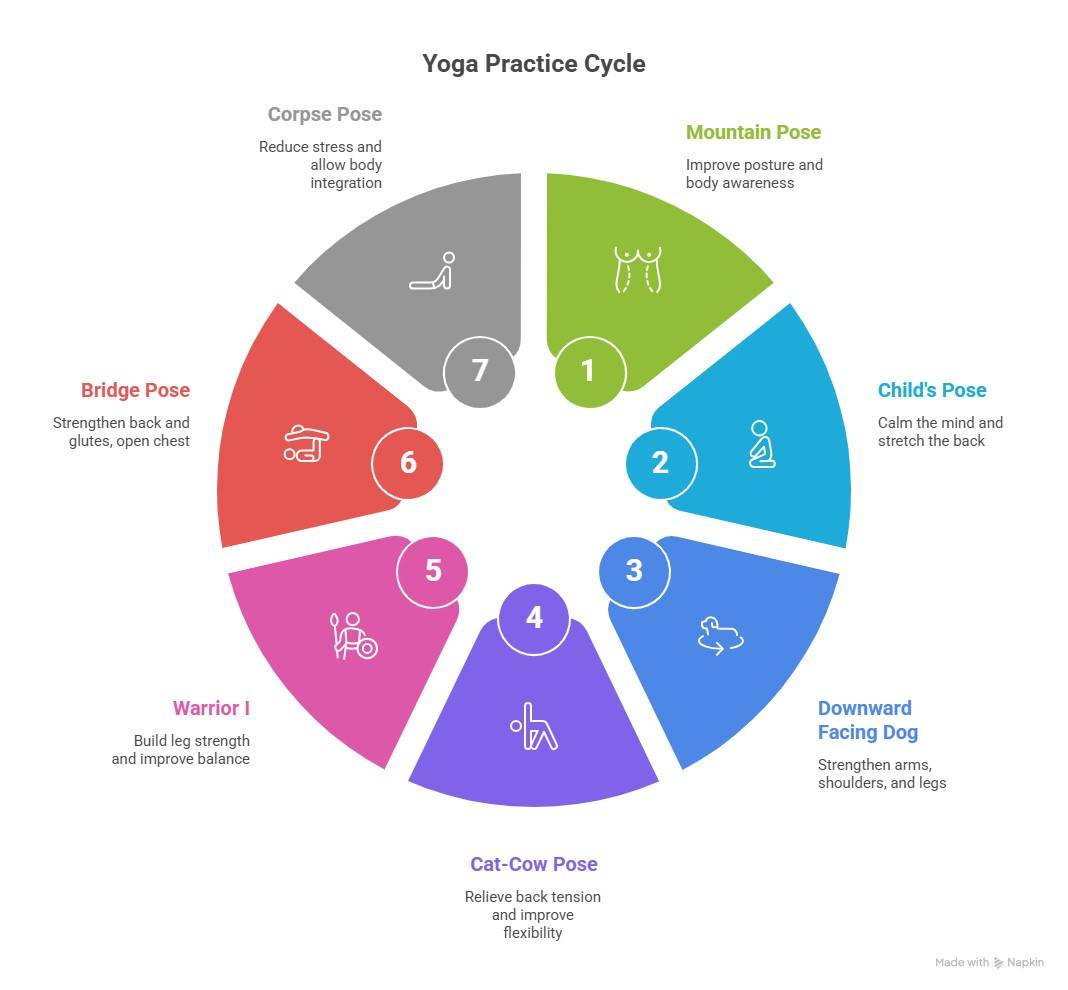
Related: 12 Best Yoga Moves for Beginners: Master the Basics with These Essential Poses!
Mountain Pose (Tadasana)
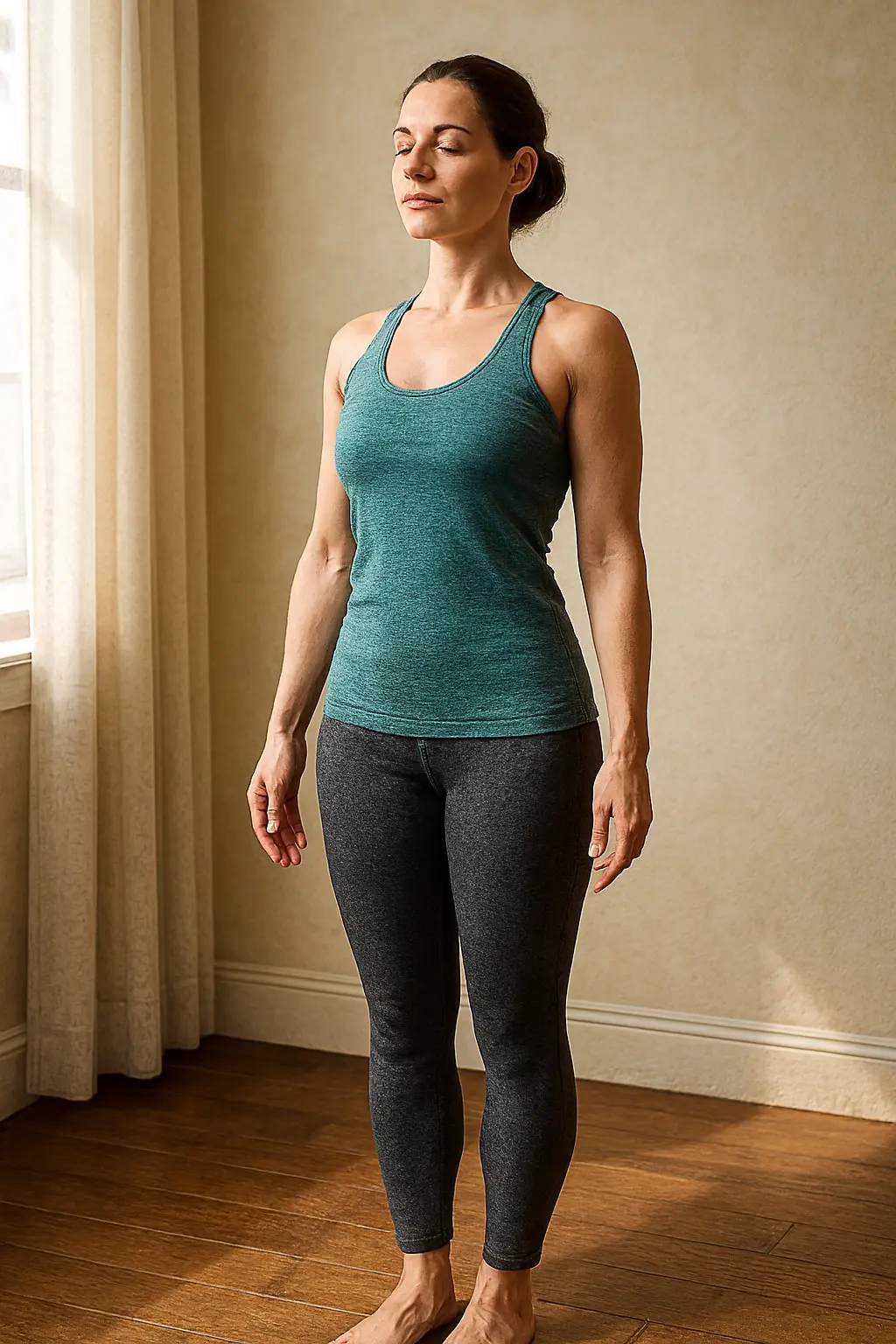
It may seem like you’re simply standing, yet the impact goes far deeper.
How to do it –
- Stand with feet hip-width apart
- Press all four corners of your feet into the floor
- Roll your shoulders back and down
- Let arms hang naturally at your sides
- Breathe deeply for 5-10 breaths
Why I love this – Mountain Pose teaches you proper posture. Every day, I turn to it while my coffee gets ready. It’s that simple.
Key benefit – Improves posture and body awareness
Child’s Pose (Balasana)
This is my favourite resting pose. Whenever I feel overwhelmed during practice, I come back here.
How to do it –
- Kneel on the floor
- Sit back on your heels
- Fold forward, reaching arms ahead
- Rest your forehead on the mat
- Breathe slowly for 1-3 minutes
Pro tip – If your hips don’t reach your heels, place a folded blanket between them. Comfort matters more than “perfect” form.
Key benefit – Calms the mind and stretches the back gently
Downward Facing Dog (Adho Mukha Svanasana)
People often refer to this as the “foundation” of yoga. At first, it felt impossible. Now, it’s where I find energy.
Step-by-step approach –
- Start on hands and knees
- Tuck your toes under
- Lift your hips up and back
- Press your hands firmly into the mat
- Keep knees slightly bent (it’s okay!)
- Hold for 5-8 breaths
Common mistake – Trying to straighten your legs too much. I’ve seen so many beginners strain their hamstrings this way. Bent knees are perfectly fine.
Key benefit – Strengthens arms, shoulders, and legs while stretching the whole back
Cat-Cow Pose (Marjaryasana-Bitilasana)
This gentle yoga pose wakes up your spine. I do it every single morning, even on days I skip my full practice.
The flow –
- Start on hands and knees (tabletop position)
- Cow – Inhale, drop belly, lift chest and tailbone
- Cat – Exhale, round spine, tuck chin and tailbone
- Repeat 8-10 times, moving with your breath
Why it works – Your spine loves movement. This basic yoga posture brings blood flow and flexibility to your back.
Key benefit – Relieves back tension and improves spinal flexibility
Warrior I (Virabhadrasana I)
This pose makes you feel strong. I remember the first time I held Warrior I for a full minute—I felt like I could handle anything.
Getting into position –
- Step left foot back about 3-4 feet
- Turn the left foot out slightly (45 degrees)
- Bend the right knee over the right ankle
- Raise arms overhead
- Keep hips facing forward
- Hold 5-8 breaths, then switch sides
Reality check – Your back heel might lift. That’s normal when you’re starting. Focus on steady breathing over perfect alignment.
Key benefit – Builds leg strength and improves balance
Bridge Pose (Setu Bandha Sarvangasana)
Successful for anyone who sits all day (like me). This easy yoga pose for beginners opens your chest and strengthens your back.
Instructions –
- Lie on your back, knees bent, feet flat
- Place your feet hip-width apart, near your hips
- Press feet down and lift hips up
- Clasp hands under your back (optional)
- Hold 30-60 seconds
- Lower slowly
Personal note – I like this because it feels immediately good. You’ll notice your chest opening and your breathing deepening.
Key benefit – Strengthens the back and glutes while opening the chest
Corpse Pose (Savasana)
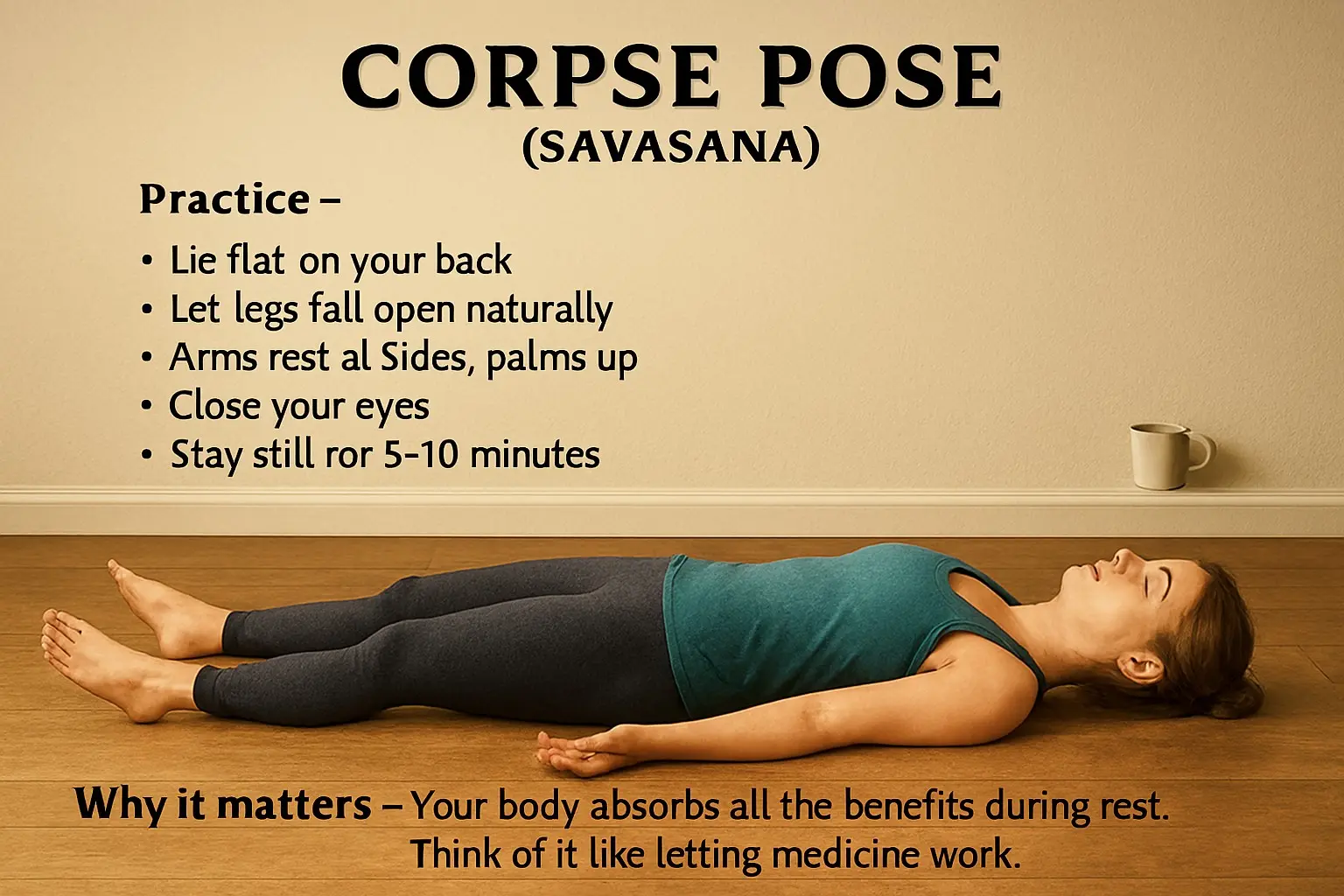
Don’t skip this. I used to think lying down wasn’t “real” yoga. I was so wrong.
Practice –
- Lie flat on your back
- Let legs fall open naturally
- Arms rest at sides, palms up
- Close your eyes
- Stay still for 5-10 minutes
Why it matters – Your body absorbs all the benefits during rest. Think of it like letting medicine work.
Key benefit: Reduces stress and allows body integration
Quick Reference – Beginner Poses briefly
| Pose Name | Difficulty | Time to Hold | Main Benefit |
| Mountain Pose | Very Easy | 5-10 breaths | Posture awareness |
| Child’s Pose | Very Easy | 1-3 minutes | Stress relief |
| Downward Dog | Easy | 5-8 breaths | Full body strength |
| Cat-Cow | Very Easy | 8-10 rounds | Spinal flexibility |
| Warrior I | Moderate | 5-8 breaths | Leg strength |
| Bridge Pose | Easy | 30-60 seconds | Back strengthening |
| Corpse Pose | Very Easy | 5-10 minutes | Deep relaxation |
Building Your First Yoga Routine
Start small. Really small.
Here’s what worked for me:
Week 1 – Just 10 minutes daily
- 2 minutes Cat-Cow Pose
- 1 minute Child’s Pose
- 3 minutes Downward Facing Dog (with breaks)
- 2 minutes Mountain Pose
- 2 minutes Corpse Pose
Week 2-3 – Add 5 more minutes
- Include Bridge Pose and Warrior I
- Hold each pose a bit longer
Week 4+ – Follow your body
- Some days you’ll want 30 minutes
- Other days, 10 is enough
- Both are perfectly fine
Common Mistakes (And How I Fixed Them)
Holding Your Breath
I used to forget to breathe during poses. Then my teacher said, “If you’re not breathing, you’re not doing yoga.”
Fix: Count your breaths out loud at first.
Comparing Yourself to Others
In my first class, I watched everyone else. Big mistake. I strained my neck and missed the whole point.
Fix: Close your eyes when possible. Focus on how YOU feel.
Rushing Through Poses
I wanted results yesterday. But yoga doesn’t work that way.
Fix: Hold each basic yoga asana for the full recommended time. Quality beats speed.
Skipping Warm-Up
I jumped straight into Downward Facing Dog once and pulled a muscle. Learn from my mistakes.
Fix: Always start with Cat-Cow or gentle stretches.
Equipment You Actually Need
Forget fancy gear. Here’s what I use:
Essential –
- Yoga mat (non-slip) – I paid $25 for mine three years ago
- Comfortable clothes you can move in
Helpful but optional –
- Two yoga blocks (for support)
- One strap or belt (for flexibility work)
- Blanket (for comfort in seated poses)
Don’t squander money on –
- Expensive yoga clothes
- Special yoga shoes (go barefoot)
- Fancy props you won’t use
Safety Tips for Yoga Beginners
Your safety comes first. Always.
Important Note: Listen to your body. Pain is your body’s way of telling you to pause or adjust. Discomfort from stretching is okay. Sharp pain is not.
Safe practice rules
- Warm up for 5 minutes before starting yoga poses
- Never force a stretch
- Modify poses when needed (bent knees are fine!)
- Stop if something hurts
- Stay hydrated
According to the American Council on Exercise, proper form prevents 90% of yoga-related injuries. Take your time learning each pose correctly.
How Long Until You See Results?
Everyone asks this. Here’s my honest answer:
After 1 week –
- Better sleep
- Slightly improved flexibility
- Reduced stress
After 1 month –
- Noticeable flexibility gains
- Stronger core
- Better posture
After 3 months –
- Significant flexibility improvement
- Regular stress management
- Visible muscle tone
After 6 months –
- Yoga becomes a habit
- Advanced poses feel possible
- Major lifestyle changes
I tracked my progress with photos. Seeing the difference kept me motivated.
Best Times to Practice Yoga
I’ve tried morning, noon, and night yoga. Each has benefits.
Morning yoga (my favourite) –
- Wakes up stiff muscles
- Sets positive tone for the day
- Simple yoga stretches feel amazing after sleep
Lunch break yoga:
- Break up sitting time
- Re-energizes the afternoon
- 15 minutes is enough
Evening yoga:
- Releases work stress
- Prepares body for sleep
- Gentle yoga poses work best
Try different times. See what feels right for your schedule.
Yoga for Specific Goals
For Flexibility
Focus on these simple yoga poses:
- Child’s Pose
- Downward-Facing Dog
- Cat-Cow
- Bridge Pose
Hold each for 30-60 seconds. Breathe deeply.
For Stress Relief
My go-to calming sequence:
- Child’s Pose (2 minutes)
- Cat-Cow (10 rounds)
- Corpse Pose (5 minutes)
This takes just 10 minutes but transforms my mood.
For Strength
Build power with:
- Mountain Pose (core work)
- Warrior I (legs)
- Downward Dog (full body)
- Bridge Pose (back and glutes)
Repeat each pose 3-5 times.
Breathing – The Secret Ingredient
Effective beginner yoga at home always focuses on correct breathing.
Basic yoga breathing:
- Inhale through your nose (count to 4)
- Exhale through your nose (count to 4)
- Keep it smooth and steady
I used to breathe through my mouth. Then I learned nose breathing activates the relaxation response. Game-changer.
My Weekly Yoga Schedule
Here’s what my realistic practice looks like:
| Day | Practice | Duration |
| Monday | Full sequence | 30 minutes |
| Tuesday | Just stretching | 10 minutes |
| Wednesday | Rest day | – |
| Thursday | Focus on strength | 20 minutes |
| Friday | Gentle flow | 15 minutes |
| Saturday | Longer practice | 45 minutes |
| Sunday | Restorative poses | 20 minutes |
Notice the rest day? Your body needs it.
FAQs About Yoga Poses for Beginners
What are the 5 basic yoga poses?
The five most essential beginner yoga poses are:
- Mountain Pose – Builds posture awareness
- Child’s Pose – Perfect for resting
- Downward Facing Dog – Strengthens everything
- Cat-Cow – Wakes up your spine
- Corpse Pose – Allows deep relaxation
I recommend learning these five first. They form the foundation for almost every other pose.
Can I lose belly fat through yoga?
Yes, but not how you might think. Yoga won’t burn as many calories as running. But I’ve seen it work through:
- Strengthening lean muscle allows your body to use more energy at rest.
- Reducing stress (which lowers cortisol and belly fat storage)
- Improving mindful eating habits
- Increasing overall daily movement
I lost 12 pounds over six months by combining yoga with healthier eating. Yoga made me more aware of my body, which naturally led to better food choices. Focus on strength-building poses like Warrior I and Downward Dog for best results.
What are the 7 basic yoga poses?
The seven foundational easy yoga poses every beginner should know:
- Mountain Pose (Tadasana)
- Child’s Pose (Balasana)
- Downward Facing Dog (Adho Mukha Svanasana)
- Cat-Cow Pose (Marjaryasana-Bitilasana)
- Warrior I (Virabhadrasana I)
- Bridge Pose (Setu Bandha Sarvangasana)
- Corpse Pose (Savasana)
These seven cover all the basics: standing, resting, strengthening, and relaxation. Master these before moving to harder poses.
Which yoga pose is best for beginners?
Child’s Pose wins this one for me. Here’s why:
- You literally cannot do it wrong
- It feels good immediately
- You can stay as long as you want
- It calms your nervous system
- Perfect for any fitness level
When I feel overwhelmed during practice, I always return to Child’s Pose. It’s like a reset button for your body and mind. Start every practice with this pose to set a calm, gentle tone.
Conclusion
Yoga poses for beginners changed my life. Not overnight. Not dramatically. But slowly, steadily, my body got stronger. My mind got calmer. My days got better.
You don’t need to be flexible to start. You don’t need special clothes or a yoga studio membership. You just need a mat, 10 minutes, and the willingness to try.
I still can’t do a headstand. I probably never will. But I can touch my toes now. My back doesn’t hurt. I sleep better. That’s enough for me.
Start with one pose today. Just one. Try Mountain Pose while you wait for your morning coffee. That’s how this journey begins.
Your yoga practice doesn’t need to look like anyone else’s. It just needs to work for you.
References
- Harvard Health Publishing – “Yoga for Better Mental Health” URL: https://www.health.harvard.edu/staying-healthy/yoga-benefits-beyond-the-mat
- Essential Yoga Poses for Beginners: Your Complete Guide
- https://centerforyogala.com/yoga-poses/

Adel Galal is a health and wellness writer with over 30 years of experience studying and writing about health, fitness, nutrition, and healthy living. He is the founder of NextFitLife.com, where he shares practical, evidence-based guidance to support long-term health at any age. Adel’s mission is simple:
to help people make smarter health choices that fit real life, at any age.