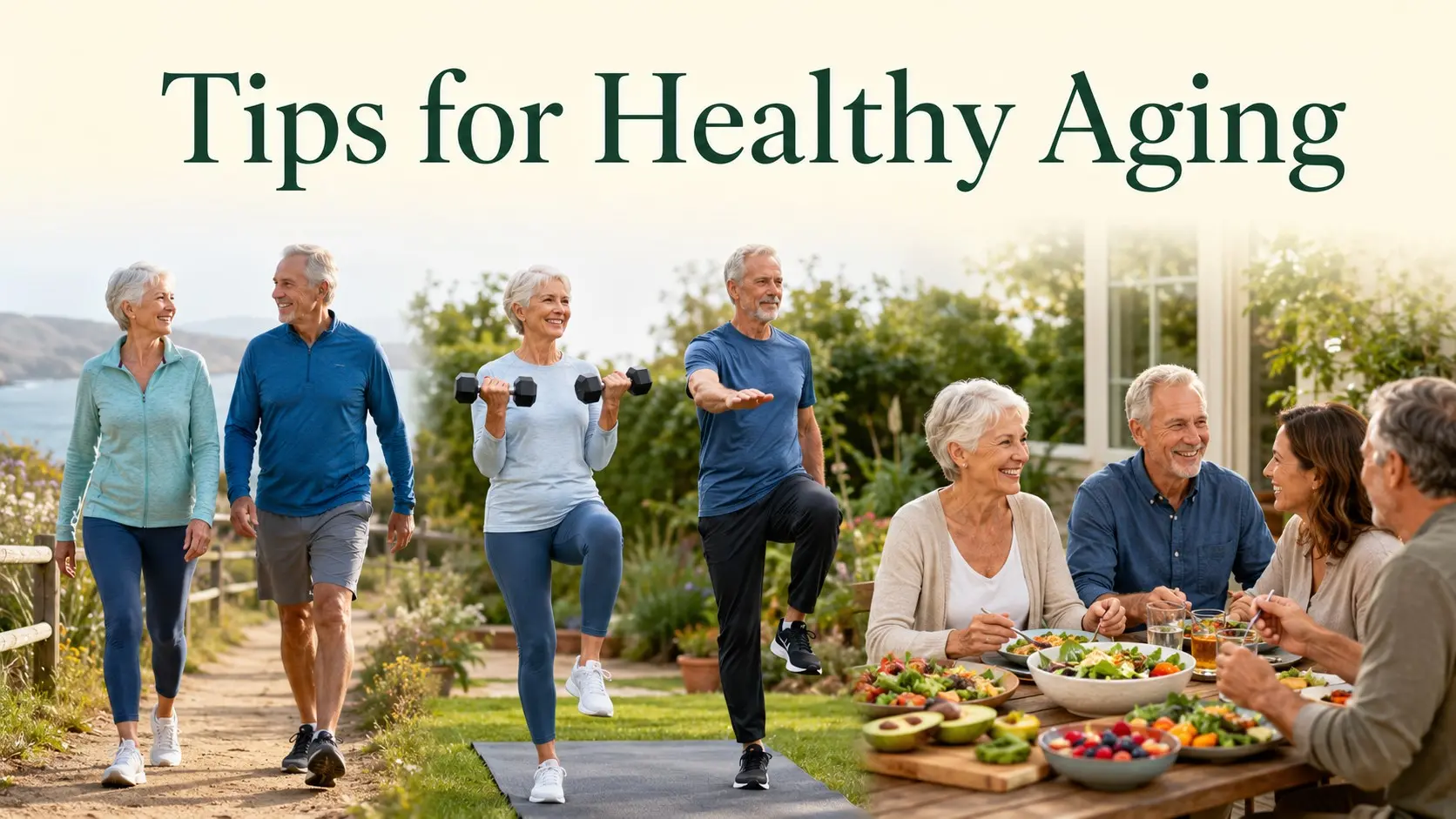
The best Tips for healthy aging are not about stopping age.
Aging is normal.
The goal is to protect your health, strength, thinking, independence, and quality of life as the years pass.
You cannot control every part of aging.
Genetics matter.
Past health matters.
Your environment matters.
Access to healthcare matters.
But many daily choices still matter too.
Regular physical activity can protect strength and mobility.
Healthy food can support muscle, bones, heart health, and energy.
Sleep matters.
Social connection matters.
Hearing and vision matter.
Blood pressure, blood sugar, and cholesterol matter.
Vaccines and preventive care matter.
Fall prevention matters too.
Healthy aging does not mean never becoming sick.
It means supporting your ability to keep doing the things that matter to you.
Do Not Blame Every New Symptom on Aging
This is one of the most important healthy aging rules.
New weakness can have a cause.
Additional confusion can have a cause.
New incontinence can have a cause.
New pain can have a cause.
New breathlessness can have a cause.
Seek urgent medical care for:
- New severe chest pain or pressure
- Severe trouble breathing
- Sudden weakness on one side
- New trouble speaking
- Sudden severe confusion
- Loss of consciousness
- A seizure
- A serious fall with head injury
- Sudden vision loss
- Rapidly worsening illness
Read Health Issues for Older People for a detailed guide to common conditions, risks, and warning signs.
What Are the Best Tips for Healthy Aging?
The most useful Tips for Healthy Aging are simple.
- Stay physically active.
- Protect muscle strength and balance.
- Eat a varied, nutritious diet with enough protein.
- Get enough sleep.
- Control blood pressure, blood sugar, and cholesterol.
- Protect brain, hearing, and vision health.
- Stay socially connected.
- Reduce fall and fracture risk.
- Review medicines and vaccines.
- Keep up with preventive healthcare.
You do not need to do everything perfectly.
Choose the areas that need the most attention.
Small improvements can matter when they continue for years.
What Does Healthy Aging Mean?
Healthy aging does not mean looking young.
It does not mean having no wrinkles.
It does not mean never needing medicine.
It does not mean avoiding every disease.
WHO focuses on maintaining functional ability.
This means being able to do the things that matter to you.
That May Include
- Walking safely
- Preparing meals
- Bathing and dressing
- Shopping
- Managing medicines
- Seeing family
- Using transport
- Enjoying hobbies
- Making your own decisions
- Living independently when possible
People Age Differently
Two people who are both 75 can have very different abilities.
Age alone does not tell you how healthy a person is.
Health can be shaped by:
- Genetics
- Medical conditions
- Nutrition
- Movement
- Sleep
- Hearing
- Vision
- Medicines
- Housing
- Social support
- Healthcare access
1. Keep Moving Every Day
Physical activity is one of the strongest foundations of healthy aging.
You do not need to train like an athlete.
You do need to keep moving.
Why Movement Matters
Regular activity can support:
- Heart health
- Blood pressure
- Blood sugar
- Bone health
- Muscle
- Balance
- Sleep
- Mood
- Brain health
- Independent living
How Much Activity?
Older adults can work toward about 150 minutes of moderate aerobic activity each week.
Brisk walking is one example.
You can divide the activity across the week.
Everyday Movement Counts
Movement can include:
- Walking
- Gardening
- Dancing
- Swimming
- Cycling
- Household tasks
- Walking to local shops
Start Small if You Are Inactive
A short walk is useful.
Five minutes can become ten.
Ten can become twenty.
Build slowly.
Read Walking Exercise for Seniors for a simple walking plan.
2. Protect Muscle Strength and Balance
Walking is important.
But walking alone is not the whole exercise plan.
Strength training becomes especially important with age.
Why Muscle Matters
Muscle helps you:
- Stand from a chair
- Climb stairs
- Carry groceries
- Walk safely
- Recover from illness
- Protect independence
Adults Should Include Strength Work
Older adults can aim for muscle strengthening exercise on at least two days each week.
Simple Strength Exercises Can Include
- Chair stands
- Wall push exercises
- Resistance bands
- Light weights
- Gym machines
Balance Matters Too
Balance exercise can reduce fall risk.
Options can include:
- Standing on one leg with safe support nearby
- Heel to toe walking
- Tai chi
- Structured balance classes
Safety First
Use stable support if balance is poor.
Ask a physical therapist or healthcare professional for help if you have repeated falls or major mobility problems.
3. Eat for Strength, Bones, Heart and Brain Health
Nutrition remains important at every age.
Older adults need enough energy and nutrients.
Build Meals Around
- Vegetables
- Whole fruit
- Beans
- Lentils
- Whole grains
- Fish
- Eggs
- Poultry
- Lean meat when eaten
- Yogurt
- Milk or suitable alternatives
- Nuts
- Seeds
- Healthy unsaturated fats
Protein Deserves Attention
Protein supports muscle maintenance and repair.
Useful sources include:
- Eggs
- Fish
- Yogurt
- Beans
- Lentils
- Chicken
- Tofu
Do Not Ignore Unplanned Weight Loss
Loss of appetite and unexpected weight loss are not always harmless.
Possible causes include:
- Dental problems
- Medicine effects
- Depression
- Digestive disease
- Dementia
- Cancer
- Difficulty shopping or cooking
Persistent unexplained weight loss needs medical assessment.
Food First When Possible
A supplement cannot replace a varied diet.
Use supplements when there is a real nutritional need or professional recommendation.
4. Protect Your Sleep
Getting older does not mean you no longer need sleep.
Older adults generally need about 7 to 9 hours of sleep each night.
Sleep Supports
- Daytime energy
- Mood
- Memory
- Attention
- Physical recovery
- Overall wellbeing
Try Simple Sleep Habits
- Keep a regular waking time
- Keep the bedroom quiet
- Keep the room comfortable
- Reduce late caffeine
- Avoid large late meals
- Reduce late alcohol
- Stay active during the day
Do Not Ignore Sleep Apnea
Talk with a healthcare professional if you:
- Snore very loudly
- Stop breathing during sleep
- Wake gasping
- Wake with headaches
- Stay very sleepy during the day
Frequent Waking May Have a Cause
Possible causes include:
- Pain
- Bladder symptoms
- Medicines
- Depression
- Anxiety
- Sleep disorders
Do not assume poor sleep is simply part of age.
5. Control Blood Pressure, Blood Sugar and Cholesterol
Healthy aging includes protecting the heart and blood vessels.
This also protects the brain, kidneys, eyes, and other organs.
High Blood Pressure Can Be Silent
You may feel normal even when blood pressure is too high.
Have it checked.
Diabetes Can Affect Many Organs
Good diabetes management can help protect:
- The heart
- The kidneys
- The eyes
- The feet
- The nerves
Cholesterol Matters Too
Your healthcare professional can consider your full cardiovascular risk.
This may include:
- Age
- Blood pressure
- Cholesterol
- Smoking
- Diabetes
- Family history
Do Not Stop Medicine Because You Feel Well
Blood pressure and cholesterol medicines often treat problems that do not cause symptoms.
Talk with the healthcare professional managing your treatment before changing medicine.
Read Heart Health After 50 for more cardiovascular guidance.
6. Protect Brain Health as You Age
Brain health is part of healthy aging.
Dementia is more common in older age.
But dementia is not a normal or inevitable part of aging.
Current WHO Guidance
WHO released updated dementia risk reduction guidance in July 2026.
Important modifiable risks include:
- Physical inactivity
- Smoking
- Harmful alcohol use
- Social isolation
- High blood pressure
- Diabetes
- High cholesterol
- Hearing loss
- Air pollution
Keep the Brain Engaged
Useful activities can include:
- Reading
- Learning a skill
- Playing music
- Games
- Conversation
- Classes
- Creative activities
Protect Hearing
WHO includes hearing care as part of dementia risk reduction.
Use hearing aids when professionally recommended.
Manage Heart and Metabolic Health
Blood pressure, diabetes, cholesterol, activity, and tobacco exposure all matter for brain health too.
Be Careful With Brain Supplements
WHO's 2026 dementia guidance does not recommend routine vitamin B, vitamin E, omega 3, or multivitamin supplements for dementia prevention when there is no diagnosed deficiency.
Correct real deficiencies instead of assuming more vitamins will create a younger brain.
7. Stay Socially Connected
Social connection is a health issue.
It is not only entertainment.
Isolation Can Become More Common With Age
Reasons can include:
- Retirement
- Loss of a partner
- Hearing loss
- Vision loss
- Mobility problems
- Moving home
- Loss of friends
Connection Can Come From Many Places
- Family
- Friends
- Neighbors
- Community groups
- Faith communities
- Walking groups
- Classes
- Volunteering
You Do Not Need a Huge Social Circle
A few meaningful relationships can matter.
Combine Activity and Connection
A walking group can support both movement and social health.
A dance class can do the same.
So can volunteering.
Loneliness Deserves Attention
Persistent loneliness is linked with worse physical, emotional, and cognitive health.
Reach out early.
Use the Mental Health and Wellness Hub for more emotional and social well-being guidance.
8. Prevent Falls and Protect Your Bones
Fall prevention is one of the most important Tips for Healthy Aging.
Falls are common.
They are also often preventable.
CDC reports that more than 14 million older adults, about one in four, report falling each year in the United States.
Reduce Fall Risk With
- Strength exercise
- Balance training
- Good footwear
- Vision care
- Medicine review
- Good home lighting
- Clear walking paths
- Grab bars where needed
Medicines Can Affect Falls
Some medicines can cause:
- Dizziness
- Sleepiness
- Low blood pressure
- Confusion
Ask a doctor or pharmacist to review medicines after a fall.
Bone Health Matters
Osteoporosis makes fractures more likely.
Current Osteoporosis Screening Guidance
Current United States Preventive Services Task Force guidance recommends osteoporosis screening for women aged 65 years or older.
Younger postmenopausal women may also need screening when fracture risk is increased.
Evidence remains insufficient for routine population screening of all men.
9. Review Medicines and Keep Vaccines Current
Medicine needs can change with age.
Kidney function can change.
Liver function can change.
You may also start taking more medicines over time.
Keep One Complete Medicine List
Include:
- Prescription medicine
- Pain medicine
- Sleep medicine
- Cold medicine
- Vitamins
- Minerals
- Herbs
- Supplements
Ask for a Medicine Review
A useful question is:
Do I still need all of these medicines?
Do Not Stop Medicine Suddenly
Some treatments can cause serious problems if stopped without guidance.
Vaccination Still Matters in Older Age
Vaccines may include:
- Influenza
- COVID
- Shingles
- Pneumococcal disease
- RSV
- Tetanus and diphtheria
- Pertussis when indicated
RSV Guidance Has Changed in Recent Years
Current CDC guidance recommends RSV vaccination for everyone aged 75 and older.
Adults aged 50 through 74 who have increased risk for severe RSV may also be recommended to receive it.
Recommendations vary by country and health condition.
Ask your healthcare professional which vaccines apply to you now.
10. Use Preventive Care Before Problems Become Serious
Preventive care changes with age.
You may need:
- Blood pressure checks
- Diabetes screening
- Cholesterol review
- Cancer screening
- Bone health screening
- Hearing checks
- Vision care
- Dental care
- Fall risk assessment
- Vaccine review
Screening Is Not One Size Fits All
More testing is not always better.
Screening decisions can depend on:
- Age
- Sex
- Personal history
- Family history
- Previous screening
- Overall health
- Life expectancy
- Personal preferences
Some Screening Changes in Older Age
For example, colorectal cancer screening for average risk adults becomes more individualized after age 75 under current United States guidance.
Keep Regular Health Reviews
Appointments are also a chance to discuss:
- Falls
- Memory changes
- Sleep
- Urine problems
- Weight loss
- Mood
- Medicines
Read Health Screening for a detailed preventive care guide.
You can also use the Medical Tests and Screenings Hub.
Protect Hearing and Vision
Hearing and vision are closely connected with independence.
Hearing Loss Can Affect
- Conversation
- Social connection
- Understanding medical instructions
- Safety
- Cognitive health
Do Not Assume Hearing Loss Cannot Be Treated
Possible treatments can include:
- Earwax treatment
- Hearing aids
- Medical treatment
- Other hearing support
Vision Supports Safe Living
Vision changes can affect:
- Driving
- Falls
- Reading medicine labels
- Cooking
- Walking
Sudden Vision Loss Is Different
Seek urgent medical care for sudden major vision loss or severe new eye symptoms.
Do Not Forget Oral Health
Oral health affects eating, speaking, comfort, nutrition, and quality of life.
Common Problems Include
- Dry mouth
- Tooth decay
- Gum disease
- Tooth loss
- Denture problems
Medicines Can Cause Dry Mouth
Dry mouth can increase cavity risk.
Tell your dentist about all medicines you take.
Basic Care Still Matters
Brush twice each day.
Use fluoride toothpaste.
Clean between teeth.
Keep dental appointments.
Stop Smoking and Be Careful With Alcohol
It is never too late to stop smoking.
NIA notes that quitting can improve health even in people aged 60 or older who have smoked for many years.
Stopping Smoking Can Reduce Risk
Benefits include lower risk of:
- Heart attack
- Stroke
- Lung disease
- Several cancers
Alcohol Is Not Required for Healthy Aging
You do not need to drink alcohol for heart health.
Alcohol Can Interact With Medicines
It can also affect:
- Balance
- Sleep
- Blood pressure
- Liver health
- Fall risk
If you do not drink, there is no health reason to begin drinking for healthy aging.
Maintain a Weight That Supports Your Health and Function
Body weight deserves context in older adults.
Weight Loss Is Not Always the Goal
For some older adults, avoiding unplanned weight loss and protecting muscle may be more important than becoming lighter.
Muscle Matters More With Age
Large calorie restriction without enough protein and strength exercise may worsen muscle loss.
Watch for Sarcopenia
Sarcopenia refers to age-related loss of muscle mass and function.
Warning signs can include:
- Weak grip
- Slow walking
- Difficulty standing
- Difficulty climbing stairs
- Repeated falls
Do Not Chase a Young Adult Body
The goal is health and function.
Not looking 25 again.
Protect Mental and Emotional Health
Mental health remains important at every age.
Depression is not a normal part of aging.
Signs That Deserve Attention Include
- Persistent sadness
- Loss of interest
- Withdrawal from others
- Sleep changes
- Appetite changes
- Feeling hopeless
- Loss of energy
Stress Can Still Affect Older Adults
Common sources include:
- Health problems
- Caregiving
- Money
- Loss
- Retirement
- Loneliness
Ask for Help
Support can include:
- Friends
- Family
- Community groups
- Therapy
- Medical care
Visit the Mental Health and Wellness Hub for more information.
Keep Purpose, Curiosity and Enjoyment in Your Life
Healthy aging is not only about avoiding disease.
You need reasons to enjoy the years you have.
Meaningful Activities Can Include
- Volunteering
- Learning
- Gardening
- Music
- Reading
- Travel
- Cooking
- Art
- Spending time with grandchildren
- Helping your community
Learn Something New
Try:
- A language
- A musical instrument
- A computer skill
- A craft
- A new recipe
Retirement Should Not Mean Stopping Life
You may have more time to build interests that were difficult during working years.
Purpose looks different for every person.
A Simple Weekly Healthy Aging Plan
You do not need a complicated program.
Most Days
- Move your body
- Eat vegetables and whole fruit
- Include protein
- Drink enough fluid
- Take prescribed medicine correctly
- Talk with another person
Two or More Days Each Week
- Do strength exercise
- Practice balance exercises
Each Week
- Do something enjoyable
- Spend time with people
- Review your activity
- Prepare healthy food
- Check that medicine supplies are organized
During the Year
- Review vaccines
- Review medicines
- Attend appropriate screening
- Have vision and dental care
- Discuss hearing changes
- Discuss falls
- Discuss new memory changes
Healthy Aging Warning Signs You Should Not Ignore
Arrange medical assessment for:
- Unplanned weight loss
- Repeated falls
- New memory problems
- New difficulty walking
- Persistent fatigue
- New breathlessness
- New swelling in the legs
- Persistent loss of appetite
- Blood in urine
- Blood in stool
- New difficulty swallowing
- A wound that does not heal
- Major vision or hearing changes
- Persistent depression
- New incontinence
Sudden Confusion Needs Attention
Sudden confusion is not the same as gradual dementia.
Possible causes include:
- Infection
- Medicine effects
- Dehydration
- Low oxygen
- Blood sugar problems
- Other acute illness
Prompt medical assessment may be needed.
Common Myths About Tips for Healthy Aging
Myth: Getting Weak Is Inevitable
No.
Muscle changes with age, but older adults can improve strength with appropriate resistance exercise.
Myth: Older Adults Should Avoid Exercise
No.
Physical activity is a major part of healthy aging.
Exercise can be adapted to ability.
Myth: Falls Are Normal
No.
Falls are common, but many fall risks can be reduced.
Myth: Dementia Is Normal Aging
No.
Dementia is caused by diseases and injuries affecting the brain.
Myth: Older Adults Need Very Little Sleep
No.
Older adults still need adequate sleep.
Myth: Everyone Needs Anti-Aging Supplements
No.
Supplements should meet a real nutritional need.
Myth: It Is Too Late to Stop Smoking
No.
Stopping tobacco can improve health at older ages.
Myth: Weight Loss Is Always Healthy in Old Age
No.
Unplanned weight loss can signal illness or poor nutrition.
Myth: Depression Is Normal When You Get Older
No.
Depression is a treatable health condition.
Myth: Healthy Aging Means Never Needing Help
No.
Using support when needed can protect independence.
References and Sources
This guide was checked against current open healthy aging, physical activity, fall prevention, vaccination, and brain health guidance.
- World Health Organization: Ageing and HealthWHO guidance on healthy aging, functional ability, common health conditions, independence, supportive environments, and the wide differences between older adults.
Read the WHO Ageing and Health Fact Sheet
- National Institute on Aging: What Do We Know About Healthy Aging?NIH information about exercise, healthy food, sleep, smoking, mental health, social connection, medical care, and practical actions that support healthy aging.
Read the National Institute on Aging Healthy Aging Guide
- Centers for Disease Control and Prevention: Preventing Falls and Hip FracturesUpdated January 2026 guidance on fall risk, medicine review, osteoporosis, strength and balance exercise, vision, and home safety.
Read the CDC Fall Prevention Guide
- Centers for Disease Control and Prevention: Adult Immunization Schedule by AgeCurrent CDC guidance for adult vaccines including influenza, RSV, shingles, pneumococcal vaccination, tetanus, and other vaccines based on age and health risks.
Read the CDC Adult Immunization Schedule
- World Health Organization: Risk Reduction of Cognitive Decline and Dementia, Second EditionUpdated July 2026 guidance on physical activity, smoking, alcohol, social connection, blood pressure, diabetes, cholesterol, hearing, diet, air pollution, and other modifiable dementia risks.
Read the WHO 2026 Dementia Risk Reduction Guidelines
Conclusion
The best Tips for Healthy Aging are not about fighting your age.
They are about protecting what matters.
Keep moving.
Build strength.
Practice balance.
Eat enough nutritious food.
Protect sleep.
Control blood pressure and blood sugar.
Protect hearing and vision.
Stay socially connected.
Prevent falls.
Review medicines and vaccines.
Use preventive care.
And keep doing things that give your life meaning.
Take action today: Choose three Tips for Healthy Aging from this guide and turn them into simple actions you can repeat this week. If a new symptom is affecting your strength, memory, mobility, appetite, mood, or independence, discuss it with a qualified healthcare professional instead of assuming it is normal aging.
Continue Your Healthy Aging Plan on NextFitLife
Use these related guides for deeper information about older adult health, exercise, screening, heart health, mental wellbeing, and healthy living.
- NextFitLife Health Hub
- General Wellness and Lifestyle Hub
- Health Issues for Older People
- Walking Exercise for Seniors
- Heart Health After 50
- Heart and Cardiovascular Health Hub
- Health Screening Guide
- Medical Tests and Screenings Hub
- Mental Health and Wellness Hub
Main Health Hub: Return to the NextFitLife Health Hub for the complete health library.
Older Adult Health: Read Health Issues for Older People for heart disease, diabetes, falls, hearing, vision, dementia, medicines, nutrition, and warning signs.
Movement: Use Walking Exercise for Seniors to build a practical walking routine that supports mobility and independence.
Heart Health: Read Heart Health After 50 for blood pressure, cholesterol, activity, and cardiovascular warning signs.
Preventive Care: Use the Health Screening Guide for age based screening, risk assessment, and questions to discuss with your healthcare professional.
Mental Wellbeing: Visit the Mental Health and Wellness Hub for stress, depression, emotional health, sleep, and social wellbeing.
Medical Disclaimer
This content is for general educational purposes and does not replace professional medical advice, diagnosis, or treatment. Consult an appropriately qualified healthcare professional for personal medical concerns.
This article explains published guidance and does not provide a personal clinical assessment.
Always consult qualified medical professionals for diagnosis and treatment of any health condition.
I am also not a geriatrician, cardiologist, neurologist, registered dietitian, pharmacist, physical therapist, audiologist, ophthalmologist, psychologist, or other licensed healthcare professional.
This article provides general education only.
It does not diagnose dementia, osteoporosis, heart disease, diabetes, depression, frailty, hearing loss, or another health condition.
It does not prescribe exercise, supplements, medicine, vaccines, or medical tests.
It does not tell you to stop prescribed treatment.
Age, medical history, medicines, mobility, fall risk, nutrition, cognitive health, and other conditions can change which recommendations are appropriate for you.
Frequently Asked Questions About Tips for Healthy Aging
What are the best Tips for Healthy Aging?
The most useful habits include physical activity, strength and balance exercise, nutritious food, enough sleep, chronic disease control, social connection, fall prevention, vaccines, medicine review, and preventive care.
What does healthy aging mean?
Healthy aging means supporting your ability to function, stay independent, maintain relationships, enjoy meaningful activities, and manage health conditions as you get older.
Can you slow aging?
You cannot stop biological aging. Healthy habits may reduce some disease risks and help protect physical and mental function.
Is weakness normal with aging?
Some muscle loss occurs with age, but severe weakness should not simply be accepted. Strength exercise, nutrition, and medical assessment can help.
Can older adults build muscle?
Yes. Older adults can improve strength with appropriate resistance exercise and adequate nutrition.
How much exercise should older adults get?
Older adults can generally work toward about 150 minutes of moderate aerobic activity each week plus muscle strengthening exercise on at least two days.
What exercise is best for healthy aging?
A useful plan combines aerobic activity, strength exercise, and balance training. Walking, resistance training, swimming, cycling, and tai chi are examples.
Is walking enough for seniors?
Walking is excellent for health, but strength and balance exercises should also be included when possible.
How can older adults prevent falls?
Strength and balance exercise, medicine review, vision care, good footwear, safe home lighting, clear walking paths, and osteoporosis care can reduce risk.
Are falls a normal part of aging?
No. Falls become more common with age, but many fall risks can be reduced.
How much sleep do older adults need?
Older adults generally need about 7 to 9 hours of sleep each night.
Why do older people wake up at night?
Possible causes include pain, bladder problems, medicines, sleep apnea, depression, anxiety, or other health conditions.
What should older adults eat?
A healthy eating pattern can include vegetables, fruit, beans, lentils, whole grains, protein foods, dairy or suitable alternatives, nuts, seeds, and healthy fats.
Why is protein important for older adults?
Protein helps support muscle maintenance, tissue repair, strength, and recovery.
Is losing weight always good for older adults?
No. Unplanned weight loss can signal illness, poor nutrition, dental problems, depression, medicine effects, or another problem.
Is dementia a normal part of aging?
No. Dementia becomes more common with age but is caused by diseases and injuries affecting the brain.
How can older adults protect brain health?
Stay physically and socially active, avoid tobacco, limit harmful alcohol use, manage blood pressure, diabetes, and cholesterol, protect hearing, eat well, and keep mentally engaged.
Do brain supplements prevent dementia?
WHO does not recommend routine B vitamins, vitamin E, omega 3, or multivitamin supplements for dementia prevention when there is no diagnosed deficiency.
Does hearing loss affect brain health?
Yes. Hearing loss is associated with cognitive and social health. Current WHO dementia guidance includes hearing treatment as part of risk reduction.
Why is social connection important for older adults?
Social connection supports emotional wellbeing, activity, purpose, and cognitive health. Social isolation and loneliness are linked with poorer health outcomes.
What vaccines do older adults need?
Depending on age, country, health conditions, and vaccination history, vaccines may include influenza, COVID, shingles, pneumococcal disease, RSV, tetanus, and others.
Do adults over 75 need an RSV vaccine?
Current United States CDC guidance recommends RSV vaccination for adults aged 75 years and older. Recommendations can differ by country.
Should older adults review their medicines?
Yes. Medicine reviews can identify duplicate treatment, interactions, unnecessary medicines, and medicines that may increase dizziness, confusion, or fall risk.
Should women over 65 have osteoporosis screening?
Current United States Preventive Services Task Force guidance recommends osteoporosis screening for women aged 65 years or older.
How often should older adults have health screening?
There is no single schedule for everyone. Screening depends on age, health history, previous tests, family history, risk, and expected benefit.
Is depression normal in older age?
No. Depression is a health condition, and treatment can help.
Is it too late to stop smoking after age 60?
No. Stopping smoking can still reduce health risks and improve circulation, lung health, and ability to exercise.
What helps older adults stay independent?
Strength, balance, activity, hearing, vision, nutrition, social support, safe housing, preventive care, and good management of chronic conditions all help protect independence.
What symptoms should older adults not ignore?
New weakness, repeated falls, sudden confusion, unplanned weight loss, persistent breathlessness, blood in stool or urine, major memory change, new swallowing trouble, or a wound that does not heal deserve medical attention.
What is the most important healthy aging habit?
No single habit covers everything, but regular physical activity is one of the strongest foundations because it supports strength, mobility, heart health, balance, sleep, mood, and independence.

Health & wellness writer with 30+ years of experience in nutrition, fitness, and healthy aging. Founder of NextFitLife.com — evidence-based health guidance.