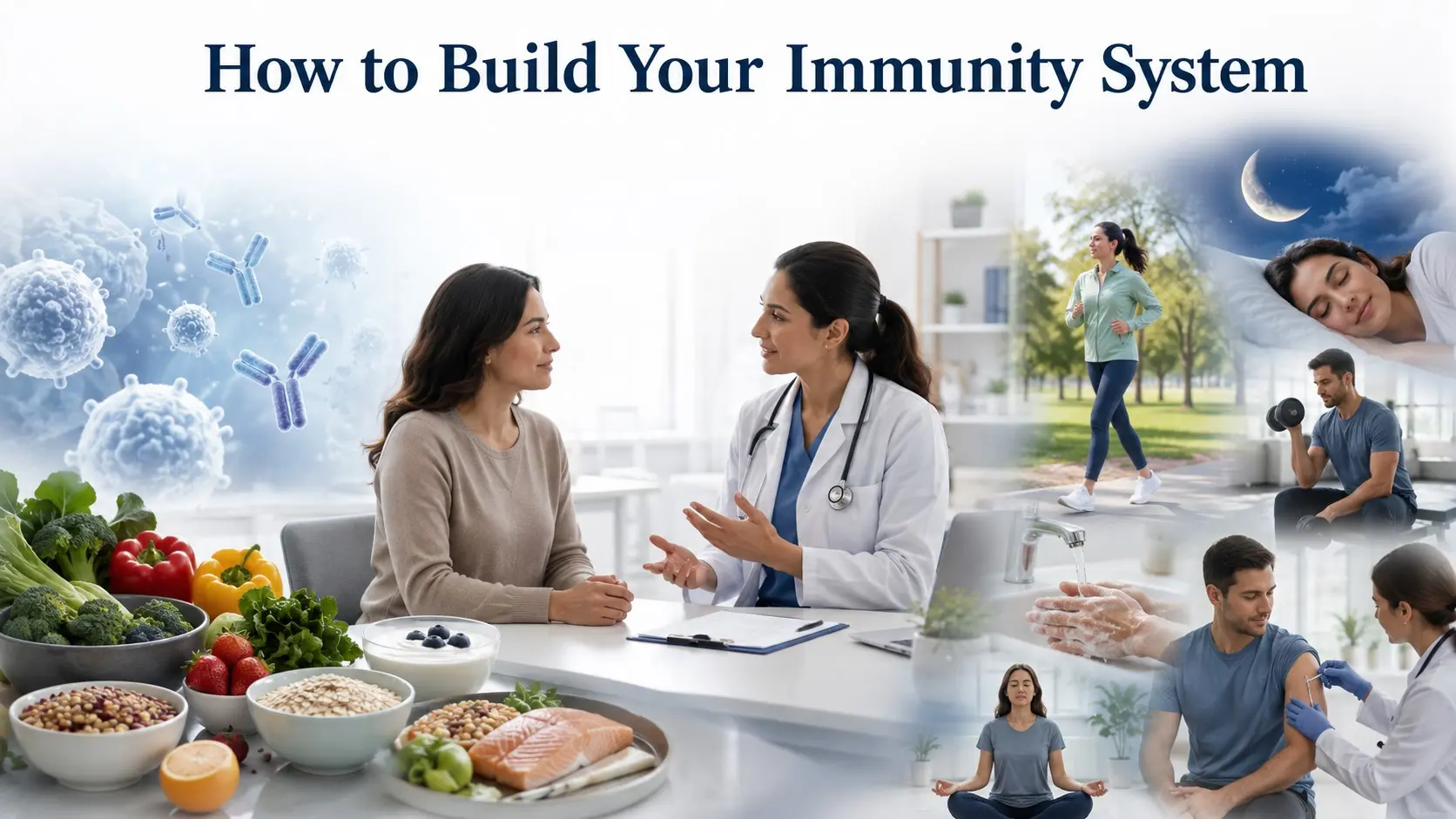
If you want to know how to Build Your Immunity System, start with one important fact.
Your immune system is not a muscle that becomes stronger every time you take a vitamin.
It is a complex network.
It includes cells, tissues, organs, proteins, antibodies, and physical barriers.
Your skin helps protect you.
Your airways help protect you.
Your gut helps protect you.
White blood cells help find threats.
Antibodies recognize specific targets.
Your body also creates immune memory after some infections and vaccines.
You cannot safely turn all of this up with one food, herb, tea, or supplement.
In fact, more immune activity is not always better.
Allergies and autoimmune diseases involve immune responses that are not working in the right way.
A better goal is to support normal immune function.
You can do this with enough nutrition, regular sleep, movement, vaccines, infection prevention, tobacco avoidance, stress care, and treatment of actual health problems.
No habit can guarantee that you will never get sick.
But the right basics can support your health and reduce some preventable risks.
Important Immune Health Notice
Frequent illness does not automatically mean your immune system is weak.
Many problems can cause repeated infections or slow recovery.
These include diabetes, lung disease, poor nutrition, immune suppressing medicines, cancer treatment, HIV, sleep problems, smoking, and other medical conditions.
See a healthcare professional if infections are unusually severe, keep returning, take a long time to clear, or are caused by unusual germs.
Seek urgent medical care for serious trouble breathing, chest pain, new confusion, fainting, severe dehydration, a rapidly spreading painful rash, or rapidly worsening illness.
How to Build Your Immunity System in Simple Steps
You cannot build or boost your immune system overnight.
You can support normal immune health with repeatable habits.
- Eat a varied healthy diet.
- Get enough protein, vitamins, and minerals.
- Sleep enough each night.
- Move regularly and build muscle.
- Keep recommended vaccines current.
- Avoid smoking and tobacco exposure.
- Manage long lasting stress.
- Use good infection prevention habits.
- Keep alcohol intake low or avoid it.
- Treat real nutrient deficiencies and health conditions.
These steps are less exciting than a miracle supplement.
They are also more useful.
How Does the Immune System Work?
The immune system protects you from germs and other threats.
It has several layers.
Physical Barriers
Your first defences include:
- Skin
- The lining of your airways
- The lining of your digestive system
- Mucus
- Other protective secretions
These barriers help stop many germs before they enter deeper tissue.
Innate Immunity
Innate immunity reacts quickly.
It does not need to recognize one exact germ first.
It uses cells such as:
- Neutrophils
- Macrophages
- Natural killer cells
Inflammation is also part of this response.
Adaptive Immunity
Adaptive immunity is more specific.
It includes B cells and T cells.
B cells can produce antibodies.
T cells help control infected cells and coordinate immune responses.
Immune Memory
Adaptive immunity can remember some germs.
This can help the body respond faster during a later exposure.
Vaccines use this ability.
They prepare your immune system for specific infections without requiring you to face the full risk of that illness first.
Can You Really Boost Your Immune System?
The phrase immune boosting is popular.
It is not very precise.
Your immune system needs balance.
Too little immune activity can make infection harder to fight.
Too much or misdirected activity can damage healthy tissue.
What Happens With Nutrient Deficiency?
This is where nutrition matters.
Your body needs enough vitamins, minerals, protein, and energy.
Deficiencies in some nutrients can impair normal immune responses.
Correcting a deficiency may restore normal function.
What if You Already Get Enough?
More is not automatically better.
Extra vitamin C, vitamin D, zinc, selenium, or other nutrients do not make a healthy immune system unlimited.
Large doses can cause side effects.
Some can interact with medicines.
Some can become toxic.
10 Evidence Based Ways to Support Your Immune System
You do not need to do all ten perfectly.
Start with the habit that needs the most attention.
1. Eat a Varied Healthy Diet
Your immune cells need nutrients and energy.
No single food supplies everything.
This is why a varied diet matters.
Build Meals Around Simple Foods
Try to include:
- Vegetables
- Whole fruit
- Beans and lentils
- Whole grains
- Nuts and seeds
- Fish
- Eggs
- Lean meat or poultry if you eat them
- Dairy foods or suitable alternatives
- Healthy unsaturated fats
Eat Different Colors
Color is not magic.
But eating fresh fruits and vegetables is an easy way to increase food variety.
Red peppers offer vitamin C.
Carrots and leafy vegetables provide vitamin A precursor.
Beans provide minerals, protein, and fibre.
Fish can provide protein and vitamin D.
You Do Not Need Special Immune Foods
Garlic can be part of a healthy diet.
Ginger can be part of a healthy diet.
Turmeric can be part of a healthy diet.
None of them is a proven shield against infection.
The whole eating pattern matters more.
For the wider picture, visit the General Wellness and Lifestyle Hub.
2. Get Enough Protein, Vitamins, and Minerals
Several nutrients are involved in normal immune function.
These include:
- Vitamin A
- Vitamin B6
- Vitamin B12
- Vitamin C
- Vitamin D
- Vitamin E
- Folate
- Iron
- Zinc
- Selenium
- Copper
- Magnesium
Protein Matters Too
Your body uses amino acids from protein to make many important structures.
Protein also supports tissue repair.
Useful sources include:
- Fish
- Eggs
- Poultry
- Lean meat
- Beans
- Lentils
- Tofu
- Yogurt
- Milk
- Nuts
- Seeds
Food First Is a Good Starting Point
A diverse diet can provide many nutrients together.
A supplement can be useful when your intake is low or a deficiency is diagnosed.
A supplement should solve a real need.
It should not replace food.
Do Not Guess a Deficiency From Tiredness
Fatigue has many causes.
Possible causes include:
- Poor sleep
- Anemia
- Thyroid disease
- Infection
- Diabetes
- Depression
- Medicine effects
- Other health conditions
If a deficiency is suspected, testing may sometimes be useful.
The Medical Tests and Screenings Hub explains why laboratory testing should be chosen for a reason.
3. Protect Your Sleep
Sleep supports many body systems.
This includes normal immune regulation.
Most adults should get at least seven hours of sleep each day.
Some people need more.
Make Sleep Easier
Try to:
- Keep a regular bedtime
- Keep a regular waking time
- Make your room dark
- Keep the room comfortable
- Reduce late caffeine
- Give yourself enough time in bed
Do Not Treat Severe Sleep Problems With Supplements Alone
Persistent poor sleep may have a cause.
Examples include:
- Sleep apnea
- Insomnia
- Pain
- Depression
- Anxiety
- Menopause
- Medicine effects
Watch for Sleep Apnea
Ask for medical advice if you:
- Snore very loudly
- Wake gasping
- Stop breathing during sleep
- Wake with frequent headaches
- Stay very sleepy during the day
For broader sleep and stress guidance, visit the Mental Health and Wellness Hub.
4. Move Regularly and Build Strength
Physical activity supports overall health.
It supports heart health.
It supports blood glucose control.
It helps protect muscle.
It can also support sleep and mental health.
How Much Activity Do Adults Need?
Adults should aim for at least 150 minutes of moderate activity each week.
Brisk walking is one example.
You can spread the minutes through the week.
You do not need to do them all at once.
Add Strength Work
Adults should also do muscle strengthening activity on at least two days each week.
Options include:
- Weights
- Resistance bands
- Body weight exercises
- Machines
More Is Not Always Better
You do not need extreme exercise for immune health.
Training should fit your ability.
Recovery matters.
If you are new to exercise, start small.
Our Safe Beginner Fitness Guide explains how to build walking, cardio, strength, and recovery without chasing extreme workouts.
5. Keep Recommended Vaccines Current
Vaccination is one of the clearest ways to train immunity against specific infections.
A vaccine exposes your immune system to an antigen or instructions related to an antigen.
This helps the body build a specific response.
Vaccines Are Not General Immune Boosters
They are more precise than that.
A flu vaccine is designed to prepare immunity against influenza.
A measles vaccine prepares immunity against measles.
Other vaccines target other infections.
Which Vaccines Do You Need?
The answer depends on:
- Your age
- Your health conditions
- Your pregnancy status
- Your work
- Your travel
- Your previous vaccines
- Your immune health
Ask a healthcare professional which vaccines are currently recommended for you.
Recommendations can change with time and location.
For infection-specific guidance, visit the Infections and Immune Health Hub.
6. Do Not Smoke
Smoking harms nearly every organ in the body.
It also interferes with normal immune function.
Smoking damages the lungs and airways.
This matters because your respiratory system is one of the places where your body meets germs from the outside world.
Secondhand Smoke Matters Too
You do not need to be the person smoking to be harmed by tobacco smoke.
Reduce secondhand smoke exposure when you can.
What About Vaping?
Vaping is not harmless.
Vape aerosol can contain nicotine, harmful chemicals, metals, and small particles that reach the lungs.
People who have never used tobacco should not start vaping for health reasons.
If breathing or lung health is a concern, visit the Lung and Respiratory Health Hub.
7. Manage Long Lasting Stress
Stress is part of life.
A short stress response is not always harmful.
Long lasting stress is different.
It can affect sleep, mood, food choices, blood pressure, and other parts of health.
Research also shows a complex link between chronic stress and immune regulation.
Do Not Aim for Zero Stress
That is not realistic.
Instead, build ways to recover from stress.
You might try:
- Walking
- Slow breathing
- Time outdoors
- Talking with someone you trust
- A hobby
- Relaxation exercises
- Setting limits on work when possible
Get Help When Stress Becomes Too Much
Talk with a healthcare or mental health professional if stress is causing persistent anxiety, depression, sleep loss, panic, or difficulty functioning.
The Mental Health and Wellness Hub includes guides about stress, sleep, emotional health, depression, and support.
8. Reduce Your Exposure to Infection
A healthy immune system does not make infection prevention unnecessary.
Reducing exposure can be more useful than trying to take an immune booster.
Wash Your Hands
Wash your hands when needed.
This includes:
- Before preparing food
- Before eating
- After using the toilet
- After coughing or blowing your nose when hands are dirty
- After handling potentially contaminated items
Use Infection Specific Prevention
Different infections spread in different ways.
Prevention may include:
- Vaccination
- Hand hygiene
- Cleaner indoor air
- Staying away from others when sick
- Food safety
- Safe water
- Sexual health precautions
- Protection from insect bites
- Safe wound care
Do Not Take Antibiotics for Every Illness
Antibiotics treat certain bacterial infections.
They do not treat viruses such as colds or influenza.
Do not use leftover antibiotics.
Do not share them.
Do not take antibiotics prescribed for another person.
9. Keep Alcohol Intake Low or Avoid It
You do not need alcohol for health.
Heavy alcohol use can harm many organs.
It can also worsen sleep, nutrition, liver health, accidents, and medicine safety.
Do Not Use Alcohol as an Immune Remedy
Alcohol does not kill infection inside your body.
Drinking alcohol does not disinfect your lungs or blood.
If you do not drink alcohol, there is no health reason to start for immunity.
10. Treat Deficiencies and Manage Health Conditions
The most useful immune support is sometimes medical care.
Correct Real Nutrient Deficiencies
A person with low vitamin B12 may need B12.
A person with iron deficiency may need iron treatment.
A person with vitamin D deficiency may need vitamin D.
A person with zinc deficiency may need more zinc.
This is targeted treatment.
It is different from taking extra nutrients without knowing whether you need them.
Manage Chronic Conditions
Good treatment of chronic disease can matter during infections.
Examples include:
- Diabetes
- Kidney disease
- Heart disease
- Lung disease
- HIV
Some Medicines Lower Immune Activity on Purpose
Examples include medicines used for:
- Autoimmune disease
- Organ transplantation
- Cancer
- Some inflammatory conditions
Do not stop these medicines because you are worried about immunity.
Stopping treatment can be dangerous.
Discuss infection prevention and vaccination with the medical team managing your condition.
Do Immune Boosting Supplements Work?
Many products are sold as immune support supplements.
Common ingredients include:
- Vitamin C
- Vitamin D
- Zinc
- Elderberry
- Echinacea
- Garlic extracts
- Probiotics
- Herbal blends
The label can sound convincing.
The evidence is often much less clear.
Deficiency Changes the Answer
If a person lacks an essential nutrient, replacing it can improve normal body function.
If a person already gets enough, taking extra may offer little benefit.
Supplements Can Cause Harm
Possible problems include:
- Too much vitamin intake
- Too much zinc
- Medicine interactions
- Liver injury from some herbs
- Kidney problems
- Contamination
- Taking several products with the same ingredient
Tell your healthcare professional about every vitamin, mineral, herb, powder, gummy, and cold remedy you take.
What About Vitamin C?
Vitamin C is essential.
It has roles in innate and adaptive immunity.
Vitamin C deficiency impairs normal immune function.
Does More Vitamin C Prevent Every Cold?
No.
Regular vitamin C supplementation does not prevent most people in the general population from getting the common cold.
Research suggests it may slightly shorten cold symptoms when taken regularly.
The effect is modest.
Should You Double Your Vitamin C When You Feel Sick?
There is no general rule that says you should double your dose.
Large amounts can cause stomach cramps, nausea, or diarrhea.
Food sources are a simple starting point.
Examples include:
- Bell peppers
- Citrus fruit
- Kiwi
- Strawberries
- Broccoli
What About Vitamin D?
Vitamin D supports normal immune and bone function.
A deficiency can affect health.
More vitamin D is not always better.
Should Everyone Take Vitamin D for Immunity?
No.
Your needs depend on diet, sun exposure, age, health, and other factors.
Some people need supplements.
Some do not.
Do Not Use Very Large Doses Without Medical Advice
Too much vitamin D can raise calcium in the blood.
Severe toxicity can harm the kidneys and other organs.
For a detailed evidence review, read Vitamin D and COVID-19: What Research Shows.
What About Zinc?
Zinc is an essential mineral.
Your immune cells need it to work normally.
Zinc deficiency can impair immune responses.
Do Zinc Supplements Prevent Infection?
Not every infection.
Some zinc lozenges may shorten a common cold when used early.
Results vary.
This does not mean daily high dose zinc is a good immune strategy.
Can Too Much Zinc Be Harmful?
Yes.
Too much zinc can cause nausea.
Long lasting excess can reduce copper absorption.
This can create another nutrient problem.
Read our Zinc and Magnesium Benefits guide for food sources, supplement safety, and deficiency information.
Do Probiotics Build the Immune System?
Your gut and immune system interact closely.
That does not mean every probiotic product improves immunity.
Probiotic Effects Are Specific
Different probiotic strains can act differently.
A result seen with one strain cannot automatically be applied to every yogurt, capsule, or fermented food.
Food Can Still Support a Healthy Diet
Foods such as yogurt and kefir can provide useful nutrients.
Fermented vegetables can add variety.
Fibre-rich foods can support the gut microbiome.
Examples include:
- Beans
- Lentils
- Vegetables
- Fruit
- Whole grains
- Nuts
- Seeds
You Do Not Need a Probiotic Pill to Have a Healthy Immune System
Some probiotics have specific medical uses.
Others have weak or uncertain evidence.
People with severe immune suppression should ask their medical team before using live microorganism supplements.
Does Drinking More Water Boost Immunity?
No fixed amount of water turns the immune system up.
Your body does need enough fluid for normal function.
Fluid needs vary.
They depend on:
- Body size
- Weather
- Exercise
- Pregnancy
- Food intake
- Health conditions
There Is No Universal Eight Cup Rule
Water also comes from food and other drinks.
Some people need fluid limits because of kidney, heart, or liver disease.
Drink according to thirst, health needs, and professional advice when you have a medical condition.
When Should You Worry About Your Immune System?
Getting an occasional cold does not prove that you have an immune disorder.
People encounter different germs.
Exposure levels differ.
Children can also catch infections more often than adults.
Arrange a Medical Review if You Have
- Repeated severe infections
- Infections that are difficult to treat
- Unusual infections
- Repeated pneumonia
- Persistent oral thrush without a simple reason
- Long-lasting diarrhea with weight loss
- Poor wound healing
- Unexplained weight loss
- Long-lasting fever
- Persistent swollen lymph nodes
These symptoms have many causes.
They do not automatically mean immune deficiency.
When Is an Infection an Emergency?
Seek urgent medical care for:
- Serious trouble breathing
- Chest pain
- Additional confusion
- Fainting
- Severe dehydration
- A seizure
- A stiff neck with severe illness
- A rapidly spreading painful rash
- Blue or grey lips or skin
- Rapidly worsening weakness
People who are pregnant, very young, older, immunocompromised, or medically fragile may need professional care earlier.
Common Myths About How to Build Your Immune System
Myth: You Can Boost Immunity Overnight
No.
There is no safe instant immune reset.
Myth: More Vitamins Mean More Immunity
No.
Deficiency can impair normal immune function.
Excess intake does not create unlimited protection.
Myth: Vitamin C Stops You From Catching Colds
No.
It does not prevent most colds in the general population.
Myth: Everyone Needs Vitamin D Supplements
No.
Need depends on vitamin D status, diet, health, age, and other factors.
Myth: Garlic, Ginger, or Turmeric Prevent Infection
No.
They can be healthy foods.
They do not replace vaccines, medicine, or infection prevention.
Myth: Eight Cups of Water Boost Immunity
No.
Hydration matters for health.
There is no universal water amount that boosts immune defences.
Myth: Probiotics Make Everyone's Immunity Stronger
No.
Effects depend on the strain, person, health condition, and outcome studied.
Myth: Getting Sick Means Your Immune System Is Weak
No.
Healthy people can still get infections.
Myth: Vaccines Weaken Natural Immunity
No.
Vaccines use the body's normal adaptive immune processes to build specific protection.
Myth: Antibiotics Strengthen Your Immune System
No.
Antibiotics treat certain bacterial infections.
They do not strengthen immunity.
A Simple Daily Immune Health Plan
You do not need a complicated routine.
Morning
- Eat a nutritious breakfast if breakfast fits your routine
- Include a protein source
- Add fruit or vegetables during the day
- Take prescribed medicines as directed
During the Day
- Move your body
- Drink enough fluid
- Wash hands when needed
- Avoid smoking
- Eat varied meals
Evening
- Make time to relax
- Prepare for sleep
- Avoid relying on alcohol to unwind
- Give yourself enough time for at least seven hours of sleep
During the Year
- Review recommended vaccines
- Manage chronic health conditions
- Attend appropriate preventive care
- Address persistent symptoms
- Check supplements for unnecessary duplicate ingredients
For a wider preventive plan, read the Health Screening guide.
References and Sources
This guide was checked against current open nutrition, immune health, vaccination, activity, and sleep guidance.
- National Institutes of Health Office of Dietary Supplements: Dietary Supplements for Immune Function and Infectious DiseasesThis detailed NIH resource explains innate immunity, adaptive immunity, vitamins, minerals, zinc, vitamin C, vitamin D, supplement evidence, and why correcting deficiency differs from taking extra nutrients when intake is already adequate.
- World Health Organization: Healthy DietUpdated 2026 WHO guidance on dietary adequacy, balance, moderation, diversity, fruits, vegetables, whole grains, pulses, protein, fats, vitamins, and minerals.
- Centers for Disease Control and Prevention: Explaining How Vaccines WorkCDC guidance explaining antibodies, immune memory, active immunity, and how vaccines train the body's natural defenses against specific infections.
- Centers for Disease Control and Prevention: Physical Activity for AdultsCurrent guidance recommending at least 150 minutes of moderate physical activity each week plus muscle strengthening activity on at least two days.
- Centers for Disease Control and Prevention: Sleep in AdultsCDC guidance on adult sleep duration and the recommendation that adults get at least seven hours of sleep each day.
Conclusion
How to Build Your Immunity System has a simpler answer than supplement advertising suggests.
You do not need a miracle food.
You do not need a detox.
You do not need a giant vitamin dose.
Your body needs the basics.
Eat enough nutritious food.
Get enough protein, vitamins, and minerals.
Sleep well.
Move regularly.
Keep recommended vaccines current.
Avoid smoking.
Manage long lasting stress.
Reduce exposure to infection.
Treat real deficiencies and medical conditions.
These habits support normal immune health.
They cannot guarantee that you will never become sick.
Take action today: Choose one habit from this guide that needs work and make it easier to repeat this week. If you are trying to learn how to Build Your Immunity System because you keep getting severe or unusual infections, arrange a medical assessment instead of relying on supplements.
Continue Building Your Health Plan on NextFitLife
Use these related guides to learn more about normal immune function, infection prevention, nutrition, sleep, exercise, supplements, and medical testing.
- NextFitLife Health Hub
- Infections and Immune Health Hub
- General Wellness and Lifestyle Hub
- Mental Health and Wellness Hub
- Lung and Respiratory Health Hub
- Medical Tests and Screenings Hub
- Health Screening Guide
- Vitamin D and COVID 19
- Zinc and Magnesium Benefits
- Safe Beginner Fitness Guide
Main Health Hub: Return to the NextFitLife Health Hub for the full health library.
Infections and Immune Health: Use the Infections and Immune Health Hub for vaccination, infection prevention, antibiotics, respiratory illness, mpox, UTIs, and warning signs.
General Wellness: Visit the General Wellness and Lifestyle Hub for sleep, movement, food, stress care, tobacco choices, alcohol, and preventive health.
Nutrition and Supplements: Read Zinc and Magnesium Benefits for a closer look at mineral needs, food sources, supplement safety, and deficiency.
Vitamin D: Read Vitamin D and COVID 19 for evidence about immune function, deficiency, supplements, and infection claims.
Medical Testing: Use the Medical Tests and Screenings Hub before assuming tiredness or frequent illness proves a vitamin or immune deficiency.
Medical Disclaimer
This content is for general educational purposes and does not replace professional medical advice, diagnosis, or treatment. Consult an appropriately qualified healthcare professional for personal medical concerns.
This article explains published guidance and does not provide a personal clinical assessment.
Always consult qualified medical professionals for diagnosis and treatment of any health condition.
I am also not an immunologist, infectious disease specialist, registered dietitian, pharmacist, allergist, hematologist, or other licensed healthcare professional.
This article provides general education only.
It does not diagnose a weak immune system.
It does not diagnose an immune deficiency.
It does not prescribe vitamins, minerals, herbs, probiotics, or medicines.
It does not replace vaccination advice.
It does not tell you to stop an immune-suppressing medicine.
People who are pregnant, immunocompromised, receiving cancer treatment, living with an autoimmune disease, taking prescription medicine, or managing a chronic condition should discuss supplements and infection prevention with their healthcare team.
Frequently Asked Questions About How to Build Your Immune System
How do you build your immune system?
Support normal immune health with a varied diet, enough nutrients, regular sleep, physical activity, vaccination, infection prevention, tobacco avoidance, stress care, and treatment of medical problems or nutrient deficiencies.
Can you boost your immune system quickly?
No safe food, drink, vitamin, or supplement can instantly boost the whole immune system. Your immune system is a complex network that needs normal nutrition and overall health support.
What is the best immune booster?
There is no single best immune booster. Vaccines create specific protection against certain infections. Adequate food, sleep, exercise, and other healthy habits support normal body function.
What foods strengthen the immune system?
No single food makes the immune system strong. A varied diet with vegetables, fruit, beans, whole grains, protein foods, nuts, seeds, and healthy fats can provide nutrients needed for normal immune function.
Which vitamins are important for immunity?
Vitamins A, B6, B12, C, D, and E, along with folate and several minerals, contribute to normal immune function. Deficiency can cause problems, but extra intake does not guarantee greater protection.
Does vitamin C boost immunity?
Vitamin C is essential for normal immune function. Large extra doses do not create unlimited immunity or prevent every infection.
Does vitamin C prevent colds?
Regular supplementation does not prevent most people from catching common colds. Research suggests it may modestly shorten cold symptoms in some people.
Does vitamin D improve immunity?
Vitamin D has a role in normal immune function. People with deficiency may need treatment. Taking more than needed is not proven to provide unlimited protection and can become harmful.
Does zinc strengthen immunity?
Zinc is required for normal immune activity. Zinc deficiency can impair immunity. High dose zinc is not a safe general immune strategy.
Can zinc help a cold?
Some oral zinc lozenges may shorten cold duration when started early. Results depend on the product and dose, and excess zinc can cause side effects.
Do probiotics improve immunity?
Some probiotic strains may have specific effects, but evidence does not show that every probiotic improves immunity in every person.
Is garlic an immune booster?
Garlic can be part of a healthy diet, but it is not a proven substitute for vaccination, medical treatment, or infection prevention.
Does ginger boost immunity?
Ginger is a food and spice. Evidence does not support using it as a general treatment that makes people immune to infection.
Does turmeric strengthen the immune system?
Turmeric contains compounds studied for many effects, but ordinary turmeric does not provide proven protection from infections.
How much sleep do adults need for immune health?
Adults should get at least seven hours of sleep each day. Individual sleep needs can vary.
Does exercise support immunity?
Regular physical activity supports overall health and normal body function. Adults should generally aim for at least 150 minutes of moderate activity each week plus muscle strengthening on two days.
Can too much exercise weaken immunity?
Very heavy training without enough food, sleep, and recovery can place stress on the body. Exercise should match your health, fitness, and recovery needs.
Does stress weaken the immune system?
The relationship is complex. Long lasting stress can affect immune regulation as well as sleep, mental health, blood pressure, and other parts of health.
Does drinking eight cups of water boost immunity?
No. Your body needs enough fluid, but there is no fixed eight cup amount that boosts the immune system. Fluid needs vary between people.
Do vaccines strengthen the immune system?
Vaccines train adaptive immunity against specific diseases. They help the body develop targeted immune memory without facing the full risk of the infection first.
Does smoking affect the immune system?
Yes. Smoking harms many organs and interferes with normal immune function. Quitting smoking is an important step for overall health.
Can alcohol weaken immunity?
Heavy alcohol use can harm health, nutrition, sleep, liver function, and immune regulation. Alcohol is not needed for immune health.
How long does it take to rebuild the immune system?
There is no fixed rebuilding time. The immune system is always active. Recovery from a nutrient deficiency, illness, medicine effect, or medical condition depends on the cause.
Why do I keep getting sick?
Repeated illness can have many causes, including exposure to germs, children in the home, poor sleep, smoking, chronic disease, medicine effects, nutritional problems, or an immune disorder. Persistent or severe infections need medical assessment.
How do doctors test the immune system?
Testing depends on the problem. A clinician may use a blood count, antibody tests, immunoglobulin levels, HIV testing, nutrition tests, or other studies when appropriate.
When should I see a doctor about my immune system?
Arrange medical care for repeated severe infections, unusual infections, repeated pneumonia, persistent thrush, unexplained weight loss, prolonged fever, or infections that are difficult to treat.

Health & wellness writer with 30+ years of experience in nutrition, fitness, and healthy aging. Founder of NextFitLife.com — evidence-based health guidance.