Originally published: Jul 14, 2023
Last updated: July 17, 2026
Next review: July 2027
Written by: Adel Galal, Founder and Lead Writer at NextFitLife
Review status: Editorially reviewed and checked against current NIH, NCCIH, FDA, and MedlinePlus guidance. This page has not been medically reviewed by a doctor, pharmacist, registered dietitian, or kidney specialist.
Reading time: About 19 minutes
Magnesium supports muscle function, nerve signals, blood glucose control, blood pressure regulation, bone structure, protein production, and normal heart rhythm.
These roles are important.
They do not mean that extra supplements make a healthy person stronger, calmer, more energetic, or immune to infection.
A true deficiency can cause health problems.
Correcting that deficiency may improve symptoms.
Taking more than the body needs may cause new problems.
Too much zinc can cause nausea and reduce copper absorption.
Too much supplemental magnesium can cause diarrhoea, low blood pressure, weakness, or a dangerous heartbeat.
Risk is higher when kidney function is poor.
Combination products are often marketed for sleep, testosterone, immunity, exercise recovery, stress, and energy.
Many of these claims are stronger than the evidence.
This guide explains the proven zinc and magnesium benefits, food sources, daily needs, deficiency signs, supplement limits, medicine interactions, and situations that need medical care.
For a wider guide to vitamins and minerals in food, visit the NextFitLife Vitamins and Minerals in Food Hub.
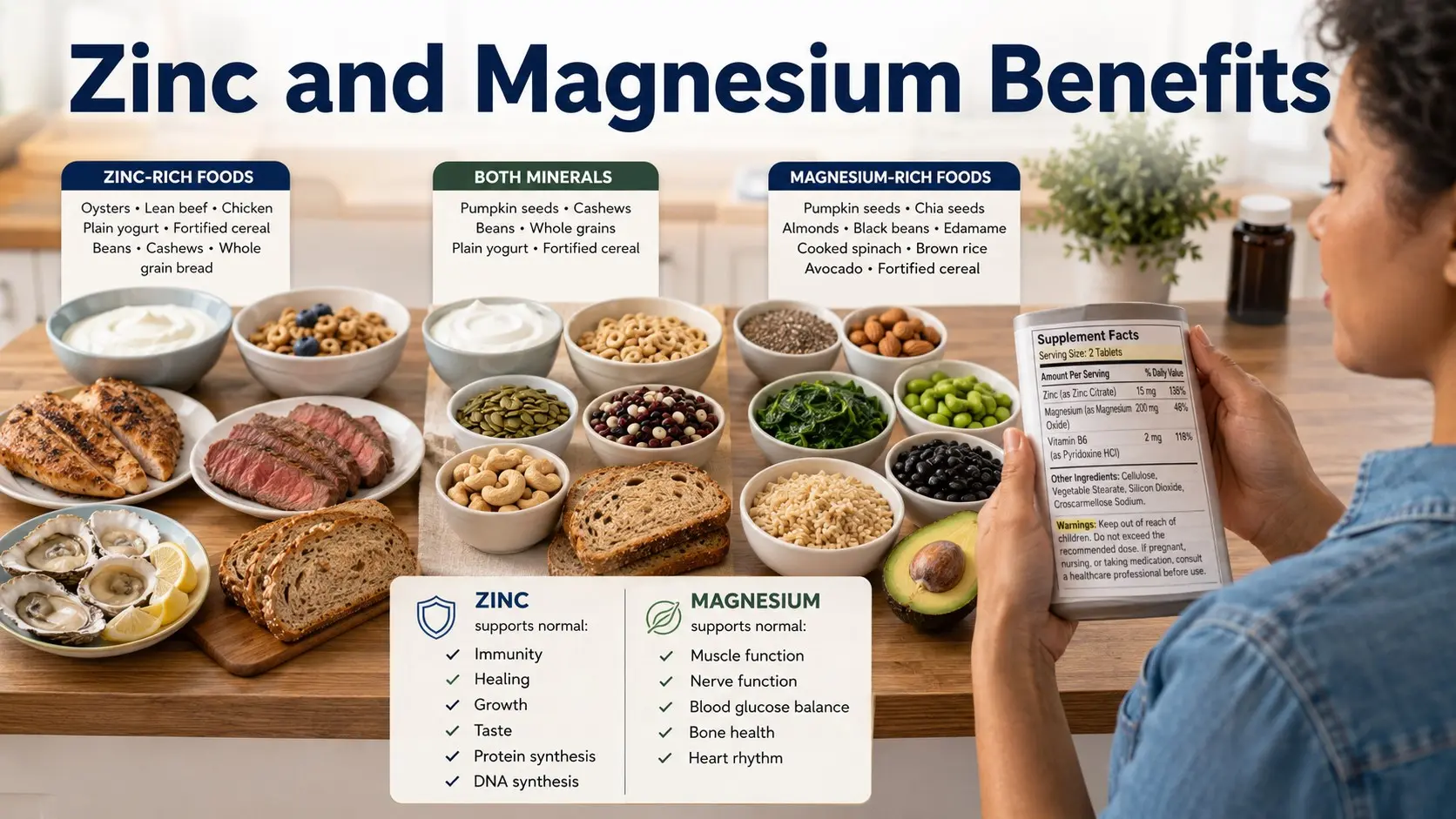
Zinc and Magnesium Benefits - Quick Answer
Zinc helps with:
- Normal immune responses
- Wound healing
- Protein and DNA production
- Growth and development
- Cell division
- Taste and smell
Magnesium helps with:
- Normal muscle contraction
- Nerve communication
- Blood glucose control
- Blood pressure regulation
- Bone structure
- Protein and DNA production
- Normal heart rhythm
Most people should begin with food.
Good zinc sources include oysters, meat, poultry, dairy foods, fortified cereal, beans, nuts, and whole grains.
Good magnesium sources include pumpkin seeds, chia seeds, almonds, beans, leafy vegetables, whole grains, and fortified cereal.
Do not assume a combined supplement is needed.
Check the amounts in your multivitamin, sports product, cold remedy, and sleep supplement before adding another product.
Editorial and Advertising Disclosure
This guide was written and editorially reviewed by Adel Galal.
Adel is a health and wellness writer.
He is not a doctor, pharmacist, registered dietitian, kidney specialist, or sports medicine professional.
This page cannot diagnose a deficiency, interpret laboratory results, or select a safe supplement dose for you.
NextFitLife uses display advertising to support the website.
Advertising does not decide the claims, warnings, references, or conclusions on this page.
Read the
Editorial Policy,
Medical Review Policy,
and
Corrections Policy.
Important Supplement Safety Note
Do not take zinc and magnesium supplements simply because you feel tired, stressed, weak, or unable to sleep.
These symptoms have many possible causes.
Do not combine several products without adding the total amounts.
Zinc may appear in multivitamins, cold lozenges, immune products, and sports supplements.
Magnesium may appear in multivitamins, antacids, laxatives, sleep products, electrolyte powders, and sports supplements.
Extra zinc can cause copper deficiency.
Extra magnesium can cause severe toxicity when the kidneys cannot remove it properly.
Ask a doctor or pharmacist before supplementation if you take medicine, are pregnant, have kidney disease, or are treating a child.
What Are Zinc and Magnesium?
Zinc and magnesium are minerals found in food.
The body cannot make them.
They must come from food, fortified products, or supplements.
Zinc Is a Trace Mineral
The body needs zinc in small amounts.
It is involved in the work of hundreds of enzymes.
It also supports cell signals, growth, healing, and normal immune activity.
Magnesium Is a Major Mineral
The body needs more magnesium than zinc.
Much of the body’s magnesium is stored in bones.
The rest is found in muscles, soft tissue, blood, and other fluids.
They Are Not the Same Nutrient
Zinc and magnesium perform some related tasks, but one cannot replace the other.
A combined supplement may be convenient.
Convenience does not prove that both ingredients are needed.
Proven Zinc Benefits
The strongest zinc benefits come from meeting normal nutritional needs and correcting deficiency.
Normal Immune Function
Zinc helps immune cells form, mature, communicate, and respond.
Zinc deficiency can weaken immune responses.
Extra zinc does not make the immune system unlimited or prevent every infection.
Wound Healing
Zinc supports skin integrity, protein production, cell growth, and tissue repair.
A person with low zinc may heal poorly.
Taking extra zinc does not guarantee that every wound will close faster.
Slow healing may also be caused by infection, diabetes, poor circulation, pressure, smoking, or poor nutrition.
Growth and Development
Zinc supports normal growth during pregnancy, infancy, childhood, and adolescence.
Children should receive age appropriate nutrition and supplements only when recommended.
Taste and Smell
Zinc supports normal taste and smell.
Deficiency may reduce these senses.
Many other problems can also cause taste or smell loss.
Do not use zinc inside the nose.
Protein and DNA Production
Zinc is needed to make proteins and DNA.
It also helps cells divide normally.
Proven Magnesium Benefits
The main magnesium benefits involve normal body function.
Muscle Function
Magnesium helps muscles contract and relax.
A severe deficiency can contribute to cramps, tremors, weakness, or abnormal muscle activity.
Most common muscle cramps are not automatically caused by low magnesium.
Nerve Function
Magnesium helps nerves send signals.
It also helps regulate movement of minerals across cell membranes.
Blood Glucose Regulation
Magnesium plays a role in glucose metabolism and insulin activity.
This does not mean magnesium supplements cure diabetes.
People with diabetes should continue prescribed care and monitoring.
Blood Pressure Regulation
Magnesium supports normal blood vessel and blood pressure regulation.
Supplement studies often show small or inconsistent effects.
Magnesium cannot treat a dangerous blood pressure reading.
For urgent blood pressure guidance, read What to Drink to Lower Blood Pressure Quickly.
Bone Health
Magnesium is part of bone structure.
It also interacts with calcium, vitamin D, and hormones involved in bone health.
Bone health depends on the full diet, activity, hormones, age, and medical conditions.
Protein and DNA Production
Magnesium is required for many reactions involved in producing protein, DNA, and energy.
Zinc and Magnesium Benefits for Immunity
Zinc and magnesium support normal immune function.
This is not the same as proving that a supplement prevents infection.
Zinc Deficiency and Immunity
Zinc deficiency can impair the development and activity of immune cells.
Correcting low zinc can restore normal function.
Taking large doses when zinc status is already adequate can cause harm.
Zinc Lozenges for the Common Cold
Some oral zinc lozenges may shorten the duration of a cold when started within 24 hours of the first symptoms.
Results vary by zinc form, dose, product, and study.
Side effects may include nausea, bad taste, stomach discomfort, and mouth irritation.
Long-term high-dose cold treatment is unsafe.
Never Use Zinc Inside the Nose
Intranasal zinc products have been linked with severe and sometimes permanent loss of smell.
Do not use zinc nasal gels, sprays, swabs, or similar products.
Magnesium and Infection
Magnesium supports many normal cell functions.
There is no good evidence that routine magnesium supplements prevent colds, flu, or other infections in people who are not deficient.
Food First
A varied diet supports immune nutrition better than relying on one mineral.
Protein, vitamin A, vitamin C, vitamin D, folate, iron, selenium, zinc, and other nutrients all matter.
Review the NextFitLife Foods to Fight Colds and Flu Guide for safer illness nutrition advice.
Zinc, Magnesium, Sleep, Stress, and Mood
Products combining zinc and magnesium are often marketed as sleep aids.
The evidence does not show that they reliably treat insomnia in everyone.
Magnesium and Sleep
Some studies have examined magnesium supplements for sleep.
Results are limited and not consistent enough to recommend magnesium as a general insomnia treatment.
A person with magnesium deficiency may have symptoms that affect sleep.
Correcting a deficiency is different from treating chronic insomnia in a person with normal magnesium status.
Zinc and Sleep
Zinc is involved in many nervous system processes.
This does not prove that a zinc tablet makes people fall asleep faster.
Stress and Anxiety
Zinc and magnesium are required for normal brain and nerve function.
Supplements are not proven replacements for therapy, mental health care, sleep treatment, or prescribed medicine.
Persistent Sleep Problems
Long-term insomnia may be linked with stress, anxiety, depression, sleep apnea, pain, medication, menopause, or another condition.
Read the NextFitLife guide to the Best Foods to Eat Before Bed for practical sleep nutrition facts.
Zinc and Magnesium for Exercise and Muscle Recovery
Athletes lose small amounts of minerals through sweat and normal body processes.
Training also increases the importance of adequate energy, protein, fluids, and overall nutrition.
Magnesium and Exercise
Magnesium supports muscle and nerve function.
A deficiency can reduce physical performance.
Supplementing beyond normal needs has not been shown to create unlimited strength or endurance.
Zinc and Recovery
Zinc supports protein production, cell division, and wound healing.
These functions are important during recovery.
Extra zinc does not replace protein, sleep, gradual training, or medical assessment of an injury.
Muscle Cramps
Cramps may be related to fatigue, training load, dehydration, nerve conditions, medicine, circulation, or other factors.
Do not assume every cramp is caused by magnesium deficiency.
Sports Products
Pre-workout powders, electrolyte drinks, recovery products, and multivitamins may already contain zinc or magnesium.
Add all sources before taking another supplement.
Zinc, Magnesium, Testosterone, and Sexual Health
Zinc and magnesium products are often sold as testosterone boosters.
The marketing usually goes beyond the evidence.
Zinc Deficiency
Severe zinc deficiency can affect growth, reproductive health, and hormone function.
Correcting a true deficiency may restore normal body function.
This does not mean extra zinc raises testosterone above a healthy normal level.
Magnesium Claims
Magnesium is needed for normal metabolism and muscle function.
Evidence does not support treating low testosterone with an ordinary magnesium supplement without a proper diagnosis.
ZMA Products
ZMA supplements usually contain zinc, magnesium, and vitamin B6.
They are often promoted for sleep, testosterone, muscle growth, and recovery.
Independent evidence for major benefits in people with adequate nutrition is limited.
Check the zinc, magnesium, and vitamin B6 amounts carefully.
Symptoms Need Proper Assessment
Low sex drive, erectile problems, fatigue, infertility, or reduced strength can have many causes.
A clinician should review symptoms, medicine, sleep, mental health, and appropriate laboratory tests.
How Much Zinc and Magnesium Do You Need?
Needs differ by age, sex, pregnancy, and breastfeeding.
The following are general United States recommendations for adults.
| Group | Zinc each day | Magnesium each day |
|---|---|---|
| Adult men | 11 milligrams | 400 to 420 milligrams |
| Adult women | 8 milligrams | 310 to 320 milligrams |
| Pregnancy | 11 milligrams | 350 to 360 milligrams for most adults |
| Breast feeding | 12 milligrams | 310 to 320 milligrams for most adults |
Recommendations may differ slightly between countries.
These values are daily nutrition targets.
They are not treatment doses for deficiency.
A clinician may recommend a different amount for a diagnosed condition.
Best Food Sources of Zinc and Magnesium
Food provides minerals together with protein, fibre, healthy fats, vitamins, and other nutrients.
Foods Rich in Zinc
- Oysters
- Beef
- Pork
- Lamb
- Chicken
- Turkey
- Crab and other seafood
- Milk and yogurt
- Fortified breakfast cereal
- Beans
- Nuts
- Whole grains
Foods Rich in Magnesium
- Pumpkin seeds
- Chia seeds
- Almonds
- Cashews
- Peanuts
- Black beans
- Kidney beans
- Edamame
- Spinach
- Whole grains
- Fortified breakfast cereal
- Plain yogurt
- Avocado
Foods That Provide Both
- Pumpkin seeds
- Cashews
- Almonds
- Peanuts
- Beans
- Whole grains
- Fortified cereal
- Dairy foods
Simple One-Day Food Pattern
Breakfast can include fortified cereal with plain yogurt and pumpkin seeds.
Lunch can include beans, whole grain bread, and vegetables.
Dinner can include chicken, fish, tofu, or lean meat with brown rice and leafy vegetables.
A snack can include a small handful of unsalted nuts.
For more nutrient rich meal ideas, visit the NextFitLife Foods and Nutrition Hub.
Plant Diets and Mineral Absorption
Vegetarian and vegan diets can provide zinc and magnesium.
Planning is important.
Zinc From Plant Foods
Zinc from beans, grains, nuts, and seeds is absorbed less efficiently than zinc from many animal foods.
This is partly because plant foods may contain phytates.
Phytates bind some zinc in the digestive tract.
Ways to Improve Plant Zinc Use
- Soak dried beans before cooking.
- Use sprouted grains or legumes when safe and suitable.
- Choose fermented foods such as tempeh.
- Use yeast-raised whole-grain bread.
- Eat a varied diet rather than relying on one source.
Magnesium From Plant Foods
Many plant foods are naturally rich in magnesium.
Seeds, nuts, beans, whole grains, and green vegetables are useful choices.
Review Other Nutrients
People following a vegan diet also need reliable vitamin B12 and iodine sources.
Iron, calcium, vitamin D, protein, and omega fats may also need attention.
Zinc and Magnesium Deficiency
Deficiency cannot be diagnosed from one symptom or a social media checklist.
Possible Zinc Deficiency Signs
- Poor growth in children
- Reduced appetite
- Frequent infections
- Slow wound healing
- Changes in taste or smell
- Hair loss
- Skin changes
- Diarrhoea
These signs have many other possible causes.
People at Higher Risk of Low Zinc
- People with digestive disorders that reduce absorption
- People who had gastrointestinal surgery
- People with long term diarrhoea
- People with alcohol use disorder
- Vegetarians and vegans with poorly planned diets
- Pregnant and breastfeeding people with low intake
- Older infants who receive inadequate complementary foods
Possible Magnesium Deficiency Signs
- Loss of appetite
- Nausea
- Vomiting
- Fatigue
- Weakness
- Numbness
- Tingling
- Muscle cramps
- Abnormal heartbeat
- Seizures in severe cases
People at Higher Risk of Low Magnesium
- People with Crohn disease or celiac disease
- People with long term diarrhoea
- People with type 2 diabetes
- People with alcohol use disorder
- Older adults
- People taking some diuretics
- People taking proton pump inhibitors for a long time
A medical review is needed when a deficiency is suspected.
Do You Need Zinc or Magnesium Blood Tests?
Routine testing is not needed for every healthy person.
Zinc Testing
Blood zinc can help in selected situations.
Results can be affected by inflammation, infection, time of day, fasting, pregnancy, and other factors.
A result must be interpreted with symptoms and medical history.
Magnesium Testing
A standard blood magnesium test measures magnesium in the blood.
Most magnesium is stored inside cells and bones.
A normal blood result does not always describe every body store perfectly.
However, blood testing remains useful when severe deficiency or excess is suspected.
Testing May Be Considered When
- You have persistent diarrhea or poor absorption
- You had gastrointestinal surgery
- You have unexplained weakness, cramps, or an abnormal heart rhythm
- You use a medicine known to affect mineral levels
- You have kidney disease
- You have symptoms of zinc excess or copper deficiency
- You are receiving treatment for a confirmed deficiency
How to Choose Zinc and Magnesium Supplements
A supplement may be useful when food intake is inadequate or a clinician recommends treatment.
It should solve a defined need.
Read the Supplement Facts Panel
Check:
- Serving size
- Zinc amount
- Magnesium amount
- Percent Daily Value
- Vitamin B6 amount
- Other vitamins and minerals
- Herbs or stimulants
- Other ingredients
Elemental Mineral Amount
Supplement labels normally state the elemental zinc or magnesium amount.
This is the amount used when adding to your daily total.
Common Zinc Forms
Products may contain zinc gluconate, zinc acetate, zinc citrate, zinc sulphate, or another form.
The label amount matters more than marketing words such as premium or advanced.
Common Magnesium Forms
Products may contain magnesium citrate, chloride, lactate, aspartate, glycinate, oxide, or another form.
Some forms are absorbed more easily than magnesium oxide.
Individual tolerance also differs.
Magnesium citrate and oxide may have a stronger laxative effect.
FDA Does Not Approve Supplements Before Sale
Dietary supplements are not approved by the FDA for safety and effectiveness before they enter the market.
Manufacturers are responsible for product safety and lawful labels.
Do not treat the words FDA registered as proof that a supplement was approved.
Third Party Testing
Independent quality testing may help confirm identity and ingredient amounts.
It does not prove that a product produces the advertised health benefit.
Upper Limits and Too Much Zinc or Magnesium
Zinc Upper Limit
The adult upper intake level for zinc is 40 milligrams per day from food, drinks, supplements, and medicines combined.
This is an upper limit.
It is not a daily target.
A clinician may use a different dose for a limited medical reason.
Effects of Too Much Zinc
- Nausea
- Vomiting
- Stomach pain
- Headache
- Loss of appetite
- Low copper
- Anaemia
- Reduced immune function
- Lower HDL cholesterol
- Nerve problems after prolonged excess
Copper Deficiency
Long term high zinc intake can reduce copper absorption.
This may cause anaemia, low white blood cells, weakness, numbness, walking difficulty, or other neurologic problems.
A copper supplement should not be added without professional advice.
Magnesium Supplement Upper Limit
The adult upper limit for magnesium from supplements and medicines is 350 milligrams per day.
This limit does not include magnesium naturally found in food.
A clinician may prescribe more for a specific condition.
Effects of Too Much Supplemental Magnesium
- Diarrhoea
- Nausea
- Stomach cramping
- Low blood pressure
- Weakness
- Confusion
- Breathing difficulty
- Abnormal heartbeat
- Cardiac arrest in severe toxicity
Food Magnesium Is Different
Magnesium from normal food does not usually cause toxicity in healthy people.
The kidneys remove extra magnesium.
This protection may fail when kidney function is severely reduced.
Zinc and Magnesium Medicine Interactions
Minerals can bind medicines in the digestive tract.
This may reduce medicine absorption.
Antibiotics
Zinc and magnesium can interact with tetracycline and quinolone antibiotics.
The medicine and mineral may need to be taken several hours apart.
Ask the pharmacist for timing based on the exact antibiotic.
Penicillamine
Zinc can reduce absorption of penicillamine, a medicine used for conditions such as rheumatoid arthritis and Wilson disease.
Separate timing as directed by the prescriber or pharmacist.
Bisphosphonates
Magnesium can reduce absorption of some medicines used for osteoporosis.
Follow the exact timing instructions for the medicine.
Diuretics
Some diuretics increase magnesium loss.
Others may reduce magnesium loss.
Blood tests and treatment depend on the exact product.
Proton Pump Inhibitors
Long-term use of some acid-reducing medicines may cause low magnesium levels in selected people.
Do not stop the medicine without medical advice.
Antacids and Laxatives
Some antacids and laxatives contain magnesium.
Include these amounts when calculating your intake.
Cold Remedies
Zinc may be present in lozenges, syrups, tablets, and immune products.
Check every label to avoid prolonged high intake.
Pregnancy, Breastfeeding, and Children
Pregnancy
Zinc and magnesium are required for normal pregnancy nutrition.
A prenatal vitamin may already contain one or both minerals.
Do not add a separate high-dose supplement without reviewing the total with a doctor, midwife, or pharmacist.
Breast Feeding
Nutrient needs change during breastfeeding.
Review multivitamins, magnesium products, cold remedies, and zinc lozenges together.
Children
Children have lower daily needs and lower upper limits than adults.
Do not give an adult zinc, magnesium, ZMA, sleep, sports, or immune products to a child.
Keep supplements locked away.
Some products look and taste like sweets.
Infants and Young Children
Growth problems, poor feeding, diarrhoea, unusual weakness, or repeated infections need paediatric assessment.
Do not diagnose a mineral deficiency at home.
Zinc and Magnesium With Kidney Disease
Kidney disease changes supplement safety.
Magnesium Risk
The kidneys normally remove excess magnesium.
When kidney function is poor, magnesium can build up in the blood.
This may cause weakness, low blood pressure, slow breathing, confusion, or a dangerous heartbeat.
People with kidney disease should not use magnesium laxatives, antacids, sleep products, or supplements without approval.
Zinc and Kidney Care
Some people with kidney disease may have low zinc intake or altered zinc status.
Others may receive zinc through renal vitamins or treatment plans.
Extra zinc can still cause copper deficiency and medicine interactions.
Food Restrictions Differ
Nuts, seeds, beans, dairy foods, and whole grains may contain phosphorus or potassium.
Do not add large amounts without checking the personal kidney plan.
Read the NextFitLife Diet for Kidney Disease Guide.
Common Myths About Zinc and Magnesium Benefits
Myth: More Zinc Creates Stronger Immunity
No.
Enough zinc supports normal immunity.
Too much may reduce immune function and cause copper deficiency.
Myth: Magnesium Cures Insomnia
No.
Evidence is limited, and poor sleep has many possible causes.
Myth: Zinc Prevents Every Cold
No.
Some oral lozenges may shorten a cold when started early.
They do not guarantee prevention or treatment.
Myth: Zinc Nasal Spray Is Faster
No.
Intranasal zinc may cause permanent loss of smell and should not be used.
Myth: Magnesium Stops Every Muscle Cramp
No.
Cramps have many causes, and routine supplements do not help every person.
Myth: ZMA Always Raises Testosterone
No.
Evidence does not show a reliable testosterone increase in people with adequate nutrition.
Myth: Food Sources Can Cause Magnesium Overdose
Magnesium toxicity from normal food is unusual in healthy people.
Supplements and magnesium medicines create a larger risk.
Myth: Supplements Are FDA Approved
No.
FDA does not approve dietary supplements for safety and effectiveness before they are sold.
When to Seek Medical Help
Arrange a Medical Review for
- Persistent weakness or fatigue
- Slow wound healing
- Ongoing taste or smell changes
- Repeated muscle cramps
- Numbness or tingling
- Long term diarrhoea
- Poor nutrient absorption
- A highly restrictive diet
- Long-term high-dose zinc use
- Regular magnesium laxative or antacid use
- Possible medicine interactions
Seek Urgent Medical Care for
- Severe weakness
- Confusion
- Fainting
- A seizure
- Breathing difficulty
- A very slow or irregular heartbeat
- Severe low blood pressure symptoms
- Repeated vomiting after a large supplement dose
- A large accidental dose taken by a child
Contact your local poison service or emergency service after a suspected overdose.
Do not wait for symptoms to become severe.
Conclusion
The real zinc and magnesium benefits come from meeting normal nutritional needs.
Zinc supports immunity, healing, growth, taste, protein production, and DNA production.
Magnesium supports muscles, nerves, blood glucose control, blood pressure regulation, bones, and normal heart rhythm.
Food should be the first source for most people.
Supplements may help when intake is low or a deficiency is diagnosed.
More is not better.
Excess zinc can cause copper deficiency.
Excess magnesium can become dangerous, especially with kidney disease.
Review all medicines, multivitamins, cold products, sleep products, and sports supplements before adding another mineral.
Use this zinc and magnesium benefits guide by checking your food intake and every supplement label before deciding whether an additional product is truly needed.
Medical Disclaimer
This content is for education only.
It does not replace diagnosis, blood testing, prescribed treatment, kidney care, nutrition therapy, medicine review, pregnancy care, pediatric care, or emergency services.
This content is for general educational purposes and does not replace professional medical advice, diagnosis, or treatment. Consult an appropriately qualified healthcare professional for personal medical concerns. This article explains published guidance and does not provide a personal clinical assessment. Always consult qualified medical professionals for diagnosis and treatment of any health condition.
Seek urgent care for severe weakness, confusion, breathing difficulty, seizures, fainting, a dangerous heartbeat, or a suspected supplement overdose.
References and Sources
- National Institutes of Health Office of Dietary Supplements. Zinc Fact Sheet for Health Professionals.Current information about zinc functions, food sources, daily requirements, deficiency, common cold evidence, upper limits, copper deficiency, and medicine interactions.
- National Institutes of Health Office of Dietary Supplements. Magnesium Fact Sheet for Health Professionals.Current information about magnesium functions, food sources, daily requirements, deficiency, supplemental limits, toxicity, kidney risk, and medicine interactions.
- National Center for Complementary and Integrative Health. The Common Cold and Complementary Health Approaches.Open guidance about oral zinc lozenges, treatment timing, side effects, and the danger of zinc products used inside the nose.
- National Institutes of Health Office of Dietary Supplements. Immune Function and Infectious Diseases.Open evidence about zinc deficiency, immune cell development, infection claims, dietary supplements, and the limits of immune-boosting products.
- United States Food and Drug Administration. Questions and Answers on Dietary Supplements.Official guidance about supplement labels, manufacturer responsibility, medicine interactions, safety, adverse events, and the lack of approval before sale.
Continue Reading on NextFitLife
Frequently Asked Questions
What are the main zinc and magnesium benefits?
Zinc supports immunity, wound healing, growth, taste, protein production, and DNA production. Magnesium supports muscles, nerves, blood glucose, blood pressure, bones, and heart rhythm.
Do the benefits of zinc and magnesium increase with a higher dose?
No. Once nutritional needs are met, larger doses may cause side effects rather than extra benefits.
Can zinc boost the immune system?
Zinc supports normal immune function. Correcting deficiency helps, but extra zinc does not prevent every infection or create unlimited immunity.
Can zinc shorten a cold?
Some oral zinc lozenges may shorten a cold when started within 24 hours. Product, dose, and timing matter, and side effects can occur.
Is zinc nasal spray safe?
No. Zinc products used inside the nose have been linked with severe and sometimes permanent loss of smell.
Does magnesium help with sleep?
Evidence is limited. Magnesium may help when deficiency is present, but it is not a proven treatment for every case of insomnia.
Does magnesium stop muscle cramps?
Not always. Cramps have many causes, and magnesium supplements do not help every person.
Do zinc and magnesium raise testosterone?
Correcting a true deficiency may restore normal function. Extra supplements have not been shown to reliably raise testosterone in well-nourished people.
Can I take zinc and magnesium together?
They can be taken in the same product, but both may be unnecessary. Check the doses, medicines, diet, kidney health, and other supplements first.
What foods contain both zinc and magnesium?
Pumpkin seeds, nuts, beans, whole grains, fortified cereal, and dairy foods can provide both minerals.
How much zinc do adults need?
Adult men generally need 11 milligrams daily, and adult women need 8 milligrams. Pregnancy and breastfeeding needs are higher.
How much magnesium do adults need?
Adult men generally need 400 to 420 milligrams daily. Adult women generally need 310 to 320 milligrams.
How much zinc is too much?
The adult upper limit is 40 milligrams daily from all sources unless a clinician recommends a different short-term treatment.
How much supplemental magnesium is too much?
The adult upper limit for supplements and medicines is 350 milligrams daily. Magnesium naturally present in food is not included.
Can too much zinc cause copper deficiency?
Yes. Long-term high zinc intake can reduce copper absorption and may cause anemia or nerve problems.
Is magnesium safe with kidney disease?
It may not be. Magnesium can build up when kidney function is poor and may cause serious toxicity.
Do zinc and magnesium interact with antibiotics?
Yes. They can reduce the absorption of some tetracycline and quinolone antibiotics. Ask a pharmacist about safe timing.
Is this article medical advice?
No. It provides general education. A qualified healthcare professional should diagnose deficiencies and recommend treatment.

Health & wellness writer with 30+ years of experience in nutrition, fitness, and healthy aging. Founder of NextFitLife.com — evidence-based health guidance.