```html
Last Updated: September 14, 2026
Written and Source Checked by: Adel Galal, Founder and Lead Writer at NextFitLife
Physical fitness is not the same as being thin, athletic, muscular, or able to run a marathon.
A person can improve fitness at almost any starting level through regular physical activity, strength work, cardiovascular exercise, mobility, balance training, recovery, and consistent healthy habits.
For broader exercise guidance, visit the NextFitLife Fitness Hub.
Quick Answer: What Is Physical Fitness?
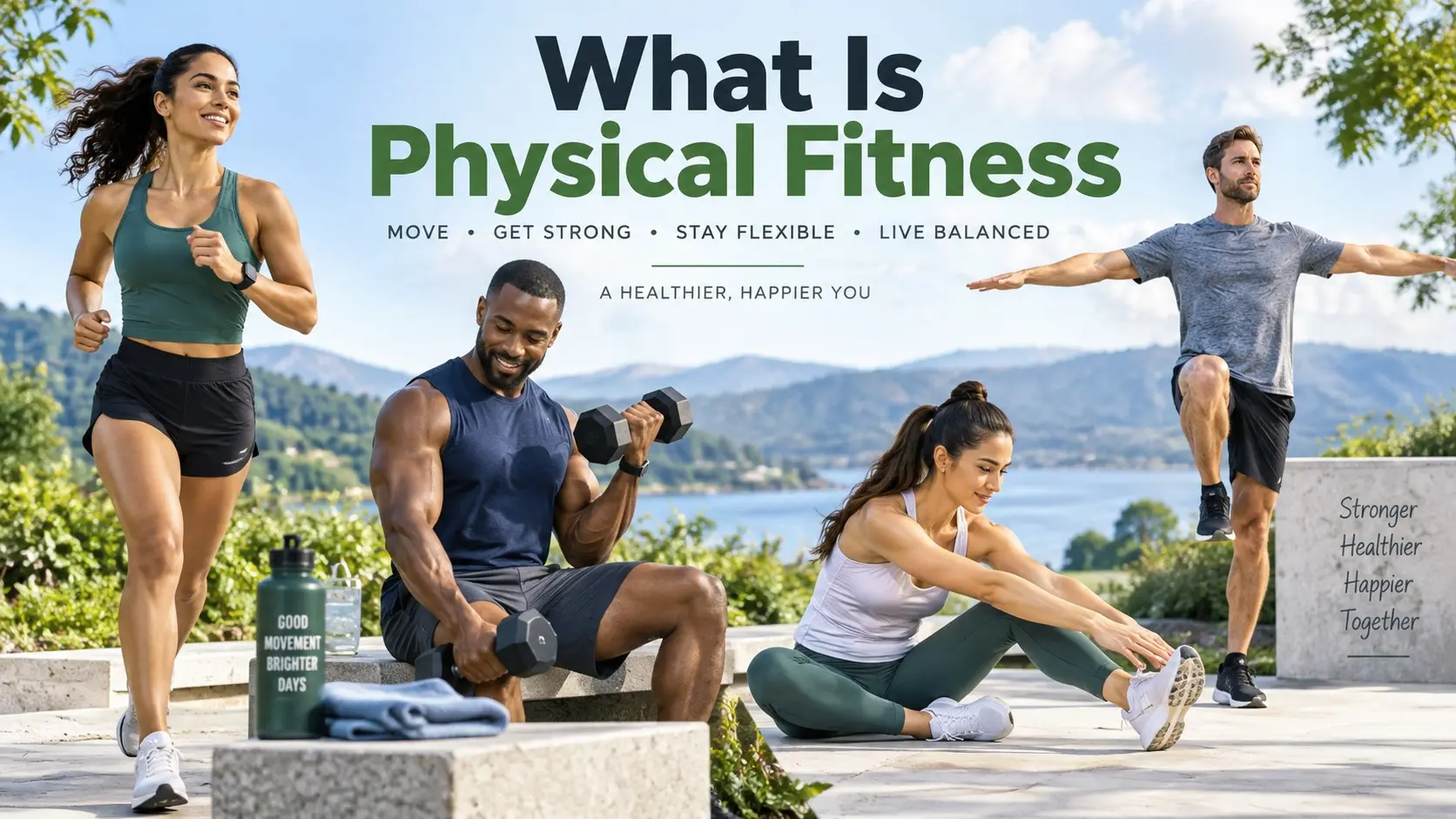
Physical fitness is your body's ability to perform physical tasks efficiently and safely while maintaining enough energy for everyday life.
In practical terms, good physical fitness can help you:
- Walk and climb stairs more comfortably.
- Carry groceries and everyday objects.
- Perform work and household tasks.
- Exercise without becoming exhausted too quickly.
- Maintain strength and mobility as you age.
- Recover appropriately after normal physical effort.
- Participate in activities you enjoy.
Physical fitness is not one single ability. It is a combination of several physical qualities that work together.
Physical Fitness vs. Physical Activity vs. Exercise
These terms are closely related, but they do not mean exactly the same thing.
| Term | Meaning | Example |
|---|---|---|
| Physical Activity | Any body movement that requires energy. | Walking, gardening, cleaning, climbing stairs, or cycling to work. |
| Exercise | Planned and structured physical activity usually performed to improve or maintain fitness. | A strength workout, swimming session, planned walk, or cycling workout. |
| Physical Fitness | The physical abilities and capacities you develop or maintain. | Better endurance, strength, balance, flexibility, and movement ability. |
A simple way to remember the difference is:
Physical activity is what you do. Exercise is structured activity. Physical fitness is part of what your body develops from regular movement and training.
What Are the 5 Essential Components of Physical Fitness?
A useful modern framework groups physical fitness into five broad areas:
- Cardiorespiratory fitness
- Muscular fitness
- Body composition
- Flexibility
- Neuromotor fitness
Together, these five components provide a broader picture of physical fitness than body weight, appearance, or athletic performance alone.
1. Cardiorespiratory Fitness
Cardiorespiratory fitness describes how effectively your heart, lungs, blood vessels, and working muscles cooperate during sustained activity.
Activities that can challenge cardiorespiratory fitness include:
- Brisk walking
- Running
- Cycling
- Swimming
- Dancing
- Rowing
- Hiking
As cardiorespiratory fitness improves, activities such as walking longer distances or climbing stairs may begin to feel easier.
Explore more cardiovascular training in the NextFitLife Cardio and Endurance Guide.
2. Muscular Fitness
Muscular fitness includes your ability to produce force, repeat muscular effort, and in some situations generate force quickly.
Muscular Strength
Muscular strength is your ability to produce force.
Examples include:
- Lifting an object.
- Standing from a chair.
- Carrying shopping bags.
- Pushing or pulling something.
Muscular Endurance
Muscular endurance is your muscles' ability to continue working repeatedly or for an extended period.
Examples include:
- Walking uphill.
- Performing repeated bodyweight squats.
- Carrying objects for a longer distance.
- Maintaining posture during physical tasks.
Muscular Power
Muscular power combines force and speed.
Power is important in many sports, but it can also matter during everyday movements that require you to produce force quickly.
For practical resistance-training guidance, visit the Strength Training and Muscle Building Guide.
3. Body Composition
Body composition refers to the proportions of different tissues in your body, including fat mass and fat-free mass such as muscle, bone, organs, and body water.
Body composition is not the same as body weight.
Two people can weigh the same while having very different amounts of muscle and body fat.
Body composition should also not be used as the only measure of health or fitness. Cardiovascular fitness, muscular capacity, mobility, balance, sleep, nutrition, and daily function also matter.
4. Flexibility
Flexibility describes the range of motion available around a joint.
Useful flexibility can support comfortable movement during activities such as:
- Bending
- Reaching
- Turning
- Squatting
- Walking
- Exercising
You do not need extreme flexibility to be physically fit.
The goal is useful, comfortable movement that supports your daily activities and exercise needs.
For stretching, mobility, and yoga guidance, visit the NextFitLife Yoga and Flexibility Guide.
5. Neuromotor Fitness
Neuromotor fitness includes abilities that help your nervous system and muscles coordinate movement efficiently.
Examples include:
- Balance
- Agility
- Coordination
- Gait speed
- Movement control
These abilities are relevant for sports, everyday movement, fall prevention, mobility, and maintaining function as you age.
What Were the Traditional 5 Components of Physical Fitness?
Many health and fitness resources have traditionally listed these five health-related components:
- Cardiorespiratory endurance
- Muscular strength
- Muscular endurance
- Flexibility
- Body composition
This framework is still useful for understanding fitness fundamentals.
Modern approaches may organize some abilities differently, such as grouping strength, muscular endurance, and power under the broader category of muscular fitness while giving more attention to balance, coordination, and other neuromotor skills.
Why Is Physical Fitness Important?
Physical fitness affects much more than appearance.
Regular physical activity can support heart health, muscular function, mobility, mental well-being, healthy aging, and your ability to perform everyday activities independently.
Physical Fitness Supports Heart and Circulatory Health
Aerobic activity challenges your heart, lungs, circulation, and working muscles.
Regular activity can improve cardiorespiratory fitness and support overall cardiovascular health.
Physical Fitness Helps Maintain Strength
Strength training helps maintain and improve muscular fitness.
Your muscles are involved in everyday tasks such as standing, walking, carrying, lifting, climbing stairs, and maintaining independence.
Physical Fitness Makes Daily Activities Easier
One of the most practical benefits of improving fitness is that everyday life may become easier.
Improved fitness can help you:
- Walk farther.
- Climb stairs more comfortably.
- Carry groceries.
- Play with children.
- Perform household tasks.
- Travel more comfortably.
- Stay physically independent as you age.
Physical Activity Supports Mental Wellbeing
Movement affects both the body and brain.
Regular physical activity can support mood, sleep, brain health, and emotional wellbeing.
Exercise is not a substitute for appropriate mental-health treatment, but it can be a valuable part of a broader healthy lifestyle.
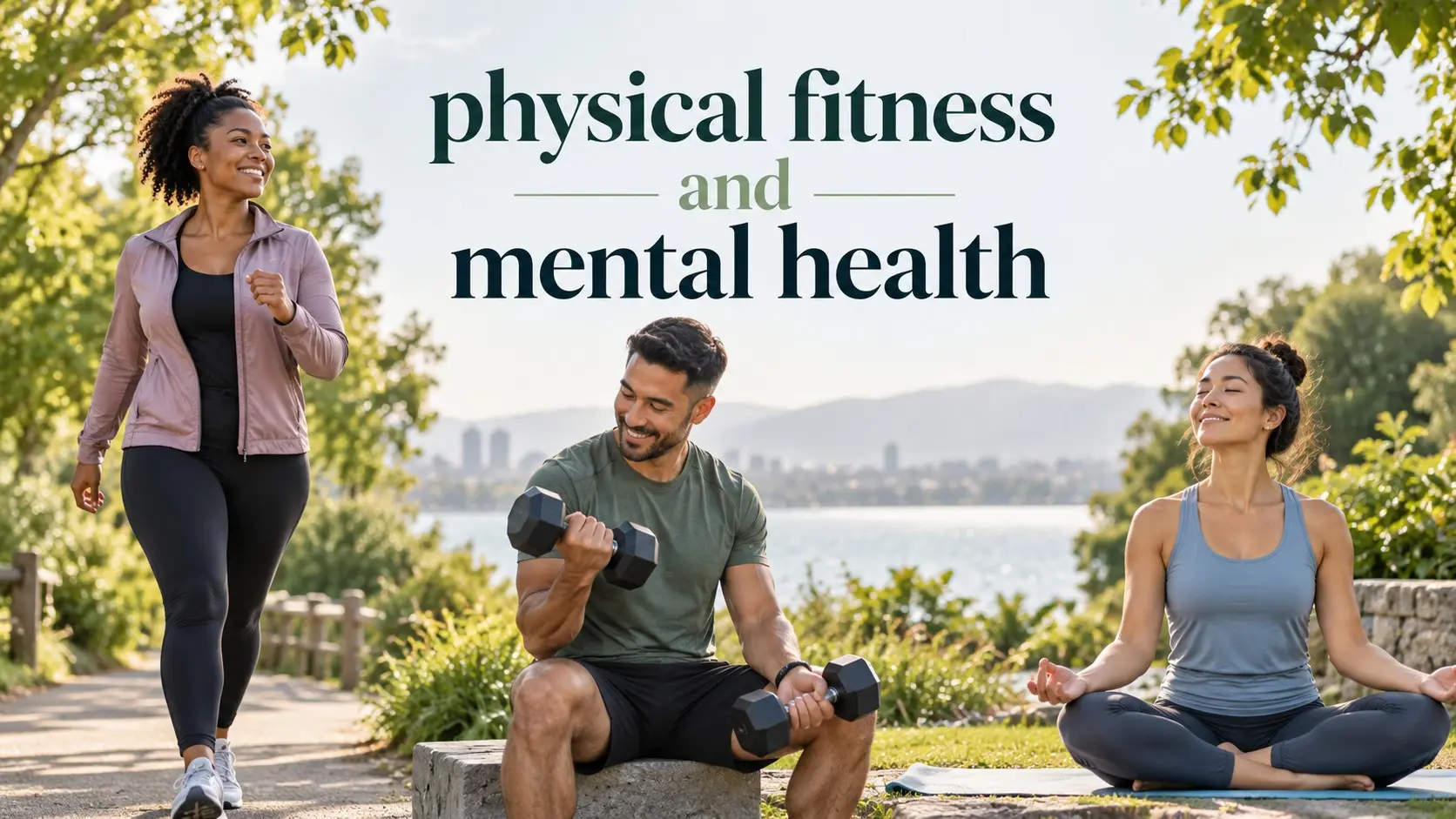
Read more in Physical Fitness and Mental Health: 7 Powerful Benefits.
Fitness Supports Healthy Aging
Strength, cardiovascular capacity, balance, mobility, and coordination become increasingly important with age.
Maintaining these abilities can support independence and make everyday movement safer and easier.
For a practical example, see Walking Exercise for Seniors.
How Much Physical Activity Do Adults Need?
General public-health guidance encourages adults to work toward:
- 150 to 300 minutes of moderate-intensity aerobic activity each week, or
- 75 to 150 minutes of vigorous-intensity aerobic activity each week, or
- An equivalent combination of moderate and vigorous physical activity.
Adults should also include muscle-strengthening activity on at least two days each week.
You do not have to complete all of your activity in one session.
Movement can be distributed throughout the week, and smaller amounts of physical activity are generally better than remaining completely inactive.
What Does Moderate-Intensity Exercise Mean?
Moderate intensity means you are working harder than at rest without exercising at maximum effort.
Examples may include:
- Brisk walking
- Recreational cycling
- Water aerobics
- Active dancing
- Some forms of gardening
A useful practical method is the talk test.
During moderate-intensity activity, you can usually talk, although singing comfortably would be more difficult.
What Is Vigorous-Intensity Exercise?
Vigorous physical activity requires substantially more effort.
Examples can include:
- Running
- Fast cycling
- Swimming laps at a challenging pace
- High-intensity sports
- Fast uphill hiking
During vigorous activity, speaking more than a few words at a time may become difficult.
You do not need vigorous exercise to begin improving your fitness.
Do You Need a Gym to Be Physically Fit?
No.
A gym can provide useful equipment, but gym membership is not required to improve physical fitness.
You can build fitness through activities such as:
- Walking
- Stair climbing
- Bodyweight exercises
- Resistance bands
- Home dumbbell workouts
- Cycling
- Swimming
- Yoga
- Active recreation
- Sports
If you prefer exercising at home, explore the Home Workouts and Equipment Guide.
Is Walking Enough for Physical Fitness?
Walking is an excellent starting point for many people.
Regular brisk walking can improve aerobic fitness and help increase your overall activity level.
However, a well-rounded physical fitness routine should ideally include more than aerobic activity alone.
Consider combining walking with:
- Strength training
- Balance exercises
- Mobility work
- Flexibility exercises
This gives your body a broader fitness foundation.
Can You Be Fit Without Being Thin?
Yes.
Body size and physical fitness are not the same thing.
Fitness includes abilities such as endurance, strength, balance, mobility, flexibility, and movement function.
You cannot accurately determine someone's fitness level simply by looking at their body size.
Can a Thin Person Be Physically Unfit?
Yes.
A person can have a lower body weight while still having limited cardiovascular endurance, low muscular strength, poor balance, or a very sedentary lifestyle.
Body weight alone is not a complete fitness assessment.
How Can You Tell If Your Physical Fitness Is Improving?
You do not necessarily need complicated laboratory testing to notice meaningful progress.
Signs that your physical fitness may be improving include:
- You can walk farther without stopping.
- Climbing stairs feels easier.
- You can lift slightly more weight.
- You can complete more controlled repetitions.
- Your balance improves.
- Daily activities feel less tiring.
- You recover more comfortably after normal workouts.
- You can exercise longer at a similar effort level.
For many beginners, these practical improvements are more useful than focusing on a single measurement.
How Can Beginners Improve Physical Fitness?
A good beginner fitness plan is usually simple enough to repeat consistently.
Step 1: Start Walking More
If you are currently inactive, begin with a manageable amount of walking.
You could start with:
- 5 to 10 minutes at a time.
- Several short walks during the day.
- A comfortable pace that does not leave you excessively exhausted.
Gradually increase duration as your body adapts.
Step 2: Add Strength Training
You do not need bodybuilding-style workouts to improve muscular fitness.
Beginner exercises can include:
- Chair squats
- Wall push-ups
- Resistance-band rows
- Glute bridges
- Light dumbbell exercises
- Supported step-ups
Step 3: Work on Balance
Balance becomes increasingly valuable as people age.
Simple exercises may include:
- Standing near a stable chair while practicing balance.
- Heel-to-toe walking.
- Controlled marching.
- Supported single-leg standing when appropriate.
Step 4: Include Mobility and Flexibility
Use gentle movements that help maintain comfortable joint motion.
Do not force stretches into pain.
Step 5: Progress Gradually
Physical fitness improves through repeated training followed by appropriate recovery.
Progress might mean:
- Walking a few minutes longer.
- Completing one or two additional repetitions.
- Using slightly more resistance.
- Improving exercise technique.
- Improving balance.
- Becoming more consistent.
For additional beginner guidance, see How to Get Fit Fast: A Safe Beginner Guide.
A Simple Weekly Physical Fitness Plan
This is a general example rather than an individualized exercise prescription.
| Day | Example Activity |
|---|---|
| Monday | 20 to 30 minutes of brisk walking |
| Tuesday | Beginner strength training |
| Wednesday | Easy walking or recovery movement |
| Thursday | Strength training plus gentle mobility |
| Friday | 20 to 30 minutes of cardiovascular activity |
| Saturday | An enjoyable activity such as walking, cycling, swimming, hiking, or recreational sport |
| Sunday | Rest or gentle movement |
Your appropriate starting point may be easier than this example.
That is perfectly reasonable. The goal is sustainable progression rather than doing too much too quickly.
What Factors Affect Physical Fitness?
Your fitness level is influenced by more than workouts alone.
Important factors can include:
- Current activity level
- Age
- Genetics
- Sleep
- Nutrition
- Recovery
- Medical conditions
- Medications
- Previous injuries
- Stress
- Training consistency
- Your environment and access to exercise opportunities
This is why two people following the same fitness program may progress at different rates.
What Is the Best Type of Exercise for Physical Fitness?
There is no single best exercise for everyone.
A well-rounded fitness routine usually includes several types of movement.
| Fitness Goal | Useful Activities |
|---|---|
| Cardiorespiratory Fitness | Walking, cycling, swimming, running, rowing, dancing |
| Muscular Fitness | Weights, resistance bands, machines, bodyweight exercises |
| Flexibility | Gentle stretching, yoga, mobility exercises |
| Balance and Neuromotor Fitness | Balance exercises, tai chi, controlled movement drills |
| General Daily Function | Walking, carrying, climbing stairs, strength training, recreational activity |
The best exercise routine is one that is appropriate for your health, abilities, goals, preferences, and lifestyle and that you can continue consistently.
Common Physical Fitness Mistakes
Doing Too Much Too Soon
Starting with an extreme workout schedule can increase fatigue, soreness, frustration, and injury risk.
Build your fitness gradually.
Doing Only Cardio
Cardiovascular exercise is important, but muscular fitness, mobility, and balance also matter.
Doing Only Strength Training
Strength is valuable, but cardiovascular fitness also supports heart health and everyday stamina.
Using Body Weight as Your Only Measure of Fitness
A bathroom scale cannot measure your endurance, balance, strength, flexibility, coordination, or cardiovascular capacity.
Ignoring Recovery
Fitness improves through both training and recovery.
Sleep, nutrition, rest, and appropriate training progression all matter.
Exercising Through Significant Pain
Exercise may feel challenging, but sharp, severe, or unusual pain should not simply be ignored.
When Should You Speak With a Healthcare Professional?
Many people can begin with light physical activity safely, but professional guidance may be appropriate if you have significant medical conditions, symptoms, mobility limitations, or exercise concerns.
Consider speaking with a qualified healthcare professional before beginning or substantially increasing exercise if you have concerns involving:
- Heart disease
- Chest symptoms
- Unexplained fainting
- Severe dizziness
- Significant breathing problems
- Uncontrolled blood pressure
- Diabetes complications
- Recent surgery
- Osteoporosis
- Major joint problems
- Neurological conditions
- Pregnancy-related exercise concerns
- A recent serious injury
Seek urgent medical care for symptoms such as chest pain, fainting, sudden weakness, severe or unusual shortness of breath, confusion, or other symptoms that may indicate a medical emergency.
What Is the Most Important Rule for Improving Physical Fitness?
Consistency is usually more valuable than occasional extreme effort.
You do not need the perfect workout.
You need a reasonable routine you can repeat.
Start at an appropriate level, progress gradually, train different aspects of fitness, recover properly, and continue consistently.
Conclusion: Build Physical Fitness for a Stronger, Healthier Life
What is physical fitness? It is your body's ability to move, work, exercise, and complete everyday activities effectively while maintaining sufficient strength, endurance, mobility, balance, and energy.
The five essential components of physical fitness are cardiorespiratory fitness, muscular fitness, body composition, flexibility, and neuromotor fitness.
You do not need to become an elite athlete to improve your fitness.
Walking more, strengthening your muscles, improving cardiovascular endurance, practicing balance, maintaining useful mobility, sleeping well, and progressing gradually can all contribute to a stronger and healthier body.
Your next step: choose one realistic activity today. Take a walk, complete a short strength session, practice balance, or spend a few minutes on mobility. Repeat that habit consistently and build from there.
References and Sources
- Centers for Disease Control and Prevention — Adult Activity: An Overview.
Adult aerobic and muscle-strengthening physical activity recommendations.
CDC Adult Physical Activity Guidelines - World Health Organization — Physical Activity.
Global recommendations covering physical activity, sedentary behavior, health, and wellbeing.
WHO Physical Activity Guidance - MedlinePlus — Exercise and Physical Fitness.
Consumer health information about aerobic exercise, strength training, flexibility, balance, and fitness.
MedlinePlus Exercise and Physical Fitness - U.S. Office of Disease Prevention and Health Promotion — Physical Activity Guidelines for Americans.
Evidence-based guidance covering aerobic activity, muscle strengthening, and sedentary behavior.
Physical Activity Guidelines for Americans - American College of Sports Medicine.
Professional exercise-science information covering physical fitness, exercise testing, training, and healthy physical activity.
American College of Sports Medicine
Explore More NextFitLife Fitness Guides
- NextFitLife Fitness Hub
- Strength Training and Muscle Building
- Cardio and Endurance
- Home Workouts and Equipment
- Yoga and Flexibility
- Beginner Fitness Guide
- Physical Fitness and Mental Health
- Walking Exercise for Seniors
About the Author
Adel Galal is the founder and lead writer of NextFitLife.
He has maintained a personal interest in health, fitness, nutrition, sleep, wellness, and healthy aging for more than 30 years, with more than 15 years of health and wellness writing and research communication experience.
These are not medical credentials.
His role is to research health and fitness topics, compare reputable public-health and scientific sources, identify the limits of available evidence, and explain complicated information in practical language for everyday readers.
NextFitLife aims to distinguish established health and fitness guidance from exaggerated claims, unsafe shortcuts, and unrealistic promises.
This content is for educational purposes and does not replace professional medical advice, diagnosis, or treatment. Always consult an appropriately qualified healthcare professional about personal health conditions, symptoms, or exercise limitations.
Learn more about Adel Galal, NextFitLife, our editorial approach, source checking, and corrections on the About Us page.
Frequently Asked Questions About Physical Fitness
What is physical fitness in simple words?
Physical fitness means having sufficient strength, stamina, mobility, balance, and cardiovascular capacity to perform everyday activities and exercise effectively without becoming unnecessarily exhausted.
What are the 5 essential components of physical fitness?
The five broad components are cardiorespiratory fitness, muscular fitness, body composition, flexibility, and neuromotor fitness. Muscular fitness includes abilities such as strength and muscular endurance, while neuromotor fitness includes balance, coordination, agility, and movement control.
Why is physical fitness important?
Physical fitness can make everyday activities easier while supporting heart health, muscular function, mobility, balance, mental wellbeing, healthy aging, and long-term independence.
How much physical activity should adults get each week?
Adults are generally encouraged to work toward at least 150 minutes of moderate-intensity aerobic activity per week or 75 minutes of vigorous activity, or an equivalent combination, together with muscle-strengthening activity on at least two days each week.
Is walking good for physical fitness?
Yes. Walking is a form of physical activity that can improve cardiorespiratory fitness. A more complete fitness routine can combine walking with strength, balance, flexibility, and mobility exercises.
Can you improve physical fitness without going to a gym?
Yes. Walking, cycling, swimming, resistance bands, bodyweight exercises, home strength training, yoga, recreational sports, and active daily living can all contribute to physical fitness.
How long does it take to improve physical fitness?
There is no universal timeline. Progress depends on your starting fitness, health, training type, frequency, sleep, nutrition, recovery, and consistency. Some functional improvements may become noticeable within weeks, while larger adaptations generally require continued training.
Is body weight a good measure of physical fitness?
Body weight alone is not a complete measure of physical fitness. Cardiovascular fitness, muscular fitness, balance, flexibility, mobility, body composition, and everyday physical function also matter.
```

Health & wellness writer with 30+ years of experience in nutrition, fitness, and healthy aging. Founder of NextFitLife.com — evidence-based health guidance.