Published: Jul 19, 2022
Topic: Best Teas for Weight Loss
Written and Source Checked by: Adel Galal, Founder and Lead Writer at NextFitLife
Medical Review Status: This article is educational and source -checked. It has not been independently reviewed by a licensed healthcare professional.
Reading Time: About 17 minutes the best teas for weight loss will not melt belly fat.They will not detox fat from your body.
They will not fix an unhealthy diet.
And they will not replace physical activity, sleep, or medical care.
That does not make tea useless.
Quite the opposite.
Plain tea can be a useful drink for people trying to manage their weight.
Most traditional tea contains almost no calories when you drink it without sugar, syrup, honey, cream, or sweetened milk.
Replacing a sugary drink with unsweetened tea may help reduce calorie intake.
Tea also contains plant compounds called polyphenols.
Green, black, white, and oolong tea all come from the same plant, Camellia sinensis.
They differ because the leaves are processed differently.
Herbal drinks such as ginger and hibiscus are different.
They do not come from the traditional tea plant.
I have maintained a personal interest in health, fitness, nutrition, weight management, sleep, wellness, and healthy aging for more than 30 years.
One lesson is especially important when reading about weight loss foods and drinks.
A small biological effect is not the same as meaningful weight loss.
This guide reviews six popular teas, explains what current evidence actually shows, and helps you use tea without falling for exaggerated fat burning claims.
For the larger picture, visit the NextFitLife Weight Loss and Metabolism Hub.
Quick Answer: What Is the Best Tea for Weight Loss?
Green tea has the most research behind it.
But even green tea is not a proven major weight loss treatment.
A recent analysis of randomized trials found that green tea may lead to a small reduction in body weight.
The certainty of that evidence was low or very low.
Other teas did not show a clear reliable weight loss effect in that analysis.
So the most useful way to think about tea for weight loss is this:
- Drink it without added sugar.
- Use it instead of sugary drinks when you enjoy it.
- Choose a tea you actually like.
- Keep expectations realistic.
- Do not rely on tea as your weight loss plan.
A sustainable weight management plan still depends mainly on your overall food intake, physical activity, sleep, health, medicines, and habits.
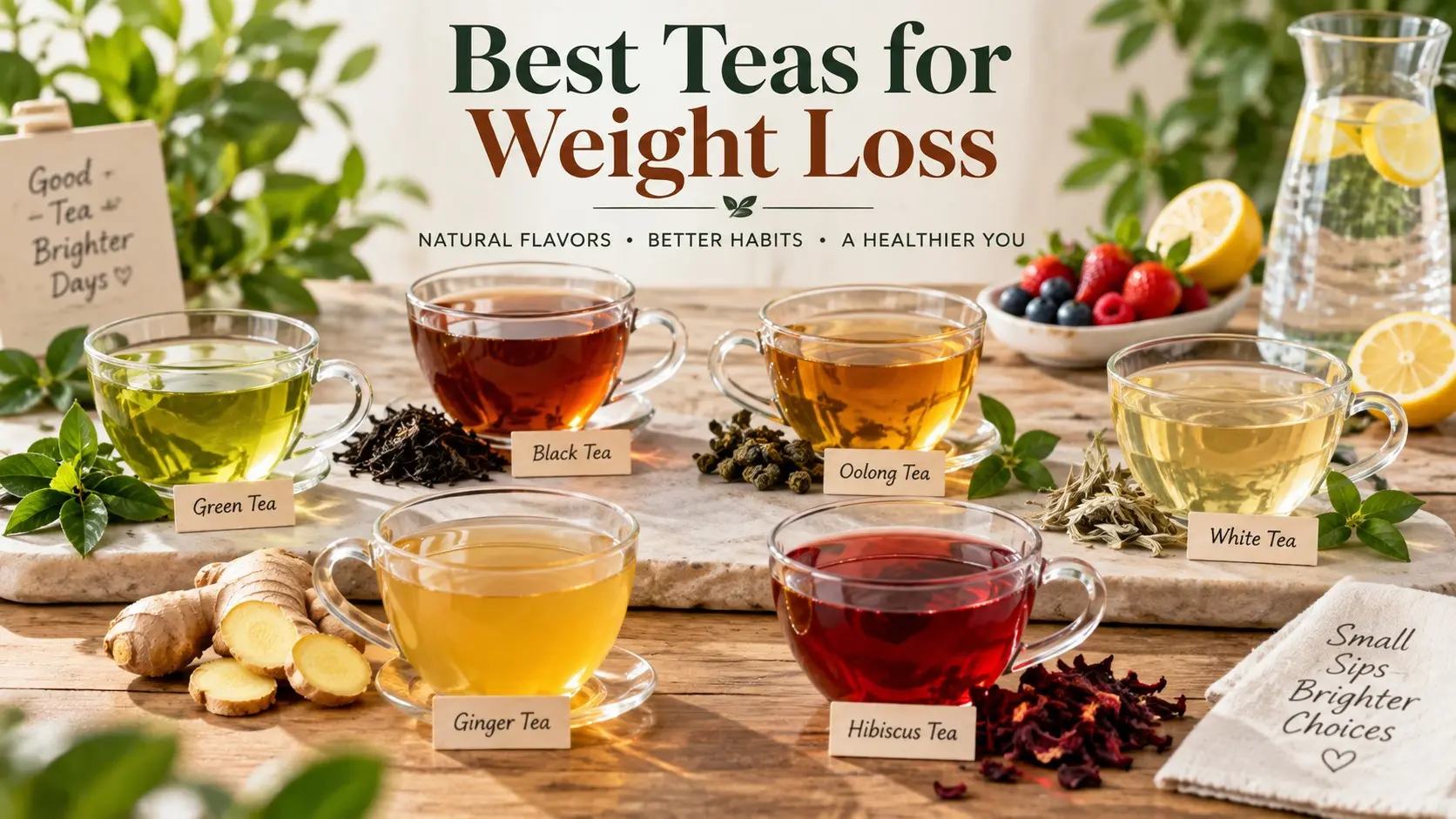
6 Best Teas for Weight Loss, Based on Evidence and Practical Use
| Tea | Weight Loss Evidence | Caffeine | Best Reason to Choose It |
|---|---|---|---|
| Green Tea | Most studied. Possible small effect, but evidence remains uncertain. | Yes | Best studied traditional tea and easy replacement for sugary drinks |
| Black Tea | No reliable meaningful weight loss effect established | Yes | Strong flavour and widely available without added calories |
| Oolong Tea | Limited human evidence and no strong proof of meaningful weight loss | Yes | Useful choice if you enjoy a flavor between green and black tea |
| White Tea | Human weight loss evidence remains very limited | Yes | Light flavor and a low calorie traditional tea option |
| Ginger Tea | Ginger supplement studies show mixed small effects, but tea itself is not proven for weight loss | Usually no, unless blended with traditional tea | Flavorful caffeine free option for many people |
| Hibiscus Tea | Recent randomized trial review found no clinically meaningful weight loss benefit | No | Tart caffeine free alternative to sugary drinks |
The table does not mean these six teas are proven weight loss treatments.
It ranks them as practical beverage choices while making the evidence clear.
1. Green Tea: The Best Studied Choice
Green tea gets more attention for weight management than any other tea.
It contains caffeine and plant compounds called catechins.
The best known catechin is EGCG.
You may see these compounds described online as powerful fat burners.
That description goes too far.
The National Center for Complementary and Integrative Health says green tea catechins and caffeine may have a modest effect on body weight.
A newer systematic review and network analysis of randomized trials reached a similar cautious conclusion.
Green tea was associated with roughly a small amount of weight loss compared with placebo or water.
But the researchers rated the evidence as low or very low certainty.
This means the true effect may be smaller, absent, or different from the estimate.
Does Green Tea Burn Belly Fat?
No good evidence shows that drinking green tea selectively removes belly fat.
Your body decides where stored fat comes off.
Tea cannot direct fat loss to your stomach.
Overall fat change comes mainly from your long-term energy balance and individual biology.
Green Tea Beverage Versus Green Tea Extract
This difference matters.
A normal cup of tea is not the same as a concentrated green tea supplement.
NCCIH says green tea consumed as a beverage has not raised safety concerns for most adults.
Green tea still contains caffeine.
Concentrated green tea extract can cause:
- Nausea
- Constipation
- Abdominal discomfort
- Higher blood pressure
Uncommon cases of liver injury have also been reported, mainly with concentrated extracts in tablets or capsules.
Do not assume a green tea fat burner supplement is equivalent to drinking tea.
2. Black Tea: A Strong Flavor Without the Sugar
Black tea is the most widely consumed traditional tea in much of the world.
It comes from the same Camellia sinensis plant as green tea.
The leaves undergo more oxidation during processing.
This creates the dark colour and stronger taste.
The old version of this article claimed that black tea could regulate weight and reduce waist size.
That claim was too strong.
Some small trials have found changes in weight-related measurements.
But the overall evidence does not establish black tea as an effective weight loss treatment.
A recent network analysis of randomized trials did not find a reliable weight loss effect from black tea.
Why Can Black Tea Still Be Useful?
Because plain black tea is a low-calorie drink.
If you usually drink:
- Sweet soda
- Sweetened iced tea
- Sweet coffee drinks
- Fruit drinks
Replacing some of those drinks with plain black tea may reduce your intake of added sugar and calories.
That matters more for weight management than trying to make tea burn fat.
Watch What You Add
A plain cup of black tea contains very little energy.
A large sweet tea can be very different.
Sugar, honey, syrups, cream, condensed milk, and sweetened creamers can turn tea into a high-calorie drink.
The tea is not the problem.
The additions can change the nutritional picture.
3. Oolong Tea: Interesting, but Evidence Is Still Limited
Oolong tea is partially oxidized.
That places it between green and black tea in processing.
Its flavour can range from light and floral to deeper and roasted.
The old article claimed oolong could increase metabolism enough to burn hundreds of additional calories each day.
That is not a reasonable conclusion from the available research.
Small short-term studies have measured changes in energy use after oolong consumption.
But short-term laboratory changes do not prove large long-term fat loss.
High-quality human studies remain limited.
You can enjoy oolong as part of a healthy eating pattern.
Just do not expect it to replace a calorie deficit.
Who Might Like Oolong?
Oolong may suit someone who wants:
- More flavor than many green teas
- A lighter taste than some black teas
- A caffeinated alternative to sugary drinks
- A tea that works hot or cold
4. White Tea: Pleasant, but Not a Proven Fat Burner
White tea is made from young tea leaves and buds with relatively light processing.
It usually has a delicate flavour.
You may see claims that white tea stops new fat cells from forming.
Those claims often come from laboratory research.
A laboratory study on cells does not prove that drinking white tea makes people lose weight.
Recent small human research is interesting.
But the evidence is still too limited to call white tea an effective obesity treatment.
White tea is better viewed as another unsweetened tea choice.
White Tea Can Still Fit a Healthy Diet
Choose white tea because you like it.
Drink it plain or with simple additions such as lemon.
Do not pay a premium price because a package promises to melt fat.
5. Ginger Tea: Flavorful, but Tea-Specific Evidence Is Weak
Ginger tea is different from green, black, oolong, and white tea.
It is an herbal infusion made from ginger root.
Ginger has been studied in randomized trials.
Some meta-analyses suggest small changes in weight or body composition.
But an important detail is often lost online.
Most of those trials studied ginger preparations or supplements.
They do not prove that an ordinary cup of ginger tea causes meaningful weight loss.
The certainty of some ginger weight outcomes has also been rated low or very low.
Why Choose Ginger Tea?
It can be:
- Caffeine free
- Warm and flavorful
- Easy to prepare
- A useful alternative to sweet drinks
You can make it with fresh sliced ginger and hot water.
Lemon can add flavour.
Honey adds sugar and calories, so use it according to your overall eating plan.
Ginger Is Not a Detox
Your liver and kidneys already perform important waste-processing functions.
Ginger tea does not cleanse fat from the liver or flush toxins from body fat.
Those are marketing claims, not a useful explanation of human physiology.
6. Hibiscus Tea: Refreshing, but Not Proven for Weight Loss
Hibiscus tea has a deep red colour and tart flavour.
It is also called roselle or sour tea in some regions.
Hibiscus is naturally caffeine-free.
This makes it an attractive alternative for people who want to reduce caffeine.
But weight loss claims are weak.
A 2024 systematic review and meta-analysis of six randomized trials found no clinically meaningful benefit for:
- Body weight
- Body mass index
- Waist circumference
That is a good example of why a healthy plant drink should not automatically be called a weight loss drink.
Why Hibiscus Still Makes the List
Because it can replace sugary drinks.
Serve it hot.
Or prepare it cold and unsweetened.
Add lemon, mint, or other flavourings if you enjoy them.
Which Tea Has the Strongest Weight Loss Evidence?
Green tea.
But “strongest” does not mean strong.
This distinction is important.
Among popular teas, green tea has been studied most extensively.
The possible weight effect appears small.
Major health sources remain cautious about whether that change is meaningful.
No tea should be used as your primary obesity treatment.
Can Tea Boost Metabolism?
Caffeine can temporarily increase energy expenditure.
Tea also contains plant compounds that researchers have studied for metabolic effects.
But the phrase “boost metabolism” often creates unrealistic expectations.
A temporary metabolic change does not mean large fat loss.
Your daily energy use is influenced by:
- Body size
- Muscle mass
- Age
- Sex
- Genes
- Food intake
- Physical activity
- Health conditions
A cup of tea cannot override those factors.
Does Tea Burn Belly Fat?
No tea can target abdominal fat.
This applies to:
- Green tea
- Black tea
- Oolong tea
- White tea
- Ginger tea
- Hibiscus tea
Body fat loss happens across the body.
The pattern is influenced by genetics, hormones, age, sex, and overall weight change.
For a clearer explanation, read How Weight Loss Works.
Tea Helps Most When It Replaces a Sugary Drink
This may be the most practical section in the entire guide.
CDC guidance says sugary beverages are a major source of added sugars.
Frequently drinking them is associated with weight gain and other health problems.
Sweetened tea itself can be a sugary beverage.
So compare these two choices:
| Drink Choice | Weight Management Impact |
|---|---|
| Plain unsweetened tea | Very little or no energy and no added sugar |
| Tea with several teaspoons of sugar | Adds sugar and calories |
| Bottled sweet tea | May contain substantial added sugar |
| Milk tea with syrup | Can contain significant sugar and calories depending on preparation |
| Tea instead of soda | Can reduce calorie intake when tea is unsweetened |
The useful effect comes from the beverage swap.
Not from a mysterious fat-burning reaction.
How Should You Drink Tea for Weight Management?
Keep it simple.
- Choose a tea you enjoy.
- Brew it without added sugar when possible.
- Drink it hot or cold.
- Let very hot tea cool before drinking.
- Use it to replace sugary beverages rather than adding it on top of them.
- Watch total caffeine intake.
- Keep your main focus on your overall eating pattern.
Can You Add Lemon to Tea?
Yes.
Lemon adds flavor with very little energy.
It can make plain tea easier to enjoy without sugar.
Lemon does not turn tea into a fat burner.
Can You Add Honey?
You can.
But honey still contains sugar and calories.
Your body does not ignore its energy because it is natural.
If weight loss is your goal, use a small amount if you need it.
You can also try:
- Lemon
- Fresh mint
- Cinnamon
- Ginger
- Vanilla
These can add flavour without a large amount of added sugar.
What About Milk in Tea?
A splash of milk can fit a healthy eating pattern.
The main concern for weight management is the overall amount.
A little milk is different from a large sweet milk tea containing syrup, condensed milk, sugar, or cream.
Look at the full drink.
How Much Tea Should You Drink?
There is no universal number of cups required for weight loss.
You do not need six cups.
You do not need a tea every hour.
Use tea as a beverage you enjoy.
Water should still be a major source of hydration.
Traditional green, black, white, and oolong teas contain caffeine.
Caffeine amounts vary with:
- Tea type
- Amount of leaves
- Brewing time
- Water temperature
- Serving size
How Much Caffeine Is Safe?
The FDA says that for most healthy adults, about 400 milligrams of caffeine per day is not generally associated with negative effects.
That is not a target.
You do not need that much.
Some people are much more sensitive.
Too much caffeine can cause:
- Jitters
- Anxiety
- Insomnia
- Fast heartbeat
- Headache
- Stomach discomfort
If tea affects your sleep, drink caffeinated tea earlier in the day or choose herbal or decaffeinated options.
Tea During Pregnancy
Pregnancy changes caffeine guidance.
ACOG recommends keeping total caffeine below 200 milligrams per day during pregnancy.
Caffeine can come from:
- Tea
- Coffee
- Chocolate
- Soft drinks
- Energy drinks
Do not count tea separately and forget the other sources.
Herbal teas also deserve care during pregnancy because herbs can have biological effects.
Ask your obstetric professional about herbal products you use regularly.
Tea While Breastfeeding
Caffeine passes into breast milk in small amounts.
CDC guidance says low to moderate caffeine intake, around 300 milligrams or less per day, usually does not affect most breastfeeding infants.
Some younger or preterm babies may be more sensitive.
Watch for:
- Fussiness
- Jitteriness
- Poor sleep
If you notice a pattern, discuss your caffeine intake with your healthcare professional.
Tea and Medicines
Tea is food, but that does not mean every form is irrelevant to medicine.
Green tea can interact with some medicines.
NCCIH notes interactions involving medicines such as nadolol and some other drugs.
Concentrated extracts may create more concern than normal beverage use.
If you take prescription medicine every day, ask your doctor or pharmacist before using tea extracts or concentrated herbal products.
Tea Beverage Versus Weight Loss Tea Supplements
| Regular Tea | Weight Loss Tea Product |
|---|---|
| Usually simple leaves or herbs brewed in water | May contain many ingredients |
| Can be naturally low in calories | May contain stimulants or laxative ingredients |
| Caffeine amount is often moderate | Caffeine may be concentrated or combined with other stimulants |
| Easy to understand what you are drinking | Formulas can be harder to evaluate |
| No promise of rapid weight loss is needed | Often marketed with aggressive slimming claims |
Harvard specifically warns against so-called weight loss teas that may contain potentially harmful substances such as laxatives.
Do not confuse ordinary tea with a slimming product.
Do Detox Teas Help You Lose Fat?
No.
Some detox teas make the scale drop because they cause:
- Water loss
- More bowel movements
That is not the same as losing body fat.
Laxatives do not remove calories after your body has already absorbed them.
Repeated laxative or diuretic use can also be harmful.
Avoid any product that promises to clean fat or toxins from the body.
What About Matcha?
Matcha is powdered green tea.
You consume the powdered tea leaves rather than only drinking water steeped with leaves.
That means the concentration of tea compounds can differ.
Matcha can fit a healthy diet.
It is not a guaranteed weight loss treatment.
Watch the additions in matcha lattes.
A plain matcha drink and a large sweet matcha latte can have very different calorie and sugar content.
What About Peppermint Tea?
Peppermint tea is another caffeine-free herbal drink.
It can be enjoyable.
But there is not strong evidence that peppermint tea causes meaningful weight loss.
You can choose it because you like the flavour.
That is enough.
Which Tea Is Best at Night?
If caffeine affects your sleep, choose a caffeine-free herbal drink at night.
Options may include:
- Ginger tea
- Hibiscus tea
- Peppermint tea
- Chamomile tea
Sleep matters for overall health and weight management.
Do not sacrifice sleep just to drink a caffeinated tea that is marketed for fat loss.
Can Tea Replace Water?
Tea contributes to fluid intake.
But plain water remains an excellent default drink.
CDC guidance notes that water has no calories and can help reduce calorie intake when it replaces sugary beverages.
You do not need to choose between water and tea.
Both can fit your day.
Best Tea Choice by Goal
| Your Goal | Practical Choice | Why |
|---|---|---|
| Most researched tea | Green tea | Has the largest body of weight-related research, though effects are small and uncertain |
| Strong traditional flavor | Black tea | Easy unsweetened alternative to sweet drinks |
| Middle ground flavour | Oolong tea | Falls between green and black tea in processing and taste |
| Light traditional tea | White tea | Delicate flavour and naturally low calorie when plain |
| Caffeine-free spicy drink | Ginger tea | Warm flavour without caffeine when used alone |
| Caffeine-free tart drink | Hibiscus tea | Works well hot or cold without sugar |
How Tea Fits Into Real Weight Loss
Tea is one small part of the picture.
Healthy weight loss usually involves:
- A nutritious eating pattern
- Suitable portions
- Regular physical activity
- Enough sleep
- Stress management
- Behavior support
- Medical care when needed
NIDDK recommends choosing an eating and drinking plan you can maintain over time.
That is more important than finding the perfect tea.
Read Successful Weight Loss for a complete approach.
You can also compare treatment paths in Weight Loss Options.
Common Tea and Weight Loss Mistakes
Thinking Tea Melts Fat
It does not.
Adding Large Amounts of Sugar
Sweet tea can become a sugary drink.
Buying Detox Tea
Water loss is not body fat loss.
Using Green Tea Extract Instead of Tea
Concentrated extracts can have different safety risks.
Drinking Caffeine Late at Night
Poor sleep can make healthy habits harder.
Ignoring Total Food Intake
Tea cannot cancel excess calorie intake.
Believing Herbal Means Proven
A plant can be natural without being an effective weight loss treatment.
When Should You Ask a Healthcare Professional?
Talk with a qualified healthcare professional if you:
- Are pregnant
- Are breastfeeding
- Have heart rhythm problems
- Have uncontrolled high blood pressure
- Have liver disease
- Take regular prescription medicine
- Are very sensitive to caffeine
- Want to use concentrated tea extracts
- Want to use an herbal weight loss product
If you need treatment for obesity or another medical condition, do not replace medical care with tea.
Conclusion: Use the Best Teas for Weight Loss for What They Do Well
The best teas for weight loss are not fat melting drinks.
Green tea has the strongest research, but its possible weight effect is small and uncertain.
Black, oolong, and white tea are useful low calorie drinks when served plain.
Ginger and hibiscus offer flavorful caffeine free choices.
The biggest practical benefit may be simple.
Drink unsweetened tea instead of a sugary beverage.
Then put your real effort into the habits that matter most.
Eat well.
Move regularly.
Sleep.
Use reasonable portions.
Get professional help when you need it.
Your next step: choose one tea from this guide that you genuinely enjoy and try it without added sugar the next time you would normally reach for a sugary drink.
References and Sources
- National Center for Complementary and Integrative Health, Green Tea. NCCIH reviews green tea research, possible modest effects on body weight, caffeine, extract safety, liver concerns, and medicine interactions.NCCIH Green Tea Guidance
- Harvard T.H. Chan School of Public Health, Harvard reviews traditional and herbal tea, polyphenols, caffeine, health research, brewing, and the limited evidence for tea as a weight loss aid. Harvard Nutrition Source Tea Review
- British Journal of Nutrition, Comparative Effects of Tea and Coffee Drinking on Body Weight. This systematic review and network meta-analysis of randomized trials found a small green tea weight effect with low or very low certainty and no reliable effect for several other beverages.Tea and Body Weight Systematic Review
- Complementary Therapies in Medicine, Hibiscus and Obesity Treatment. This 2024 systematic review and meta-analysis found no clinically meaningful weight, BMI, or waist benefit from Hibiscus sabdariffa. Hibiscus Weight Management Meta-Analysis
- Centers for Disease Control and Prevention, Sugar-Sweetened Beverages. CDC guidance explains that sugary drinks contribute added sugars and are associated with weight gain, while reducing them can support a healthier eating pattern.CDC Sugar-Sweetened Beverage Guidance
Explore More NextFitLife Weight Management Guides
- Weight Loss and Metabolism Hub
- Successful Weight Loss
- Weight Loss Options
- How Weight Loss Works
- Natural Weight Loss
- Weight Loss Through Herbal Supplements
- Weight Loss Breakfast Options
- Nutrition Tips for Improving Your Health
- NextFitLife Fitness Hub
About the Author
Adel Galal is the founder and lead writer of NextFitLife.com.
Adel has maintained a personal interest in health, fitness, nutrition, sleep, wellness, and healthy aging for more than 30 years.
His health and wellness writing and research communication experience spans more than 15 years.
At NextFitLife, Adel researches health, nutrition, fitness, food, supplements, and weight management topics.
He compares reputable medical, public health, and scientific sources.
He separates established evidence from early research and marketing claims.
He also looks for safety concerns, medicine interactions, and important limits in the evidence.
His goal is to turn complex research into clear information that adults can use to make better-informed decisions.
Before focusing on NextFitLife, Adel spent 29 years working as an IT Manager for the Nestlé Egypt Region.
His professional experience involved data analysis, planning, structured review, information management, systems thinking, and problem-solving.
These are transferable research and communication skills.
They are not medical credentials.
Adel is not a physician, registered dietitian, pharmacist, physiotherapist, dermatologist, psychologist, certified personal trainer, or other licensed healthcare professional.
I am not a dermatologist or A doctor, and this content does not replace professional medical advice. What I share comes from real-life experience, extensive research, and consultation with healthcare providers. Always consult qualified medical professionals for diagnosis and treatment of any health condition.
Learn more about Adel Galal, NextFitLife, research methods, source checking, editorial standards, medical review, and corrections on the About Us page.
Frequently Asked Questions About the Best Teas for Weight Loss
What is the best tea for weight loss?
Green tea has the most research, but its possible weight loss effect appears small and uncertain. No tea should be considered a major weight loss treatment.
Does green tea help you lose weight?
Green tea may have a small effect on body weight. Recent randomized trial evidence is low or very low certainty, so results should not be exaggerated.
Which tea burns the most belly fat?
No tea selectively burns belly fat. Overall body fat changes through long-term energy balance, health, activity, genetics, hormones, and other factors.
Is black tea good for weight loss?
Black tea is a useful low-calorie beverage when unsweetened, but current evidence does not establish it as an effective weight loss treatment.
Does oolong tea boost metabolism?
Small studies have examined short term energy expenditure after oolong tea, but this does not prove meaningful long term weight loss. Evidence remains limited.
Does white tea burn fat?
There is not enough strong human evidence to say that white tea burns body fat. Many claims come from laboratory research rather than long-term human trials.
Is ginger tea good for weight loss?
Some studies of ginger preparations suggest small body composition effects, but ordinary ginger tea has not been proven to produce meaningful weight loss.
Does hibiscus tea help you lose weight?
A 2024 systematic review of randomized trials did not find a clinically meaningful benefit for body weight, BMI, or waist circumference.
How many cups of tea should I drink for weight loss?
There is no required number. Drink tea if you enjoy it, watch caffeine, and use unsweetened tea as one possible replacement for sugary beverages.
Should I drink tea before or after meals?
There is no strong evidence that a specific tea timing produces important fat loss. Choose a time that fits your routine and does not interfere with sleep or medicines.
Can I add honey to tea while losing weight?
Yes, but honey contains sugar and calories. Use a small amount if it fits your overall eating plan.
Are detox teas good for weight loss?
No. Products that act as laxatives or diuretics can cause temporary water or bowel changes, not meaningful body fat loss, and they may cause harm.
Is green tea extract better than drinking green tea?
No. Concentrated extracts are not simply stronger tea. They can cause side effects, interact with medicines, and have been linked with uncommon liver injury.
Can I drink tea during pregnancy?
Many teas can fit pregnancy, but total caffeine should generally stay below 200 milligrams per day according to ACOG. Discuss regular herbal products with your obstetric healthcare professional.
Can I drink tea while breastfeeding?
Yes. CDC says low to moderate caffeine intake, around 300 milligrams or less per day, usually does not affect most breastfeeding infants, though younger and preterm infants may be more sensitive.
```

Health & wellness writer with 30+ years of experience in nutrition, fitness, and healthy aging. Founder of NextFitLife.com — evidence-based health guidance.