Next review: September 2027 or sooner if major matcha, green tea, caffeine, liver safety, or nutrition guidance changes
Written and source- checked by: Bahaa Adel, Founder and Lead Writer at NextFitLife
Review status: Checked against current NCCIH green tea guidance, FDA caffeine guidance, EFSA catechin safety information, and recent peer reviewed human matcha research. This article has not been medically reviewed by a physician, registered dietitian, or pharmacist.
Quick answer: Matcha green tea is finely ground green tea made from Camellia sinensis. Because you consume the suspended leaf powder instead of only a brewed infusion, matcha provides catechins such as EGCG, L theanine, caffeine, chlorophyll, and other tea compounds. Small human trials suggest possible benefits for attention and stress related performance, but matcha is not proven to detox the body, prevent cancer, or cause major weight loss.
Matcha is easy to oversell.
It is green.
It looks healthy.
It contains interesting plant compounds.
Then the internet adds everything else.
Fat burning.
Perfect focus.
Better sleep.
Detox.
Cancer prevention.
Those claims are not all supported equally.
The truth is still interesting.
Good matcha contains a useful mix of:
- Green tea catechins
- EGCG
- L theanine
- Caffeine
- Chlorophyll
- Other polyphenols
- Small amounts of minerals and other leaf compounds
It also has a distinctive flavor that can make an unsweetened drink feel more interesting than plain water.
That makes matcha useful.
It does not make it medicine.
For broader nutrition guidance, visit the NextFitLife Nutrition and Vitamins Hub and the Foods and Nutrition Hub.
What exactly is Matcha Green Tea?
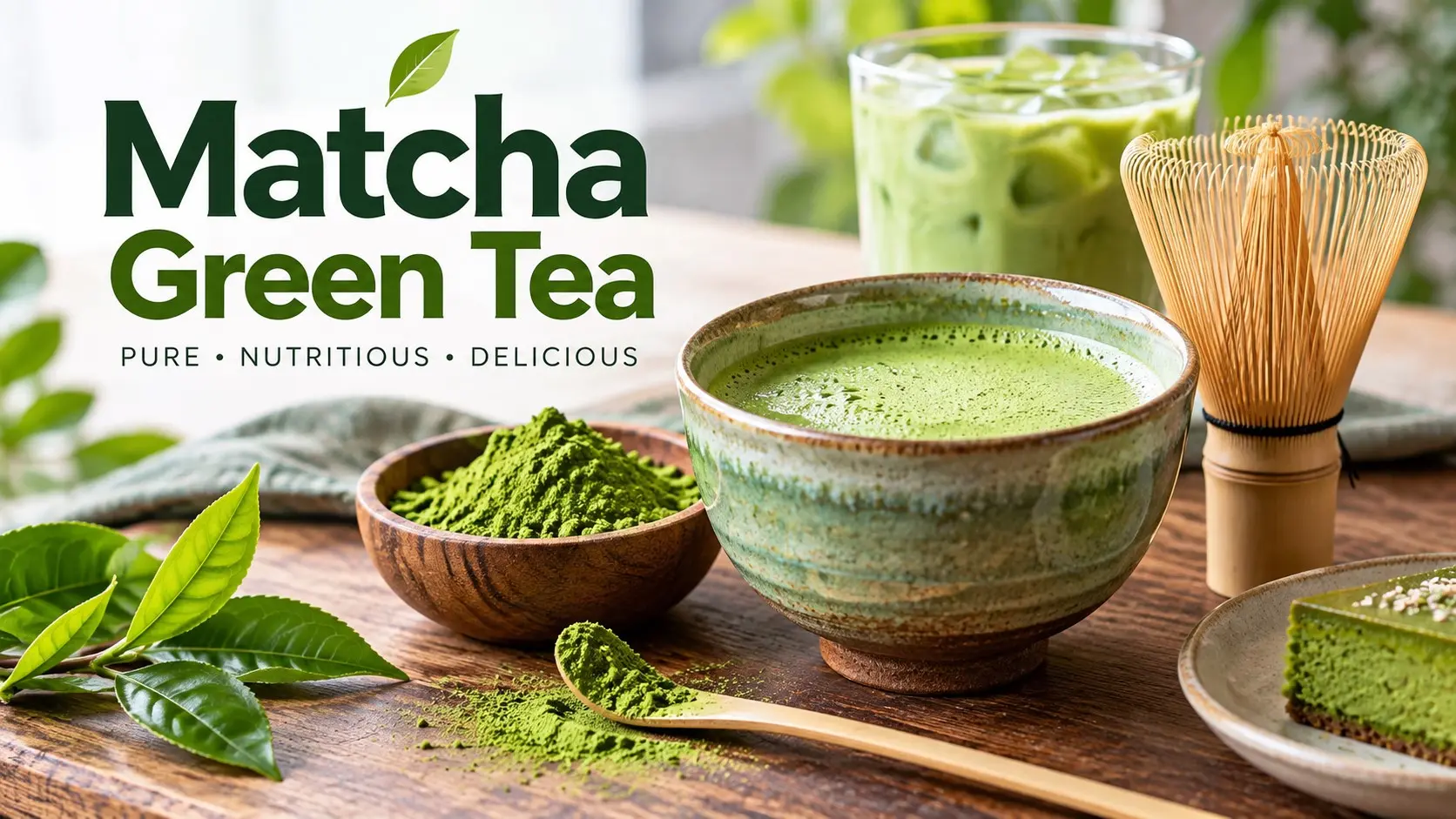
Matcha Green Tea is powdered green tea.
It comes from the same plant used to make other true teas:
Camellia sinensis.
But the growing and processing methods are different.
Tea plants used for traditional matcha are shaded before harvest.
The leaves are then processed into tencha.
Stems and veins are removed.
The remaining leaf material is ground into a very fine green powder.
Why shade the tea plants?
Shading changes the chemistry of the leaf.
It can increase compounds such as:
- Chlorophyll
- L theanine
- Other amino acids
These changes help create matcha's:
- Deep green color
- Soft vegetal flavor
- Sweet notes
- Umami
Is matcha the same as normal green tea?
No.
They come from the same tea plant.
But you consume them differently.
Normal green tea
You steep the leaves in water.
Then you remove them.
Matcha
You whisk the fine leaf powder into water.
You drink the suspended powder.
This means you consume both water soluble compounds and some components that remain in the leaf material.
That does not automatically mean matcha has stronger health effects.
It means the exposure is different.
What does matcha taste like?
Good matcha should not taste like bitter lawn clippings.
It usually has a mix of:
- Umami
- Fresh vegetal notes
- Mild sweetness
- Soft bitterness
- A little astringency
- A creamy feeling when whisked well
Low quality or stale matcha can taste:
- Harsh
- Flat
- Very bitter
- Dusty
- Overly astringent
For a complete flavor guide, read What Does Matcha Taste Like?.
9 evidence aware Matcha Green Tea benefits and facts
1. Matcha provides tea catechins including EGCG
Matcha contains green tea catechins.
The best known is:
Epigallocatechin gallate or EGCG.
Other catechins include:
- Epicatechin
- Epicatechin gallate
- Epigallocatechin
These are plant polyphenols.
They can take part in antioxidant and cell signaling processes.
This is why matcha is often called an antioxidant rich tea.
But antioxidant does not mean disease cure
This is important.
A food can contain antioxidant compounds without being proven to prevent:
- Cancer
- Dementia
- Heart attacks
- Diabetes
- Aging
Human health is more complicated than a laboratory antioxidant test.
Current matcha research is promising.
It is still limited.
2. Matcha provides L theanine
L theanine is an amino acid naturally found in tea.
Shading the tea plants before harvest helps preserve higher amounts of theanine.
L theanine is one reason good matcha has a smoother and more savory taste.
Researchers also study it for effects on:
- Attention
- Stress response
- Relaxation
- Cognition
Matcha gives you L theanine together with caffeine.
That combination is one reason researchers are interested in matcha and mental performance.
3. Caffeine can increase alertness
Matcha contains caffeine.
It is not caffeine free.
Caffeine is a stimulant.
It can improve alertness and attention for many people.
FDA says up to about 400 mg of caffeine per day is not generally associated with negative effects for most healthy adults.
That number is not a target.
Some people feel uncomfortable with much less.
How much caffeine is in matcha?
The amount varies widely.
Research samples have found roughly 19 to 44 mg of caffeine per gram of matcha.
That means a 2 gram serving could contain roughly:
38 to 89 mg of caffeine.
This is only a rough range.
Your product can be different.
Caffeine changes with:
- Tea variety
- Harvest
- Growing conditions
- Powder amount
- Product quality
If your package lists caffeine, use that number.
4. Matcha may support attention during stress
This is one of the more interesting matcha specific findings.
A randomized trial in young adults gave participants about 2 grams of matcha per day for two weeks.
After a mild psychological stress task, the matcha group performed better on some attention measures.
Other cognitive outcomes did not clearly improve.
So I would not say:
Matcha makes you smarter.
A better summary is:
Matcha may modestly support selected attention measures in some situations.
5. Longer term cognitive research is promising but mixed
A 2024 randomized controlled trial followed 99 older adults with subjective cognitive decline or mild cognitive impairment.
Participants received about 2 grams of matcha or placebo daily for 12 months.
Matcha improved one measure related to recognizing facial emotions.
It did not produce broad improvements across every cognitive outcome.
This is useful research.
It is not evidence that matcha prevents dementia.
The 2026 research picture
A 2026 review of matcha research concluded that:
- Matcha contains many biologically active compounds
- Some human studies report promising effects
- The studies use different doses and methods
- More well designed long term clinical trials are needed
That is the balanced position.
6. Matcha may influence stress response
Researchers have studied matcha for stress support.
The interest comes mainly from the combination of:
- L theanine
- Caffeine
- Catechins
Some small studies have reported improvements in selected stress related measures.
That does not make matcha an anxiety treatment.
Chronic stress may require changes in:
- Sleep
- Workload
- Exercise
- Mental health care
- Medication when appropriate
A drink cannot remove the source of stress.
7. Plain matcha can replace a sugary drink
This may be the most practical benefit.
Plain matcha contains almost no added sugar unless you put sugar in it.
A simple cup can contain:
- Matcha powder
- Water
That is it.
A matcha latte can also fit a healthy diet.
But café versions can contain:
- Sugar syrup
- Sweetened milk
- Flavored creamer
- Whipped toppings
The word matcha does not cancel those ingredients.
A better matcha latte
Try:
- 1 to 2 grams matcha
- A small amount of warm water
- Plain dairy milk or unsweetened fortified plant milk
- Cinnamon if you like it
Add only as much sweetener as you actually need.
8. Matcha is not a strong weight loss treatment
This claim needs a reset.
Green tea catechins and caffeine have been studied for weight management.
NCCIH says the effect on body weight appears to be modest.
Much of that research involves:
- Green tea extracts
- Catechin supplements
- Green tea beverages
It does not prove ordinary matcha causes major weight loss.
Matcha does not burn belly fat by itself
You can drink matcha while losing weight.
You can also drink matcha while gaining weight.
The result depends much more on:
- Total food intake
- Activity
- Protein
- Fiber
- Sleep
- Health conditions
- Medication
A sweet matcha drink with 400 calories is still a 400 calorie drink.
For a stronger weight strategy, visit the Weight Loss and Metabolism Hub.
9. Matcha beverage safety is very different from green tea extract safety
This is the safety point I would remember.
NCCIH reports no safety concerns for green tea consumed as a beverage by adults in moderate amounts.
Green tea still contains caffeine.
Concentrated green tea extract supplements are different.
Why extracts deserve more caution
Rare liver injury has been reported with concentrated green tea extracts.
EFSA found that supplement doses providing about:
800 mg EGCG per day
may be associated with early signs of liver injury.
EFSA did not identify the same concern with ordinary green tea infusions.
This does not mean every green tea supplement damages the liver.
It means concentrated extracts should not be treated as if they were simply a cup of tea.
Matcha versus coffee
Neither automatically wins.
| Feature | Matcha | Coffee |
|---|---|---|
| Caffeine | Moderate but variable | Usually higher per typical serving |
| L theanine | Yes | No meaningful amount |
| Catechins | Rich source | Not a major source |
| Chlorogenic acids | Some | Rich source |
| Calories plain | Very low | Very low |
| Main issue | Caffeine and bitterness | Caffeine and individual tolerance |
If coffee makes you jittery, matcha may feel different because the dose can be lower.
But that is individual.
Do not assume L theanine completely cancels caffeine.
Does matcha give smoother energy than coffee?
People often describe it that way.
There is a plausible reason.
Matcha contains both:
- Caffeine
- L theanine
The combination has been studied for attention and cognitive performance.
But the phrase “clean energy” is marketing language.
Caffeine is still caffeine.
If you are sensitive, matcha can still cause:
- Jitters
- Palpitations
- Anxiety
- Insomnia
- Stomach upset
Does matcha detox your body?
No special detox has been proven.
Your body already has organs that handle waste and metabolism.
These include your:
- Liver
- Kidneys
- Lungs
- Digestive system
Matcha can be a nutritious beverage.
That is enough.
You do not need detox language to make it valuable.
Does matcha prevent cancer?
There is not enough evidence to say that.
NCCIH states that studies of green tea and cancer in people have produced inconsistent results.
Matcha contains compounds that researchers study in cells and animals.
Cell studies do not prove cancer prevention in humans.
Do not use matcha instead of:
- Screening
- Vaccination
- Medical treatment
- Smoking cessation
- Other proven cancer prevention strategies
Is matcha good for heart health?
Green tea research is encouraging in some areas.
NCCIH reports that green tea products can produce a small reduction in:
- Total cholesterol
- LDL cholesterol
Much of that research studied green tea extracts rather than matcha specifically.
That distinction matters.
I would say matcha can fit a heart healthy eating pattern.
I would not call it cholesterol medicine.
Can Matcha Green Tea lower blood pressure?
Green tea research has found small blood pressure effects in some groups.
Direct matcha evidence is much thinner.
Matcha also contains caffeine.
Caffeine can temporarily raise blood pressure in some people.
If you have hypertension, do not replace your treatment with matcha.
See the High Blood Pressure Guide for the bigger picture.
Is matcha good for blood sugar?
Tea catechins are being studied for glucose metabolism.
But matcha is not a diabetes treatment.
The biggest practical issue is usually the recipe.
Plain matcha
Very little sugar.
Sweet matcha latte
Can contain a lot of sugar.
If blood glucose matters for you, check:
- Serving size
- Added sugar
- Syrups
- Sweetened milk
Is matcha good for the gut?
Matcha contains polyphenols and some leaf material.
Researchers are studying how tea compounds interact with gut microbes.
That does not make matcha a probiotic.
A strong gut eating pattern still relies on:
- Vegetables
- Fruit
- Whole grains
- Beans
- Lentils
- Nuts
- Seeds
- Fermented foods when tolerated
For meal ideas, see Recipes for Healthy Gut.
Is Matcha Green Tea good for sleep?
This is complicated.
L theanine is often associated with relaxation.
Matcha also contains caffeine.
A 2024 clinical trial did not show clear objective sleep improvements from matcha.
Some subjective measures were more promising.
The evidence is not strong enough to use matcha as insomnia treatment.
Timing matters
If you are sensitive to caffeine, try to avoid matcha late in the day.
The FDA notes that caffeine can cause:
- Insomnia
- Sleep disruption
- Anxiety
- Jitters
Your response matters more than a social media claim that matcha is calming.
How to make Matcha Green Tea properly
You do not need an elaborate ceremony.
A bowl and whisk help.
A mug and small whisk can work too.
Simple traditional style matcha
You need:
- 1 to 2 grams matcha powder
- About 60 to 80 mL warm water
- A small whisk
Step 1. Sift the matcha
This removes lumps.
It makes whisking easier.
Step 2. Avoid boiling water
Water around 70 to 80°C works well for many matcha powders.
Very hot water can make the taste harsher and more bitter.
Step 3. Add a small amount of water
Do not fill the entire bowl.
Step 4. Whisk quickly
Use a fast back and forth movement.
A thin layer of foam should form.
Step 5. Drink soon
Matcha powder can settle.
A quick swirl before the last sip is normal.
How to make an easy Matcha Green Tea latte
You need:
- 1 to 2 grams matcha
- 60 mL warm water
- 150 to 200 mL plain milk or unsweetened plant milk
- Optional small amount of sweetener
Method:
- Sift the matcha.
- Whisk with warm water.
- Add warmed or cold milk.
- Taste before adding sweetener.
That last step saves a surprising amount of sugar.
Is ceremonial grade matcha healthier?
Not automatically.
Ceremonial grade matcha is commonly used as a quality and marketing term for matcha intended to be whisked and drunk plain.
It often has:
- Brighter color
- Smoother flavor
- More umami
- Less harsh bitterness
But the phrase does not guarantee a specific:
- EGCG level
- Caffeine dose
- L theanine amount
- Health outcome
Buy it because you enjoy the quality.
Do not buy it because the word ceremonial sounds medicinal.
What is culinary grade matcha?
Culinary grade matcha is usually stronger and more bitter.
It is designed to stand up to other ingredients.
It works well in:
- Smoothies
- Oatmeal
- Yogurt
- Baking
- Matcha lattes
It is not automatically unhealthy.
How do you recognize good matcha?
Quality varies.
I look at five things.
1. Color
Good matcha is usually vivid green.
Dull olive or brown tones can suggest:
- Age
- Oxidation
- Lower quality leaf material
2. Aroma
Fresh matcha should smell:
- Green
- Fresh
- Vegetal
- Slightly sweet
3. Texture
It should feel very fine.
4. Flavor
Good matcha balances:
- Umami
- Sweetness
- Vegetal notes
- Moderate bitterness
5. Packaging
Light, oxygen, moisture, and heat can reduce quality.
A well sealed opaque container is useful.
How should you store matcha?
Matcha is delicate.
After opening:
- Close the container tightly
- Keep it dry
- Protect it from light
- Protect it from heat
- Use it while it still tastes fresh
If you refrigerate matcha, keep it tightly sealed.
Let the container warm before opening it.
This can reduce condensation entering the powder.
How much matcha should you drink?
There is no official daily matcha requirement.
A common food serving uses about:
1 to 2 grams of powder.
For many healthy adults, one serving can fit easily into the day.
Some people tolerate more.
Some tolerate less.
The main limit is often caffeine.
Count your total caffeine
Do not count only matcha.
Add:
- Coffee
- Other tea
- Energy drinks
- Cola
- Chocolate
- Pre workout supplements
- Caffeine medicines
FDA cites 400 mg per day as an amount not generally associated with negative effects for most healthy adults.
Some people need much less.
Who should be more careful with matcha?
Extra caution makes sense if you:
- Are very sensitive to caffeine
- Have frequent palpitations
- Have uncontrolled anxiety
- Have severe insomnia
- Are pregnant
- Are breastfeeding
- Take medicines that may interact with green tea
- Have a liver disorder and are considering green tea extracts
Matcha during pregnancy
Matcha contains caffeine.
Pregnancy changes caffeine advice.
If you are pregnant or trying to become pregnant, count matcha as part of your total caffeine intake.
Discuss your intake with your prenatal healthcare professional.
Can Matcha Green Tea interact with medicines?
Yes.
Green tea and concentrated extracts can interact with some medicines.
NCCIH specifically notes interactions involving:
- Nadolol
- Atorvastatin
- Raloxifene
Other interactions are possible.
If you take prescription medicine every day, ask your pharmacist before using large amounts of matcha or any concentrated green tea extract.
Can matcha cause liver damage?
Ordinary green tea beverage use and concentrated extracts should not be treated as the same exposure.
Liver injury reports are much more strongly associated with:
concentrated green tea extracts.
EFSA considers ordinary green tea infusions generally safe.
Supplement doses around 800 mg EGCG per day have been linked with early signs of liver injury in some research.
Matcha is not an EGCG pill
A normal bowl of matcha is food.
A concentrated catechin capsule can deliver much higher doses.
Do not assume that because both came from tea leaves, their safety profile is identical.
Does matcha stain teeth?
Tea can contribute to surface staining.
Matcha contains plant pigments and tannin like polyphenols.
Simple habits can help:
- Drink water afterward
- Maintain normal brushing
- Get routine dental care
You do not need to brush immediately after every cup.
Can matcha upset your stomach?
It can.
Possible symptoms include:
- Nausea
- Stomach discomfort
- Reflux
- Jitters
Some people tolerate matcha better with food.
If it repeatedly makes you feel bad, reduce the amount.
Can matcha reduce iron absorption?
Tea polyphenols can reduce absorption of nonheme iron from plant foods when consumed with the meal.
This matters more if you:
- Have iron deficiency
- Have iron deficiency anemia
- Eat mostly plant based iron
If your clinician has told you to improve iron absorption, you may be advised to separate tea from iron rich meals or supplements.
Best foods to pair with matcha
Matcha works well with simple foods.
Breakfast
- Oatmeal
- Plain yogurt
- Eggs
- Whole grain toast
- Fruit
Snacks
- Nuts
- Fruit
- Plain yogurt
- Whole grain crackers
For complete meal ideas, see Healthy Breakfast Foods.
5 easy ways to use Matcha Green Tea
1. Traditional whisked matcha
Matcha plus warm water.
Simple.
2. Matcha latte
Add plain milk or unsweetened fortified plant milk.
3. Matcha oatmeal
Stir a small amount into cooked oats.
4. Matcha yogurt
Mix matcha into plain yogurt with berries.
5. Matcha smoothie
Blend a small amount with fruit, milk, yogurt, and ice.
Avoid turning every matcha recipe into a sugar delivery system.
Common Matcha Green Tea myths
Myth 1. Matcha detoxes your liver
No special detox effect has been proven.
Myth 2. Matcha burns belly fat
Weight effects from green tea products are modest at best.
Myth 3. Matcha prevents cancer
Human evidence is not strong enough for that claim.
Myth 4. Matcha has no caffeine
It contains meaningful caffeine.
Myth 5. L theanine cancels caffeine
No.
You can still experience caffeine side effects.
Myth 6. Ceremonial grade means medically superior
It mainly refers to intended quality and drinking experience.
Myth 7. More matcha is better
More caffeine and catechins are not automatically better.
How I approach Matcha Green Tea research
At NextFitLife, I separate the tea from the marketing around the tea.
This guide considers evidence on:
- Matcha powder
- Green tea catechins
- EGCG
- L theanine
- Caffeine
- Attention
- Stress response
- Cognitive function
- Sleep
- Weight loss claims
- Green tea extract safety
- Liver injury
- Medication interactions
- Ceremonial grade matcha
- Culinary grade matcha
The evidence tells a fairly simple story.
Matcha is an interesting tea.
Its combination of caffeine, L theanine, catechins, and whole leaf material makes it different from ordinary brewed green tea.
Small human trials suggest possible benefits for selected aspects of attention and stress related performance.
But the direct human research is still much smaller than the marketing industry around matcha.
That distinction matters.
Conclusion
Matcha Green Tea can be a smart beverage when you enjoy the taste and tolerate caffeine.
It provides catechins, EGCG, L theanine, caffeine, chlorophyll, and other tea compounds.
Human research on attention and cognition is promising but still limited.
Plain matcha can also be a useful alternative to a sugary drink.
Just do not turn it into a detox cure, weight loss drug, or cancer treatment.
Your next step: start with 1 to 2 grams of Matcha Green Tea whisked into warm, not boiling, water. Taste it before adding sugar. Then notice how your body responds to the caffeine before making it an everyday habit.
References and Sources
These sources are open and clickable so readers can check the original evidence.
- National Center for Complementary and Integrative Health
Green Tea Usefulness and Safety
https://www.nccih.nih.gov/health/green-tea
Used for current green tea evidence, weight management, cholesterol, beverage safety, caffeine, concentrated extract liver concerns, pregnancy information, and medication interactions. - U.S. Food and Drug Administration
Spilling the Beans How Much Caffeine Is Too Much?
https://www.fda.gov/consumers/consumer-updates/spilling-beans-how-much-caffeine-too-much
Used for the FDA's current 400 mg daily caffeine reference for most healthy adults and common symptoms of excessive caffeine intake. - European Food Safety Authority
Safety of Green Tea Catechins
https://www.efsa.europa.eu/en/press/news/180418
Used for the distinction between green tea beverages and concentrated supplements and the finding that supplemental EGCG intakes around 800 mg per day may be associated with early signs of liver injury. - Peer Reviewed Open Access Review
Matcha as a Source of Bioactive Compounds 2026 Review
https://pmc.ncbi.nlm.nih.gov/articles/PMC13209849/
Used for the latest 2026 review of matcha cultivation, catechins, caffeine, L theanine, composition, human trials, metabolic research, and the need for more long term clinical evidence. - PubMed
Effect of Matcha Green Tea on Cognitive Functions and Sleep Quality in Older Adults
https://pubmed.ncbi.nlm.nih.gov/39213264/
Used for the 12 month randomized controlled trial studying 2 grams of matcha daily in older adults with subjective cognitive decline or mild cognitive impairment.
Explore More on NextFitLife
What Does Matcha Taste Like?
Foods and Nutrition Hub
Nutrition and Vitamins Hub
Healthy Breakfast Foods
Weight Loss and Metabolism Hub
High Blood Pressure Guide
Recipes for Healthy Gut
Cacao Powder
General Wellness and Healthy Lifestyle Hub
About the Author
Bahaa Adel
Founder and Lead Writer at NextFitLife
Bahaa Adel is the founder and lead writer of NextFitLife, an independent educational website focused on nutrition, fitness, food, wellness, healthy aging, and practical lifestyle information.
For food and supplement articles, Bahaa compares current public health guidance with peer reviewed research before turning the evidence into simple everyday advice.
The goal is not to make ordinary foods sound medicinal.
It is to explain what we know.
What looks promising.
And what has been exaggerated.
That approach matters with matcha.
Matcha contains real bioactive compounds and has promising human research.
But the evidence is not strong enough to support every claim attached to the word superfood.
This content is for general educational purposes and does not replace professional medical advice, diagnosis, or treatment. Consult an appropriately qualified healthcare professional for personal medical concerns. This article explains published guidance and does not provide a personal clinical assessment. Always consult qualified medical professionals for diagnosis and treatment of any health condition.
Learn more about Bahaa Adel and NextFitLife
Frequently Asked Questions
What is Matcha Green Tea?
Matcha is finely ground green tea made from specially grown and processed Camellia sinensis leaves. The powder is whisked into water, so you consume suspended leaf material rather than discarding the leaves after brewing.
What are the main Matcha Green Tea benefits?
Matcha provides catechins such as EGCG, L theanine, caffeine, chlorophyll, and other tea compounds. Small human trials suggest possible benefits for selected measures of attention and stress related performance, but more research is needed.
Does matcha contain caffeine?
Yes. Matcha can contain meaningful amounts of caffeine. Research samples have ranged roughly from 19 to 44 mg per gram, although individual products vary.
How much caffeine is in 2 grams of matcha?
Based on published composition ranges, 2 grams could provide roughly 38 to 89 mg of caffeine. The actual amount depends on the product.
Is matcha healthier than normal green tea?
Not automatically. Matcha is consumed as suspended leaf powder, so the exposure to tea compounds differs from brewed green tea. Direct evidence proving that matcha produces better long term health outcomes is still limited.
Does matcha help you focus?
Small randomized trials suggest matcha may improve selected attention measures, especially during mild stress. Caffeine and L theanine may both contribute.
Does matcha reduce stress?
Some small studies report promising effects on stress related measures, but matcha is not a treatment for chronic anxiety or significant psychological stress.
Does matcha help you lose weight?
Green tea catechins and caffeine may have a modest effect on body weight, but matcha does not cause major weight loss by itself and does not specifically burn belly fat.
Does matcha detox your body?
No special detox effect has been proven. Your liver, kidneys, lungs, and digestive system already handle waste and metabolism.
Does matcha prevent cancer?
Current human evidence is not strong enough to say that matcha prevents cancer. Studies of green tea and cancer have produced inconsistent results.
Is matcha good for cholesterol?
Green tea products can modestly reduce total and LDL cholesterol in some studies, but much of the evidence involves green tea extracts rather than matcha specifically.
Is Matcha Green Tea good for sleep?
Matcha contains L theanine but also caffeine. Current human evidence does not establish matcha as an insomnia treatment, and late use can worsen sleep in caffeine sensitive people.
Is matcha better than coffee?
Neither is universally better. Matcha often provides less caffeine per serving and contains L theanine and catechins, while coffee contains its own beneficial plant compounds. Personal tolerance and preference matter.
What does matcha taste like?
Good matcha tastes vegetal, mildly sweet, slightly bitter, creamy, and rich in umami. Poor quality or stale matcha can taste harsh, dusty, or very bitter.
What is ceremonial grade matcha?
Ceremonial grade is commonly used for matcha intended to be whisked and enjoyed plain. It often has smoother flavor and stronger umami, but the term does not guarantee specific health benefits.
What is culinary grade matcha?
Culinary matcha is generally stronger and more bitter, making it useful for lattes, smoothies, oatmeal, and baking.
How much matcha should I use?
A common serving uses about 1 to 2 grams of powder. There is no official daily matcha requirement, so intake should also consider caffeine tolerance.
Can matcha cause liver damage?
Liver injury reports are mainly associated with concentrated green tea extract supplements rather than normal tea beverages. High dose EGCG supplements deserve much more caution than an ordinary cup of matcha.
Can matcha interact with medicines?
Yes. Green tea and extracts can interact with medicines including nadolol, atorvastatin, and raloxifene. Ask a pharmacist if you use prescription medicine regularly.
Can pregnant women drink matcha?
Matcha contains caffeine, so it should count toward total pregnancy caffeine intake. Pregnant or breastfeeding people should discuss appropriate caffeine limits with their healthcare professional.
Can matcha reduce iron absorption?
Tea polyphenols can reduce absorption of nonheme iron when consumed with meals. This may matter more for people with iron deficiency or diets relying heavily on plant based iron.

Health & wellness writer with 30+ years of experience in nutrition, fitness, and healthy aging. Founder of NextFitLife.com — evidence-based health guidance.