Published: Jun 23, 2023
Last Updated: October 2, 2026
Written and Source Checked by: Adel Galal, Founder and Lead Writer of NextFitLife
Medical Review Status: This article has not been formally reviewed by a physician, ear nose and throat specialist, audiologist, or another licensed healthcare professional.
Do you hear a tiny pop, click, or crackle in your ear each time you swallow?
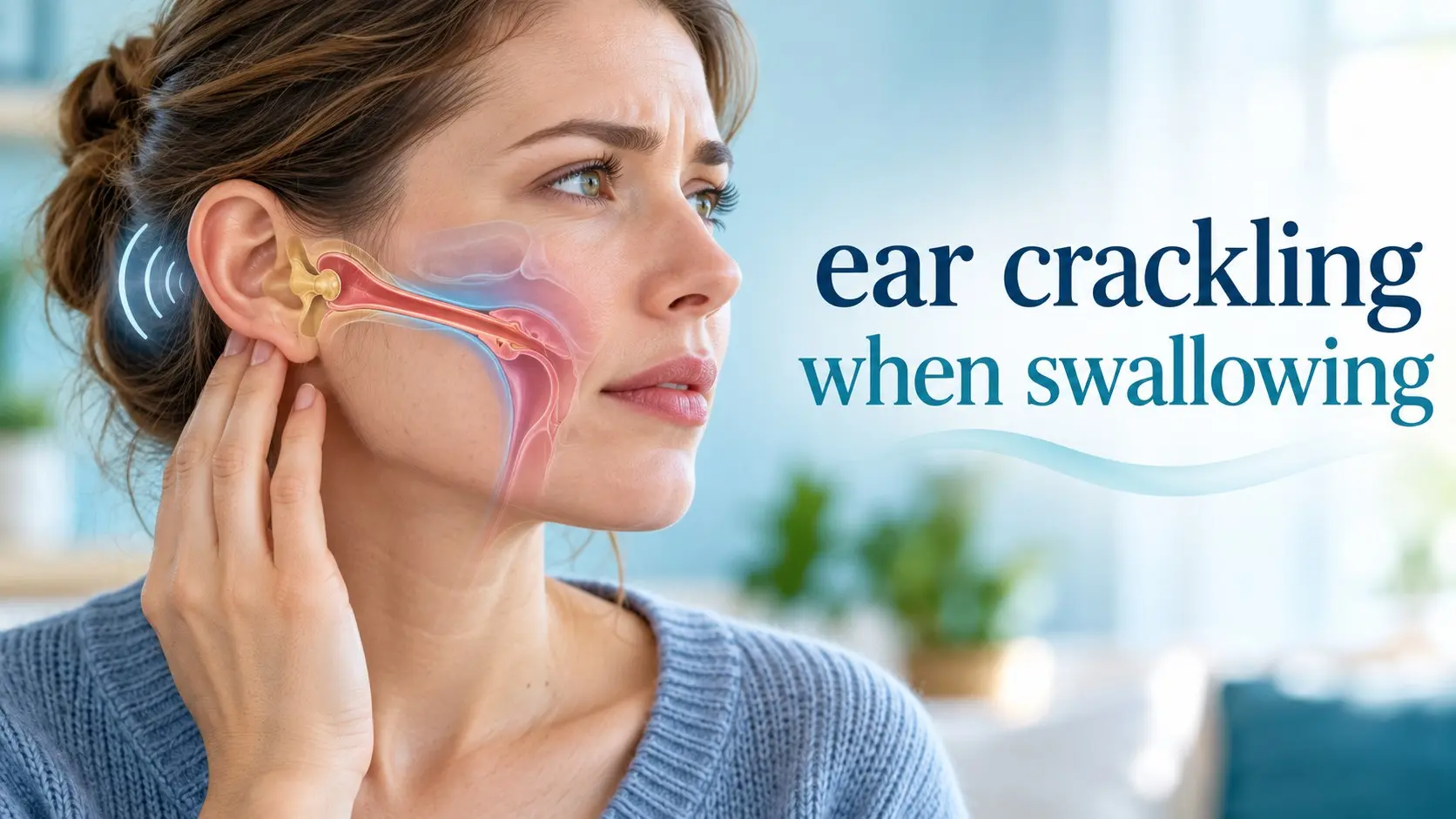
It can sound strange, but it is not always a sign that something is wrong. Swallowing normally helps open a small passage called the Eustachian tube. That tube moves air between the middle ear and the area behind your nose and throat, which helps keep pressure balanced.
For that reason, an occasional soft ear crackling sound can be normal. It becomes more important when the sound keeps happening, feels uncomfortable, blocks your hearing, or comes with pain, drainage, dizziness, or a sudden change in hearing.
Quick answer: Ear crackling when swallowing often happens when the Eustachian tube opens to balance pressure. Colds, allergies, Eustachian tube dysfunction, middle ear fluid, earwax, jaw problems, and pressure changes can make the sound more noticeable. Mild crackling without pain or hearing loss is often temporary, but persistent symptoms deserve a proper ear check.
For more plain language guides on common symptoms and everyday health concerns, visit the NextFitLife Health Hub.
Medical note: I am not a dermatologist or A doctor, and this content does not replace professional medical advice. What I share comes from real-life experience, extensive research, and consultation with healthcare providers. Always consult qualified medical professionals for diagnosis and treatment of any health condition.
Table of Contents
- Is ear crackling when swallowing normal?
- Why swallowing makes the ear pop
- 9 common causes
- What your symptoms may suggest
- How to relieve mild ear crackling safely
- What not to do
- Why only one ear may crackle
- Ear crackling after a cold or allergy
- Ear crackling during flights
- How doctors find the cause
- Treatment by cause
- When to seek medical care
- How to lower the chance of future problems
- References and Sources
- Related NextFitLife guides
- About the author
- Frequently asked questions
Is Ear Crackling When Swallowing Normal?
Sometimes, yes.
Your Eustachian tubes are narrow passages that connect each middle ear with the back of the nose and throat. Most of the time, they stay closed. They briefly open when you swallow, yawn, or chew.
That opening lets air move and helps balance pressure on both sides of the eardrum. You may hear a light pop or click when this happens.
A soft sound that happens now and then, with no pain, hearing change, dizziness, or blocked feeling, is often part of normal pressure control.
Repeated popping ears when swallowing can be different. If the ear also feels blocked or your hearing sounds dull, the Eustachian tube may not be working normally.
Why Does Swallowing Make the Ear Crackle?
Think of the Eustachian tube as a small pressure valve.
When you swallow, muscles in the throat pull this valve open for a moment. Air can then enter or leave the middle ear. This keeps the pressure behind your eardrum close to the surrounding pressure.
You may notice this action more when you have a cold, allergy, sinus swelling, or a recent flight because pressure is harder to balance.
This is why the sound often seems to come from deep inside the ear rather than the outer ear canal.
9 Causes of Ear Crackling When Swallowing
1. Normal Eustachian Tube Opening
The first cause is not really a disease.
A small pop or crackle can simply be the sound of the Eustachian tube opening as you swallow. Many people notice the same feeling when they yawn or chew.
This is more likely to be normal when:
- The sound is mild.
- It happens only sometimes.
- There is no ear pain.
- Your hearing stays normal.
- There is no drainage or dizziness.
If those points fit your experience, you may only be hearing your ear's normal pressure system at work.
2. Eustachian Tube Dysfunction
Eustachian tube dysfunction, often called ETD, happens when the tube does not open or close as it should.
Obstructive ETD can make the ear feel blocked because air and fluid do not move normally. You may notice ear pressure, fullness, popping, crackling, mild pain, or muffled hearing.
Some people notice it most while swallowing because the tube tries to open each time.
There is also a less common form in which the tube stays too open. In that case, a person may hear their own voice or breathing unusually loudly.
This difference matters because treatment is not the same for every form of ETD.
3. Colds, Allergies, and Nasal Congestion
A cold or allergy can make the tissue around the Eustachian tube swell. Thick mucus may also make pressure control more difficult.
This can cause ear congestion, popping, a blocked feeling, or dull hearing.
You may also have:
- A stuffy or runny nose
- Sneezing
- A sore throat
- Sinus pressure
- Cough
The ear noise often improves as the nasal swelling settles, although the ear may take longer than the nose to feel fully normal.
For more educational guides about infections and immune related symptoms, visit the Infections and Immune Health Hub.
4. Middle Ear Fluid
Middle ear fluid can collect behind the eardrum when the Eustachian tube does not drain well.
The fluid may remain after a cold or an ear infection. It can cause bubbling, popping, crackling, pressure, or dull hearing.
Useful distinction: Middle ear fluid is not the same as water trapped in the ear after swimming. Swimming water normally sits in the outer ear canal. Middle ear fluid is behind the eardrum.
If swimming or showering is the problem, see our guide on how to get water out of your ear safely.
5. Middle Ear Infection
A middle ear infection can cause fluid and inflammation behind the eardrum. That may create pressure, popping, or crackling.
Other symptoms may include:
- Ear pain
- Reduced hearing
- A feeling of pressure
- Fever in some cases
- Fluid draining from the ear if the eardrum opens
Do not assume every crackling ear needs antibiotics. Many causes are not bacterial infections, and treatment depends on what an examination shows.
6. Pressure Changes and Ear Barotrauma
Flying, diving, or driving through large altitude changes can create a pressure difference across the eardrum.
Your Eustachian tube normally fixes this by opening when you swallow or yawn. If it cannot keep up, you may feel pressure in the ears, popping, pain, or temporary hearing changes.
This is called ear barotrauma when pressure causes discomfort or injury.
Colds and allergies can raise the risk because they make it harder for the tube to open.
7. Earwax Buildup
Earwax is normal and useful. It protects the ear canal.
Too much wax can sometimes cause a plugged feeling, reduced hearing, tinnitus, itching, or unusual ear noises. Jaw movement during chewing or swallowing may also make the sound seem more obvious.
Do not push cotton swabs, hairpins, or other objects into the canal. They can move wax deeper and may injure the eardrum.
8. TMJ and Jaw Problems
Your temporomandibular joint sits just in front of the ear. This is the joint that moves when you speak, chew, or yawn.
A TMJ disorder can cause clicking or popping that feels as if it is coming from the ear.
Clues include:
- Jaw pain
- A click when opening the mouth
- Jaw stiffness
- Pain while chewing
- Morning jaw soreness
- Teeth grinding or clenching
If moving the jaw changes the sound more than swallowing alone, a jaw problem becomes more likely.
You can explore related symptom education in the Pain Management and Conditions Hub.
9. Middle Ear Muscle Spasms
A much less common cause is called middle ear myoclonus.
Tiny muscles inside the middle ear can contract without you meaning to move them. This may create repeated clicking, crackling, fluttering, buzzing, or thumping.
The sound may be rhythmic and may appear even when you are not swallowing.
This cause is rare. Persistent rhythmic clicking should be assessed rather than diagnosed at home.
What Do Your Symptoms Suggest?
No single symptom can prove the cause, but the pattern can give useful clues.
| What You Notice | Possible Explanation | What to Do Next |
|---|---|---|
| Brief soft pop only when swallowing or yawning | Normal Eustachian tube opening | Usually observe if there are no other symptoms |
| Crackling with fullness and dull hearing | Eustachian tube dysfunction or middle ear fluid | Use gentle pressure care and arrange an exam if it persists |
| Crackling after a cold with nasal blockage | Temporary Eustachian tube swelling | Manage the nasal problem safely and monitor the ear |
| Pain, fever, or ear drainage | Possible infection or eardrum problem | Seek medical assessment |
| Symptoms during flying or diving | Pressure related Eustachian tube trouble | Equalize gently and seek care for severe symptoms |
| Blocked feeling with wax visible near the canal opening | Earwax buildup | Avoid objects and ask about safe wax removal |
| Clicking with jaw pain or chewing | TMJ disorder | Consider dental or medical assessment if persistent |
| Repeated rhythmic clicking even at rest | Rare middle ear muscle movement | Arrange an ear assessment |
| Sudden major hearing change | Needs urgent evaluation | Seek urgent medical care rather than assuming it is wax or congestion |
How Can You Relieve Mild Ear Crackling Safely?
If symptoms are mild and there are no warning signs, a few simple actions may help the Eustachian tube open.
1. Swallow Normally
Take small sips of water and swallow normally. Each swallow activates the muscles that help open the Eustachian tube.
2. Yawn
A gentle yawn can open the tube and help balance pressure.
You do not need to force a huge yawn. Normal movement is enough.
3. Chew
Chewing food or gum can increase swallowing and jaw movement, which may help during mild pressure changes.
4. Try Gentle Pressure Equalization
If your ear feels blocked after flying or an altitude change, close your mouth, pinch your nose, and breathe out very gently against the closed nose.
Do not blow hard.
Stop if it causes pain. Strong pressure can injure the ear rather than help it.
5. Use Saline for Nasal Congestion
A plain saline nasal spray can help moisten the nose and loosen mucus when congestion is involved.
Follow the product directions and keep spray devices clean.
6. Drink Enough Fluid
Normal hydration can help keep mucus thinner during a cold.
It is not a cure for ETD, but it is a simple part of general care when you are congested.
7. Give a Cold Time to Clear
Ear pressure may remain after the worst nasal symptoms are gone. Mild symptoms can improve as inflammation settles and the tube begins working normally again.
Persistent symptoms are different and should be checked.
Should You Take a Decongestant?
Do not assume that every blocked ear needs a decongestant.
These medicines may be useful for some people with nasal congestion, but they are not suitable for everyone. More important, Johns Hopkins notes that decongestants or antihistamines can make some forms of Eustachian tube dysfunction worse.
Your age, blood pressure, medicines, pregnancy status, and the actual type of ear problem all matter. Ask a pharmacist or healthcare professional when you are unsure.
What Should You Not Do for Ear Crackling?
Trying too hard to clear the ear can cause a new problem.
Avoid These Common Mistakes
- Do not forcefully blow your ears open.
- Do not put cotton swabs deep into the ear canal.
- Do not use hairpins, keys, or other objects to remove wax.
- Do not use ear candles.
- Do not start antibiotics without a diagnosis.
- Do not pour homemade mixtures into an ear that is painful or draining.
- Do not use random ear drops if you may have a hole in the eardrum or ear tubes unless a healthcare professional confirms they are safe.
- Do not keep diving if you cannot equalize pressure comfortably.
If you have blood coming from the ear, see our guide to ear bleeding, first aid, and warning signs.
Why Does Only One Ear Crackle When I Swallow?
The two Eustachian tubes do not always behave in the same way.
One side may be more swollen after a cold, hold more fluid, contain more wax, or have a different pressure problem. Jaw symptoms can also be stronger on one side.
Short lived one sided symptoms are not automatically dangerous. However, persistent one sided symptoms deserve more attention if they come with hearing loss, pain, ringing, dizziness, or drainage.
Why Does My Ear Crackle After a Cold?
A cold can swell the nose and the opening of the Eustachian tube.
While the tube is swollen, pressure may not move freely. Fluid may also stay behind the eardrum for a while.
As the tube begins to reopen, you may notice pops or crackles during swallowing. This may continue after your nose feels better because the middle ear needs more time to return to normal.
If the muffled hearing or blocked feeling does not improve, an ear examination can check for fluid, wax, infection, or another cause.
Can Allergies Cause Ear Crackling?
Yes. Nasal allergies can inflame tissue around the Eustachian tube.
That may cause pressure, fullness, popping, or crackling. Sneezing, an itchy nose, watery eyes, and clear nasal drainage make an allergy trigger more likely.
Treat the allergy itself with advice that fits your health history rather than using ear medicines at random.
Why Does My Ear Crackle on an Airplane?
Cabin pressure changes during takeoff and landing.
The Eustachian tubes need to open often enough to keep the middle ear pressure balanced. That is why swallowing, yawning, or chewing can make the ears pop.
If you have a cold or strong nasal congestion, equalizing may be harder.
During descent:
- Stay awake.
- Swallow often.
- Yawn gently.
- Chew gum if safe for you.
- Use only gentle pressure equalization.
Severe pain, bleeding, strong dizziness, or a hearing change after a flight needs medical assessment.
Can TMJ Cause Crackling That Feels Like It Is in the Ear?
Yes.
The jaw joint sits very close to the ear. A click from that joint can feel and sound as if it comes from inside the ear.
Try to notice what triggers the sound. If it happens when you open your mouth wide, chew, clench, or move the jaw from side to side, the jaw deserves attention.
Jaw pain, locking, stiffness, or morning soreness makes a TMJ disorder more likely.
Jaw clicking without pain or movement problems does not always need treatment, but painful or limited movement should be assessed.
How Do Doctors Find the Cause?
A clinician usually starts with the story of your symptoms and a look inside the ear.
They may ask:
- When did the crackling begin?
- Is it in one ear or both?
- Does it happen only when swallowing?
- Did it start after a cold, allergy flare, flight, or dive?
- Is your hearing different?
- Do you have pain, drainage, dizziness, or ringing?
- Does moving your jaw change the sound?
Ear Examination
An otoscope lets a healthcare professional look at the ear canal and eardrum. This may show wax, infection, fluid related changes, or an injured eardrum.
Tympanometry
Tympanometry checks how the eardrum responds to changes in air pressure.
It can help identify some middle ear pressure problems and fluid behind the eardrum.
Hearing Test
A hearing test may be useful when crackling comes with muffled hearing, ringing, or a clear change in hearing.
Learn more about health tests and what they may show in the Medical Tests and Screenings Hub.
Jaw or Nasal Examination
If the ear itself looks normal, a clinician may also check jaw movement or the nose and throat.
Imaging is not needed for every person with ear crackling. It is usually reserved for symptoms or examination findings that give a specific reason to look deeper.
Treatment Depends on the Cause
There is no single treatment that fixes every crackling ear.
| Cause | Typical Approach | Important Point |
|---|---|---|
| Normal tube opening | Usually no treatment | Watch for new symptoms |
| Eustachian tube dysfunction | Treat the type and underlying trigger | Not every form needs the same medicine |
| Cold or allergy | Manage nasal symptoms appropriately | Ask before using decongestants if you have health conditions |
| Middle ear fluid | Observation or treatment based on cause and duration | Persistent hearing problems need assessment |
| Ear infection | Treatment depends on the type and severity | Do not assume antibiotics are always needed |
| Pressure problem | Gentle equalization and medical care if severe | Never force a painful ear to pop |
| Earwax buildup | Safe wax softening or professional removal when appropriate | Avoid putting objects inside the ear |
| TMJ disorder | Jaw care based on the cause | Persistent pain or locking needs assessment |
| Middle ear muscle spasm | Specialist evaluation and individualized treatment | This is uncommon |
When Should You See a Healthcare Professional?
Arrange an appointment if the crackling:
- Keeps returning
- Lasts more than a week or two without improving
- Comes with ongoing ear fullness
- Comes with hearing changes
- Is painful
- Happens with repeated ear infections
- Occurs mainly in one ear and does not settle
- Comes with troublesome ringing or dizziness
A simple ear examination can often narrow the cause much faster than trying several home treatments.
When Is Ear Crackling Urgent?
Get prompt medical care if ear crackling comes with:
- Sudden hearing loss or a sudden major drop in hearing
- Severe ear pain
- Blood or pus from the ear
- Strong or new vertigo
- Facial weakness
- A serious head or ear injury
- Severe symptoms after diving or a major pressure change
- High fever with significant ear symptoms
Sudden hearing loss is especially important. Do not assume a sudden blocked or quiet ear is only wax, allergy, or congestion. Rapid hearing loss can be a medical emergency and should be assessed promptly.
How Can You Reduce Future Ear Crackling?
You cannot prevent every pop because normal ears are supposed to equalize pressure.
You can still lower the chance of troublesome symptoms:
- Avoid putting objects into the ear canal.
- Manage recurring allergies with appropriate medical advice.
- Swallow and yawn during airplane pressure changes.
- Avoid diving when you cannot equalize your ears comfortably.
- Do not force your ears to pop.
- Protect your ears from very loud noise.
- Get repeated hearing or pressure problems checked instead of treating them blindly.
For practical safety guidance on common health problems, visit the First Aid and Home Remedies Hub.
Conclusion
Ear crackling when swallowing is often caused by the normal opening of the Eustachian tube or a temporary pressure problem. Colds, allergies, middle ear fluid, wax, infections, jaw problems, and altitude changes can make the sound stronger or more frequent.
Start with gentle steps such as swallowing, yawning, and avoiding objects inside the ear. If the crackling keeps returning, affects your hearing, becomes painful, or comes with dizziness or drainage, arrange an ear examination. Sudden hearing loss needs urgent medical attention.
Knowing what comes with the sound is often more useful than the sound itself, so note your other symptoms and share them with a qualified healthcare professional.
References and Sources
- Johns Hopkins Medicine. Eustachian Tube Dysfunction.
Updated April 23, 2026.
https://www.hopkinsmedicine.org/health/conditions-and-diseases/eustachian-tube-dysfunction - MedlinePlus. Ear Barotrauma.
Reviewed April 29, 2026.
https://www.medlineplus.gov/ency/article/001064.htm - National Institute on Deafness and Other Communication Disorders. Sudden Deafness.
https://www.nidcd.nih.gov/health/sudden-deafness - ENT Health. Earwax Cerumen Impaction.
https://www.enthealth.org/conditions/earwax-cerumen-impaction/ - Cleveland Clinic. Middle Ear Myoclonus.
Updated January 29, 2026.
https://my.clevelandclinic.org/health/diseases/middle-ear-myoclonus
Related NextFitLife Ear and Health Guides
If you want to learn more about ear symptoms and safe care, continue with these NextFitLife guides:
- Health Hub
- How to Get Water Out of Your Ear Safely
- Ear Bleeding: Causes, First Aid, and Warning Signs
- Infected Ear Piercing: Symptoms and Safe Care
- First Aid and Home Remedies Hub
- Pain Management and Conditions Hub
- Medical Tests and Screenings Hub
About the Author
Adel Galal is the founder and lead writer of NextFitLife. He has more than 30 years of personal study and practice across health, fitness, nutrition, sleep, wellness, and healthy aging, along with more than 15 years of health and wellness writing experience.
His work focuses on turning complex health information into clear, practical language while comparing information from recognized medical and public health sources.
Adel is not a physician, ear nose and throat specialist, audiologist, pharmacist, or other licensed healthcare professional. Unless a named qualified reviewer is shown on the page, NextFitLife articles should not be considered formally medically reviewed.
Learn more about Adel, NextFitLife, and the site's editorial and medical review approach on the About Us page.
Frequently Asked Questions
Why does my ear crackle every time I swallow?
Swallowing briefly opens the Eustachian tube, so a mild pop can be normal. Repeated crackling with pressure, fullness, or dull hearing may suggest Eustachian tube dysfunction, congestion, or middle ear fluid.
Is ear crackling when swallowing dangerous?
Usually not by itself. A soft occasional pop without pain or hearing change is often harmless. Persistent crackling or symptoms with pain, drainage, dizziness, or hearing loss should be assessed.
How do I stop my ears from crackling when I swallow?
If pressure is the cause, normal swallowing, yawning, chewing, or gentle pressure equalization may help. Treatment is different when the cause is wax, infection, fluid, allergy, or a jaw problem.
Can a blocked Eustachian tube cause crackling?
Yes. A tube that does not open well can cause popping, crackling, pressure, fullness, pain, or muffled hearing.
Why does only one ear crackle?
One Eustachian tube may be more swollen or blocked than the other. One sided wax, middle ear fluid, pressure changes, or a jaw problem can also cause symptoms on one side.
Can earwax cause a crackling sound?
Earwax buildup can cause a blocked feeling, reduced hearing, ringing, and unusual ear noises. Do not insert cotton swabs or other objects to remove deep wax.
Can allergies make my ears crackle?
Yes. Allergies can cause swelling around the Eustachian tube. This can make pressure harder to balance and may lead to fullness, popping, or crackling.
Can TMJ problems cause ear crackling?
Yes. The jaw joint is very close to the ear. Jaw clicking can feel as if it comes from inside the ear, especially when it appears with chewing, jaw pain, stiffness, or clenching.
How long can ear crackling last after a cold?
Mild pressure symptoms may remain for a while after nasal symptoms improve because swelling or middle ear fluid can take longer to clear. Seek care if symptoms persist, worsen, or affect hearing.
When should I worry about ear crackling?
Seek medical advice when it is persistent or comes with pain, drainage, dizziness, repeated infections, or hearing changes. Sudden hearing loss or a sudden major drop in hearing needs urgent medical assessment.

Health & wellness writer with 30+ years of experience in nutrition, fitness, and healthy aging. Founder of NextFitLife.com — evidence-based health guidance.