Published: Dec 30, 2023
Last updated: July 2026
Reviewed for accuracy: Editorially reviewed and fact-checked against healthy-aging, public-health, heart-health, lifestyle, sleep, nutrition, and prevention sources
Reading time: 15–20 minutes
You do not need a secret.
You do not need a perfect body.
You do not need a costly plan.
You need simple habits.
You need habits you can repeat.
A long life is not only about living more years.
It is also about living better years.
It is about strength.
It is about sleep.
It is about food.
It is about heart health.
It is about purpose.
It is about safe daily choices.
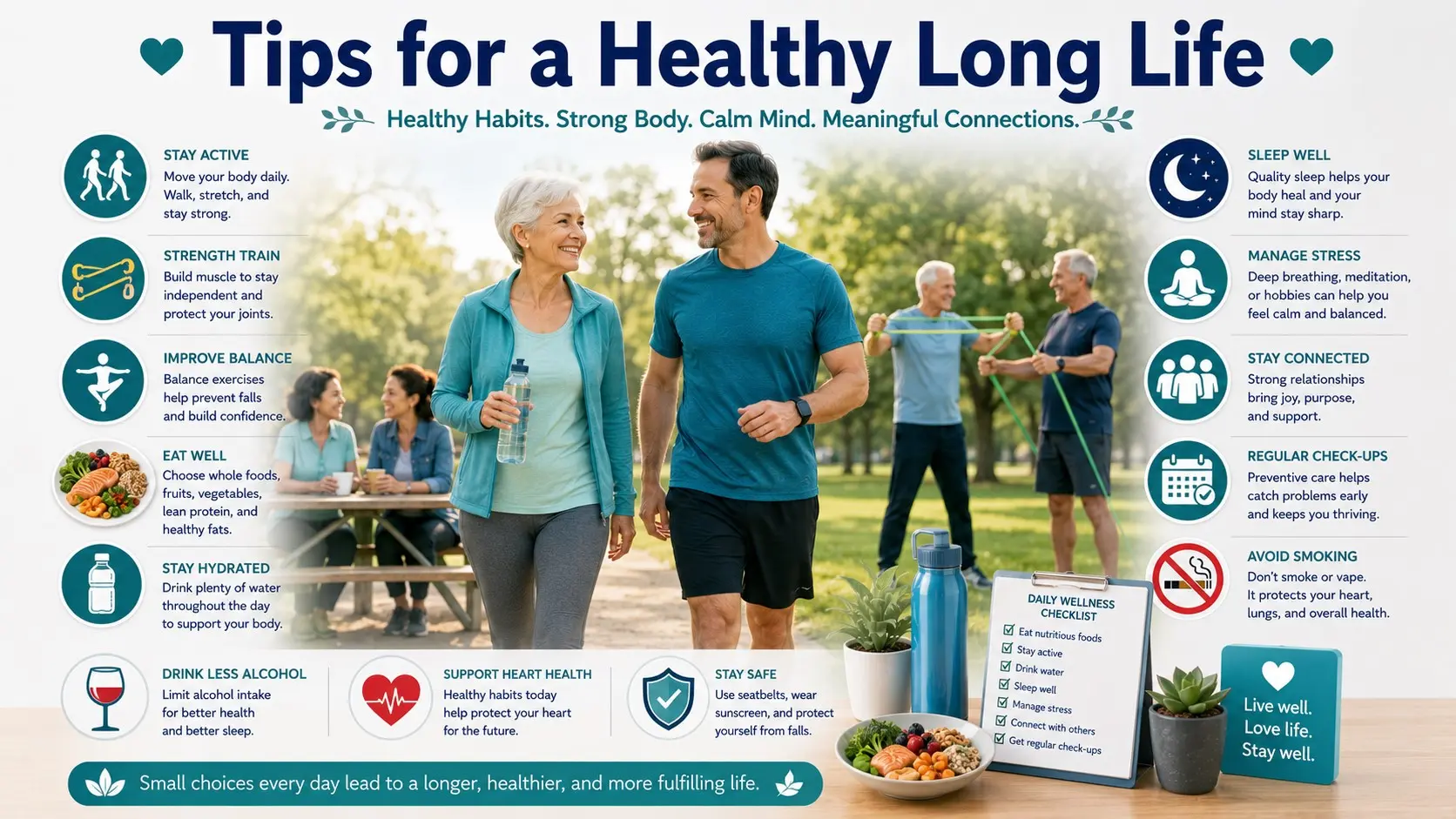
This guide shares 14 practical Tips for a Healthy Long Life.
Start with one habit today.
Add more when you are ready.
For more help, visit our Healthy Aging & Longevity Hub, General Wellness & Lifestyle Hub, Heart & Cardiovascular Health Hub, Nutrition & Vitamins Hub, Medical Tests & Screenings Hub, and Health Hub.
Medical note: This article is for education only. It does not diagnose or treat heart disease, diabetes, cancer, depression, sleep apnea, osteoporosis, dementia, high blood pressure, high cholesterol, obesity, or any medical condition. Ask a doctor before making major changes to diet, exercise, alcohol use, supplements, or medicines, especially if you are pregnant, older, frail, have a chronic illness, take medicines, or have chest pain, shortness of breath, fainting, severe pain, sudden weakness, or fast weight loss.
Quick Answer: What Are the Best Tips for a Healthy Long Life?
The best Tips for a Healthy Long Life are simple.
Move daily.
Build muscle.
Eat more whole foods.
Sleep enough.
Do not smoke.
Use less alcohol.
Care for stress.
Stay connected.
Get checkups.
Protect your heart.
Protect your brain.
Prevent falls and injuries.
Small steps matter.
You do not need to change everything at once.
Tip 1: Move Your Body Most Days
Movement is one of the strongest habits for healthy aging.
It supports your heart.
It supports your lungs.
It supports blood sugar.
It supports mood.
It supports sleep.
It supports balance.
Start with simple movement.
- Walk after meals.
- Take the stairs.
- Stretch in the morning.
- Do light housework.
- Garden.
- Dance to one song.
- Stand up every hour.
A good adult goal is 150 minutes of moderate activity each week.
But start where you are.
Five minutes is better than zero.
Tip 2: Build Muscle Twice a Week
Muscle helps you stay independent.
It helps you stand.
It helps you walk.
It helps protect bones.
It helps your body use energy.
Strength work can be simple.
- Chair stands
- Wall push-ups
- Light dumbbells
- Resistance bands
- Step-ups
- Gentle squats
- Carrying groceries
Start light.
Use good form.
Ask a doctor or physical therapist if you have pain, falls, a history, or heart symptoms.
Tip 3: Train Balance
Falls can change life fast.
Balance training can help reduce risk.
Try safe balance habits:
- Stand on one foot near a wall.
- Practice heel-to-toe walking.
- Do gentle yoga.
- Try tai chi if available.
- Keep floors clear.
- Use good lighting.
- Wear safe shoes.
Do balance exercises near support.
Do not practice alone if you feel unsteady.
Tip 4: Eat More Whole Foods
Food is daily medicine for your body.
It does not replace medical care.
But it supports health.
Try to eat more:
- Vegetables
- Fruit
- Beans
- Lentils
- Whole grains
- Nuts
- Seeds
- Fish
- Eggs
- Lean protein
- Plain yogurt
- Olive oil
You do not need a perfect diet.
Add one healthy food first.
For more help, visit our Nutrition & Vitamins Hub.
Tip 5: Eat Enough Protein and Fibre
Protein helps muscles.
Fibre helps the gut.
Fibre may also help with fullness, cholesterol, and blood sugar.
Good protein foods include:
- Fish
- Chicken
- Eggs
- Beans
- Lentils
- Tofu
- Greek yogurt
- Nuts
- Seeds
Good fibre foods include:
- Vegetables
- Fruit
- Oats
- Beans
- Lentils
- Chickpeas
- Whole grains
- Nuts and seeds
Add fibre slowly.
Drink enough water if safe for you.
Tip 6: Drink Water and Limit Sugary Drinks
Water supports digestion.
It supports the kidneys.
It supports energy.
It supports temperature control.
Simple water habits help.
- Drink when you wake up.
- Drink with meals.
- Keep water nearby.
- Drink more in heat.
- Drink more when sweating.
- Choose water instead of soda often.
Ask your doctor about fluid limits if you have heart, kidney, or liver disease.
Tip 7: Sleep Enough
Sleep helps your body repair.
It supports memory.
It supports mood.
It supports hunger signals.
It supports heart health.
Many adults need at least 7 hours of sleep.
Try:
- Keep a steady sleep time.
- Keep the room dark.
- Keep the room cool.
- Stop screens before bed.
- Limit late caffeine.
- Avoid large, late meals.
- Use a calm routine.
Ask a doctor if you snore loudly, stop breathing during sleep, wake gasping, or feel sleepy all day.
Tip 8: Do Not Smoke or Vape
Not smoking is one of the most important Tips for a Healthy Long Life.
Smoking harms the heart.
It harms lungs.
It harms blood vessels.
It raises cancer risk.
Vaping can also irritate the lungs and throat.
Quitting can help at any age.
Ask a doctor, pharmacist, or quit-support service.
You do not have to quit alone.
Tip 9: No Alcohol
Less alcohol is better for health.
For some people, none is safest.
Alcohol can affect:
- Sleep
- Liver health
- Blood pressure
- Heart rhythm
- Mood
- Falls
- Cancer risk
- Medicine safety
If you drink, try to drink less.
Ask for help if stopping feels hard.
Do not stop heavy alcohol use suddenly without medical advice.
Tip 10: Protect Your Heart Numbers
Some health problems are quiet.
You may not feel high blood pressure.
You may not feel high cholesterol.
You may not feel high blood sugar at first.
But these numbers matter for long life.
Ask your doctor about checking:
- Blood pressure
- Cholesterol
- Blood sugar
- Weight and waist risk
- Kidney health if at risk
- Heart risk based on age and family history
Daily habits help.
Medicine may also be needed for some people.
Taking medicine is not a failure.
It is care.
For more help, visit our Heart & Cardiovascular Health Hub.
Tip 11: Get Screenings and Vaccines.
Prevention matters.
Screenings can find some problems early.
Vaccines can help prevent some serious infections.
Ask your doctor what you need based on age, sex, risk, and family history.
You may need checks for:
- Blood pressure
- Cholesterol
- Diabetes
- Colon cancer
- Breast cancer
- Cervical cancer
- Prostate health
- Skin changes
- Bone health
- Vision
- Hearing
- Dental health
- Vaccines
For more, visit our Medical Tests & Screenings Hub.
Tip 12: Care for Stress and Mental Health
Stress is part of life.
But chronic stress can affect sleep, mood, eating, pain, and energy.
Simple stress care can help.
- Take slow breaths.
- Walk outside.
- Talk to someone safe.
- Pray or meditate.
- Write your thoughts.
- Take abrupt breaks.
- Reduce doom-scrolling.
- Ask for therapy if needed.
Get help if you feel hopeless, unsafe, very anxious, or unable to function.
For support, visit our Mental Health & Wellness Hub.
Tip 13: Stay Connected
Connection helps health.
People need people.
Good relationships can support mood, purpose, and daily habits.
Try:
- Call a friend.
- Eat with family.
- Join a group.
- Volunteer.
- Walk with someone.
- Ask for help.
- Offer help.
- Spend time with safe people.
If you feel lonely, start small.
Send one message today.
Tip 14: Keep Your Brain and Purpose Active
Your brain needs to be used.
Your life also needs meaning.
Purpose does not have to be big.
It can be family.
It can be faith.
It can be learned.
It can be work.
It can help others.
Brain and purpose habits include:
- Read
- Learn a skill
- Do puzzles
- Play music
- Cook a new recipe
- Teach someone
- Volunteer
- Spend time in nature
- Keep a simple routine
A healthy long life is not only body health.
It is also mind, meaning, and connection.
Extra Safety Habits for a Longer, Healthier Life
Safety habits are healthy habits, too.
Try to:
- Wear a seatbelt.
- Use sunscreen.
- Use helmets when needed.
- Keep floors clear to prevent falls.
- Check smoke alarms.
- Store medicines safely.
- Use good lighting at night.
- Wear proper shoes.
- Get vision checked.
- Brush and floss your teeth.
Small safety steps can prevent big problems.
Simple 7-Day Healthy Long Live Plan
This plan is simple.
Do not try to be perfect.
Day 1: Walk for 10 Minutes
Walk at an easy pace.
Day 2: Add Protein
Add one protein food to a meal.
Day 3: Drink More Water
Add one extra glass of water if safe for you.
Day 4: Sleep Earlier
Go to bed 20 minutes earlier.
Day 5: Practice Balance
Stand near a wall and practice balance safely.
Day 6: Call Someone
Send a message or call one person.
Day 7: Book one checkup
Book a doctor, dentist, eye, or screening visit if due.
Daily Healthy Aging Checklist
- Did I move today?
- Did I eat protein?
- Did I eat a fruit or a vegetable?
- Did I drink water?
- Did I sleep enough?
- Did I care about stress?
- Did I avoid smoking and vaping?
- Did I limit alcohol?
- Did I connect with someone?
- Did I take medicines as prescribed?
- Did I do one safe habit?
- Do I need a checkup?
What Not to Do
- Do not chase “anti-aging” miracle cures.
- Do not smoke or vape.
- Do not ignore high blood pressure.
- Do not skip sleep for years.
- Do not follow crash diets.
- Do not drink heavily.
- Do not ignore chest pain or shortness of breath.
- Do not stop prescribed medicine without advice.
- Do not take many supplements without review.
- Do not isolate yourself if you need support.
Questions to Ask Your Doctor
- What screenings do I need now?
- Is my blood pressure healthy?
- Should I check my cholesterol?
- Should I check blood sugar?
- What exercise is safe for me?
- Do I need a bone health screening?
- Are my medicines still right?
- Are my supplements safe?
- Do I need vaccines?
- How can I reduce fall risk?
- Should I check hearing or vision?
- What symptoms should I never ignore?
FAQ
What are the best Tips for a healthy long life?
The best Tips for a healthy long life include daily movement, strength training, balance work, whole foods, protein, fibre, water, sleep, no smoking, less alcohol, checkups, stress care, social connection, and purpose.
Can daily habits really help you live longer?
Daily habits can support healthier aging and lower the risk of many chronic diseases. They cannot control everything, but they can improve your chances of staying stronger and healthier.
What is the most important habit for longevity?
There is no single habit for everyone. But not smoking, staying active, eating well, sleeping enough, and managing blood pressure, cholesterol, and blood sugar are very important.
How much exercise do adults need for healthy aging?
Many adults should aim for at least 150 minutes of moderate activity each week and muscle-strengthening activity 2 days a week. Start with less if needed and ask a doctor if you have health limits.
Why is strength training important as you age?
Strength training helps protect muscles, balance, bones, and daily function. It may help you stay independent and reduce fall risk when done safely.
Does sleep affect longevity?
Sleep supports body repair, mood, memory, heart health, and immune function. Many adults need at least 7 hours of sleep.
Can social connection help healthy aging?
Yes. Social connection can support mental health, purpose, and daily routines. Staying connected may help people feel less lonely and more supported.
Are supplements needed for a healthy long life?
Not always. Many people can get nutrients from food. Some people need supplements for specific deficiencies. Ask a doctor before using supplements, especially if you take medicine.
Is it too late to start healthy habits after 50 or 60?
No. It is not too late. Starting movement, better food, sleep care, quitting smoking, reducing alcohol, and getting checkups can help at many ages.
How do I start if I feel overwhelmed?
Start with one small habit. Walk for 10 minutes, add one vegetable, drink water, or sleep 20 minutes earlier. Repeat it for a week, then add another habit.
Related Reading
- Healthy Aging & Longevity Hub
- Tips for Good Health: 15 Simple Daily Habits
- Healthy Lifestyle Roadmap: 14 Practical Tips for Better Health
- Effect of Unhealthy Lifestyle: What It Can Do to Your Body
- Self-Care Habits: Simple Steps for Better Daily Health
- Nutrition & Vitamins Hub
- Heart & Cardiovascular Health Hub
- Medical Tests & Screenings Hub
- Mental Health & Wellness Hub
- Mental Health Self-Care Tips: 7 Simple Steps
- Health Hub
Key Takeaway
Tips for a healthy long life are not magic.
They are daily habits.
Move often.
Build muscle.
Practice balance.
Eat whole foods.
Eat protein and fibre.
Drink water.
Sleep enough.
Do not smoke.
Use less alcohol.
Check your heart numbers.
Get screenings.
Care for stress.
Stay connected.
Keep your brain and purpose active.
Start small.
Repeat often.
That is how healthy aging grows.
References and Sources
- National Institute on Aging — What Do We Know About Healthy Aging?
- CDC — Adult Physical Activity Guidelines
- American Heart Association — Life’s Essential 8
- WHO — Everyday Actions for Better Health
- NHS — Live Well

Health & wellness writer with 30+ years of experience in nutrition, fitness, and healthy aging. Founder of NextFitLife.com — evidence-based health guidance.