
Updated on: October 12, 2026
Written and source checked by: Adel Galal, Founder and Lead Writer at NextFitLife
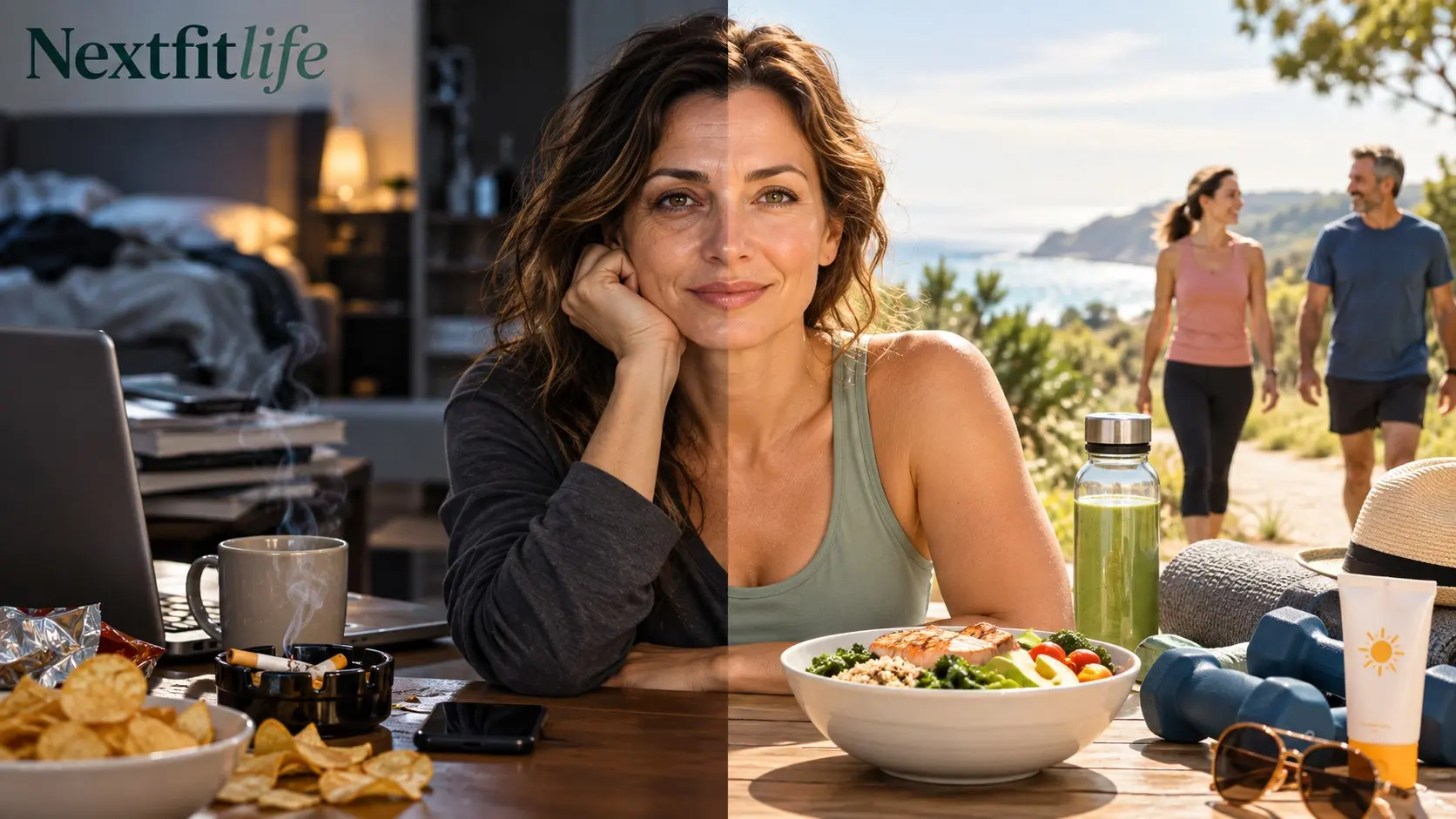
Some health mistakes can make healthy aging harder, but they do not literally make your birthday arrive faster. The habits that matter most affect your risk of heart disease, cancer, weak muscles, poor sleep, skin damage, diabetes, loss of mobility, and other problems that become more important as you get older.
The good news is that many of these risks can change.
You do not need an expensive anti aging routine. You need habits that protect the body you will depend on ten, twenty, and thirty years from now.
This article is for general information and education. It does not replace medical advice, diagnosis, or treatment.
For more practical guidance, visit the NextFitLife Healthy Aging and Longevity Hub.
- What premature aging really means
- 9 costly health mistakes
- The habits that matter most
- What supplements cannot fix
- A simple healthy aging plan
- References and Sources
- Internal Links and Hub
- Author Bio
- Frequently Asked Questions
What does premature aging actually mean?
Premature aging is often used online as if aging were one single process.
It is not.
Your skin, heart, blood vessels, muscles, bones, brain, lungs, immune system, and metabolism all change over time. Genetics matter, but so do health conditions, environment, habits, and access to care.
That means there is no single biological clock that you can reset with a smoothie or supplement.
A better goal is healthy aging.
Healthy aging means protecting function for as long as possible. You want enough strength to get out of a chair, enough fitness to walk comfortably, enough bone strength to reduce fracture risk, and enough cardiovascular and brain health to stay independent.
Appearance is only one small part of the picture.
9 costly health mistakes that may age you faster
1. Smoking or continuing to use tobacco
If I had to place one habit near the top, this would be it.
Smoking affects nearly every organ in the body. It raises the risk of heart disease, stroke, lung disease, many cancers, and premature death.
It also affects appearance.
Smoking damages skin structure and blood flow, which can contribute to wrinkles and slower wound healing.
The important part is what happens when you stop.
CDC states that quitting smoking improves health at any age, even after years of smoking. It lowers the risk of premature death and can add years to life expectancy compared with continuing to smoke.
You do not have to wait until you develop a smoking related disease before quitting becomes worthwhile.
For more detail, read Smoking and Your Lungs and Smoking Impact on Skin.
2. Moving too little and sitting for most of the day
Your body is built to move.
A desk job does not automatically make you unhealthy, but long periods of inactivity combined with little exercise can slowly reduce fitness, mobility, and metabolic health.
WHO recommends that adults aim for 150 to 300 minutes of moderate activity each week, or 75 to 150 minutes of vigorous activity, or a mix.
You do not have to become a runner.
Walking counts. Cycling counts. Dancing counts. Swimming counts. Active chores count.
If you currently do very little, the first goal is not 300 minutes.
Start moving more than you do now.
The body responds to small amounts of activity, and you can build from there.
3. Skipping strength training
This is one of the biggest gaps in many healthy aging articles.
Aerobic exercise matters, but so does muscle.
Adults naturally lose some muscle mass and strength with age. That process is called muscle loss or, when it becomes more significant, sarcopenia.
Less strength can make stairs, carrying groceries, rising from the floor, and recovering from illness harder.
WHO recommends muscle strengthening work for the major muscle groups on at least two days each week.
That can include:
- Weights
- Resistance bands
- Machines
- Body weight exercises
- Loaded carries
- Some forms of manual work
Strength training does not stop aging. It helps protect strength, function, and independence as you age.
If you are starting later in life, that is still useful.
See Strength Training After 40 and the NextFitLife Strength Training Guide.
4. Treating poor sleep as normal
Sleep is not time wasted.
Most adults need at least about seven hours, although sleep needs vary somewhat with age and the individual.
CDC reported in 2026 that 30.5 percent of United States adults surveyed in 2024 slept less than seven hours on average.
Poor sleep quality affects more than morning energy.
Long term inadequate sleep is linked with poorer mental health and with several chronic health problems.
There is another issue people miss.
If you spend eight hours in bed but snore loudly, wake gasping, or remain exhausted during the day, the solution may not be simply going to bed earlier.
Sleep apnea and other sleep disorders deserve proper assessment.
Aim for a steady sleep schedule and enough time to sleep. If insomnia, severe snoring, restless legs, or daytime sleepiness continues, talk with a healthcare professional.
Read Sleep Deprivation: Causes, Symptoms and Health Effects and Sleep Hygiene: 15 Evidence Based Habits.
5. Building most meals around highly processed foods
A healthy diet does not require a perfect menu.
WHO's 2026 guidance describes four basic principles: adequacy, balance, moderation, and diversity.
The foundation should be a variety of minimally processed or unprocessed foods while limiting excess free sugars, sodium, and unhealthy fats.
A practical healthy diet can include:
- Vegetables
- Fruit
- Beans and lentils
- Whole grains
- Nuts and seeds
- Fish
- Eggs
- Dairy or suitable alternatives
- Lean meat if you eat it
- Healthy oils
You do not need to eat an “anti aging superfood” every morning.
Your usual eating pattern matters more than whether you add one trendy ingredient.
Protein also becomes useful to think about as you age because muscle maintenance depends on both resistance exercise and adequate nutrition.
Visit the Healthy Eating Lifestyle Hub for practical food guidance.
6. Drinking alcohol because you think it is good for longevity
This idea deserves updating.
Alcohol should not be started for health benefits.
WHO states that there is no form of alcohol use that is completely risk free. Even low amounts carry some health risk, and alcohol is linked with several cancers.
This does not mean every person who drinks occasionally will become ill.
Risk rises with exposure.
If you do not drink, there is no health reason to start.
If you do drink, less exposure means less alcohol related risk.
Your personal situation matters because alcohol can interact with medicines, sleep, liver disease, pregnancy, mental health, and other conditions.
7. Letting UV exposure build year after year
Here, appearance and health overlap.
Repeated ultraviolet exposure contributes to sun damage, wrinkles, uneven pigmentation, and skin cancer risk.
The solution is not hiding indoors.
Use several forms of protection when UV exposure is significant:
- Seek shade when practical.
- Wear sun protective clothing.
- Use a wide brimmed hat.
- Wear UV protective sunglasses.
- Use broad spectrum, water resistant SPF 30 or higher sunscreen on exposed skin.
Sunscreen is useful, but it is one part of sun protection rather than a license to stay outside indefinitely.
If your main concern is skin aging, this habit has much stronger support than most anti aging creams or supplements.
8. Letting social connection disappear from your life
Healthy aging is not only physical.
WHO's 2025 Commission on Social Connection found that loneliness and social isolation are linked with poorer physical and mental health and increased risk of early death.
Strong social connection does not mean having hundreds of contacts.
It means having people with whom you can share time, support, conversation, help, and a sense of belonging.
That might come from family, friends, work, faith groups, clubs, volunteering, exercise groups, neighbors, or community activities.
If your circle has become smaller with age, do not wait for connection to rebuild itself.
Call someone. Join something. Volunteer. Invite a friend for a walk.
Social health deserves attention alongside exercise and food.
For more, visit the Mental Health and Wellness Hub.
9. Waiting for symptoms before using preventive care
High blood pressure can be silent.
High cholesterol can be silent.
Prediabetes can be silent.
Some cancers can develop before symptoms appear.
So can eye disease and early bone loss.
Preventive care is not about ordering every blood test every year.
It means using the screening and prevention that fit your age, sex, family history, health conditions, medicines, vaccination history, and country.
This may include checks for:
- Blood pressure
- Cholesterol
- Diabetes risk
- Selected cancers
- Bone health
- Vision
- Dental health
- Vaccination needs
- Mental health
There is no universal “annual full body test” that everybody needs.
The smarter approach is age and risk based screening.
See Health Screening: Tests by Age, Timing and Risk.
Which of these health mistakes matters most?
That depends on your starting point.
| If This Is Your Main Problem | Start Here | Why |
|---|---|---|
| You smoke | Build a quitting plan | Stopping tobacco produces major health benefits at any age |
| You barely move | Walk more and add basic strength work | Movement supports heart, muscle, bone, and metabolic health |
| You sleep poorly | Protect sleep time and investigate persistent problems | Sleep supports physical and mental health |
| Your diet is mostly ultra processed food | Replace one daily meal first | The whole eating pattern matters more than one superfood |
| You avoid preventive care | Review overdue screenings and vaccinations | Some important health problems begin silently |
You do not need to fix nine things this week.
Start with the one carrying the most risk for you.
Is dehydration really making you age faster?
This claim is common, but it needs context.
Dehydration is not healthy. Severe or persistent dehydration can cause real problems.
However, there is no good reason to promise that drinking eight or ten glasses of water will prevent wrinkles or slow biological aging.
Your fluid needs vary with body size, food intake, climate, activity, pregnancy, health conditions, and medicines.
Drink enough to stay normally hydrated, and increase fluids when heat, exercise, illness, or another condition raises your needs.
Do not turn water into an anti aging medicine.
Does chronic stress make you age faster?
Long lasting stress can affect sleep, eating, blood pressure, mood, physical activity, and relationships.
Those effects matter.
But claims that every stressful week is directly shortening your telomeres or dramatically aging your cells are often presented with more certainty than the science allows.
The practical message is easier.
If stress is making you sleep badly, isolate yourself, drink more, stop exercising, or struggle with work and daily life, it needs attention.
Useful options include exercise, time outdoors, slow breathing, counseling, problem solving, better boundaries, and social support.
For more tools, visit How to Keep Yourself Mentally Healthy.
What about dental health?
Dental care still belongs in a healthy aging plan.
The old version treated dental neglect as if it directly accelerated whole body aging.
A more accurate reason to care for your mouth is simpler.
Gum disease, dental decay, pain, and tooth loss can make eating and daily life harder. Oral health is part of health.
Brush with fluoride toothpaste, clean between teeth, and use professional dental care based on your needs.
Persistent gum bleeding, loose teeth, oral pain, or a mouth sore that does not heal should be checked.
Do anti aging supplements help?
This is where many people spend money before they fix sleep, smoking, movement, or food.
Supplements can be useful when you have a deficiency or a clear medical reason.
They are not a replacement for the foundations above.
Vitamin D
Vitamin D matters for bone health, but taking extra vitamin D when you do not need it has not been shown to stop aging.
Omega 3
Omega 3 fats are nutrients with important roles in health. Fish can be part of a healthy eating pattern. A supplement is not automatically necessary for every adult.
Collagen
Some research suggests oral collagen may modestly improve some skin measures, but this should not be confused with slowing aging throughout the body.
CoQ10 and resveratrol
These products are frequently marketed for longevity. Evidence does not justify presenting them as proven treatments that extend healthy life in otherwise healthy adults.
If you take medicines or have a health condition, discuss supplements with your healthcare professional because supplements can cause side effects or interactions.
What actually supports healthy aging?
The pattern is remarkably ordinary.
- Do not smoke.
- Move most days.
- Strength train at least twice a week when appropriate.
- Get enough good quality sleep.
- Eat mostly nutritious, minimally processed food.
- Keep alcohol exposure low, or do not drink.
- Protect your skin from excess UV.
- Stay connected with other people.
- Use preventive healthcare based on your age and risk.
You will notice that none of those steps requires an anti aging product.
A simple seven day healthy aging reset
Day 1: Check your biggest risk
Pick the habit most likely to harm your health. Smoking, inactivity, uncontrolled blood pressure, heavy drinking, and severe sleep problems deserve priority.
Day 2: Walk
Add a brisk walk or another activity you can repeat.
Day 3: Use your muscles
Do a short strength session suited to your ability.
Day 4: Improve one meal
Add vegetables, fruit, beans, whole grains, or a useful protein source.
Day 5: Protect sleep
Choose a realistic bedtime and remove one thing that keeps delaying sleep.
Day 6: Contact somebody
Call, visit, walk with, or eat with someone you value.
Day 7: Check preventive care
Review your last blood pressure check, dental visit, vaccinations, and age appropriate health screening.
Keep the changes that were easy enough to repeat.
Common anti aging mistakes worth dropping
Buying supplements before changing major risks
A supplement cannot cancel smoking, inactivity, poor sleep, or heavy alcohol use.
Thinking thin automatically means healthy
Healthy aging depends on strength, fitness, nutrition, medical health, and function, not one body size.
Doing only cardio
Aerobic activity is excellent, but muscle strengthening adds benefits that become more important with age.
Waiting for pain before getting checked
Many important conditions start quietly.
Believing you are too old to improve
You cannot make yourself younger, but health behavior can still improve function and disease risk later in life.
Conclusion: Fix the habits with the biggest payoff
The most important health mistakes are not small cosmetic errors. They are habits that slowly affect your heart, lungs, muscles, bones, sleep, brain, skin, and ability to stay independent.
You cannot stop aging, and you do not need to.
You can protect healthy aging by reducing tobacco exposure, moving more, lifting something regularly, sleeping enough, eating well, limiting alcohol, protecting your skin, staying connected, and using preventive care.
Your next step: choose the one mistake above that creates the most risk in your life and work on that first. One useful change repeated for years beats nine perfect habits that last a week.
References and Sources
- World Health Organization. Healthy Diet. Updated January 26, 2026.
Used for the principles of a healthy eating pattern and the role of minimally processed foods.
https://www.who.int/news-room/fact-sheets/detail/healthy-diet - World Health Organization. Physical Activity.
Used for aerobic activity and muscle strengthening recommendations for adults and older adults.
https://www.who.int/europe/news-room/fact-sheets/item/physical-activity - Centers for Disease Control and Prevention. About Sleep.
Used for adult sleep needs and the role of sleep in physical and emotional health.
https://www.cdc.gov/sleep/about/index.html - Centers for Disease Control and Prevention. Benefits of Quitting Smoking.
Used for the health benefits of smoking cessation at any age and reduced risk of premature death.
https://www.cdc.gov/tobacco/about/benefits-of-quitting.html - World Health Organization. Alcohol.
Used for alcohol related health risks and the fact that alcohol use is not risk free.
https://www.who.int/news-room/fact-sheets/detail/alcohol - World Health Organization Commission on Social Connection. From Loneliness to Social Connection: Charting a Path to Healthier Societies. June 30, 2025.
Used for the links between social isolation, loneliness, health, and lifespan.
https://www.who.int/groups/commission-on-social-connection/report/ - American Academy of Dermatology. Statement on the Importance of Sun Protection. May 20, 2025.
Used for broad spectrum SPF 30 or higher sunscreen, shade, clothing, and UV protection.
https://www.aad.org/news/statement-importance-of-sun-protection - National Institute on Aging. How Can Strength Training Build Healthier Bodies as We Age?
Used for age related changes in muscle and the role of strength training in mobility and function.
https://www.nia.nih.gov/news/how-can-strength-training-build-healthier-bodies-we-age
Internal Links + Hub
- Healthy Aging and Longevity Hub
- General Wellness and Lifestyle Hub
- NextFitLife Health Hub
- 10 Evidence Based Tips for Healthy Aging
- Common Health Mistakes
- Sleep Deprivation Guide
- Sleep Hygiene Guide
- Strength Training After 40
- Strength Training and Muscle Building Hub
- Healthy Eating Lifestyle Hub
- Mental Health and Wellness Hub
- How to Keep Yourself Mentally Healthy
- Smoking and Your Lungs
- Smoking Impact on Skin
- Health Screening by Age and Risk
Author Bio
Adel Galal is the founder and lead writer of NextFitLife. His health and wellness content focuses on turning guidance from established medical and public health sources into simple, practical information readers can use in everyday life.
For healthy aging topics, the focus is on habits that support long term function, mobility, cardiovascular health, mental wellbeing, and independence rather than promising that a food, supplement, or product can stop the normal aging process.
I am not a dermatologist or a doctor, and this content does not replace professional medical advice. What I share comes from real life experience, extensive research, and consultation with healthcare providers. Always consult qualified medical professionals for diagnosis and treatment of any health condition.
This article has been researched and source checked. It has not been medically reviewed by a physician, geriatrician, dietitian, exercise physiologist, or other licensed healthcare professional.
Learn more about NextFitLife and its editorial approach at About Us.
Frequently Asked Questions
What health mistakes can make aging harder?
Smoking, inactivity, loss of muscle strength, poor sleep, an unhealthy diet, higher alcohol exposure, repeated unprotected UV exposure, social isolation, and skipping preventive healthcare can all make healthy aging more difficult.
Can you reverse premature aging?
You cannot reverse your chronological age. You can improve many health risks and aspects of physical function by stopping smoking, becoming active, improving sleep, eating well, controlling medical conditions, and using preventive care.
What is the most harmful aging habit?
Smoking is one of the highest impact preventable health risks. It raises the risk of cancer, cardiovascular disease, lung disease, and premature death. Quitting benefits health at any age.
How much exercise supports healthy aging?
WHO recommends that adults aim for 150 to 300 minutes of moderate aerobic physical activity each week, or 75 to 150 minutes of vigorous activity, plus muscle strengthening on at least two days each week.
Is strength training important as you get older?
Yes. Strength training helps preserve muscle strength and physical function. Age related muscle loss can make walking, stairs, balance, and everyday tasks harder, so strength work becomes especially useful with age.
How much sleep do adults need?
Most adults need at least seven hours of sleep, although needs vary with age. Adults aged 61 to 64 are commonly advised to get seven to nine hours, while adults 65 and older generally need about seven to eight hours.
Does drinking more water slow aging?
Normal hydration is important for health, but drinking extra water has not been proven to stop biological aging or prevent wrinkles. Fluid needs vary with climate, activity, diet, health, and medicines.
Does alcohol help you live longer?
Alcohol should not be started for health or longevity. WHO states that alcohol use is not risk free, and even low levels carry some health risk. Lower exposure means lower alcohol related risk.
What is the best diet for healthy aging?
There is no single anti aging diet. A strong pattern includes a variety of minimally processed foods, vegetables, fruit, beans, whole grains, useful protein sources, nuts, seeds, and healthy fats while limiting excess sugar, sodium, and unhealthy fats.
Do anti aging supplements work?
No supplement has been proven to stop normal human aging. Supplements can be useful for diagnosed deficiencies or specific medical reasons, but they do not replace sleep, physical activity, nutritious food, tobacco avoidance, or medical care.
Can you improve your health after age 60?
Yes. People can still improve strength, fitness, smoking related risk, nutrition, sleep, blood pressure control, and other parts of health after 60. The right plan should match current health, medications, mobility, and medical conditions.
Why does social connection matter for healthy aging?
Social connection supports mental and physical wellbeing. WHO reports that loneliness and social isolation are associated with worse health and increased risk of early death, making social health an important part of healthy aging.

Health & wellness writer with 30+ years of experience in nutrition, fitness, and healthy aging. Founder of NextFitLife.com — evidence-based health guidance.

