Published: May 4, 2025
Last Updated: July 26, 2026
Next Review: July 2027, or earlier if important tinnitus, hearing-aid, psychological-therapy, neuromodulation, imaging, or referral guidance changes
Written and Source Checked by: Adel Galal, Founder and Lead Writer at NextFitLife
Review Status: Editorially reviewed against current NIDCD, NICE, NHS, AAO-HNS, MedlinePlus, and U.S. FDA information. Not medically reviewed by a physician, ENT specialist, audiologist, psychologist, pharmacist, or emergency clinician.
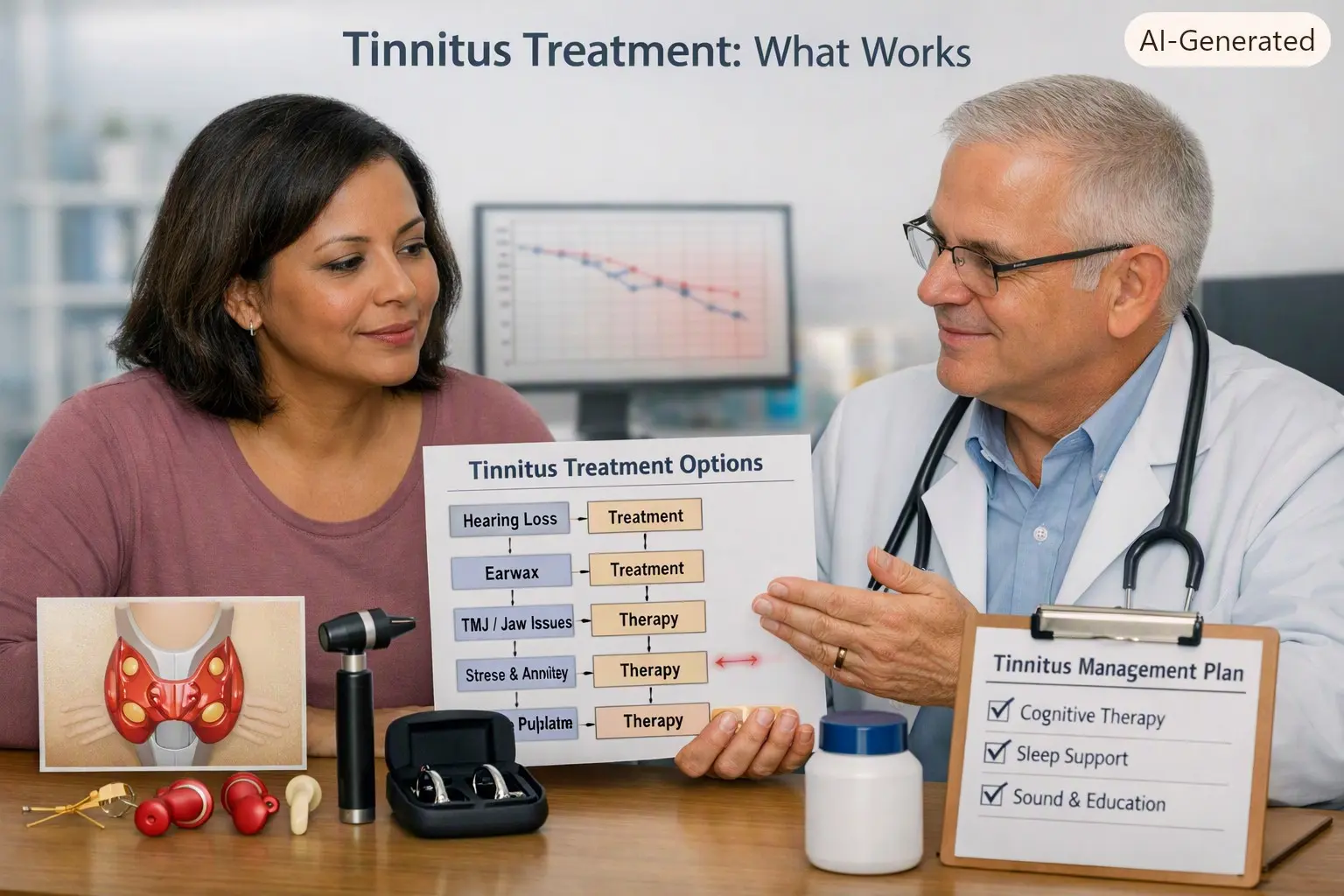
Tinnitus treatment is not one medicine, device, sound, or home remedy that works for everyone. The appropriate plan depends on the cause, hearing results, whether the sound affects one or both ears, whether it follows the heartbeat, how long it has lasted, and how strongly it affects sleep, mood, concentration, and daily life.
When tinnitus comes from a treatable problem—such as impacted earwax, an ear infection, a medicine effect, or a jaw-joint disorder—addressing that condition may reduce or sometimes resolve the sound.
Persistent tinnitus may not disappear completely, but evidence-based treatment can still make a meaningful difference. Hearing aids may improve tinnitus when hearing loss is present. Cognitive behavioural therapy can reduce distress and sleep disruption. Education, counselling, low-level sound enrichment, and specialist rehabilitation may help the brain give tinnitus less attention.
The goal of treatment is often better sleep, easier communication, lower anxiety, improved concentration, and less interference with everyday life—not a guaranteed promise of complete silence.
Quick Answer: What Is the Best Treatment for Tinnitus?
There is no single tinnitus treatment that works for everyone.
When tinnitus has a treatable cause—such as impacted earwax, an ear infection, a medicine effect, or a jaw-joint problem—addressing that cause may reduce or sometimes resolve the sound.
For persistent tinnitus, evidence-based options include hearing aids when hearing loss is present, cognitive behavioral therapy for tinnitus-related distress, education and counseling, and low-level sound enrichment.
These treatments may improve sleep, concentration, emotional wellbeing, communication, and quality of life even when tinnitus remains audible.
Selected adults with at least moderate tinnitus may also discuss prescription bimodal neuromodulation with a qualified tinnitus professional. This treatment is intended to provide temporary symptom relief and is not a permanent cure.
When Tinnitus Needs Urgent Medical Care
Seek urgent medical assessment when tinnitus occurs with:
- Sudden hearing loss in one or both ears
- A sudden blocked or muffled-ear sensation with reduced hearing
- Facial weakness or drooping
- New arm or leg weakness
- Difficulty speaking
- Severe spinning vertigo
- New neurologic symptoms
- A significant head injury
- Severe ear pain, bleeding, or drainage after trauma
Sudden hearing loss may occur with tinnitus and can be mistaken for earwax or congestion. Time-sensitive treatment may be needed.
Seek immediate mental-health or emergency support if tinnitus distress causes thoughts of self-harm, feeling unsafe, or believing that you may act on those thoughts.
Tinnitus Patterns That Need Prompt Evaluation
Arrange medical evaluation for:
- Pulsatile tinnitus: A sound that follows the heartbeat
- Persistent unilateral tinnitus: Tinnitus that remains in only one ear
- Hearing that is significantly worse in one ear
- Rapidly changing or worsening tinnitus
- Persistent dizziness or repeated vertigo
- Ear pain, discharge, or bleeding
- Tinnitus that began after starting or increasing a medicine
- Tinnitus that seriously disrupts sleep, mood, work, concentration, or relationships
These patterns do not automatically indicate a dangerous condition, but they may require a hearing assessment, ENT referral, blood tests, or targeted imaging.
Tinnitus Treatment Versus a Tinnitus Cure
A cure removes the condition permanently. Treatment may instead:
- Address an underlying cause
- Improve hearing
- Reduce tinnitus prominence
- Reduce distress
- Improve sleep
- Improve concentration
- Support habituation
- Improve daily function
Some cases caused by affected earwax, infection, a temporary medicine effect, or another correctable condition may substantially improve after treatment.
Chronic tinnitus associated with hearing loss or changes in auditory processing may remain present. Treatment can still be successful when the person sleeps better, feels less anxious, communicates more easily, and spends less time monitoring the sound.
For a direct discussion of cure claims, read Is There a Tinnitus Cure? 10 Evidence-Based Ways to Find Relief.
Why Treatment Must Match the Tinnitus Pattern
Tinnitus is not one uniform condition.
The treatment pathway changes according to:
- One ear versus both ears
- Pulsatile versus non-pulsatile tinnitus
- Sudden versus gradual onset
- Temporary versus persistent symptoms
- Hearing loss
- Ear pain or infection
- Vertigo
- Jaw or neck involvement
- Medicine exposure
- Sleep and emotional impact
Examples of Different Treatment Paths
- Earwax blockage: Professional wax management may help.
- Hearing loss: Hearing aids may improve communication and reduce tinnitus prominence.
- Severe distress: Tinnitus-focused CBT may be central.
- Nighttime awareness: Sound enrichment and insomnia treatment may help.
- Pulsatile tinnitus: Medical evaluation for a physical cause is more important than masking alone.
- Jaw-related tinnitus: Dental or musculoskeletal assessment may be appropriate.
What does the initial tinnitus assessment include?
Tinnitus treatment should begin with an appropriate assessment rather than a supplement, commercial device, or online sound program.
Symptom History
A clinician may ask:
- When did tinnitus begin?
- Was the onset sudden or gradual?
- Does it affect one or both ears?
- Does it pulse with the heartbeat?
- Is hearing reduced?
- Is ear pain or pressure present?
- Is there dizziness or vertigo?
- Was there recent loud-noise exposure?
- Was there a head or neck injury?
- Does jaw or neck movement change the sound?
- Which medicines and supplements are used?
- How does tinnitus affect sleep, mood, concentration, and daily life?
Ear Examination
An ear examination may identify:
- Impacted earwax
- Ear-canal inflammation
- Middle-ear infection
- Fluid behind the eardrum
- Eardrum damage
- A foreign object
Head, Neck, and Jaw Review
The examination may also assess:
- Jaw-joint tenderness
- Tooth grinding
- Neck movement
- Muscle tension
- Neurologic signs
- Blood-vessel sounds
Tinnitus-Impact Questionnaires
A validated questionnaire may measure the effect of tinnitus on:
- Sleep
- Concentration
- Emotional wellbeing
- Social activity
- Daily function
The score does not prove whether tinnitus exists. It helps guide treatment intensity and measure progress.
Why Does a Hearing Assessment Matter?
Tinnitus commonly occurs with hearing loss, including high-frequency hearing loss that a person may not yet recognize.
An audiology assessment may evaluate:
- Hearing thresholds at different pitches
- Speech understanding
- Differences between the ears
- Middle-ear function
- Whether hearing aids may help
Who Especially Needs Hearing Testing?
- People with persistent tinnitus
- People with tinnitus in only one ear
- People reporting hearing difficulty
- People with significant noise exposure
- People with different hearing between the ears
- People considering hearing aids or specialist rehabilitation
Why Unrecognized Hearing Loss Matters?
Reduced access to external sound can make tinnitus more prominent.
Improving access to speech and environmental sounds may:
- Reduce listening effort
- Improve communication
- Reduce isolation
- Make tinnitus less dominant
Does Everyone With Tinnitus Need Imaging?
No.
Routine MRI or CT scanning is not recommended for bilateral, non-pulsatile tinnitus when hearing is symmetrical and the medical history and examination contain no concerning findings.
Imaging May Be Considered for:
- Pulsatile tinnitus
- Persistent tinnitus in one ear
- Asymmetric hearing loss
- Focal neurologic signs
- A suspected blood-vessel disorder
- A suspected structural ear or skull-base condition
- Selected cases after significant head trauma
The correct imaging study depends on the suspected cause. MRI, CT, ultrasound, or blood-vessel imaging are not interchangeable.
Tinnitus Treatment Comparison
| Treatment | Best Suited For | Realistic Goal | Important Limitation |
|---|---|---|---|
| Treating earwax or infection | A confirmed blockage or ear disorder | Reduce or resolve cause-related tinnitus | Will not treat unrelated hearing-loss tinnitus |
| Medicine review | Symptoms beginning after a medicine or dose change | Identify a safer plan when possible | Medicines must not be stopped independently |
| Hearing aids | Tinnitus with hearing loss | Improve hearing and reduce tinnitus prominence | Not a guaranteed cure |
| CBT | Distress, anxiety, insomnia, or impaired function | Reduce emotional and functional impact | May not reduce perceived sound volume |
| Sound enrichment | Quiet settings or nighttime awareness | Reduce contrast and support sleep or habituation | Responses vary |
| Sleep treatment | Insomnia and nighttime distress | Improve sleep and coping | Does not directly repair hearing damage |
| TRT or structured counselling | Persistent bothersome tinnitus | Reduce awareness and emotional response | Methods and outcomes vary |
| Jaw or neck treatment | Tinnitus altered by jaw or neck movement | Treat a confirmed somatic contributor | Not appropriate for every tinnitus type |
| Bimodal neuromodulation | Selected adults with at least moderate tinnitus | Temporary symptom relief | Requires assessment and prescription; results vary |
| Mental-health treatment | Depression, anxiety, panic, or severe distress | Improve safety, mood, and quality of life | Does not mean tinnitus is imaginary |
Treating Identifiable Causes of Tinnitus
Impacted Earwax
Earwax blocking the ear canal may cause:
- Tinnitus
- Muffled hearing
- Ear fullness
- Discomfort
Professional wax removal may reduce tinnitus when the blockage is responsible.
Do not insert cotton swabs, hairpins, ear candles, menthol products, oils, or other objects into the ear canal.
Ear Infection or Middle-Ear Fluid
Tinnitus related to infection or fluid may improve after the underlying ear condition resolves.
Seek assessment for:
- Ear pain
- Fever
- Drainage
- Muffled hearing
- Vertigo
- Symptoms that persist or worsen
Medicine-Related Tinnitus
Tinnitus has been reported with selected:
- Anti-inflammatory medicines
- High-dose aspirin
- Antibiotics
- Cancer medicines
- Antimalarial medicines
- Diuretics
- Antidepressants
- Other prescription or nonprescription products
A reported association does not prove that a medicine caused an individual case.
The prescriber may review:
- When tinnitus began
- Recent dose changes
- Other possible causes
- Whether a safer alternative exists
- The risk of changing or stopping treatment
Do not stop aspirin, antibiotics, antidepressants, cancer treatment, or another prescribed medicine independently.
Jaw-Joint Disorders
A temporomandibular-joint problem may be relevant when tinnitus changes with:
- Jaw movement
- Chewing
- Clenching
- Tooth grinding
- Pressure near the jaw
Treatment may involve dental assessment, jaw-behaviour changes, a professionally prescribed oral appliance, or physical therapy when appropriate.
Hearing Aids for Tinnitus
Hearing aids are an important treatment option when tinnitus occurs with measurable hearing loss.
How Hearing Aids May Help
- Amplify speech and environmental sounds
- Reduce listening effort
- Reduce the contrast between tinnitus and the surroundings
- Improve communication
- Reduce social withdrawal
- Make tinnitus less noticeable
Available Features
Some hearing aids include:
- Sound-generation programs
- Tinnitus-support settings
- Streaming from a smartphone
- Adjustable background sounds
- Directional microphones
Fitting and Follow-Up Matter
A successful hearing-aid trial may require:
- Accurate hearing testing
- Professional fitting
- Gradual adjustment
- Follow-up programming
- Regular use
- Realistic expectations
More expensive features do not automatically produce better tinnitus relief.
Can Hearing Aids Help Without Obvious Hearing Loss?
Some people have high-frequency loss or difficulty understanding speech in noise without realizing that hearing has changed.
A professional test is needed before deciding whether hearing aids are appropriate.
Hearing aids should not be sold solely as a tinnitus cure when hearing is normal.
Cognitive Behavioral Therapy for Tinnitus
Cognitive behavioral therapy is one of the most strongly supported treatments for persistent, bothersome tinnitus.
CBT does not claim that tinnitus is imagined, and it does not require pretending that the sound has disappeared.
What CBT Addresses
- Catastrophic thoughts
- Fear and hypervigilance
- Constant checking of tinnitus
- Sleep-related anxiety
- Avoidance of normal activities
- Depression
- General anxiety
- Reduced quality of life
Examples of Distressing Thoughts
- “I will never cope with this.”
- “The tinnitus must mean something dangerous.”
- “I cannot sleep unless the noise stops.”
- “My life is permanently ruined.”
A therapist helps examine these thoughts and build more balanced, practical responses.
What CBT May Improve
- Tinnitus-related distress
- Sleep
- Anxiety
- Depression
- Concentration
- Daily function
CBT may improve quality of life even when the perceived tinnitus volume changes little.
How CBT May Be Delivered
- Individual therapy
- Group therapy
- Guided digital therapy
- Online therapy with professional support
Low-Level Sound Enrichment
Sound enrichment adds comfortable external sound to reduce the contrast between tinnitus and a quiet environment.
Possible Sound Sources
- A fan
- Rain sounds
- Ocean sounds
- Natural outdoor sounds
- Soft music
- A quiet radio
- A bedside sound generator
- A suitable sound application
- A wearable sound generator
Sound Enrichment Versus Complete Masking
Complete masking attempts to cover tinnitus entirely.
Sound enrichment usually uses a lower volume that may:
- Reduce contrast with silence
- Support relaxation
- Improve comfort at bedtime
- Redirect attention
- Support habituation
The sound does not need to be louder than tinnitus to be useful.
Safe Sound Use
- Keep the volume comfortable
- Avoid blasting white noise through headphones
- Use speakers at bedtime when practical
- Stop or reduce sound if discomfort increases
- Discuss significant sound sensitivity with an audiologist
Sound enrichment does not reliably eliminate tinnitus or repair hearing damage.
Treating Tinnitus-Related Sleep Problems
Tinnitus and insomnia can reinforce each other.
Poor sleep may increase:
- Stress
- Emotional reactivity
- Attention to tinnitus
- Fatigue
- Difficulty coping
Practical Sleep Strategies
- Keep a reasonably consistent wake-up time
- Use low-level bedside sound when helpful
- Create a predictable wind-down routine
- Reduce clock-watching
- Limit late caffeine when it disrupts sleep
- Keep the bedroom dark and comfortable
- Avoid using alcohol as a sleep treatment
- Leave the bed briefly when prolonged wakefulness creates frustration
CBT for Insomnia
Cognitive behavioral therapy for insomnia may be appropriate when sleep problems persist.
It may address:
- Fear of not sleeping
- Long periods awake in bed
- Irregular sleep timing
- Unhelpful sleep behaviours
Consider Sleep Apnea
Ask for assessment if tinnitus and poor sleep occur with:
- Loud snoring
- Breathing pauses during sleep
- Gasping or choking at night
- Morning headaches
- Severe daytime sleepiness
Read Sleep Hygiene: Practical Habits for Better Sleep.
Tinnitus Education and Counseling
Accurate education may reduce uncertainty and fear.
Useful counseling can explain:
- Why tinnitus may occur with hearing loss
- Why attention affects how noticeable it feels
- Why symptoms fluctuate
- Why quiet rooms may increase awareness
- Which patterns require medical evaluation
- Which cure claims are unsupported
- What realistic improvement can look like
Reassurance Does Not Mean Dismissal
A clinician should not simply say “learn to live with it” without:
- Checking for warning signs
- Assessing hearing
- Explaining treatment options
- Reviewing sleep and mental health
- Providing a follow-up plan
Tinnitus Support
Support may include:
- Individual counseling
- Group education
- Audiology-led programs
- Peer support
- Reliable patient organizations
Tinnitus Retraining Therapy
Tinnitus retraining therapy commonly combines:
- Structured education
- Directive counseling
- Low-level sound
- Habituation principles
What TRT Tries to Achieve
The goal is generally to make tinnitus:
- Less threatening
- Less attention-grabbing
- Less disruptive to daily life
Limitations
TRT programs differ in:
- Counseling method
- Sound devices
- Duration
- Cost
- Professional training
Some people report improvement, but TRT should not be presented as a guaranteed cure or as a treatment with one fixed completion timeline.
Stress and Emotional-Health Treatment
Stress is not the cause of every case of tinnitus, but it may increase attention, muscle tension, anxiety, and distress.
Supportive Techniques
- Slow breathing
- Progressive muscle relaxation
- Mindfulness
- Walking
- Regular physical activity
- Counseling
- Social support
- Enjoyable hobbies
What Relaxation May Help
- Emotional arousal
- Muscle tension
- Sleep preparation
- Ability to redirect attention
Relaxation does not repair every form of inner-ear or auditory-system damage.
Read Breathing Exercises to Reduce Stress and Stress-Reduction Techniques.
Depression and Anxiety
Tinnitus can contribute to:
- Anxiety
- Depression
- Panic
- Social withdrawal
- Hopelessness
These conditions deserve direct treatment. Mental-health treatment does not mean tinnitus is imaginary.
Safe Hearing Protection
Further hazardous noise exposure can worsen hearing damage and tinnitus.
Use Hearing Protection Around:
- Power tools
- Machinery
- Concerts
- Motor sports
- Firearms
- Explosions
- Loud occupational environments
Safer Listening Habits
- Keep headphone volume comfortable
- Take regular listening breaks
- Move away from loudspeakers
- Use appropriately fitted earplugs or earmuffs
- Follow workplace hearing-safety rules
There is no universal device-volume percentage that guarantees safety. The actual sound level, headphones, environment, and listening duration all matter.
Avoid Excessive Protection
Do not wear earplugs continuously in ordinary safe environments unless a qualified professional recommends it.
Excessive protection may:
- Reduce normal background sound
- Make tinnitus more noticeable
- Increase sound sensitivity in some people
- Interfere with communication or safety
Jaw- and Neck-Related Tinnitus
A somatic contribution may be suspected when tinnitus changes with:
- Jaw opening
- Jaw clenching
- Chewing
- Neck movement
- Posture
- Pressure on selected muscles
Possible Treatment Options
- Dental assessment
- Management of tooth grinding
- Jaw-behavior modification
- Physical therapy
- Posture and movement work
- Treatment of a confirmed musculoskeletal condition
These treatments are most relevant when a jaw or neck contributor has been identified. They are not general treatments for all tinnitus.
Bimodal Neuromodulation
Bimodal neuromodulation combines sound with stimulation of another sensory pathway.
One FDA-authorized prescription device combines:
- Sound delivered through headphones
- Mild electrical stimulation delivered to the tongue
Who May Be Considered?
The authorized indication is for:
- Adults aged 18 or older
- At least moderate tinnitus measured with a validated questionnaire
- Use after prescription by a professional experienced in tinnitus assessment and management
Realistic Treatment Goal
The authorized purpose is temporary relief of tinnitus symptoms.
It is not:
- A guaranteed cure
- A treatment for every tinnitus type
- A substitute for evaluating sudden hearing loss
- A substitute for evaluating pulsatile or one-sided tinnitus
- A replacement for hearing assessment
Possible Limitations and Risks
- Different responses between patients
- Temporary tinnitus worsening
- Discomfort or irritation
- Headache
- Cost
- Limited availability
- Required treatment commitment
Discuss expected benefits, risks, cost, alternatives, and follow-up before beginning treatment.
Can Medicines Treat Tinnitus?
No medicine is approved as a universal cure for primary chronic tinnitus.
Medicines may still be used to treat related or underlying conditions, including:
- Depression
- Anxiety
- Insomnia
- Migraine
- Ear infection
- High blood pressure
- A diagnosed inflammatory condition
Medicines Not Routinely Prescribed Solely for Primary Tinnitus
Professional guidance does not recommend routine use solely for persistent primary tinnitus of:
- Antidepressants
- Anti-anxiety medicines
- Anticonvulsants
- Intratympanic medicines
This does not mean these treatments are never appropriate for another diagnosed condition.
Melatonin
Melatonin is sometimes marketed for tinnitus. It may affect sleep in selected people, but it is not a proven tinnitus cure and should not be recommended routinely as a tinnitus treatment.
Which Treatments Are Not Recommended as Routine Tinnitus Care?
Be cautious with claims such as:
- “Permanent silence”
- “Repair your auditory nerve”
- “Reverse tinnitus in seven days”
- “One vitamin stops the ringing”
- “Clinically proven for everyone”
Testimonials and product reviews cannot replace controlled evidence.
Options that should not be presented as established universal treatment include:
- Ginkgo biloba
- Zinc supplements
- Magnesium supplements
- Vitamin B12 without a diagnosed deficiency
- Herbal combinations
- Ear oils
- Menthol rubs
- Ear candling
- Routine chiropractic manipulation
- Commercial low-level laser cure claims
- Unregulated electrical devices
Supplements and Herbal Products
No vitamin, mineral, or herbal supplement has been proven to cure persistent tinnitus generally.
Commonly Marketed Products
- Ginkgo biloba
- Zinc
- Magnesium
- Vitamin B12
- Melatonin
- Mixed “ear-health” formulas
When Deficiency Treatment Is Appropriate
A professionally diagnosed deficiency should be treated for its own health consequences.
Examples include:
- Vitamin B12 deficiency
- Iron-deficiency anemia
- Magnesium deficiency
- Zinc deficiency
Correcting a deficiency does not guarantee that unrelated chronic tinnitus will disappear.
Supplement Risks
- Medicine interactions
- Bleeding risk
- Liver or kidney effects
- Excessive doses
- Undeclared ingredients
- Delay of appropriate medical assessment
Discuss supplements with a pharmacist or qualified healthcare professional.
Do Salt, Caffeine, Alcohol, Sugar, or MSG Affect Tinnitus?
There is no universal tinnitus diet.
Some people report tinnitus changes after consuming:
- Caffeine
- Alcohol
- High-sodium meals
- Large amounts of sugar
- MSG
- Selected artificial sweeteners
These individual observations do not prove that the same food worsens tinnitus for everyone.
A Structured Trigger Review
When a repeated relationship seems possible:
- Record tinnitus, sleep, stress, meals, and noise exposure.
- Change one factor at a time.
- Use a short, structured trial.
- Avoid unnecessary long-term restriction.
- Discuss major dietary changes with a qualified professional.
Caffeine
Do not abruptly stop a large daily caffeine intake solely because of tinnitus. Withdrawal may cause headaches, fatigue, irritability, and concentration problems.
Reducing late caffeine may still help when insomnia is a major problem.
Salt
Sodium reduction may be appropriate for selected medical conditions, including:
- High blood pressure
- Heart failure
- Kidney disease
- Selected Ménière’s disease plans
It is not a universal tinnitus treatment.
Alcohol
Alcohol may affect sleep, blood pressure, hydration, mood, and medicine safety. A person who notices a repeatable relationship may discuss moderation with a healthcare professional.
Acupuncture, Chiropractic Treatment, and Massage
Acupuncture
Evidence is insufficient to present acupuncture as an established tinnitus treatment.
Someone choosing acupuncture should:
- Use a qualified practitioner
- Avoid guaranteed-cure claims
- Continue necessary medical assessment
- Consider cost and possible adverse effects
Chiropractic Manipulation
Chiropractic manipulation is not an established treatment for primary tinnitus.
Neck manipulation can carry risks and should not be broadly recommended as a tinnitus remedy.
Massage and Physical Therapy
Massage or physical therapy may support selected people when:
- Jaw or neck movement changes tinnitus
- Muscle tension is present
- A musculoskeletal condition has been identified
This is different from claiming that massage repairs the inner ear or auditory nerve.
Laser Therapy, TMS, and Experimental Treatment
Low-Level Laser Therapy
Low-level laser therapy is not established as a standard tinnitus treatment.
Be cautious with claims that a commercial laser device can:
- Regrow hearing cells
- Repair auditory nerves
- Reverse tinnitus permanently
Transcranial Magnetic Stimulation
Researchers have studied repetitive transcranial magnetic stimulation for tinnitus.
Results have been mixed, and it is not recommended as routine established treatment for persistent, bothersome tinnitus.
Research Areas
Ongoing research includes:
- Bimodal stimulation
- Brain-network modulation
- Individualized sound approaches
- Medication development
- Auditory-system biomarkers
Participation in a legitimate clinical trial is different from purchasing an unregulated treatment online.
Cochlear Implants and Tinnitus
Cochlear implants restore access to sound for selected people with severe-to-profound hearing loss who meet specialist criteria.
Some implant recipients report improvement in tinnitus.
Cochlear implants are not routine tinnitus devices for people with usable natural hearing.
The decision is based primarily on:
- Degree of hearing loss
- Speech understanding
- Limited benefit from hearing aids
- Medical and surgical suitability
Treating Tinnitus at Night
Tinnitus is often more noticeable at night because the environment is quieter and there are fewer competing sounds or activities.
A Nighttime Treatment Plan
- Use a fan or low-level sound generator when helpful
- Choose a calming sound rather than an irritating one
- Keep the volume comfortable
- Follow a regular wind-down routine
- Avoid repeatedly checking the time
- Reduce stimulating work or content near bedtime
- Address anxiety about sleep directly
Is Complete Silence Harmful?
No.
Some people sleep well in silence, while others notice tinnitus more strongly when there is no external sound.
Choose the environment that provides the best combination of:
- Comfort
- Safe sound volume
- Relaxation
- Consistent sleep
Creating an Individualized Tinnitus Treatment Plan
| Main Concern | Possible Next Step |
|---|---|
| Muffled hearing or ear fullness | Ear examination and hearing assessment |
| Tinnitus with hearing loss | Audiology assessment and hearing-aid evaluation |
| High distress or catastrophic thoughts | Tinnitus-focused CBT |
| Difficulty sleeping | Low-level sound, sleep assessment, and CBT for insomnia when appropriate |
| Jaw or neck movement changes tinnitus | Dental, jaw, or physical-therapy assessment |
| Heartbeat-synchronized sound | Medical assessment for pulsatile tinnitus |
| Persistent tinnitus in one ear | Hearing assessment and possible ENT referral |
| Persistent moderate or severe tinnitus after standard care | Specialist rehabilitation or discussion of prescription bimodal neuromodulation |
A Practical Starting Sequence
- Check for urgent or concerning features.
- Arrange an ear and medical assessment.
- Complete hearing testing.
- Treat an identifiable cause when possible.
- Address hearing loss.
- Address distress and sleep.
- Add sound enrichment when useful.
- Review progress and specialist options.
How Should Tinnitus Treatment Progress Be Measured?
Treatment success should not be judged only by whether tinnitus is quieter.
Useful Progress Measures
- Sleep quality
- Concentration
- Tinnitus-related distress
- Anxiety and mood
- Ability to work
- Social activity
- Hearing and communication
- Time spent monitoring tinnitus
- Ability to enjoy quiet or normal activities
Use Validated Questionnaires
A clinician may repeat a validated tinnitus questionnaire to measure whether treatment has changed the condition’s effect on daily life.
A person can make meaningful progress even when tinnitus remains audible.
Questions to Ask an ENT, Audiologist, or Healthcare Professional
- Could earwax, infection, or middle-ear fluid explain my tinnitus?
- Do I need a complete hearing test?
- Is my hearing different between the ears?
- Does my tinnitus pattern require imaging?
- Could a medicine contribute?
- Should I speak with the prescriber before changing anything?
- Would hearing aids help my hearing and tinnitus?
- Would tinnitus-focused CBT be appropriate?
- Which sound-enrichment options are safe?
- Could a jaw or neck problem contribute?
- Do I need assessment for pulsatile tinnitus?
- Would tinnitus retraining therapy be suitable?
- Am I a reasonable candidate for prescription bimodal neuromodulation?
- Could insomnia, anxiety, depression, or sleep apnea need separate treatment?
- How will we measure treatment progress?
- Which symptoms require urgent care?
What Not to Do
- Do not expect one treatment to work for every tinnitus type.
- Do not ignore sudden hearing loss.
- Do not dismiss pulsatile or one-sided tinnitus.
- Do not stop prescribed medicine independently.
- Do not insert objects, oils, menthol products, or candles into the ear.
- Do not play masking sound at a damaging volume.
- Do not wear earplugs continuously in safe environments without advice.
- Do not rely on ginkgo, zinc, magnesium, B12, or herbal combinations as a general cure.
- Do not rely on laser, chiropractic, or unregulated-device cure claims.
- Do not delay mental-health support when tinnitus causes severe distress.
Key Takeaway
Effective tinnitus treatment begins by identifying the tinnitus pattern and checking for a treatable cause.
An evidence-based plan may include:
- Ear and medical assessment
- Professional hearing testing
- Treatment of earwax, infection, jaw problems, or medicine effects
- Hearing aids when hearing loss is present
- Cognitive behavioral therapy
- Low-level sound enrichment
- Sleep treatment
- Education and counseling
- Stress and emotional-health support
- Safe hearing protection
- Specialist rehabilitation or bimodal neuromodulation in selected cases
No treatment described here is guaranteed to silence tinnitus.
Success may mean better sleep, lower distress, improved hearing, easier concentration, and less attention to the sound.
Recommended next step: Record when the tinnitus began, whether it affects one or both ears, whether it pulses, whether hearing changed, and how it affects sleep and daily life. Bring that information and a complete medicine list to a qualified healthcare professional.
References and Sources
National Institute on Deafness and Other Communication Disorders: Tinnitus
National Institute on Deafness and Other Communication Disorders: Sudden Sensorineural Hearing Loss
NICE: Tinnitus—Assessment and Management Recommendations
NICE: Hearing Loss in Adults—Assessment and Management
American Academy of Otolaryngology–Head and Neck Surgery: Clinical Practice Guideline—Tinnitus
AAO-HNS: Tinnitus Guideline Fact Sheet
AAO-HNS: Red Flags Warning of Ear Disease
U.S. Food and Drug Administration: Combined Acoustic and Electrical Tinnitus-Relief Device
NHS: Tinnitus
MedlinePlus: Tinnitus
Medical review note: Because this article discusses sudden hearing loss, pulsatile tinnitus, hearing aids, psychological therapy, imaging, medicine effects, and prescription neuromodulation, it should be prioritized for review by an ENT physician, audiologist, or qualified medical reviewer.
Related NextFitLife Guides and Topic Hubs
Related Tinnitus, Hearing, Sleep, and Stress Guides
- Is There a Tinnitus Cure? 10 Evidence-Based Ways to Find Relief
- What Is Tinnitus? Causes, Symptoms, and Solutions
- Common Causes of Tinnitus
- Causes of Vertigo: From Ear Crystals to Neurologic Conditions
- Ear Bleeding: Causes, First Aid, and When to Worry
- Breathing Exercises to Reduce Stress
- Stress-Reduction Techniques
- Sleep Hygiene: Practical Habits for Better Sleep
- Healthy Lifestyle: Practical Daily Habits
NextFitLife Topic Hubs
- Medical Tests and Screenings Hub
- Mental Health and Wellness Hub
- First Aid and Home Remedies Hub
- Health Hub
Frequently Asked Questions About Tinnitus Treatment
What is the best treatment for tinnitus?
The best treatment depends on the cause, hearing results, symptom pattern, and effect on daily life. Evidence-based options include hearing aids when hearing loss is present, CBT for tinnitus-related distress, education, and low-level sound enrichment.
Can tinnitus be treated permanently?
Some cause-specific tinnitus may resolve after earwax, infection, a medicine effect, or another treatable problem is addressed. Persistent hearing-related tinnitus may remain but become much less disruptive.
Is tinnitus treatment different from a tinnitus cure?
Yes. A cure permanently removes tinnitus. Treatment may instead improve hearing, reduce distress, support sleep, or make tinnitus less noticeable.
Can treating earwax stop tinnitus?
Professional wax removal may reduce or resolve tinnitus when impacted earwax is the cause. It will not treat tinnitus caused by hearing loss or another condition.
Can an ear infection cause treatable tinnitus?
Yes. Infection or middle-ear fluid may cause tinnitus, pain, pressure, and muffled hearing. Symptoms may improve after the underlying ear condition resolves.
Do hearing aids help tinnitus?
Hearing aids may amplify speech and environmental sounds, reduce listening effort, and make tinnitus less prominent when hearing loss is present.
Can hearing aids help without obvious hearing loss?
Some people have unrecognized high-frequency hearing loss. A professional hearing test is needed before deciding whether hearing aids are appropriate.
How does CBT treat tinnitus?
CBT addresses catastrophic thoughts, fear, hypervigilance, insomnia, anxiety, and avoidance behaviors associated with tinnitus.
Does CBT make tinnitus quieter?
It may not substantially change perceived loudness, but it can reduce distress and improve sleep, concentration, mood, and daily function.
Does sound therapy work?
Low-level sound may reduce contrast with silence, support relaxation, improve sleep, or assist habituation. It does not reliably eliminate tinnitus.
What is the difference between masking and sound enrichment?
Masking attempts to cover tinnitus completely. Sound enrichment generally uses comfortable low-level sound to reduce contrast without necessarily hiding tinnitus.
Is white noise safe?
White noise may be used at a comfortable low volume. Loud sound delivered through speakers or headphones can damage hearing.
What treatment helps tinnitus at night?
Low-level bedside sound, a consistent sleep routine, reduced clock-watching, treatment of anxiety, and CBT for insomnia may help.
What is tinnitus retraining therapy?
TRT combines education, directive counseling, sound support, and habituation principles to reduce tinnitus awareness and emotional response.
How long does tinnitus retraining therapy take?
There is no universal timeline. Program methods, intensity, duration, and individual responses vary.
What is bimodal neuromodulation?
It combines sound with stimulation of another sensory pathway. One prescription device pairs headphone sound with mild electrical tongue stimulation.
Is prescription bimodal neuromodulation a permanent cure?
No. The FDA-authorized purpose is temporary symptom relief in selected adults after assessment and prescription by an experienced tinnitus professional.
Are tinnitus applications effective?
Some applications provide sound enrichment, relaxation, or educational support. Quality varies, and an application should not replace medical or hearing assessment.
Is there a medicine for tinnitus?
No medicine is approved as a universal cure for primary chronic tinnitus. Medicines may be used for associated conditions such as depression, anxiety, insomnia, migraine, or infection.
Do supplements treat tinnitus?
No supplement has been proven to cure persistent tinnitus generally. A diagnosed nutrient deficiency should be treated for its own health effects.
Does vitamin B12 help tinnitus?
Vitamin B12 is not a general tinnitus treatment. Replacement may be appropriate when a genuine B12 deficiency is diagnosed.
Does magnesium help tinnitus?
Magnesium is not a proven general tinnitus treatment. Supplementation should be based on a diagnosed deficiency and medical guidance.
Does ginkgo biloba work for tinnitus?
Professional tinnitus guidance does not recommend ginkgo biloba for persistent bothersome tinnitus.
Should caffeine be stopped?
There is no universal requirement to stop caffeine. Reducing late caffeine may improve sleep, while abrupt withdrawal can cause headaches and fatigue.
Does a low-salt diet help tinnitus?
There is no universal low-salt tinnitus diet. Sodium reduction may be appropriate for selected conditions such as high blood pressure or some Ménière’s disease plans.
Can acupuncture treat tinnitus?
Evidence is insufficient to present acupuncture as an established tinnitus treatment. It should not replace hearing or medical assessment.
Does massage help jaw-related tinnitus?
Massage or physical therapy may help selected cases when jaw or neck movement changes tinnitus and a musculoskeletal contributor is identified.
Does chiropractic treatment help tinnitus?
Chiropractic manipulation is not an established treatment for primary tinnitus and should not be promoted as a general cure.
Is laser therapy proven for tinnitus?
No. Low-level laser therapy is not established as a standard tinnitus treatment.
Does TMS treat tinnitus?
Research findings have been mixed, and routine TMS is not recommended as established treatment for persistent, bothersome tinnitus.
When does one-sided tinnitus need investigation?
Persistent tinnitus in one ear requires hearing and medical evaluation, especially when accompanied by asymmetric hearing loss, dizziness, or neurologic symptoms.
How is pulsatile tinnitus treated?
Treatment depends on the underlying cause. Pulsatile tinnitus requires medical evaluation for blood-flow, pressure, middle-ear, or structural conditions.
When is imaging needed?
Imaging may be appropriate for pulsatile tinnitus, one-sided tinnitus, asymmetric hearing loss, neurologic signs, or another specific structural concern.
When does tinnitus require urgent care?
Urgent care is needed when tinnitus occurs with sudden hearing loss, facial weakness, severe vertigo, new neurologic symptoms, major head trauma, or severe emotional distress.
How should treatment progress be measured?
Progress may include better sleep, lower distress, improved concentration, easier communication, increased activity, and less time spent monitoring tinnitus.
Medical Disclaimer
All health content on NextFitLife is provided for general educational and informational purposes only. It does not diagnose tinnitus, hearing loss, Ménière’s disease, an ear infection, impacted earwax, a jaw disorder, a blood-vessel condition, vestibular schwannoma, medicine-related ear injury, or another medical condition.
Tinnitus treatment depends on the cause, hearing results, whether the sound is pulsatile or unilateral, symptom duration, sleep, emotional impact, medicines, and medical history. No treatment described here is guaranteed to silence tinnitus.
Do not stop aspirin, antibiotics, antidepressants, cancer treatment, or another prescribed medicine because tinnitus develops without speaking with the prescriber. Do not rely on supplements, ginkgo, zinc, magnesium, vitamin B12, menthol products, acupuncture, chiropractic manipulation, laser therapy, or an unregulated device as a substitute for professional assessment.
Seek urgent medical care when tinnitus occurs with sudden hearing loss, facial weakness, severe vertigo, new neurologic symptoms, significant head injury, severe emotional distress, or thoughts of self-harm. Pulsatile tinnitus and persistent tinnitus in one ear require medical evaluation.

Health & wellness writer with 30+ years of experience in nutrition, fitness, and healthy aging. Founder of NextFitLife.com — evidence-based health guidance.