First published: May 6, 2025
Last updated: July 30, 2026
Written and source checked by: Adel Galal
Clinical review status: This article has not been reviewed by a dermatologist.
The best all natural skin care routine is not a collection of raw kitchen ingredients.
It is a simple routine built around safety, skin comfort, and ingredients that suit your needs.
The word natural sounds gentle.
Yet poison ivy, citrus acid, essential oils, and many allergens are natural too.
A natural source does not prove that an ingredient is safe for every person.
An organic label also does not prove that a product will treat acne, eczema, wrinkles, pigmentation, or another skin problem.
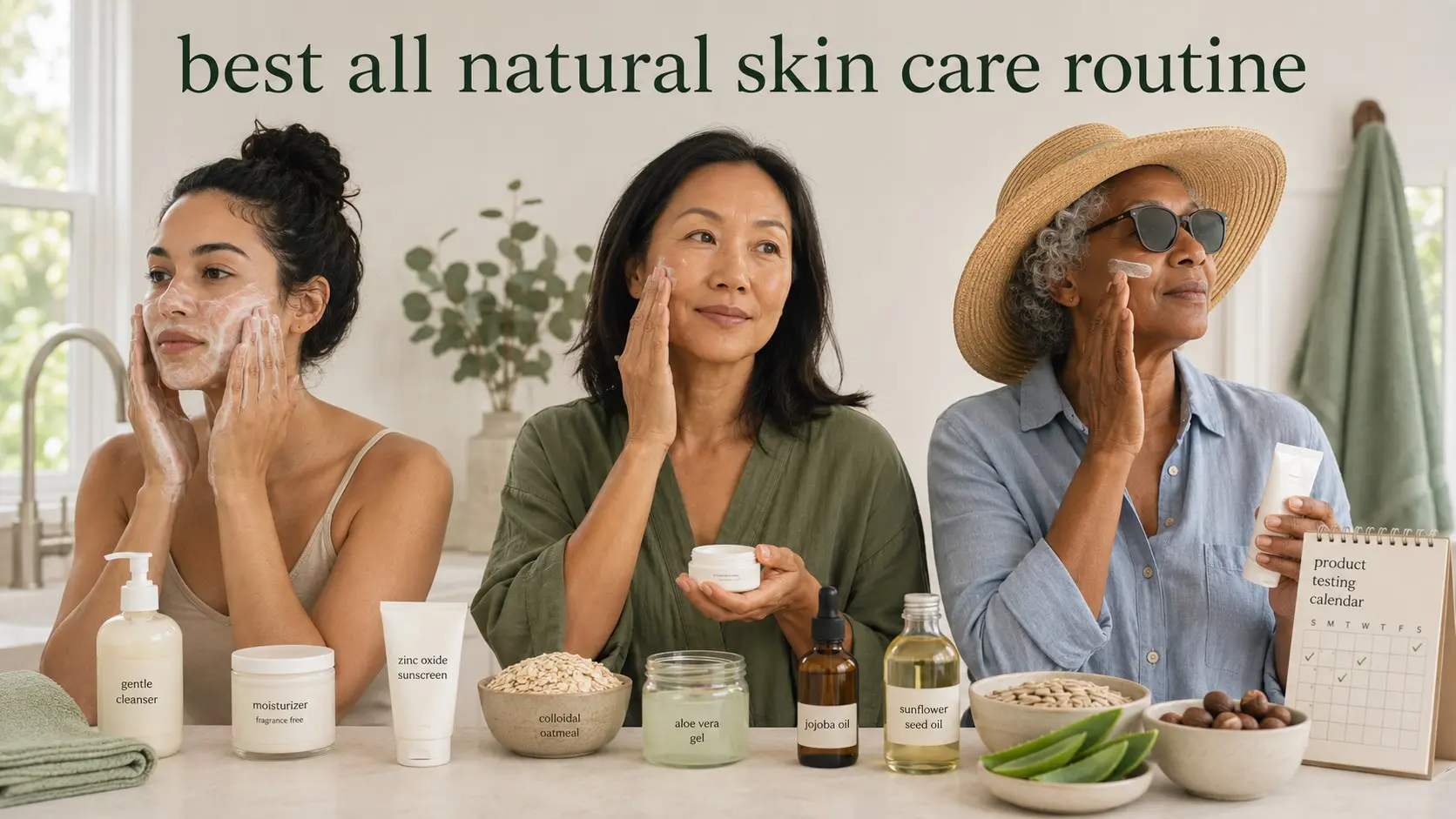
The safest routine still begins with a gentle cleanser, moisturizer, and sunscreen.
Plant oils, oats, aloe, and other botanical ingredients can be added when they are properly formulated, preserved, and tolerated.
This guide explains a safe natural skin care routine, useful plant ingredients, unsafe home remedies, product labels, routines for each skin type, and warning signs.
For wider support, visit the Healthy Skin Guide, the Skincare Basics Guide, and the Complete Skin Health Guide.
Seek medical care for trouble breathing, fast facial swelling, a blistering rash, severe pain, spreading infection, a changing skin mark, or a sore that does not heal.
Quick Answer
The best all natural skin care routine has three basic steps.
- Wash gently with a mild cleanser.
- Apply a fragrance-free moisturizer.
- Use broad-spectrum SPF 30 or higher.
A plant-based ingredient can be added when it has a clear purpose.
Examples include colloidal oatmeal for dry or itchy skin, sunflower seed oil for moisture, aloe gel for temporary soothing, or jojoba oil as part of a moisturizer.
Do not apply undiluted essential oils, lemon, vinegar, raw garlic, baking soda, toothpaste, or homemade sunscreen.
Test every new product before using it on the whole face.
What Does Natural Skin Care Mean?
The word natural has no single legal meaning for cosmetics in the United States.
A brand may use it to describe:
- Plant oils
- Plant extracts
- Minerals
- Wax
- Clay
- Ingredients changed from natural materials
- A product with a small amount of botanical material
This means two products labelled natural may be very different.
Read the complete ingredient list.
Do not judge a product by the front label alone.
What Does Organic Skin Care Mean?
Organic skin care usually refers to how certain agricultural ingredients were grown or processed.
It does not prove that the final product:
- Is safer
- Will not cause an allergy
- Will not clog pores
- Works better
- Contains no synthetic ingredients
- Can treat skin disease
Organic and natural are not the same claim.
A useful product should be safe, stable, properly preserved, and suitable for the skin.
Does Natural Mean Safe?
No.
Natural ingredients can cause:
- Burning
- Dryness
- Clogged pores
- Irritant dermatitis
- Allergic contact dermatitis
- Sun sensitivity
- Eye injury
Examples include citrus oils, cinnamon, clove, peppermint, tea tree oil, lavender oil, raw garlic, and some nut oils.
A product may also become unsafe when it is:
- Mixed incorrectly
- Contaminated
- Stored badly
- Used after its shelf life
- Applied near the eyes
- Used on broken skin
Safe skin care is not about choosing nature over science. It is about choosing suitable ingredients, safe concentrations, stable formulas, correct packaging, and realistic claims.
Best All Natural Skin Care Routine
Morning Routine
- Wash with lukewarm water or a gentle cleanser.
- Apply one optional treatment product.
- Apply moisturizer.
- Apply broad-spectrum sunscreen.
Evening Routine
- Remove makeup and sunscreen gently.
- Wash with a gentle cleanser.
- Apply one optional treatment product.
- Apply moisturizer.
- Use a plain ointment on very dry areas when needed.
Four steps are enough for most people.
You do not need ten serums, several oils, or a new mask every day.
Step 1: Choose a Gentle Cleanser
A gentle face cleanser removes sweat, sunscreen, makeup, and surface oil.
Choose a product labelled:
- Fragrance free
- For sensitive skin
- Soap free
- Noncomedogenic when acne-prone
Use lukewarm water.
Apply cleanser with clean fingertips.
Rinse well.
Pat the skin dry.
Avoid scrubbing with:
- Sugar
- Salt
- Coffee grounds
- Ground nuts
- Fruit seeds
- Rough cloths
- Hard brushes
Step 2: Use a Simple Moisturizer
A moisturizer helps slow water loss.
A good natural face moisturizer may combine plant oils with glycerin, ceramides, wax, or another barrier ingredient.
Choose a light lotion for oily skin.
Choose a cream for normal or dry skin.
Choose an ointment for small very dry areas.
Useful ingredients may include:
- Glycerin
- Sunflower seed oil
- Jojoba oil
- Shea butter
- Squalane
- Colloidal oatmeal
- Petrolatum
- Ceramides
Not every ingredient needs to be plant based for the formula to be gentle.
Step 3: Protect Skin From the Sun
Sunscreen is essential even in a natural routine.
Choose broad spectrum SPF 30 or higher.
A mineral sunscreen uses ingredients such as zinc oxide or titanium dioxide.
A zinc oxide sunscreen may suit people who prefer mineral filters.
Mineral sunscreen is not automatically better for every person.
The best sunscreen is one you can apply correctly and use often.
Apply it to exposed skin.
Remember the ears, neck, upper chest, hands, and scalp.
Add shade, sunglasses, a hat, and protective clothing.
Never make sunscreen at home. Homemade oils, zinc mixtures, and herbal creams cannot guarantee even coverage, stability, water resistance, or a tested SPF.
Step 4: Add One Treatment When Needed
A treatment should match one obvious concern.
| Concern | Possible ingredient | Important limit |
|---|---|---|
| Dry or itchy skin | Colloidal oatmeal or sunflower seed oil | Does not replace treatment for severe eczema |
| Mild redness | Simple aloe gel or colloidal oatmeal | Redness may have a medical cause |
| Clogged pores | Salicylic acid | Not fully natural, but often more useful than harsh scrubs |
| Acne | Azelaic acid, salicylic acid, or adapalene | Deep or scarring acne needs professional care |
| Uneven tone | Azelaic acid, vitamin C, or niacinamide | Sunscreen is still required |
| Fine lines | Retinol or a prescription retinoid | Can irritate and is not suitable during pregnancy |
A safe routine does not need to exclude a useful ingredient simply because it was made in a laboratory.
Safety and effectiveness matter more than marketing language.
Natural Ingredients That May Be Useful
Colloidal Oatmeal
Colloidal oatmeal is finely prepared oatmeal used in skin products.
It may help soothe dry or itchy skin and support the barrier.
Choose a finished product rather than rubbing breakfast oats onto irritated skin.
People with an oat allergy should avoid it.
Sunflower Seed Oil
Sunflower seed oil may help soften dry skin and reduce water loss.
Choose a cosmetic product made for skin.
Do not use rancid cooking oil.
Stop if it causes itching or pimples.
Jojoba Oil
Jojoba oil for skin is often used in moisturizers and cleansing oils.
It may soften the skin.
It does not treat infection, severe acne, eczema, or wrinkles by itself.
Apply a small amount over moisturizer rather than replacing every moisturizer with pure oil.
Shea Butter
Shea butter for skin can help reduce dryness.
It may feel too heavy on oily or acne-prone facial skin.
Choose a finished fragrance-free formula when sensitive.
Aloe Vera
A simple aloe vera gel may feel cooling and soothing.
It may also contain fragrance, alcohol, dye, or preservatives.
Read the label.
Stop if it causes burning or a rash.
Aloe does not replace medical care for burns or infected skin.
Rosehip Oil
Rosehip oil contains fatty acids and plant compounds.
It may work as a light emollient.
Evidence for scars, acne, or deep wrinkles is limited.
It may oxidize when exposed to heat, light, and air.
Squalane
Squalane is a stable moisturizing ingredient that may come from plants or other sources.
It can reduce a dry feeling without being very heavy.
It differs from squalene, which is less stable.
Clay
Clay may absorb some surface oil for a short time.
It does not detox the skin.
It may worsen dryness and sensitivity.
Do not leave a clay mask on until it cracks and hurts.
Are Essential Oils Safe for Skin?
Essential oils for skin can cause irritation and allergy.
Examples include:
- Tea tree oil
- Lavender oil
- Peppermint oil
- Cinnamon oil
- Clove oil
- Rosemary oil
- Lemon oil
- Bergamot oil
Do not apply essential oils directly to the face.
Do not use them near the eyes.
Some citrus oils may increase sensitivity to sunlight.
A diluted oil can still cause an allergic reaction.
Fragrance-free skin care is often safer for eczema, rosacea, and sensitive skin.
Are Preservatives Bad?
Water-based cosmetics need protection from bacteria, yeast, and mould.
Preservatives help keep a product safe during storage and normal use.
A preservative can cause an allergy in some people.
Yet a product with no suitable preservation may become contaminated.
Do not add water, tea, fruit, or aloe juice to a finished cream.
This can change its preservation and shelf life.
Throw away a product that changes smell, colour, or texture.
How to Test a Natural Skin Care Product
- Apply the finished product to a small area of the inner arm.
- Use it twice daily for seven to ten days.
- Use the same amount you plan to use normally.
- Stop for redness, itching, swelling, blistering, or pain.
- Test only one new product at a time.
A home test cannot guarantee that a reaction will never occur.
Seek urgent help for trouble breathing or swelling of the lips, tongue, or throat.
Natural Routine for Dry Skin
Morning
- Rinse with water or use a cream cleanser.
- Apply a moisturizer containing glycerin, sunflower oil, shea butter, oatmeal, or ceramides.
- Apply sunscreen.
Evening
- Use a gentle cleanser.
- Apply a thick moisturizer to damp skin.
- Apply a small amount of ointment to very dry areas.
Avoid frequent clay masks, scrubs, citrus, fragrance, and essential oils.
Read the Daily Dry Skin Care Guide.
Natural Routine for Oily Skin
Morning
- Use a gentle cleanser.
- Apply a light moisturizer.
- Apply noncomedogenic sunscreen.
Evening
- Use a gentle cleanser.
- Use salicylic acid on planned nights when suitable.
- Apply a light moisturizer.
Do not use lemon, alcohol, or clay every day to remove oil.
The skin needs a working barrier even when it is oily.
Natural Routine for Sensitive Skin
Morning
- Use a fragrance-free cleanser or water rinse.
- Apply a simple moisturizer.
- Apply sunscreen.
Evening
- Cleanse gently.
- Apply moisturizer.
Avoid:
- Essential oils
- Fragrance
- Strong plant extracts
- Scrubs
- Frequent masks
- Several new products together
Simple is often better for sensitive skin.
Natural Routine for Acne Prone Skin
Morning
- Use a gentle cleanser.
- Apply azelaic acid or benzoyl peroxide when suitable.
- Apply noncomedogenic moisturizer.
- Apply sunscreen.
Evening
- Use a gentle cleanser.
- Apply adapalene or another suitable acne treatment.
- Apply moisturizer.
Tea tree oil is not automatically safer than standard acne treatment.
It can cause irritation or allergy.
Deep, painful, widespread, or scarring acne needs a dermatologist.
Visit the Acne, Whiteheads and Pores Guide.
Natural Routine for Mature Skin
Morning
- Use a creamy cleanser.
- Apply moisturizer.
- Apply broad-spectrum sunscreen.
Evening
- Cleanse gently.
- Use retinol on planned nights when suitable.
- Apply a rich moisturizer.
Plant oils may soften dry fine lines.
They cannot lift loose skin or rebuild lost facial structure.
Read the Anti Aging and Wrinkles Guide.
Natural Skin Care During Pregnancy
Natural does not automatically mean suitable during pregnancy.
Plant extracts and essential oils may still have biological effects.
Topical retinoids should not be used during pregnancy.
Discuss strong acids, acne products, lightening products, essential oils, and herbal products with a qualified professional.
A simple routine may include:
- Gentle cleanser
- Fragrance-free moisturizer
- Mineral or another suitable sunscreen
- Azelaic acid when approved
Natural Skin Care Remedies to Avoid
Lemon Juice
Lemon is acidic and may cause irritation, burns, or sun-related reactions.
Apple Cider Vinegar
Vinegar may damage the skin barrier and cause chemical burns.
Baking Soda
Baking soda can disrupt the skin surface and increase dryness.
Toothpaste
Toothpaste is not an acne treatment and may irritate facial skin.
Raw Garlic
Garlic may cause serious irritation and burns.
Raw Egg Masks
Raw eggs can irritate the skin and carry a contamination risk.
Sugar and Salt Scrubs
Large particles may scratch and inflame the skin.
Cinnamon Masks
Cinnamon can cause burning and allergic reactions.
Undiluted Essential Oils
Concentrated oils may cause dermatitis and eye injury.
Homemade Sunscreen
Homemade sunscreen cannot provide reliable, tested protection.
Does Eating Natural Food Improve Skin?
A varied diet supports general health and normal skin function.
Choose:
- Vegetables
- Fruit
- Beans
- Lentils
- Whole grains
- Fish
- Eggs
- Tofu
- Nuts
- Seeds
- Healthy oils
No single food can detox the skin.
No juice can remove acne, wrinkles, eczema, or pigmentation in a few days.
Supplements may help a confirmed deficiency.
They do not replace meals, sunscreen, or medical care.
Read the Foods for Healthy Skin Guide.
How to Buy Natural Skin Care Products
Check the following before buying.
- Read the full ingredient list.
- Look for fragrance-free when sensitive.
- Choose noncomedogenic products when acne-prone.
- Check the expiration or period after opening.
- Choose a package that protects light-sensitive oils.
- Avoid products with miracle claims.
- Avoid products with no manufacturer details.
- Avoid unlabelled homemade products.
- Check whether the seller explains storage.
- Test the product before full use.
Natural Beauty Marketing Warning Signs
Be careful when a brand claims that a product:
- Contains no chemicals
- Detoxes the skin
- Removes toxins
- Cures acne
- Cures eczema
- Erases wrinkles
- Closes pores
- Works for every skin type
- Has no side effects
- Needs no preservative
- Replaces sunscreen
- Produces instant permanent results
Everything is made of chemicals, including water and plant oils.
The useful question is whether a formula is safe and suitable.
When to See a Dermatologist
Arrange professional care for:
- A changing mole
- A sore that does not heal
- A painful rash
- Severe itching
- Blisters
- Skin infection
- Severe acne
- Acne scars
- Hair loss
- Repeated product reactions
- Dark marks that change
- Eczema that affects sleep
- Rosacea with eye symptoms
Bring your products or clear photos of their ingredient lists.
When a Skin Reaction Is Urgent
Seek urgent help for:
- Trouble breathing
- Swelling of the lips, tongue, or throat
- Fast facial swelling
- Fainting
- A widespread blistering rash
- Skin peeling with fever
- Severe eye pain after a product exposure
- A painful spreading infection
Common Natural Skin Care Myths
Myth: Natural Means Safe
Natural ingredients can irritate, burn, clog pores, or cause allergy.
Myth: Organic Products Work Better
Organic farming claims do not prove that a cosmetic works better.
Myth: Preservatives Are Always Harmful
Preservatives can protect water-based products from dangerous contamination.
Myth: Essential Oils Are Gentle
Essential oils are concentrated and may cause dermatitis.
Myth: Plant Oils Replace Moisturizer
Oil slows water loss but does not add every part of a balanced moisturizer.
Myth: Homemade Skin Care Is Fresher and Safer
Homemade products may have contamination, concentration, storage, and preservation problems.
Myth: Mineral Sunscreen Is Chemical Free
Mineral ingredients are chemicals too.
Myth: Natural Skin Care Can Cure Acne
Acne may need proven treatment and professional care.
Myth: Burning Means a Natural Remedy Is Working
Burning often means irritation or injury.
Myth: More Ingredients Create Better Results
A simple routine is usually easier to tolerate and evaluate.
Seven-Day Natural Skin Care Reset
Day 1
Remove products that burn or cause repeated irritation.
Day 2
Choose a gentle fragrance free cleanser.
Day 3
Choose one moisturizer for your skin type.
Day 4
Add broad spectrum SPF 30 or higher.
Day 5
Patch test one optional treatment product.
Day 6
Throw away products with a changed smell, color, or texture.
Day 7
Check your skin for pain, rash, infection, or changing marks.
Follow the basic routine for several weeks before adding another active product.
Five High Authority References and Sources
United States Food and Drug Administration: Using Cosmetics Safely
Open guidance explaining that natural and organic sources do not prove safety and that cosmetic claims should not replace safe use.
United States Food and Drug Administration: Organic Cosmetics
Open guidance explaining the separate roles of USDA organic requirements and FDA cosmetic safety and labelling requirements.
American Academy of Dermatology: How to Test Skin Care Products
Open dermatologist guidance on testing products and recognizing reactions to fragrance and botanical ingredients.
American Academy of Dermatology: Tips for Relieving Dry Skin
Open guidance on fragrance free products, gentle washing, moisturizer, sun protection, and avoiding ingredients that worsen dry sensitive skin.
NHS: Causes of Contact Dermatitis
Open guidance on cosmetic ingredients, fragrances, preservatives, plants, medicines, and other causes of allergic or irritant contact dermatitis.
Conclusion
The best all natural skin care routine is simple, gentle, and realistic.
Use a mild cleanser.
Apply moisturizer.
Protect the skin with sunscreen.
Add one plant-based or evidence-informed treatment only when it has a rational purpose.
Do not assume that natural, organic, clean, or chemical-free claims prove safety.
Avoid harsh kitchen remedies, undiluted essential oils, and homemade sunscreen.
Call to action: Check your routine today. Keep one gentle cleanser, one moisturizer, and one sunscreen. Remove any product that repeatedly burns or irritates your skin, then patch test each new product before full use.
Related NextFitLife Guides and Hubs
Medical Disclaimer
This article provides general education. It does not diagnose acne, eczema, rosacea, allergy, infection, skin cancer, or another medical condition.
It does not replace a skin examination, medical history, diagnosis, prescription, treatment plan, pregnancy assessment, or emergency medical care.
Always consult a qualified dermatologist, doctor, pharmacist, or other suitable healthcare professional before treating persistent symptoms, using prescription skin care, applying essential oils, or beginning a strong active product.
About the Author
Frequently Asked Questions
What is the best all natural skin care routine?
Use a gentle cleanser, fragrance-free moisturizer, and broad-spectrum SPF 30 or higher. Add one suitable treatment only when needed.
Does natural skin care mean chemical-free?
No. Every plant, oil, mineral, and a drop of water is made of chemicals. The useful question is whether the formula is safe and suitable.
Are organic skin care products safer?
Not automatically. Organic claims describe certain ingredient production standards, not whether the final product will irritate skin or work better.
Can I use pure plant oil as moisturizer?
A plant oil may reduce water loss, but many people benefit from a complete moisturizer that also contains water-attracting and barrier-supporting ingredients.
Which natural oil is best for dry skin?
Sunflower seed oil, jojoba oil, squalane, and shea butter may suit some people. Patch test first and choose a cosmetic-grade product.
Is coconut oil good for the face?
Coconut oil may soften dry skin but may feel heavy or clog pores in some acne-prone people.
Is aloe vera safe for daily use?
A simple aloe product may soothe some skin. It can still cause irritation or allergy, especially when it contains fragrance or alcohol.
Can essential oils go directly on skin?
No. Concentrated essential oils may cause burns, irritation, allergy, and eye injury.
Is tea tree oil good for acne?
Tea tree oil may help some mild acne, but it may also irritate skin. Proven acne treatments often have clearer dosing and safety guidance.
Can lemon brighten dark spots?
Lemon may irritate or burn skin and can cause a reaction after sun exposure. It is not a safe dark spot treatment.
Do natural products need preservatives?
Water-based products usually need suitable preservation to reduce bacteria, yeast, and mould growth.
How should I patch test natural skincare?
Apply the product to a small area of the inner arm twice daily for seven to ten days. Stop if redness, itching, swelling, or pain develops.
Can I make sunscreen at home?
No. Homemade sunscreen cannot provide reliably tested SPF, even coverage, stability, or water resistance.
When should I see a dermatologist?
Seek care for a changing mole, nonhealing sore, severe acne, infection, strong itching, repeated reactions, or a rash that affects daily life.

Health & wellness writer with 30+ years of experience in nutrition, fitness, and healthy aging. Founder of NextFitLife.com — evidence-based health guidance.