Published: March 2023
Last updated: July 20, 2026
Next review: July 2027
Written and source checked by: Adel Galal, Founder and Lead Writer at NextFitLife
Review status: Editorially reviewed and source checked. This article has not been medically reviewed by a doctor, dentist, or registered dietitian.
Calcium Rich Foods can help you get the calcium your body needs through normal meals.
Calcium helps build and maintain bones and teeth.
Your body also uses it for muscles, nerves, blood vessels, hormones, and normal blood clotting.
Most calcium in the body is stored in the bones and teeth.
Your body keeps blood calcium within a narrow range.
This means a normal blood calcium test does not always show whether your diet has provided enough calcium over time.
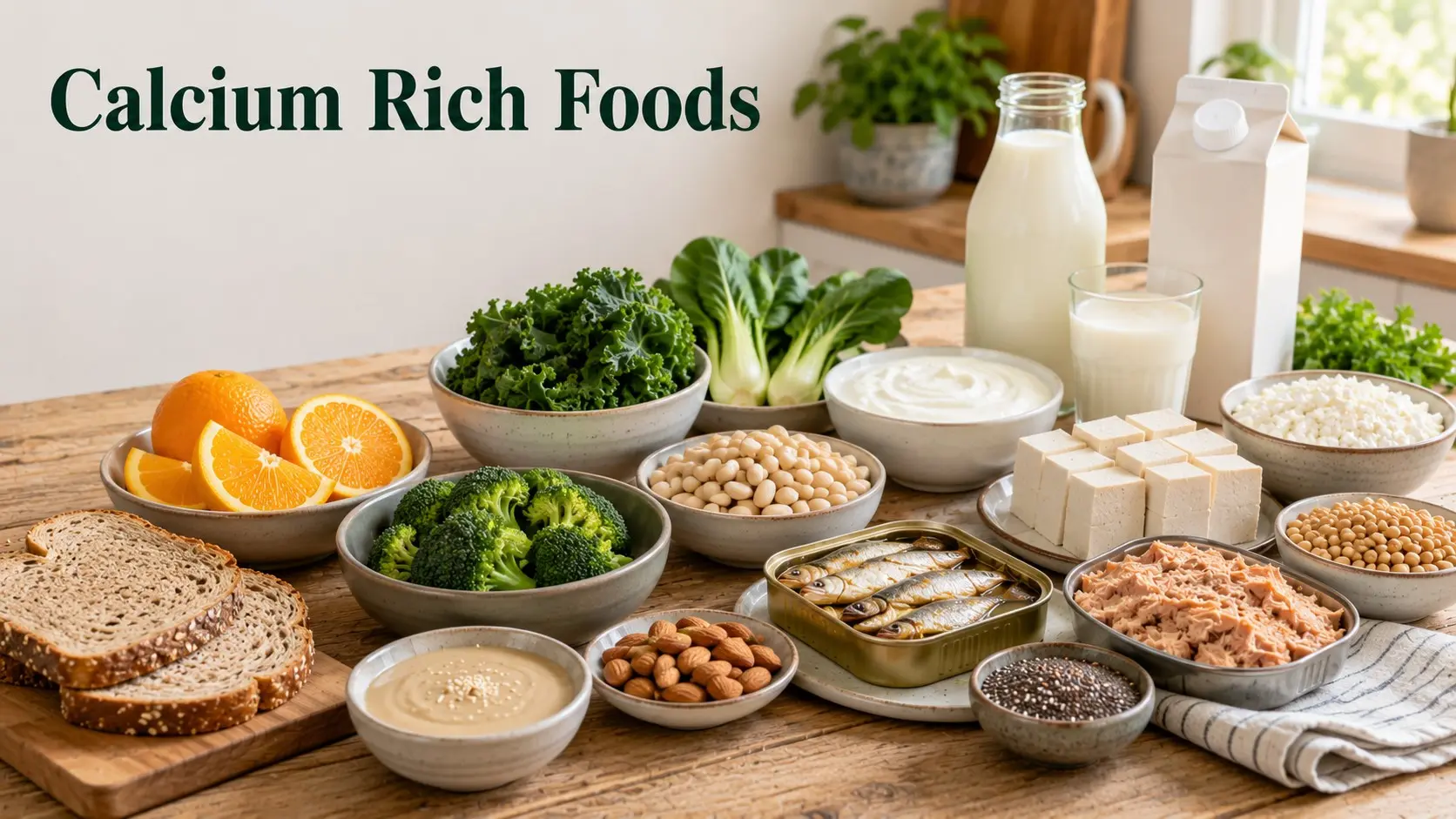
The best food sources include yogurt, milk, cheese, calcium set tofu, fortified plant drinks, sardines with bones, canned salmon with bones, bok choy, kale, soybeans, chia seeds, and selected fortified foods.
Not every meal must be high in calcium.
Apples, rice, chicken, eggs, oats, and many vegetables contain little calcium, but they can still be useful foods.
The goal is not to avoid every low calcium food.
The goal is to include enough reliable calcium sources across the day.
This guide explains daily needs, dairy and plant sources, food labels, calcium absorption, simple meals, supplement safety, and common mistakes.
For broader guidance, visit the NextFitLife Bone and Joint Health Foods Hub.
Quick Answer
The best Calcium Rich Foods include plain yogurt, milk, mozzarella, fortified soy drink, calcium set tofu, sardines with bones, canned salmon with bones, cooked soybeans, bok choy, kale, turnip greens, chia seeds, white beans, almonds, tahini, and fortified cereal or juice.
United States guidance recommends 1,000 milligrams a day for most adults age 19 to 50.
Women age 51 to 70 and all adults over age 70 generally need 1,200 milligrams.
United Kingdom guidance uses 700 milligrams a day for most adults.
Needs differ by age, sex, country, pregnancy, health, and treatment. Use local guidance and personal medical advice.
Important Medical and Nutrition Note
I am not a dermatologist or A doctor, and this content does not replace professional medical advice.
What I share comes from real life experience, extensive research, and consultation with healthcare providers.
Always consult qualified medical professionals for diagnosis and treatment of any health condition.
Do not diagnose calcium deficiency from brittle nails, dry skin, tooth problems, muscle cramps, or tiredness.
These signs can have many causes.
Do not begin a calcium supplement or a medically restricted low calcium diet without professional guidance.
People with kidney disease, kidney stones, high blood calcium, parathyroid disease, cancer, sarcoidosis, or medicine interactions need personal advice.
Seek urgent medical care for severe weakness, confusion, fainting, seizures, an abnormal heartbeat, or another serious symptom.
Why Calcium Rich Foods Matter
Calcium is the most abundant mineral in the body.
Almost all of it is stored in bones and teeth.
This stored calcium gives bones structure and hardness.
Your body also needs calcium for:
- Muscle movement
- Nerve messages
- Normal heart rhythm
- Blood vessel function
- Blood clotting
- Hormone release
- Cell functions
If calcium intake stays low for a long time, the body may take calcium from bone to keep blood calcium stable.
This can contribute to weaker bones over time.
Calcium Does Not Work Alone
Calcium is only one part of bone health nutrition.
Bones also need:
- Vitamin D
- Enough protein
- Magnesium
- Phosphorus
- Vitamin K
- Regular weight bearing activity
- Strength exercise
- Healthy hormone levels
- Avoiding smoking
- Medical care when needed
Vitamin D helps the body absorb calcium.
Read our Foods High in Vitamin D Guide for food sources and supplement safety.
Calcium and Teeth
Calcium helps give teeth their hard structure.
But calcium food does not repair a cavity.
Dental health also depends on brushing, fluoride, dental visits, saliva, sugar intake, and other factors.
See a dentist for pain, swelling, bleeding gums, broken teeth, or signs of decay.
How Much Calcium Do You Need?
Calcium needs differ by country.
The table below shows United States reference amounts.
| Life stage | Recommended calcium each day |
|---|---|
| Birth to 6 months | 200 milligrams |
| Age 7 to 12 months | 260 milligrams |
| Age 1 to 3 | 700 milligrams |
| Age 4 to 8 | 1,000 milligrams |
| Age 9 to 18 | 1,300 milligrams |
| Adults age 19 to 50 | 1,000 milligrams |
| Men age 51 to 70 | 1,000 milligrams |
| Women age 51 to 70 | 1,200 milligrams |
| Adults age 71 and older | 1,200 milligrams |
| Pregnant and breastfeeding adults | 1,000 milligrams |
| Pregnant and breastfeeding teens | 1,300 milligrams |
United Kingdom guidance recommends about 700 milligrams each day for most adults.
This difference does not mean one source is wrong.
Nutrition authorities can use different methods and reference values.
Follow the guidance used in your country or by your healthcare team.
Do You Need to Reach the Exact Number Every Day?
You do not need to hit one exact number at every meal.
Your intake can vary from day to day.
A regular pattern matters more than one perfect day.
People with osteoporosis, low food intake, digestive disease, pregnancy, or other medical needs may receive a personal target.
20 Best Calcium Rich Foods
Calcium amounts can change by brand, recipe, processing, and serving size.
Check the food label when calcium is a main reason for choosing the product.
1. Plain Yogurt
Plain yogurt is one of the easiest high calcium foods.
One cup can provide about 300 to 415 milligrams.
The exact amount depends on the product.
Use yogurt with:
- Fruit
- Oats
- Chia seeds
- Cinnamon
- Soup
- Salad dressing
- Savory sauces
Greek yogurt can provide more protein, but some brands provide less calcium than regular yogurt.
Read the label.
2. Cow Milk
One cup of cow milk usually provides about 276 to 300 milligrams of calcium.
Whole, reduced fat, and fat free milk all provide calcium.
Use milk in:
- Oatmeal
- Cereal
- Smoothies
- Soup
- Sauces
- Hot drinks
People with lactose intolerance may tolerate lactose free milk.
A milk allergy is different from lactose intolerance.
3. Mozzarella and Other Cheese
One and a half ounces of part skim mozzarella can provide about 333 milligrams.
Cheese amounts differ by type.
Cheese also can contain a lot of sodium and saturated fat.
Use a suitable portion for taste and calcium.
4. Fortified Soy Drink
One cup of calcium fortified soy drink can provide about 300 milligrams.
Some brands provide more or less.
Shake the container when the instructions say to do so.
Added calcium can settle near the bottom.
Compare:
- Calcium
- Protein
- Vitamin D
- Vitamin B12
- Iodine
- Added sugar
5. Other Fortified Plant Drinks
Fortified oat, almond, pea, rice, and coconut drinks may provide calcium.
Unfortified products may provide very little.
Plant drinks also differ in protein.
Do not assume every plant drink is equal to dairy milk.
6. Calcium Set Tofu
Half a cup of firm tofu made with calcium sulfate can provide about 253 milligrams.
Some tofu provides much less.
Look for calcium sulfate in the ingredient list.
Use tofu in:
- Scrambles
- Soup
- Curries
- Rice bowls
- Salads
- Stir cooked vegetables
7. Sardines with Bones
Three ounces of canned sardines with bones can provide about 325 milligrams.
The small bones are soft and edible.
Sardines also provide protein and omega 3 fats.
Compare sodium between products.
8. Canned Salmon with Bones
Three ounces of canned pink salmon with bones can provide about 181 milligrams.
Mash the soft bones into the salmon.
Use it in sandwiches, fish cakes, salad, pasta, or potato meals.
Fresh boneless salmon is not a strong calcium source.
9. Soybeans
Half a cup of cooked soybeans can provide about 131 milligrams.
Soybeans also provide protein and fiber.
Use them in soup, salad, rice bowls, or vegetable meals.
10. Cottage Cheese
One cup of low fat cottage cheese can provide about 138 milligrams.
This is less than many yogurts.
Cottage cheese can contain a lot of sodium.
Compare labels.
11. Turnip Greens
Half a cup of cooked turnip greens can provide about 99 milligrams.
Cook them with garlic, beans, onions, or a small amount of olive oil.
12. Kale
One cup of cooked kale can provide about 94 milligrams.
Kale contains less calcium per serving than milk or yogurt.
Its calcium is more available than the calcium in spinach.
13. Bok Choy
One cup of raw shredded bok choy can provide about 74 milligrams.
Add it to soup, noodles, tofu meals, rice, or vegetable dishes.
14. Broccoli
Broccoli is not one of the highest calcium foods by total amount.
Half a cup of raw broccoli provides about 21 milligrams.
It can still contribute when eaten often.
It also adds fiber, vitamin C, and other nutrients.
15. Chia Seeds
One tablespoon of chia seeds provides about 76 milligrams.
Chia also provides fiber and plant omega 3 fat.
Add it to yogurt, oats, pudding, or a smoothie.
Allow dry chia seeds to absorb liquid before serving them to someone with swallowing problems.
16. White Beans and Other Beans
Beans can provide small to moderate amounts of calcium.
They also provide protein and fiber.
Use beans in soup, salad, pasta, curry, wraps, or rice bowls.
Drain and rinse canned beans to remove some sodium.
17. Almonds
Almonds provide calcium, fat, protein, fiber, and magnesium.
They contain a lot of energy in a small serving.
Use a small handful.
People with nut allergies must avoid them.
18. Tahini and Sesame Seeds
Tahini is a paste made from sesame seeds.
Calcium varies by brand and whether the seed hull is included.
Use tahini in hummus, dressing, sauces, or toast.
Check the label for an exact amount.
19. Fortified Breakfast Cereal
Some cereals contain added calcium.
A cereal with 10 percent of the United States Daily Value provides about 130 milligrams.
Other cereals may provide more.
Compare calcium, serving size, fiber, added sugar, and sodium.
20. Fortified Orange Juice
One cup of calcium fortified orange juice can provide about 349 milligrams.
Not every juice is fortified.
Shake the container when directed.
Juice has less fiber than whole fruit.
People managing blood sugar may need a smaller portion or another calcium source.
Calcium Content of Common Foods
These are approximate amounts.
| Food | Serving | Approximate calcium |
|---|---|---|
| Plain low fat yogurt | 8 ounces | 415 milligrams |
| Fortified orange juice | 1 cup | 349 milligrams |
| Part skim mozzarella | 1.5 ounces | 333 milligrams |
| Sardines with bones | 3 ounces | 325 milligrams |
| Fat free milk | 1 cup | 299 milligrams |
| Fortified soy drink | 1 cup | 299 milligrams |
| Calcium set firm tofu | Half a cup | 253 milligrams |
| Canned salmon with bones | 3 ounces | 181 milligrams |
| Cottage cheese | 1 cup | 138 milligrams |
| Cooked soybeans | Half a cup | 131 milligrams |
| Cooked kale | 1 cup | 94 milligrams |
| Chia seeds | 1 tablespoon | 76 milligrams |
| Raw bok choy | 1 cup | 74 milligrams |
| Canned pinto beans | Half a cup | 54 milligrams |
| Whole wheat bread | 1 slice | 30 milligrams |
| Apple with skin | 1 medium | 10 milligrams |
Are Low Calcium Foods Bad for Bones?
No.
A food does not need to be rich in every nutrient.
Many nutritious foods provide little calcium.
Examples include:
- Apples
- Bananas
- Pears
- Chicken
- Eggs
- Rice
- Pasta
- Oats
- Potatoes
- Most fish without bones
- Most unfortified grains
- Many vegetables
These foods can provide protein, fiber, vitamins, minerals, energy, or enjoyment.
You do not need to avoid them because they contain little calcium.
Pair them with a calcium source.
Simple Pairing Examples
- Apple with yogurt
- Oatmeal made with fortified soy drink
- Eggs with calcium fortified toast and milk
- Chicken with kale and yogurt sauce
- Rice with calcium set tofu and bok choy
- Pasta with white beans and cheese
- Potatoes with canned salmon and vegetables
When Is a Low Calcium Diet Needed?
A medically prescribed low calcium diet is uncommon.
It may be used for a specific test or condition under professional supervision.
Do not remove dairy food, fortified products, tofu, or edible bone fish because a general article tells you to lower calcium.
A long low calcium diet can make it harder to meet bone needs.
Do Soda and Meat Remove Calcium from Bones?
These claims are often overstated.
Meat and eggs are low in calcium, but that does not make them calcium robbers.
Protein is also important for muscles and bones.
Soft drinks can replace milk or other nutritious drinks when consumed often.
They may also add sugar or caffeine.
This is different from saying one soda directly pulls calcium from every person’s bones.
Focus on the full eating pattern.
How Calcium Absorption Works
Eating calcium does not mean your body absorbs all of it.
Calcium absorption changes with the food, the amount eaten, vitamin D, age, and health.
Vitamin D Helps
Vitamin D helps the intestines absorb calcium.
Low vitamin D can reduce calcium absorption.
Food sources include oily fish, eggs, UV exposed mushrooms, and selected fortified foods.
Spinach Is Not a Reliable Calcium Source
Spinach contains calcium.
It also contains a lot of oxalate.
Oxalate binds calcium and makes much of it hard to absorb.
Spinach is still a nutritious vegetable.
Do not count it as your main calcium source.
Kale, broccoli, bok choy, and cabbage have better calcium availability.
Fortified Foods Vary
Calcium added to plant drinks, juice, tofu, and cereal can make them useful sources.
The amount changes by product.
Read the label.
Spread Calcium Across the Day
Your body absorbs smaller calcium amounts more efficiently than one very large amount.
Include calcium at two or three meals rather than trying to get everything at once.
Do Not Fear Oxalate and Phytate
Oxalate and phytate can reduce calcium absorption from some plant foods.
This does not mean beans, grains, seeds, or vegetables are unhealthy.
A varied diet with several reliable calcium sources can still meet your needs.
Calcium Rich Foods Without Dairy
A dairy free calcium plan needs reliable replacements.
Useful choices include:
- Fortified soy drink
- Fortified oat or pea drink
- Calcium set tofu
- Sardines with bones
- Canned salmon with bones
- Bok choy
- Kale
- Turnip greens
- Soybeans
- White beans
- Chia seeds
- Tahini
- Fortified cereal
- Fortified orange juice
Vegan Calcium Sources
A vegan diet can provide enough calcium.
The most dependable vegan calcium sources are often fortified drinks and calcium set tofu.
Vegetables, beans, seeds, nuts, and bread can add more.
Check vitamin D and vitamin B12 too.
Visit our Special Diets Hub for more plant based nutrition guidance.
Lactose Intolerance
Lactose intolerance does not always require avoiding all dairy.
Some people tolerate:
- Lactose free milk
- Hard cheese
- Yogurt
- Small dairy portions with meals
Milk allergy is different.
A person with a true allergy needs safe avoidance and professional guidance.
Simple Meals with Calcium Rich Foods
Breakfast Idea 1
- Plain yogurt
- Berries
- Oats
- Chia seeds
Breakfast Idea 2
- Whole grain cereal
- Fortified soy drink
- Fruit
- Almonds if safe
Breakfast Idea 3
- Eggs
- Kale or bok choy
- Whole grain toast
- A glass of milk or fortified plant drink
Find more ideas in our Healthy Breakfast Ideas Guide.
Lunch Idea 1
- Canned salmon with bones
- Potatoes
- Cucumber and tomato
- Plain yogurt dressing
Lunch Idea 2
- Calcium set tofu
- Brown rice
- Bok choy
- Broccoli
- Sesame dressing
Lunch Idea 3
- White bean soup
- Kale
- Whole grain bread
- A small amount of cheese
Dinner Idea 1
- Sardines with bones
- Roasted potatoes
- Cooked greens
- Lemon
Dinner Idea 2
- Tofu curry
- Broccoli and cabbage
- Rice
- Fortified yogurt alternative
Simple Snack Ideas
- Yogurt and fruit
- Fortified soy drink
- Cheese and whole grain crackers
- Chia pudding
- White bean dip with vegetables
- Almonds with fruit if safe
Seven Day Calcium Rich Foods Plan
This is a general example.
Change the foods and portions to fit your needs.
| Day | Breakfast | Main calcium meal |
|---|---|---|
| Day 1 | Yogurt, berries, oats, and chia | Salmon with bones, potatoes, and kale |
| Day 2 | Fortified cereal and soy drink | Calcium set tofu, rice, and bok choy |
| Day 3 | Eggs, toast, and milk | White bean soup with kale and cheese |
| Day 4 | Oatmeal made with fortified plant drink | Sardines, potatoes, and cooked greens |
| Day 5 | Cottage cheese, fruit, and oats | Tofu curry with broccoli and rice |
| Day 6 | Yogurt, apple, cinnamon, and almonds | Salmon cakes with cabbage salad |
| Day 7 | Chia pudding with fortified soy drink | Bean pasta with kale and mozzarella |
How to Read Calcium on Food Labels
Check the Serving Size
The calcium amount applies to one listed serving.
Your cup or bowl may contain more or less.
Check Milligrams
Milligrams show the actual calcium amount.
This is useful when adding your daily intake.
Check the Percent Daily Value
The United States Daily Value for calcium is 1,300 milligrams.
A food with 20 percent or more of the Daily Value is considered high in calcium.
A lower amount can still contribute.
Read the Ingredients
For tofu, look for calcium sulfate.
For plant drinks, look for added calcium and vitamin D.
For cereal and juice, confirm that the product is fortified.
Shake Fortified Drinks
Added minerals can settle.
Shake plant drinks and fortified juice when the package directs you to do so.
Do You Need a Calcium Supplement?
Food and fortified foods are usually the first choice.
A supplement may be useful when food cannot meet your needs.
This decision should consider your diet, health, age, medicine, and other supplements.
Calcium Carbonate
Calcium carbonate is best absorbed with food.
It contains a larger amount of elemental calcium in each tablet.
It can cause gas or constipation in some people.
Calcium Citrate
Calcium citrate can be taken with or without food.
It may be easier to absorb for people with low stomach acid.
Smaller Amounts Are Absorbed Better
Calcium supplements are absorbed best in amounts of 500 milligrams or less at one time.
Do not take several calcium products without checking the total.
Upper Limits
The United States upper limit from food and supplements is:
- 2,500 milligrams a day for adults age 19 to 50
- 2,000 milligrams a day for adults age 51 and older
This is a safety ceiling.
It is not a daily goal.
Possible Side Effects
Calcium supplements may cause:
- Gas
- Bloating
- Constipation
- Stomach discomfort
Too much calcium can contribute to high blood calcium and other problems.
Medicine Interactions
Calcium supplements can interact with:
- Levothyroxine
- Some antibiotics
- Dolutegravir
- Lithium
- Other medicines
Ask a pharmacist how far apart to take your medicine and calcium.
Do not guess.
Calcium and Kidney Stones
People with calcium kidney stones are sometimes told to stop eating calcium.
This is not usually the correct general advice.
Normal calcium from food can bind oxalate in the gut.
A very low calcium diet may increase oxalate absorption in some people.
Stone prevention depends on the stone type, urine tests, fluid needs, sodium intake, and medical history.
Calcium supplements may need different timing or limits.
Follow advice from a kidney specialist or dietitian.
Calcium Rich Foods and Full Bone Health
Calcium alone cannot prevent every fracture.
A full plan may include:
- Enough vitamin D
- Enough protein
- Walking
- Strength exercise
- Balance exercise
- Avoiding smoking
- Limiting excess alcohol
- Fall prevention
- Bone density testing when advised
- Osteoporosis medicine when prescribed
Read our guide to Vitamins for Strong Bones and Joints for a wider nutrition overview.
After Menopause
Bone loss can speed up after menopause.
Calcium, vitamin D, protein, activity, and medical screening all matter.
Food cannot replace osteoporosis treatment when it is needed.
For Children and Teens
Children and teens need calcium for growth and bone development.
They also need enough total food and protein.
Do not give a child adult supplements without pediatric advice.
During Pregnancy and Breastfeeding
Calcium needs are important during pregnancy and breastfeeding.
The body also changes how it absorbs calcium during these stages.
Follow maternity guidance before adding supplements.
Common Calcium Mistakes
Counting Spinach as a Main Calcium Source
Spinach contains calcium, but much of it is not absorbed because of oxalate.
Assuming Every Plant Drink Is Fortified
Some contain a lot of calcium.
Some contain almost none.
Read the label.
Assuming Every Tofu Is High in Calcium
Only tofu made with a calcium salt is a reliable high source.
Avoiding Low Calcium Foods
Rice, apples, eggs, chicken, and many other foods can still be nutritious.
Pair them with calcium instead of banning them.
Taking a Large Supplement Without Checking Food Intake
You may already receive calcium from milk, yogurt, fortified drinks, cereal, antacids, and multivitamins.
Count the full amount.
Expecting Calcium to Fix Teeth
Calcium supports tooth structure.
It does not repair decay or infection.
Ignoring Vitamin D
Low vitamin D can reduce calcium absorption.
Ignoring Protein and Exercise
Bones and muscles need more than calcium.
Using Blood Calcium to Judge Diet
The body tightly controls blood calcium.
A normal result does not prove that long term food intake is adequate.
Conclusion: Add Calcium Rich Foods Across Your Day
Calcium Rich Foods can help support bones, teeth, muscles, nerves, and other normal body functions.
The strongest sources include yogurt, milk, cheese, fortified plant drinks, calcium set tofu, sardines with bones, canned salmon with bones, soybeans, kale, bok choy, chia seeds, beans, and selected fortified foods.
Low calcium foods are not bad foods.
Pair them with reliable calcium sources.
Spread calcium across the day.
Check labels.
Include vitamin D, protein, and regular movement.
Use supplements only when they are needed and safe.
Start with one step today.
Add yogurt to breakfast.
Choose a fortified soy drink.
Use calcium set tofu at lunch.
Or add canned salmon with bones to dinner.
Save this Calcium Rich Foods guide and share it with someone who wants simple and responsible bone nutrition advice.
References and Sources
- National Institutes of Health Office of Dietary Supplements: Calcium Fact Sheet for Health Professionals
- National Institutes of Health Office of Dietary Supplements: Calcium Fact Sheet for Consumers
- National Health Service: Food for Healthy Bones
- British Dietetic Association: Calcium Food Sources and Daily Needs
- International Osteoporosis Foundation: Calcium and Bone Health
Frequently Asked Questions About Calcium Rich Foods
What are the best Calcium Rich Foods?
The best Calcium Rich Foods include yogurt, milk, cheese, fortified soy drink, calcium set tofu, sardines with bones, canned salmon with bones, soybeans, kale, bok choy, chia seeds, beans, and fortified cereal or juice.
Which food has the most calcium?
Among common servings, plain yogurt, fortified juice, mozzarella, sardines with bones, milk, fortified soy drink, and calcium set tofu can provide large amounts. The exact amount depends on the product.
How much calcium do adults need?
United States guidance recommends 1,000 milligrams each day for most adults age 19 to 50. Women age 51 to 70 and all adults over age 70 generally need 1,200 milligrams. United Kingdom guidance uses 700 milligrams for most adults.
What are the best vegan Calcium Rich Foods?
Useful vegan choices include fortified plant drinks, calcium set tofu, soybeans, white beans, kale, bok choy, turnip greens, chia seeds, tahini, almonds, fortified cereal, and fortified juice.
Is spinach high in calcium?
Spinach contains calcium, but oxalate makes most of it difficult to absorb. Kale, bok choy, broccoli, and cabbage are more reliable plant sources.
Are eggs Calcium Rich Foods?
No. Eggs provide protein and other nutrients, but they are not high in calcium. Pair them with milk, fortified plant drink, cheese, yogurt, tofu, or calcium rich vegetables.
Are bananas high in calcium?
No. Bananas are low in calcium. They still provide potassium, carbohydrate, and other nutrients. Add yogurt or fortified milk when you want a calcium rich snack.
Are low calcium foods bad for bones?
No. Many useful foods contain little calcium. The goal is to eat a varied diet and add enough reliable calcium sources across the day.
Can I get enough calcium without dairy?
Yes. Fortified plant drinks, calcium set tofu, canned fish with bones, soybeans, greens, beans, seeds, nuts, and fortified products can help meet calcium needs.
Does cooking destroy calcium?
Calcium is a mineral, so normal cooking does not destroy it. Boiling can move some calcium into cooking water. Use the liquid in soup or sauce when practical.
Do I need vitamin D with calcium?
Vitamin D helps the body absorb calcium. A full bone health plan also needs protein, physical activity, and medical care when needed.
Should I take a calcium supplement?
A supplement may help when food cannot meet your needs. Ask a doctor, pharmacist, or registered dietitian about the amount, type, timing, and medicine interactions.
Can too much calcium be harmful?
Yes. Too much calcium can cause constipation, stomach symptoms, high blood calcium, and other problems. Supplements can also interact with medicines.
Can calcium repair cavities?
No. Calcium supports tooth structure, but it cannot repair a cavity or treat an infection. See a dentist for dental problems.

Health & wellness writer with 30+ years of experience in nutrition, fitness, and healthy aging. Founder of NextFitLife.com — evidence-based health guidance.