Published on:
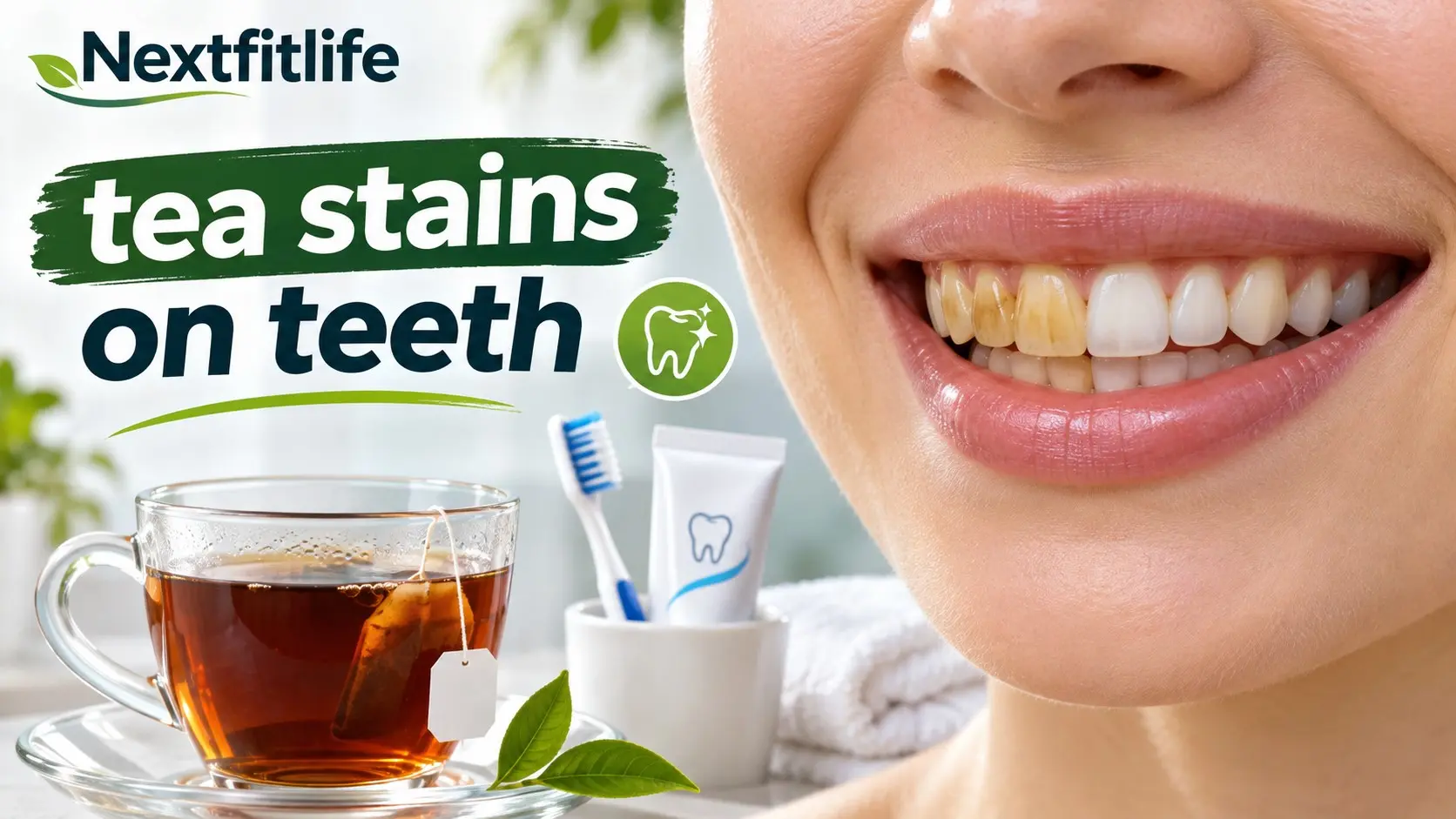
Tea stains on teeth are usually surface stains caused by colored compounds that collect on enamel and on plaque or tartar. Mild stains may improve with good brushing, whitening toothpaste, or a professional cleaning. Dark color in one tooth, pain, swelling, a hole, or a mark that keeps changing needs a dental check instead of more whitening.
Quick answer: Tea can stain natural teeth over time, especially with frequent exposure. Most tea staining is external rather than permanent internal discoloration. Water after tea, twice daily brushing with fluoride toothpaste, daily cleaning between teeth, and professional cleaning can help. Peroxide whitening can change natural tooth color when cleaning alone is not enough.
This article is for general information and education. It does not replace medical advice, diagnosis, or treatment.
See a dentist promptly if one tooth becomes gray, brown, or black without a clear reason, or if discoloration comes with pain, swelling, drainage, a visible hole, a broken tooth, or a recent injury. Those signs are not safely explained as simple tea stain.
Tea is only one cause of tooth discoloration. If you also drink coffee often, compare this guide with Coffee Stains on Teeth. For a wider daily care plan, see the NextFitLife Oral Care Guide.
Table of Contents
- Why tea stains teeth
- Tea stains versus deeper discoloration
- Which teas are more likely to stain
- Are tea stains permanent?
- 11 practical ways to reduce tea stains
- What not to use on teeth
- Cleaning, whitening toothpaste, and bleaching compared
- Tea after whitening
- Crowns, veneers, and fillings
- When a dark area needs a dentist
- A simple tea drinker's routine
- Common mistakes
- Conclusion
- References and Sources
- Internal Links and NextFitLife Hubs
- About the Author
- Frequently Asked Questions
Why Does Tea Stain Teeth?
Tea contains strongly colored plant compounds. When you drink it often, some of those compounds can collect on the outside of teeth. The American Dental Association lists tea with coffee, red wine, cola, tobacco, and other highly pigmented exposures as common causes of extrinsic stains.
Extrinsic means the color is mainly on the outer surface. That is different from intrinsic discoloration, which starts inside the tooth.
The surface of a tooth is not perfectly smooth in real life. Saliva forms a thin film over enamel, and plaque or tartar can create more places for color to collect. That is why two people who drink the same amount of tea may not develop the same amount of staining.
Tea staining also depends on the drink itself. Brew strength, tea type, frequency, how long you sip it, whether the teeth already have deposits, and the condition of enamel or dental restorations can all change the final color.
Does Tea Stain Teeth More Than Coffee?
I would not give every reader a simple “tea is worse” or “coffee is worse” answer.
Both drinks are well established causes of surface staining. Laboratory studies do not produce one universal ranking because results change with the tea, coffee, tooth surface, restorative material, exposure time, and test method.
Some experiments have found substantial tea staining, and a 2026 laboratory study found that tea stains penetrated more deeply than wine stains under its test conditions. A separate older laboratory study found more enamel staining from coffee than tea.
Those results help researchers understand staining. They do not tell us that one drink will always stain every person's teeth more.
Practical takeaway: if you drink tea or coffee every day, treat both as staining drinks. Your oral care and total exposure matter more than trying to decide which cup is always worse.
If both drinks are part of your routine, see Coffee Stains on Teeth: 11 Smart Ways to Help.
Which Types of Tea Can Stain Teeth?
Dark brewed teas are the obvious concern because they carry more visible pigment, but lighter tea does not mean zero staining.
Black Tea
Black tea can leave yellow or brown surface color over time. Strong tea and frequent drinking increase the amount of repeated pigment exposure.
That does not mean everyone who drinks black tea develops obvious stains. Daily cleaning, saliva, enamel surface, tartar, smoking, other drinks, and dental work all change what you see.
Green Tea
Green tea can also contribute to tooth discoloration.
Its color is different from black tea, but “green” does not mean stain free. If you prefer green tea for taste or other reasons, there is no need to avoid it solely because of tooth color. Just use the same sensible oral care habits.
Herbal and Fruit Teas
Herbal tea is too broad a label to predict staining.
A pale chamomile infusion and a deep red hibiscus drink do not expose teeth to the same pigments. Some fruit teas also contain acidic ingredients, which creates an enamel issue separate from staining.
Iced Tea
Iced tea can stain too. Temperature does not remove the pigments.
Sweetened bottled iced tea can also expose teeth to added sugar, so stain and cavity risk become two different questions.
Are Tea Stains on Teeth Permanent?
Most true surface tea stains are not permanent.
The American Dental Association notes that many external stains can be reduced with mechanical cleaning, including brushing with a whitening toothpaste or professional dental cleaning.
If natural teeth still look darker after plaque, tartar, and surface stain are removed, peroxide based whitening can change the tooth color more deeply.
That does not mean every dark tooth should be bleached.
A color change can also come from tooth injury, decay, aging, previous dental treatment, medicine exposure during tooth development, or another change inside the tooth.
If your main problem is broad yellow discoloration rather than obvious tea stain, see How to Remove Yellow Stains on Teeth Safely.
How Can You Tell Tea Stain From Something Else?
| What You See | What It Could Mean | Useful Next Step |
|---|---|---|
| Yellow or brown film on several teeth | Possible surface stain | Improve daily cleaning and consider a professional cleaning |
| Hard brown deposit near the gumline | Possible tartar with stain attached | Professional cleaning rather than scraping at home |
| Brown or black area with a hole or pain | Possible tooth decay | Dental examination |
| One tooth turning gray or dark | Possible internal discoloration or past injury | Dental examination |
| Color change around a filling or crown | Stain, aging restoration, or another dental problem | Ask a dentist to inspect the area |
If the color is painful, rough, isolated to one tooth, or keeps changing, stop treating it as a cosmetic stain until a dental professional has checked it.
11 Practical Ways to Reduce Tea Stains on Teeth
1. Drink Water After Tea
This is the easiest habit on the list.
Have a few sips of plain water when you finish your tea. Water helps clear some leftover pigment and reduces the time the drink sits around the teeth.
You do not need a strong whitening rinse every time. A plain water rinse is simple and easy to repeat.
2. Brush Twice a Day With Fluoride Toothpaste
Regular brushing keeps plaque from building into a surface that holds more color. Use a soft toothbrush and fluoride toothpaste, and clean for about two minutes each time.
Do not turn stain removal into a scrubbing contest.
Harder pressure does not bleach enamel. Aggressive brushing can irritate gums and contribute to tooth wear over time.
For the full routine, use the Oral Hygiene Guide.
3. Clean Between Teeth Every Day
Tea stains can look worse where plaque stays between teeth or near the gumline.
Floss, interdental brushes, or another method recommended for your mouth can clean areas a toothbrush misses.
This will not bleach teeth, but it can reduce the plaque layer that collects stain and helps daily oral health at the same time.
4. Use Whitening Toothpaste for Mild Surface Stain
A whitening toothpaste is a reasonable first choice when the problem is mild external staining.
The ADA explains that many whitening toothpastes work mainly by polishing or mechanically removing extrinsic stain. Some formulas use peroxide or other stain fighting ingredients too.
The limit is simple: removing surface stain is not the same as bleaching the natural color inside a tooth.
If you are comparing options, see Best Teeth Whitening Tips.
5. Get a Professional Cleaning if Stain Is Attached to Tartar
If dark color sits on hardened tartar, stronger toothpaste is not the answer.
A dental professional can remove tartar and polish many surface stains. Teeth can look noticeably cleaner afterward even though no bleaching took place.
This distinction matters because people often buy whitening kits for a problem that is really hardened buildup.
6. Consider Peroxide Whitening When Cleaning Is Not Enough
Hydrogen peroxide and carbamide peroxide are established tooth whitening agents.
They can change the color of natural teeth rather than only polishing the outer surface.
Whitening choices include dentist supervised treatment, dentist supplied trays for home use, and some over the counter products.
Know the tradeoff: temporary tooth sensitivity and gum irritation are the most common adverse effects of vital tooth whitening.
If you already have cavities, cracked teeth, sore gums, exposed roots, or strong sensitivity, get dental advice before using a stronger whitening treatment.
For repeat use and timing, see How Often Can You Whiten Your Teeth Safely?.
7. Stop Sipping One Cup for Hours
A tea that takes twenty minutes is different from the same tea sitting beside you all morning.
Long, repeated exposure gives pigments more chances to contact teeth.
You do not need to gulp the drink. Finish it in a normal sitting, have some water, and move on.
8. Use a Straw for Iced Tea if You Like It
A straw can reduce some contact with the front surfaces of the teeth when you drink iced tea.
It does not stop all staining, so do not treat it as a stain proof shield.
If using a straw makes the drink easier to enjoy, fine. If it feels silly or inconvenient, the other habits matter more.
9. Know What Milk Can and Cannot Do
There is an interesting piece of tea specific research here.
A laboratory study using extracted human teeth found that adding milk reduced tea induced staining. The researchers identified casein, a milk protein, as the main factor in that experiment.
The result is real, but the setting matters.
The teeth were exposed under controlled laboratory conditions. That does not tell us exactly how much difference a splash of milk makes after months or years of ordinary tea drinking.
If you already enjoy milk in tea, there is no problem using it. I would not add milk only as a dental treatment.
10. Watch Added Sugar for a Different Reason
Sugar is not the pigment that makes tea stains brown.
It creates a separate dental issue. Oral bacteria use fermentable carbohydrates and produce acids that contribute to tooth decay.
A very sweet tea can therefore create two different concerns: surface discoloration from the drink and repeated sugar exposure from the sweetener.
If you drink sweet tea often, reducing the frequency of sugar exposure is more useful than trying to scrub the teeth harder later.
11. Keep Routine Dental Visits
A dental examination does something no whitening product can do: it checks whether the color is really harmless surface stain.
Routine cleanings can remove deposits. Exams can also identify decay, cracks, gum problems, damaged dental work, or discoloration that starts inside a tooth.
This becomes especially useful when one area looks very different from the rest of your smile.
What Should You Avoid for Tea Stains?
Lemon Juice
Do not rub lemon onto teeth to make them whiter.
Lemon is acidic. Repeated acid exposure can soften and erode enamel. If enamel becomes thinner, the yellow dentin underneath can become more visible.
That is the opposite of the result you wanted.
Vinegar
Vinegar creates the same basic problem.
Acid is not a sensible whitening strategy, even when the ingredient sounds natural.
Activated Charcoal
I would skip charcoal whitening.
MouthHealthy from the American Dental Association says there is no reliable scientific evidence showing that charcoal safely and effectively whitens teeth.
A heavily abrasive product can also trade a cosmetic stain for unwanted tooth wear.
Aggressive Salt or Baking Soda Scrubs
Baking soda is used in properly formulated toothpastes. That is different from repeatedly scrubbing loose powder over teeth with force.
Abrasive homemade mixtures can add wear without giving you controlled whitening.
Strawberry, Citrus, and Baking Soda Recipes
Fruit based DIY whitening mixes combine acid with abrasion.
They are popular because they sound natural, not because they are the safest way to protect enamel.
Uncontrolled Peroxide
Do not improvise your own peroxide concentration or leave strong peroxide on the teeth and gums longer because you want a faster result.
Whitening products are designed around dose and contact time.
More exposure can mean more sensitivity or gum irritation rather than a better result.
Should You Brush Immediately After Tea?
You do not need to brush after every ordinary cup of tea.
Your main goal is a good twice daily brushing routine. Drinking or rinsing with water after tea is an easy extra step.
If your tea contains lemon, citrus, or another strongly acidic ingredient, avoid hard brushing immediately afterward.
Cleveland Clinic advises waiting before brushing after acidic foods and drinks because brushing while enamel is softened can add wear.
That is different from claiming that every plain cup of tea requires an exact waiting period.
Whitening Toothpaste, Cleaning, or Bleaching: Which Fits?
| Option | Main Job | Useful For | Main Limit |
|---|---|---|---|
| Regular fluoride toothpaste | Daily plaque removal and cavity protection | Daily oral care | Not designed for major color change |
| Whitening toothpaste | Reduces surface stain | Mild tea staining | Limited effect on deeper tooth color |
| Professional cleaning | Removes plaque, tartar, and many external stains | Stain attached to deposits | Does not bleach natural tooth color |
| Peroxide strips or gels | Bleaches natural tooth color | Broader cosmetic whitening | Can cause sensitivity or gum irritation |
| Dentist supervised whitening | Controlled bleaching of natural teeth | Stronger color change or people who need guidance | Not suitable for every mouth and does not whiten restorations |
A useful order is often simple: clean the mouth well, remove tartar and external stain when needed, then decide whether you still want bleaching.
Do Whitening Toothpastes Work on Tea Stains?
They can help, especially when the stain is external.
A 2026 laboratory study compared whitening toothpastes on tea, coffee, and wine stained bovine teeth. Whitening response differed with both the beverage and the toothpaste formula.
In that model, a peroxide containing toothpaste performed better against tea and coffee staining than the abrasive formulations.
That is useful research, but it was an in vitro study. Bovine teeth brushed for thousands of controlled machine cycles are not the same as a person's mouth.
I would use the study to explain why formulas can behave differently, not to promise that one toothpaste will erase every tea stain.
Can Adding Milk Prevent Tea Stains?
Maybe to some degree under laboratory conditions, but do not oversell it.
A 2014 study using extracted human teeth found less tea staining when milk was added. Casein appeared to be the main component responsible for the effect in that experiment.
That result does not establish how much difference a splash of milk makes after months or years of real tea drinking.
If you like milk in tea, there is no need to avoid it because of staining. If you prefer tea without milk, there is no dental reason to force yourself to add it.
What About Green Tea?
Green tea can still stain teeth.
Its color profile differs from black tea, and the degree of staining changes with the exact product and how often it is consumed.
Do not switch to green tea solely because someone told you it is stain free.
At the same time, cosmetic staining does not mean the drink is automatically bad for oral health. Tooth color and dental disease are different questions.
What About Herbal Tea?
Herbal tea is a category, not one drink.
A pale chamomile tea and a dark hibiscus tea contain very different pigments. Fruit blends can also include acids that matter for enamel.
The word “herbal” therefore tells you little about staining on its own.
Look at the actual drink, how dark it is, whether it contains acidic ingredients, and how often you sip it.
Can Tea Stain Fillings, Bonding, or Other Dental Work?
Yes. Dental materials can change color too.
Research on restorative materials shows that repeated exposure to tea and coffee can discolor some resin based dental materials, although the amount depends on the material.
This matters because bleaching works on natural teeth differently from dental restorations.
The ADA and NHS both explain that whitening products lighten natural teeth, not crowns, veneers, dentures, implants, or tooth colored fillings in the same way.
If you have visible bonding or restorations across the front teeth, ask a dentist what color result is realistic before bleaching.
Can You Drink Tea While Whitening Your Teeth?
The answer is more nuanced than the usual “white diet only” rule.
A randomized clinical trial found that consuming tea or coffee during bleaching did not prevent the whitening color change in that study.
The researchers still advised limiting stain causing drinks to help maintain the result. NHS guidance also advises avoiding highly colored foods and drinks during whitening.
So you do not need to panic if you accidentally drink tea during a whitening course.
But if you are spending time and money on whitening, reducing frequent exposure to dark tea during and after treatment is reasonable.
Will Whitening Work on Crowns, Veneers, or Fillings?
No, not in the same way it works on natural teeth.
Whitening products change natural tooth color. Tooth colored restorations do not automatically bleach to match.
This includes:
- Crowns
- Veneers
- Composite bonding
- Fillings
- Dentures
- Implant crowns
If natural teeth get lighter while a visible restoration stays the same, the restoration can suddenly look darker by comparison.
What if Your Teeth Are Sensitive?
Start with the least aggressive option.
First make sure untreated decay, a cracked tooth, an exposed root, or gum disease is not causing the sensitivity.
Then ask whether a mild stain removing toothpaste, professional cleaning, or a lower intensity whitening plan makes sense.
ADA guidance notes that whitening related sensitivity is common and usually temporary. Product concentration, contact time, and the condition of the teeth can change the risk.
If whitening produces strong or persistent pain, stop and contact a dentist.
When Is a Dark Area Not Just Tea Stain?
This is the part to check before buying another whitening kit.
See a dentist if you notice:
- One tooth suddenly becoming gray, brown, or black
- A visible hole or broken area
- Pain when biting
- Strong hot or cold sensitivity
- Swelling
- Drainage or a bad taste
- Bleeding around one suspicious area
- Color change after a dental injury
- A dark line around a filling or crown that is getting worse
- A rough deposit that will not brush away
Cleveland Clinic explains that tooth discoloration can come from drinks such as tea and coffee, but also from trauma, disease, aging, medicines, and other causes.
A whitening product cannot diagnose the difference.
A Simple Daily Routine for Tea Drinkers
Morning
Drink your tea with or around breakfast if that suits your routine.
When you finish, have some water. Brush with fluoride toothpaste at your normal time rather than repeatedly brushing after every cup.
During the Day
If you have another cup, enjoy it in one sitting instead of stretching it across several hours. Follow it with water.
If you drink iced tea, a straw is optional. If the drink contains lots of added sugar, the sugar exposure matters for decay risk even though sugar is not the stain pigment.
Evening
Brush carefully and clean between the teeth.
If surface stains are building despite good care, try a suitable whitening toothpaste or schedule a professional cleaning before moving straight to stronger bleaching.
Common Tea Stain Mistakes
Assuming Every Brown Spot Is Tea
A cavity, tartar deposit, damaged tooth, or aging restoration can look brown too.
Scrubbing Harder
Hard brushing does not bleach enamel. Good technique beats force.
Using Acid to Whiten
Lemon and vinegar can erode enamel. A brighter looking tooth is not worth weaker enamel.
Thinking Green Tea Cannot Stain
Lighter tea can stain differently, but it is not stain proof.
Assuming Milk Makes Tea Harmless to Tooth Color
The milk study is interesting, but it was a laboratory experiment. It is not a guarantee.
Whitening Before a Dental Check
If one tooth is dark, painful, cracked, or changing quickly, find the cause first.
Expecting Restorations to Whiten
Crowns, veneers, fillings, and bonding do not respond like natural teeth.
A Quick Decision Guide
| Situation | First Step | When to Move On |
|---|---|---|
| Mild yellow or brown surface stain | Daily oral care plus a suitable whitening toothpaste | If stain persists or tartar is visible, book a cleaning |
| Hard stain near the gumline | Professional cleaning | Discuss cosmetic whitening afterward if natural teeth still look dark |
| Healthy teeth but natural color is darker than you want | Discuss peroxide whitening options | Adjust treatment if sensitivity or gum irritation occurs |
| One tooth is much darker | Dental examination | Treatment depends on the cause |
| Visible crowns, veneers, or bonding | Ask about color matching before whitening | Changing restoration color may require replacing or polishing the restoration |
Conclusion
Tea stains on teeth are usually an external color problem rather than permanent damage inside the tooth.
Start with the boring things that work: water after tea, fluoride toothpaste twice a day, daily cleaning between teeth, and routine professional care. Use whitening toothpaste for mild surface stain, and consider peroxide whitening only when you understand what kind of discoloration you are treating.
Your next step: look at whether the color affects many teeth or just one. If several teeth have mild surface stain, improve cleaning first. If one tooth is dark, painful, damaged, or changing, book a dental exam before trying to whiten it.
References and Sources
- American Dental Association. Whitening.
https://www.ada.org/resources/ada-library/oral-health-topics/whitening - MouthHealthy, American Dental Association. Natural Teeth Whitening.
https://www.mouthhealthy.org/all-topics-a-z/natural-teeth-whitening - NHS. Teeth Whitening. Last reviewed August 19, 2025.
https://www.nhs.uk/tests-and-treatments/teeth-whitening/ - Cleveland Clinic. Tooth Discoloration: Causes and Treatment.
https://my.clevelandclinic.org/health/symptoms/10958-tooth-discoloration - Australian Dental Association. Teeth Staining.
https://teeth.org.au/teeth-staining - Lee RJ, Bayne A, Tiangco M, Garen G, Chow AK. Prevention of Tea Induced Extrinsic Tooth Stain. International Journal of Dental Hygiene. 2014.
https://pubmed.ncbi.nlm.nih.gov/25040739/ - Kim S, et al. Comparative Evaluation of Whitening Toothpastes on Coffee, Tea, and Wine Stains With Stain Depth Analysis Using Microspectrophotometry. Journal of Esthetic and Restorative Dentistry. 2026.
https://pubmed.ncbi.nlm.nih.gov/41359870/ - Short Term Effects of Stain Causing Beverages on Tooth Bleaching: A Randomized Controlled Clinical Trial. Journal of Dentistry. 2020.
https://pubmed.ncbi.nlm.nih.gov/32169479/
Internal Links and NextFitLife Hubs
- NextFitLife Oral Care Guide
- Coffee Stains on Teeth
- How to Remove Yellow Stains on Teeth Safely
- Best Teeth Whitening Tips
- Oral Hygiene Guide
- How Often Can You Whiten Your Teeth Safely?
- How to Get Healthy Looking Teeth
- Gum Disease at Home: What Helps and When You Need Care
- About NextFitLife
Frequently Asked Questions
Does tea stain teeth?
Yes. Tea is a recognized cause of extrinsic tooth staining. Repeated exposure can leave yellow or brown color on enamel and on plaque or tartar.
Are tea stains on teeth permanent?
Most surface tea stains are not permanent. Whitening toothpaste or professional cleaning can reduce many external stains. Deeper internal discoloration needs a different approach.
How do you remove tea stains from teeth?
Start with twice daily brushing using fluoride toothpaste, daily cleaning between teeth, and water after tea. Whitening toothpaste can help mild surface stains. Tartar and stubborn external stain may need a professional cleaning, while peroxide whitening can change natural tooth color.
Does black tea stain teeth more than green tea?
Black tea is dark and can stain teeth, while green tea can also cause discoloration. The amount of staining depends on the exact tea, brew strength, frequency, exposure time, plaque, and tooth surface, so there is no universal rule that predicts every person's result.
Does milk in tea prevent staining?
A laboratory study using extracted human teeth found that milk reduced tea staining and identified casein as an important factor. That does not prove milk prevents stains in real life, so it should not be treated as a whitening method.
Can whitening toothpaste remove tea stains?
Yes, whitening toothpaste can help with external tea stains. Its effect is more limited when the discoloration is inside the tooth or when color is attached to hardened tartar.
Should I brush right after drinking tea?
You do not need to brush after every cup. Rinse with water and keep a good twice daily brushing routine. If the drink contains strong acids such as lemon or citrus, avoid hard brushing immediately afterward.
Can green tea stain teeth?
Yes. Green tea can contribute to tooth discoloration even though it may look lighter than black tea. Lighter color does not mean it is stain free.
Can tea stain crowns, veneers, or fillings?
Dental restorative materials can discolor over time. Whitening products also do not bleach crowns, veneers, fillings, bonding, or implant crowns in the same way they bleach natural teeth.
When should a dark tooth be checked by a dentist?
See a dentist when one tooth becomes much darker, the area is painful or swollen, there is a hole or broken tooth, discoloration follows an injury, or the color around a filling or crown keeps changing.